Hiroshima’s message of peace can be heard as well as seen in this hands-on koto workshop. You learn a few things about the instrument, then play a piece written in honor of atomic bomb victims. I like that the lesson gives you a real role in the experience, and that its peace-themed music connects the instrument to the city’s history.
I also like the practical welcome for beginners: instructors guide you through the basics, and the experience is offered in English and several other languages. One consideration is that the timing and meeting location need care. The published schedule is not entirely clear, and an earlier participant had trouble finding the class after a location change.
At a glance
- Play a 13-string koto: Try the traditional Japanese instrument with help from an instructor. No prior music experience is required.
- Learn about its long history: The koto has a history of about 1,300 years. You’ll also hear about Fukuyama, where more than 70 percent of Japan’s kotos are made.
- Practice music for peace: Learn a piece honoring Hiroshima’s atomic bomb victims, then join other participants for a group performance.
- Take home a recording: A video of the group performance is provided as a keepsake.
- Meet in central Hiroshima: The workshop location is WA Experience Hiroshima in Kamiyacho Shareo, an underground shopping mall.
- Pay from $50.45: The price buys a guided cultural activity, not just a short music demonstration. Check the final price and your exact session details before booking.
👉 See our pick of the Hiroshima’s 13 Top Workshops & Classes (With Prices)
- At a glance
- A koto lesson with a Hiroshima connection
- From the instrument’s history to a melody for peace
- What happens during the workshop
- How the experience feels for a first-time player
- Kamiyacho Shareo and the meeting point
- Is .45 good value?
- Who should book this koto workshop?
- Should you book it?
- FAQ
- Do I need to know how to play an instrument?
- Where does the workshop take place?
- How early should I arrive?
- What languages are available?
- What will I play?
- Do I receive a recording of the performance?
- What is the minimum age?
- Can I cancel for a refund?
- The Best Of Hiroshima!
- More Workshops & Classes in Hiroshima
- More Tours in Hiroshima
- More Tour Reviews in Hiroshima
A koto lesson with a Hiroshima connection
 1 / 8
 2 / 8
 3 / 8
 4 / 8
 5 / 8
 6 / 8
 7 / 8
 8 / 8
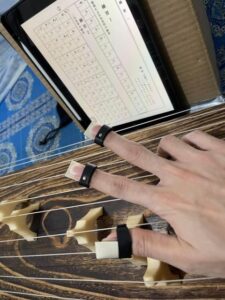
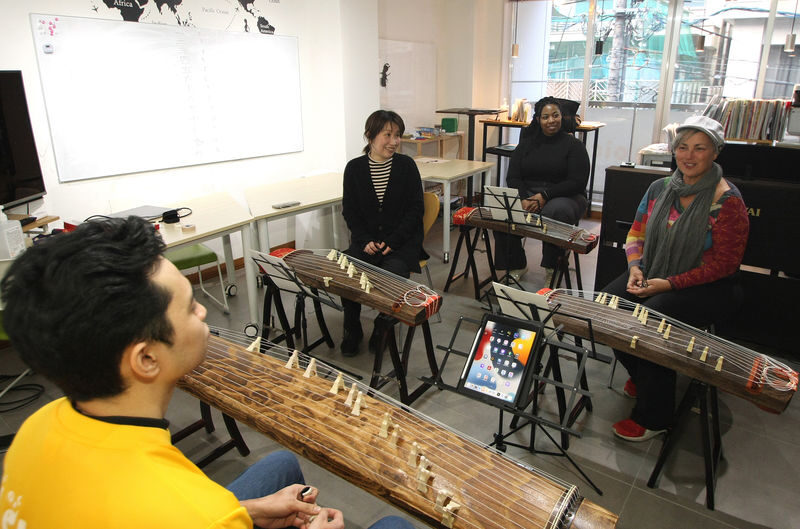
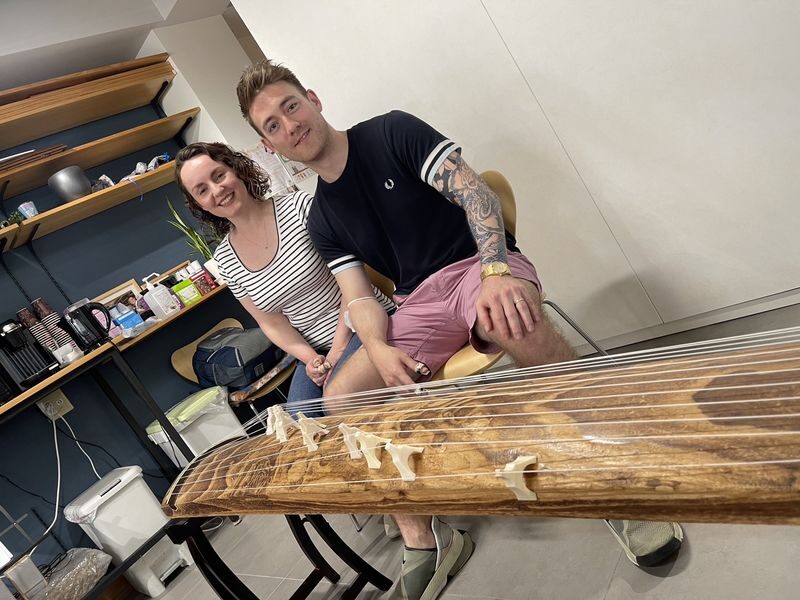
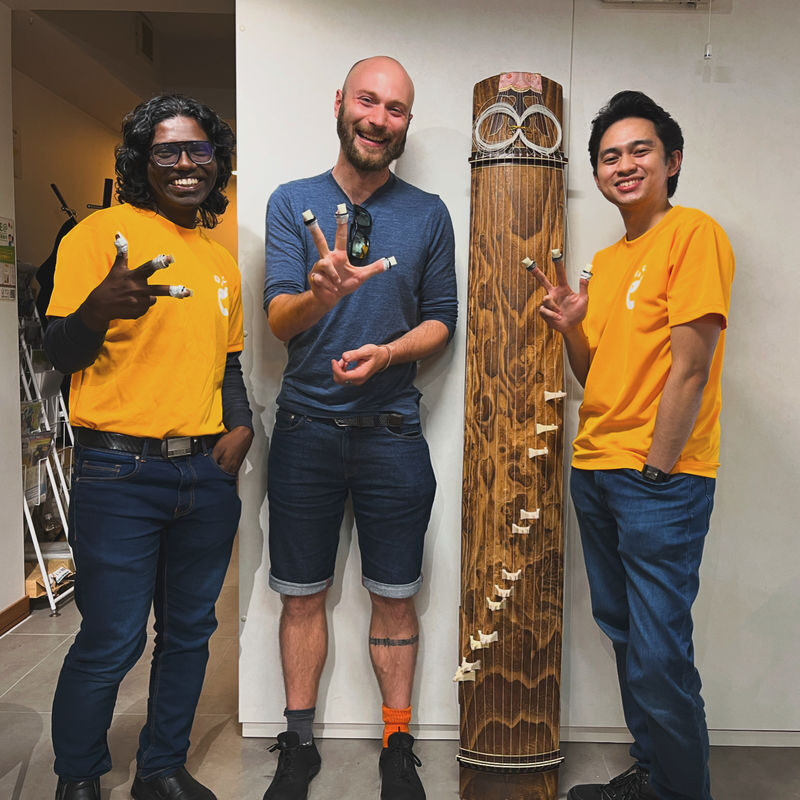
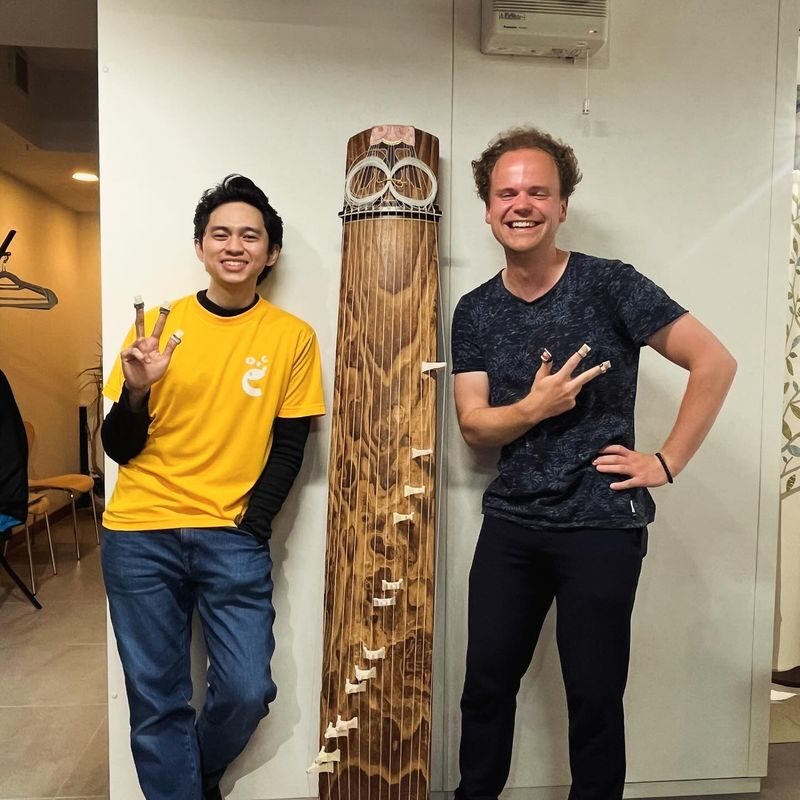
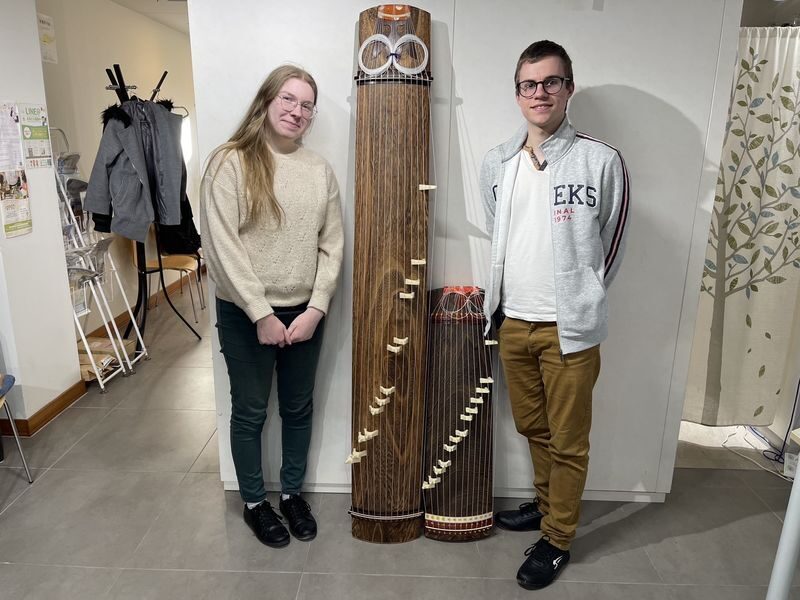
The koto is a long, 13-string instrument played with the fingers, traditionally using picks. Here, the point is not simply to look at one or hear a performer. You get to sit down, learn how to approach the instrument, and try making music yourself.
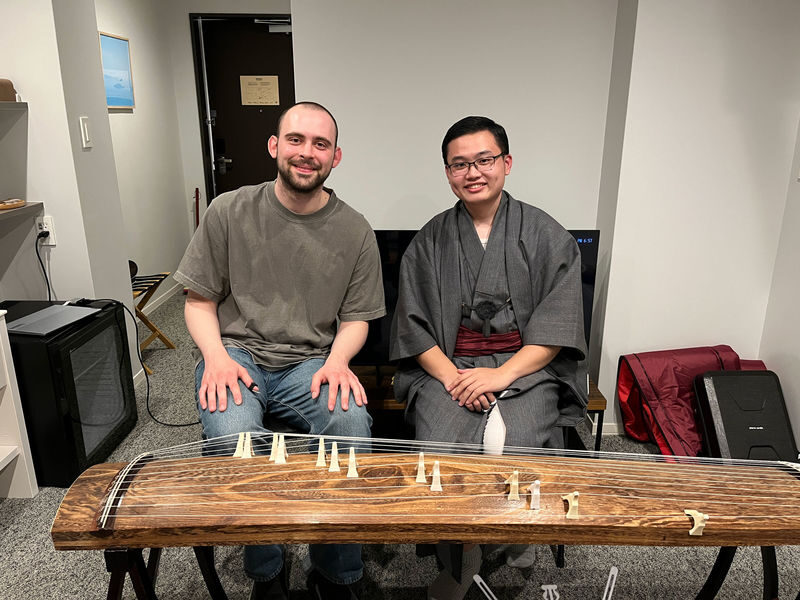
That hands-on element makes the activity a good choice if you want a cultural experience that asks something of you. You do not need to read music or have played an instrument before. The instructor guides you through the process, and the workshop uses an accessible melody rather than expecting you to arrive with any skill.
The setting matters, too. The koto has been part of Japanese musical life for around 1,300 years, and the workshop links that history with Hiroshima’s identity as a city of peace and resilience. It also introduces Fukuyama, in Hiroshima Prefecture, which is known as the heartland of koto craftsmanship. More than 70 percent of Japan’s kotos are made there, a striking local connection for an activity in Hiroshima.
You can also read our reviews of more tours and experiences in Hiroshima

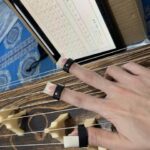

From the instrument’s history to a melody for peace
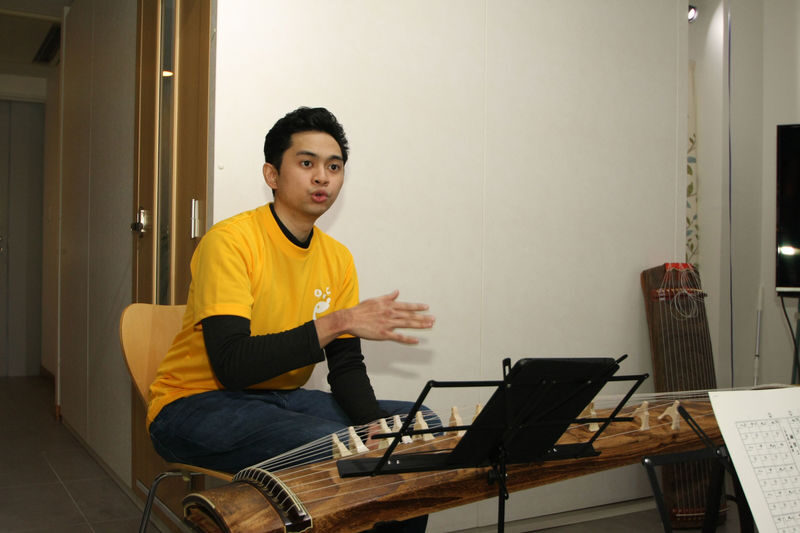
The lesson begins with context about the koto and its place in Japanese culture. That background gives you a reason to pay attention to the instrument’s form and sound, rather than treating it as an unfamiliar prop. You’ll hear about its long history and the craft tradition centered in nearby Fukuyama.
The central piece is called Echo of Serenity, a composition honoring victims of the atomic bombing. Its purpose gives the playing a different weight from a standard beginner’s tune. You are not only learning where to place your hands; you are taking part in a musical expression of remembrance and peace.
The koto’s resonant sound suits this kind of reflection. The workshop describes the instrument as soothing and meditative, and the planned performance gives participants time to listen as well as play. If you are visiting Hiroshima’s Peace Memorial sites, this can offer a quieter, participatory way to engage with the city’s history. It is not a substitute for visiting those sites or learning about the events in depth. It is a focused cultural activity with a clear memorial purpose.
What happens during the workshop
The activity is listed as a guided koto lesson, with a departure and return time both shown as 01:30. That schedule does not make the total duration easy to interpret, so confirm your session time and expected length when you book. The core activity is the workshop itself, rather than a tour between several landmarks.
After meeting the instructor, you’ll hear about the instrument and its background, then move into a practical lesson. The guidance is described as patient and English-friendly, with instruction also available in Chinese, Japanese, Korean, and Bahasa Indonesia. One instructor named in connection with the class is Tiffany, who has experience teaching the instrument. Instructor assignment may vary, so don’t assume she will lead every session.
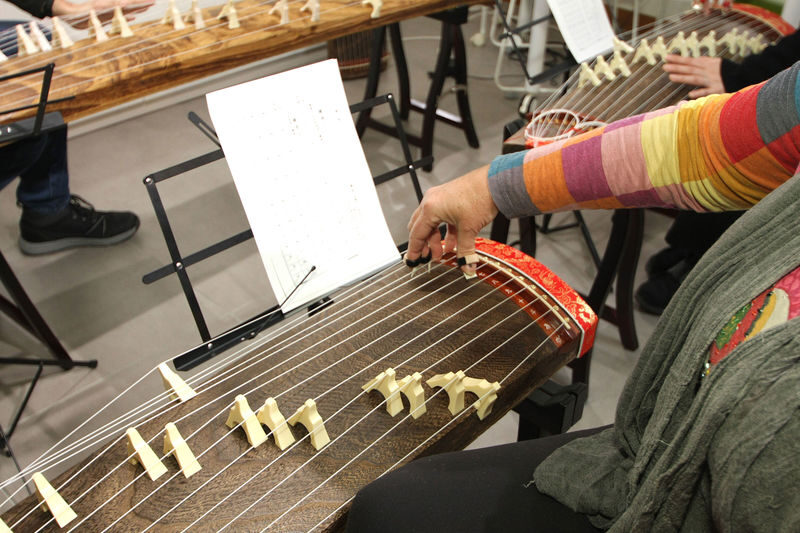
The hands-on portion takes you from the basics toward a simple melody. The lesson is designed for beginners, and the class may include practice pieces before you work on the main song. This is helpful if you are unsure about your musical ability: you can build familiarity before joining the group performance.
The workshop ends with participants playing Echo of Serenity together. A video recording of the performance is provided, giving you a personal keepsake of the activity. It is also a practical reminder of what you learned, especially if the melody becomes a brief but meaningful part of your Hiroshima visit.
How the experience feels for a first-time player
A first lesson on an unfamiliar instrument can feel awkward at first. That is part of the appeal here. You are there to try, not to deliver a polished recital, and the instructors are described as patient with beginners. If you are traveling with someone who plays music, the activity can still work for both of you: one person can bring musical confidence, while the other starts from zero.
The strongest part is the combination of explanation and participation. A demonstration alone might leave you admiring the sound from a distance. By learning a piece and taking part in a group performance, you have a clearer sense of how the instrument responds and why its sound has been valued for reflection.
The class also has an emotional purpose that may not suit every mood. Its focus on the atomic bombing and remembrance is sincere, not a light entertainment theme. If you want a playful craft class or a performance with no historical context, this may feel more contemplative than you’re looking for. If you want to connect music with Hiroshima’s story in a respectful way, the theme is a major reason to consider it.
Kamiyacho Shareo and the meeting point
The stated meeting location is WA Experience Hiroshima, also given in Japanese as 和文化体験処ひろしま, at 315 Shareo Underground Shopping Mall, 1-1 Otemachi, Naka Ward, Hiroshima. The venue is in Kamiyacho Shareo, an underground shopping mall in central Hiroshima. Arrive five minutes before the scheduled start.
Do not rely on the time and address alone if anything in your booking confirmation looks different. One participant encountered conflicting times and found the class was moved to another location, about a 40-minute walk away. The provider offered to pay for a taxi in that case, but the confusion still caused a lengthy delay. That appears to be an unusual problem, not a normal part of the class, but it is worth checking the exact meeting point directly before setting out.
The itinerary’s repeated 01:30 time makes this extra sensible. Keep your confirmation details handy, and contact the provider if you are unsure about the start time or venue. A short message in advance is easier than trying to solve a location puzzle after you arrive.


Is $50.45 good value?
At a starting price of $50.45, this is more than a quick introduction to a Japanese instrument. The fee includes the workshop and instruction, admission to the activity, a welcome gift, and the group performance video. It also buys an experience with a specific local and historical connection: the koto’s relationship to Fukuyama and a piece dedicated to Hiroshima’s peace message.
The value depends on what you want from your time. If you are looking for a formal concert, a long music course, or a broad historical tour, this is not that. You get a short, focused opportunity to learn and play, with the emotional context built into one piece.
For a music lover, or anyone who likes to learn by doing, the price is reasonable for an instructor-led activity with a keepsake recording. If you are only mildly curious about music, you may find the cost high for a single workshop. Think of it as a cultural class with a personal, reflective focus, rather than a general sightseeing stop.
Who should book this koto workshop?
I’d recommend it to travelers who want a calm activity between Hiroshima’s larger historical sites, and to anyone interested in Japanese instruments, music, or local craft. It also suits beginners who might hesitate to book a lesson because they have never played before. The workshop explicitly does not require prior experience.
The minimum age is 10, and participants must be under 100 to take part. Pets are not allowed, and anyone who appears intoxicated may be refused service without a refund. Those rules are worth knowing if you’re planning the activity for a family group or a day out.
If you are traveling with a companion who prefers watching to playing, ask whether they can attend without participating before booking. The supplied details describe a hands-on workshop and do not say whether observers can join. Group size is also not specified, so check if class size is important to you.
Should you book it?
Book this workshop if you want to do more than hear about Hiroshima’s history: you want to take part in a small musical act of remembrance. Its best qualities are the beginner-friendly lesson, the koto’s connection to nearby Fukuyama, and the chance to play Echo of Serenity with a group.
Skip it if your priority is a detailed history tour, a full-length concert, or an activity with no solemn subject matter. Before paying, confirm the exact start time and meeting point. If those details are clear, this offers a thoughtful and unusual way to spend part of a Hiroshima visit.
Experience the Soul of Hiroshima: A Peaceful Koto Workshop
“We had a wonderful time with an experienced teacher. The staff reached out personally to confirm the booking and to support with finding the locati…”
FAQ
Do I need to know how to play an instrument?
No. The workshop is designed for beginners, and no prior experience is needed.
Where does the workshop take place?
The meeting address is WA Experience Hiroshima, 315 Shareo Underground Shopping Mall, 1-1 Otemachi, Naka Ward, Hiroshima, in Kamiyacho Shareo.
How early should I arrive?
Arrive five minutes before the scheduled departure time.
What languages are available?
Instruction is listed in English, Chinese, Japanese, Korean, and Bahasa Indonesia.
What will I play?
You’ll learn a piece called Echo of Serenity, which honors victims of the atomic bombing, and join a group performance.
Do I receive a recording of the performance?
Yes. A video recording of the group performance is provided as a keepsake.
What is the minimum age?
Participants must be at least 10 years old. The activity’s stated upper age limit is under 100.
Can I cancel for a refund?
A full refund is available if you cancel at least 24 hours before the activity date, using destination local time.