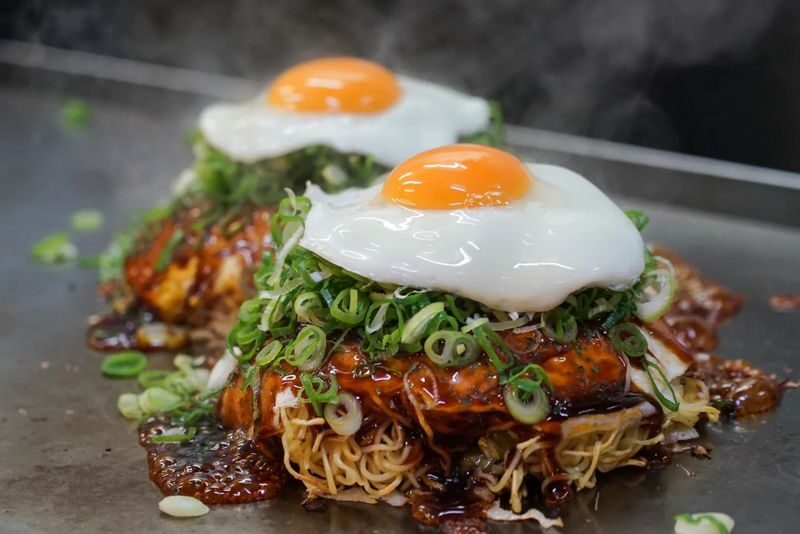
Hiroshima-style okonomiyaki arrives hot off the grill, cooked by a chef at your table. Then the evening moves into Nagarekawa, a district of small bars and izakayas where a local guide can help you order foods you might otherwise pass by. It is a friendly, food-first way to spend three hours in Hiroshima.
I like two things in particular: you get to watch your okonomiyaki being made, rather than simply meeting it on a plate, and the walk introduces you to local dishes such as oysters and horumon tempura. The included drinks also make it easy to sample Hiroshima sake without planning a separate tasting.
One consideration: the menu and stops can change, and vegetarian choices are limited. Smoking may be allowed at some venues, too. If you have strict dietary needs or want a smoke-free evening, ask before booking.
- Key points before you book
- A 7 p.m. start in central Hiroshima
- Okonomiyaki, cooked right at your table
- Nagarekawa, one bar and eatery at a time
- Hiroshima sake, plus soft-drink choices
- The guide can make the evening feel local
- What the price includes, and what it does not
- Food needs and comfort to consider
- Who should book this Hiroshima food walk?
- FAQ
- How long is the Hiroshima Bar Hopping Food Tour?
- Where is the meeting point?
- What food and drinks are included?
- Can I join if I do not drink alcohol?
- Are vegetarian meals or allergy-safe dishes available?
- Will the tour definitely visit a sake bar?
- Is the tour wheelchair-accessible?
- Should you book it?
- The Best Of Hiroshima!
- More Food & Drink Experiences in Hiroshima
- More Tours in Hiroshima
- More Tour Reviews in Hiroshima
Key points before you book
 1 / 9
 2 / 9
 3 / 9
 4 / 9
 5 / 9
 6 / 9
 7 / 9
 8 / 9
 9 / 9
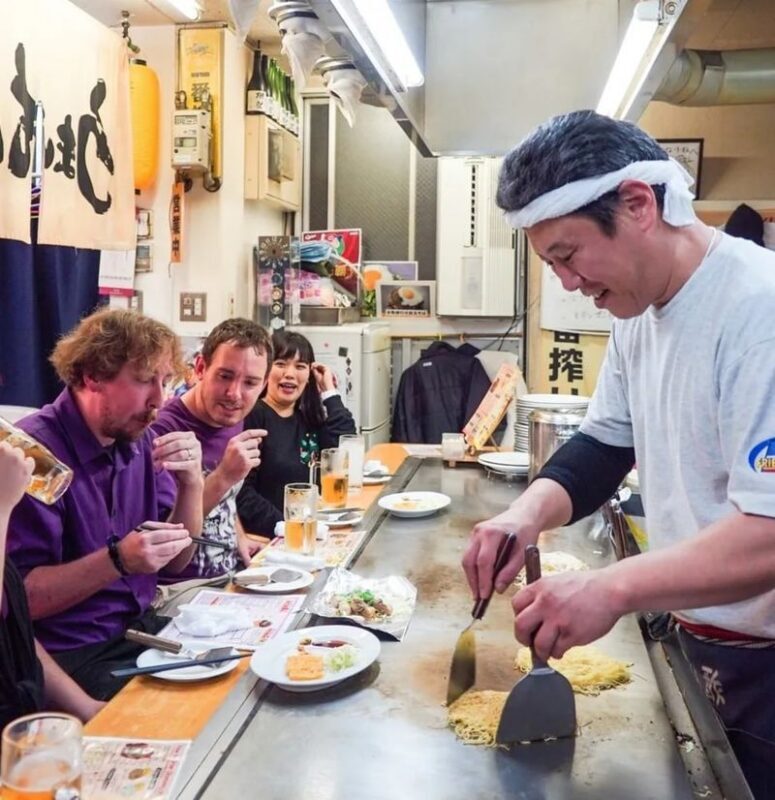
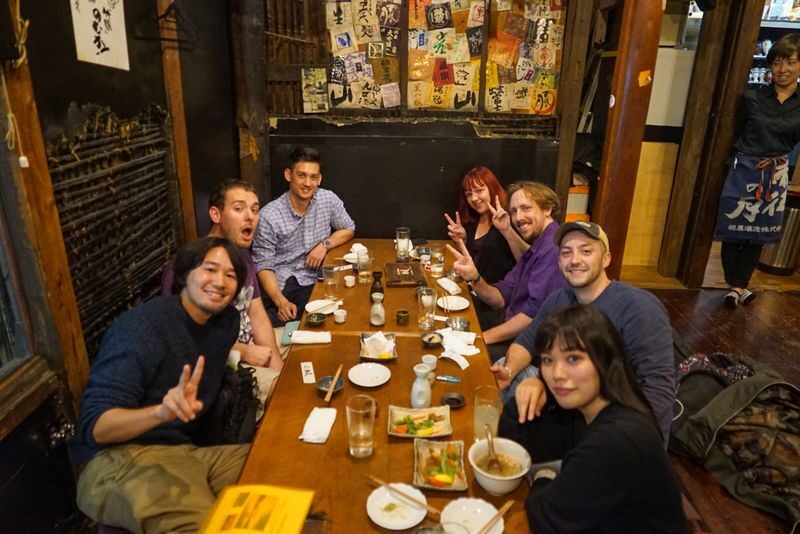
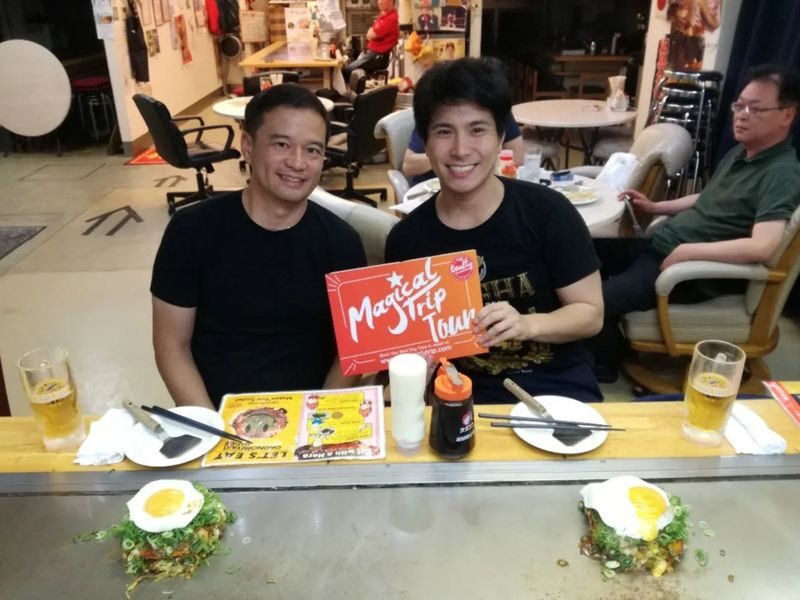
- Dinner starts with a show: A chef prepares your Hiroshima-style okonomiyaki at the table on a flat iron grill.
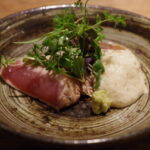
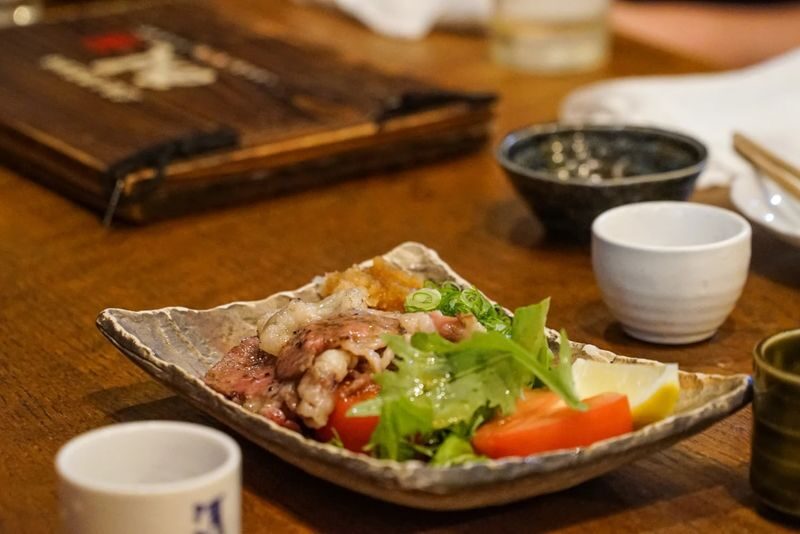
- Nagarekawa is the setting: Walk between local izakayas and bars, with possible dishes including horumon tempura and oysters.
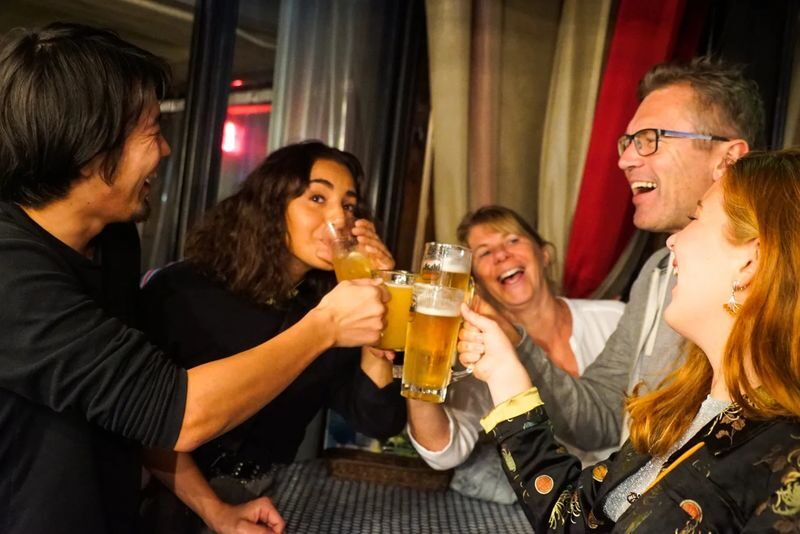
- Three drinks are included: You can sample sake and choose soft drinks if you do not drink alcohol.
- Food is part of the ticket: The tour includes one okonomiyaki plate and two additional dishes.
- The route can change: Seasonal ingredients and restaurant availability may affect the stops and menu.
- Plan for an evening on foot: Meet at 7 p.m. near the GUCCI display at Fukuya department store, then return around 10 p.m.
👉 See our pick of the Hiroshima’s 13 Top Workshops & Classes (With Prices)
A 7 p.m. start in central Hiroshima
The meeting point is in front of the GUCCI display outside Hiroshima Fukuya department store, in Hatchobori. Your guide will hold a Magical Trip sign. Arrive 10 minutes early: the tour starts on time, and late arrivals who miss the group cannot join, reschedule, or receive a refund.
The location gives you a clear landmark in a central part of town. From there, the group explores on foot, so wear comfortable shoes and dress for the weather. Hiroshima summers can be very hot, while winter temperatures can fall below freezing. There is no hotel pickup or drop-off.
The tour runs from 7 to about 10 p.m. That timing suits a relaxed dinner with several stops, but it is still an evening commitment. If you have an early start the next morning, remember that you will be out for three hours and may be eating and drinking throughout.
You can also read our reviews of more food & drink experiences in Hiroshima

Okonomiyaki, cooked right at your table
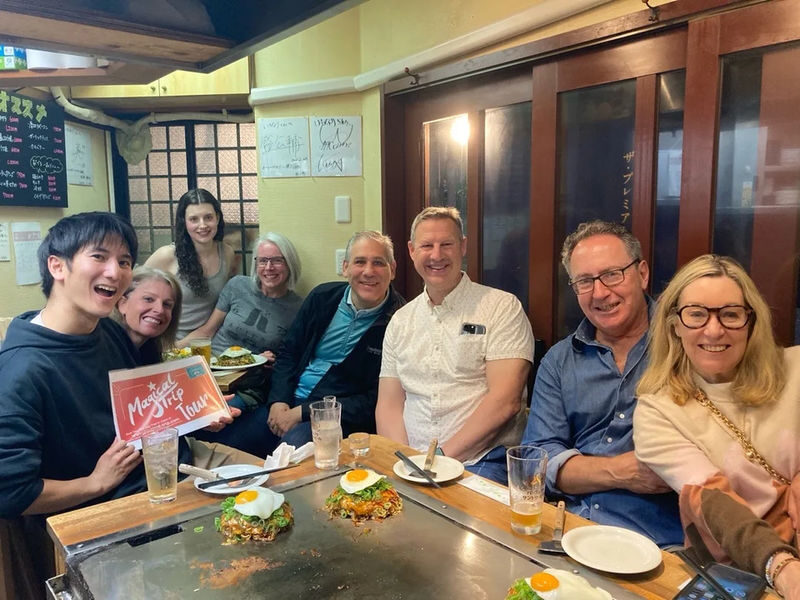
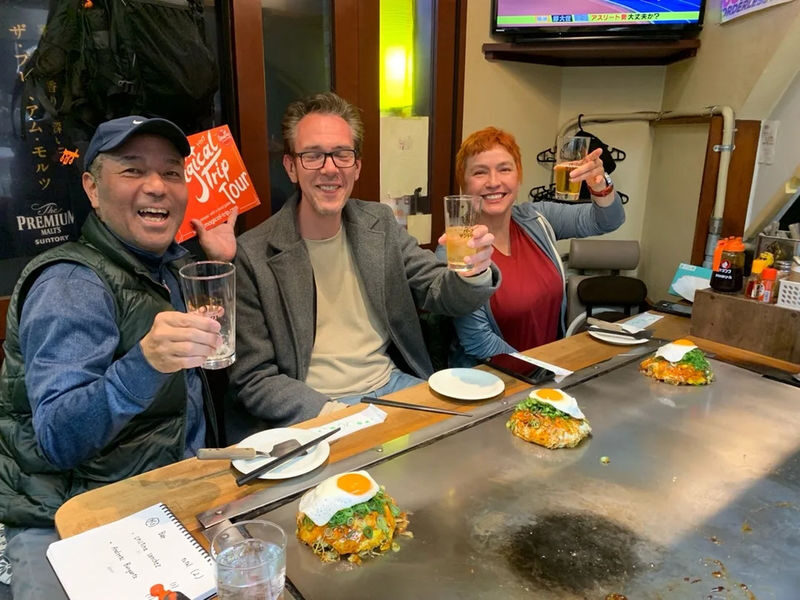
The first major food stop is an izakaya known for okonomiyaki. Instead of receiving a prepared dish, you watch the chef build and cook it on a flat iron grill at your table. The sizzling preparation is part of the pleasure, and it offers a close look at one of Hiroshima’s best-known local foods.
Hiroshima-style okonomiyaki is a substantial meal, and the tour begins with a whole plate. That matters when judging the food allowance: the package is not just a tasting of tiny samples. You also receive two other dishes during the evening, along with three drinks.
The exact dishes depend on the season and what ingredients are available. The wider Nagarekawa area is known for foods such as oysters and horumon tempura, but do not assume every dish will appear on your particular night. The route is designed to introduce you to local specialties, not to lock every group into an identical menu.
Nagarekawa, one bar and eatery at a time
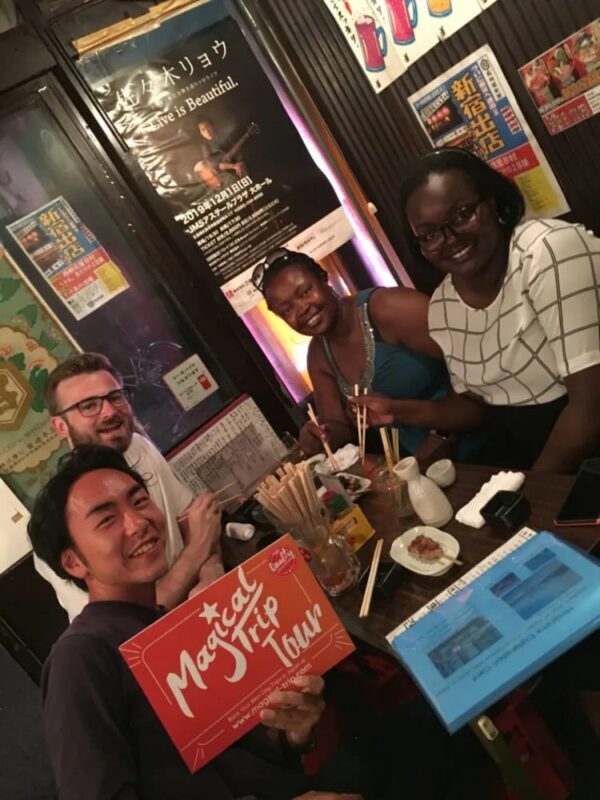
After okonomiyaki, the evening continues through Nagarekawa’s backstreets. The appeal is less about seeing a landmark and more about stepping into places you might not choose on your own. A guide can handle the transition between restaurants, explain what is on the menu, and make ordering less daunting if Japanese food is new to you.
The precise sequence and venues can vary. Some past evenings have included an okonomiyaki restaurant, a sushi bar, and an izakaya. A sake-focused stop may also be part of the plan, but a venue can be closed, in which case the guide may adjust the route. That flexibility is useful, though it means you should treat the listed food ideas as possibilities rather than a guaranteed checklist.
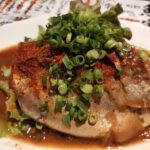
Horumon tempura, oysters, sushi, and other izakaya dishes each offer a different way to understand local eating. Some may be unfamiliar in texture or flavor, which is exactly where a guide earns their keep. You can ask what a dish is, how it is usually eaten, or what to try next. If you prefer to stick with familiar foods, you can still enjoy the okonomiyaki and the social feel of the stops.
The tour is on foot, and the restaurants are part of the experience. It is not a sightseeing walk with a long list of monuments. Think of it as an evening of food, conversation, and neighborhood atmosphere, with the guide helping you connect the stops.
Hiroshima sake, plus soft-drink choices
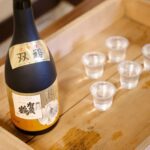
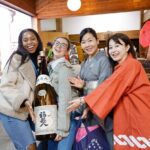
Hiroshima has a strong sake-making tradition, and the tour is intended to introduce you to local sake styles, from dry and rich to sweet and light. Three drinks are included overall. That gives you a useful tasting opportunity without having to order a full drink at every stop.
The precise sake selection and venue are not guaranteed. A restaurant may be closed or the route may change, so the evening’s sake experience can differ. If trying Hiroshima sake is your main reason for booking, keep that variability in mind and confirm the current plan with the operator if possible.
You do not have to drink alcohol. Soft drinks are available, and the tour is open to adults aged 20 and over. Japan’s legal drinking age is 20, so bring valid identification if you plan to drink. The package does not include additional personal purchases, so take cash if you expect to order extra snacks or drinks beyond what is provided.
The guide can make the evening feel local
This tour depends heavily on its guide. Names associated with past outings include Yoko, Sayu, Yuji, Hika, and Ryu. Their role is more than leading the walk: they help the group settle into unfamiliar restaurants, explain local food and drink, and keep the evening moving between stops.
Several accounts of the experience describe guides who were warm, attentive, and easy to talk with. Yoko was noted for making conversation feel personal, while Hika was praised for local knowledge and a lively manner. The names are useful to know, but you cannot count on a particular guide being assigned on your date.
A guide can also help the group connect with one another. That is a welcome bonus if you are traveling alone or enjoy meeting people over a meal. If you prefer a private dinner or want to spend as long as you like at each restaurant, a scheduled group walk may feel less flexible.
You can also read our reviews of more tours and experiences in Hiroshima


What the price includes, and what it does not
The listed starting price is $85.45, while the package option is also shown at $105.45. Prices can vary, so check the cost for your chosen date and package before paying. At either price, the value rests on more than the food alone: you get a guide, three drinks, one okonomiyaki plate, two additional dishes, and photos taken during the tour.
For someone new to Hiroshima, the guided access to several local eateries can be the strongest part of the value. You avoid the work of choosing unfamiliar restaurants and can sample a range of dishes in one evening. The experience also gives you ideas for places and foods to revisit on your own.
The meal allowance should be enough to make this feel like dinner for many people, especially with a whole okonomiyaki plate at the start. Still, appetites vary, and extra food or drinks are at your own expense. You also do not need to pay for the guide’s food and drinks.
Food needs and comfort to consider
Vegetarian options are limited because many Japanese restaurants are not set up to provide dedicated vegetarian menus. The kitchens are not operated by the tour company, and the operator cannot guarantee meals free of allergens or meet every dietary restriction. Some restaurants may not allow substitutions, though the guide will try to find alternatives at other stops.
If you have a serious allergy, strict dietary rules, or a strong need to avoid certain ingredients, this is not a tour to book without checking first. You may find that some dishes are unsuitable, and the menu can shift with ingredient availability.
Smoking is another practical point. Some stops may permit smoking, and the tour may not be able to change venues for that reason. The activity is not wheelchair- or stroller-accessible, and it is not recommended for pregnant participants. Pets are not allowed.
Who should book this Hiroshima food walk?
I would consider this tour if you want a guided introduction to Hiroshima food and prefer a lively evening over a formal tasting. It is especially useful if okonomiyaki is high on your list, you are curious about sake, or the idea of choosing an izakaya on your own feels like more work than fun.
It also suits solo visitors and small groups who enjoy eating together and chatting along the way. The guide-led format can make unfamiliar menus easier to approach, while the three stops or more give you a broader taste of local dining than a single restaurant visit.
I would think twice if you need a fully vegetarian or allergy-safe menu, require wheelchair access, dislike smoking venues, or want a fixed list of restaurants. The route is flexible by design, and that flexibility is both a strength and a trade-off. You get a local evening that can adapt to what is open, but not a promise that every dish or venue will match your expectations.
Hiroshima Bar Hopping Food Tour
“The staff were extremely warm and enthusiastic, and gave a very detailed introduction. Highly recommended to join in and experience the local izaka…”
FAQ
How long is the Hiroshima Bar Hopping Food Tour?
The tour runs from about 7 p.m. to 10 p.m., for a total of roughly three hours.
Where is the meeting point?
Meet in front of the GUCCI display outside Hiroshima Fukuya department store in Hatchobori. Look for a guide holding a Magical Trip sign.
What food and drinks are included?
The tour includes one Hiroshima-style okonomiyaki plate, two additional dishes, and three drinks. Extra snacks and drinks are personal expenses.
Can I join if I do not drink alcohol?
Yes. Soft drinks are available as an alternative. Participants must be at least 20 years old, and anyone drinking alcohol should bring valid identification.
Are vegetarian meals or allergy-safe dishes available?
Vegetarian choices are limited. Allergy-free meals and dietary substitutions cannot be guaranteed because food is prepared in restaurants outside the tour operator’s control.
Will the tour definitely visit a sake bar?
The tour is designed to include Hiroshima sake, but venues and stops can change. A planned sake venue may be closed, so the exact experience is not guaranteed.
Is the tour wheelchair-accessible?
No. The activity is not wheelchair- or stroller-accessible. It is also not recommended for pregnant participants, and pets are prohibited.
Should you book it?
Book this tour if you want to eat Hiroshima-style okonomiyaki, try local dishes, and let a guide take the guesswork out of an evening in Nagarekawa. Its best value is the combination of a substantial first dish, several food stops, included drinks, and local context. Skip it if your diet, mobility needs, or preference for smoke-free venues makes the flexible restaurant route a poor fit.