Kyoto’s tea culture can feel formal from the outside. Here, you put on a kimono, learn the gestures behind the ceremony, and whisk your own matcha, all in about an hour. It’s a practical way to meet a tradition without needing prior knowledge or a full afternoon.
I like two things in particular: you take part rather than just watch, and the kimono dressing and tea room photos make the cultural lesson feel tied to place. Instructors such as Haruka, Gakuji, Nana, and Aika have led sessions, with English explanations of the steps and their meaning.
One consideration: an hour goes quickly, especially with dressing, hairstyling, instruction, tea, sweets, and photos all included. If you want a slow, extended ceremony, this compact introduction may feel brisk. You also cannot wear the kimono outside after the session.
- What Makes This Kyoto Tea Session Worth Your Hour
- Dressing for the Tea Room
- Learning the Ceremony, One Gesture at a Time
- Matcha, Wagashi, and a Moment to Look Around
- What One Hour Can, and Cannot, Give You
- Is the Price Good Value?
- Booking Times and a Few Useful Details
- Who Should Book This Kimono and Matcha Activity?
- FAQ
- How long does the activity last?
- Where is the meeting point?
- Do I get to make my own matcha?
- Is the kimono included, and can I wear it outside?
- Can children take part?
- What is included with the tea?
- The Best Of Kyoto!
- More Tours in Kyoto
- More Tour Reviews in Kyoto
What Makes This Kyoto Tea Session Worth Your Hour
 1 / 8
 2 / 8
 3 / 8
 4 / 8
 5 / 8
 6 / 8
 7 / 8
 8 / 8
- You wear a traditional kimono: A kimono set and simple hairstyling are included, so dressing is part of the activity, not an extra errand.
- You make your own matcha: Your instructor demonstrates the method, then guides you as you whisk a bowl with traditional utensils.
- The ceremony has context: Learn about etiquette and the ideals of harmony, respect, purity, and tranquility as you follow the ritual.
- Seasonal wagashi comes with the tea: The sweets give you a small taste of the pairing that makes the tea service more than a lesson in technique.
- Photos are part of the visit: You’ll have time to take pictures in the kimono inside the traditional tea rooms.
- It fits into a Kyoto day: The session is about one hour, and the venue is roughly a five-minute walk from Kyoto Shiyakusho-mae Station.

👉 See our pick of the We Rank Kyoto’s 15 Top Workshops & Classes
Dressing for the Tea Room
The visit begins at Kimono Tea Ceremony CHITOSEYA Kyoto, on the first floor at 536 Tenshojimae-cho in Nakagyo Ward. The address is in the Teramachi area, about a five-minute walk from Kyoto Shiyakusho-mae Station. Arrive five minutes before your selected start time so the session can begin on schedule.
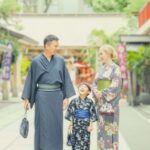
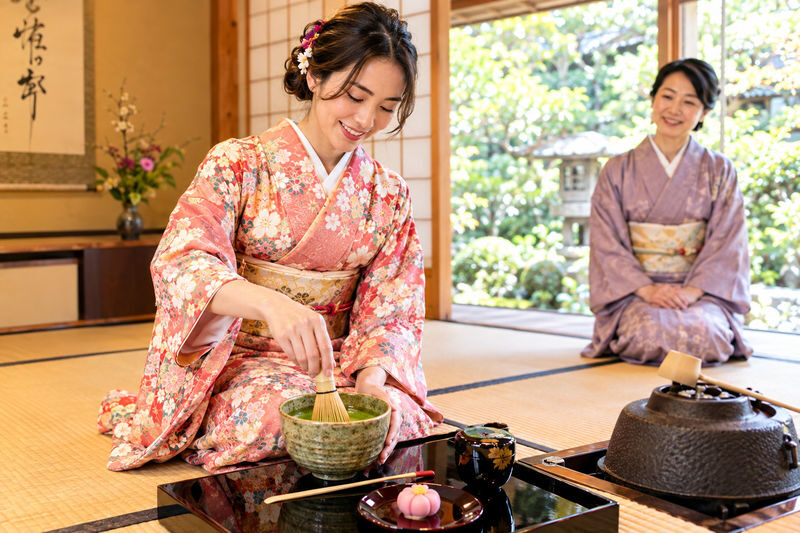
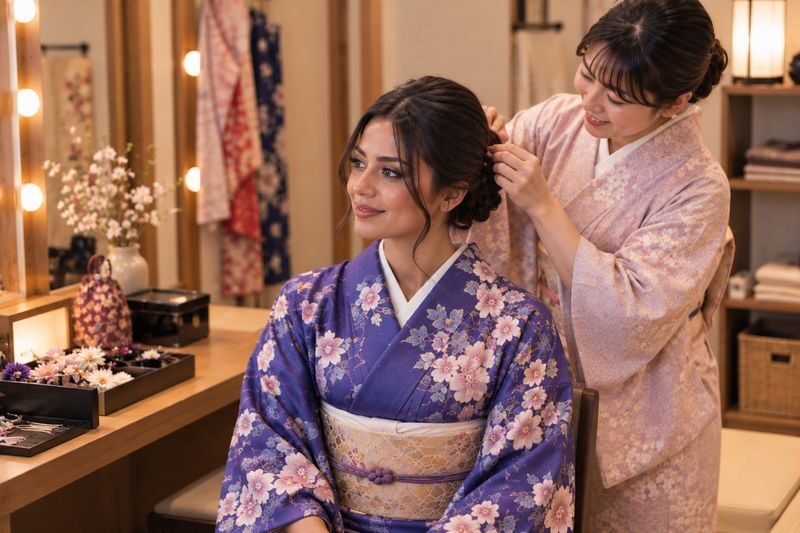
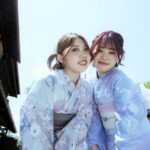
A kimono set is included, along with simple hairstyling. The dressing is not just a costume change before the main event. It helps set the tone, and the formal layers make ordinary movements feel more deliberate. You’ll have a chance to see the colors and details up close, then wear the kimono in the tea room for the ceremony and photos.
The staff help with the dressing, including the obi belt, which can be the trickiest part for a first-timer. That hands-on attention can make the preparation feel like a cultural introduction in its own right. Still, allow for the possibility that the getting-ready portion takes a meaningful share of a one-hour session. The full visit is short, so don’t expect a long stretch of unstructured time in the outfit.
Simple hairstyling is included, but the details of what that involves are not specified. If a particular hairstyle matters to you, ask the venue before booking rather than assuming a specific look or service.
You can also read our reviews of more tours and experiences in Kyoto.



Learning the Ceremony, One Gesture at a Time
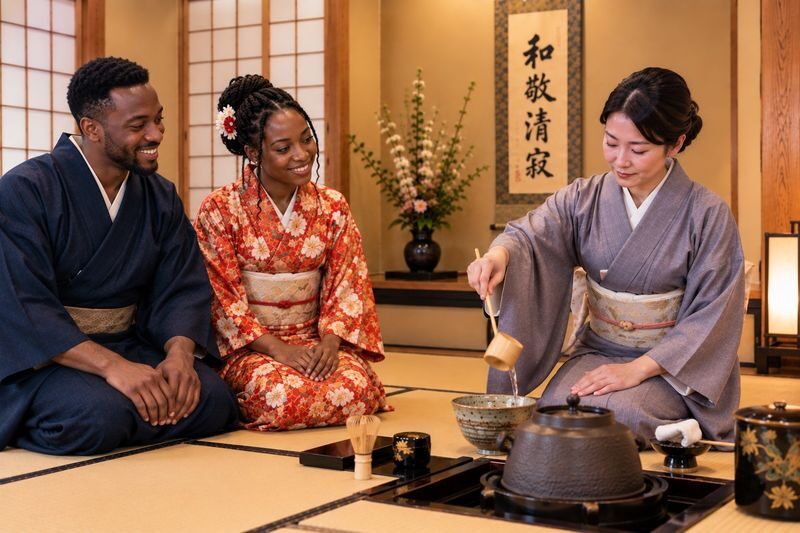
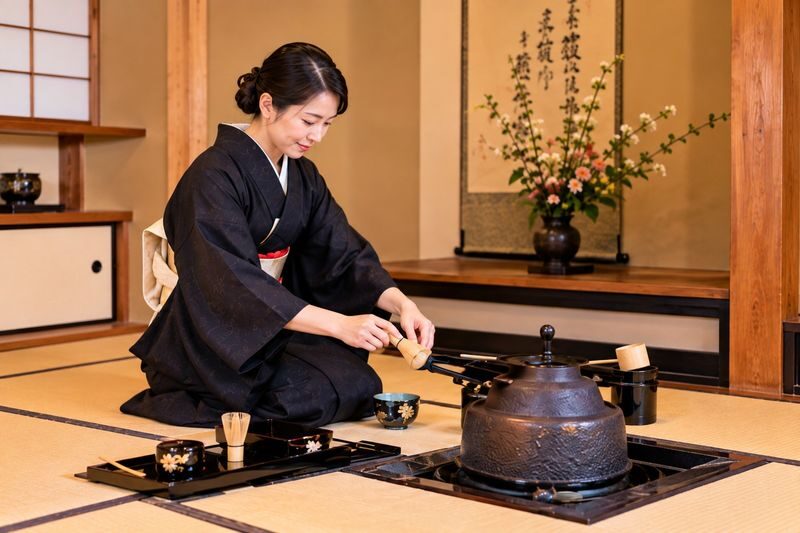
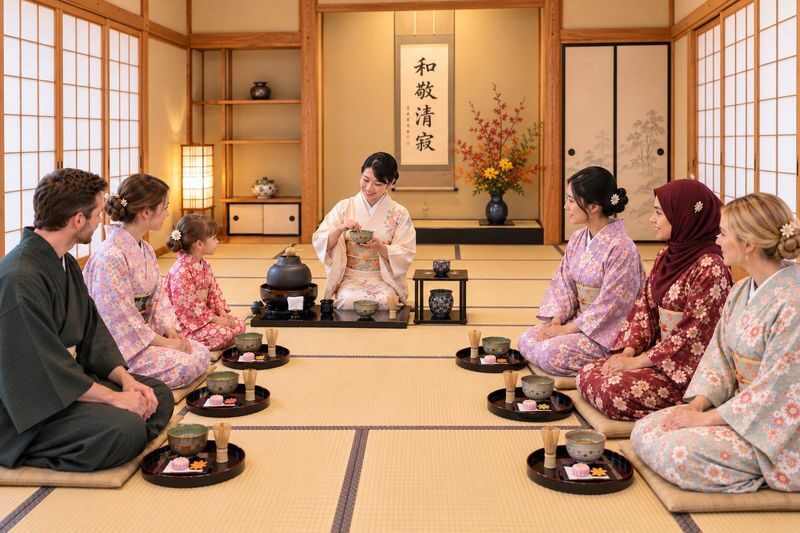
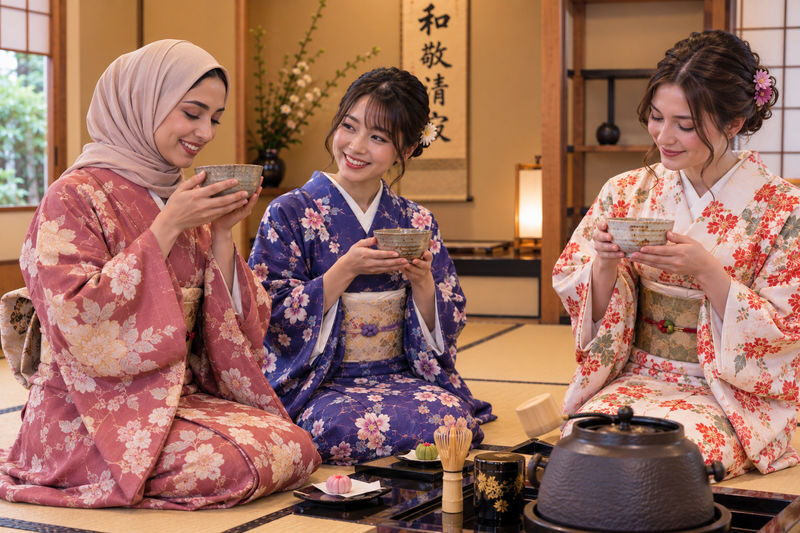
Once dressed, you’ll join a guided tea ceremony in a traditional room. Your instructor introduces the customs and etiquette, explains what the ceremony’s movements mean, and demonstrates how matcha is prepared. English-speaking staff are included, so the activity is designed to be approachable even if you know little about Japanese tea.
The ceremony’s four guiding ideas are harmony, respect, purity, and tranquility. These are not simply words to memorize. They give you a way to understand why the process is careful and measured, from preparing the utensils to serving and drinking the tea. The lesson helps turn a sequence of unfamiliar gestures into something you can follow.
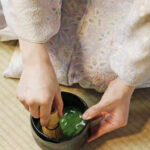
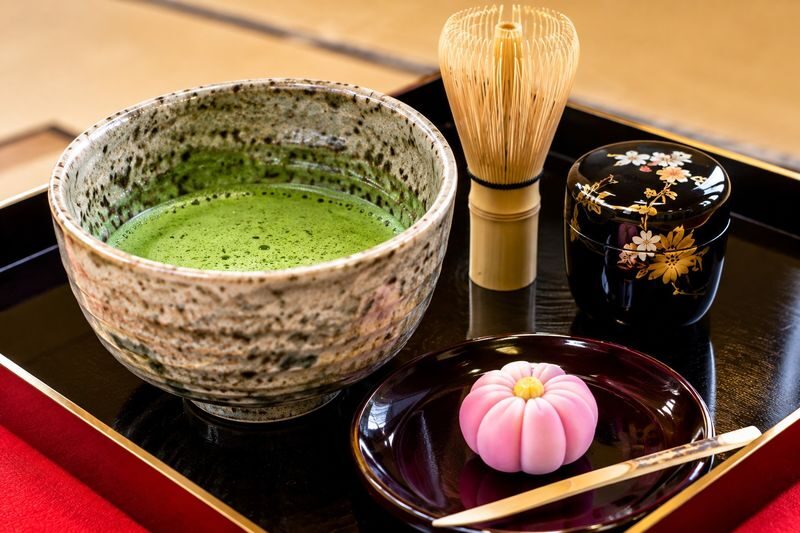
Then it’s your turn. Using traditional tea utensils, you’ll whisk and prepare your own bowl of matcha with guidance. That practical step is the heart of the activity: you don’t just watch a host perform a ritual, you try the technique yourself. An instructor can correct or explain as you go, which makes this a useful first encounter for anyone who has never prepared matcha.
The pace is intended to be clear and friendly, not intimidating. Instructors who have led sessions include Haruka, Gakuji, Nana, Aika, and Kaori. Their explanations have covered the ceremony, the room, and the history and preparation of matcha. The particular instructor may vary, so treat those names as examples rather than a request you can count on.
Matcha, Wagashi, and a Moment to Look Around
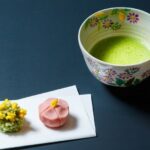
After preparing the tea, you’ll drink it with seasonal wagashi, traditional Japanese sweets. The pairing offers a pleasant pause after the lesson and lets you focus on the flavor of freshly prepared matcha. The specific sweet changes with the season, so you should not expect one fixed menu item.
Matcha has a distinctive taste, and this is a good setting to try it without needing to know what to expect. You can ask questions as the ceremony unfolds, then taste the bowl you made yourself. The session is not described as a tasting flight or a full tea-and-food meal, so plan to eat elsewhere if you need lunch or dinner.
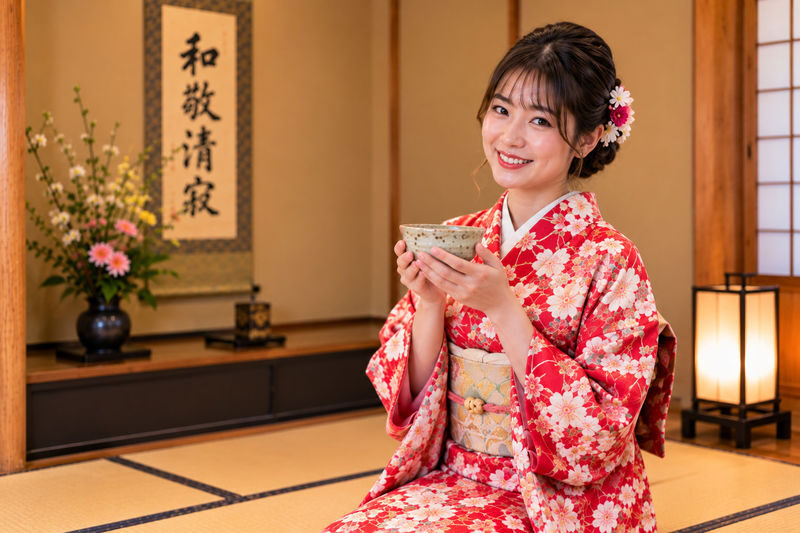
The room and utensils are part of the lesson too. Seeing how the setting supports the ceremony makes the explanation more concrete than a demonstration in an ordinary classroom. There is time for photos inside the traditional tea rooms, with staff able to help take pictures. If you want portraits in your kimono, that’s a useful inclusion. Keep in mind that photo time is part of a compact session, not a separate photo shoot.
What One Hour Can, and Cannot, Give You
The schedule describes a one-hour guided tea ceremony, with kimono rental, hairstyling, dressing, instruction, matcha, sweets, and photo time included. That makes the activity easy to fit between other Kyoto plans, but it also calls for realistic expectations. You’ll get a taste of the tradition, not an extended study of tea ceremony.
The experience appears to work well for couples, families with older children, and solo visitors who want an activity with a clear beginning and end. You don’t need to arrive knowing the etiquette. The instructor explains the steps, and you can take part at your own pace.
For children, those under five can join free. However, the venue does not have yukata sizes for very young children, and preparing matcha independently may be difficult for them. Children aged 13 and older pay the adult rate. If you’re choosing this for a young child, think about whether they’ll be comfortable wearing the available clothing and watching a guided activity.
There is no information on group size, so don’t assume you’ll have a private ceremony. If a private setting matters to you, check directly before booking. The same applies if you have specific needs around kimono sizing or hairstyling, since those details are not provided.
Is the Price Good Value?
The stated starting price is US$31.60, while the named Kimono Tea Ceremony package is also shown at US$63.20. Those figures do not match, so check the price for your chosen date, time, and package before you pay. The actual amount may depend on the option selected; don’t plan your budget around the lower figure until you confirm it.
At the price shown for your booking, the value comes from the combination of services: kimono set rental, simple hairstyling, an English-speaking instructor, tea ceremony guidance, matcha and seasonal wagashi, use of utensils, and photo time. You would otherwise need to arrange several elements separately, and the guided lesson gives the clothing a cultural purpose beyond dressing up for pictures.
The trade-off is that this is a short, structured activity. You’re paying for a compact introduction, with the convenience of having the dressing and ceremony in one place. If you want to spend a full morning learning tea practice or wear a kimono around Kyoto, this is not the right format. The kimono cannot be worn outside after the session, and that restriction matters if strolling through the city in it is your main goal.


Booking Times and a Few Useful Details
Start times are offered hourly from 09:00 to 18:00. Return times are listed from 10:30 to 19:30, though the options depend on the start time and the itinerary duration. Choose the time you book, and arrive five minutes early at the first-floor meeting point.
The voucher is valid only on the date and time specified, if a time applies. You can cancel for a full refund at least 24 hours before the activity, using destination local time. Late arrival or a missed session is not eligible for a refund or amendment. In extreme weather or other unforeseen events, the operator may cancel and offer a reschedule or full refund.
The venue is at 536 Tenshojimae-cho, Teramachi-dori Sanjo-agaru, Nakagyo-ku, Kyoto. It is about five minutes on foot from Kyoto Shiyakusho-mae Station. That central location makes it a manageable addition to a day in the city, but allow time to find the entrance and reach the first-floor meeting point.
Who Should Book This Kimono and Matcha Activity?
Book it if you want a short, hands-on introduction to Kyoto’s tea culture, especially if you’d like to wear a kimono and make your own matcha without arranging each part separately. It suits first-timers, couples, and visitors who value a guided explanation as much as the photos.
Skip it if your priority is a long, quiet ceremony, an all-day kimono rental, or wearing the outfit around town afterward. And check the final package price carefully, since the two displayed starting figures differ. If the cost and one-hour format suit your plans, this is a tidy way to add a little ceremony and craft to a Kyoto itinerary.
Kyoto Traditional Kimono & Matcha Tea Ceremony
“We had an amazing time! 100% recommend this experience. Thank you!”
FAQ
How long does the activity last?
The experience lasts about one hour. It includes kimono rental, simple hairstyling, tea ceremony guidance, matcha, seasonal wagashi, and time for photos.
Where is the meeting point?
Meet on the first floor of Kimono Tea Ceremony CHITOSEYA Kyoto, at 536 Tenshojimae-cho in Nakagyo Ward. The venue is about a five-minute walk from Kyoto Shiyakusho-mae Station.
Do I get to make my own matcha?
Yes. The instructor demonstrates the traditional method and guides you as you whisk and prepare your own bowl using tea ceremony utensils.
Is the kimono included, and can I wear it outside?
A kimono set rental and simple hairstyling are included. You cannot wear the kimono outside after the activity.
Can children take part?
Children under five can join free, but yukata sizes are not available for very young children, and making matcha independently may be difficult for them. Children aged 13 and older pay the adult rate.
What is included with the tea?
You’ll have freshly prepared matcha and seasonal wagashi sweets. The specific sweet may vary by season.