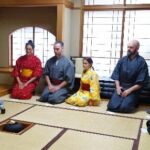
A small entrance, a careful bow, a bowl of matcha: this Osaka class turns tea into a lesson in how people welcome one another. You change into kimono before entering the tea room, then learn its customs with a certified instructor at SAMURAI HONOR.
I like two things in particular: you get to try making matcha, rather than only watch, and wagashi gives the ceremony a seasonal, artistic dimension. One participant praised Kaori for making the lesson fun and helping them try the tea preparation themselves.
The main consideration is that this is a focused cultural class, not a full-day Osaka outing. The advertised price starts at $52.05, and the experience’s package details center on matcha and wagashi; confirm what is included if you are expecting brush writing or other activities.
- Enter through the nijiriguchi: Learn why a tea room’s small entrance asks people to bow and leave status outside.
- Practice the manners, not just the recipe: The class teaches gestures, etiquette and the spirit of hospitality alongside matcha preparation.
- Taste wagashi with a seasonal purpose: The traditional sweet is presented as a way to think about Japanese ideas of beauty and the seasons.
- Wear a kimono for the ceremony: Traditional dress is part of the experience, with Japanese hairstyles also mentioned as a way to complement it.
- Expect a hands-on lesson: Kaori was named by one participant, who especially enjoyed learning a little and trying to make matcha.
- Check dietary needs before booking: The activity cannot accommodate several common dietary requirements, including vegetarian, vegan, gluten-free and allergy-related needs.
- A tea lesson built around shared hospitality
- Changing into kimono before the ceremony
- Passing through the nijiriguchi
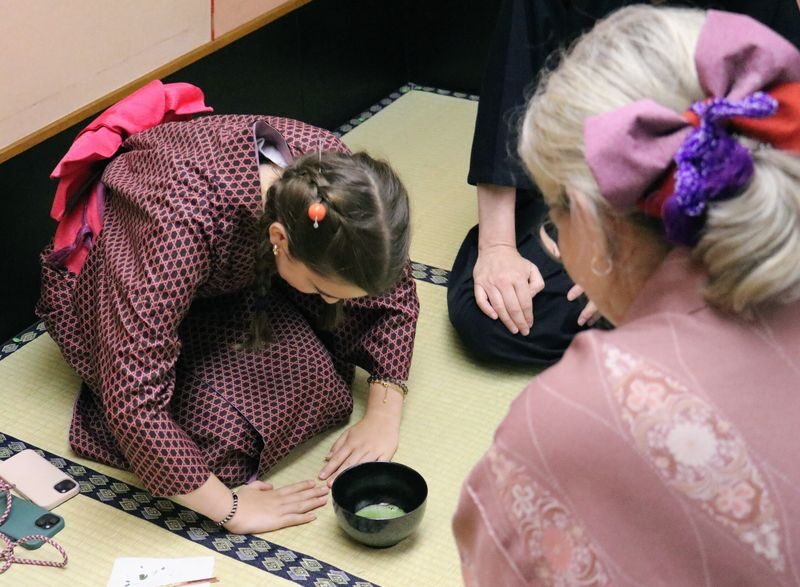
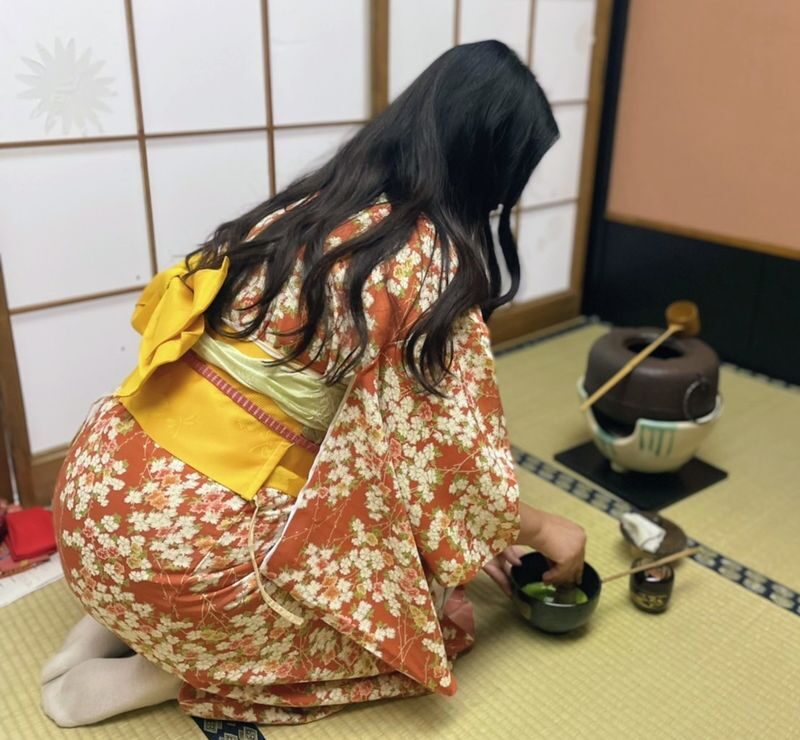
- Practicing manners and making matcha
- Wagashi, seasons and Japanese ideas of beauty
- What the price includes, and what it does not
- Finding SAMURAI HONOR in Osaka
- Is this Osaka tea ceremony right for you?
- FAQ
- Where does the tea ceremony take place?
- What is included in the tea ceremony package?
- Do I get to wear a kimono?
- What languages are supported?
- Can the activity accommodate dietary restrictions?
- What is the minimum age to participate?
- The Best Of Osaka!
- More Tours in Osaka
- More Tour Reviews in Osaka
A tea lesson built around shared hospitality
 1 / 8
 2 / 8
 3 / 8
 4 / 8
 5 / 8
 6 / 8
 7 / 8
 8 / 8
The point of this experience is not simply to learn the steps for whisking powdered green tea. The class frames the tea ceremony as a shared act: the instructor offers hospitality, while you respond with attention and good manners. That idea gives the small gestures a purpose. A bow, the way you move through a doorway, and the care you take with the tea all help create the ceremony’s calm.
You are introduced to Zen through the practice of tea, with etiquette and beautiful gestures taught as things to try, not just rules to memorize. The class also explains that once you pass into the tea room, everyone is equal. That is a useful lens for the activity: it is less about performing for an audience and more about taking part in a respectful exchange.
The experience takes place at SAMURAI HONOR in Osaka’s Joto-ku district. The advertised package is a tea ceremony led by a master, with matcha and wagashi. A class description also refers to writing brushes, but the package details specifically name tea and sweets. If brush writing is a deciding factor for you, ask before booking rather than assuming it is included.
👉 See our pick of the The Top 15 Workshops & Classes In Osaka
Changing into kimono before the ceremony
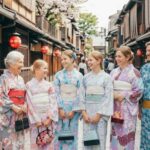
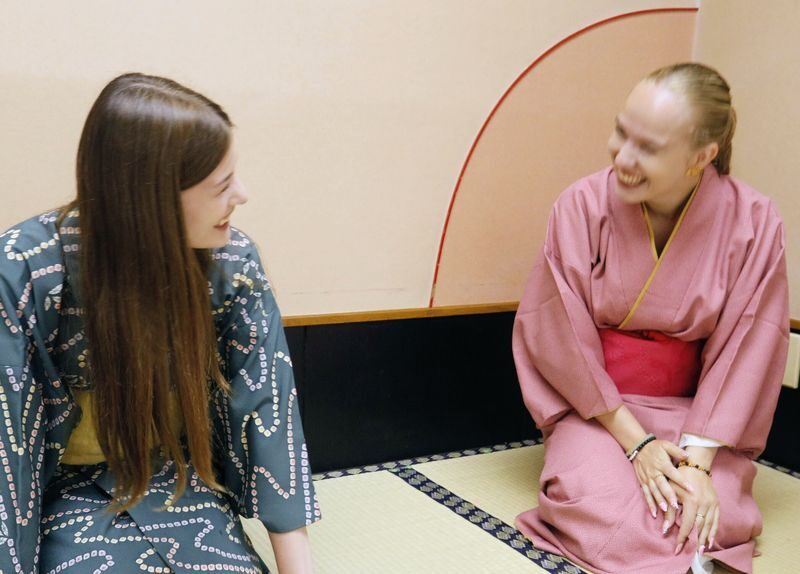
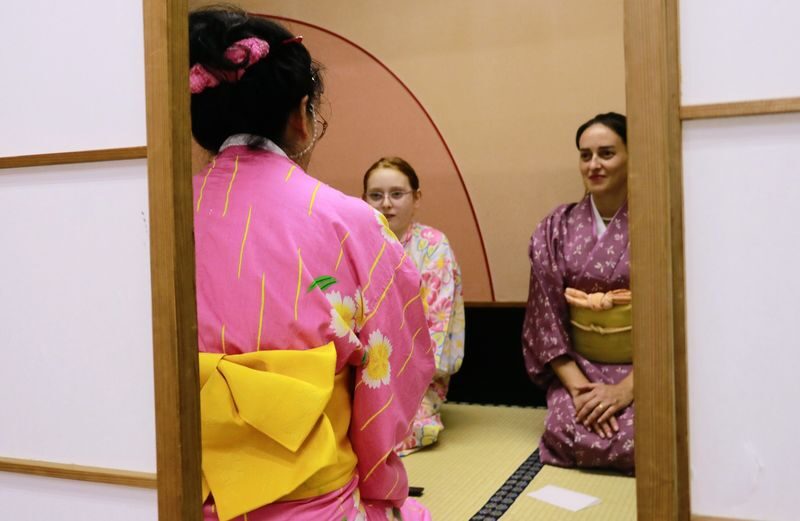
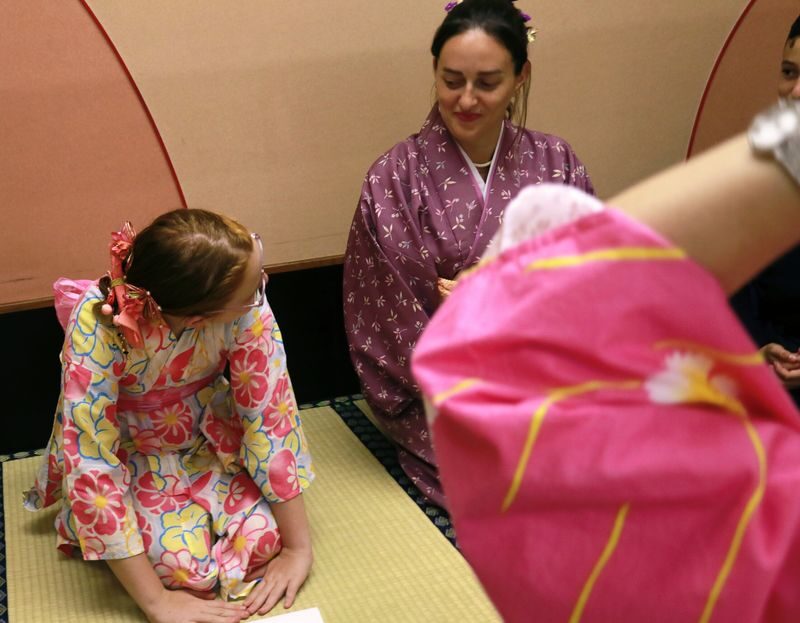
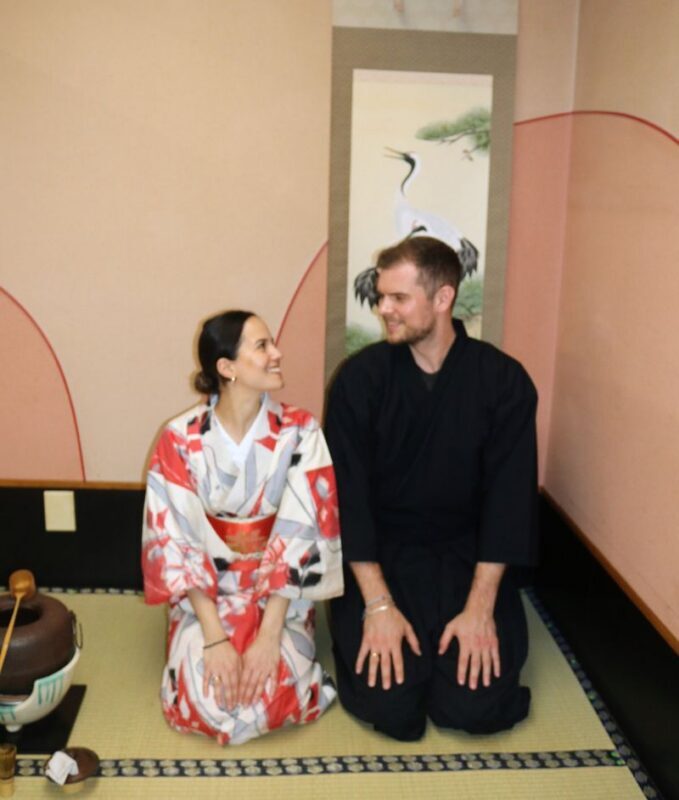
Before the tea experience, you change into traditional Japanese clothing. Kimono is not just a photo prop here; it is part of the class’s cultural setting, and the ceremony offers a chance to notice how posture and movement feel in formal dress. The activity information also mentions elegant Japanese hairstyles to complement the kimono, though it does not spell out exactly what styling is included.
Bring a change of clothes, as requested, and follow the guidance to wear formal clothing. Those instructions are worth checking before you leave your hotel, especially if you plan to wear the kimono for photos or have other Osaka plans afterward. The information does not give a dressing duration or explain how much time is set aside for photos, so keep your schedule flexible rather than planning a tight connection.
The kimono element makes this a good fit if you want more than a demonstration. You can experience a Japanese cultural practice while dressed for it, and the activity specifically encourages taking photos. If your priority is a quick matcha tasting, the clothing change and etiquette lesson may feel like extra ceremony. If you want context and a memorable setting, they are part of the appeal.
You can also read our reviews of more tours and experiences in Osaka.



Passing through the nijiriguchi
One of the most distinctive details is the nijiriguchi, the small entrance used by people entering the tea room. Its low dimensions mean you pass through carefully, rather than striding in as you might through an ordinary doorway. The lesson connects that movement to the idea that everyone is equal inside the room.
This is a simple but effective way to understand how the setting shapes the ceremony. Instead of hearing an abstract explanation of humility, you act it out with your body. The doorway becomes a pause between the everyday world and the focused activity inside.
The information does not specify the tea room’s size, architecture or historical age, so you should not expect a particular traditional building or a museum-style tour. The value here lies in learning the meaning of the entrance as part of the activity, then carrying that attentiveness into the rest of the ceremony.
Practicing manners and making matcha
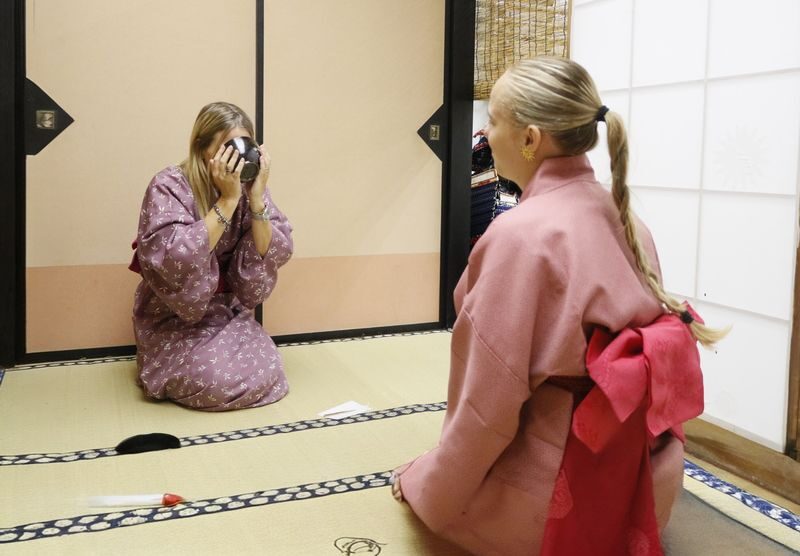
After entering, you learn the attitude expected of someone taking part in a tea ceremony. The class covers etiquette, manners and graceful gestures, with students learning by practicing them. That matters because a tea ceremony can look highly choreographed from the outside. Trying the movements yourself makes the form easier to follow and less intimidating.
The advertised experience includes a master serving matcha, and the participant who mentioned Kaori appreciated getting to try making it. That is the clearest indication of the hands-on element: you should expect to learn at least a little about preparing the tea, rather than only receiving a bowl. The description does not provide a detailed recipe, equipment list or exact sequence, so treat this as an introductory lesson rather than a technical course in tea preparation.
Matcha is powdered green tea, and its preparation is one piece of the ceremony, not the whole event. The class asks you to notice how host and participant work together. If you come in expecting only a drink, the instruction may feel formal; if you are curious about why each gesture matters, the lesson has more to offer.
One participant gave the experience five stars and named Kaori as a lovely instructor, describing the class as fun and enjoying the chance to try making matcha. That is a positive but narrow signal: it comes from one review, so it cannot establish that every session has the same guide or style. Still, it gives you a useful expectation that the activity can be friendly and participatory, not stiff.
Wagashi, seasons and Japanese ideas of beauty
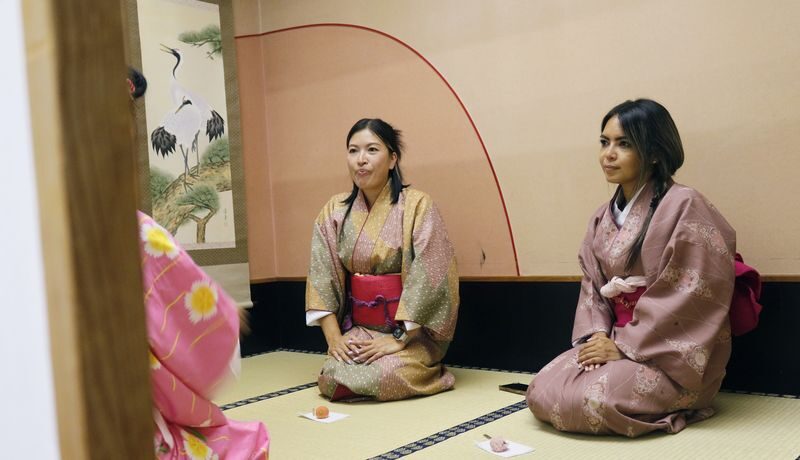
The matcha is served with wagashi, a traditional Japanese confection. These sweets are described as colorful and carefully made, and the class uses them to introduce wabi and sabi, ideas associated with beauty, simplicity and the passage of time. Wagashi can also reflect Japan’s seasons, making the sweet part of the lesson more than a snack alongside the tea.
That context gives you a reason to pause and look at what you are eating. A small confection can express a season or an idea through its shape and appearance. The activity information does not name a specific sweet or promise that the wagashi will match the season of your visit, so think of this as an introduction to the tradition rather than a guaranteed menu.
Food restrictions are a significant practical point. The class cannot accommodate halal-certified diets, lactose intolerance, allergies, gluten intolerance, vegetarian diets or vegan diets. If any of those apply to you, this is not a suitable booking unless the provider confirms a safe arrangement directly. Do not assume that a small traditional sweet is free of ingredients you avoid.
What the price includes, and what it does not
At a starting price of $52.05, the experience is best judged as a guided cultural lesson, not as a way to buy a bowl of tea and a sweet. The listed inclusions cover admission, a certified professional instructor, an English-speaking staff member and guides in English, Chinese, Spanish, French, Italian and Thai. Wagashi and the tea experience are central to the package.
The broader inclusion list also mentions drinks or alcohol at selected bars, as well as round-trip transfers to and from the meeting location. Those items do not fit neatly with the specific tea-ceremony package details, which describe the master serving matcha and wagashi. Confirm whether any transfer or additional drink applies to your selected package before treating it as part of the value.
Hotel pickup and drop-off, transport, personal expenses, and tips are not included. In practical terms, you need to make your own way to SAMURAI HONOR and budget for getting there. No duration or group size is stated, so those details are worth checking if you are planning around another activity or prefer a small class.

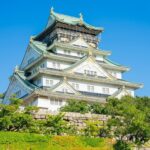

Finding SAMURAI HONOR in Osaka
The meeting point is SAMURAI HONOR, at Excellence Takayama 1F, 2-3-19 Shigino-Nishi, Joto-ku, Osaka 536-0014. The directions say to start at Osaka-jo Koen Station and walk north along Tamatsukuri Suji Street for about 160 metres, then turn at Bentenbashi Kitazume and follow the remaining short turns to the venue.
Because the final directions include several close turns, have the full address handy rather than relying only on a quick glance at the route. The activity does not include hotel transfers, and general transport is excluded, so allow time to find the location and arrive ready to change.
Participants must be at least six years old. People aged 90 or older are asked to present a medical certificate before participating. Pets are not allowed, and anyone who appears intoxicated may be refused service without a refund. These are straightforward rules, but they matter if you are booking for a family group or planning an evening around drinks.
Is this Osaka tea ceremony right for you?
I would choose this class if you want a compact introduction to matcha, Japanese etiquette and the meaning behind a tea-room setting. It suits curious first-time participants, families with children aged six and up, and anyone who likes the idea of wearing kimono while learning a cultural practice. The mix of a hands-on tea lesson and wagashi gives the experience more substance than a quick photo stop.
I would look elsewhere if you need a class that can handle food allergies or a vegetarian, vegan, halal-certified or gluten-free diet. I would also confirm the brush-writing question, any transfer details, the class duration and what kimono styling includes before paying. The listed price can be good value if the clothing, instruction, matcha and sweet are all elements you want; it is less compelling if you only want a tasting.
Book it for the chance to learn how the ceremony works, not on the assumption that you will receive an extensive tea course or a long cultural tour. Kaori’s positive mention suggests that the lesson can feel warm and enjoyable, but the available feedback is just one person’s experience. If the practical details suit your needs, this is a thoughtful way to spend a slice of time in Osaka.
Learn Zen of Making tea Matcha,enjyoing Wagashi in kimono set
“kaori was lovely, it was so fun to learn a little bit with her and get to try to make matcha!”
FAQ
Where does the tea ceremony take place?
It meets at SAMURAI HONOR, Excellence Takayama 1F, 2-3-19 Shigino-Nishi, Joto-ku, Osaka 536-0014. The directions start from Osaka-jo Koen Station.
What is included in the tea ceremony package?
The package is described as a master serving matcha and wagashi. Admission, a certified professional instructor and language support are also listed as inclusions.
Do I get to wear a kimono?
Yes. The activity includes changing into traditional Japanese clothing before the tea ceremony and mentions kimono photos and hairstyles to complement the clothing.
What languages are supported?
The listed guide languages are English, Chinese, Spanish, French, Italian and Thai. English-speaking staff are also included.
Can the activity accommodate dietary restrictions?
No. It cannot accommodate halal-certified diets, lactose intolerance, allergies, gluten intolerance, vegetarian diets or vegan diets.
What is the minimum age to participate?
Participants must be at least six years old. Participants aged 90 or older must present a medical certificate.