Century-old Nara cedar becomes something you can use every day in this one-hour workshop at kurabi salon. I like that you shape the chopsticks to fit your own hand, and that the artisan explains how chopstick shapes and use differ in Japan. The cedar’s ties to Nara’s forests give the finished pair a story beyond the craft itself.
I also like the unhurried setup: you begin with hojicha in a traditional machiya, watch the host demonstrate, then work beside them. You’ll leave with your wrapped chopsticks and a pottery deer rest. One consideration: the workshop costs from $40.99 for an hour, so it makes most sense if you value making something yourself, not just buying a souvenir.
- Work century-old Nara cedar into a pair of chopsticks shaped to your hand.
- Learn by watching, then doing: the artisan demonstrates before you shave the wood yourself.
- Hear how chopsticks differ in Japan and why Nara’s cedar forests matter.
- Take home two Nara-made items: your wrapped chopsticks and a pottery deer rest.
- Get local suggestions from your Nara-born host before heading back out.
- A machiya welcome in Naramachi
- Shaping cedar one pass at a time
- A small object with a larger Nara story
- The finished pair and the pottery deer rest
- What the hour includes, and what it does not
- Getting to kurabi salon and choosing a time
- Who will get the most from this workshop
- Should you book the Nara chopstick workshop?
- FAQ
- How long is the workshop?
- How much does the chopstick-making workshop cost?
- Where does the workshop take place?
- How do I get to kurabi salon?
- What is included?
- What times can I choose?
- Can children take part?
- Can I cancel or change my booking?
- The Best Of Nara!
- More Workshops & Classes in Nara
- More Tours in Nara
- More Tour Reviews in Nara
A machiya welcome in Naramachi
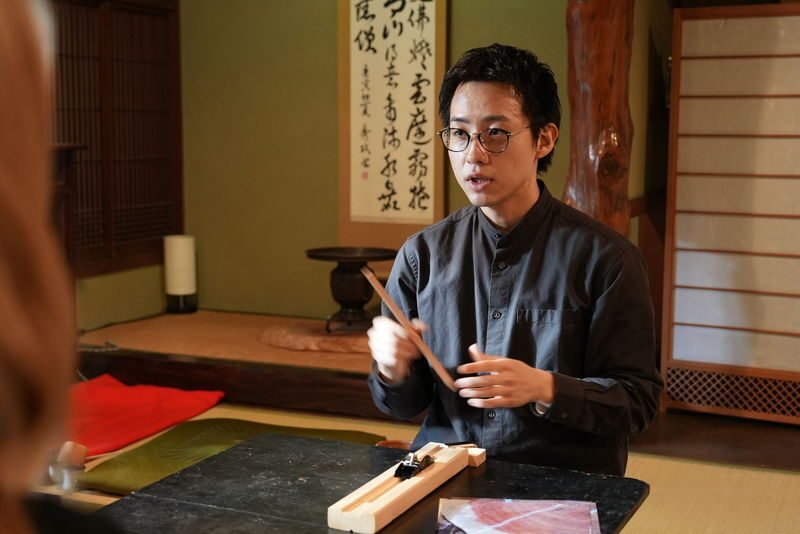
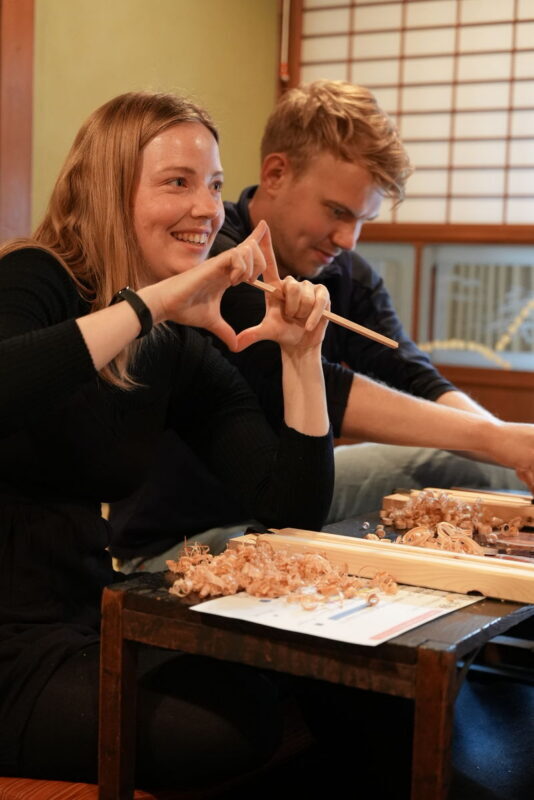
The session takes place at kurabi salon in Naramachi, a historic neighborhood in Nara. You begin with a cup of hojicha, a roasted green tea, while the host introduces the workshop and the wood you’ll use. It is a useful start: instead of jumping straight into a tool, you first get a sense of why the material matters and what you’re about to make.
The setting also suits the activity. This is a small craft lesson in a traditional-style machiya, not a stop on a packed sightseeing circuit. The one-hour format leaves room for conversation, but it is still short enough to fit into a day in Nara.
The workshop is guided in English and Japanese. Hosts named in past sessions include Masaki-san and Mike-san. The welcome is part of the value here: the host can talk about Nara’s craft traditions and, as the session wraps up, offer suggestions for places to eat or visit. If you’re in town for only a day, that local advice can help you make better use of the time.
👉 See our pick of the 9 Of The Best Workshops & Classes In Nara
Shaping cedar one pass at a time
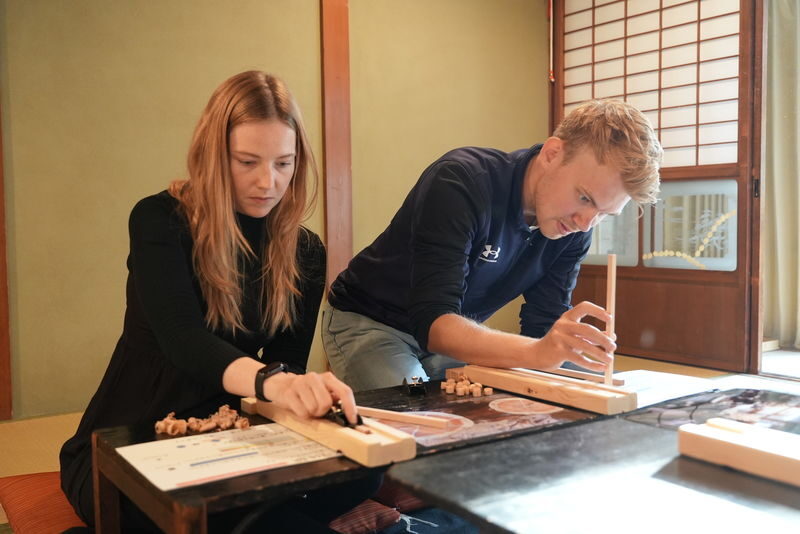
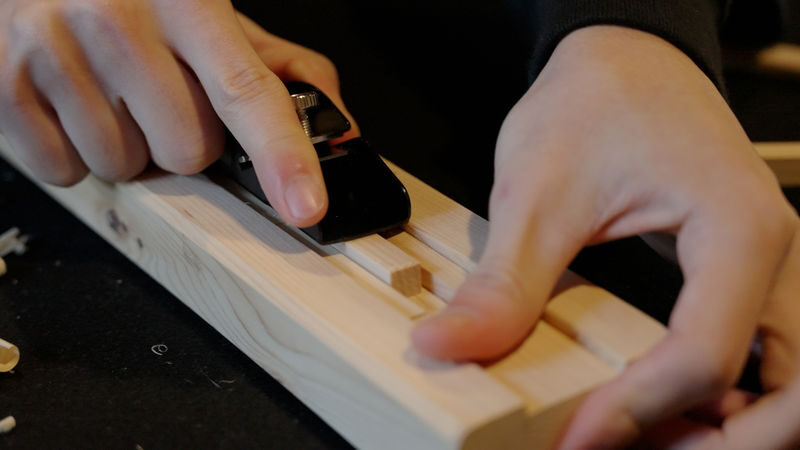
The central task is to turn a piece of Nara cedar, more than a hundred years old, into a usable pair of chopsticks. First, you watch the artisan at work. Then you take your own place beside them and shave the wood gradually, one pass at a time.
That slow approach is a good fit for a handcraft. You are not simply decorating a finished object; the shape develops as you work. The aim is a pair that feels right in your hand, so the process asks you to pay attention to the wood and to how the two sticks take form.
Expect to use your hands and focus for much of the hour. The experience is not described as a strenuous activity, but it is practical work rather than a demonstration you watch from a chair. If you enjoy learning through doing, that is the main appeal. If you prefer a polished object with no making involved, this will be less compelling.
The instructor’s demonstration matters because a pair of chopsticks looks simple until you try to shape one. You can observe the technique, then follow along with guidance as you work. The workshop is designed for families, couples, friends, and solo participants. Children must be included in the booking headcount, and a 12-year-old has been able to stay engaged with the process.
You can also read our reviews of more tours and experiences in Nara


A small object with a larger Nara story
The wood gives the activity its sense of place. Nara cedar is not just a convenient material for a craft class: the host explains where it comes from and why the forests matter in Japan. That context changes the way you look at the finished pair. It becomes a reminder of the region, rather than a generic souvenir that could have come from anywhere.
You also learn about the meaning in chopstick shapes and how chopsticks are used in Japan. These details are useful well beyond the workshop. Chopsticks are part of everyday meals, yet their size and form can vary, and learning what to notice helps you see them as designed tools rather than interchangeable tableware.
The session includes guidance on how to hold and care for your pair. That practical advice is worth taking seriously: the point is to make chopsticks you can use for years, not just carry home as a keepsake. The class connects the craft to ordinary life, which is one reason it feels more personal than a quick souvenir purchase.
The finished pair and the pottery deer rest
Once your chopsticks are complete, they are wrapped in cloth for you to take home. The workshop also includes a deer chopstick rest made from Nara pottery. Deer are strongly associated with Nara, so the small rest gives the set another local touch without taking attention away from the handmade pair.
The finished object is personal in a way a shop-bought pair is not. You have shaped it yourself, and you can remember the wood, the demonstration, and the conversation that went with it. That makes the souvenir useful as well as meaningful. You do not need to display it on a shelf; you can bring it out at meals.
The listing highlights a choice of deer rest, though it does not explain how many designs are available. If the exact style matters to you, ask the host during the session rather than counting on a particular design in advance.
What the hour includes, and what it does not
The $40.99 starting price covers a one-hour guided activity, admission, an English- or Japanese-speaking guide, and refreshments. You also make and take home your chopsticks, with a Nara pottery deer rest included. For a short activity, that is a fair package if you want a hands-on lesson and a finished object rather than a simple craft demonstration.
The price is less persuasive if your main goal is to see Nara’s best-known sights. This workshop does not replace time at the temples, shrines, or park. Think of it as a quieter addition to a Nara day, especially if you want a break from sightseeing or a cultural activity that gives you something tangible to bring home.
The session details do not specify group size. If you are choosing the workshop because you want a private class, confirm that directly before booking. One past participant described a private session, but that does not establish that every booking is private.
Getting to kurabi salon and choosing a time
Kurabi salon is at 39 Gangojicho in Naramachi, about a 17-minute walk from Kintetsu Nara Station. Plan for the walk when arranging your day, especially if you have a timed visit elsewhere. The available start times are 10:30, 12:30, 14:30, and 16:30, with the corresponding return times listed as 11:30, 13:30, 15:30, and 17:30. Available options can depend on the departure time you select.
The booking time matters because the voucher is valid only on the date and, where applicable, the time shown. Arrive for the time you chose rather than treating the workshop as a drop-in activity. The address is in Naramachi, so you can plan a walk through the neighborhood around the session, but the workshop itself lasts only an hour.
You can cancel for a full refund at least 24 hours before the activity date, using local time in Japan. Changes are also allowed up to 24 hours before the start, with some exceptions, including bookings made with certain passes or points, and bookings without an issued voucher. Check the conditions attached to your particular booking before relying on a change.


Who will get the most from this workshop
I’d choose this activity if you like small, hands-on experiences that reveal something about a place. It works well for a couple or friends who want an easy shared activity, and it can suit a family with children who are interested in making things. A solo participant can also take part.
It is especially appealing if you want a Nara souvenir that is both useful and made by you. The host’s stories and local recommendations add another layer, particularly if you are visiting Nara for a day and want ideas for where to eat or what to see next. The craft is the main event, but the conversation can help the experience feel connected to the town.
You may want to skip it if your schedule is packed or you are only looking for a short stop with no hands-on work. An hour is not long, but the walk to the salon and the fixed start time call for planning. And if you already have several craft activities booked elsewhere in Japan, the value depends on whether Nara cedar and the local context make this one distinct for you.
Should you book the Nara chopstick workshop?
Book it if you want a relaxed hour of making, a useful souvenir, and a closer look at Nara’s cedar and chopstick traditions. I particularly like the combination of hands-on work and local context: you learn why the wood matters, then leave with something shaped by your own hands.
Before booking, make sure the 17-minute walk and one of the set start times fit your day. At a starting price of $40.99, it is a thoughtful choice for craft-minded visitors and families, but not a must for anyone trying to squeeze every major sight into a short visit.
Nara: Chopstick-Making Workshop with Artisan
“we had an excellent time – very informative on the history of cedar in the Nara prefecture, chopstick making techniques, and cultural insights. we…”
FAQ
How long is the workshop?
The guided workshop lasts one hour.
How much does the chopstick-making workshop cost?
The workshop is listed from US$40.99. The price may depend on the package available when you book.
Where does the workshop take place?
It takes place at kurabi salon, at 39 Gangojicho in Naramachi, Nara.
How do I get to kurabi salon?
The salon is about a 17-minute walk from Kintetsu Nara Station.
What is included?
The package includes admission, an English- or Japanese-speaking guide, refreshments, the chopstick-making activity, and a Nara pottery deer chopstick rest.
What times can I choose?
Available departure times are 10:30, 12:30, 14:30, and 16:30. Return times are listed as 11:30, 13:30, 15:30, and 17:30, depending on the selected departure.
Can children take part?
Families are welcome, and children must be included in the passenger headcount when booking.
Can I cancel or change my booking?
A full refund is available if you cancel at least 24 hours before the activity date, using Japan local time. Changes are allowed until 24 hours before the start, subject to exceptions for some booking types and vouchers.