Kyoto Yuzen is best understood with a brush in your hand. At Shinichiro, in the historic Nishijin district, you work with an artisan in his 150-year-old machiya and make a silk piece of your own. The lesson is practical, but the setting is part of the story: this is the artisan’s home and workshop, not a classroom designed to look old.
I like two things in particular: you get to make real choices about color while receiving help to keep the design balanced, and the artisan shares the craft in the intimate setting where he works. An English- or Chinese-speaking staff member helps explain his words, so language need not keep you at arm’s length.
The main consideration is price. At US$176.99 and up, this is a costly two-hour activity, especially if you are comparing it with a quick souvenir workshop. It makes more sense if you value the artist’s guidance, the visit to the machiya, and a handmade keepsake rather than simply looking for the cheapest craft class.
- Work inside a 150-year-old Nishijin machiya: The traditional townhouse is both the workshop and a chance to see a Kyoto home with a long connection to textile arts.
- Choose colors with an expert’s eye nearby: Select one or two shades, then let the artisan help shape a harmonious palette.
- Make your own Yuzen-dyed silk: You apply color to the artisan’s design and take your finished piece home.
- Hear the craft explained as you work: English- or Chinese-speaking staff interpret the artisan’s explanations.
- Plan for a focused two-hour visit: There are three listed start times, and you need to arrive 10 minutes before the one you booked.
- Inside the Nishijin machiya
- Choosing colors and working on silk
- What the two-hour visit looks like
- Why the language support matters
- The souvenir and the value
- Getting there and planning your booking
- Who will appreciate this workshop most
- Should you book the Yuzen experience?
- FAQ
- How long does the Yuzen dyeing experience last?
- What are the available start times?
- Where is the workshop held?
- How do I get to the venue by bus?
- Is language support provided?
- What will I make?
- Is there a minimum age?
- What should I bring to the workshop?
- Can I cancel for a refund?
- The Best Of Kyoto!
- More Tours in Kyoto
- More Tour Reviews in Kyoto
Inside the Nishijin machiya
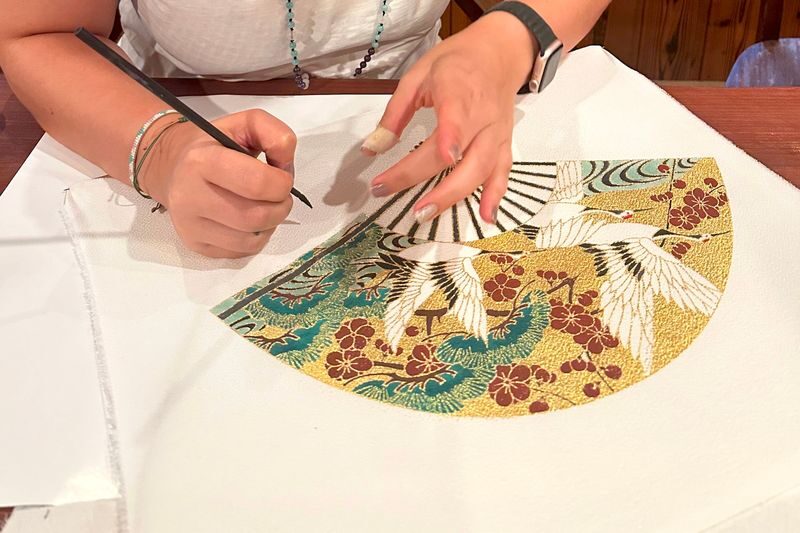
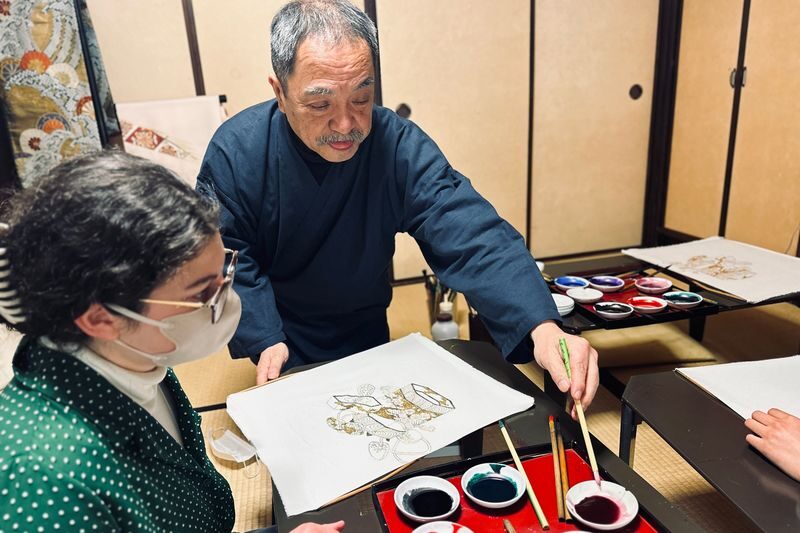

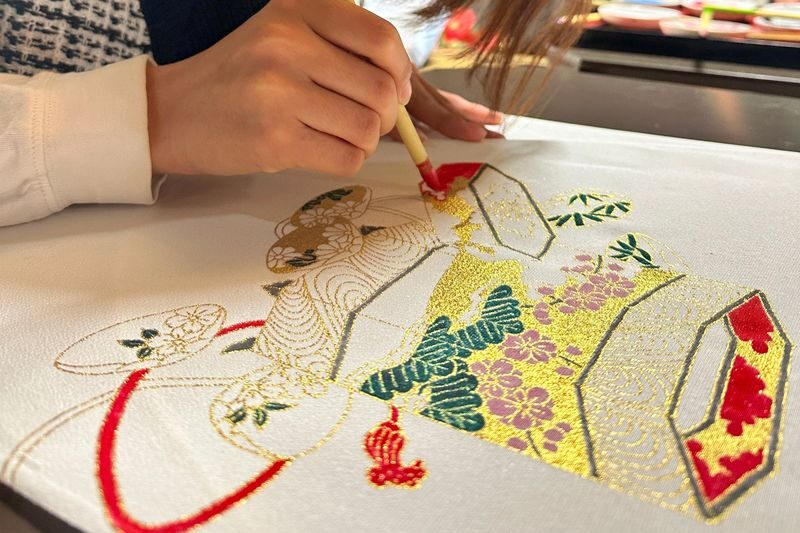
Nishijin is closely associated with Kyoto’s textile traditions, and this workshop brings you into that world through a working craft rather than a display case. The experience takes place at Shinichiro, at 575 Kitanogomoncho in Kamigyo Ward, inside a machiya more than 150 years old. You are welcomed into the artisan’s own home and workshop, where Yuzen-dyed works are also on view.
That setting changes the feel of the class. You are not just watching a demonstration from a distance or following a set of instructions in a modern studio. You meet the artisan in the place where he works, see his finished pieces, and then try the craft yourself. The building’s age and domestic scale make the visit feel personal, though anyone expecting a large museum-style exhibit should keep expectations modest: the focus is the workshop and the art in it.
The artisan is described as having more than 50 years of experience painting kimono designs. That long practice matters when you reach the color stage. You are encouraged to make your own choices, but you can also ask for guidance on how shades work together. It is a useful middle ground for beginners: you have creative freedom without being left to guess your way through every decision.

👉 See our pick of the We Rank Kyoto’s 15 Top Workshops & Classes
Choosing colors and working on silk
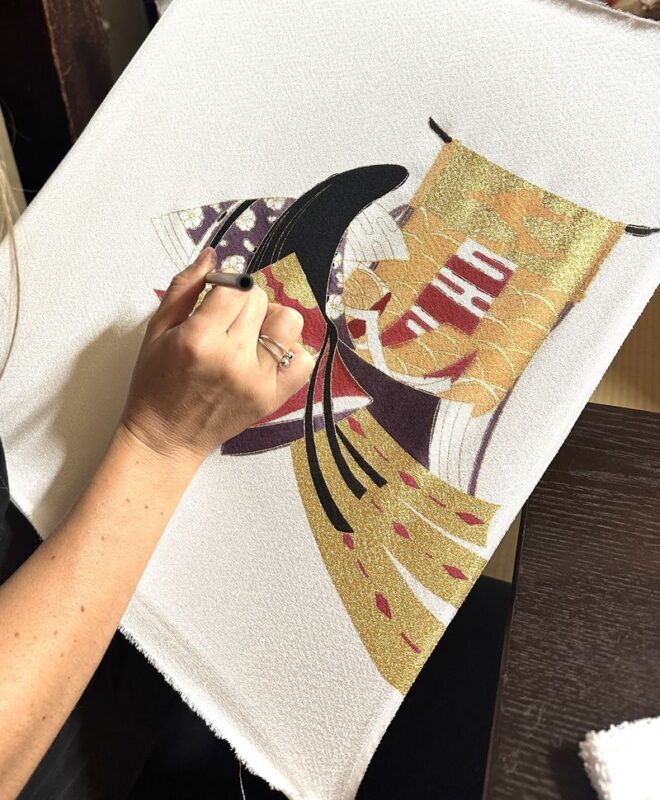
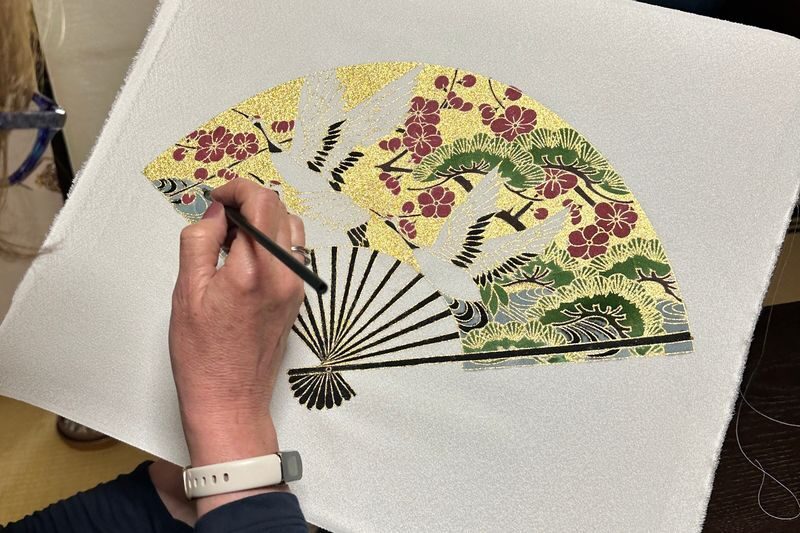
The hands-on portion centers on applying color to silk. You choose one or two colors, while the artisan helps select the remaining tones to create balance and harmony. That gives you a genuine role in the design without requiring you to arrive with a trained artist’s eye.
You do not need to consider yourself artistic to take part. The experience is framed as guided practice, and the instructor offers suggestions as you work. People who want to make every decision themselves can still bring their preferences to the process; those who feel unsure can lean on the artisan’s advice. One useful approach is to start with the colors you are drawn to, then listen to how the artisan recommends supporting them.
The workshop also gives you a close look at the materials and methods behind Yuzen dyeing. The explanations are tied to what you are doing, so the history and technique are not just a short talk before the activity begins. As you apply color, you can ask about the tools and process, with an English- or Chinese-speaking staff member helping communicate the artisan’s explanations.
Do not expect a full course in every stage of textile production. Two hours is enough for an introduction and a finished personal piece, not an apprenticeship in the whole craft. The emphasis is on a guided, approachable experience that lets you make something and understand more about the tradition behind it.
You can also read our reviews of more tours and experiences in Kyoto.



What the two-hour visit looks like
The schedule is straightforward: arrive at Shinichiro, meet the artisan and language staff, take a guided look around the townhouse and view Kyoto Yuzen works, then work on your silk piece. The activity lasts about two hours, including the guided experience. There is no separate journey between multiple attractions, so the time is spent at the atelier.
There are three listed start times: 10:00, 13:00, and 15:30. The corresponding return times are listed as 12:00, 15:00, and 17:30, though the available options depend on the departure time selected when booking. Choose carefully and arrive 10 minutes early. If you arrive earlier, you may need to wait, but you can enter the atelier and wait inside.
The setting is calm and the activity is paced around making your piece. One family even had enough time to finish after running past the scheduled end, but that is not a reason to count on extra time. If you have another timed booking afterward, leave a comfortable gap rather than assuming the workshop will finish early.
A small group can make this kind of activity feel especially personal. The available information does not promise a private class or give a maximum group size, so do not book expecting one-to-one instruction. If you happen to be the only participant at your time, the atmosphere may feel like a private workshop, but that depends on the booking.
Why the language support matters
The artisan’s explanations are interpreted by English- or Chinese-speaking staff. That support is more than a convenience: it lets you follow the story behind the work, ask questions, and make color decisions with a clearer sense of the advice being offered. The artisan’s kindness and patience are also central to the experience, particularly if you are new to textile work.
Language availability is stated in general terms, not as a guarantee that both languages will be offered at every session. If you need a particular language, confirm it before booking. In the room, expect an interpreter or staff member to help carry the conversation rather than assuming the artisan will lead the lesson in English or Chinese himself.
The souvenir and the value
You take home your own Yuzen-dyed silk piece. Its value is not only the object itself, but the fact that you made it while learning directly from an artisan in the craft’s home city. You also get to see other Yuzen works at the townhouse, which gives you a reference point for the skill and finish behind the tradition.
At US$176.99 or more, this is not a budget activity. The price is easier to justify if you want an intimate cultural workshop with an experienced practitioner, help shaping your design, language support, and a keepsake that carries a story. It is harder to justify if your priority is low-cost entertainment or a long list of sights in a short time.
The product description does not specify the size or exact format of the silk piece, so do not book based on an assumption that you will create a particular item, such as a scarf or wall hanging. Think of the outcome as a unique silk work to take home, with the final design shaped by the available pattern and your color choices.
Getting there and planning your booking
The address is 575 Kitanogomoncho, Kamigyo Ward, Kyoto, postal code 602-8214. The nearest stated public transport option is Imadegawa Omiya Bus Stop, a three-minute walk away. Check the map and route from your hotel before setting out, especially if you are working around a fixed start time.
Participants must be at least six years old. The activity may suit families with children who can sit through a focused craft session and follow the instructor’s guidance, but the minimum age is the only stated age rule. Bring your mobile voucher and use it on the date and time selected when booking. Late arrivals and no-shows are not refundable, so punctuality matters.
Cancellation is available for a full refund if you cancel at least 24 hours before the activity date, using destination local time as the reference. Confirmation is expected within 48 hours. If it does not arrive, contact customer support rather than assuming your place is set.
Who will appreciate this workshop most
I would put this near the top of the list for anyone curious about Kyoto’s living craft traditions, especially if you prefer making something to simply watching a demonstration. It also suits couples, families with children aged six or older, and solo visitors who enjoy a calm activity with room for questions. No artistic confidence is required, but a willingness to try and accept guidance will help.
It is less suitable if you want a fast, inexpensive activity, need a flexible arrival time, or are hoping to see several parts of Kyoto in two hours. The workshop is concentrated and place-based. That is its strength, but it means you should treat it as a planned appointment rather than a casual stop between sights.
Should you book the Yuzen experience?
Book it if you want to meet an experienced Kyoto artisan, learn by doing, and take home a silk piece you helped create. The old machiya, thoughtful color guidance, and language support give the class more substance than a simple paint-and-go activity. For a craft-minded visitor, that combination can make the price worthwhile.
Skip it if cost is your main concern or you are looking for an open-ended visit. This is a scheduled two-hour workshop with a fixed start, and the exact item you make is not specified in advance. If the price fits your budget and you like the idea of a quiet, hands-on introduction to Yuzen, it is a strong way to spend part of a Kyoto day.
Traditional Yuzen Dyeing Experience in Kyoto
“Our teacher is a master of his craft. it was incredible learning from him. Our interpreter was also amazibg and very helpful. i love how my piece t…”
FAQ
How long does the Yuzen dyeing experience last?
The activity lasts about two hours. The schedule includes a guided townhouse visit and viewing of Kyoto Yuzen works, as well as the dyeing activity.
What are the available start times?
The listed start times are 10:00, 13:00, and 15:30. Available options can vary according to the departure time you choose when booking.
Where is the workshop held?
It takes place at Shinichiro, 575 Kitanogomoncho, Kamigyo Ward, Kyoto, Japan, postal code 602-8214.
How do I get to the venue by bus?
The venue is a three-minute walk from Imadegawa Omiya Bus Stop.
Is language support provided?
Yes. English- or Chinese-speaking staff explain the artisan’s words. If you need a particular language, confirm its availability for your session before booking.
What will I make?
You will create a Yuzen-dyed silk piece to take home. You choose one or two colors, and the artisan helps select the remaining tones.
Is there a minimum age?
Yes. Participants must be at least six years old.
What should I bring to the workshop?
Bring your mobile voucher. You should also arrive at the venue 10 minutes before your booked start time.
Can I cancel for a refund?
You can receive a full refund if you cancel at least 24 hours before the activity date, using local destination time.