Hiroshima Soccer Museum connects a city’s football story with its postwar recovery, then lets you trade the display cases for a ball. Inside Edion Peace Wing Hiroshima, this compact museum is a good fit for a stadium visit, even if you’re not a devoted football fan.
I like two things in particular: the displays cover both Hiroshima football and Sanfrecce Hiroshima, and the activity area gives you a chance to try shooting, dribbling, and passing. Detailed English explanations help make the exhibits accessible. The main drawback is scale: the museum is small, so you may finish sooner than you would at a larger sports museum.
- Key points before you go
- Football in Hiroshima, beyond the score
- From local history to Sanfrecce shirts
- Take a turn in the activity zone
- A small museum with a shop at the end
- How to fit it into a Hiroshima day
- Is the ticket good value?
- Who should make time for it?
- Should you book?
- FAQ
- Where is Hiroshima Soccer Museum?
- How long should I allow for a visit?
- What are the opening hours?
- How much does admission cost?
- What can I see and do inside?
- Are the explanations available in English?
- How do I get to the museum by public transport?
- Do children aged 0 to 5 need a ticket?
- Can I leave and come back in?
- The Best Of Hiroshima!
- More Museum Experiences in Hiroshima
- More Tours in Hiroshima
- More Tour Reviews in Hiroshima
Key points before you go
 1 / 7
 2 / 7
 3 / 7
 4 / 7
 5 / 7
 6 / 7
 7 / 7
- The museum links football with Hiroshima’s recovery after the atomic bombing.
- Sanfrecce Hiroshima gets a place in the story, including club history and a chronology of uniforms.
- The activity area puts you in motion, with shooting, dribbling, and passing challenges in a game format.
- English explanations are available for historical displays and activity-zone instructions.
- The museum is compact, with a typical visit taking about 1 to 2 hours.
- The club goods shop connects to the museum, giving you a chance to browse Sanfrecce merchandise at the end.
👉 See our pick of the Hiroshima’s 13 Top Workshops & Classes (With Prices)
Football in Hiroshima, beyond the score
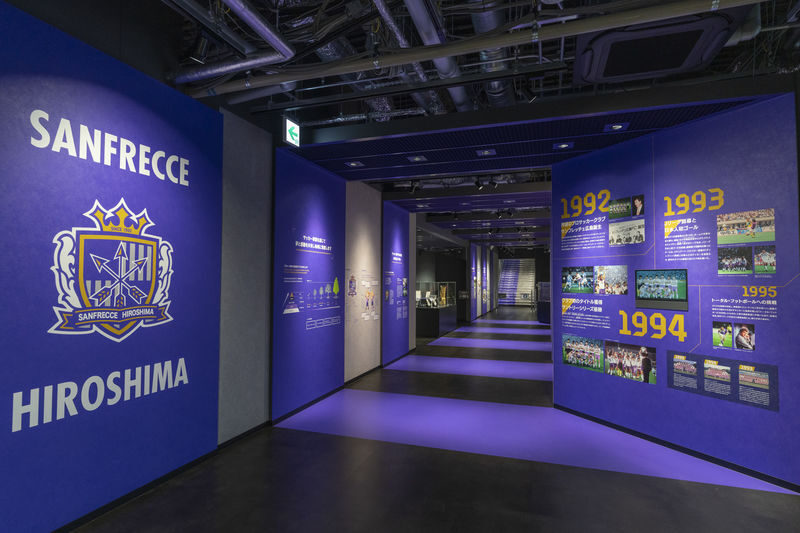
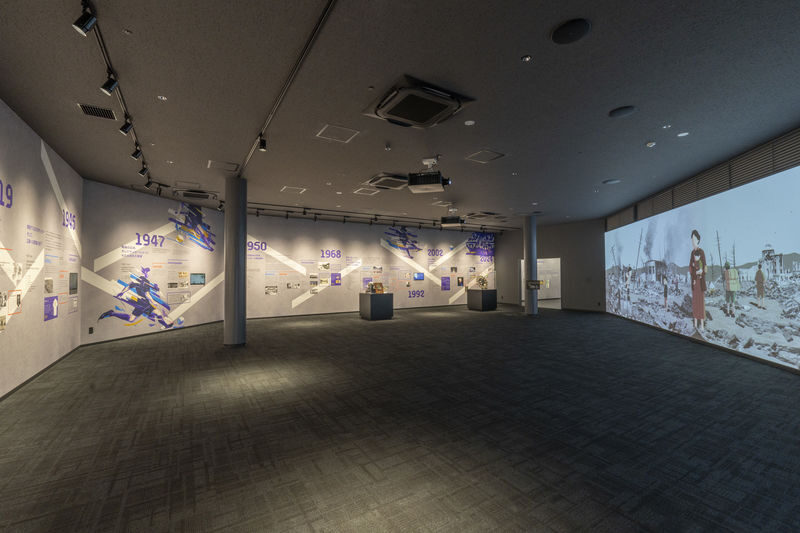
The museum’s subject is not simply the game itself. It sets Hiroshima football within a larger local story, including the relationship between soccer and the city’s recovery after the atomic bombing. That gives the visit a broader purpose than a collection of team memorabilia: you’re looking at how sport became part of life in Hiroshima.
The exhibits also introduce the history of Japanese soccer and the story of the Hiroshima club. If your knowledge of Japanese football starts and ends with a few familiar team names, this gives you a useful local starting point. The museum’s stated aim includes helping develop people who will lead the future of Sanfrecce Hiroshima, so the club is presented not only as a subject from the past but as part of the city’s continuing football life.
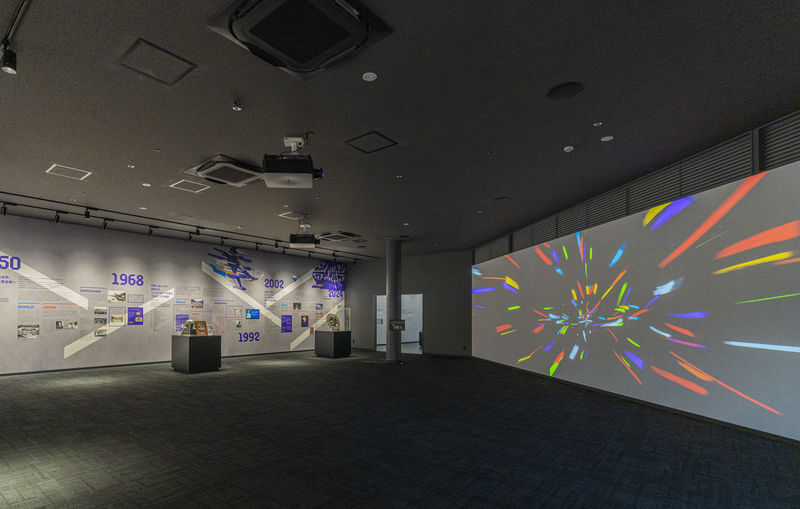
I would not expect a large, heavily staged museum. The space is described as small, and that can work in your favor if you want a short, focused visit rather than a full afternoon indoors. It also means the experience depends on your interest in the displays and on how much time you spend with the interactive features.
You can also read our reviews of more museum experiences in Hiroshima



From local history to Sanfrecce shirts
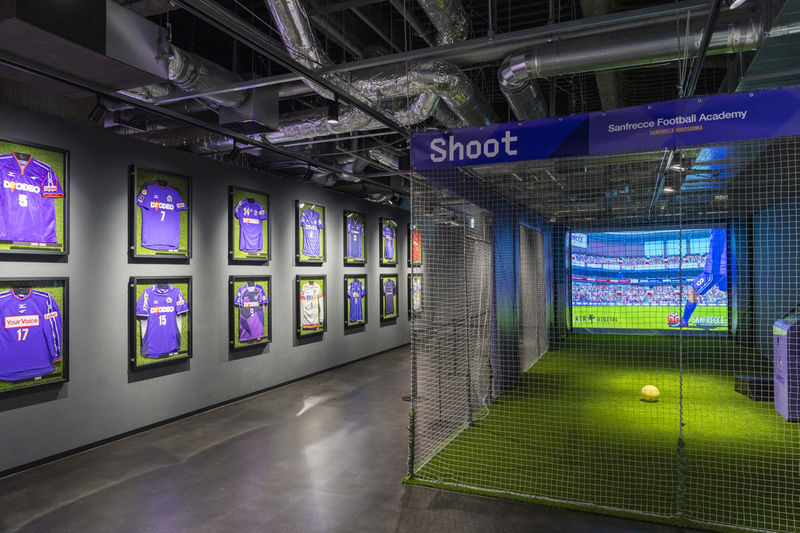
The history section gives you a simple way to follow the development of soccer in Hiroshima and the club’s place in it. One specific feature is a chronology of uniforms. That detail is useful for fans who like seeing how a club’s identity changes through its kit, and it gives casual visitors a visual thread through the club’s story.
The museum also covers Japanese soccer more broadly. Its explanations are reported to be available in English, including the historical material, so you do not need to arrive with specialist knowledge or fluent Japanese to make sense of the displays. For a subject that can quickly turn into a list of dates, teams, and names, clear text helps you choose how much detail to take in.
The historical displays are especially worthwhile if you’re visiting Edion Peace Wing Hiroshima for a match or stadium tour and want to understand the team beyond the day’s result. If you’re not a football supporter, the connection between sport, city life, and recovery gives you another reason to stop. Still, if you have little interest in either local history or soccer, the modest size means the museum may not hold your attention for long.
Take a turn in the activity zone
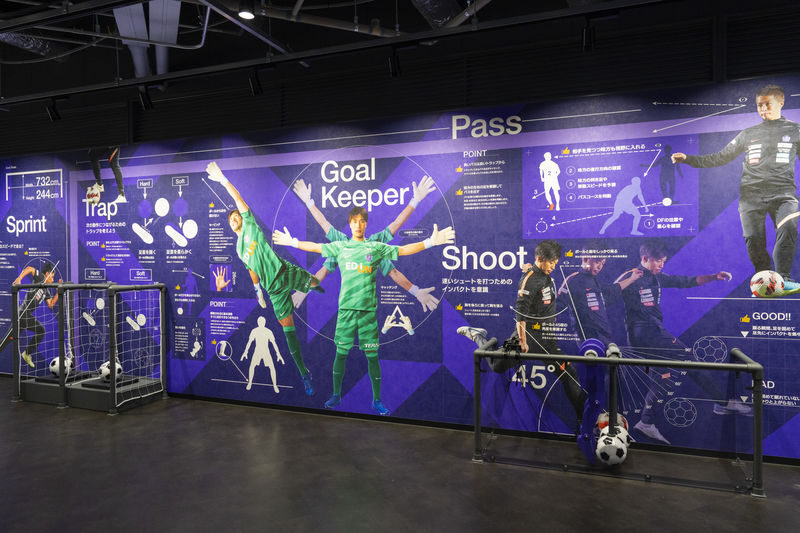
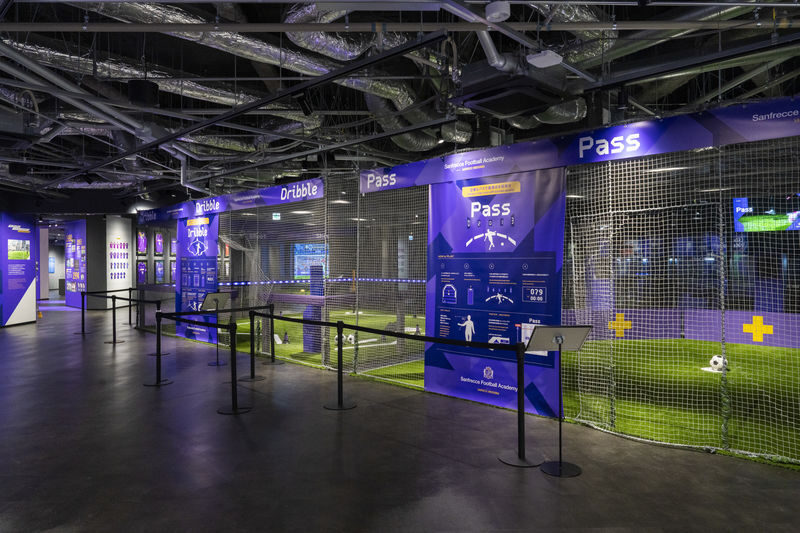
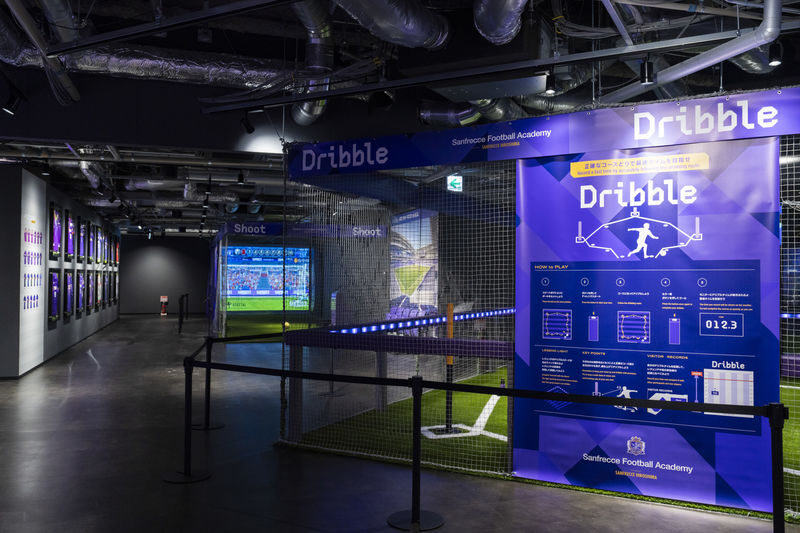
After the displays, the hands-on area changes the pace. You can try shooting, dribbling, and passing in game-style activities, rather than only reading about the sport. That practical element is a useful draw for families and for anyone who wants to move around between exhibits.
The challenges are described as experiences you can enjoy while moving your body. No special football ability is listed as a requirement, and the activity area is intended for a broad audience. I would treat it as a chance to have a go, not as a formal training session or a coached lesson. No instructor or guide is named for the museum experience.
English instructions are available in the activity area, which should help you understand what each challenge asks you to do. The museum is designed to welcome people beyond the core football crowd, and this hands-on section helps make that aim real. You can engage with the game without needing to know a formation, a player’s statistics, or the rules of every competition.
One practical point: plan your visit so you can stay until you’re finished. Re-entry is not allowed once you leave the venue. If you’re visiting with children, the activities may be a good way to break up the historical section, but the supplied information does not specify height, age, or other participation limits for the challenges.
A small museum with a shop at the end
The museum’s compact size is the main factor in setting expectations. A visit is estimated at 1 to 2 hours, though your pace will depend on how carefully you read the displays and how long you spend at the activity stations. If you’re keen on the club’s past or want to try each challenge, allow more time. If you’re mainly curious, you may need less.
At the end, the museum connects to the Sanfrecce Hiroshima club goods shop. That’s convenient if you want to finish with a look at team merchandise, and it offers a natural final stop after the displays. The shop includes gacha and random goods, alongside items sold individually. If you prefer to choose exactly what you buy, look for the individual merchandise rather than leaving your purchase to chance.
The shop connection is also useful for fans visiting in search of a particular player’s goods. Selection can vary, so don’t make a specific item the sole reason for your visit. The museum itself is the more dependable part of the outing; the shop is an added opportunity, not a guarantee of any particular product.
How to fit it into a Hiroshima day
The address is 15-2-1 Motomachi, Naka Ward, Hiroshima, inside Edion Peace Wing Hiroshima. Hiroshima Bus Center is about a 10-minute walk away, while Shin-Hakushima Station is about a 15-minute walk. If you’re driving, the stated journey from Hiroshima IC on the Sanyo Expressway is about 20 minutes.
Because the museum is located in the stadium, it makes sense to pair it with other plans in the area, especially if you’re already visiting Edion Peace Wing Hiroshima. A stadium event can mean more people around the venue, while the museum itself may be quieter. On Coming-of-Age Day, a day when the stadium was very busy, the museum was still quiet. That’s a useful reminder that crowds at the stadium do not necessarily mean a crowded museum, though busy dates can vary.
Opening hours are listed as 10:00 a.m. to 6:00 p.m. every day, with last admission at 5:30 p.m. Hours and closure dates can change, so check the latest information before setting out. Don’t leave your arrival until the last minute: arriving close to the final entry time leaves little room for the displays and activity stations.
Is the ticket good value?
Admission starts at $3.15, with the ticket covering admission to the attractions. At that price, the museum can be an inexpensive addition to a day in Hiroshima, particularly if you have an interest in soccer, Sanfrecce Hiroshima, or the way sports connect with local history. The hands-on zone adds value beyond a quick look at team displays.
The value is less certain if you’re expecting a large museum with hours of exhibits. The space is small, and the visit is estimated at 1 to 2 hours. Think of it as a focused stop rather than a major day-long attraction. If you’re already near the stadium, the low starting price and modest time commitment make it an easy addition. If you need to cross town solely for a brief visit and have no interest in football, you may prefer another Hiroshima activity.
Children aged 0 to 5 enter free. For other visitors, the ticket is valid only for the selected date and, where applicable, time. You can enter directly with your voucher. Free cancellation is available when you cancel at least 24 hours before the activity date, based on local time; changes are generally allowed until 24 hours before the activity starts, with some booking types excluded.
Who should make time for it?
I’d put this museum high on the list for Sanfrecce Hiroshima supporters, football fans, and anyone already planning to visit Edion Peace Wing Hiroshima. The club history, uniform chronology, and merchandise shop give supporters familiar touchpoints, while the activity zone gives you something to do beyond reading.
It also suits families and curious visitors who want a compact indoor stop with a mix of local context and physical activities. The English explanations make it more approachable for international visitors, and the manageable visit length leaves room for other plans. If you’re after a broad account of Hiroshima’s history, this is not a substitute for a city history museum. Its story is narrower, with soccer as the lens.
Should you book?
Book if you want a short, affordable look at Hiroshima football, a closer connection to Sanfrecce Hiroshima, or a few playful challenges inside the stadium. The museum’s strongest combination is local context, clear English explanations, and hands-on activities. It is a particularly sensible stop when you are already visiting the stadium area.
Skip it if you want a large museum or have no interest in soccer and limited time in Hiroshima. The space is small, and the visit is best when you’re open to both the history and the activities. Check opening details before you go, and give yourself enough time to arrive before the 5:30 p.m. last admission.
HIROSHIMA SOCCER MUSEUM
“As a fan of player Kim Ju-sung, I planned a visit to Edion Peace Wing Hiroshima. During that, I found out about this museum and decided to go. It w…”
FAQ
Where is Hiroshima Soccer Museum?
It is inside Edion Peace Wing Hiroshima at 15-2-1 Motomachi, Naka Ward, Hiroshima City, Hiroshima Prefecture.
How long should I allow for a visit?
The visit is estimated to take 1 to 2 hours.
What are the opening hours?
The listed hours are 10:00 a.m. to 6:00 p.m. daily. Last admission is at 5:30 p.m. Hours and closure dates may change, so check current information before visiting.
How much does admission cost?
Admission starts at $3.15. The ticket package includes admission to the attractions.
What can I see and do inside?
You can learn about Hiroshima soccer, Japanese soccer, and Sanfrecce Hiroshima. There is also an activity area with shooting, dribbling, and passing challenges.
Are the explanations available in English?
Detailed English explanations are available for the historical displays and activity-zone instructions.
How do I get to the museum by public transport?
It is about a 10-minute walk from Hiroshima Bus Center and about a 15-minute walk from Shin-Hakushima Station.
Do children aged 0 to 5 need a ticket?
Admission is free for children aged 0 to 5.
Can I leave and come back in?
No. Re-entry is not allowed after you leave the venue.