Hiroshima’s Atomic Bomb Dome and Miyajima’s red torii gate make a striking pair: one asks you to remember a terrible event, the other opens onto a peaceful island shrine. This private day tour links them by public transport, with an English-speaking guide to explain the places and help you keep the day moving.
I like two things in particular: the time set aside for reflection at Peace Park, and the chance to let a local guide shape the day around your pace and interests. Guides named by past guests include Koji, Kahori, Akie, and Nagako, though you cannot count on a particular guide when booking.
The main consideration is the tight schedule. You’ll cover two major destinations in one day, and the Peace Memorial Museum admission is not included, so check how much museum time you want before you go.
- Key points to know before you book
- A morning to understand Hiroshima
- Okonomiyaki before the island
- Ferry crossing to Miyajima
- Itsukushima Shrine and the red torii gate
- Daigan-ji, a quieter temple stop
- What a private guide adds
- Price, pace, and what is included
- Practical details that matter
- Should you book this Hiroshima and Miyajima tour?
- FAQ
- Where does the tour start?
- What time does the tour return?
- Is the Peace Memorial Museum admission included?
- How do you travel between the stops?
- Is lunch included in the price?
- Can the tour accommodate dietary needs?
- How much does the tour cost?
- Is the tour suitable for children?
- Is the tour accessible for wheelchairs and strollers?
- What is the cancellation policy?
- The Best Of Hiroshima!
- More Private Tours in Hiroshima
- More Tours in Hiroshima
- More Tour Reviews in Hiroshima
Key points to know before you book
 1 / 10
 2 / 10
 3 / 10
 4 / 10
 5 / 10
 6 / 10
 7 / 10
 8 / 10
 9 / 10
 10 / 10
- The Dome and Peace Park come first: The morning focuses on Hiroshima’s wartime history and memorial sites.
- Miyajima adds a change of pace: Cross by ferry for Itsukushima Shrine, the torii gate, deer, and Daigan-ji Temple.
- You travel by public transport: Expect to use local transit and a ferry rather than a private vehicle.
- Lunch is a Hiroshima specialty: There is time for okonomiyaki, with vegetarian and vegan options noted.
- It is a private, flexible format: The guide can adapt the pace and stops to your group, within the day’s schedule.
- Check the final price and inclusions: Rates vary by group size, and the Peace Memorial Museum ticket is extra.
👉 See our pick of the Hiroshima’s 13 Top Workshops & Classes (With Prices)
A morning to understand Hiroshima
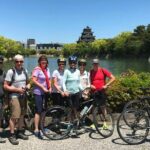
The day begins at 9:00, when your guide meets you in your hotel lobby. You’ll travel together to the first stop, so there’s no need to find your own way to the Peace Park. The tour uses public transport, which means you get around as locals do, but it also makes comfortable shoes a must.
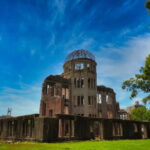
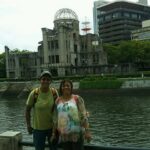
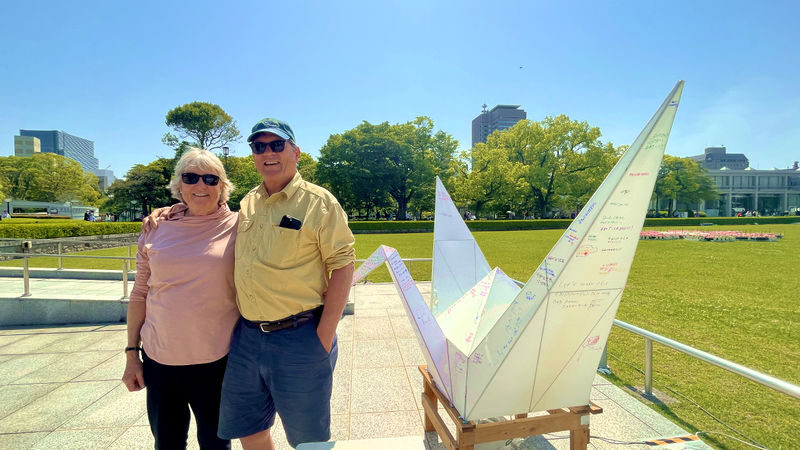
The first guided portion is scheduled from 9:15 to 11:40 and centres on the Atomic Bomb Dome and Hiroshima Peace Park. The Dome was once a prefectural hall. It remained standing after the atomic bomb exploded nearby on August 6, 1945, and is now preserved as a symbol of peace.
Seeing it in person gives the history a clear physical point of reference. The exposed structure is not a recreated exhibit: it is a surviving building, kept as a memorial. Your guide can help place it within the story of the bombing and the city’s rebuilding, then give you space to take in the site at your own pace.
The Peace Park visit is meant to be reflective rather than rushed. The tour description specifically allows time and personal space, a thoughtful choice for a place that can feel emotionally demanding. If you want to pause quietly, you should not have to treat every stop as a photo opportunity.
The Peace Memorial Museum is a key part of the area, but its admission is listed as not included. The tour includes guided sightseeing in the Peace Park area, yet you should check with the operator whether the museum visit fits the day’s timing and how tickets are handled. The schedule can change with weather or capacity, and some attractions may be skipped. If the museum is essential to you, allow for this uncertainty when deciding whether this compressed tour suits you.
You can also read our reviews of more private tours in Hiroshima

Okonomiyaki before the island
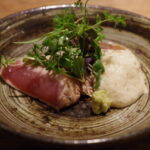
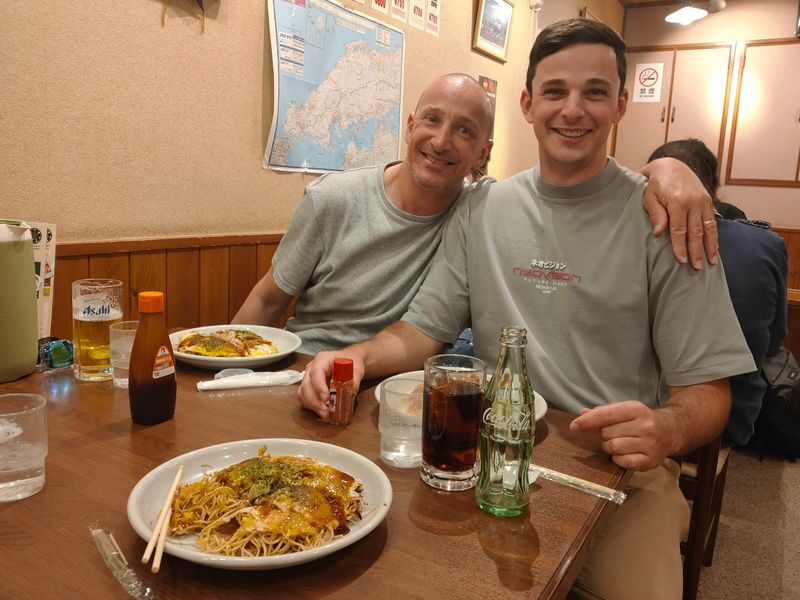
Lunch is scheduled for 11:40 and lasts 50 minutes. The plan points to a popular place for Hiroshima-style okonomiyaki, cooked in front of you. That gives you a meal and a bit of local food culture without requiring you to research a restaurant between stops.
Vegetarian and vegan options are noted, and the operator says it can accommodate halal diets, allergies, and gluten intolerance as well. If you have a dietary need, mention it when booking rather than assuming every restaurant can meet it. Meals and drinks are not included in the tour price.
Fifty minutes is enough for a focused lunch, but not a leisurely food crawl. If you prefer to eat slowly, or want a long sit-down break after the morning’s memorials, the schedule may feel brisk. The upside is that you still have the afternoon on Miyajima.
Ferry crossing to Miyajima
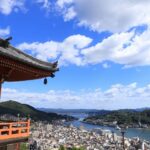
The itinerary places the ferry crossing at about 13:25, with a ten-minute ride. Miyajima changes the mood of the day: after the solemn memorial sites, you arrive on an island known for its deer, seaside views, shrine, and famous torii gate.
The island is a natural counterpoint to Hiroshima’s morning. You can take in the water and the setting, while your guide explains the religious and cultural meaning of the sites. Keep in mind that the tour does not promise a long stretch of free time. The main guided stops are short, so this is an introduction to Miyajima rather than a full island day.
The listed schedule leaves roughly 25 minutes between the ferry and the Itsukushima Shrine visit. Actual timing may vary with transport, weather, and the pace of the group. The operator also notes that the schedule can change, so treat the times as a plan rather than a guarantee.
Itsukushima Shrine and the red torii gate
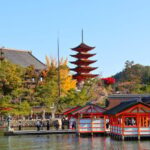
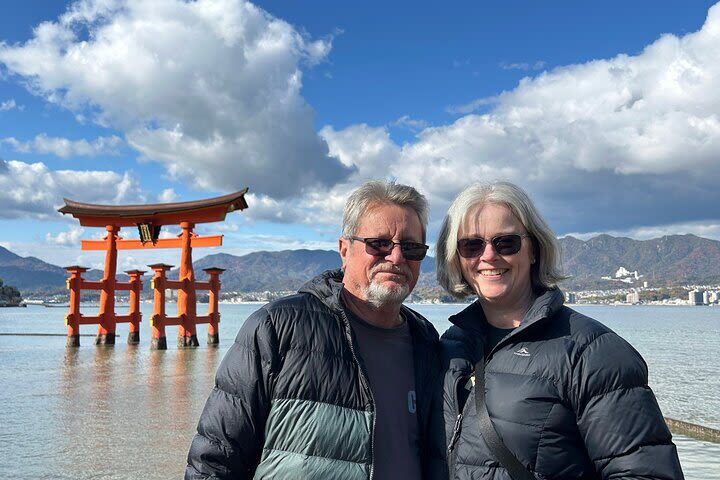
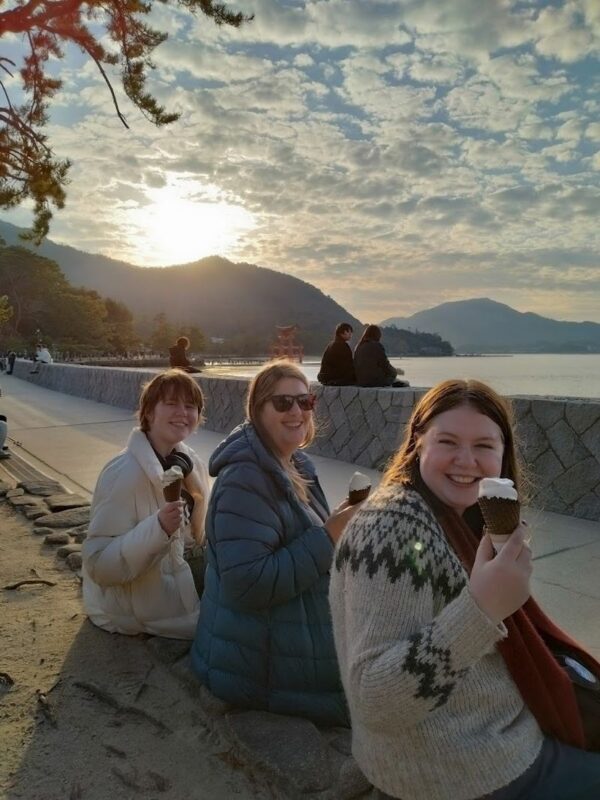
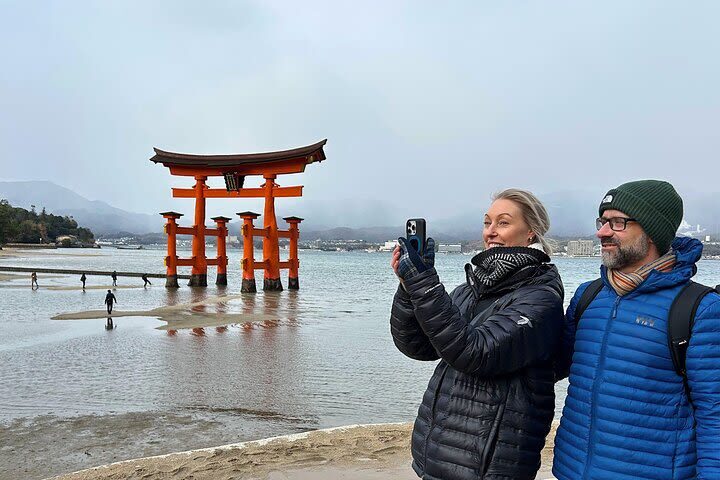
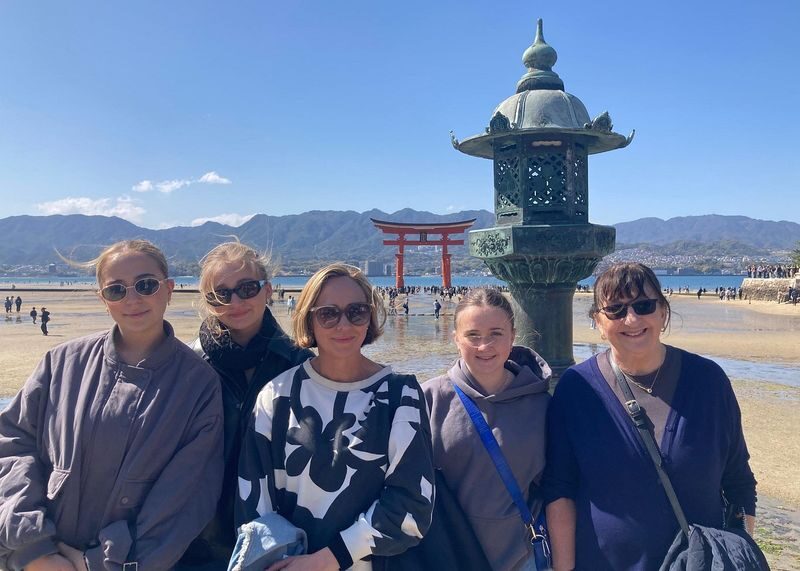
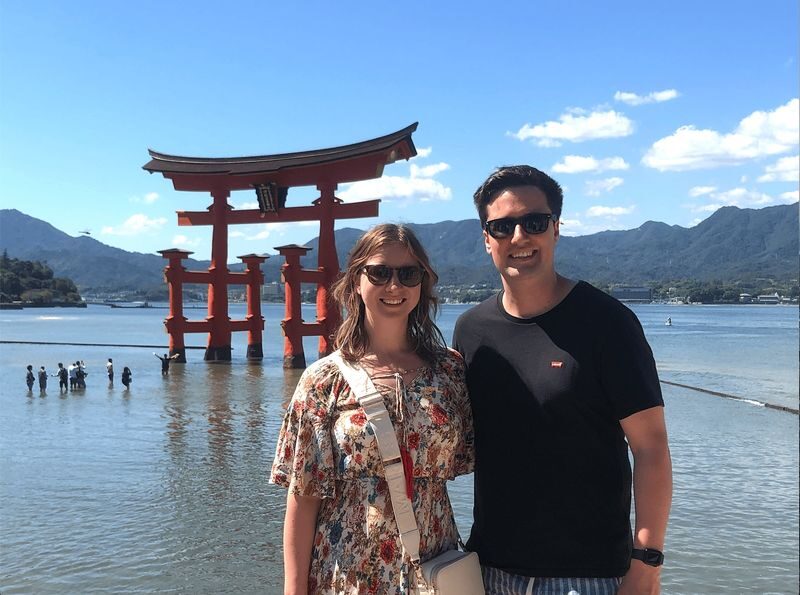
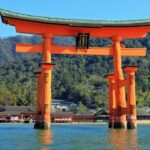
At 13:50, you’re scheduled for a 40-minute guided visit to Itsukushima Shrine. Its red torii gate is the island’s best-known sight, set at the water’s edge and often described as floating. The view depends on conditions, including the tide, so the exact appearance of the gate can vary.
The shrine’s seaside setting is a large part of its appeal. You’ll have time to look across the water and appreciate how the buildings and gate relate to the shore. Forty minutes makes for a useful guided visit, but it is not a long, unstructured wander. If you want more time for shops, snacks, or exploring beyond the listed stops, ask the guide what can be adjusted.
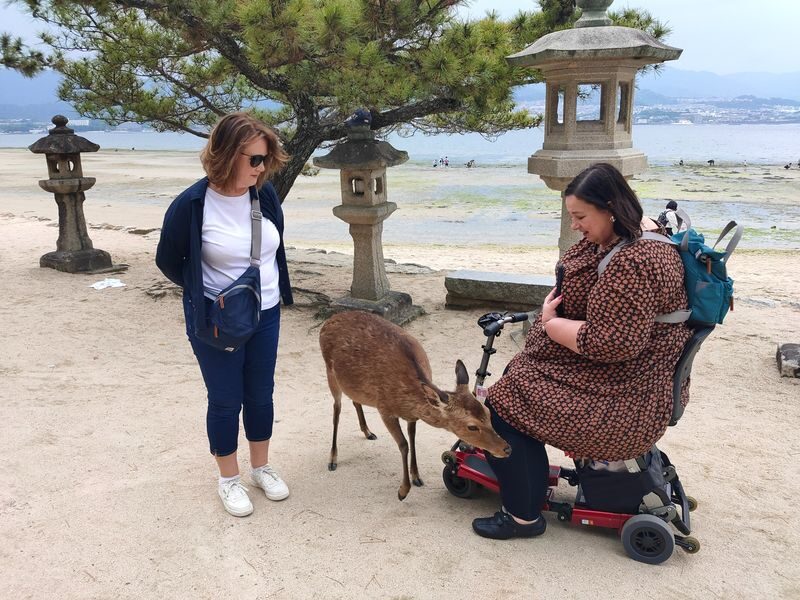
Deer roam around Miyajima, and the tour highlights the chance to see them. They add a playful note to the afternoon, but the main draw remains the shrine and its setting. Keep your attention on the cultural site, not just the animals.
Daigan-ji, a quieter temple stop
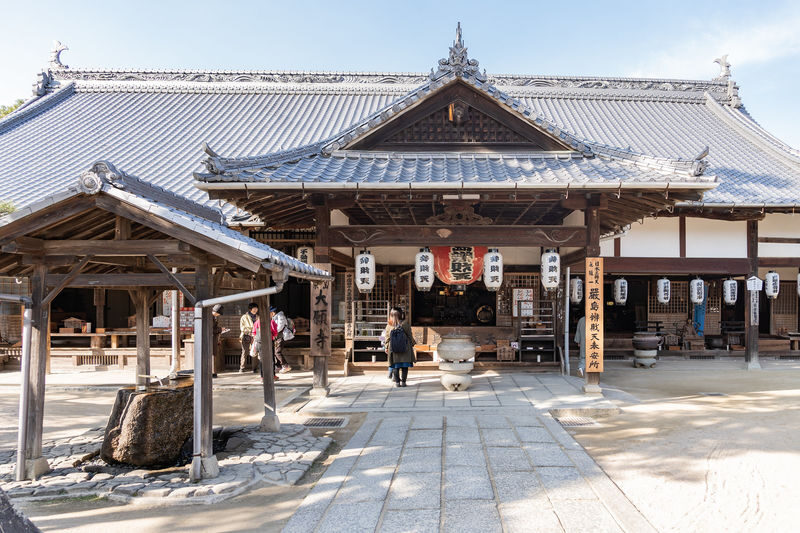
The next stop is Daigan-ji Temple, scheduled for 15 minutes from 14:30. It is dedicated to Benzaiten, associated with eloquence, music, wisdom, and wealth, and is counted among Japan’s three most famous Benzaiten temples.
This short visit gives you another angle on Miyajima’s religious life beyond its iconic shrine. The time is limited, so expect an introduction rather than a long temple visit. If you have a particular interest in the temple, ask your guide questions while you are there.
The return is listed for 16:30, with drop-off at your accommodation or another location in Hiroshima City. That flexibility can be handy if you want to continue your evening elsewhere, though you should confirm the exact drop-off arrangements with the operator.


What a private guide adds
The strongest reason to choose this tour is not simply the number of sights. It is the guide’s role in helping you connect the memorial sites, the city, and the island without having to plan every transfer yourself. Guests have singled out guides including Koji, Kahori, Akie, Nagako, Michi, and Tomoe for clear explanations, warmth, and the ability to adjust the pace.
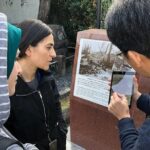
Some guides are Hiroshima locals, and that can add a personal dimension to the city’s history. Koji, for example, has been praised for explaining the Peace Park, Dome, and Museum beyond a basic guidebook account. Other guides, including Akie and Kahori, have been noted for adapting the day, answering questions, recommending food, and helping with photos.
Those names are examples, not a promise of who will lead your tour. If a particular guide matters to you, ask the operator before booking, but be prepared for availability to vary. The value lies in having an English-speaking guide who can answer questions and help make a demanding day feel manageable.
Private tours also suit groups with different needs. Families with several generations have found the flexibility useful, and one group specifically valued the format for a member with limited mobility. The activity is listed as beginner-level and wheelchair- and stroller-accessible, though the use of public transport and a full day of stops still makes it sensible to discuss individual mobility needs with the operator.
Price, pace, and what is included
The advertised starting price is US$138.05, but the listed package rates are higher for the named group sizes: US$347.65 for a solo traveller, US$189.65 for two people, and US$158.05 per person for a group of three to eight. The amount you pay therefore depends on your group and selected package. A private guide costs more than joining a large group, but the price buys a guided day across two destinations, transport, and the convenience of hotel pickup and drop-off.
The stated inclusions cover transport, admission to attractions, a professional English-speaking guide, guided visits, ticketing service fees, and operator-provided insurance. However, the information also lists the tour guide as not included, which conflicts with the included-guide details. Confirm the guide fee and exact inclusions for your chosen package before checkout. The Peace Memorial Museum admission is separately identified as excluded, and food, drinks, and personal expenses are also extra.
The format may be good value if you want a guide to manage the route and explain the history, especially as a couple or small group. If you are comfortable navigating public transport and prefer to spend longer at each site, you may get more out of arranging the day independently. The private format does not mean private transportation: you will use public transit and the ferry.
Practical details that matter
Wear comfortable walking shoes. The activity is listed as suitable for beginners and accessible to strollers and wheelchairs, but the itinerary still involves moving between several sites and using public transport. For any specific access need, check the route details with the operator before you book.
Children aged five and under can join free, while children aged 13 and older pay the adult rate. Participants must be under 100 years old. Confirmation is expected within 48 hours; if it does not arrive, contact customer support. The voucher is valid only for the date and time you selected, and cancellations made at least 24 hours before the activity date qualify for a full refund.
Should you book this Hiroshima and Miyajima tour?
Book it if you want a guided first visit that combines Hiroshima’s memorial sites with Miyajima’s shrine and seaside setting in one day. The thoughtful pace around Peace Park, the local food stop, and a guide who can adjust to your questions are strong reasons to choose it.
Think twice if you want a long museum visit, an unhurried afternoon on Miyajima, or private car transport. The schedule covers a lot, the museum ticket costs extra, and local transit is part of the experience. For a compact day with context and help navigating, it is a practical choice. Just confirm the price, guide inclusion, and museum arrangements before paying.
Hiroshima & Miyajima Highlights Private Day Tour
“We enjoyed a delightful tour around Hiroshima and Minjiama Island with. Kahori as our guide. she was a very helpful, knowledgeable and friendly per…”
FAQ
Where does the tour start?
Your guide meets you in your hotel lobby in Hiroshima at 9:00. You should be there five minutes early and provide your hotel name and address when booking.
What time does the tour return?
The listed return time is 16:30. You can choose drop-off at your accommodation or another location in Hiroshima City.
Is the Peace Memorial Museum admission included?
No. The Peace Memorial Museum admission is listed as not included, so budget for the ticket separately and confirm the visit timing with the operator.
How do you travel between the stops?
The tour uses public transportation, including a ferry crossing to Miyajima. It is not described as a private-car tour.
Is lunch included in the price?
No. Meals and beverages are not included. The schedule allows 50 minutes for lunch, and the planned okonomiyaki restaurant has vegetarian and vegan options.
Can the tour accommodate dietary needs?
The operator says it can accommodate halal-certified, allergy-related, gluten-free, vegetarian, and vegan dietary requirements. Share your needs when booking.
How much does the tour cost?
The advertised starting price is US$138.05. Listed package prices are US$347.65 for one person, US$189.65 for two, and US$158.05 per person for groups of three to eight. Check the price shown for your date and package.
Is the tour suitable for children?
Children aged zero to five can join free. Children aged 13 and older pay the adult rate.
Is the tour accessible for wheelchairs and strollers?
The activity is listed as wheelchair- and stroller-accessible. Because it uses public transportation and includes several stops, confirm any specific access requirements with the operator.
What is the cancellation policy?
You can receive a full refund if you cancel at least 24 hours before the activity date, using destination local time.