
The first thing you notice walking into Torvehallerne is the smell. Dark rye for smørrebrød on one side, warm cardamom and butter from a pastry stall on the other, smoked fish drifting in from the back. By the time your guide hands you a cold akvavit shot in a tiny stem glass, you understand why Copenhageners spend their whole lunch hour here.

This guide is for anyone trying to figure out which food tour in Copenhagen is actually worth the money. There are easily a dozen running on any given day, ranging from two-hour pastry crawls to four-hour deep dives that finish with smørrebrød and beer in Nyhavn. I have done food tours in Lisbon, Porto, Krakow, and Dublin, and Copenhagen still managed to surprise me. The food is more thought-out, the portions are bigger than you expect, and the guides know more about Danish food culture than most cookbooks I have read.

- In a Hurry? Three Picks Worth Booking
- What Actually Happens on a Copenhagen Food Tour
- The Three Tours I Would Actually Book
- 1. The Copenhagen Culinary Experience Food Tour: 9.95
- 2. Copenhagen Walking Food Tour with Secret Food Tours: 0.60
- 3. Copenhagen Guided Culinary Walking Tour with Food Tastings: 1
- What You Will Actually Eat
- Smorrebrod
- Danish Pastry
- Polser
- Cheese
- Akvavit and Beer
- Torvehallerne: What Tour Guides Actually Stop At
- How Long the Tours Run and What You Pay
- When to Book and How Far Ahead
- What Time of Day to Pick
- Reffen and the Other Street Food Option
- Vesterbro and the Meatpacking District
- How a Food Tour Compares to Eating Solo
- Dietary Restrictions and What Works
- Combining a Food Tour with the Rest of Your Copenhagen Day
- The Hygge Question
- Things That Could Go Wrong
- Other Copenhagen Activities Worth Pairing
- Final Pick
In a Hurry? Three Picks Worth Booking
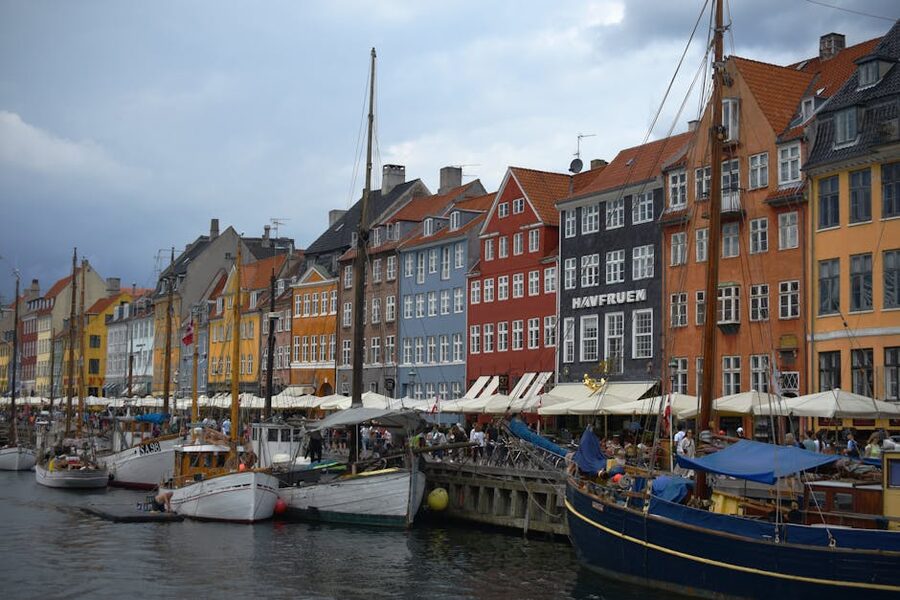
Best overall: The Copenhagen Culinary Experience Food Tour. Four hours, around $150, and the only tour I keep recommending without caveats. Six tastings plus drinks across Torvehallerne and the surrounding streets.
Best value: Copenhagen Walking Food Tour with Secret Food Tours. Three hours, around $130, and the global Secret Food Tours brand running their tight Copenhagen route through the Latin Quarter and Nyhavn.
Pastry-focused: Best of Danish Pastry Tasting Tour. Two hours, around $74, and the right call if you have already eaten lunch and just want to drink coffee and chase wienerbrød.
What Actually Happens on a Copenhagen Food Tour
Every food tour in Copenhagen is built around the same backbone, even when guides swear theirs is unique. You start at or near Torvehallerne, the covered market that opened in 2011 on the site of an old market square dating to 1889. You walk to four to seven stops over two to four hours. You eat smørrebrød, you try Danish pastry, you taste cheese, and you finish with akvavit, beer, or both.
The good guides separate themselves by how they tell the story. Anyone can hand you a piece of pickled herring on rye. The ones worth booking explain why pickling matters in a country where summers are short, why the rye is sour rather than sweet, and why eating the sandwich with a fork instead of your hands is a class signal that goes back two hundred years.
.jpg)
Group sizes matter more than you think. Tours capped at eight people feel like eating dinner with a knowledgeable friend. Tours of fifteen feel like school trips, and you spend half your time waiting for the back of the group to catch up. Anything bigger than that and you may as well go to the market alone with a list.
The Three Tours I Would Actually Book
I dug through every Copenhagen food tour we have reviewed on this site and these three keep coming back as the strongest. They run different routes, different lengths, and different price points. Pick the one that matches what you actually want from the afternoon.
1. The Copenhagen Culinary Experience Food Tour: $149.95
This is the one that punches above every other Copenhagen food tour I have looked at. Four hours sounds long until you realise the pace is built around eating slowly the way Danes do, and our full review covers how the small group size keeps the route flowing. You walk between Torvehallerne, the side streets of the Latin Quarter, and a quiet smørrebrød lunch spot most tourists never find. Bring an appetite. You will leave full.
2. Copenhagen Walking Food Tour with Secret Food Tours: $130.60
Secret Food Tours runs the same operation in twenty-plus cities, and Copenhagen is one of their tighter routes. You start near the cathedral, work through three or four food stops, and finish in Nyhavn with smørrebrød and a beer. Our review goes into the secret-dish gimmick, which is corny but actually fun. Better choice if your time is tight or you have already wandered Torvehallerne on your own.
3. Copenhagen Guided Culinary Walking Tour with Food Tastings: $141
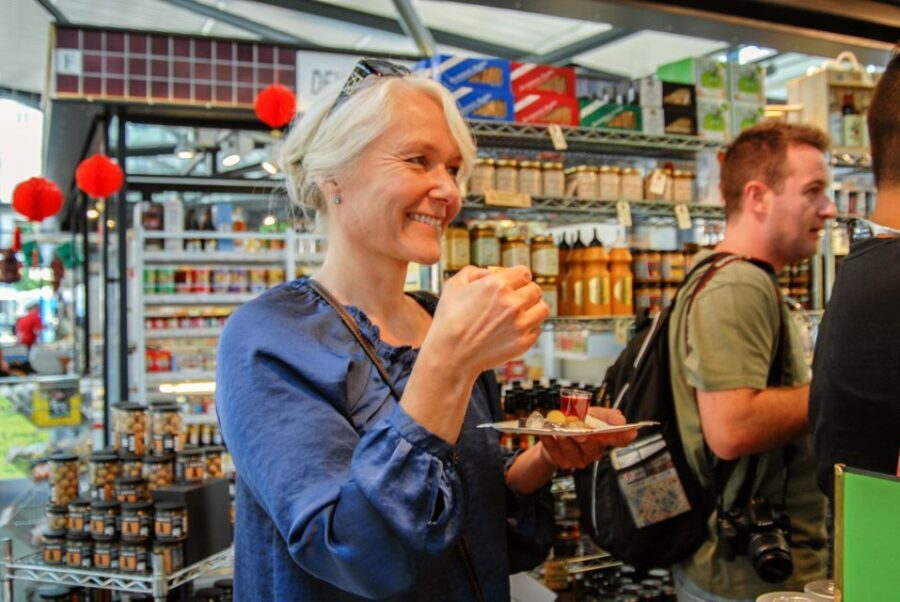
This GetYourGuide-listed tour does most of what the Culinary Experience does at a slightly lower price. The route includes Torvehallerne and the Latin Quarter and finishes with akvavit and Carlsberg in a basement bar. Our review walks through what is included and what counts as an upsell. A good safety pick if the Culinary Experience is sold out for your dates.
What You Will Actually Eat
If you are coming from outside Scandinavia, the food on a Copenhagen tour is going to be unfamiliar in surprising ways. The classics are not difficult. They are just specific, and they have rules.

Smorrebrod
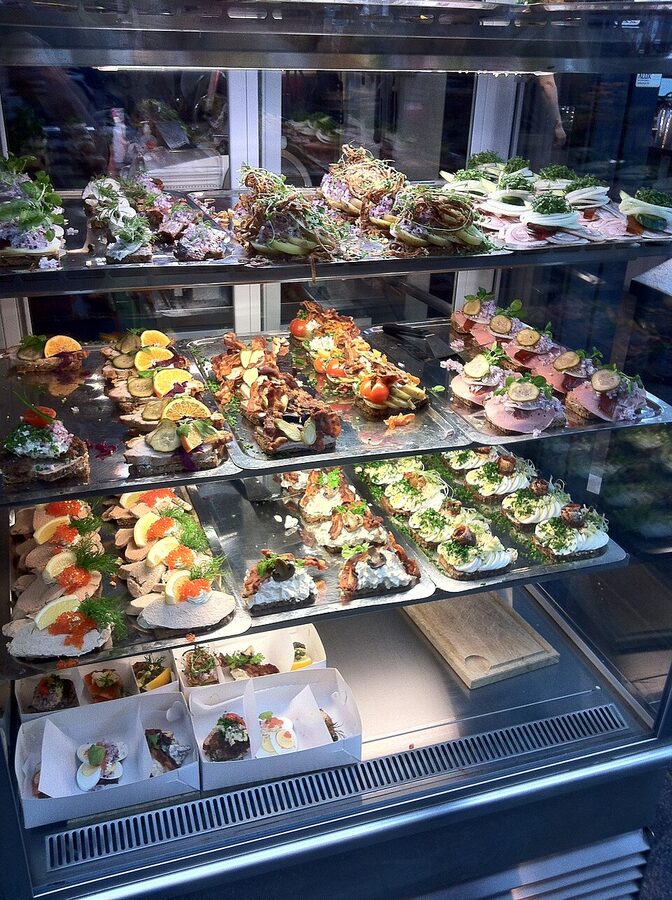
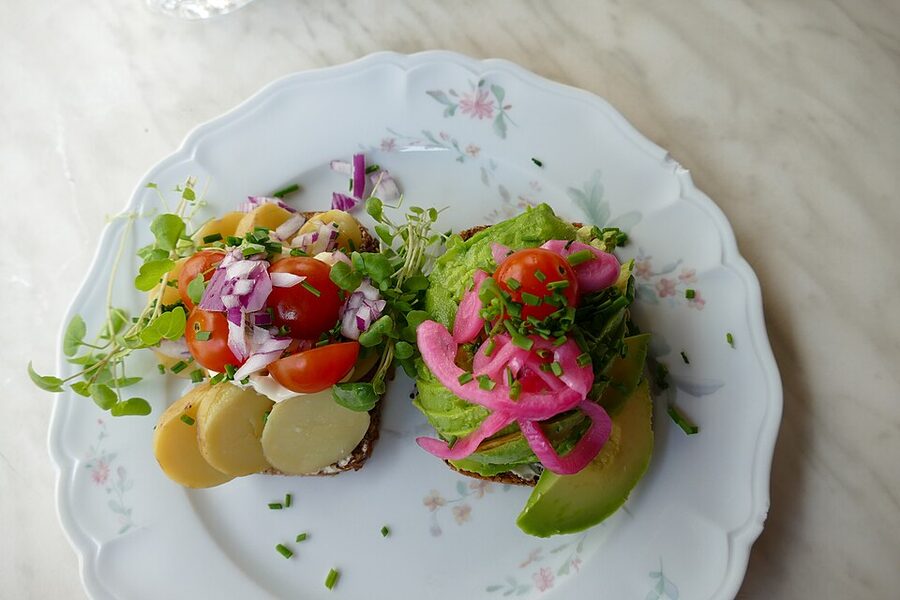
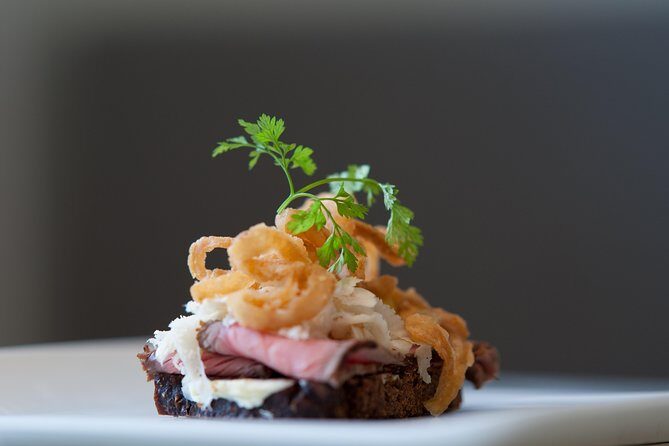
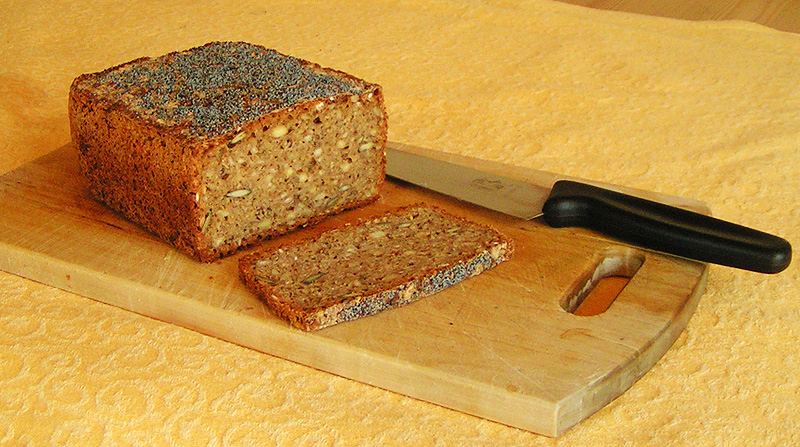
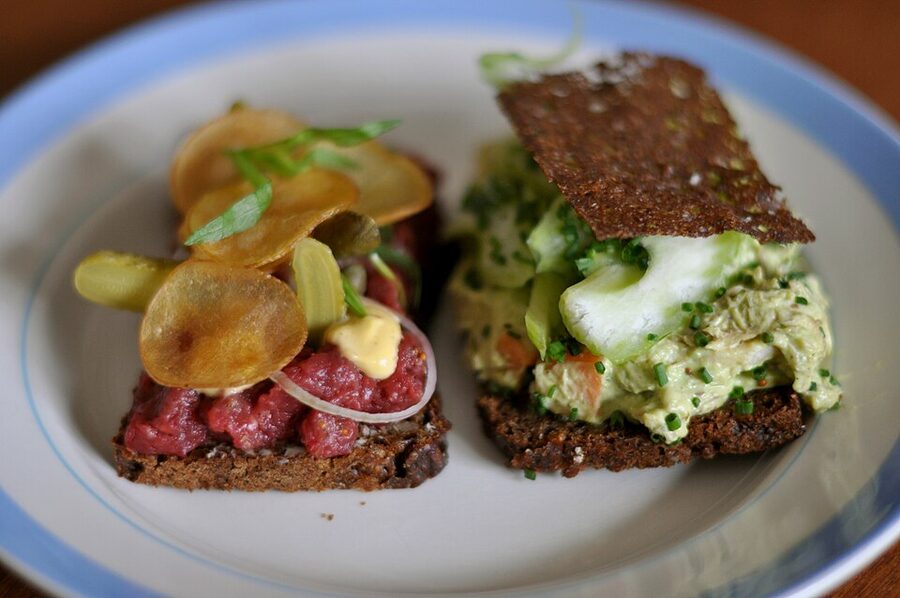
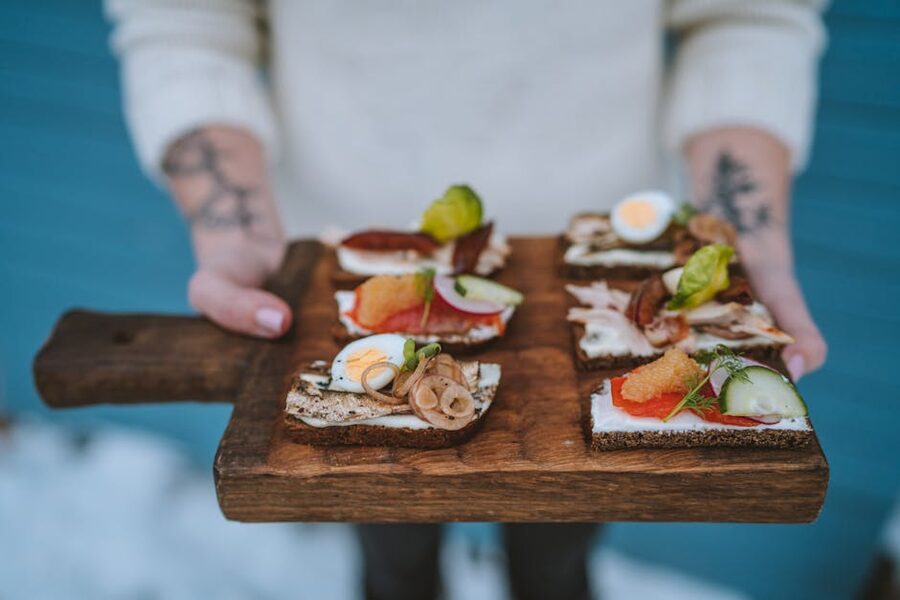
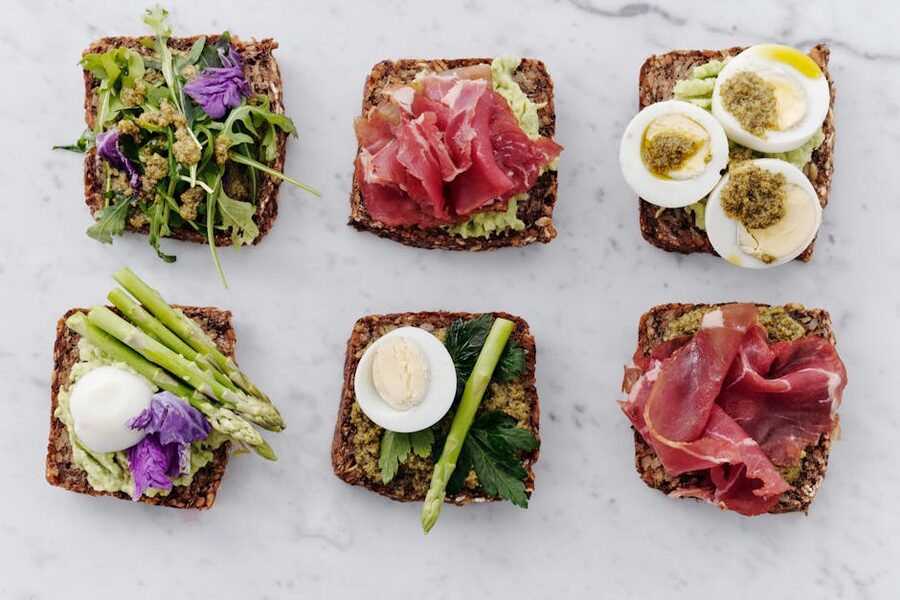
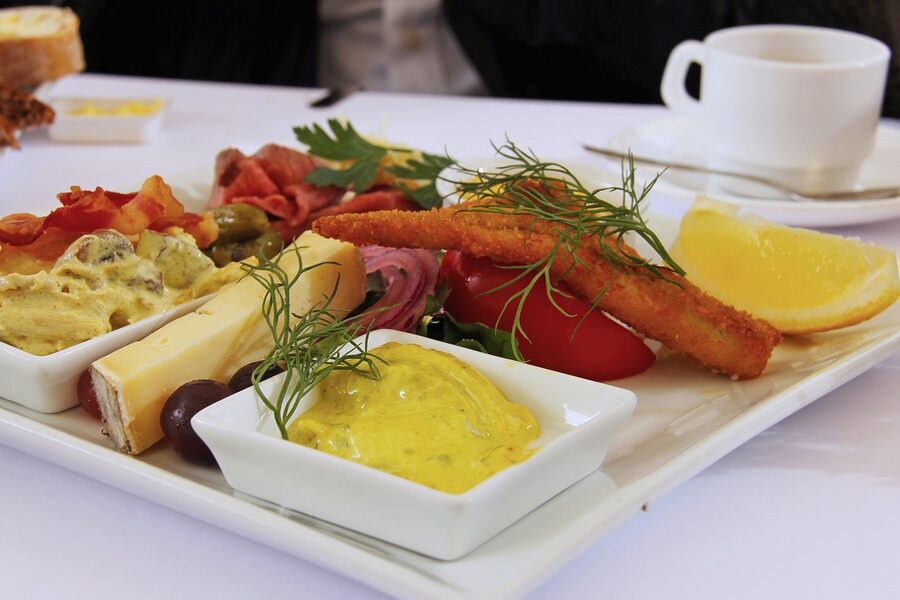
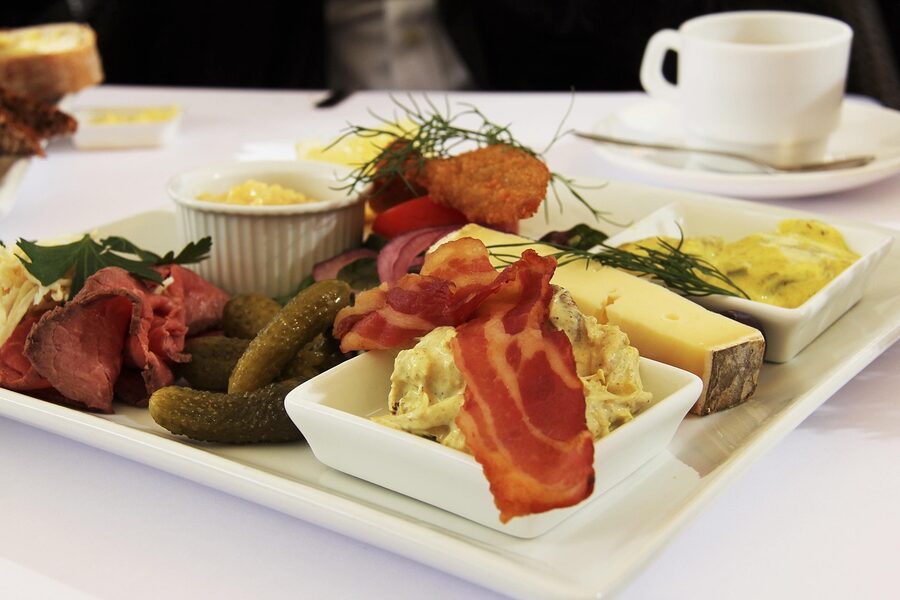
The open-faced sandwich on dark rye that Danes eat for lunch. The literal translation is “buttered bread”, but that is misleading. A proper smørrebrød is a small piece of architecture: rye base, butter or fat, then layers built up so that no two bites are quite the same. The classics are pickled herring with red onion, breaded fried plaice with remoulade and lemon, roast beef with crispy onions and horseradish cream, and chicken salad with bacon and cress. You eat it with a knife and fork. Eating smørrebrød with your hands marks you as a tourist faster than asking for ketchup.
.jpg)
Danish Pastry
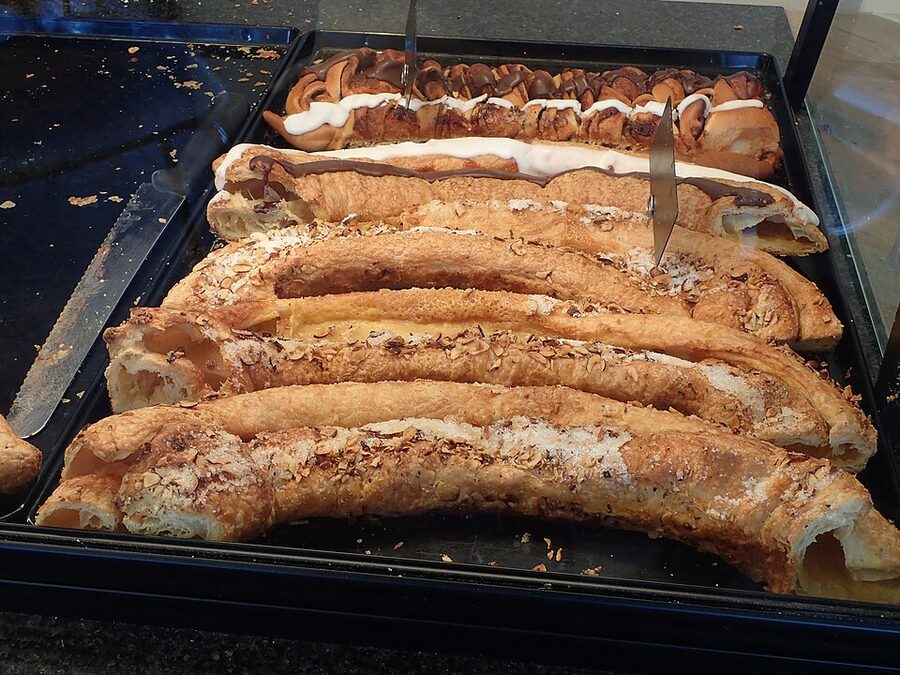
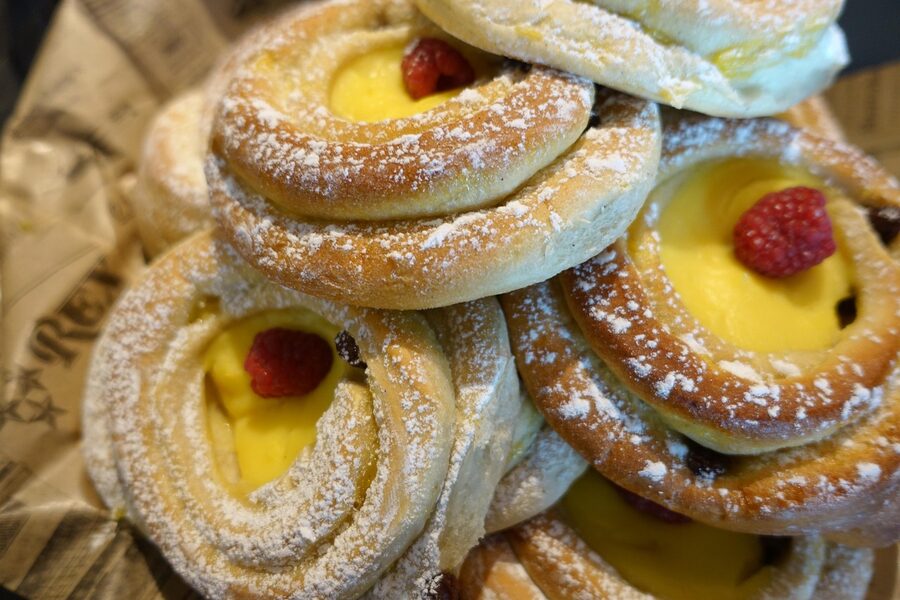
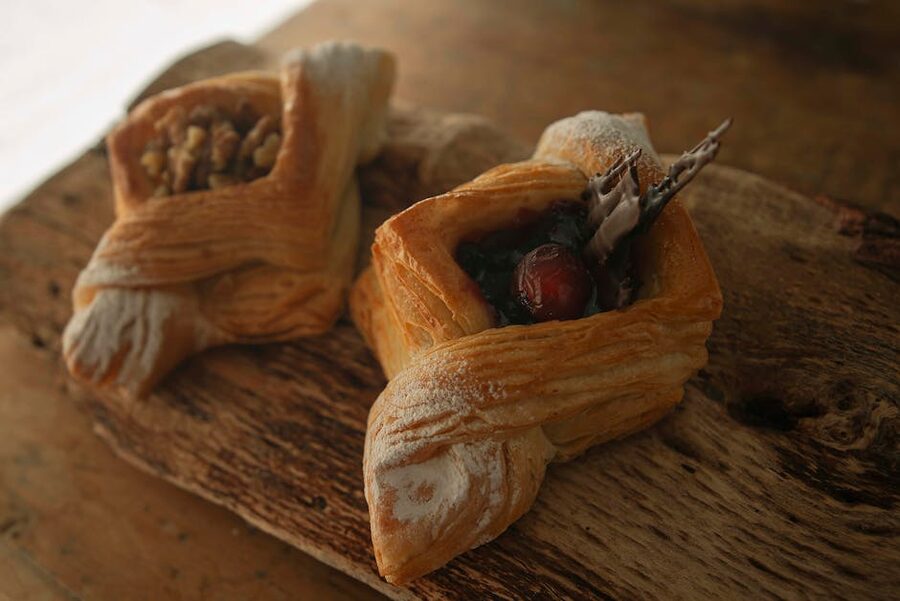
The thing called “Danish” abroad is not what Danes eat. The actual Danish word is wienerbrød, which translates to “Vienna bread”, because the laminated-dough technique came over from Austrian bakers in the 1840s. A proper wienerbrød is flakier and more buttery than what you get at most chains in your home country. The most common shapes you will run into on a tour are the kanelsnegl, a snail-shaped cinnamon roll with cardamom and pearl sugar, and the spandauer, a square pastry with custard and a dot of jam in the middle.



Polser
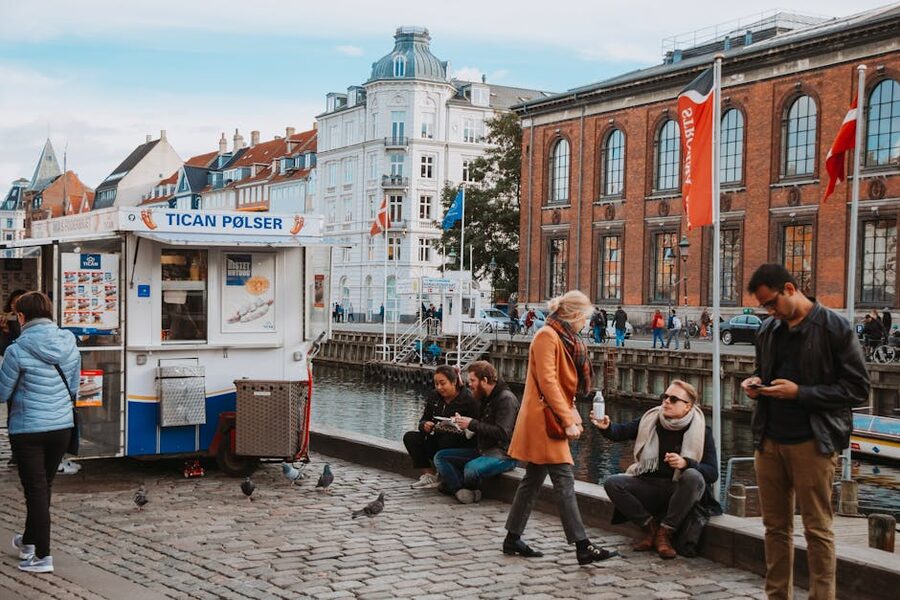
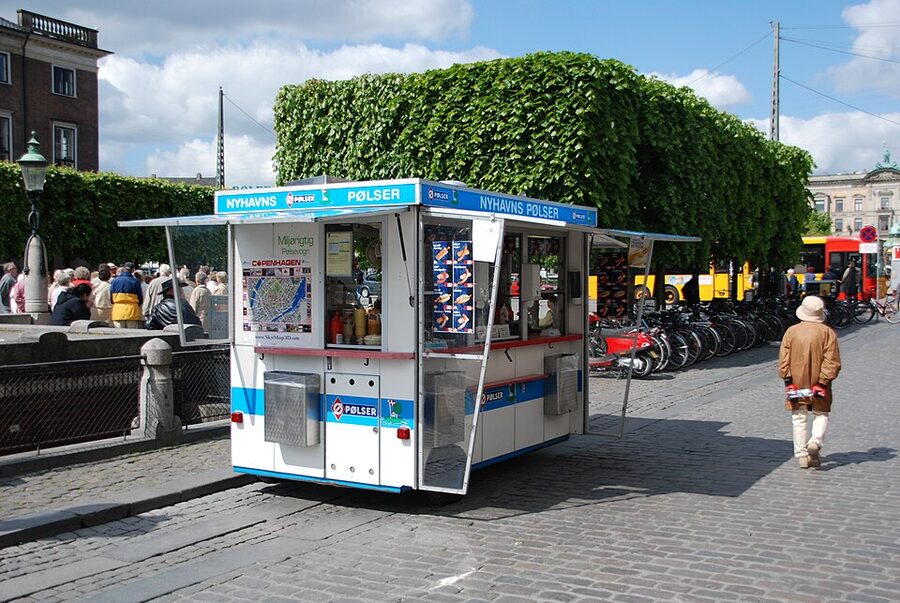
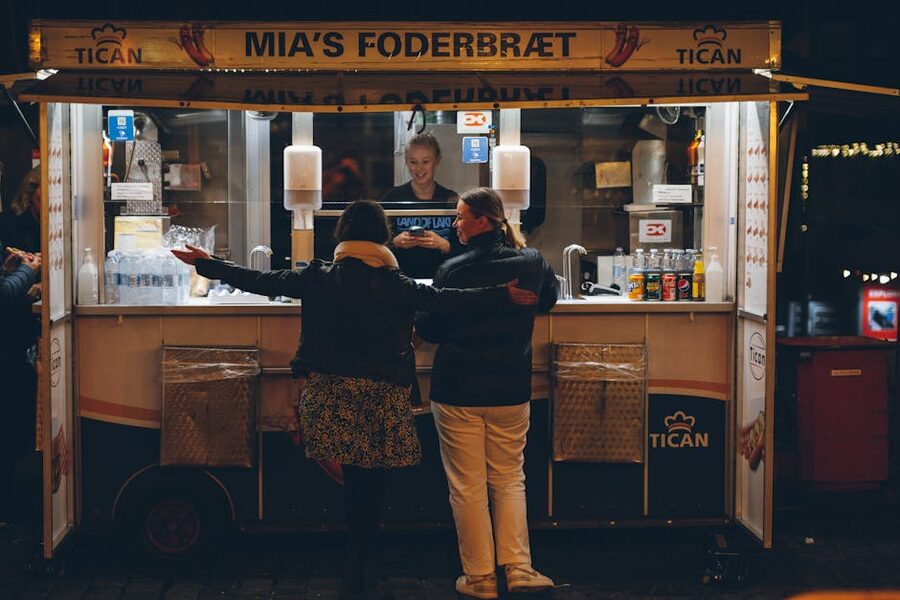
The red Danish hot dog. You will probably see one of these on a street corner before your tour even starts. The traditional version is a bright red sausage in a soft white bun, topped with mustard, pickled cucumber, raw onion, fried onion, and remoulade. It is fast food, not gourmet food, and a good guide will treat it that way: a fun, cheap five minutes of your tour rather than the headline. The most photographed cart in town is the one in front of Nyhavn, and you will pass it on most tour routes.

Cheese
Most tours include a cheese stop at Torvehallerne. The classics are Danbo, a mild semi-firm cow’s milk cheese that is still the best-selling cheese in Denmark, and Havarti, a creamier washed-curd version invented by a farmer’s wife in the 1850s. The fun stuff is the rare blue cheese from Bornholm, an island so small most Danes have to look it up on a map, and a tomato jam that gets paired with hard cheese the way honey and walnuts get paired in France. If your guide hands you that combination, eat it slowly. It is one of the best small food memories I brought back from the city.
Akvavit and Beer
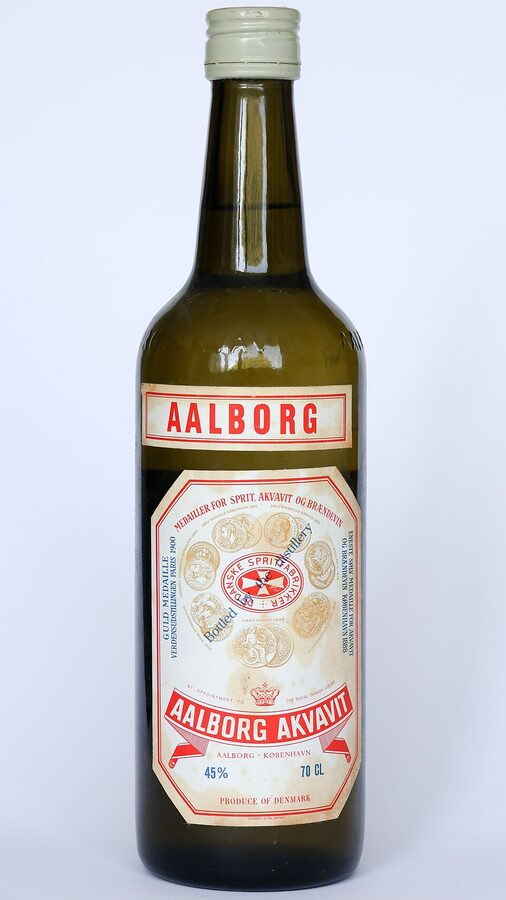
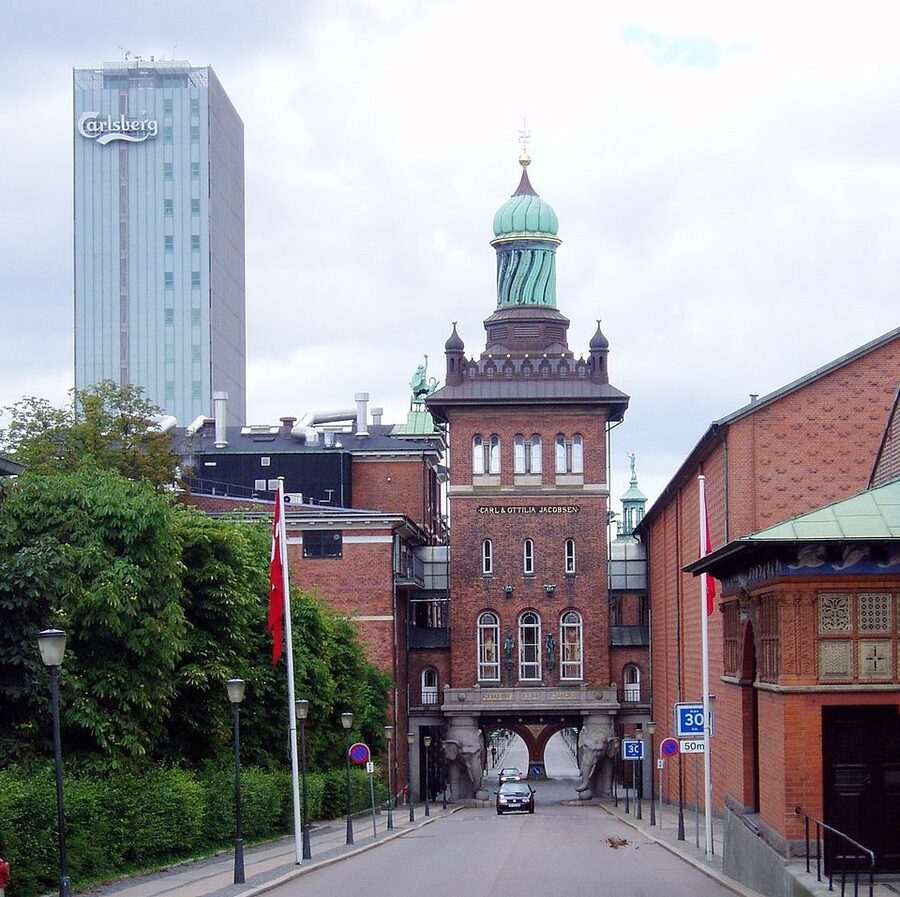
Almost every tour ends with a shot of akvavit. It is 40% ABV, distilled from grain or potatoes, and flavoured with caraway or dill. The cold of the glass on your hand is part of the ritual: it has been in the freezer, the alcohol is sharp, and the caraway hits the back of your throat about a second after you swallow. You say “skol”, you make eye contact, you drink it down. Tuborg and Carlsberg are the standard beer pairings, both brewed in Copenhagen. The tour for Carlsberg fans is a separate experience, and our Carlsberg brewery guide covers that one in detail.

Torvehallerne: What Tour Guides Actually Stop At
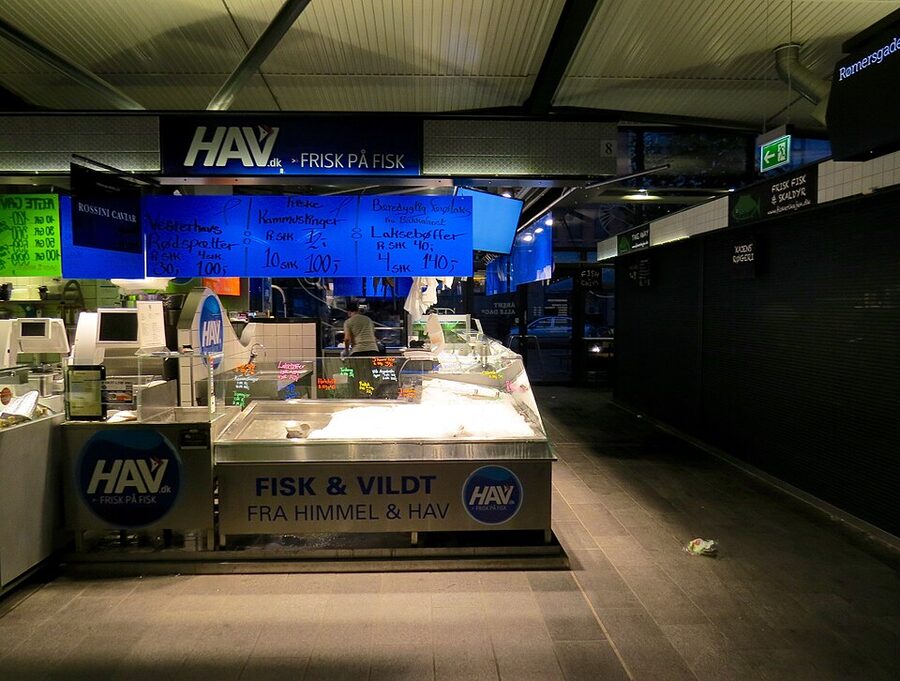
Torvehallerne is the heart of every food tour, but the market has more than sixty stalls and most tours visit between four and seven of them. Knowing which ones matter helps you decide whether to do a tour or just wing it solo afterwards.
.jpg)
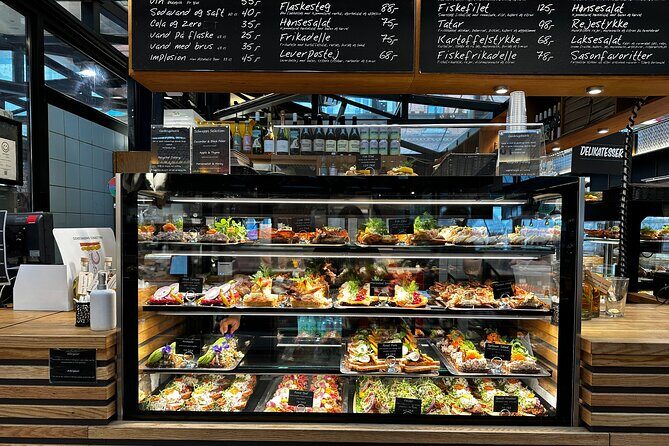
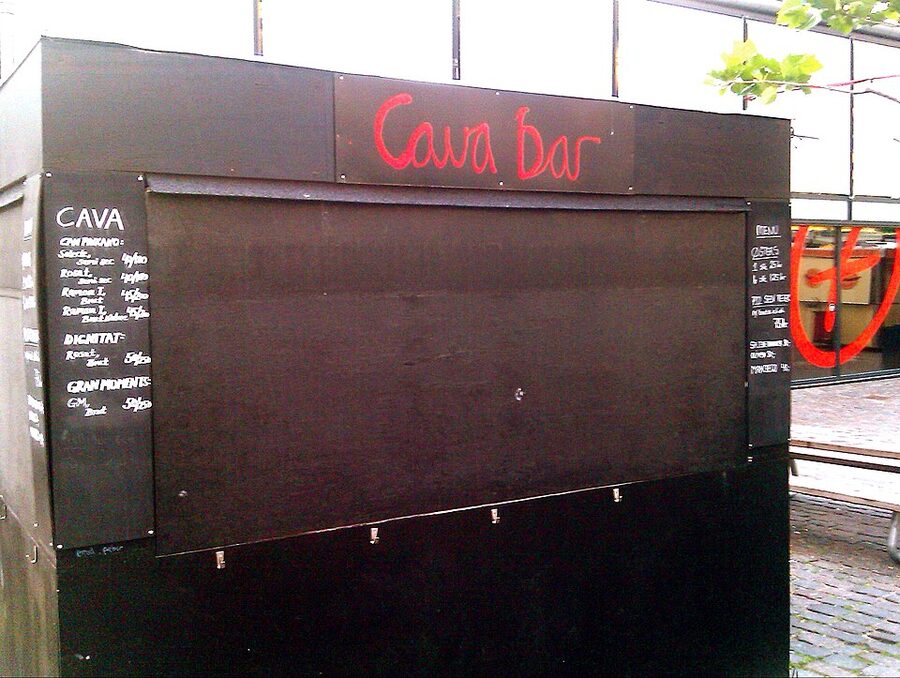
Hallernes Smørrebrød makes the best smørrebrød in the building, and most serious tours stop here. They have won several national awards for their fried plaice, and the queue at lunchtime can run twenty deep. Bornholmer Butikken is the deli for products from Bornholm, the small Danish island in the Baltic. You will get tastings of mustard, rye crackers, berry jam, salty Bornholm liquorice, and sometimes the marshmallows the locals are obsessed with. Unika is the cheese stall: three to four cheeses paired with apple wine that runs surprisingly strong at 19% ABV.
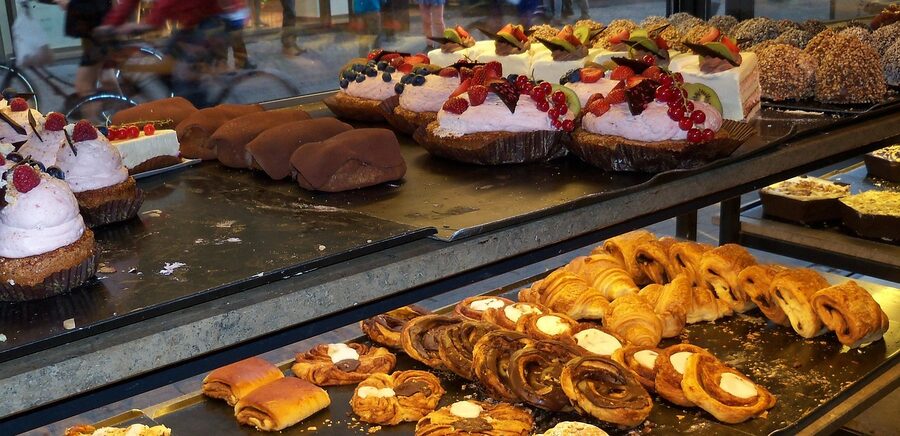
Summerbird Chocolaterie does award-winning organic chocolate truffles, and their flødeboller (chocolate-coated marshmallow domes on a wafer base) are the best in the city. Bella Frukt og Grønt sells organic ice cream made with milk from the same dairy that supplies Unika, which is why the cone tastes faintly cheesy in a good way. If your tour ends at Bella, you have done well.
How Long the Tours Run and What You Pay
The honest answer is that you have three pricing tiers in Copenhagen.
The two-hour pastry-only tours run around $74 to $90 per person. Five to six pastry stops, two coffees, no real meal. Best if you are doing it as a morning before your real lunch, or if you have already done a longer tour earlier in the trip.
The three-hour mixed tours run around $115 to $140. Six to seven tastings, usually a mix of smørrebrød, pastry, cheese, and one drink. This is the format Secret Food Tours runs and it is the right call if you are short on time.
The four-hour full tours run $140 to $160. Six to ten tastings depending on the operator, real seated stops, drinks pairings, and enough food that you should treat it as your lunch. The Culinary Experience tour at $149.95 is the benchmark in this tier and the one I recommend most often.

Beyond those three, you will see private tour options that run $200 to $400 for two to four people. They are worth it if you have a group of four. The maths flips at that size and you get a guide working only for you.
When to Book and How Far Ahead
Copenhagen food tours sell out faster than people expect, especially in summer. The four-hour tours run with small group sizes (often capped at eight or ten), so a single tour bus arriving from a cruise ship can clear out a whole week of slots.
Three weeks ahead is comfortable for shoulder season (April-May or September-October). For peak summer (mid-June through August), book at least four to six weeks out. Christmas market season (late November through December) is the secret busy time: tours run with hot drinks added to the route and book up almost as fast as summer.
Cancellation policies are usually 24 hours for full refund. The Viator-listed tours are the most flexible. The GetYourGuide ones are slightly stricter (cancel no later than 24 hours, sometimes 48). Read the policy when you book if you are travelling with weather risk.
What Time of Day to Pick
I am going to be opinionated here. Lunch tours starting between 11am and 1pm are the best ones to book. Why: the smørrebrød places are at their peak, the pastry counters still have selection, and you finish around 5pm with enough daylight to walk Nyhavn and do a canal stroll. The morning tours are fine for pastry-only itineraries but feel rushed when they try to fit smørrebrød in. The evening tours (6pm-9pm) work for drinks-heavy itineraries but you miss the produce stalls, which close around 5pm.
Reffen and the Other Street Food Option
If your trip is in summer (Reffen is closed in winter), there is a separate option to consider. Reffen is a sprawling outdoor street food area on Refshaleøen, the old shipyard island, with around fifty rotating food stalls run by a mix of immigrants, refugees, and young Danish chefs trying out concepts. Some food tours include Reffen as their final stop. Others build a separate Reffen-only itinerary.
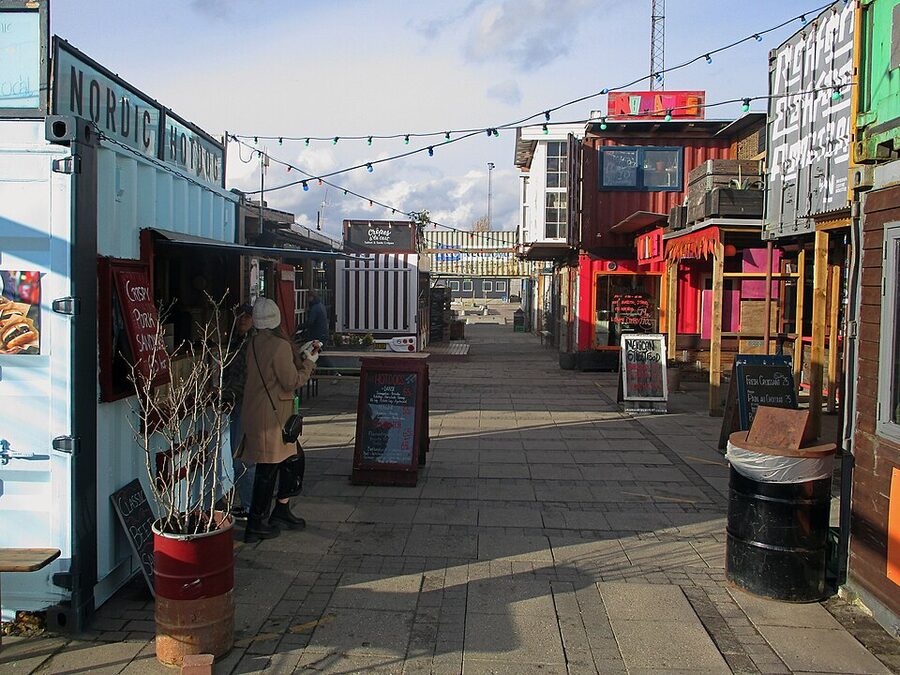

My take: Reffen is fun but it is not where you learn about Danish food. It is where Copenhageners eat from twenty different cuisines on a Saturday night. If your goal is Danish food culture, do Torvehallerne. If your goal is fun summer eating with kids and friends, do Reffen on your own and skip the tour version. The harbour bus M1 runs there directly from Nyhavn for around 25 DKK.
Vesterbro and the Meatpacking District
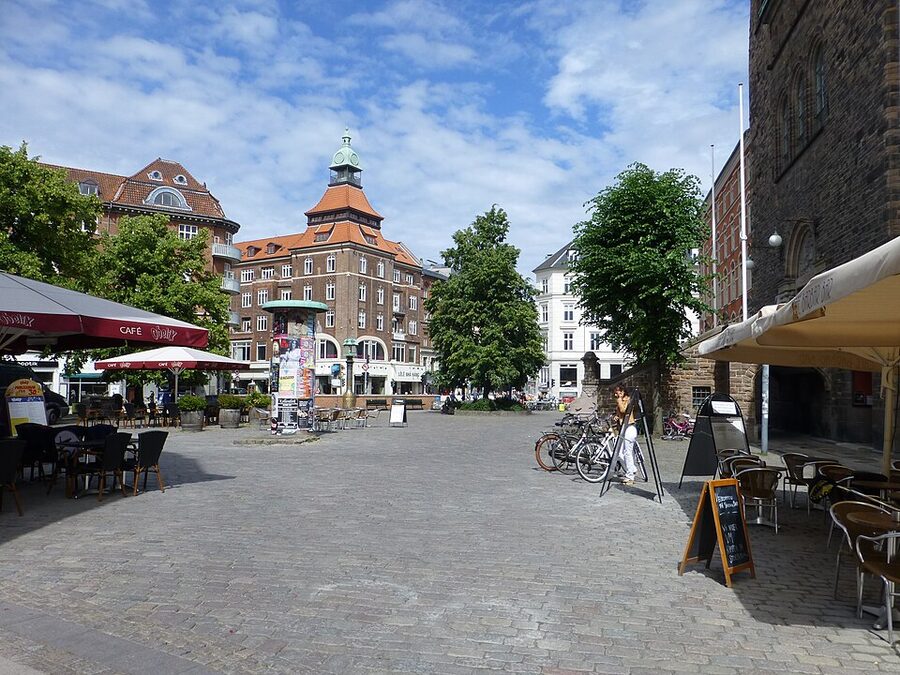
Some of the more interesting food tours route through Vesterbro and the Kødbyen (Meatpacking District). Vesterbro used to be the rough part of town. Now it is full of natural wine bars, third-wave coffee, and small restaurants run by ex-Noma cooks. The Meatpacking District is the cluster of white-tiled industrial buildings just south of the central station, repurposed into restaurants in the 2010s.

If you are interested in modern Danish food rather than traditional smørrebrød, look for tours that explicitly include Vesterbro or Kødbyen on their route. The food is more experimental: pickled fennel, fermented honey vinaigrette, lactofermented carrot, that kind of thing. New Nordic cuisine is the umbrella term and it is what made Noma globally famous before it closed its main restaurant. The tours covering this side of the food scene are rarer and the prices skew higher (often $180+) but the food is more surprising than what you get on the standard Torvehallerne route. The alternative walking tours in our companion guide also touch on the same neighbourhoods if you want to combine.
How a Food Tour Compares to Eating Solo
Honest question: do you actually need a tour for any of this? You can walk into Torvehallerne yourself and order smørrebrød at Hallernes for less than the tour costs. Why book the guided version?
The case for the tour is straightforward: you taste a wider range than you would order yourself, the guide walks you through five hundred years of Danish food history while you eat, and the small-group format lets you ask questions you would feel awkward asking a stall owner. You also taste things you would never order: caraway-fermented snaps, salted Bornholm licorice, raw beef tatar with capers and yolk. The bad tours fail at the second part. The good tours make you understand why Denmark has always punched above its weight in food: the obsession with seasonality, the discipline of preservation, the social rule that food is something you sit down and eat with other people.
The case against: if you have already done a couple of food tours in other European cities and you broadly understand how they work, you may get more out of just buying yourself smørrebrød at Hallernes and a wienerbrød at Lagkagehuset and walking yourself to Carlsberg. Save the $150 for a serious dinner at Restaurant 108 or Slurp Ramen Joint instead.
Dietary Restrictions and What Works
Vegetarians can usually be accommodated, but tell the operator at booking. Smørrebrød can be made with goat’s cheese, mushroom, or beetroot toppings instead of fish or meat. Pastry stops and cheese stops are obviously fine.
Vegans struggle more. Smørrebrød with butter is a non-starter, and most pastry contains eggs and dairy. A few operators will run an entirely vegan version on request, but call ahead. The Pastry Tasting Tour is genuinely difficult to vegan-ify.
Gluten-free is the trickiest. Rye bread is the foundation of nearly everything you would taste, and the laminated dough in Danish pastry is not gluten-free. A handful of bakeries do gluten-free wienerbrød but they are not on most tour routes. If you are coeliac, look at New Nordic-focused tours which lean less on bread and more on seafood and vegetables.

Allergies are no different to elsewhere in Europe: shellfish, nuts, and dairy declarations are taken seriously. Notify at booking and the guide will adjust the route around it. If you tell them on the day, they may not be able to swap stops.
Combining a Food Tour with the Rest of Your Copenhagen Day
A four-hour food tour ending around 5pm leaves you with a comfortable evening for one easy thing afterwards. The natural pairings are a canal cruise (an hour, easy on a full stomach), a stroll through Tivoli Gardens (open evenings, free wandering once you have a ticket), or a Copenhagen Card-funded museum if you have picked one up.
What I would not do: book a serious sit-down dinner the same evening as a four-hour food tour. You will be too full to enjoy a tasting menu, and you will resent the dinner for not being as personal as the tour was. Book your nice dinner for the night before, or two nights after.
Bike tours pair well with a morning food tour. The Copenhagen bike tour runs in the morning, ends around lunch, and you can roll straight into a midday food tour for back-to-back coverage. Just go easy on the akvavit at the end.
The Hygge Question
You will hear “hygge” on every food tour. The word translates badly. It is not just coziness. It is the active practice of slowing down, lowering the lights, and eating slowly with other people. Danes do this almost as a national reflex. A food tour gives you a small dose of it: the candle on the smørrebrød table, the way the guide stops talking when the food arrives, the deliberate pause between courses.
If you only book one experience in Copenhagen for understanding the place, a food tour is a stronger pick than the Little Mermaid statue or even the obligatory canal cruise. You leave knowing why Danes eat the way they do, why their bread is dark, why they salt licorice, why they put a candle on every restaurant table even at noon. That kind of learning sticks.
Things That Could Go Wrong
I have run through enough European food tours to know where they fall apart, and Copenhagen is no exception. The most common complaint is rain. Tours run rain or shine, but if it is heavy and your tour includes outdoor stops at Reffen or canalside, you will be miserable. Bring a real waterproof, not a cheap poncho.
The second issue is portion size. Danish portions are bigger than Mediterranean tour portions. The “tasting” might be a half-portion smørrebrød rather than three bites. By tasting four it can equal a full lunch. Skip breakfast on tour day.
The third issue is timing. The Saturday lunch slot is the most-booked of the week, and the popular tours hit Hallernes Smorrebrod around 1pm when the queue is at its longest. Some guides handle this by pre-ordering. Others don’t, and you lose 15 minutes standing in line. Ask before booking.
Other Copenhagen Activities Worth Pairing
If you are building a longer trip and want to layer the food experience, the closest companions are the general walking tour for context, the hop-on hop-off bus if you have just a day in the city, and a castles day trip if you want to see Frederiksborg or Kronborg in a single afternoon. For a fuller weekend, the Lund and Malmö day trip across the bridge to Sweden gives you a different food culture in the same trip. Pairing a food tour with the LEGOLAND Billund trip works for families with kids who would not survive a four-hour tasting tour. And if your interest is more cultural than culinary, the National Museum of Denmark covers Viking food history in the basement gallery, which a food tour does not. Across other cities, the closest equivalents in tone are the chimney cake workshop in Budapest for sweet-focused trips and the food tours in Lisbon, Porto, Krakow, and Dublin linked at the top of this guide.
Final Pick
If you are reading this and asking which one to book, my answer is the Culinary Experience for $149.95. Four hours, six tastings, small group, and the most thoughtful route through Torvehallerne and the surrounding streets. If those dates are sold out or your time in Copenhagen is shorter, the Secret Food Tours three-hour at $130.60 is the safe second pick. Pastry-only crowds should book the $74 Pastry Tasting Tour and call it a morning. None of these are bad. The differences are in pacing, group size, and whether you want to walk for four hours or two.
Book it three to six weeks out for summer, two to three for shoulder season, and at least a week ahead even off-peak. Skip breakfast. Don’t book dinner the same night. Tip your guide if they earned it (most do). Save the akvavit shot for the end.
Affiliate disclosure: This guide includes affiliate links to Viator and GetYourGuide. We earn a small commission if you book through them at no extra cost to you, which keeps these guides free.