
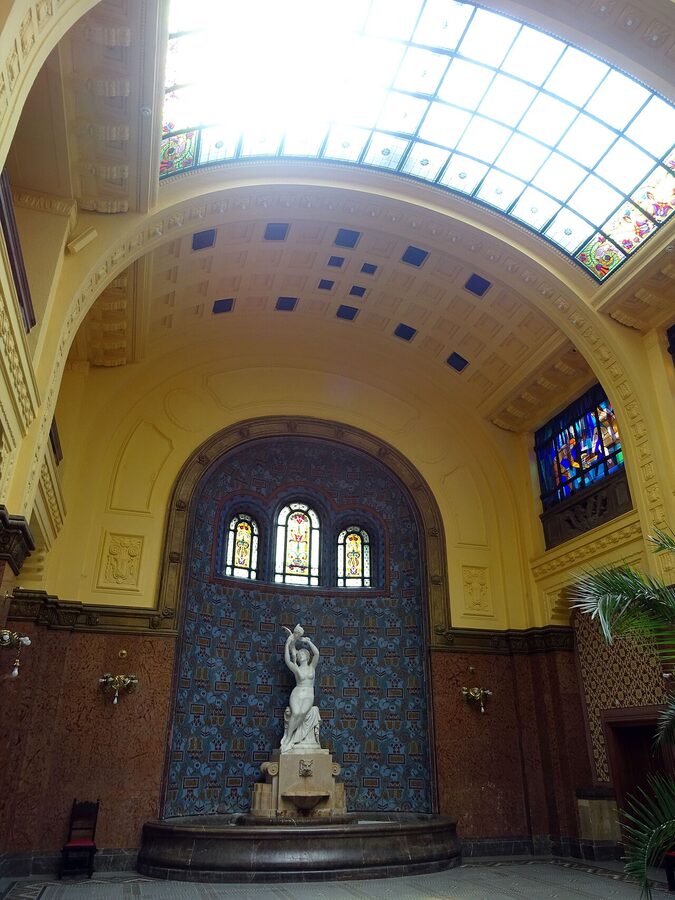
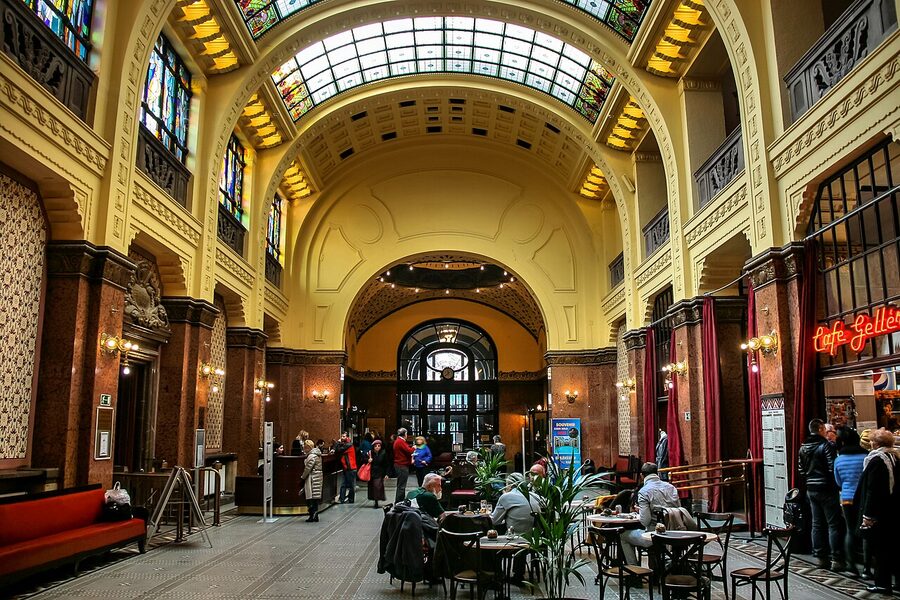
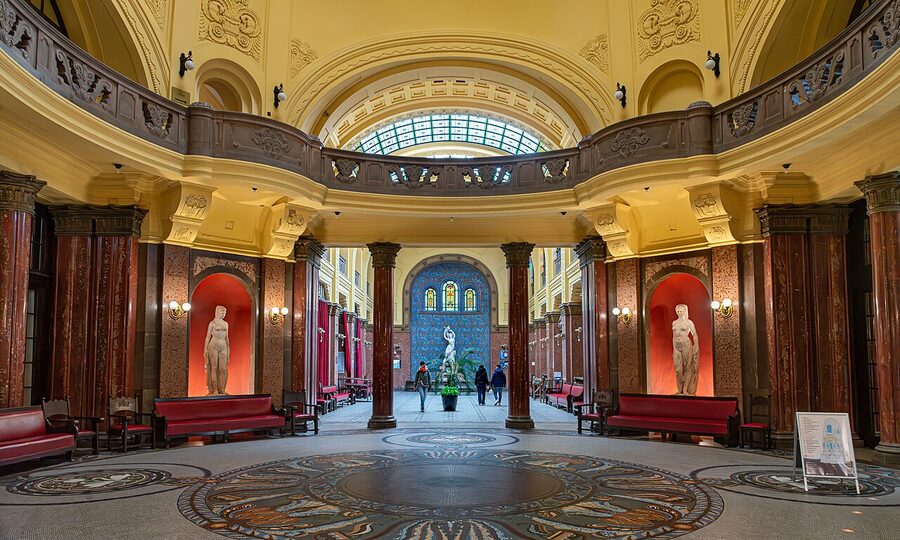
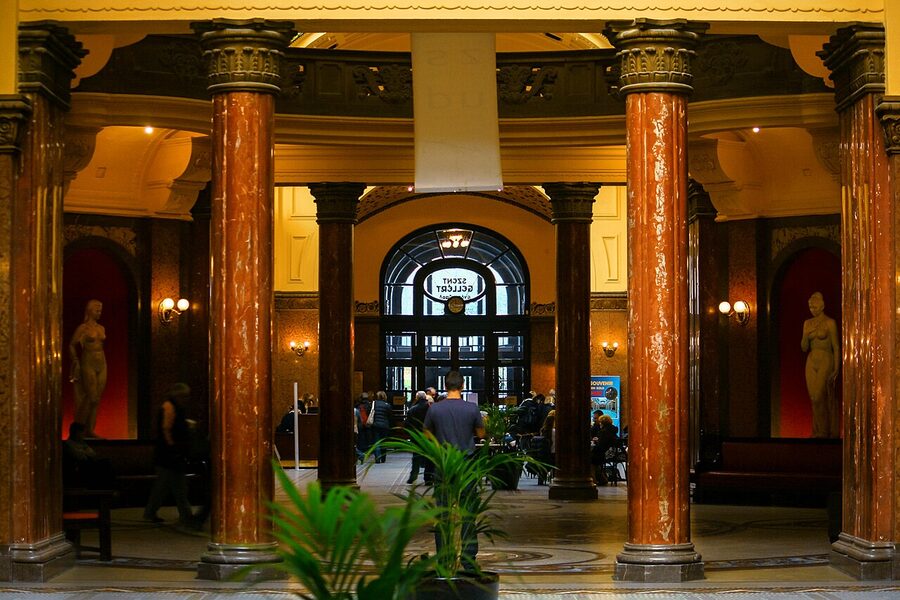
The first time I pushed open the heavy wooden doors of the Gellért, the smell hit me before anything else — that warm, mineral-tinged steam that smells faintly of sulphur and a hundred years of wet tile. Then your eyes adjust and you see the foyer. Stained glass windows the size of small cars. Marble columns. Mosaics on the floor that were laid in 1918 and have been walked over by hungover Hungarian poets, Soviet officers, Cold War defectors, and now, by me, in flip-flops, looking for the changing room.
That’s the thing about the Gellért. It does not feel like a spa. It feels like a cathedral that someone has accidentally filled with hot water and slightly tipsy tourists in towels.
.jpg)
.jpg)
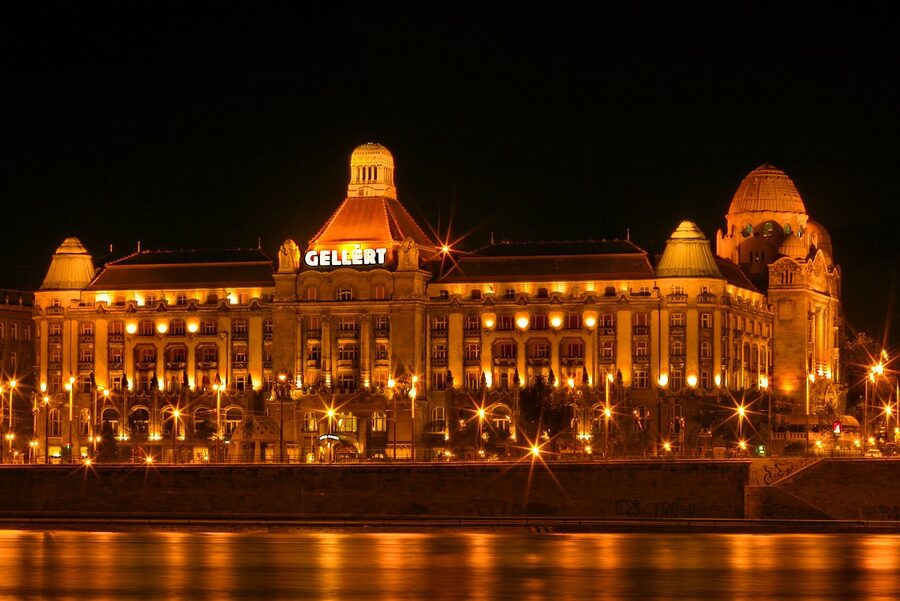
The Gellért is the Art Nouveau bathhouse on the Buda side of Budapest, and it is the second-most-famous thermal spa in the city after Széchenyi. That second-place position is actually its biggest selling point. Where Széchenyi is enormous and very busy and Instagram-famous, Gellért is smaller, more architecturally intricate, and on most weekday mornings you can have a corner of the place almost to yourself. Tickets run from about $48 for a full-day general entry, and there are a couple of upgraded versions worth knowing about before you book.
In a hurry? Three quick picks
Best value: the Gellért Spa full-day ticket from $48. All pools, sauna, and steam rooms — what most people actually want.
Best for groups and couples: the Gellért with private cabin or locker and optional massage from $51. Skip-the-line entry plus a proper changing space.
If you want bigger and busier: the bigger Széchenyi — see our Széchenyi Baths ticket guide for that one. Different vibe, different building, often a better fit for first-timers who want the postcard.
.jpg)
- In a hurry? Three quick picks
- How tickets actually work
- Two Gellért tickets worth booking
- 1. Budapest: Full-Day Gellért Spa Ticket — from
- 2. Gellért Spa with Private Cabin or Locker (and Optional Massage) — from
- Gellért vs Széchenyi — which one is right for you
- The outdoor pools (and why people are disappointed in winter)
- When to actually go (timing matters more than you’d think)
- How to get there (and why the entrance is hidden)
- A short history (because the building has earned it)
- Things I’d actually do differently
- What to do with the rest of your day
- One last honest thing
How tickets actually work
There are two things to know before you click “book” on any Gellért ticket. The first is what’s included. The second is the cabin-versus-locker decision, which sounds trivial and is not.
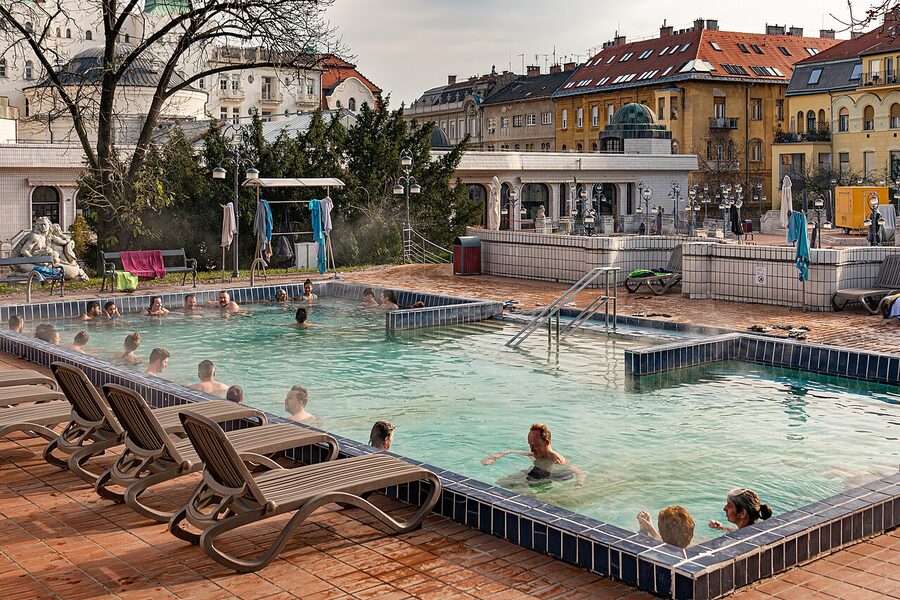
A standard full-day ticket gets you all the indoor pools, the thermal baths (separate-gender on some days, mixed on others — the schedule is posted at the door), the sauna, the steam rooms, and the outdoor pools when they are open. From May to September the outdoor area is the main draw — there’s a wave pool and a sun terrace and a separate kids’ pool. Outside summer, the outdoor section is mostly closed, which is the single most common complaint I see from first-time visitors who showed up in November expecting wave-pool weather. The indoor part of the spa is a year-round operation. The outdoor part runs roughly Easter to mid-October.
.jpg)
The cabin-versus-locker question is the bigger one. Both let you store your stuff. A locker is exactly what it sounds like — narrow, metal, in a corridor with everyone else. A cabin is a small private changing room with a bench, a mirror, and a door you can lock. If you’re traveling alone and you don’t mind getting changed in a busy hallway, the locker option saves you about $10. If you’re a couple wanting to get ready together, or you have valuables you’d rather lock somewhere proper, or you simply want a calm corner to dry off in afterwards, the cabin is genuinely worth the upgrade. I’ve used both. The cabin is one of those things you don’t think you need until you’ve had it.
Bring your own towel and flip-flops. The spa rents them at the door but you’ll pay more than the cost of buying a cheap pair from the supermarket on Bartók Béla út, which is two blocks back. A swimsuit is required everywhere except the dedicated sauna areas. Goggles are useful in the indoor swimming pool because some of the regulars do laps with the kind of seriousness that suggests they used to compete.
.jpg)
Two Gellért tickets worth booking
1. Budapest: Full-Day Gellért Spa Ticket — from $48
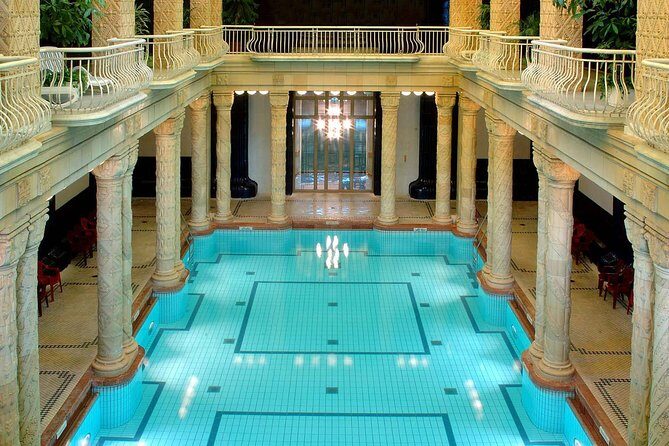
This is the standard full-day ticket and it’s the one I’d book ninety percent of the time. You get every pool, every sauna, every steam room, and the entire indoor architecture for as long as you can stand to be wet. We dig into the small print — what’s included, what isn’t, what time of day it gets crowded — in our full review of the Gellért full-day ticket, but the short version is: it’s the cheapest way in and you don’t lose anything important by not upgrading.
2. Gellért Spa with Private Cabin or Locker (and Optional Massage) — from $51
For roughly three dollars more, this version adds skip-the-line entry and your choice of a private cabin or a locker — and you can tack on a massage if you want one. The skip-the-line is more useful than it sounds in summer, when the queue at the main door can run twenty deep on a Saturday morning. Our review of the cabin-or-locker version covers which of the two upgrades is worth it for which kind of traveller, and where the optional massage actually happens.
Gellért vs Széchenyi — which one is right for you
.jpg)
This is the question every Budapest visitor asks at some point, so let me try to answer it honestly. Both are old, both have thermal water, both have stunning architecture, both cost roughly the same, and both will give you a fine morning out.
But they are not the same experience.
Széchenyi is bigger. Eighteen pools, vast yellow neo-baroque exterior, the famous outdoor section with steam curling off in winter and the chess players in the warm pool. It’s the picture-postcard Budapest spa, and it is — there’s no nice way to say this — usually packed. Tour groups, hen parties, large international crowds. If you’ve seen one Budapest spa photo, statistically speaking, you’ve seen Széchenyi. We have a full guide to the bigger spa over in the Széchenyi Baths ticket post.
Gellért is smaller. About thirteen pools, far fewer people on a normal weekday, and the architecture is — to my eye — more interesting. Széchenyi is grand. Gellért is detailed. The mosaics, the sculptures around the outdoor pool, the stained glass over the main swimming hall, the fact that you walk through the lobby of an old grand hotel to get there. It rewards looking around. It is a slightly weirder, slightly quieter, slightly more intimate experience.
If you only have time for one and you want the iconic Budapest spa shot — go to Széchenyi. If you’ve already done that on a previous trip, or you’d rather have an hour where you can actually hear yourself think, go to Gellért. If you’ve got two mornings free in Budapest and you’re a spa-curious traveller, do both.

The outdoor pools (and why people are disappointed in winter)
This is where I want to be honest. The single most common cause of a bad Gellért visit is showing up in November expecting the wave pool to be running.
It isn’t.
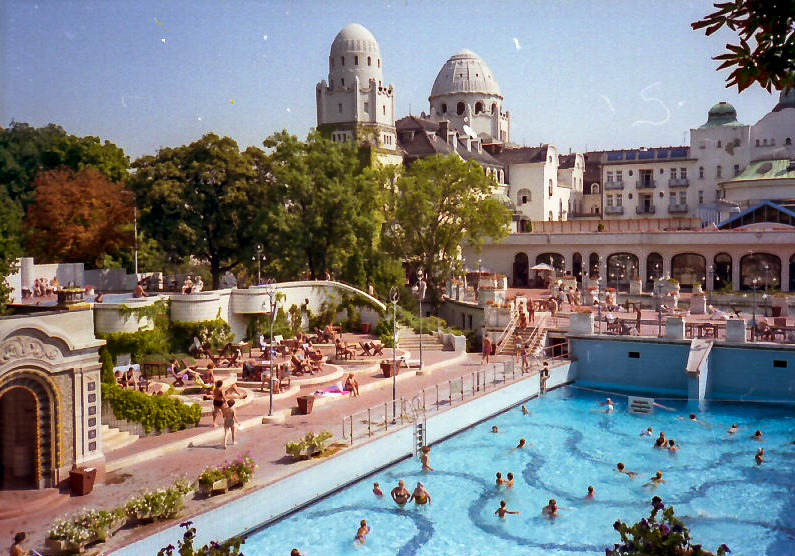
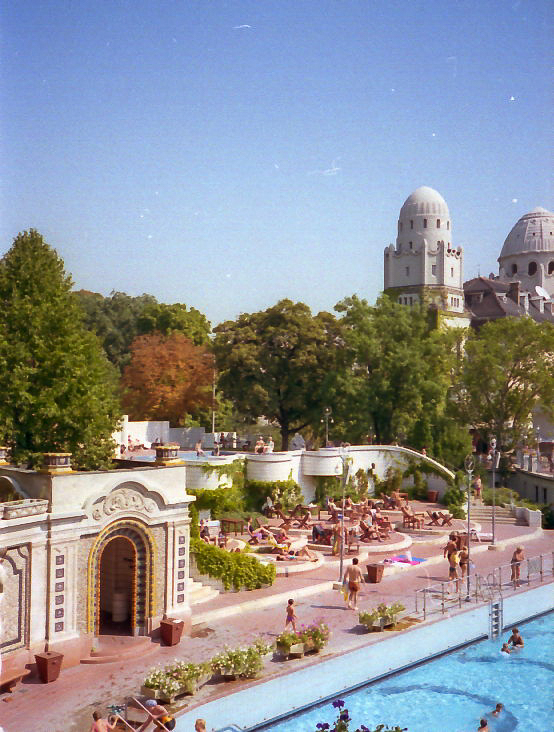
The outdoor section — wave pool, sun terrace, big rectangular splash pool — is open roughly from May to mid-September, weather depending. Outside that window the outdoor area is closed and the building turns into an indoor-only spa. That’s still plenty of building. The thermal baths, the swimming hall, the saunas, the steam rooms — all indoors and all running year-round. But if your reason for picking Gellért over Széchenyi is the famous wave pool, check the calendar before you book.


If the outdoor pool is the thing you really want and you happen to be visiting in shoulder season, ring the spa directly the day before you book — they’ll tell you if the outdoor section is running. The website is sometimes ambiguous about this and the GetYourGuide listing is sometimes ambiguous too.
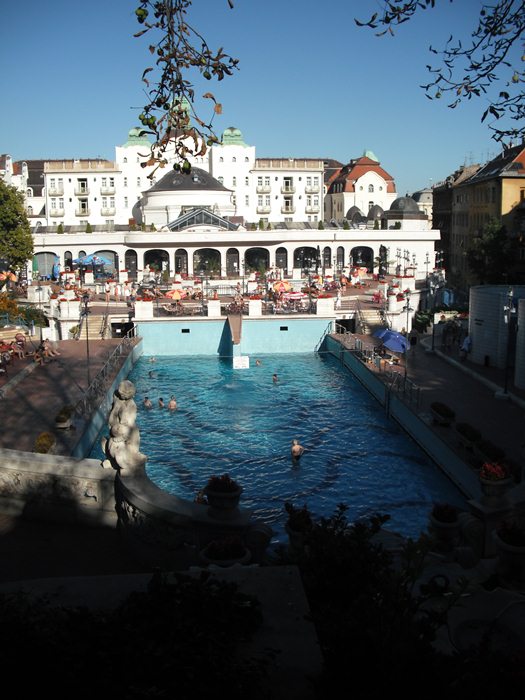

When to actually go (timing matters more than you’d think)
Weekday mornings between 9 and 11. That is the answer if you want photos of empty rooms and a thermal bath that genuinely feels like a thermal bath rather than a community pool.
The spa opens at 9 AM and the first hour is the quietest hour of the day. By midday the tour groups arrive and the indoor swimming pool starts to feel like a Tuesday afternoon at a leisure centre. Saturday is the worst day — locals come on Saturday because most of them work during the week, and the place is genuinely full. Sunday is also busy. Any weekday morning is calmer than any weekend morning.
In summer (June, July, August), the outdoor section flips that pattern — the outdoor pools are quietest first thing in the morning and crowded by mid-afternoon. So even in summer, the open-at-9 strategy still works. You get the indoor pools first while everyone else is still asleep, then move outside for the wave pool, then leave around 1 PM when the lounger situation has gotten silly.
If you’re staying in Pest and you want a more efficient morning out, this combines well with the Buda Castle area on the same side of the river. We have a full guide to Buda Castle tickets if you want to chain the two — the spa first, then walk or tram up the hill afterwards. A two-hour soak followed by an hour of fortifications is a perfectly reasonable Budapest day, and you can finish it with a Danube view from the castle terrace.

How to get there (and why the entrance is hidden)
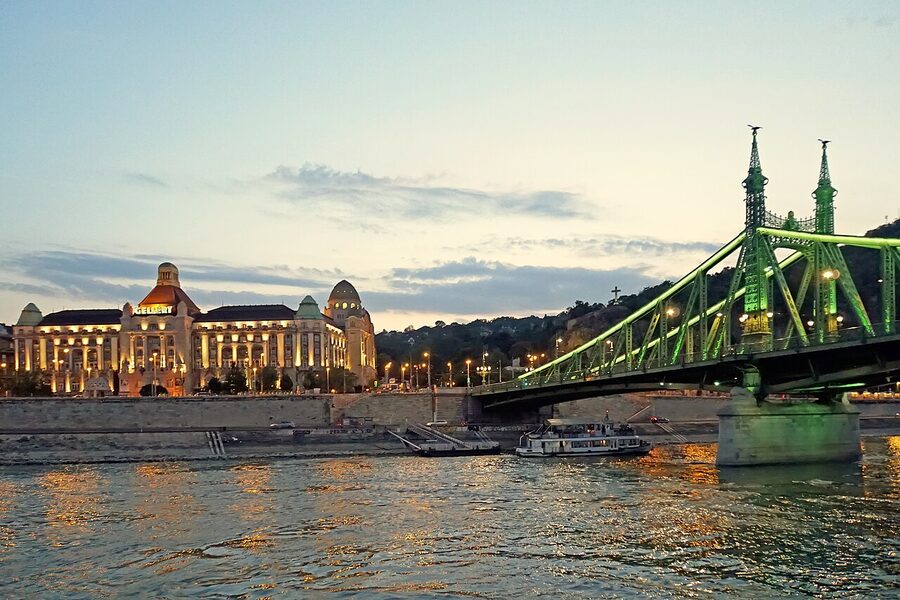
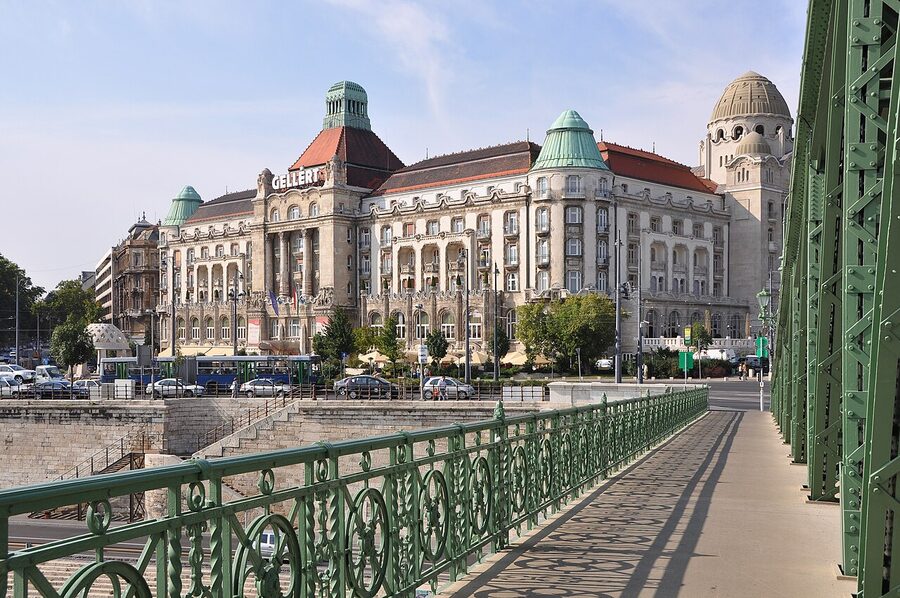
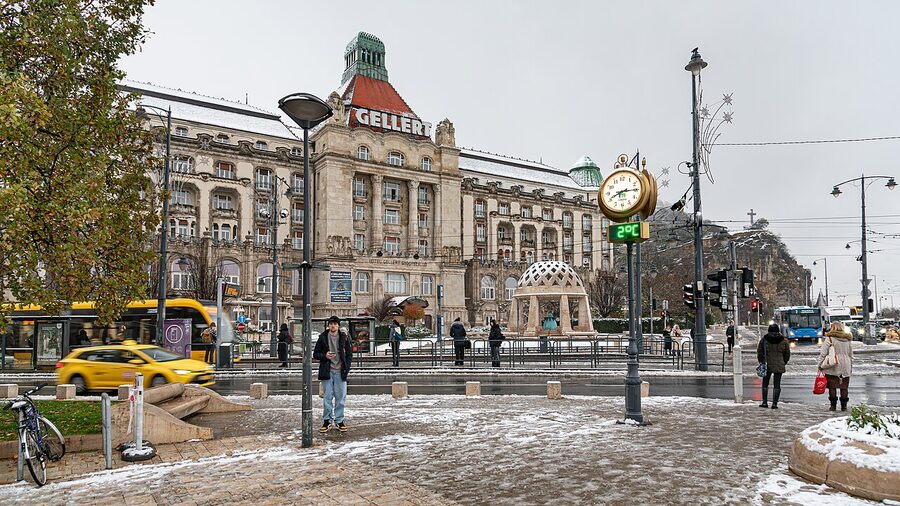
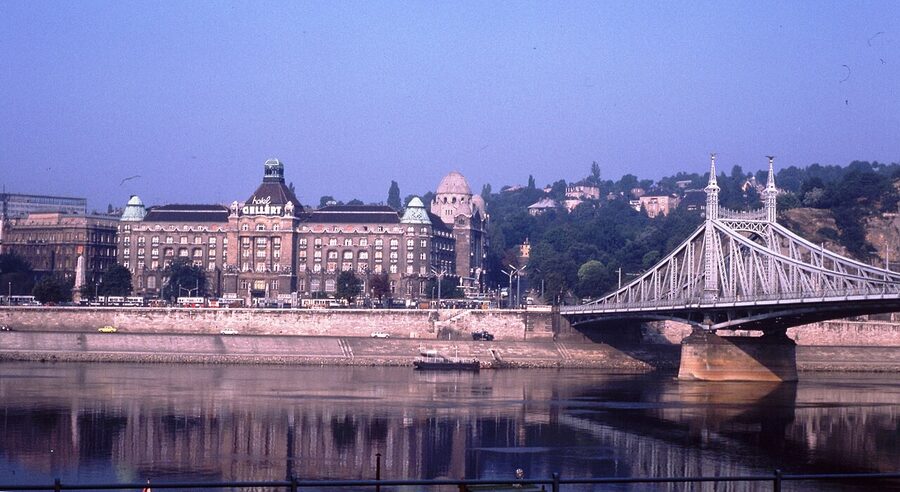
The Gellért is at the foot of Gellért Hill on the Buda side of the Danube, right at the western end of Liberty Bridge. From central Pest the simplest route is on foot — Liberty Bridge is the green metal one closest to the Central Market, and the spa is the giant Art Nouveau building waiting at the other end. Five minutes’ walk, and the bridge view of the spa across the river is one of the better budget Instagram opportunities in Budapest.
Tram 47 and 49 stop directly outside (Szent Gellért tér). Metro line 4 has a station of the same name underneath the building. From the airport, take 100E to Deák Ferenc tér and change to the tram or metro from there.
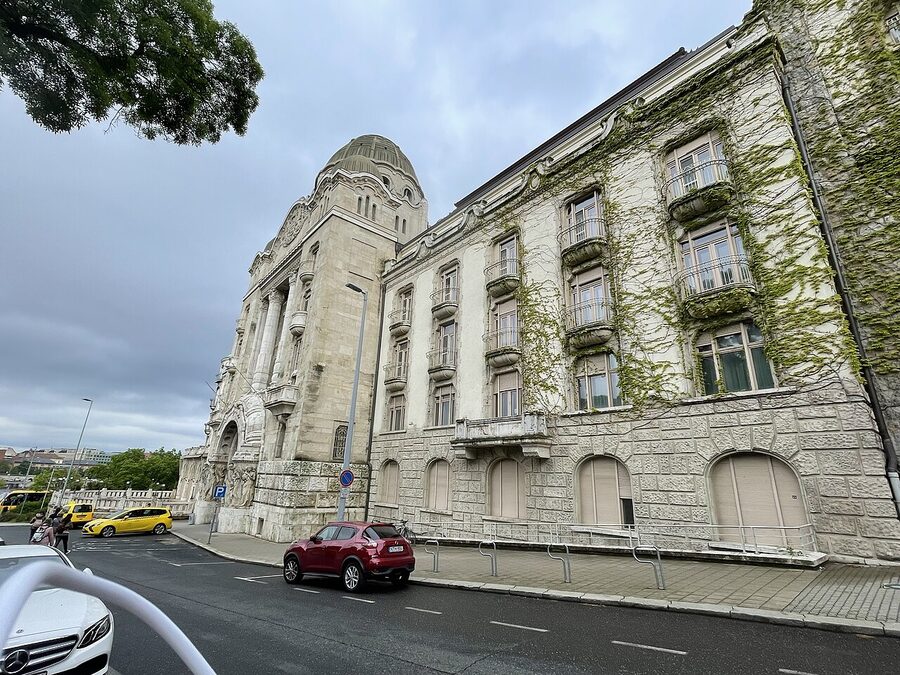
The thing nobody tells you is that the spa entrance is not the main hotel entrance. The grand front door of the Hotel Gellért is for hotel guests. The spa door is around the side on Kelenhegyi út, and it is genuinely smaller and more discreet than you’d expect for one of the most famous bathhouses in Europe. If you walk into the marble lobby with the chandelier, you are in the wrong place — turn around, walk out, and look for the side entrance with the swimming-trunk pictogram on it.
.jpg)
A short history (because the building has earned it)
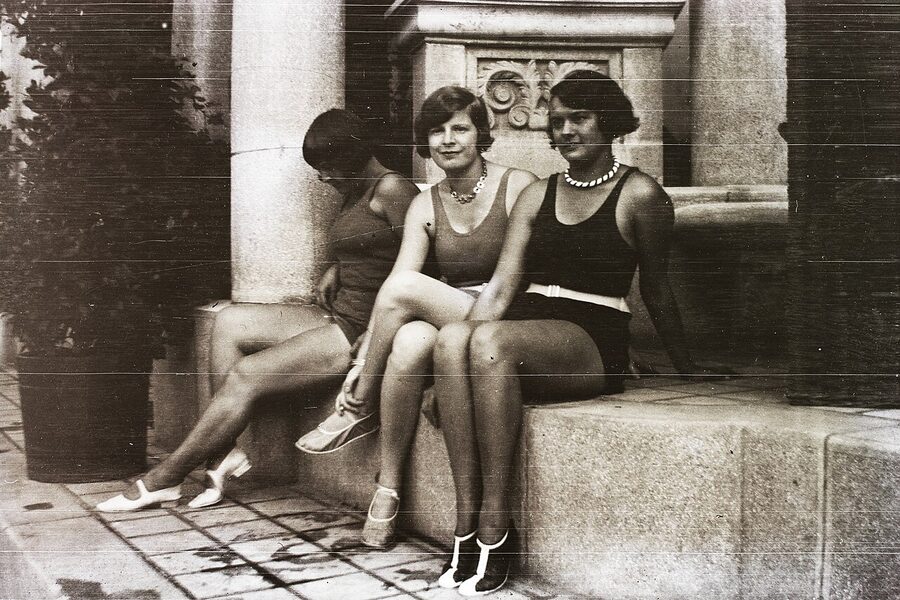
The Gellért opened in 1918, in the middle of the chaos at the end of the First World War. The hotel was already half-built when the war started; the spa portion was added on top of natural thermal springs that had been bubbling up from underneath this exact spot for at least eight hundred years. The Knights Hospitaller had a hospital here in the Middle Ages, the Ottomans built bathhouses on the site during their occupation of Buda in the sixteenth century, and the modern Art Nouveau structure is the latest in a chain of buildings that have all been doing roughly the same thing — capturing hot mineral water for tired bodies — for the better part of a millennium.
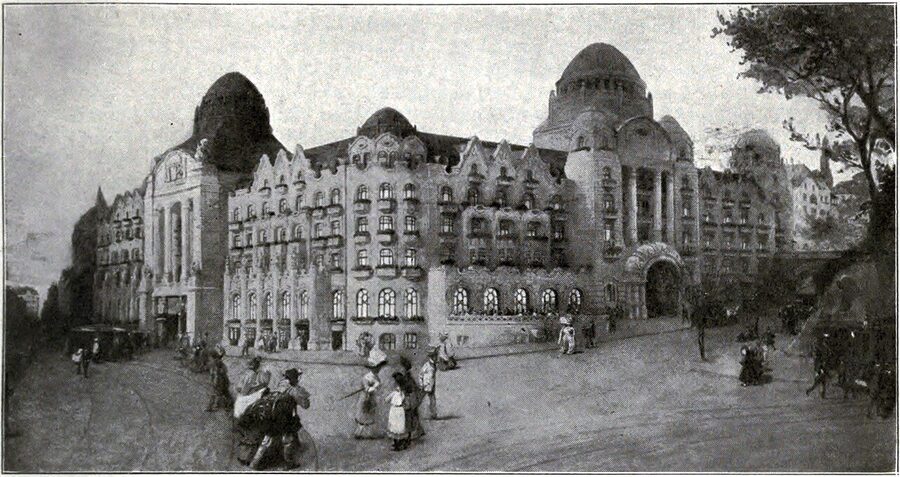
The spa took serious damage in the Second World War — the Battle of Budapest in 1944-45 left a lot of the building shelled, and the rebuilding took years. The communist period preserved it as a working public spa, which sounds like faint praise but it’s actually the reason the place still exists in something like its original state. A privatized 1990s tourist version of the same building would have looked very different. As it is, the 2008 renovation cleaned up the tiles and restored the stained glass without changing the bones of the place. You are still walking through what is essentially the building Hungarian poets and Soviet engineers and 1970s factory workers all walked through.
The thermal water itself comes from springs at about 47 degrees Celsius, and it is rich in calcium, magnesium, and a bunch of other minerals that the official literature claims are good for joints, circulation, and skin conditions. I won’t make medical claims. What I will say is that an hour in 36-degree water followed by ten minutes in a 60-degree sauna and a cold plunge is genuinely restorative, and the building helps. Soaking in a thermal bath is one experience. Soaking in a thermal bath in a 1918 Art Nouveau hall with stained glass and floor mosaics is a different experience.

Things I’d actually do differently
A few practical bits I wish someone had told me the first time:
Bring small Hungarian forint notes. The lockers want a coin or a wristband deposit, the snack bar takes cash for forint pricing only, and the towel rental kiosk likes notes under five thousand. Forex booths inside the spa give you a worse rate than the supermarket on the corner.
Eat before you go in. There’s a snack bar inside but it is utilitarian — sausage rolls, beer, sandwiches that have been sitting under a heat lamp. If you want a real meal, the cafés on Bartók Béla út two blocks back are far better and cheaper. Or do what I do — get out, sit on the wall by the river for ten minutes, then walk over to Pest and find lunch.
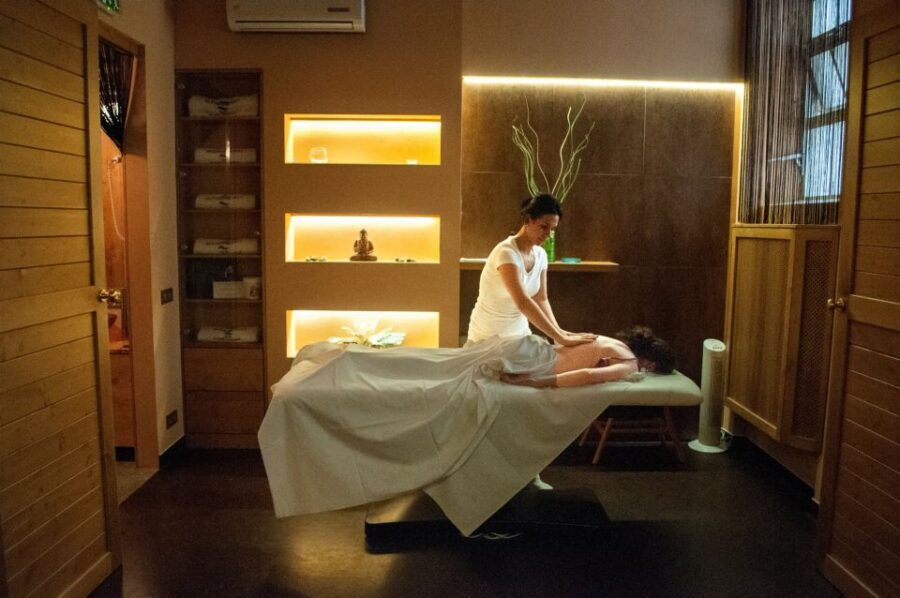
Don’t book the massage upgrade unless you actually want a massage. The optional massage on the cabin-or-locker ticket is a real Hungarian-style massage in a fairly clinical room. It’s good. It is not a luxury spa experience with rose petals. It is a gruff Hungarian massage therapist working on your shoulders for fifteen minutes. If that’s what you want, book it. If you were imagining something else, save your money.
Wear flip-flops in the changing area. The marble floor is wet all day and the path between the changing rooms and the pools is the only really treacherous bit of the whole spa. Tile plus water plus flip-flops equals a normal walk; tile plus water plus bare feet equals a slow careful shuffle.
Don’t overstay. Three hours is plenty for most people. Four hours and you start to look like a sultana. Most of the locals do an hour to ninety minutes — long enough to get the benefit, not long enough that you start craving dry land.

What to do with the rest of your day
You’ll come out of the Gellért slightly dazed, slightly damp at the edges, and very ready for a coffee. The good news is that you’re in one of the best-located parts of Budapest for the rest of an afternoon.
Walk back across Liberty Bridge into Pest and you’re at the Central Market — three floors of paprika, cured sausages, cheap lángos, and a few decent souvenirs. From there it’s a short walk along the river to Vörösmarty tér and the upper end of the central tourist trail. If you’d rather stay on the Buda side, hike Gellért Hill behind the spa for the best free view of Budapest, or walk twenty minutes north to the Buda Castle district. Our Buda Castle ticket guide covers what to do up there once you make it.
For Hungarian Parliament, which is the other photogenic Budapest icon, the simplest plan is the next morning — you can’t realistically squeeze it in after the spa unless you start very early. We’ve got a guide to visiting the Parliament separately. If your spa morning has stretched into afternoon, the better evening plan is a Danube cruise: the spa is a five-minute walk from the boat docks at Vigadó tér via Liberty Bridge, and our guide to Danube cruises covers which ones are worth booking and which to skip. Or if you’d rather see the city from the saddle than the deck, our Budapest bike tour guide picks the better routes — most of them follow the river and pass within a hundred metres of the spa.
If you’re putting together a full Budapest itinerary, the rest of the cluster fills out nicely. St Stephen’s Basilica is a quick stop on the Pest side. The other Budapest spa, Széchenyi, is its own half-day if you decide one spa wasn’t enough.
One last honest thing
The Gellért is a real working public bath. The locals come for arthritis, bad backs, hangovers, and the small social rituals of a country that has been doing thermal bathing for nine hundred years. As a tourist you are welcome — they need the money — but you are a guest in someone else’s living room. Keep your voice down in the indoor pools. Don’t take photos of strangers. If an elderly Hungarian gestures at the bench beside him, sit down. Things will work out.
That, more than the architecture, is the real reason to pick the Gellért over Széchenyi. Széchenyi is a great photo. Gellért is an actual hour you’ll remember.