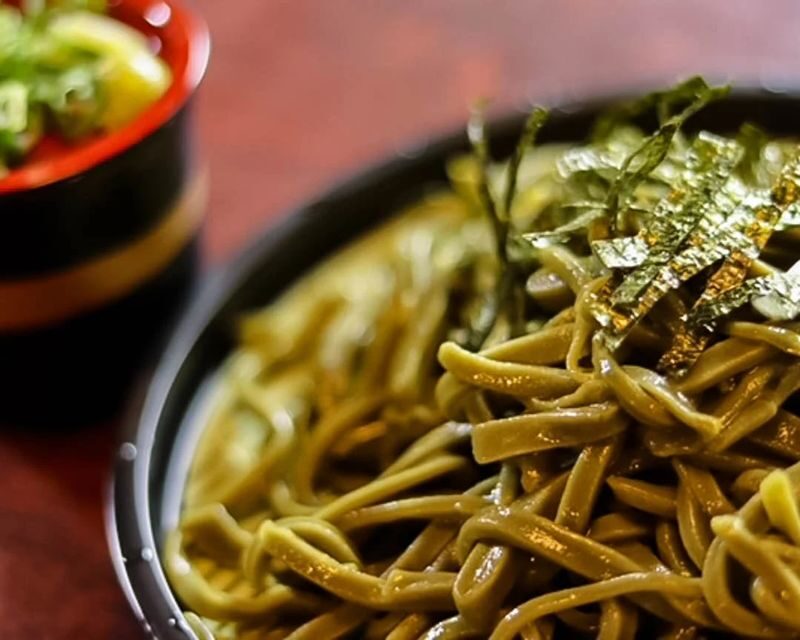
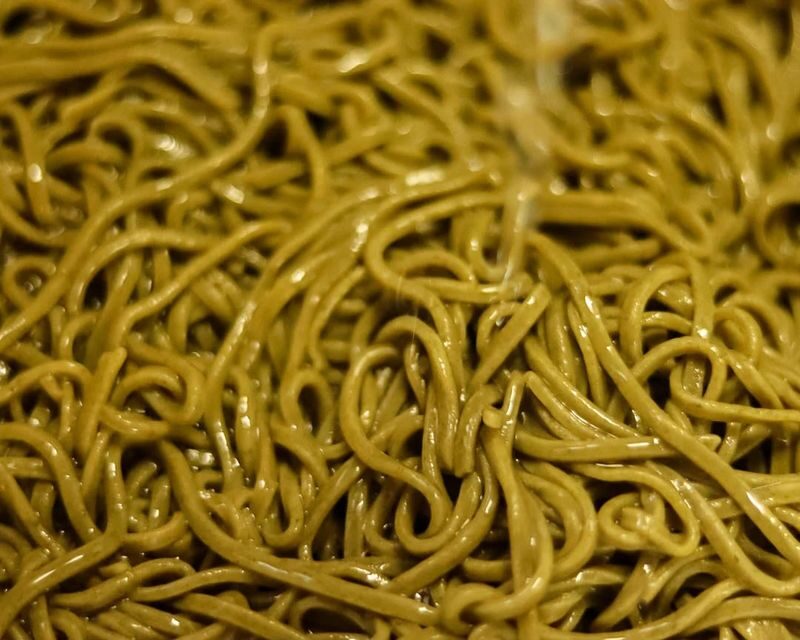
Cha soba brings two parts of Kyoto food culture together: buckwheat noodles and sencha tea. In this class in Wazuka, a tea-growing area of Soraku District, you make the green-hued noodles yourself, learn about tea’s place in local life, and sit down to eat what you have made.
I like that the class connects a practical cooking activity with Wazuka’s tea culture, rather than treating the noodles as a novelty on their own. I also like the inclusive price: ingredients, utensils, a meal, beverages, matcha tea, and sweet chadango dumplings are included.
One point needs checking before you book: the duration is listed as 8 minutes, which does not seem to fit a hands-on cooking class with a meal. The eating portion alone can vary by about 20 minutes, so confirm the actual schedule with the provider before arranging the rest of your day.
- At a glance
- Why cha soba suits Wazuka
- From tea powder to a bowl of noodles
- Tea, sweets, and the meal
- Getting to Wazuka from Kyoto
- Who should book this class
- Practical details to settle before booking
- Should you book the cha soba class?
- FAQ
- How long does the cha soba class last?
- Where does the class meet?
- How do I get to Wazuka from Kyoto Station?
- What is included in the price?
- Can I join if I have a buckwheat allergy?
- Can children take part?
- Is the activity wheelchair- and stroller-accessible?
- What are the cancellation terms?
- The Best Of Kyoto!
- More Cooking Classes in Kyoto
- More Tours in Kyoto
- More Tour Reviews in Kyoto
At a glance
 1 / 8
 2 / 8
 3 / 8
 4 / 8
 5 / 8
 6 / 8
 7 / 8
 8 / 8
- Wazuka tea country: The class takes place in a Kyoto region known for high-quality tea.
- Sencha in the noodles: Make cha soba by combining tea powder with buckwheat.
- More than a cooking lesson: Learn about tea culture and the etiquette for eating cha soba.
- Food is included: Your booking includes ingredients, utensils, a meal, beverages, matcha, and chadango.
- Choose your set: Options include the basic sencha class, Wazuka Set, Tempura Set, Dessert Set, and a version with a tea gift.
- Plan the journey: The stated public-transit trip from Kyoto Station is about 1.5 hours, and the listed class duration needs clarification.

👉 See our pick of the We Rank Kyoto’s 15 Top Workshops & Classes
Why cha soba suits Wazuka
Wazuka is known for its tea, and cha soba gives that local product a role beyond the teacup. The dish combines sencha-style tea powder with buckwheat noodles, so the class offers a direct, edible link between the region’s agricultural identity and Japanese cooking.
Cha soba is described as a dish often eaten for special occasions. That makes the lesson useful for more than learning a recipe: you also hear about where the dish fits into food culture and how it is traditionally eaten. The class includes guidance on cha soba etiquette, followed by time to try the meal yourself.
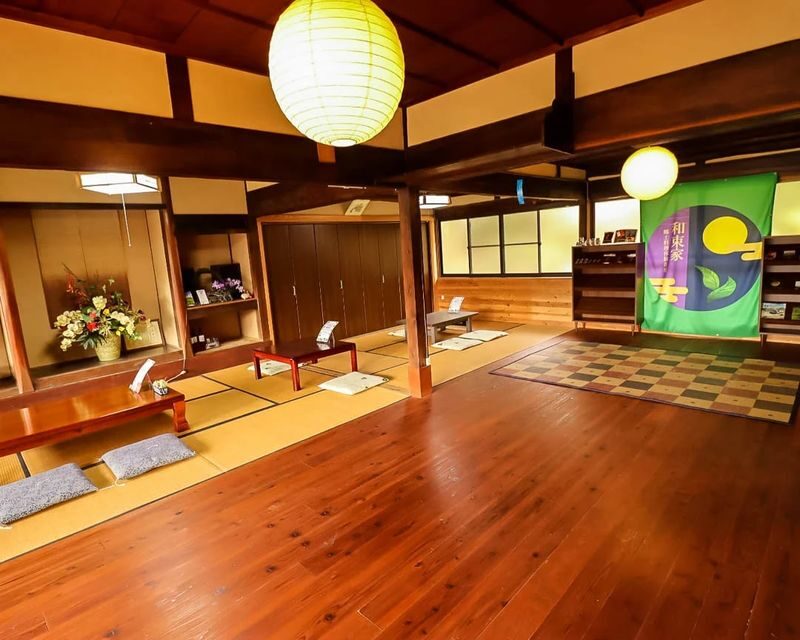
The setting is presented as an authentic Japanese tea house, a fitting place to talk about tea while tasting it. Still, the practical details name Katsura Barber Shop as the meeting point, while the address also gives the Japanese name 蕎麦打ち体験教室 和束家. This may simply be how the location is identified, but check the exact instructions and map details on your voucher rather than assuming the meeting point will look like a tea shop.
You can also read our reviews of more cooking classes in Kyoto


From tea powder to a bowl of noodles
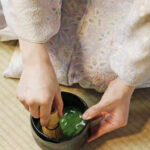
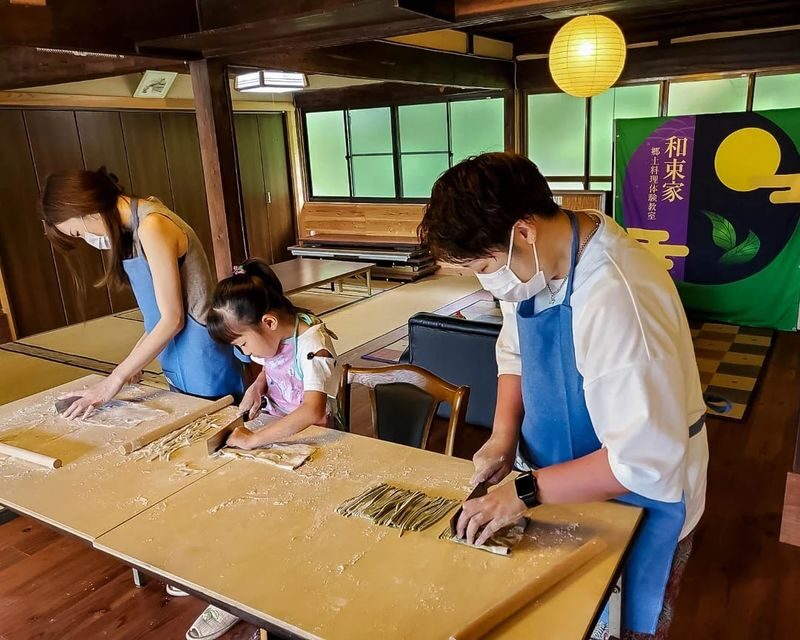
The main activity is making cha soba with sencha and buckwheat. You work with top-quality tea powder and cooking utensils supplied for the class. The details do not specify every stage or how much hands-on time each participant gets, so I would not book expecting a technical masterclass in noodle production. Think of it as a cultural cooking session: you make a regional dish while learning why tea belongs in it.
If you are not an experienced cook, that should not put you off. The class is described as approachable for beginners, and the central reward is taking part in a distinctive local food tradition, not producing restaurant-perfect noodles. You can expect to learn by doing, though the exact level of host assistance is not specified.
A guide who speaks English and Japanese is included. The host’s English is limited, so a translation machine may be used. That is worth knowing if you want a detailed conversation about ingredients or tea traditions. It need not prevent you from following a practical cooking activity, but you may want to keep questions clear and simple.
The class also covers etiquette for eating cha soba. That detail adds real value: food customs can be hard to pick up from a menu, and learning them while eating the dish makes the lesson immediately useful. You can leave with a better sense of not just what cha soba is, but how it is meant to be enjoyed.
Tea, sweets, and the meal
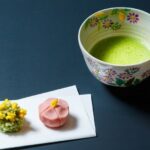
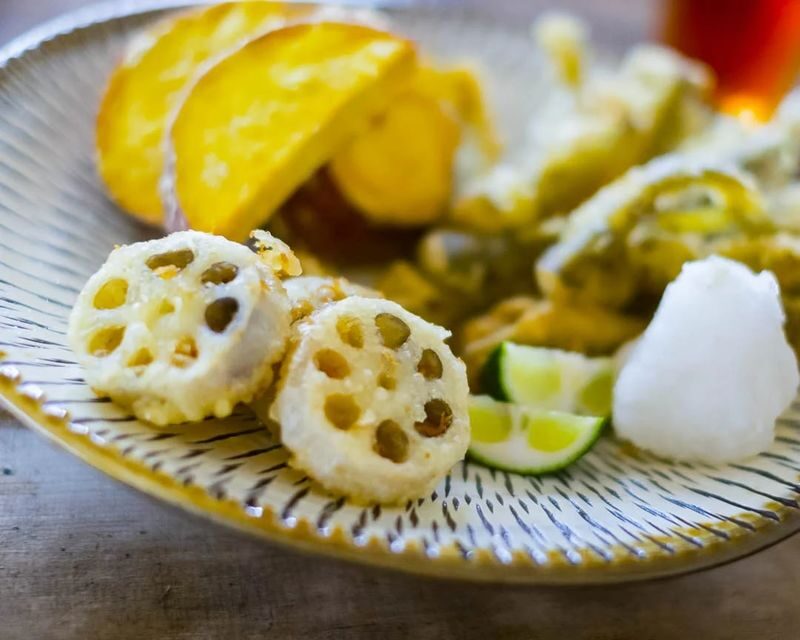
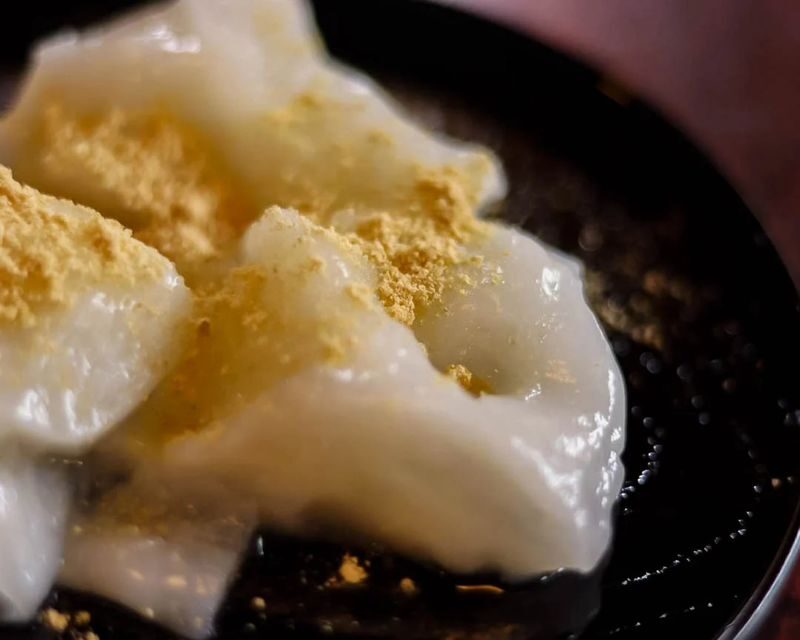
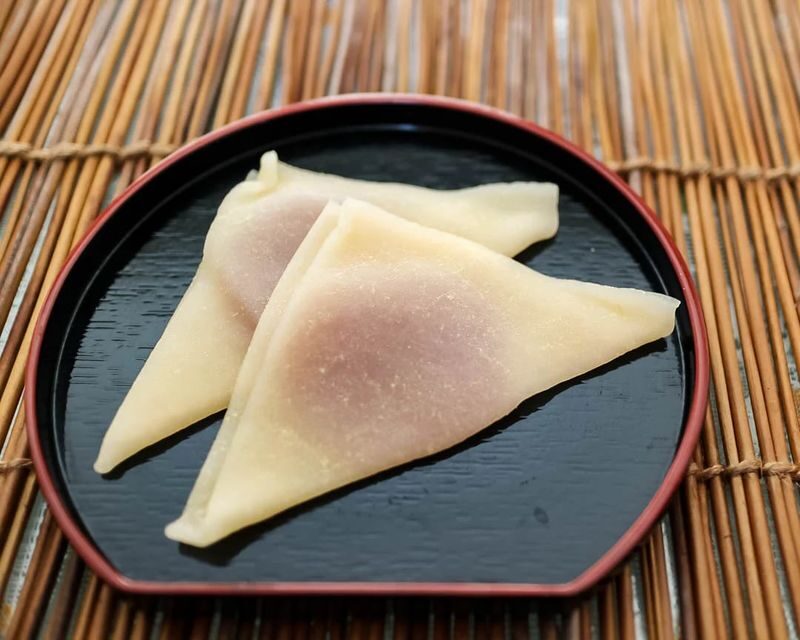
After making the noodles, you sit down to eat. The meal and beverages are included, along with Wazuka matcha tea and skewered sweet chadango dumplings. The combination gives the class a pleasant finish: you taste the noodle dish, then sample tea and a local-style sweet rather than ending as soon as the cooking is done.
The eating time can vary by about 20 minutes depending on the group. That small but useful note means you should leave breathing room after the class, especially if you have a bus connection to catch. The stated duration of 8 minutes is too short to plan around confidently, given that the activity includes cooking, instruction, and eating. Confirm the total time directly before booking.
There are several package choices, with prices starting at $44.19 for Making Cha Soba with Sencha. The Wazuka Set, Tempura Set, and Dessert Set start at $52.45, while Making Cha Soba + Gift (Taberu Cha) starts at $50.95. The supplied details do not spell out exactly what each package adds, so compare the options at checkout rather than assuming the names describe every inclusion.
For value, the base price already covers the core activity and the food and drink listed above. That makes it easier to judge than a cooking class where ingredients or a meal are extra. The higher-priced packages may suit you if their specific additions appeal, but the standard class looks like the straightforward choice if your main goal is to make cha soba and learn about tea.
Getting to Wazuka from Kyoto
This is a countryside activity, not a quick stop in central Kyoto. The information gives different journey estimates: one note says about an hour from Kyoto Station by train and bus, while another says around 1.5 hours by public transportation. The more detailed route describes taking a train to JR Kamo Station, then transferring at the west exit to a bus for Wazukatakahashi, about an eight-minute ride from Kamo.
Because the total travel time is not consistent, allow generously and check current train and bus times for your date. The trip is part of the commitment, and a late arrival can cost you the class: anyone more than 15 minutes late cannot participate. If delayed, notify the host.
Driving is estimated at about one hour from Kyoto Station. Transport is not included, so you need to arrange and pay for your own journey. Your voucher is expected to provide detailed location information after booking confirmation; use that to verify the exact meeting point before setting out.
Who should book this class
This class makes the most sense if you want a food activity with a clear connection to the place you are visiting. Wazuka’s tea reputation is central to the experience, and the noodles give you a hands-on way to explore it. It suits curious eaters, tea fans, and beginners who like the idea of making a regional dish without needing prior cooking skills.
It is also a good fit if you want a meal and cultural context in one booking. You do not just make the noodles and leave: the class includes tea, sweets, and time to eat, plus guidance on etiquette. Families may consider it too, though the venue is not stroller- or wheelchair-accessible. Children aged 1 to 4 are free, but they must still be included in the passenger headcount. Children aged 1 to 12 need a paying adult with them, and those 13 or older pay the adult rate.
This is less suitable if you have a buckwheat allergy, since people with buckwheat allergies cannot participate. Tell the host in advance about allergies or dietary restrictions. It may also be a poor fit if you have a tight Kyoto itinerary, because the countryside transfer takes time and the stated class duration is unclear.
You can also read our reviews of more tours and experiences in Kyoto

Practical details to settle before booking
The meeting point is listed as Katsura Barber Shop, Hatsuohira-21-1 Ishitera, Wazuka, Soraku District, Kyoto 619-1221. A second address format says Hatsuohira-21 Ishitera, and the Japanese business name is also provided. Check the voucher’s location details carefully, since the address wording varies.
A mobile voucher is accepted. Confirmation is due 72 hours before the activity; if it does not arrive, contact customer support. The voucher is valid only for the date and time shown. Full refunds are available if you cancel at least 72 hours before the activity, using the destination’s local time.
The class is not wheelchair- or stroller-accessible. Dates outside the regular calendar may be available for groups of 10 or more, so larger parties can ask about arranging another date.
Should you book the cha soba class?
Book it if Wazuka’s tea culture interests you and you are happy to spend a substantial part of the day getting out of Kyoto for a hands-on meal. The strongest reasons to go are the unusual sencha-and-buckwheat combination, the chance to make the dish yourself, and the included tea and sweets.
Before paying, confirm the actual duration and the exact meeting location. Those are the two details most likely to affect your plans. If you can accommodate the journey, have no buckwheat allergy, and want a local food activity rather than a quick city-center lesson, this is a distinctive choice. If your schedule is tight, the travel time may outweigh the appeal.
Kyoto Countryside Classics: Cha Soba Cooking Class
“This was so fun. We are far from great chefs but the experience is empowering even for beginners. A very unique experience that we would like to do…”
FAQ
How long does the cha soba class last?
The duration is listed as 8 minutes, but that seems inconsistent with the cooking and meal included. Eating time alone can vary by about 20 minutes, so confirm the total schedule with the provider before booking.
Where does the class meet?
The meeting point is Katsura Barber Shop, Hatsuohira-21-1 Ishitera, Wazuka, Soraku District, Kyoto 619-1221. The voucher provides detailed location information after booking confirmation.
How do I get to Wazuka from Kyoto Station?
The route described is a train to JR Kamo Station, then a bus from the west exit to Wazukatakahashi. The bus ride is about 8 minutes. The total public-transit journey is estimated at around 1 to 1.5 hours, so check the schedule for your date.
What is included in the price?
The class includes an English- and Japanese-speaking guide, ingredients, cooking utensils, meals and beverages, Wazuka matcha tea, and sweet chadango dumplings.
Can I join if I have a buckwheat allergy?
No. People with buckwheat allergies cannot participate. Inform the host in advance about allergies or dietary restrictions.
Can children take part?
Children aged 1 to 4 are free but must be included in the passenger headcount. Children aged 1 to 12 must be accompanied by a paying adult. Children aged 13 and older are charged the adult rate.
Is the activity wheelchair- and stroller-accessible?
No. The activity is not wheelchair- or stroller-accessible.
What are the cancellation terms?
A full refund is available if you cancel at least 72 hours before the activity date, using the destination’s local time.