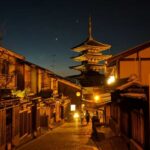
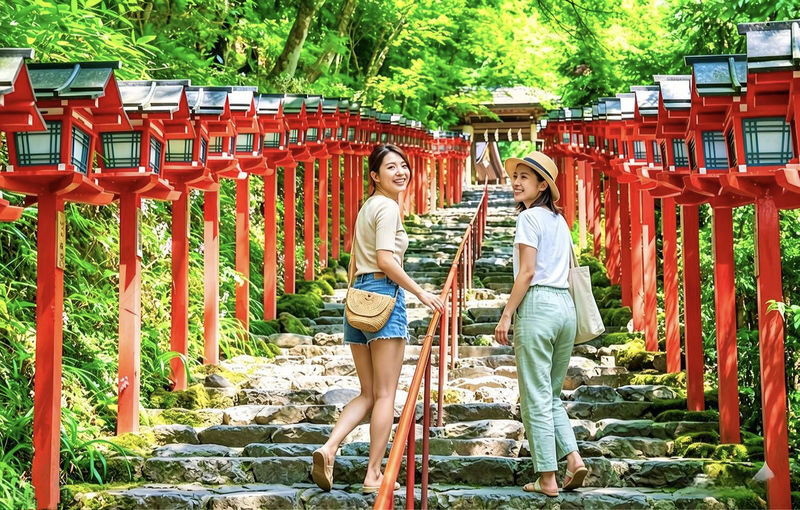
Kifune Shrine’s stone steps, lined with red lanterns, make a striking counterpoint to the mossy calm of Sanzen-in and the green bamboo of Arashiyama. This day trip links places that can take effort to reach on your own, then gives you time to explore them at your own pace.
I like the contrast between quiet temple gardens and Kyoto’s livelier river-and-bamboo scenery, and the convenience of a minibus connecting distant stops. I also like that you can choose a version with an Eizan or Sagano train ticket, rather than paying for a rail experience you may not want.
The trade-off is a packed day with several distinct stops, not a slow, guided temple visit. The standard meeting-point option excludes small-train tickets, and the precise route depends on the package you book, so check those details before paying.
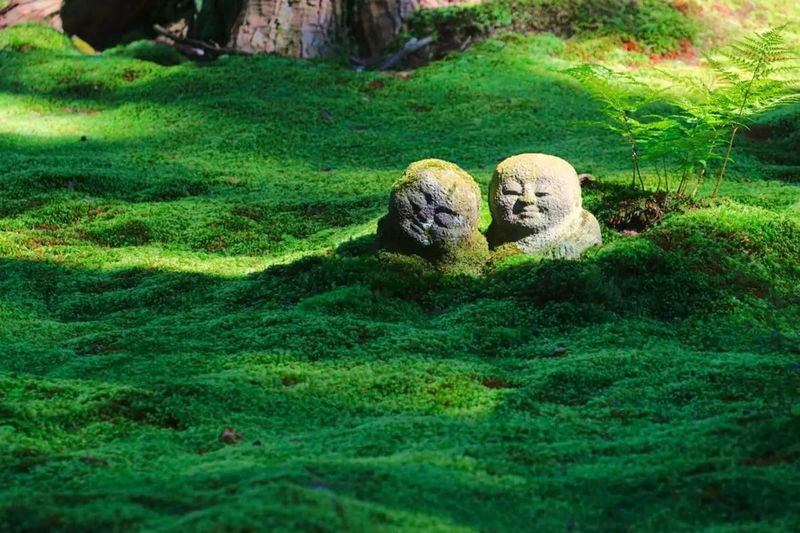
- Sanzen-in’s moss and old trees offer a calm start among shaded gardens and temple halls.
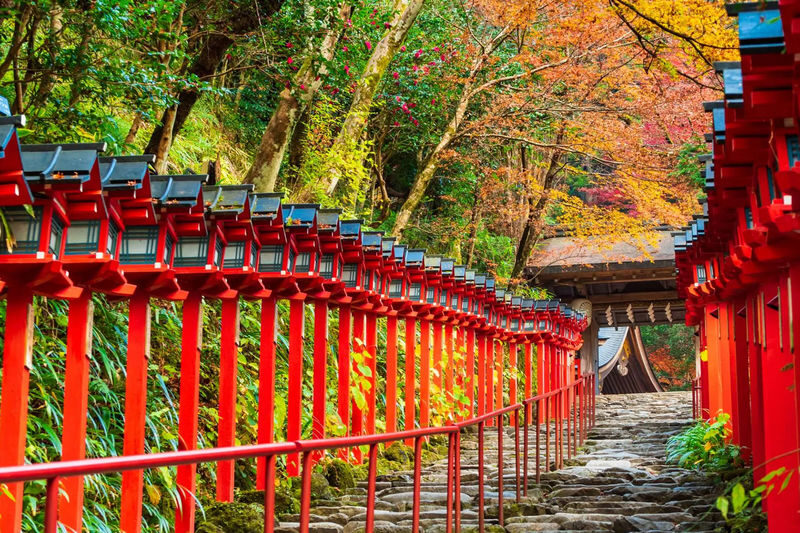
- Kifune Shrine’s lantern steps are a memorable photo stop and a place to try water fortune-telling.
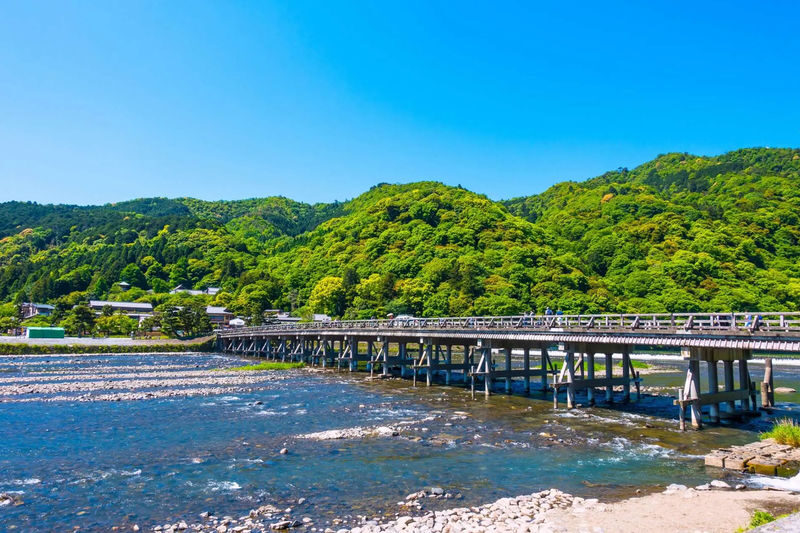
- Arashiyama’s bridge and bamboo path bring river views and a change of pace from the temple grounds.
- Rail tickets are package-dependent: the Eizan and Sagano options are separate from the basic meeting-point plan.
- Free time is part of the appeal, but you will need to keep an eye on the schedule at each stop.
- Round-trip minibus transport saves you from piecing together several journeys across Kyoto.
- A long Kyoto day, made easier by minibus
- Sanzen-in: moss gardens and a quieter Kyoto
- Kifune Shrine: lanterns, steps and water fortunes
- Arashiyama: bridge, bamboo and the train question
- Eizan Electric Railway: a different route into the hills
- What the day’s pace feels like
- Price, packages and what you actually get
- Practical details before you book
- Who should book this Kyoto day trip?
- FAQ
- Where does the tour depart from?
- Where does the tour return?
- Are Sagano Romantic Train tickets included?
- Is the Eizan Electric Railway ticket included?
- Is a tour guide included?
- Are meals and drinks included?
- How many people can ride in the vehicle?
- Is the tour suitable for children?
- Can I book another activity after the tour?
- The Best Of Kyoto!
- More 1-Day Tours in Kyoto
- More Tours in Kyoto
- More Tour Reviews in Kyoto
A long Kyoto day, made easier by minibus
 1 / 9
 2 / 9
 3 / 9
 4 / 9
 5 / 9
 6 / 9
 7 / 9
 8 / 9
 9 / 9
This is a full-day outing, with departures from Osaka or Kyoto and a small minibus carrying up to 13 passengers, not including the driver. Round-trip transfers, tolls, parking, fuel and environmental fees are included. The professional driver may speak Chinese, English or Japanese, but a tour guide and audio guide are not included.
That distinction matters. You get transport between far-flung stops and time to look around independently, but you should not expect a guide to lead you through each temple or explain its history on site. If you like deciding how long to linger over a garden or where to pause for a photograph, the self-guided format is a plus. If you want a running commentary, it may feel sparse.
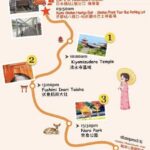
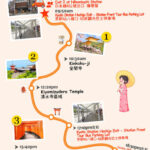
The attraction mix changes according to the selected package. Sanzen-in and Kifune Shrine are central to the described routes, while Arashiyama sights and the Eizan or Sagano rail experience depend on the option. Some route details also mention Nanzen-ji and Eikan-do. Read the exact package description at checkout rather than assuming every named stop and train ride comes with every version.

👉 See our pick of the We Rank Kyoto’s 15 Top Workshops & Classes
Sanzen-in: moss gardens and a quieter Kyoto
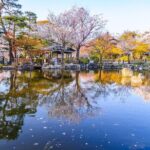
Sanzen-in is the sort of stop that rewards a slower walk. The grounds are described through towering old trees, moss spread beneath them, clear streams and elegant halls. The effect is less about ticking off a single famous view and more about letting the shade and stillness set the pace.
You can walk through the temple grounds on your own, which suits anyone who wants a little breathing room after the drive. Look for the interplay of moss, water and tree shadows, then take time around the guest halls and main halls. The scenery changes with the seasons, so the garden’s mood will vary with the weather and month.
One caution: a full day with several stops means Sanzen-in is not necessarily a long, unhurried temple visit. One traveler described the attractions as beautiful but felt there was not enough time to experience them fully. If Sanzen-in is your main reason for booking, keep that possibility in mind and ask how much time your chosen route allows.
You can also read our reviews of more tours and experiences in Kyoto

Kifune Shrine: lanterns, steps and water fortunes
Kifune Shrine is known here for the striking approach to its main shrine, where rows of vermilion lanterns line the stone steps. It is a particularly atmospheric stop, with a different feel in summer greenery and autumn colour. The shrine is associated with the deity Iwanaga-hime no Mikoto, and the route information highlights its reputation as a place to pray for good fortune in love.
There is also a distinctive water fortune-telling practice. The combination of mountain setting, steps and lanterns makes Kifune a rewarding stop even if you are not visiting for a specific prayer. After rain, the air can feel especially fresh, though the weather itself is never something the operator can promise.
Be prepared to walk. The path and stone steps are part of the experience, not a short photo stop beside the vehicle. Wear closed shoes, and dress for the day’s conditions. The activity is not recommended for people with impaired mobility, pregnant participants or anyone with certain medical conditions, including high blood pressure or epilepsy.
Arashiyama: bridge, bamboo and the train question
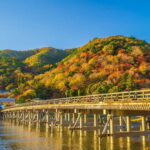
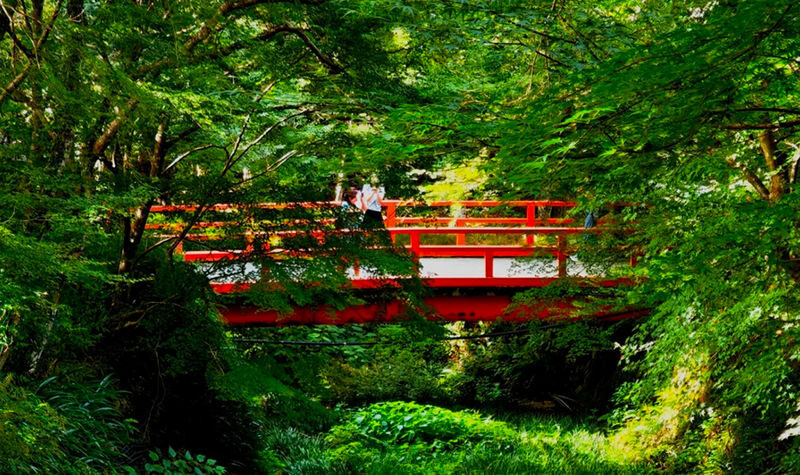
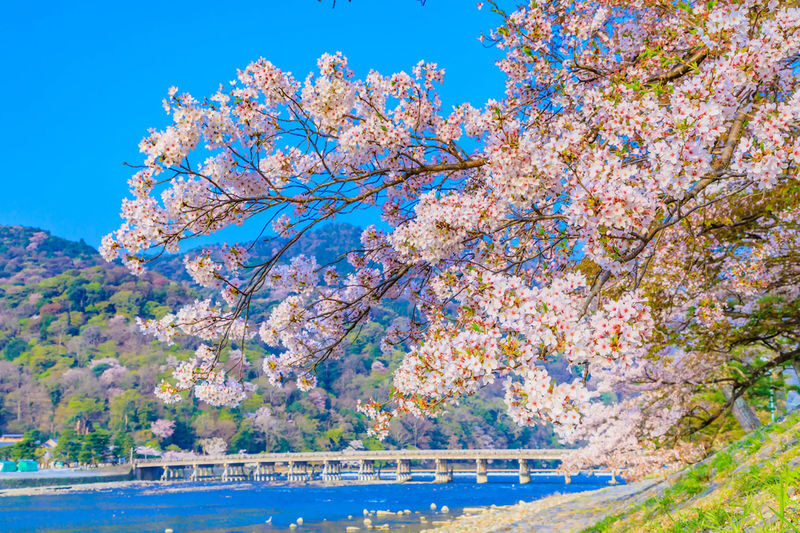
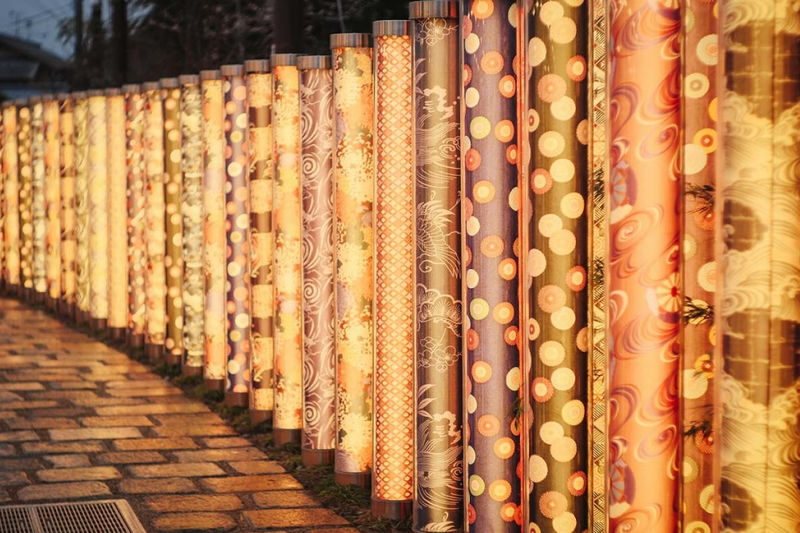
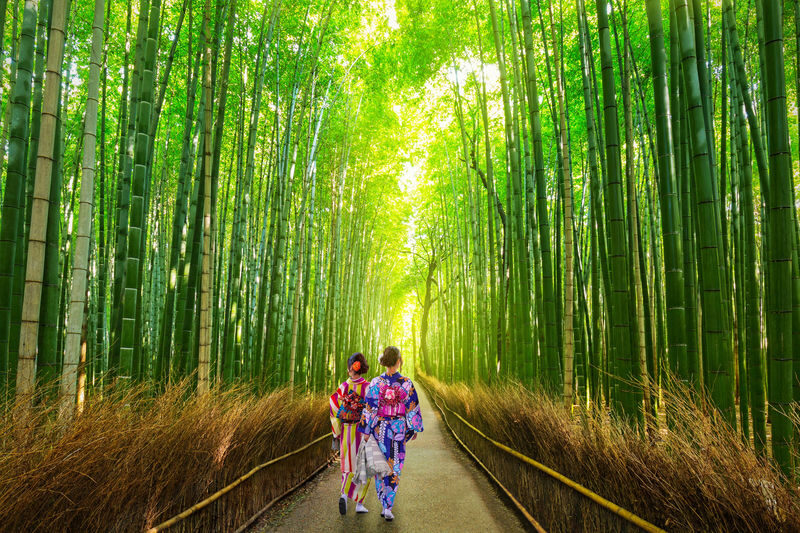
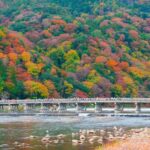
Arashiyama brings together several different kinds of scenery. Togetsukyo Bridge spans the river with green hills in view, while the bamboo grove path offers a shaded walk among tall stalks. The Kimono Forest, also called Yuzen no Korin in the tour highlights, adds a colourful art stop inspired by Kyoto Yuzen textiles.
The route information also names Tenryu-ji, a World Heritage site, with its temple buildings and garden setting. The exact Arashiyama stops and time available depend on the selected tour version and day’s schedule. You should not assume you will have time to visit every named sight at length.
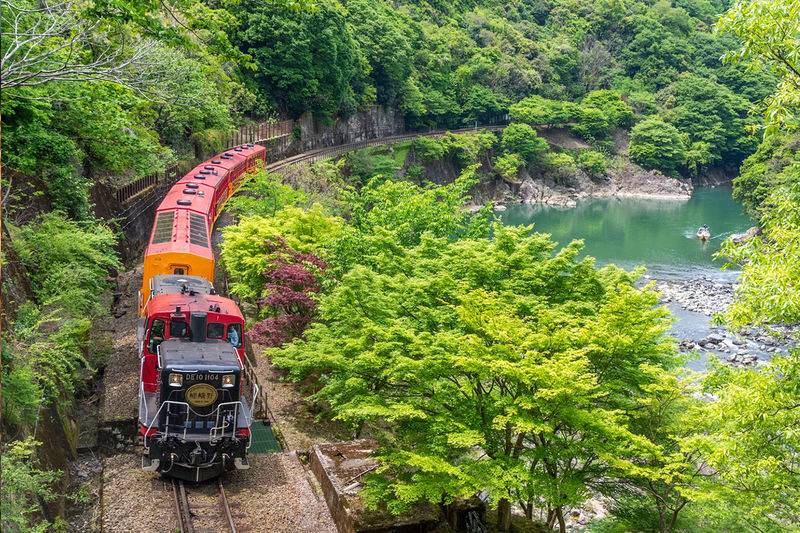
The train choice needs special attention. The basic meeting-point package excludes small-train tickets. A separate Sagano Romantic Train package includes that experience and hotel pickup and drop-off, while another package includes an Eizan Electric Railway ticket. These are different rail experiences, not interchangeable names for one ride.
If the Sagano package is your choice, know that the train seats may not offer the same view from both sides. A seat arrangement has been a point of dissatisfaction for some, and group members may need to coordinate entry and exit. Treat the train ride as a pleasant extra, not a guarantee of the best seat or a private carriage.
Eizan Electric Railway: a different route into the hills
The Eizan option is framed as a ride into Kyoto’s mountain scenery, with views of new greenery, streams and forest along the way. It can add a welcome change from road travel and temple grounds, particularly if you enjoy seeing a place from the window rather than making every stop on foot.
This version’s route information also includes Nanzen-ji and Eikan-do, alongside Sanzen-in and Kifune Shrine. These temples bring a more traditional Kyoto focus, while the railway adds a scenic journey between locations. Since the tour is self-guided at the stops, you can explore independently, but you will need to manage your own time and follow the driver’s instructions for meeting back up.
The Eizan ticket is included only in the package specifically labelled as including it. Confirm the selection carefully: the meeting-point package without small-train tickets is a different price and inclusion set.
What the day’s pace feels like
Departures are offered at 8:30 or 9:20, with the selected time confirmed at booking. The route is a long one, and return estimates are around 17:00 in Kyoto or 18:00 in Osaka, depending on the departure option. Traffic and weather can affect arrival, so do not schedule a tight dinner reservation, train connection or other activity afterward.
The time blocks shown for stops are cumulative points in the day, not clear individual visit durations. In practice, expect a schedule that connects several sights rather than one long stay at any one place. The upside is breadth: you can see temple gardens, a mountain shrine and Arashiyama in one outing. The downside is that each stop competes for your attention and time.
Service and driving are important on a day with this much road travel. Driver names associated with the operation include Mr. Song, Haowen, Ultraman, Wang and Xiao Song, but assignments vary and you cannot book a particular person. The strongest compliments are about careful driving, friendly service, clear organisation and a comfortable ride. That is useful reassurance, especially when the route includes narrow lanes as well as busier roads, but it does not turn the driver into a guaranteed tour guide.

Price, packages and what you actually get
The experience is advertised from $41.99, but the package details give a meeting-point option excluding small-train tickets from $69.95, an Eizan Electric Railway version from $92.09, and a Sagano Romantic Train version with hotel pickup and drop-off from $124.05. Prices can vary, so compare the final price and inclusions for your date rather than relying on the lowest starting figure.
The value is mainly in transport and route planning. Reaching several distant places independently can take time and energy, and the minibus removes the need to coordinate every leg yourself. The rail package can add value if you already want that particular ride; otherwise, the cheaper option may be the sensible choice.
Meals, drinks, personal expenses, tips, audio guides, tour guides and any train tickets not specified in your package are not included. Bring money for food and admission costs where applicable, and do not assume that every temple or rail fare is covered. The product information says outside food and drinks are not allowed during the activity, so plan purchases accordingly.
Practical details before you book
The vehicle holds up to 13 passengers, excluding the driver, and luggage storage or delivery is not provided. If you are travelling with bags, make other arrangements. Children and infants must be included in the passenger headcount, and the stated age limit is under 70.
Choose clothes and shoes for walking and the forecast. The activity advises long trousers, a long-sleeved shirt or shoulder covering, and closed shoes, and says to avoid flip-flops, shorts, tank tops and sleeveless shirts. Some of this is presented as guidance for appropriate dress, so check any site-specific requirements if you are unsure.
You must arrive 15 minutes before departure. The vehicle and guide information is sent to the email used for booking around 20:00 to 21:00 on the night before, sometimes later in peak season. Check your spam folder too. Late arrivals and no-shows are not refundable.
Cancellation for a full refund is available at least 48 hours before the activity date, subject to the stated terms. In extreme weather or unforeseen events, the operator may cancel and offer rescheduling or a full refund. If delays matter to you, leave the evening open: the return time is an estimate, not a firm appointment.
Who should book this Kyoto day trip?
I would book this if you want to see several different sides of Kyoto in one day and value a vehicle that links the stops. It suits independent-minded visitors who are happy to explore on their own, couples seeking a scenic day out, and solo visitors who prefer not to arrange multiple transfers.
I would think twice if you want long, detailed visits at every temple, a guide explaining each site, or a guaranteed train seat with a particular view. The route’s strength is variety and convenience, not depth at every stop.
Before you book, match your priorities to the package: choose the basic meeting-point option for transport, the Eizan version for that railway, or the Sagano version for its romantic train experience and hotel pickup and drop-off. For a first Kyoto visit with limited time, the mix of mossy temple, lantern-lined shrine and Arashiyama scenery can make a satisfying day, as long as you accept the brisk pace.
Kyoto: Kifune Shrine & Sanzen-in Temple, Arashiyama Sightseeing Train Experience/Eizan Electric Railway One-Day Trip (Departing from Osaka/Kyoto)
“Nice, Sanzen-in is super beautiful, and driver Mr. Song is very responsible 👍🏻”
FAQ
Where does the tour depart from?
You can choose a departure from Osaka or Kyoto. The departure time is selected at booking, with options listed at 8:30 and 9:20.
Where does the tour return?
The listed return points are 7-ELEVEN Kyoto Hachijo-dori East Store and Nihonbashi Exit 2 in the Namba Shinsaibashi area. The estimated return times are 17:00 for Kyoto and 18:00 for Osaka, depending on the selected option.
Are Sagano Romantic Train tickets included?
Not in the basic meeting-point package, which excludes small-train tickets. A separate Sagano Romantic Train package is offered with hotel pickup and drop-off.
Is the Eizan Electric Railway ticket included?
It is included in the package specifically labelled as including the Eizan Electric Railway ticket. Check the package selected at booking.
Is a tour guide included?
No tour guide or audio guide is included. A professional driver is included, with Chinese, English or Japanese listed as available languages.
Are meals and drinks included?
No. Meals and beverages are not included, nor are personal expenses or tips. The activity information also says outside food and drinks are not allowed.
How many people can ride in the vehicle?
The listed vehicle is a minibus for up to 13 passengers, excluding the driver.
Is the tour suitable for children?
Infants and children must be included in the passenger headcount. The same price applies to all ages, and participants must be under 70.
Can I book another activity after the tour?
It is not advisable to plan another activity immediately afterward. Return times are estimates, and traffic or weather can cause delays.