Kyoto’s appeal shifts as this route leaves the city’s familiar streets for forested hills, mossy temple gardens and Kifune Shrine’s lantern-lined steps. In one long day, you visit Nanzen-ji and Eikan-do, continue north to Sanzen-in, then take a short Eizan Electric Railway ride before reaching the mountain shrine.
I like two things here: the mix of temple styles and scenery gives the day real variety, and a small group of four to nine makes the long transfers easier than handling this scattered route by public transport. The railway adds a change of pace between temple visits, rather than making the whole day feel like a string of car rides.
The trade-off is time. You have about 90 minutes at the main temple stops, and that can feel tight if you want a slow visit, a proper meal and plenty of photos. The stops are self-guided, too, so treat the driver-guide as your transport and source of practical information, not necessarily as a temple escort.
- The day at a glance
- Nanzen-ji and Eikan-do make a strong opening pair
- Sanzen-in slows the pace, but doubles as lunch time
- A short Eizan railway ride breaks up the road journey
- Kifune Shrine gives the day a fitting final stop
- What the driver-guide service does, and does not, include
- Is the price good value?
- Who should choose this Kyoto day tour?
- Should you book it?
- FAQ
- How long is the tour?
- Where can I join the tour?
- How large is the group?
- Are temple admission fees included?
- Are meals included?
- Is the sightseeing guided?
- Is the railway fare included?
- Can I choose the guide’s language?
- Is the tour suitable for children or older participants?
- What happens if the weather or traffic changes the plan?
- The Best Of Kyoto!
- More Guided Tours in Kyoto
- More Tours in Kyoto
- More Tour Reviews in Kyoto
The day at a glance
 1 / 7
 2 / 7
 3 / 7
 4 / 7
 5 / 7
 6 / 7
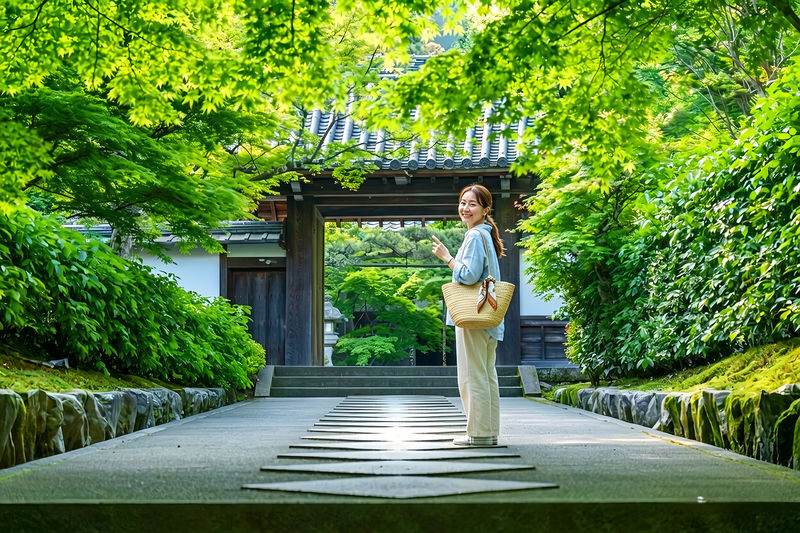 7 / 7
- Nanzen-ji and Eikan-do share the opening stop: See Zen temple architecture, a historic aqueduct and, in autumn, Eikan-do’s famous maple foliage.
- Sanzen-in is the quiet garden stop: Its moss garden and mountain setting reward a slow walk, though the 90-minute visit must also cover lunch.
- The railway ride is brief but scenic: The listed ride lasts about 22 minutes, with mountain and forest views that vary by season and weather.
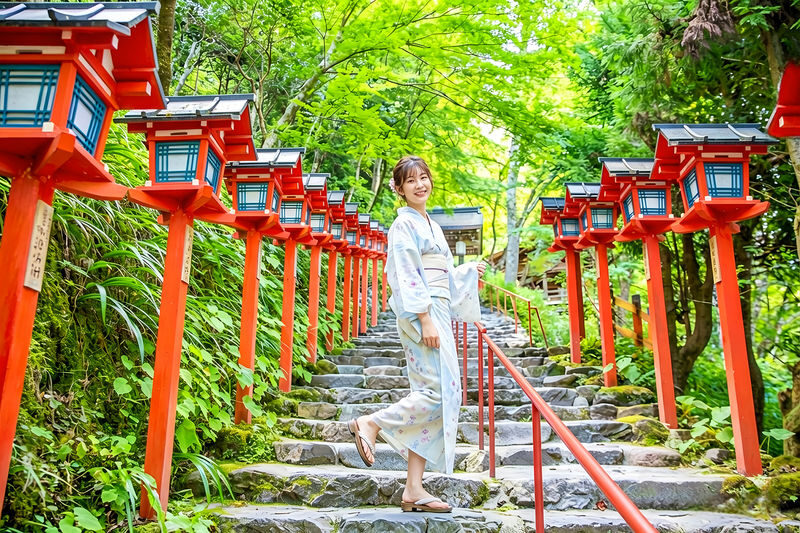
- Kifune Shrine closes the sightseeing day: Its stone approach and rows of red lanterns give the final stop a distinct mountain-shrine atmosphere.
- Transport is included, admission and meals are not: Sanzen-in’s listed admission is 700 yen; budget separately for Eikan-do and food.
- Plan for a full day, not an unhurried one: Departures are listed at 8 a.m. from Kyoto or 9 a.m. from Osaka, with return times around 5:30 p.m. and 6:30 p.m. respectively.

👉 See our pick of the We Rank Kyoto’s 15 Top Workshops & Classes
Nanzen-ji and Eikan-do make a strong opening pair
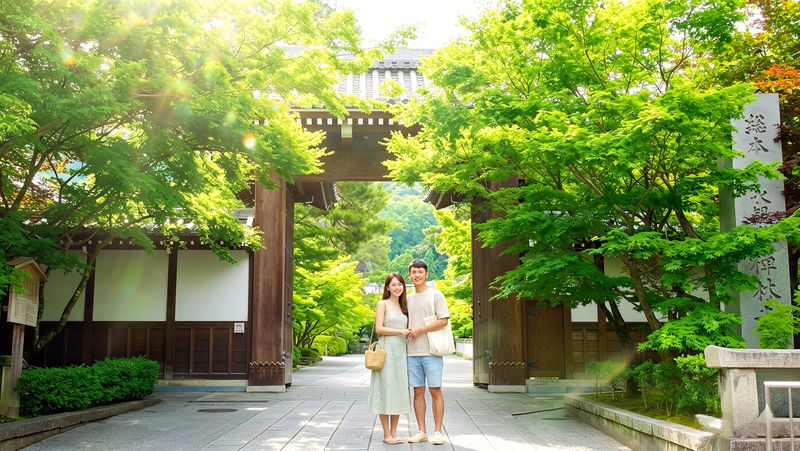
The first stop combines two places that are close enough to visit in the same block of free time. Nanzen-ji is a major center of Kyoto Zen Buddhism, known for its large Sanmon gate and temple murals. Its grounds also include the striking brick aqueduct, Suirokaku, a useful reminder that Kyoto’s history includes practical engineering as well as sacred buildings.
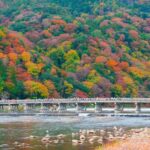
The temple’s mood changes with the calendar. Spring brings cherry blossoms, while autumn colors the grounds with maple leaves. Even outside those seasons, the scale of the gate and the contrast between temple structures and greenery make this a worthwhile start.
Nearby Eikan-do, also called Zenrin-ji, is especially known for autumn foliage. Its winding corridor follows the hillside, giving the temple a different feel from the broad, formal entrance at Nanzen-ji. If you visit in fall, the leaves are likely to be a major reason to come. At other times of year, the garden setting still offers a quieter counterpoint to the city.
The schedule allows about 90 minutes for the two temples together, not 90 minutes at each. That is enough for a focused visit, but not for lingering over every hall, garden and photo stop. The route notes that a site may be skipped because of capacity or weather, so keep some flexibility in mind.
You can also read our reviews of more guided tours in Kyoto


Sanzen-in slows the pace, but doubles as lunch time
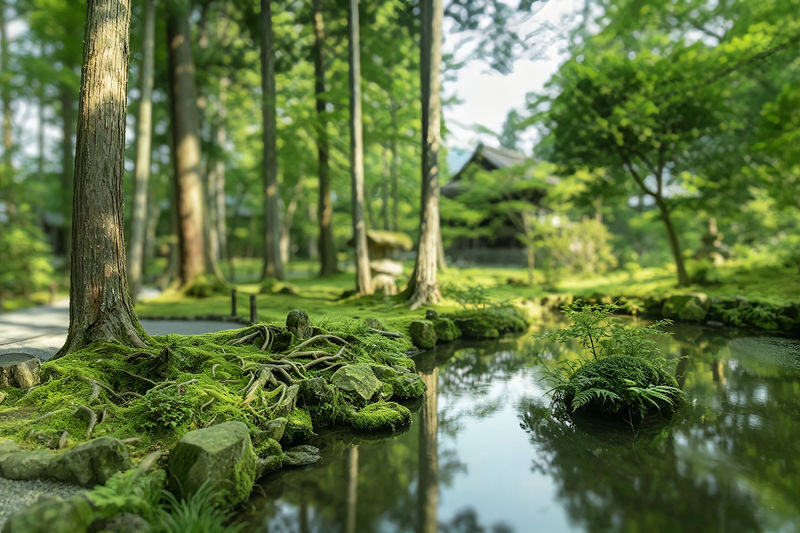
At about 11:30, the tour reaches Sanzen-in in Ohara, a mountain area north of central Kyoto. This Tendai temple is best known for its moss garden, where small stone figures sit among the greenery. Bamboo blinds, old temple buildings and the garden’s quiet scale create a more contemplative visit than the first stop.
Sanzen-in is often described as a place to slow down, and the 90-minute stop gives you room to walk the grounds rather than simply step out for a photograph. The admission fee is 700 yen and is paid separately. The temple’s jeweled-crown Kannon is another point of interest inside the hall.
There is a practical catch: this stop is also the stated place to have lunch. Ninety minutes can disappear quickly if you want to see the garden, find food and sit down to eat. One visitor found the timing too rushed for both, while others described the overall pace as comfortable. Your experience will depend on how quickly you move and how much time you want for the meal.
I would make lunch the first decision of the stop. If eating matters more than a long garden visit, plan accordingly; if the garden is your priority, keep the meal simple. The activity information says outside food and drinks are not allowed, so do not assume you can bring a picnic. It does not identify particular restaurants or promise a dedicated meal break.
A short Eizan railway ride breaks up the road journey
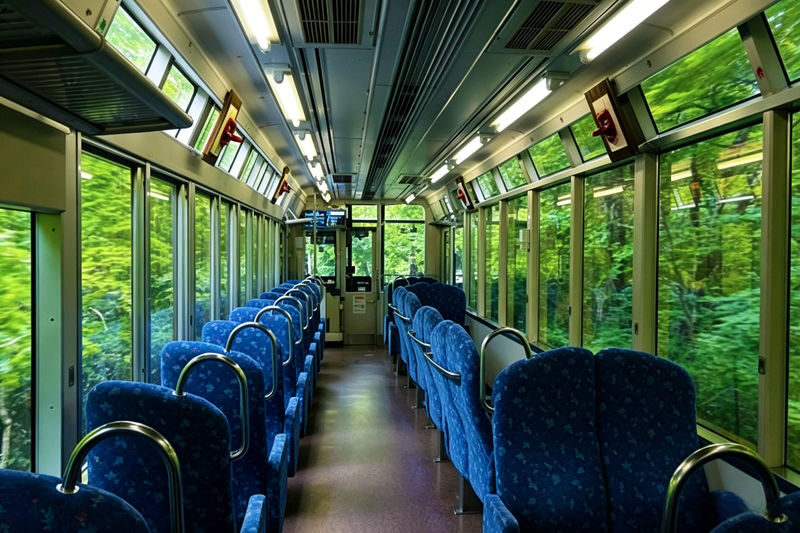
The railway segment is one of the day’s distinctive touches. It lasts about 22 minutes and takes you through the northern Kyoto hills, with views of forest and mountain scenery along the way. The route information identifies a Houchi Station to Kurama Station segment, while the broader experience is described as an Eizan Electric Railway ride. Confirm the exact boarding details with the guide on the day.
The scenery changes with the season: spring blossoms, summer greenery, autumn leaves and winter snow are all part of the route’s appeal. But this is a short ride, not a dedicated scenic-railway excursion. It gives you a moving window onto the hills, then the tour continues.
Weather matters. Rain on the train windows can blur the view, and a busy carriage may mean standing rather than sitting. Do not count on a private carriage or guaranteed seat. One past trip also had confusion over the railway fare, so ask the driver-guide before boarding whether the fare is covered and how the group will pass through the gates. The fare is not named among the included items.
Kifune Shrine gives the day a fitting final stop
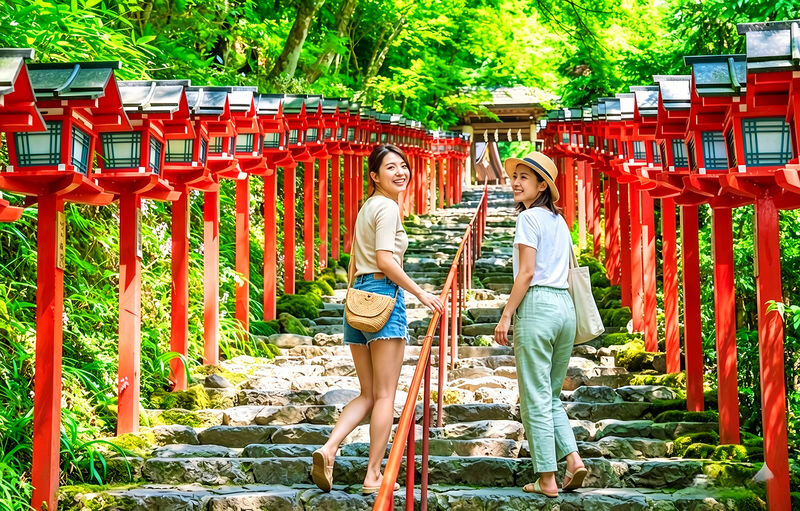
The last major visit is Kifune Shrine, in the western foothills of Mount Kurama. It is the head shrine of roughly 450 Kifune shrines in Japan and is associated with Takaokami no Kami, a dragon deity connected with rain. The approach, with stone steps and red lanterns, is the image many people carry away from this part of Kyoto.
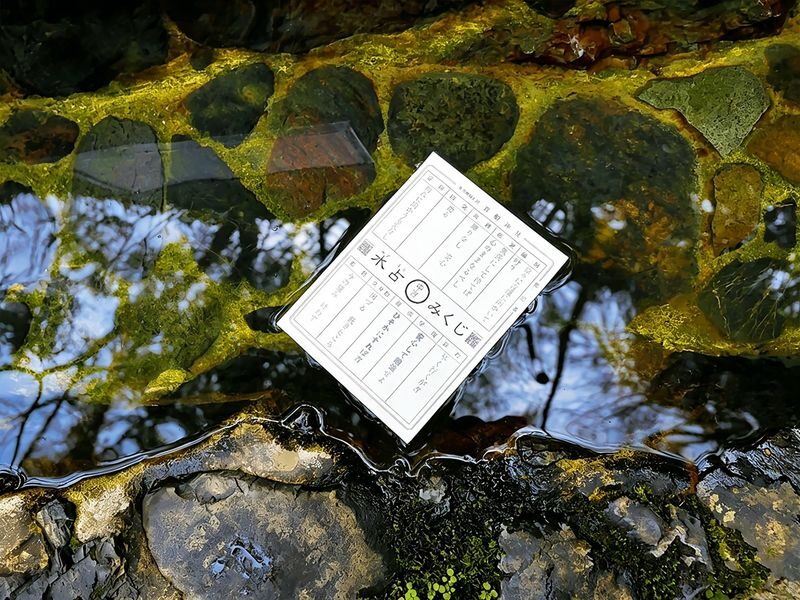
The shrine is known for water fortune slips, which reveal their fortunes when placed in water. It is a small ritual, but one that suits the setting: the shrine’s identity is closely tied to water and rainfall. In early summer, the surrounding greenery and streamside atmosphere give the visit a cool, quiet feel. In autumn, the route’s temples and wooded surroundings take on a different character.
The schedule gives you about 90 minutes here. That is enough for the approach, a look around the shrine and the water fortune, but not necessarily a long meal. Kifune is also known for seasonal riverside dining, called kawadoko. The tour does not include a meal or promise time for this experience, so book a separate visit if eating by the water is a priority.
The final drive and drop-off can depend on traffic. The listed return is around 5:30 p.m. in Kyoto or 6:30 p.m. at Osaka’s Kintetsu Nippombashi Exit 2. Treat those as estimates, not appointments to build a tight onward connection around.
What the driver-guide service does, and does not, include
Round-trip transport is the core convenience. These sights are spread across different parts of Kyoto, and Sanzen-in and Kifune are particularly awkward to combine in a day without planning connections. With a driver-guide handling the transfers, you can spend less energy navigating and more time at the stops.
The group size is listed as four to nine. The actual vehicle depends on the number of people, and a specific model cannot be requested. Seating is generally first come, first served, though you can note a preference when booking. The tour may include people speaking different languages, and the guide may give information in more than one language.
The service can vary in how much interpretation you get. Some guides have provided clear explanations, route advice and food suggestions. Past guides named include Ultraman, AIXIN, Wang Zhaoyu, Ai and Toshiya Oka, but no particular guide is guaranteed. Other participants have found the experience closer to a shared ride, with brief directions before each stop and self-guided sightseeing. If you want a temple expert to walk beside you and explain every hall, this may not be the right format.
The tour is listed as having English-, Chinese- and Japanese-speaking professional driver-guides. Confirm your language needs before booking, especially if detailed commentary is important to you. The strongest practical value is the transport and coordination, not a promise of a long guided tour inside each attraction.
You can also read our reviews of more tours and experiences in Kyoto



Is the price good value?
Prices start at $55.29, though the final amount can vary. At that entry price, transport between several far-flung sights is the main value. You also avoid having to work out the day’s connections between central Kyoto, Ohara, the railway and Kifune.
The base price does not cover admission to Eikan-do or Sanzen-in, meals, drinks or personal expenses. Sanzen-in’s admission is listed as 700 yen; the amount for Eikan-do is not specified here. The railway fare is also not clearly stated among the inclusions, so settle that question with the guide before boarding.
Think of this as a transport-led sampler of northern Kyoto. It is good value if you want to see several places in one day and accept a timed visit at each. It is less compelling if you prefer to spend half a day in one garden, have a leisurely lunch or plan your own pace. The tour’s average rating is 4.8 out of 5 from 76 ratings, but the practical question is whether its brisk structure suits you.
Who should choose this Kyoto day tour?
I would recommend it to first-time visitors who want to see a mix of temples, forest scenery and a mountain shrine without coordinating the transport themselves. It also suits people who enjoy self-guided visits and are comfortable keeping an eye on the clock. The group’s small listed size is a plus, though it does not turn the day into a private tour.
It is a weaker fit if you have limited mobility, are pregnant or have certain medical conditions such as high blood pressure or epilepsy. The activity is specifically not recommended for those circumstances. The conditions also say participants must be under 70, despite separately stating there is no age limit, so anyone close to or above that threshold should check directly before booking. Infants and children must be included in the passenger count.
Arrive ten minutes before departure. The Kyoto meeting point is outside 7-ELEVEN Kyoto Hachijo-dori East Store, at 16-16 Higashikujo Nishiiwamotocho. The Osaka meeting point is Kintetsu Nippombashi Exit 2. Confirm which departure and return point you booked, since changing the meeting point at the last minute can leave you unable to board without a refund.
The tour requires at least four participants. If that minimum is not met, the activity may be rescheduled or refunded. You can cancel for a full refund up to 24 hours before the activity date, and booking changes are generally allowed until 24 hours beforehand, with some booking-method exceptions.
Should you book it?
Book this tour if you want a practical way to connect Nanzen-ji, Eikan-do, Sanzen-in and Kifune Shrine in a single day, and you are happy to explore independently once dropped off. Its best features are the range of settings, the small-group format and the relief of having transport handled.
Skip it if your ideal Kyoto day means slow temple visits, a relaxed lunch or a guaranteed scenic train seat. Plan for extra admission costs, clarify the railway fare, and treat the schedule as a framework that traffic and weather can change. With those expectations, this is a useful introduction to Kyoto’s quieter northern sights.
Kyoto Small Group Day Tour: Kifune Shrine & Nanzen-ji Temple / Eikan-do Zenrin-ji & Sanzen-in & Eizan Electric Railway Experience (Departing from Osaka/Kyoto, Driver-Guide Service)
“A day trip to northern Kyoto in the rain offered two completely different experiences. Although the weather was poor, Sanzen-in and Kifune Shrine,…”
FAQ
How long is the tour?
The tour lasts about 9.5 hours. The listed schedule runs from a morning departure to an estimated return around 5:30 p.m. in Kyoto or 6:30 p.m. in Osaka.
Where can I join the tour?
You can depart from Kyoto or Osaka. The Kyoto meeting point is 7-ELEVEN Kyoto Hachijo-dori East Store, at 16-16 Higashikujo Nishiiwamotocho. The Osaka point is Kintetsu Nippombashi Exit 2.
How large is the group?
The stated group size is four to nine participants. The vehicle is selected according to the number of participants, and a specific vehicle model cannot be requested.
Are temple admission fees included?
No. Eikan-do and Sanzen-in admission are not included. Sanzen-in’s admission is listed as 700 yen; no Eikan-do fee is specified here.
Are meals included?
No. Meals and beverages are not included. Sanzen-in is identified as a place where you can dine, but the schedule gives about 90 minutes for the stop.
Is the sightseeing guided?
You explore the stops independently. A driver-guide provides the transport and may offer information and practical advice, but the format does not promise a guided walk through each attraction.
Is the railway fare included?
The included items do not specify the Eizan Electric Railway fare. Confirm with the driver-guide before boarding how the fare will be handled.
Can I choose the guide’s language?
English-, Chinese- and Japanese-speaking driver-guides are listed. The group may include people speaking other languages, so ask about language arrangements before booking if you need a particular language.
Is the tour suitable for children or older participants?
Infants and children must be included in the passenger headcount. The activity information says participants must be under 70, although it also says there is no age limit, so confirm eligibility directly if this affects your booking.
What happens if the weather or traffic changes the plan?
The schedule and stop order may change because of weather, traffic or other conditions. Some attractions may be skipped because of capacity or weather, and the return time is an estimate.