
The biggest mistake first-time visitors make in Copenhagen is glancing at a map, deciding the city looks compact, and announcing they’ll walk everywhere. Three hours later they’re limping past their fourth pretty canal, having seen Nyhavn and absolutely nothing else, with Carlsberg and the Little Mermaid still six kilometres apart in opposite directions.
Copenhagen is small relative to other capitals. The big sights are not. A hop-on hop-off bus, ideally the combo ticket that bundles in a one-hour canal cruise, is how most people actually see the place in a day or two without writing off the second half on blisters and bad decisions.
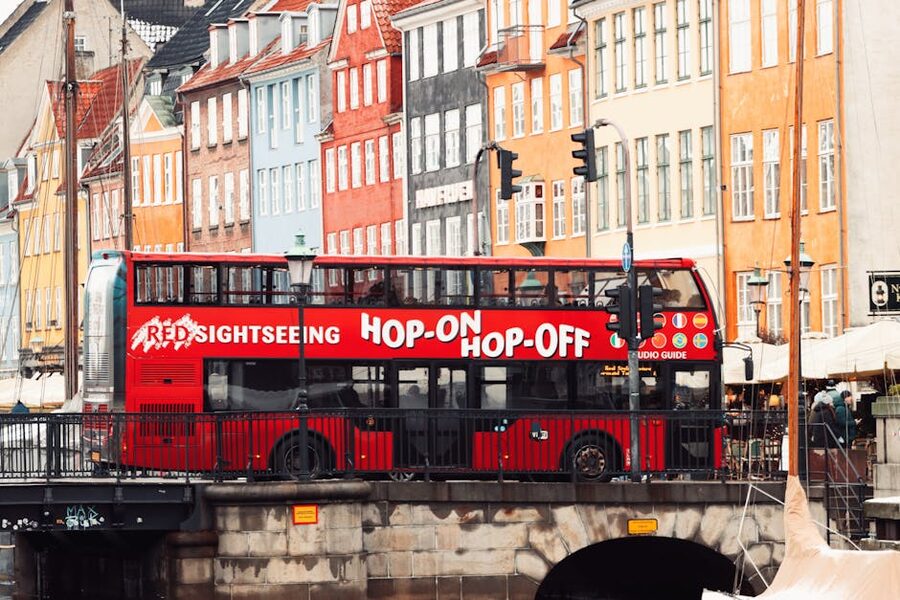
In a hurry? Three Copenhagen hop-on hop-off picks worth booking before you land.
- Best value: Red Sightseeing 24/48/72-hour bus + boat option, from $35. Most stops, most flexible, easiest to find.
- Best for short trips: 48-hour bus + 1-hour canal boat combo, from around $40. Both modes locked in for the whole weekend.
- Backup option: City Sightseeing Copenhagen, around $39. Smaller network but the buses you already recognise from every other European city.
I’ll get into all three properly below, plus the bit nobody tells you: the Copenhagen “hop-on hop-off” market has two competing red bus operators using almost identical branding, and you can absolutely board the wrong one with the right ticket. So you need to know what you bought.

- Why a hop-on hop-off bus actually makes sense in Copenhagen
- The Copenhagen hop-on hop-off operators (this is where it gets confusing)
- How the combo ticket actually works
- The three Copenhagen hop-on hop-off tickets I’d actually book
- 1. Red Sightseeing Copenhagen Hop-On Hop-Off Bus + Boat: from
- 2. Copenhagen 48-Hour Sightseeing Bus + 1-Hour Boat Tour: around
- 3. City Sightseeing Copenhagen Hop-On Hop-Off Tour: around
- The route, stop by useful stop
- Central Station / Tivoli (the obvious starting point)
- Christiansborg / Slotsholmen
- Nyhavn
- Amalienborg
- Little Mermaid / Langelinie
- Rosenborg Castle
- Carlsberg
- Tivoli (the bookend)
- The included canal cruise: what you actually get
- Mistakes I see people make on the Copenhagen HoHo
- Combining the bus with everything else Copenhagen
- Practical bits you’ll want before booking
- When does the bus run?
- Which ticket length should I buy?
- Can I use it from the airport?
- Children and pricing
- Wheelchair access
- How Copenhagen’s HoHo compares to other capitals I’ve ridden
- A short history of why Copenhagen sprawls the way it does
- One last thing
- What else to book in Copenhagen
Why a hop-on hop-off bus actually makes sense in Copenhagen
This is not a hot take I’d make about every city. In Lisbon I’d argue the trams handle the same job for a fifth of the price. In Bruges the historic centre is genuinely walkable and a bus is overkill. In Copenhagen, walking tours are excellent for the medieval core, but the core is maybe a quarter of what you came to see.
Look at where the famous stuff actually sits. Nyhavn and the medieval centre are tight together, sure. But Carlsberg Brewery is out in Vesterbro to the southwest. The Little Mermaid is up at Langelinie, north of the harbour. Rosenborg Castle is northwest of the centre. Christianshavn (where Christiania is) is across the harbour. The Designmuseum is up in Frederiksstaden. Trying to walk all of it in a day puts you somewhere around 18 km on foot, which sounds doable until you remember you also wanted to actually look at things.
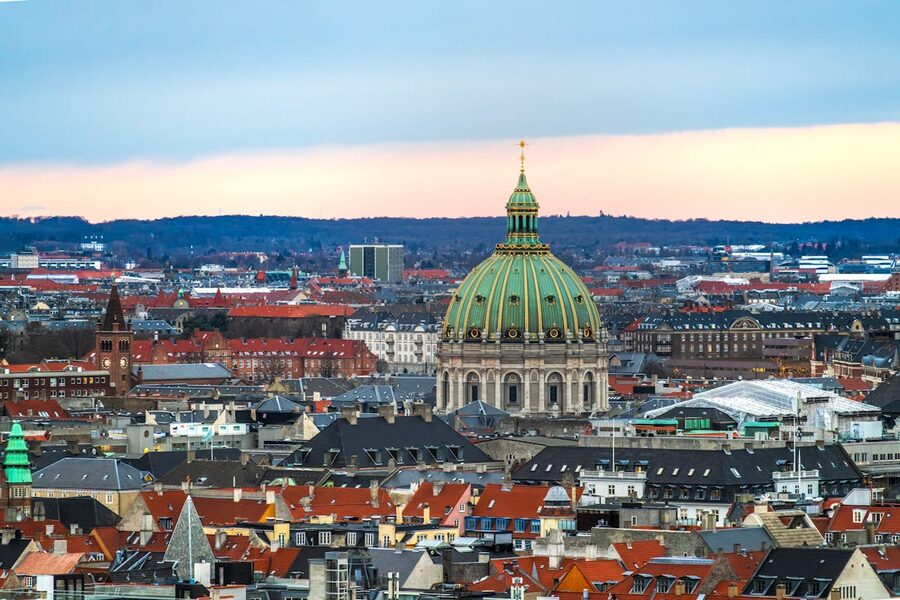
The bus solves three problems at once. It moves you between the spread-out sights at speed. It gives you a heated, dry place to be when the wind comes off the harbour and the rain starts (it will, even in July). And the audio guide actually does the work of explaining why you’re looking at any of this, which is the bit a lot of people skip and then forget what they saw.
The combo ticket, bus plus a one-hour canal boat, is the version I’d point most people toward. Not because the boat itself is wildly different from the standalone Copenhagen canal cruise you’d otherwise book separately, but because bundling saves you about the price of two coffees and you don’t have to think about a second booking.
The Copenhagen hop-on hop-off operators (this is where it gets confusing)
Three companies run hop-on hop-off services in Copenhagen, and the branding is genuinely close enough to confuse people. Worth understanding before you buy:
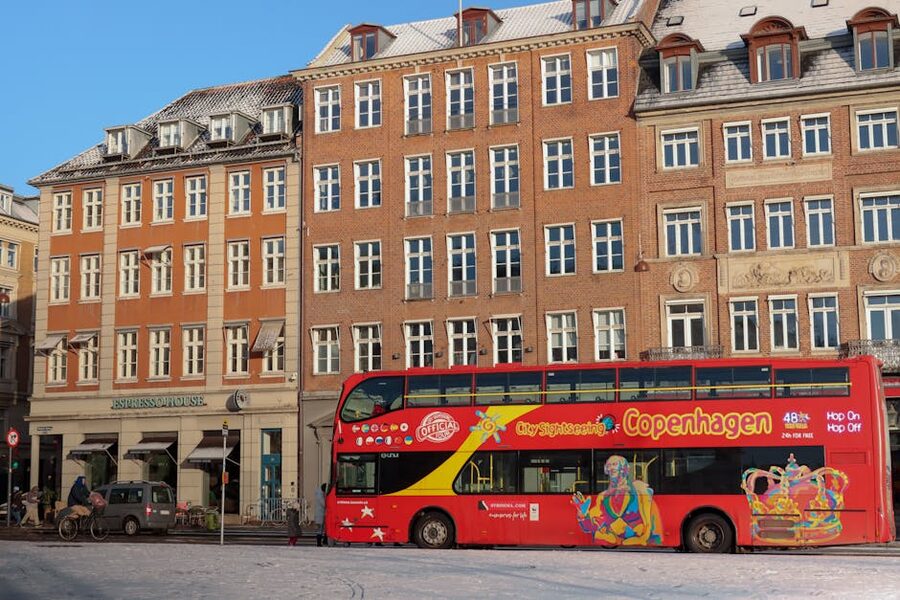
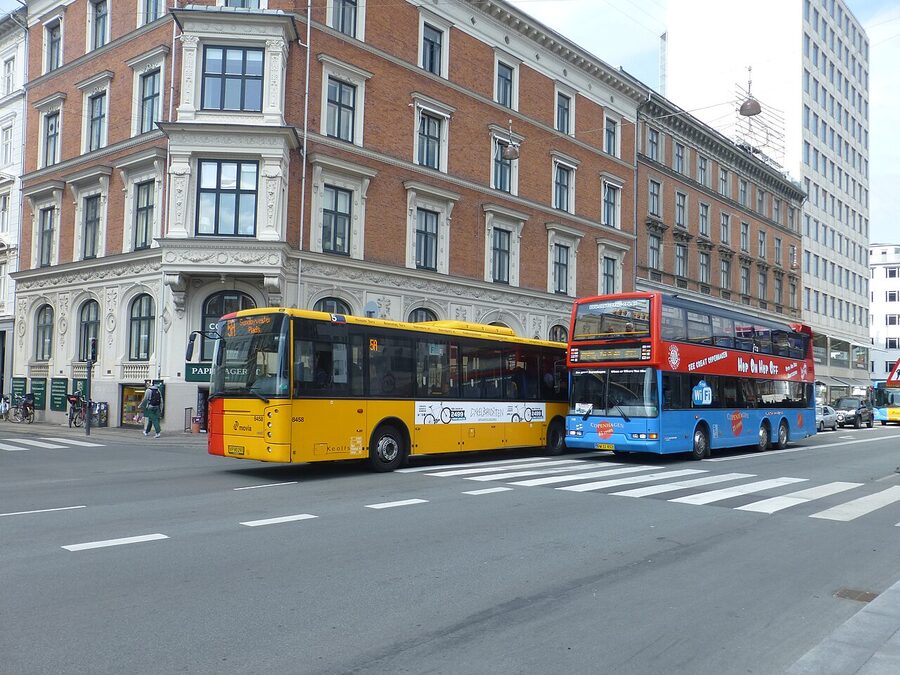
Red Sightseeing. The dominant operator. Bright red buses, “Red Sightseeing” written on the side. Largest stop network of about 22 stops on the classic loop, more on the extended routes. Sells the most popular combo ticket on GetYourGuide. Audio guide in 10+ languages. This is the one most online listings actually mean when they say “hop-on hop-off Copenhagen.”
City Sightseeing Copenhagen. The yellow-and-red franchise you’ve seen in Rome, Barcelona, every other European city. Different company entirely. Smaller route in Copenhagen, fewer stops, but tickets are sometimes a bit cheaper and the brand is reassuring if you’ve used them elsewhere.
Stromma / Hop-On Bus and Boat. Stromma is a big Scandinavian water-and-bus operator. They run a separate combo product where the bus is bundled with their canal boat fleet. If you’ve already decided you want a canal cruise, this is sometimes the slickest combo because both halves are the same operator and tickets sync.
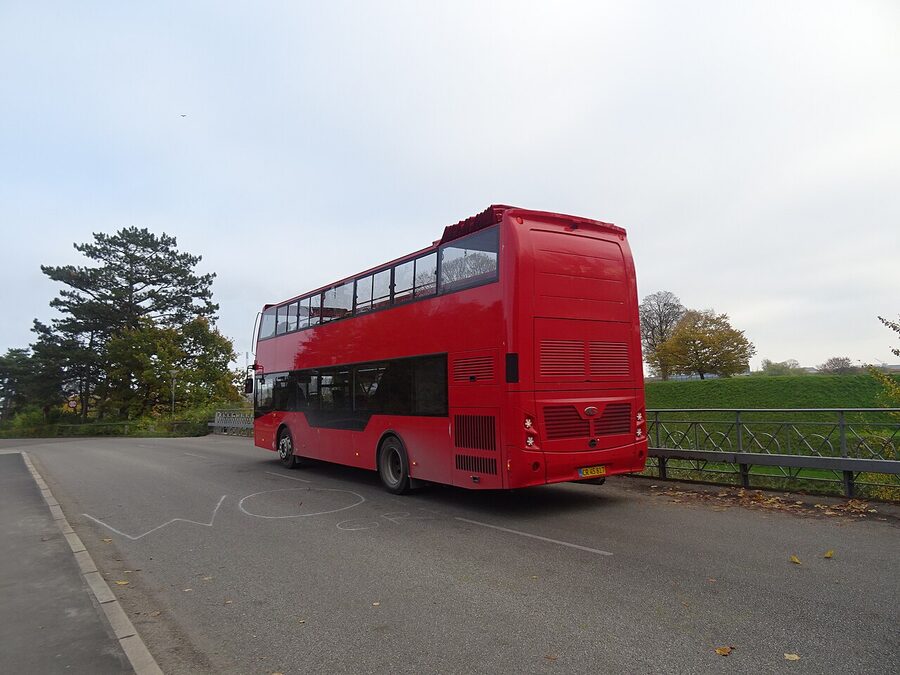

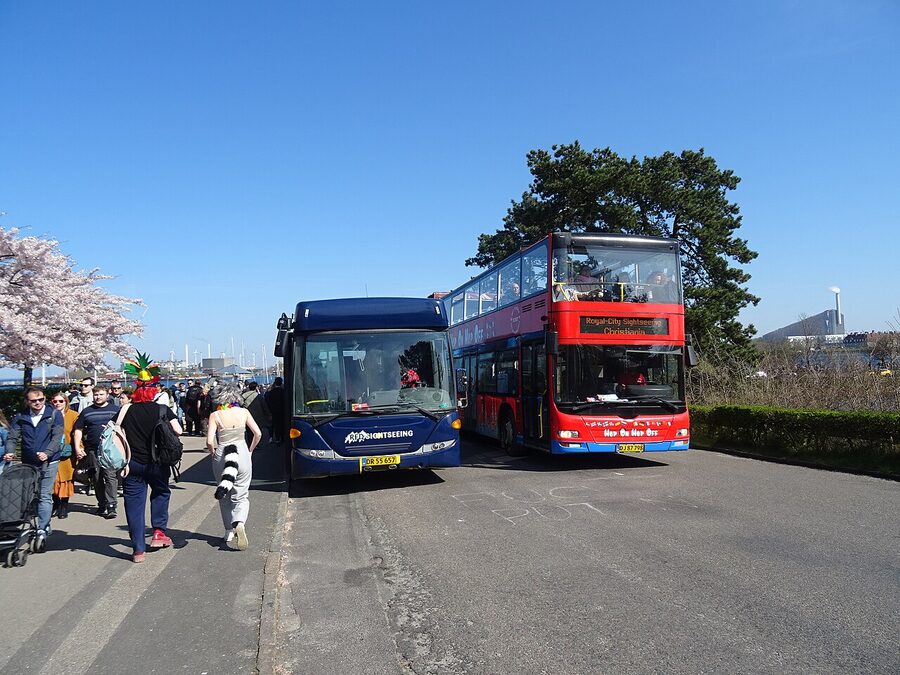
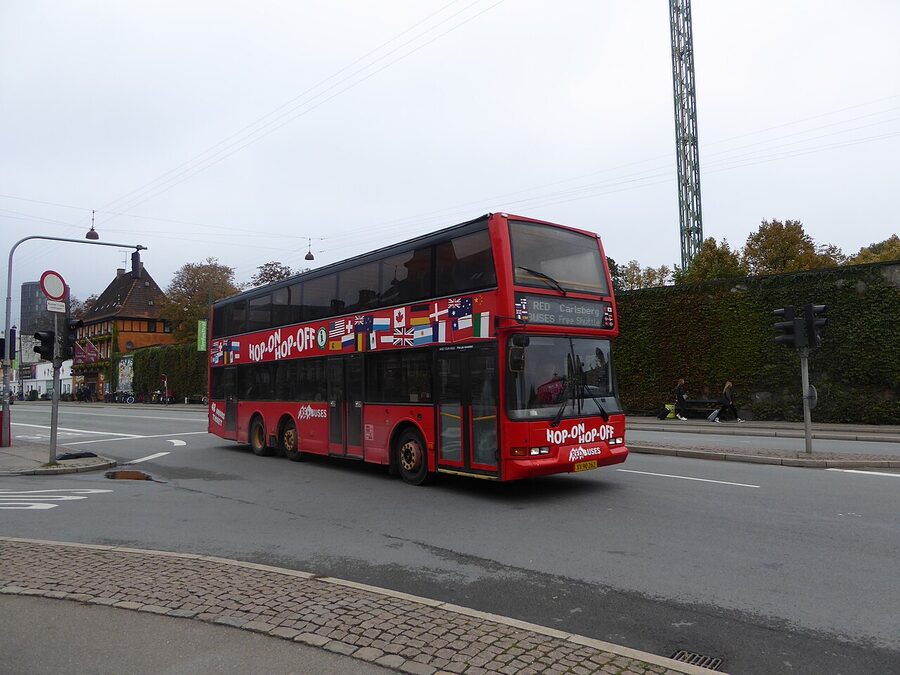
The thing to know: your ticket only works on the operator you bought from. If you bought a Red Sightseeing combo and a yellow City Sightseeing bus pulls up first, do not get on it. The driver will let you board (they’re nice), and then check your ticket two stops later, and then you have a problem. Stops are often shared, especially around the central station and Langelinie. Look at the bus, not just the queue.
How the combo ticket actually works
Here’s the practical version of what happens with the most common ticket type, the Red Sightseeing 24/48/72-hour combo with the boat option included:
You book online ahead of time. You get a confirmation email with a QR code. You don’t usually need a paper ticket, but I always screenshot mine in case the airport Wi-Fi died and Gmail is being moody. Validation starts when you scan in for the first time, not when you booked, which means a 48-hour ticket bought on Monday morning is good through to early Wednesday morning. That’s the bit that catches people out. They treat it like calendar days when it’s actually 48 rolling hours from first scan.
The bus loop runs roughly every 20-30 minutes in summer, every 30-45 minutes in winter. Last bus is around 17:00 in winter, around 19:00 in peak summer. So your ticket “starts” cleverly: scan it in around 10:00 on day one, and you can do a full afternoon, plus the next day, plus a final morning before checkout. That’s the value play. Scan it in at 8:00 hoping to grab an early loop and you’ve burned hours where the bus isn’t even running yet.

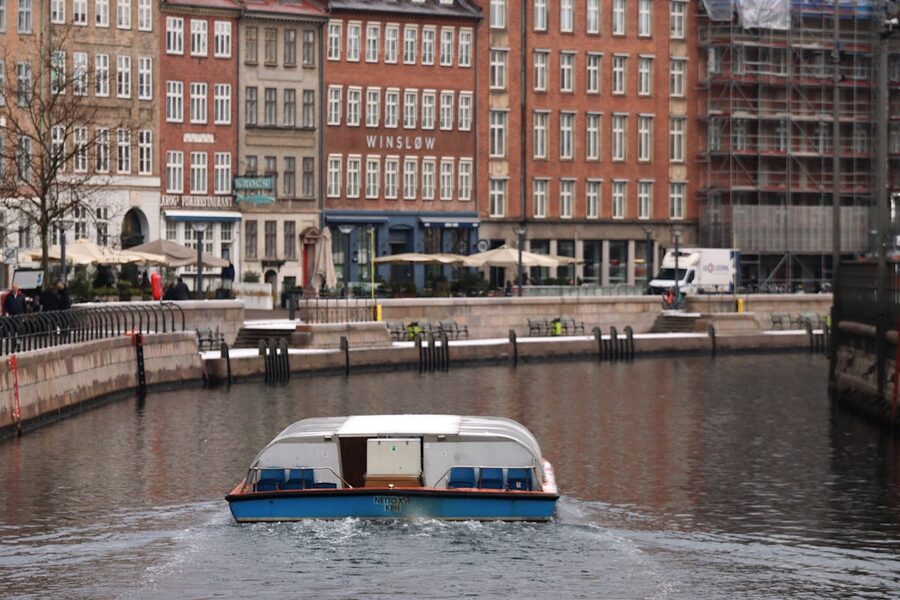
The boat side is straightforward but has its own catch. The included canal cruise is a fixed timetabled departure from a specific dock, usually Ved Stranden, near Christiansborg, or Nyhavn (depending on which combo you bought). It is not a separate hop-on hop-off boat, it’s a one-time round trip with audio commentary, about 60 minutes.
You can take it on either day of your bus pass. Most people leave it for day two, by which point they’ve worked out which sights they actually want to spend time at, and the boat becomes a relaxed sit-down break. If you’re prone to seasickness or it’s blowing a gale, the canal boats are flat-water, fully sheltered with optional roof, and they barely move. This is not the kind of boat ride that ends badly.
The three Copenhagen hop-on hop-off tickets I’d actually book
From the dozens of variants on the booking sites, these are the three that hold up. Different shapes for different trips.
1. Red Sightseeing Copenhagen Hop-On Hop-Off Bus + Boat: from $35
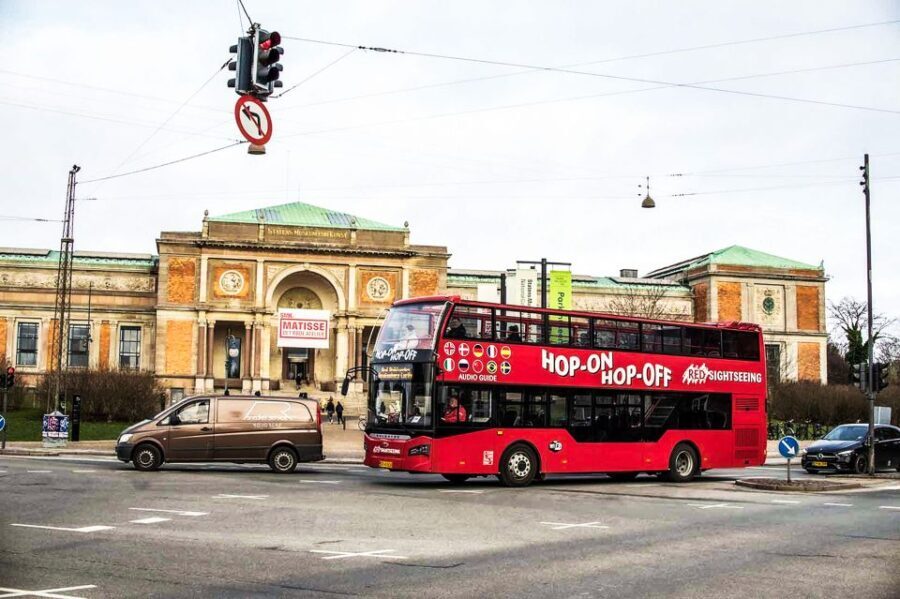
This is the one I’d point a first-timer at. The Red Sightseeing route covers everything you actually came for: Nyhavn, Tivoli, the Little Mermaid, Christiansborg, Amalienborg, Rosenborg, Carlsberg. Our full review goes deep on the route map and the audio guide quality. The boat option is worth the upgrade.
2. Copenhagen 48-Hour Sightseeing Bus + 1-Hour Boat Tour: around $40
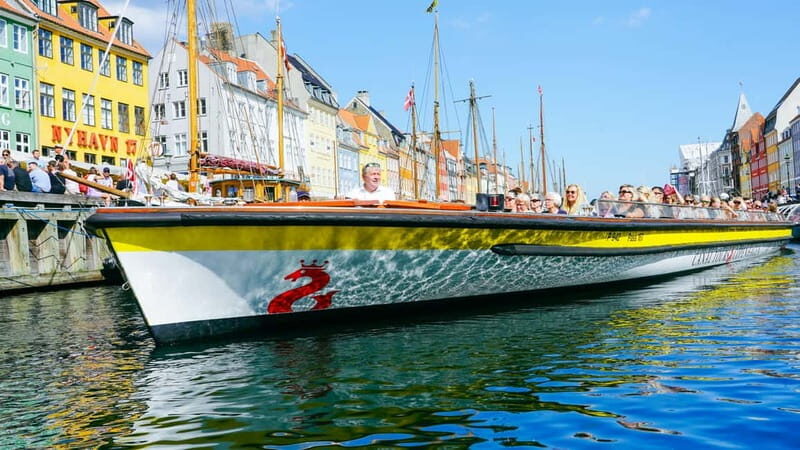
This one bundles two days of bus access with the canal cruise locked in. Our review covers the Radisson Collection start point and why a 48-hour ticket beats 24 unless you really are doing a one-day blitz. It also goes into the wider stop network, closer to 30 than 22, though some are quiet stops you’ll never use.
3. City Sightseeing Copenhagen Hop-On Hop-Off Tour: around $39
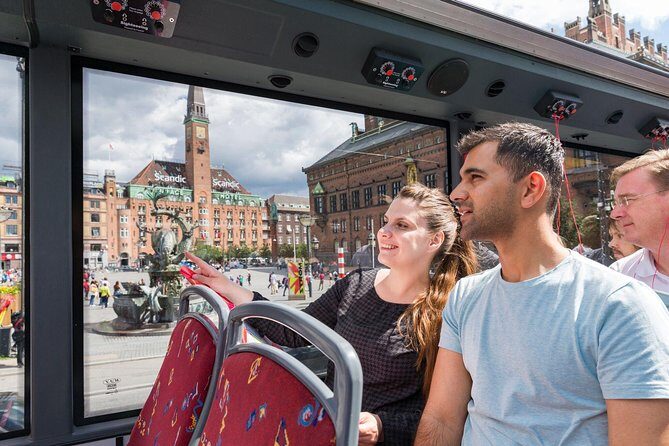
Pick this if you’ve used the City Sightseeing brand before and like knowing what you’re getting. Our take notes that the route covers the headline sights but skips Carlsberg on the basic pass, so check exactly which loop your ticket includes before you buy. Audio is solid, frequency a bit lower than Red Sightseeing.
The route, stop by useful stop
Most loops sit somewhere between 90 and 110 minutes if you ride the whole thing without getting off. You won’t, that’s the point. But knowing the order helps you plan a half-day or full-day route that flows.

Central Station / Tivoli (the obvious starting point)
If you’re flying in from the airport or coming off a train, you start here. The bus stops are right outside the main station entrance. Tivoli’s main entrance is a 90-second walk across the square. If you hit Copenhagen mid-afternoon, this is the lazy first move: drop bags, scan in, do the loop once for the audio guide, then start hopping off in earnest the next morning.
Christiansborg / Slotsholmen
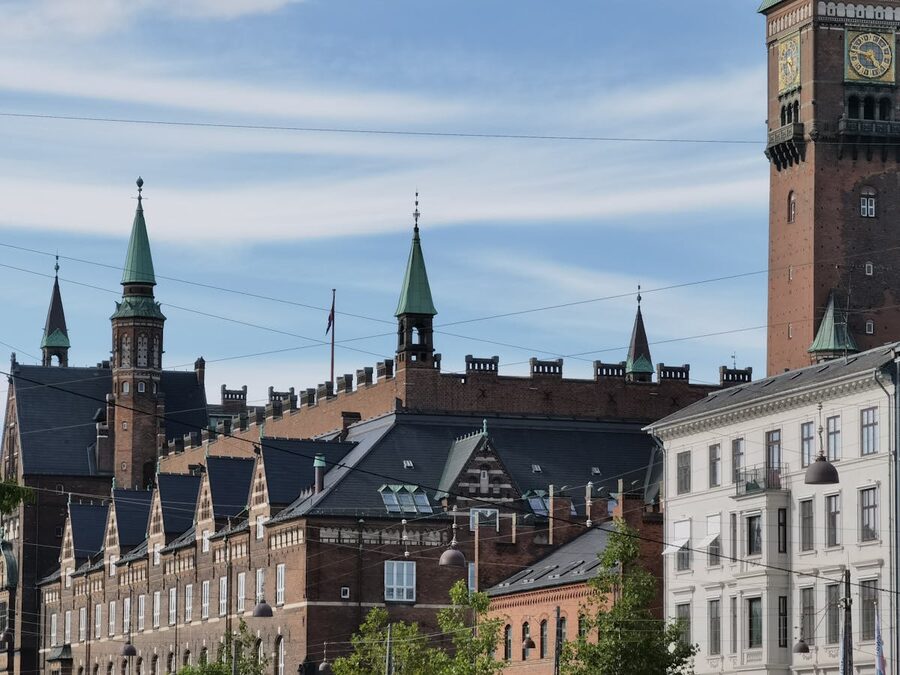
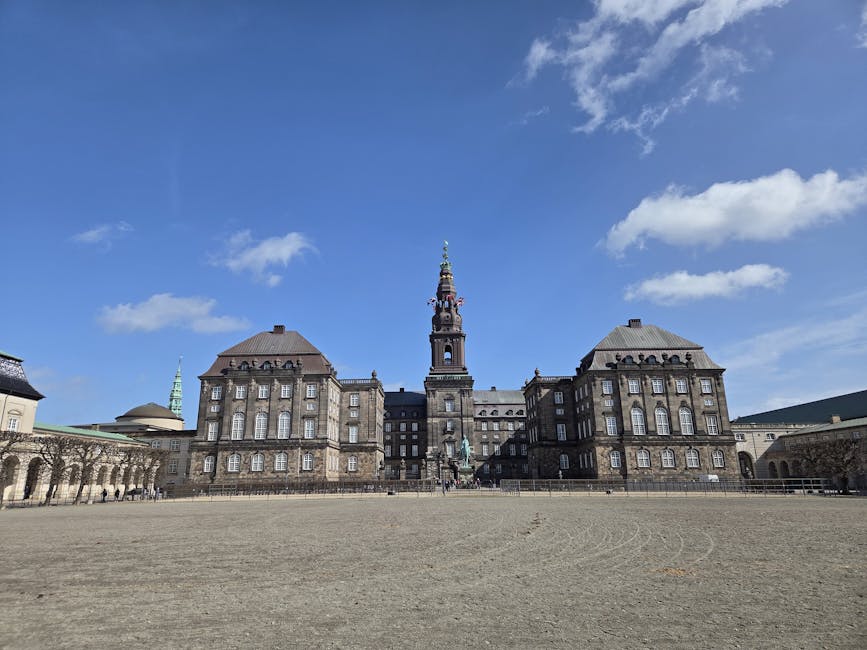
This is the political heart of Copenhagen. Christiansborg houses parliament, the prime minister’s office, and the Royal Reception Rooms all under one roof. The audio guide does a decent job here. If you’ve got a Copenhagen Card, you can hop off, do the Royal Reception Rooms and the Tower (free with the card) in about 90 minutes, and rejoin the loop. The Tower has the best free view in central Copenhagen, full stop.
Nyhavn
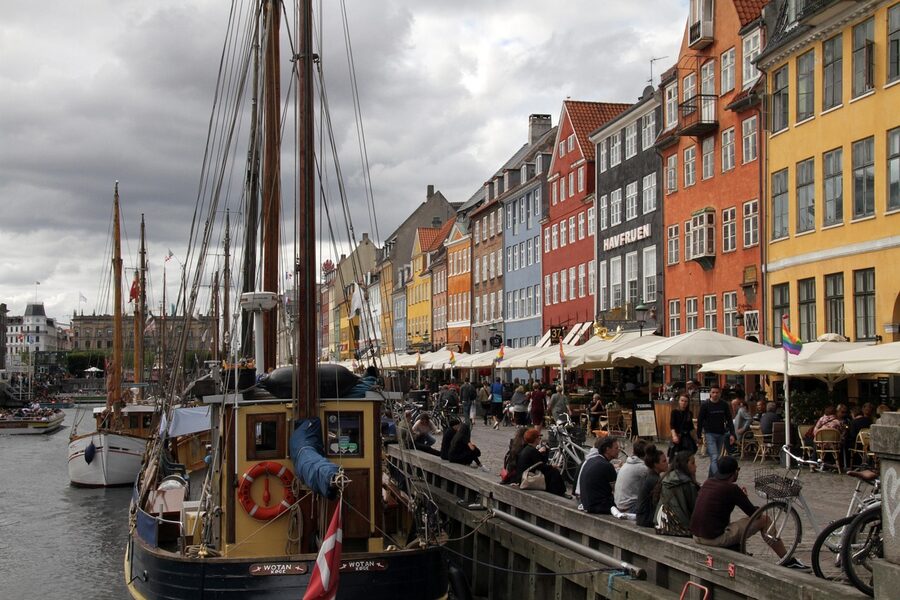
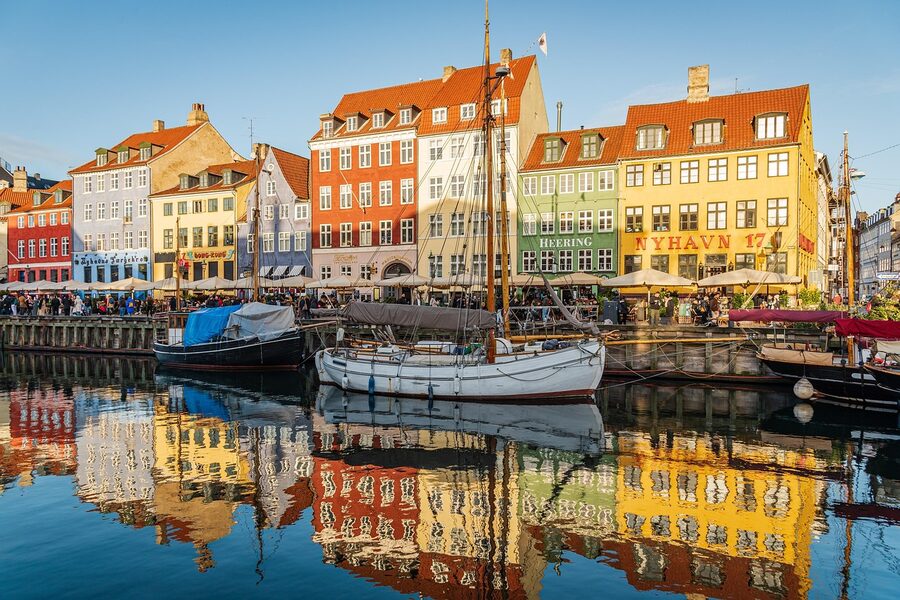
Probably the postcard you’ve already seen. Coloured townhouses, wooden boats, restaurants spilling onto the quay. The bus stop is at the head of the canal where Bredgade meets Kongens Nytorv. From here, the canal cruise dock is a five-minute walk if your ticket departs from Nyhavn rather than Ved Stranden.
Amalienborg
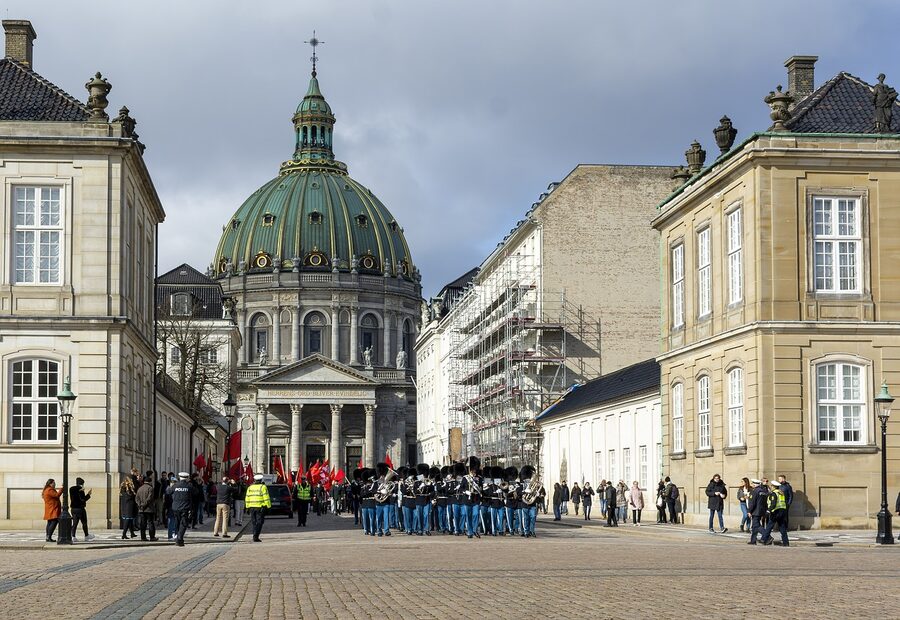
The Royal Family’s winter residence, four matching palaces around an octagonal square. Changing of the Guard happens at noon every day, year-round. If the Queen is in residence the band plays, if she’s away it’s just the soldiers, but either way it’s worth timing your hop-off to land between 11:30 and 12:00. Don’t expect Buckingham Palace levels of pageantry, this is a smaller, more intimate version.

Little Mermaid / Langelinie
The most over-anticipated and slightly disappointing stop on the loop. The statue is small. Hans Christian Andersen wrote the story, Edvard Eriksen made the bronze in 1913, and 1.3 metres of seated mermaid has somehow become Copenhagen’s defining image. You’ll see her in five minutes, take a photo, and probably be back at the bus stop within fifteen.

What makes the Langelinie stop genuinely worth the time is the walk back along the harbour. There’s a star-shaped fortress (Kastellet) about 200 metres south of the Mermaid, with grass ramparts you can walk around for free, and almost nobody bothers. It’s the best 30-minute detour on the loop.

Rosenborg Castle
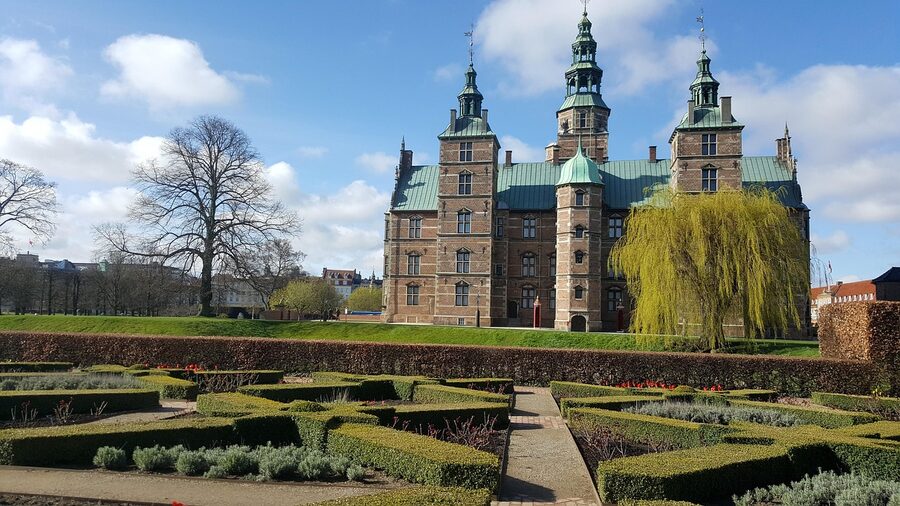
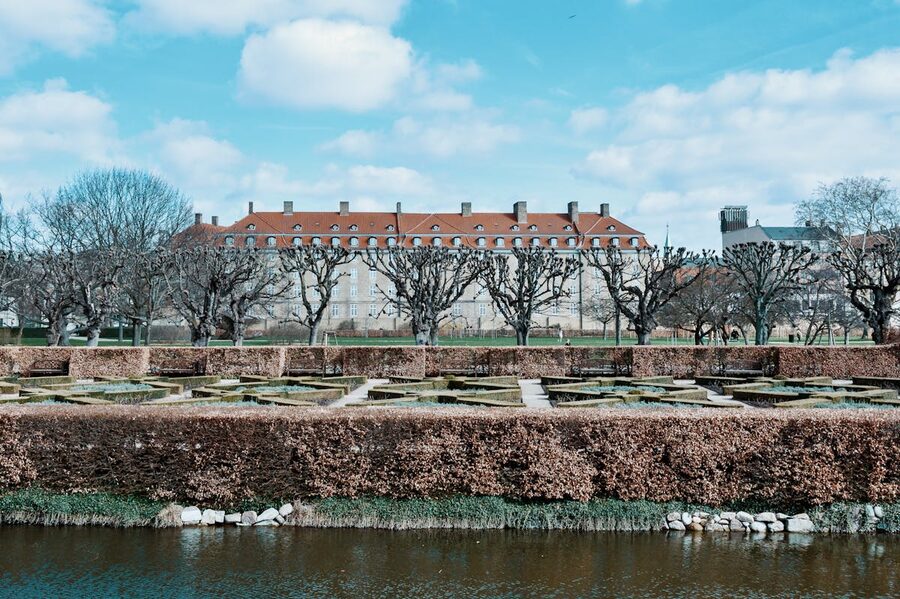
Renaissance-era royal castle inside a park. This is where the Crown Jewels actually live, in the basement. Inside, the rooms are crammed with painted ceilings, royal portraits, weird taxidermy and old swords. The garden, called Kongens Have, is the city’s oldest park and is free, so even if you skip the castle interior, hop off, walk through the rose garden, get your steps in, hop back on.
Carlsberg
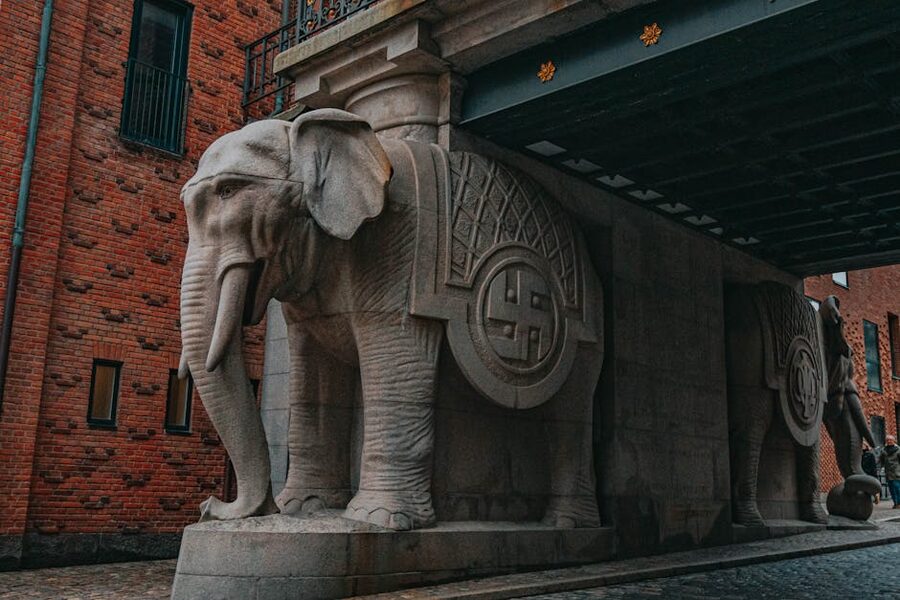
The other end of the loop, geographically. Carlsberg Brewery sits in Vesterbro, about six kilometres from the Little Mermaid as the crow flies. This is the stop that proves the bus’s worth. If you tried to walk here from Langelinie you’d burn 90 minutes you don’t have. From the bus, it’s a single hop. The Elephant Gates with their granite elephants are unmistakable. Carlsberg’s brewery tour is about 90 minutes if you want to add it on.
Tivoli (the bookend)
Ending where you started, technically, but worth getting off here in the evening rather than the morning. Tivoli Gardens is a different animal at night, with fairy lights, the Pantomime Theatre, the wooden roller coaster (one of the oldest still running in the world), and the sit-down restaurants doing Friday night fireworks in summer. Hop off, eat dinner, walk back to your hotel.

The included canal cruise: what you actually get
The boat half of the combo is, honestly, more enjoyable than the bus half for most people. The bus is functional. The boat is the bit you’ll remember.
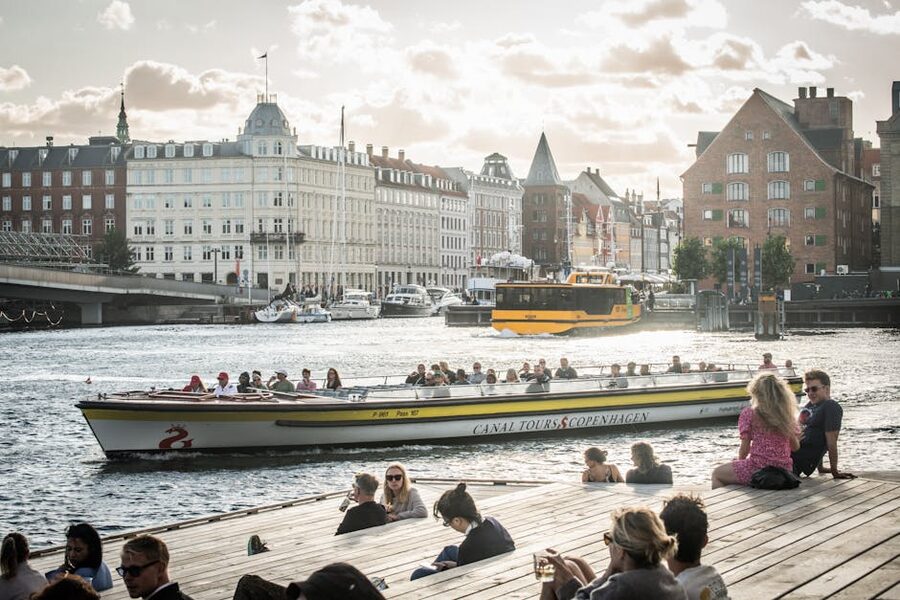
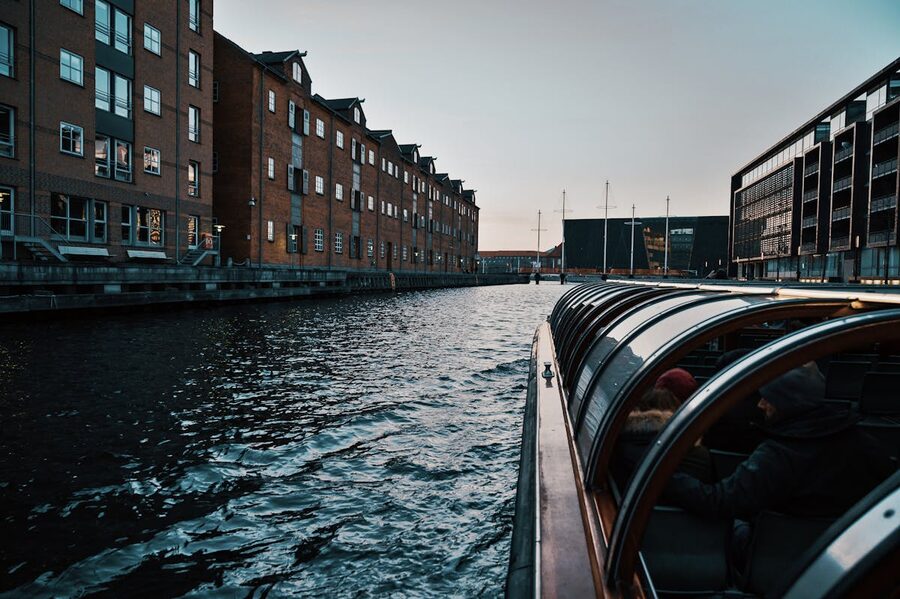
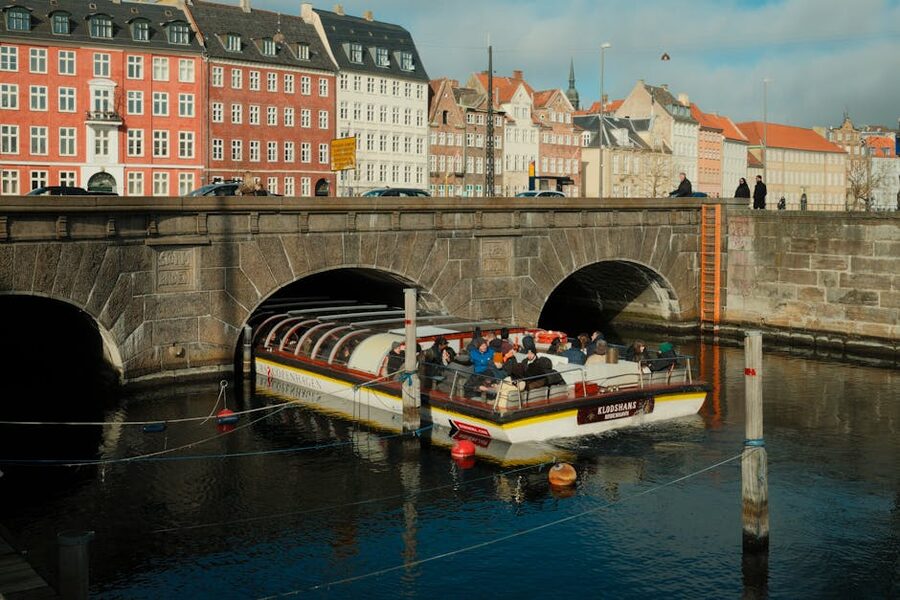
It’s an hour, give or take. Departures from either Ved Stranden (near Christiansborg) or Nyhavn. Your booking confirmation will say which. The boat is flat-bottomed, low-roofed (you’ll duck under bridges), and seats around 60-80 people. Audio commentary is multilingual through individual speakers, not a single shared loudspeaker, so you can actually hear it.
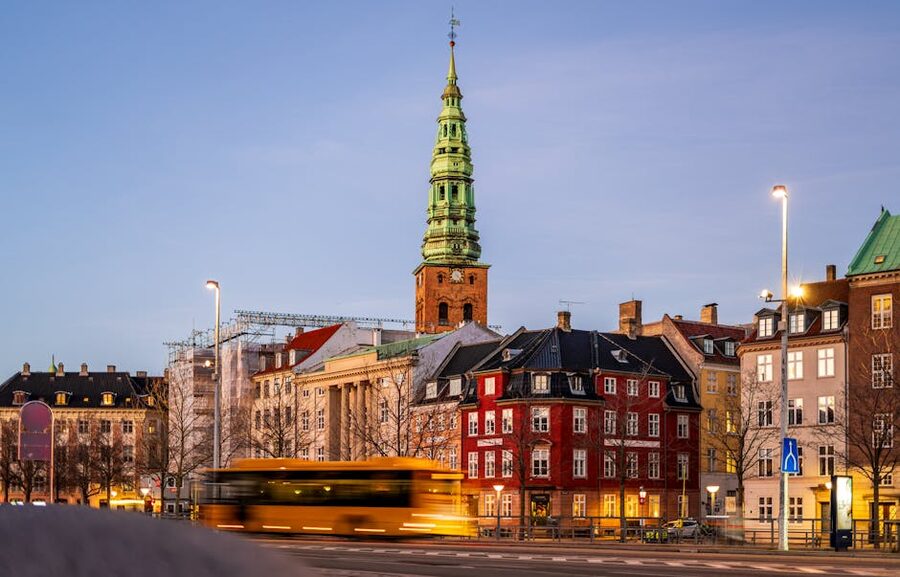
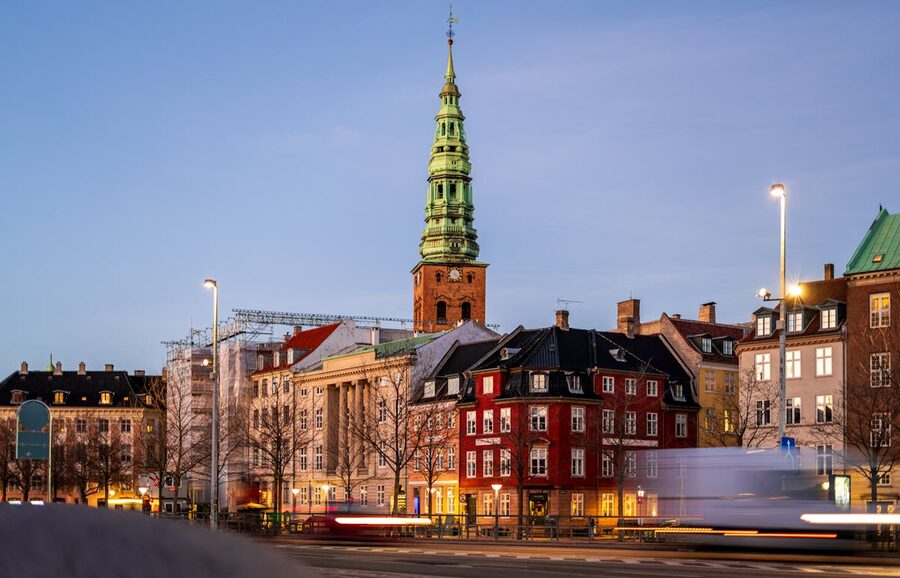
The route covers things the bus doesn’t: the Black Diamond library, the Opera House from the water, the new harbour developments at Nordhavn, Christianshavn’s hipster canal district, and the famous shot of the green-and-gold spire of Vor Frelsers Kirke from below. There’s a moment where you cross the open harbour with both Operahuset and Amalienborg in view at the same time, which is genuinely better from the water than from any bus.
Mistakes I see people make on the Copenhagen HoHo
I’ve watched this loop run in summer and dead winter. The same handful of mistakes come up again and again.
Boarding the wrong red bus. Mentioned above. Red Sightseeing and Stromma both use red livery and overlap stops. Check the operator name on the side of the bus before you scan.
Starting too late on day one. If you scan in at 14:00 with a 24-hour ticket, you’ve got two daylight hours that day and a tight squeeze the next morning. Either start earlier, or buy the 48-hour for the same hassle and three times the value.
Doing the boat first. The boat works better as the rest stop after a morning of bus-and-walk. Front-loading the boat means you’re on the boat when you’re freshest, then bored on the bus when you’re tired. Reverse it.
Skipping the audio guide. Bring earphones that fit the standard 3.5mm jack. The bus headphones provided are functional but tinny. The Red Sightseeing audio is genuinely well-written, especially on the Christiansborg and Carlsberg segments. If you skip it you’ve reduced the experience to a moving photo platform.
Not factoring weather. Open-top decks are spectacular in July, miserable in November. Always check the forecast before deciding which deck to claim. The covered lower deck is fine but views are partially obscured by the window frames.
Treating the bus as a sole mode of transport. The bus runs every 20-30 minutes. Sometimes the metro or a 15-minute walk is faster between two specific stops. Use the bus as your main loop, but don’t refuse to walk when walking makes sense.
Combining the bus with everything else Copenhagen
The hop-on hop-off bus pairs well with most other Copenhagen activities. A few specific combinations work better than others:
If you’ve got a Copenhagen Card, the card includes free entry to over 80 attractions but does not include the HoHo bus. The card also covers public transport, so you’d have free metro and bus access on top. The combo most locals would pick: Copenhagen Card for the museums and metro, separate HoHo ticket as the sightseeing layer that connects them.
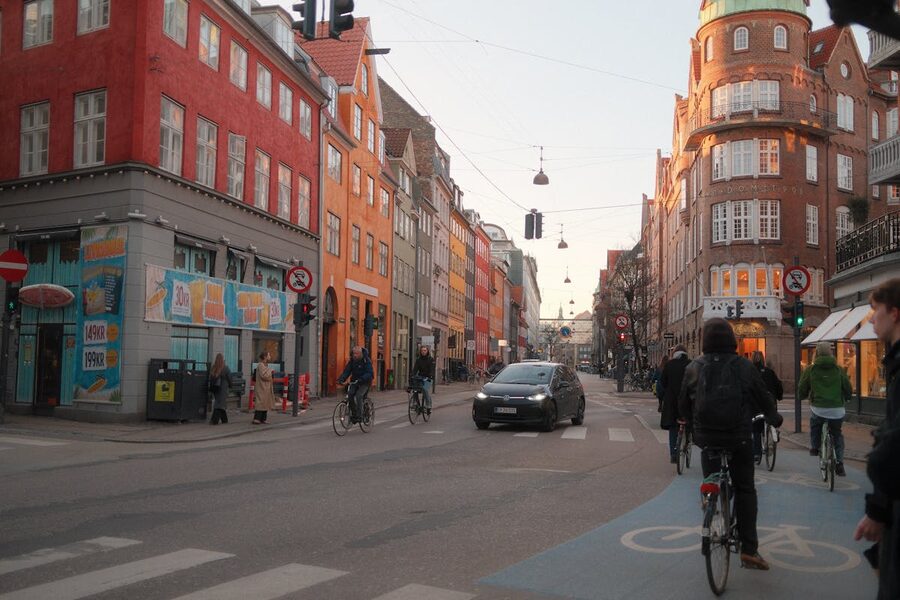
A Copenhagen bike tour is the polar opposite product but works as a great pairing. Do the HoHo on day one to get the lay of the land, then a guided bike tour on day two for the human-scale, locals-eye version. Copenhagen is genuinely the best cycling city in Europe, and the bike tour will take you to neighbourhoods the bus never visits, especially Nørrebro.
If you only have one day and want a guide, the Copenhagen walking tour covers the medieval core in two hours, and you do the HoHo for everything outside the centre. That’s the ideal split. Feet for the dense bit, wheels for the spread-out bit.
For the canal side, a standalone Copenhagen canal cruise is a tighter product than the boat included with the HoHo combo. Sometimes longer, sometimes a different route, often with a more in-depth guide. If you’ve already decided you love the canal experience, a separate booking can give you a different angle.
Practical bits you’ll want before booking
When does the bus run?
Daily, year-round. Summer hours (May to September) are roughly 09:00 to 19:00 with departures every 20-30 minutes. Winter hours (November to February) shrink to roughly 10:00 to 16:00 with departures every 30-45 minutes. March, April and October sit somewhere in between and depend on the operator.
Which ticket length should I buy?
For a one-night layover or a short stop, 24 hours is enough. For a weekend, the 48-hour is the sweet spot. It adds about 30% to the price for double the time, and gives you the buffer to actually hop off properly. The 72-hour is overkill unless you’re doing day trips and want the bus only for arrival and departure days.
Can I use it from the airport?
No, not directly. There’s no HoHo stop at Copenhagen Airport (Kastrup). But the metro from the airport to the city centre is 15 minutes and 36 DKK, drops you at Nørreport, and you can pick up the HoHo loop from there or walk five minutes to Tivoli/Central Station to start clean.
Children and pricing
Kids under 5 ride free. Kids 6-15 ride at half price on most operators. Family tickets exist on Red Sightseeing and Stromma but the maths only works out if you’ve got 2 adults and 2-3 kids. With one kid, the discrete child ticket is usually better.
Wheelchair access
Most modern buses on Red Sightseeing have wheelchair lifts and dedicated bays on the lower deck. Older buses on the smaller franchises may not. If wheelchair access matters, contact the operator before booking. Booking platforms do not flag accessibility consistently.
How Copenhagen’s HoHo compares to other capitals I’ve ridden
I’ve done the same product in Lisbon, Porto, Budapest, Warsaw, Oslo, and Brussels. Copenhagen sits comfortably in the upper half.
It beats Brussels (where the EU quarter is so far from the medieval centre that the loop drags). It beats Warsaw (where the Old Town can be done on foot and the bus mostly sells you views you’d get from a normal city bus). It’s about level with Porto and Budapest, both of which have similarly spread-out sights.
Lisbon has the best HoHo experience in southern Europe in my book. Three different routes, Belém included, the price is hard to beat. Oslo is the closest comparison to Copenhagen culturally, but Oslo’s HoHo feels weaker because so much of the city is reachable by tram and the bus loop overlaps. Copenhagen’s bus genuinely does work the metro doesn’t.
A short history of why Copenhagen sprawls the way it does
This isn’t strictly relevant to booking the bus, but it explains why the loop is shaped the way it is. Copenhagen was founded around 1167 as a small fishing village. By the 1600s, under King Christian IV, it was being expanded with deliberate planning. Christianshavn (the canal district), Nyhavn (the artificial harbour, dug 1670-73), Rosenborg (royal pleasure palace, 1606-34), and Frederiksstaden (the rococo district around Amalienborg, mid-1700s).
Each new district was built outside the previous walls, then the walls were torn down and the next ring of suburbs went up around them. Carlsberg started in 1847 in what was then countryside, well outside the city, which is why it sits so far from the medieval core today. The Little Mermaid wasn’t placed at random either. Langelinie is the old promenade where Copenhageners went on Sunday strolls when the harbour was the front door of the city.
The HoHo loop is essentially tracing this layered growth. Medieval core, royal expansion, harbour expansion, industrial outskirts. Once you see it that way, the route makes sense in a way the audio guide doesn’t quite spell out.
One last thing
The Copenhagen HoHo is not glamorous. It’s not the experience you’ll dine out on for years. But it’s the most practical 24-hour purchase you can make in this city if you want to see beyond the obvious medieval core. Buy the combo with the boat, scan in late morning on day one, save the boat for golden hour on day two, and let the audio guide do the work. That’s the formula.
What else to book in Copenhagen
If you’ve already locked in the HoHo and want to round the trip out, there’s a tight cluster of Copenhagen bookings worth thinking about together. The standalone canal cruise goes deeper than the included combo boat. Different operators, sometimes longer routes. Walking tours cover the medieval core properly and are how I’d start day one. The Copenhagen Card is the no-brainer if you’ll do three or more paid attractions, and it includes the metro and trains.
For day trips, our Kronborg, Frederiksborg and Roskilde castle day trip handles the three big royal sites in one go. Hamlet’s castle on the coast, the Danish Versailles inland, and the UNESCO cathedral where the kings are buried. There’s also a Lund and Malmö day trip across the Øresund Bridge into Sweden, which is a faster border crossing than most people expect. And if Carlsberg sparked your curiosity, the dedicated Carlsberg brewery tour goes much deeper than the bus stop drop-off allows. Pair the HoHo with one or two of these and you’ve got a Copenhagen weekend that feels like you actually saw the place.
This article contains affiliate links. If you book through them, we may earn a small commission at no extra cost to you.