Arashiyama’s autumn lantern walk gives this day trip its special reason to exist: after meeting Nara’s deer and passing beneath Fushimi Inari’s famous red gates, you reach the bamboo paths after dark, when the lanterns are lit. The tour runs from Osaka and puts three major sights into one long afternoon and evening.
I like the three-stop mix, which shifts from Nara’s open park to Fushimi Inari’s shrine paths and then to Arashiyama at night. I also like the small-group format and long Arashiyama stop: nine is the advertised group limit, and the schedule allows about two and a half hours for the lantern area.
The trade-off is a packed day with plenty of road time and fixed stop lengths. Small groups do not always mean roomy seats, and the tour’s information is not fully consistent about whether a guide is included. Confirm your package details, language support, vehicle arrangement, and festival dates before paying.
- Key points before you book
- Three Kyoto-area sights in one afternoon
- Nara Park: one hour with the deer
- Fushimi Inari: the torii gates in a short visit
- Arashiyama after dark: the day’s main event
- Small group, vehicle comfort, and the guide question
- Osaka departure, timing, and practical details
- Lantern tickets and choosing the right package
- Is this Osaka-to-Arashiyama tour a good fit?
- FAQ
- Where does the tour depart from?
- What time does the tour return?
- How much time is scheduled at each stop?
- Is the Arashiyama lantern ticket included?
- When is the lantern event scheduled?
- Are meals and drinks included?
- Is hotel pickup available?
- Are infants and toddlers allowed?
- Is travel insurance included?
- The Best Of Kyoto!
- More Guided Tours in Kyoto
- More Tours in Kyoto
- More Tour Reviews in Kyoto
Key points before you book

- The lantern walk is seasonal: The event is described as running from September 30 to November 8, 2026, with the main illumination experience in October. Confirm the dates for your chosen departure.
- Arashiyama gets the longest visit: Expect about 150 minutes there, compared with one hour at Nara Park and 90 minutes at Fushimi Inari.
- Tickets depend on your package: Some options include the lantern ticket; others require you to buy it yourself, with no guarantee that on-site tickets will remain.
- The starting point is in Osaka: Meet at Nihonbashi Exit 2 near Namba and Shinsaibashi at 11:50 a.m. for a noon departure.
- Guiding can vary: Guides named on recent departures include Angela, Apple, and Eric. Some have given clear, frequent updates, while English explanations have not been consistent.
- Traffic can change the day: The order of stops or time at each one may shift, and holiday delays can affect your evening plans.

👉 See our pick of the We Rank Kyoto’s 15 Top Workshops & Classes
Three Kyoto-area sights in one afternoon
This trip is built for convenience, not for lingering at every stop. You leave Osaka around noon, visit Nara Park, continue to Fushimi Inari Shrine, and finish in Arashiyama for the evening lantern path. The advertised return is about 9:30 p.m. in Shinsaibashi, Osaka, though traffic and event crowds can alter the timing.
That route makes sense if you are based in Osaka and want to see several headline sights without coordinating trains and transfers. It is less suited to anyone who wants a slow day, a full hike through Fushimi Inari, or time to explore Nara’s temples at length. Think of it as a sampler: each stop has a distinct character, but you must watch the clock.
The price shown for the experience starts at $55.65, while the listed options for the gathering-point package start at $79.49 without a lantern ticket and $97.55 with one. Hotel-transfer options cost more. Prices can vary, so compare the exact package at checkout rather than assuming the lowest advertised figure covers the version you want.
The value comes mainly from transport and a tight route. Transfers, tolls, parking, and fuel are included, so you avoid arranging several separate journeys. Meals, drinks, tips, personal costs, and, in some packages, the festival ticket are extra. For three stops in one day, the ride can be a practical bargain. For a more focused visit, separate trips give you more control over pace and time.
You can also read our reviews of more guided tours in Kyoto


Nara Park: one hour with the deer
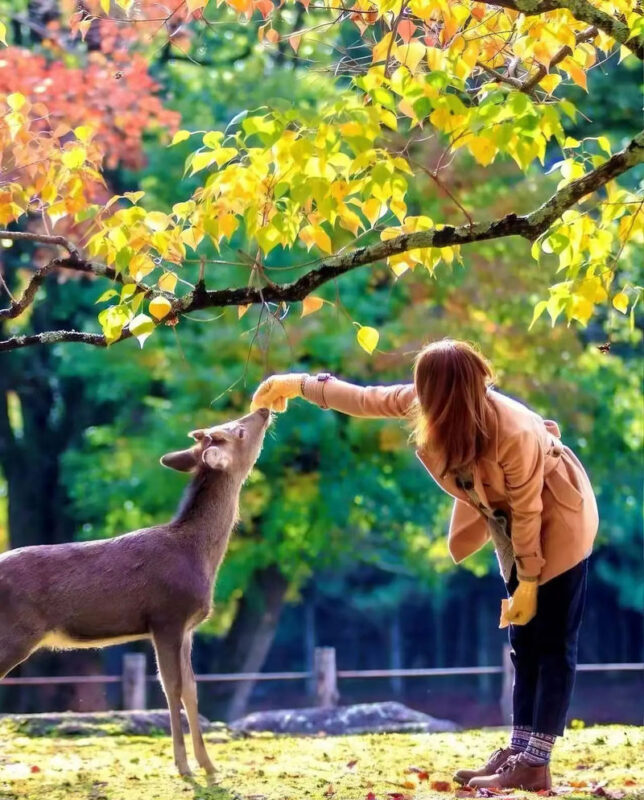
Nara Park is scheduled for about an hour, with arrival around 1 p.m. Its broad lawns and free-roaming deer make a memorable first stop. You can observe the animals up close and, if you choose, feed them. The deer are a draw for good reason: they make the park feel very different from the city streets and shrine paths later in the day.
An hour gives you time for a walk and photos, but not much more. Some tour guides have offered the option of seeing Todai-ji Temple and its Buddha statue, while others may leave you to explore the park on your own. Ask your guide how to use the stop when you arrive, and keep an eye on the return time.
The deer are wild animals, not props. One guide has reportedly given practical reminders about watching them carefully. Follow the instructions you receive, keep your belongings close, and do not let a photo distract you from the animals around you. If you are travelling with children, this is a good place to keep them within easy reach.
Fushimi Inari: the torii gates in a short visit
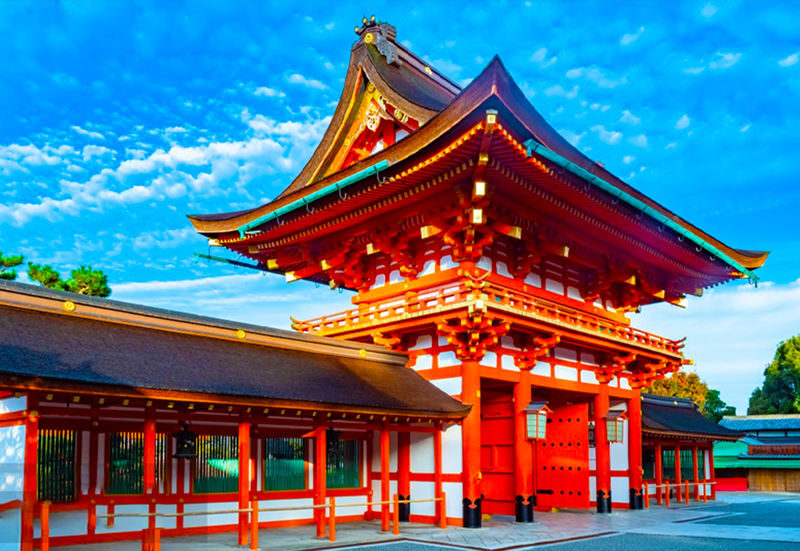
The planned 90 minutes at Fushimi Inari Taisha gives you time to see its best-known feature: rows of vermilion torii gates climbing the hillside. The shrine is a major Kyoto landmark, and walking beneath the gates offers a strong sense of the place even if you do not climb far.
This stop can feel brief. The full route up the mountain takes longer than a quick photo visit, so decide early whether your priority is a short walk among the gates, a look around the shrine grounds, or a longer climb. The schedule does not promise enough time to do everything at a relaxed pace.
There is also a practical alternative if you have already visited the gates. You can spend some of the stop around the shrine’s shopping street, where food and souvenirs are available, or take a break in a dessert shop if you need to sit down. Use this stop to match your energy to the evening ahead, not to race through every possible corner.
Arashiyama after dark: the day’s main event
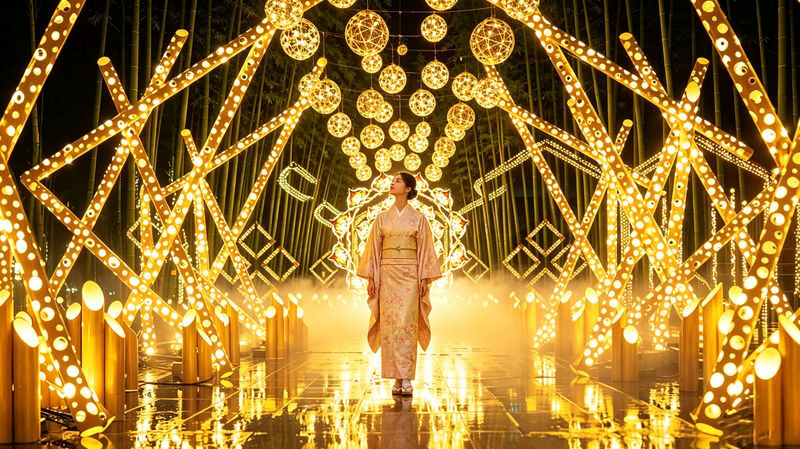
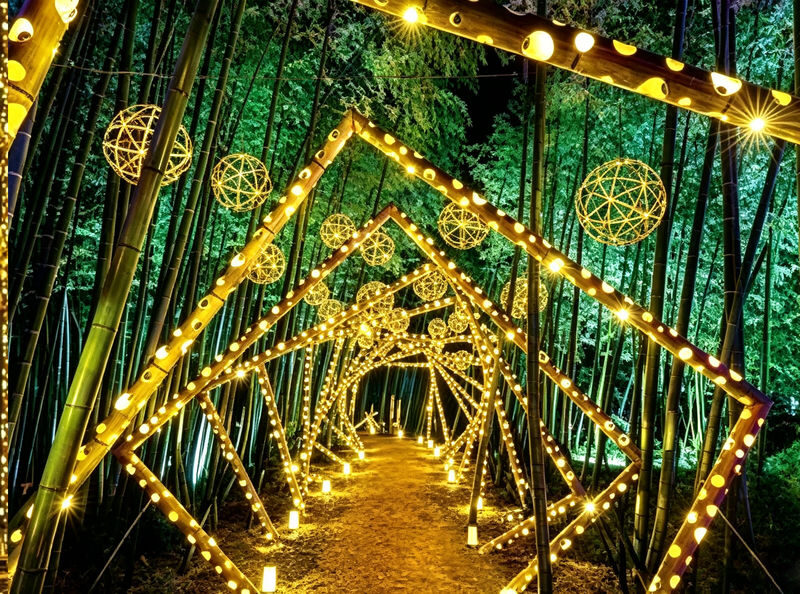
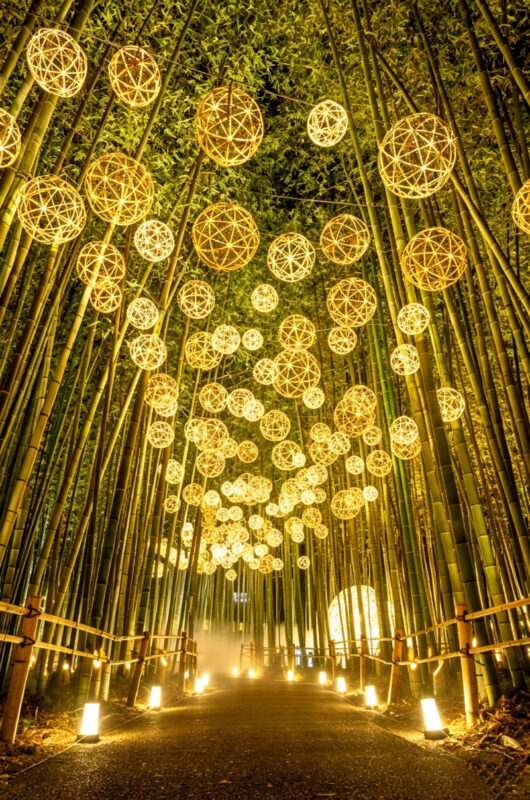
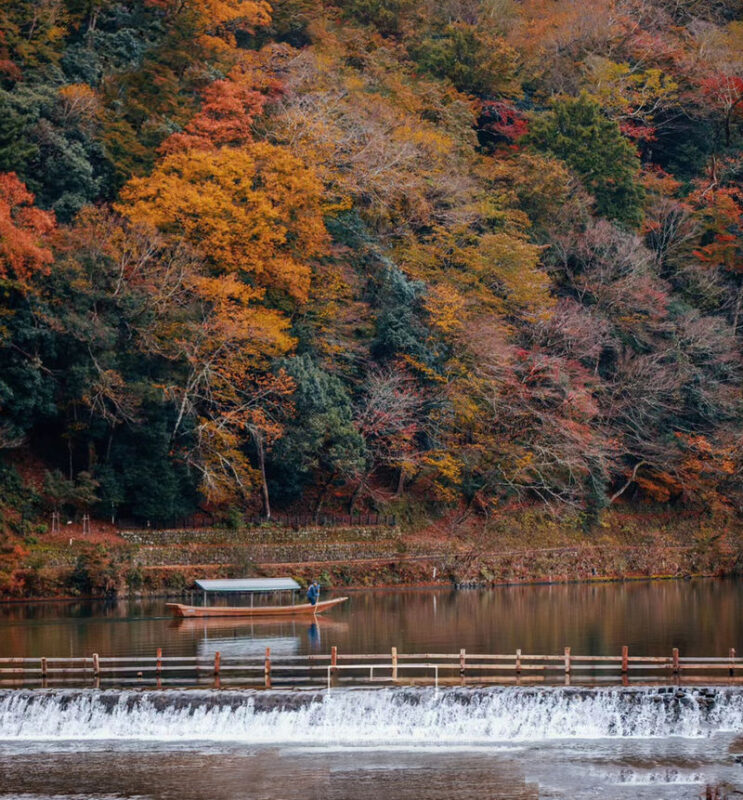
The tour reaches Arashiyama at about 5:20 p.m. and sets aside around two and a half hours. That is the largest block of time in the schedule and the main reason to choose this particular outing. The seasonal lantern event lights the bamboo path and the area around Togetsukyo Bridge, creating an evening walk that differs sharply from the daytime temple-and-shrine circuit.
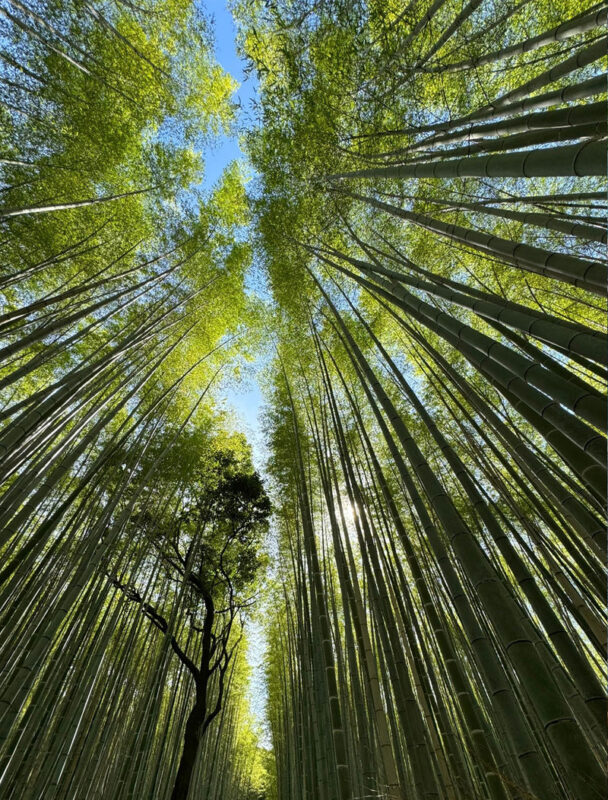
The route named for the stop includes Moon Lantern Road, Togetsukyo Bridge, and a small bamboo grove. Expect a walk among bamboo shadows and warm lights, plus time for photos. The lantern display is a limited event, and its scale and atmosphere may not match everyone’s expectations. If you are picturing a huge light show, adjust that picture: the appeal is the setting and the lantern-lit path, not a vast production.
Crowds are part of the experience. On busy nights, even a relatively small event can involve queues at popular photo spots, and some visitors have spent a long time inside despite the venue’s modest size. An included ticket may save the uncertainty of buying one on site, but it does not guarantee a quiet walk or quick photos. Follow the staff’s directions and be patient at the busiest points.
Shops in Arashiyama often close around 6 p.m., so do not count on shopping after the lights come on. If you want dinner or a snack, plan to eat before entering the lantern area or bring a sealed light snack for the ride. Food and drinks are not included, and eating is not allowed on the bus.
Small group, vehicle comfort, and the guide question
The advertised group size is up to nine people, a more personal scale than a large coach tour. It can make it easier to receive meeting reminders and ask for help. Guides named on departures have included Angela, Apple, and Eric. Some have been praised for clear directions, frequent messages, and thoughtful help with practical details such as meeting spots and restrooms.
But the group limit does not guarantee a spacious vehicle. The ride from Osaka to the sights and back is long enough that seat comfort matters. Some passengers have found the rear seats or auxiliary seats tight, even with fewer than nine people in the vehicle. If you have mobility needs or are travelling with a child, contact the operator before booking to ask about the vehicle and seating.
Also clarify what the word guide means for your package. The experience is described as a small-group trip with a driver-guide, yet the included items say a tour guide is not included. In practice, some departures have had guides who explain the route and help orient the group, while others have felt closer to point-to-point transport. English-language ability can vary. If detailed commentary in English is essential to you, confirm that directly before booking.
You can also read our reviews of more tours and experiences in Kyoto

Osaka departure, timing, and practical details
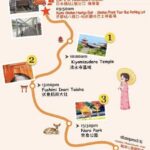
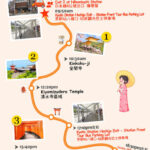
Meet at Nihonbashi Exit 2, in the Namba-Shinsaibashi area, by 11:50 a.m. The vehicle is scheduled to leave at noon. The return point is Shinsaibashi, with dismissal planned for about 9:30 p.m. Arrive early: late arrivals and no-shows are not refundable, and the group has only a short waiting allowance.
The operator sends vehicle and meeting details by email the day before, with the information window given as 3 to 8 p.m. in one instruction and 4 to 9 p.m. in another. Check your inbox and spam folder, keep your phone available, and contact the operator if the details have not arrived by 9 p.m. If a LINE group link is sent, you need to join it yourself to receive updates.
The schedule is an estimate, not a promise of exact arrival times. Traffic, weather, holidays, and festival crowds can change the stop order or shorten visits. Holiday delays of two to five hours are noted as possible, so avoid planning a tight connection or an important late-night activity after returning to Osaka.
Children and infants count toward the passenger total. Infants and toddlers aged zero to two are not recommended, and you must notify the operator in advance if they will join. The tour also lists several medical restrictions, including pregnancy, heart disease, high blood pressure, asthma, epilepsy, and acrophobia. Check the full conditions before booking, and arrange your own travel insurance because it is not included.
Lantern tickets and choosing the right package
The ticket choice deserves close attention. The options include a gathering-point package without a lantern ticket, a gathering-point package with one, and hotel-transfer packages with or without the ticket. The information gives an on-site ticket price of ¥1,500 and an advance ticket price of ¥2,000, but it does not guarantee that on-site tickets will be available. If you choose a package without admission, you take on the risk of a sellout.
Compare the total cost, not just the starting price. The ticket-included option costs more, but it reduces uncertainty on the night. Hotel pickup and drop-off may be worth the extra charge if you prefer not to reach the meeting point yourself, though the exact pickup area and terms should be checked before you book. The meeting-point option is straightforward for anyone staying near central Osaka and comfortable getting to Nihonbashi Exit 2.
A full refund is available if you cancel at least 24 hours before the activity date, according to the stated terms. Late arrival, no-show, or leaving the trip early does not qualify for a refund. If the operator cancels because of extreme weather or another unforeseen event, you can reschedule or request a full refund. Once you have used a ticket or taken part in an activity, refunds are not available.
Is this Osaka-to-Arashiyama tour a good fit?
Book this trip if you are staying in Osaka, want to see Nara and Fushimi Inari in the same outing, and care most about reaching Arashiyama for its seasonal evening lights. The included transport saves planning time, and the small-group format can make meeting and boarding easier than joining a large coach.
Choose another plan if you want a full day at each sight, need roomy seating, or expect detailed English commentary throughout. The strongest reason to book is the lantern event, so verify that it is running on your date and select a ticket-included package if you do not want to risk a sellout. With realistic expectations about the brisk pace and possible traffic, this is a convenient way to fit three very different places into one autumn day.
Depart at noon Arashiyama Moon Lantern Festival Limited | Kyoto Fushimi Inari Shrine & Nara Park Day Trip (Small Group with Driver-Guide, Optional Hotel Pickup)
“Would be helpful if the driver/guide had a sign held up at the meeting point. Also, there was a total of 6 people in one vehicle which was super un…”
FAQ
Where does the tour depart from?
Meet at Nihonbashi Exit 2 in the Namba-Shinsaibashi area of Osaka at 11:50 a.m. The scheduled departure is noon.
What time does the tour return?
The planned dismissal is at about 9:30 p.m. in Shinsaibashi, Osaka. Traffic and weather can change the timing.
How much time is scheduled at each stop?
The schedule allows about one hour at Nara Park, 90 minutes at Fushimi Inari Taisha, and two and a half hours in Arashiyama.
Is the Arashiyama lantern ticket included?
Only in some packages. Check the package name before booking. If your option does not include a ticket, you must buy one yourself, and on-site availability is not guaranteed.
When is the lantern event scheduled?
The event information gives dates from September 30 to November 8, 2026, and describes it as an autumn event held in October. Confirm the operating dates for your chosen trip.
Are meals and drinks included?
No. Meals and beverages are not included. Sealed light snacks and unopened drinks may be brought on the bus, but eating inside the vehicle is prohibited.
Is hotel pickup available?
Some package options list Osaka hotel transfer. Other options use the meeting point at Nihonbashi Exit 2. Check the exact package details before booking.
Are infants and toddlers allowed?
Children and infants must be included in the passenger count. Ages zero to two are not recommended; if an infant or toddler must join, notify the operator in advance.
Is travel insurance included?
No. The tour information says personal travel and accident insurance are not included, so arrange your own cover if needed.