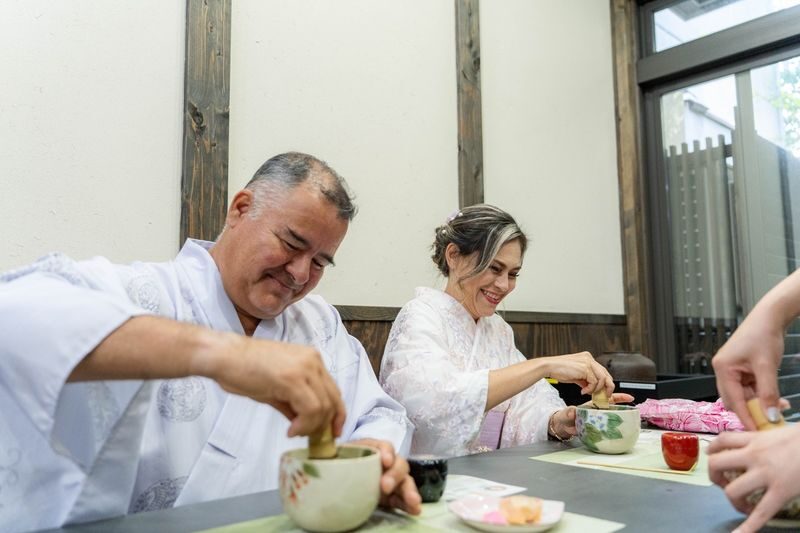
Matcha preparation is the heart of this experience: you learn a little about tea ceremony etiquette, then make and taste matcha with a traditional Kyoto sweet. At TIA Kiyomizu Chawanzaka, the session takes about 20 to 30 minutes, so it can fit into a day around Kiyomizu-dera without turning your sightseeing plan upside down.
I like two things in particular: the English guidance makes the ceremony easy to follow, and the kimono rental next door lets you combine tea with a traditional outfit. The main consideration is that this is a brief, introductory session, not a long or highly formal ceremony. Also, confirm the shop location before setting out: finding the right entrance has caused trouble for some people.
- At a glance
- A quick lesson that puts matcha in context
- Kimono rental adds a second experience
- Kiyomizu-dera is close, but find the shop first
- Friendly instruction, with room for photos
- What the price gets you
- Who will enjoy this most
- Should you book it?
- FAQ
- How long does the tea ceremony take?
- Is the experience guided in English?
- Is kimono rental included in the starting price?
- Which kimono package includes hairstyling?
- Can I go outside in the kimono?
- Can I take photos during the ceremony?
- Is the experience suitable for children?
- What is the address?
- Can I cancel for a refund?
- The Best Of Kyoto!
- More Tours in Kyoto
- More Tour Reviews in Kyoto
At a glance
 1 / 8
 2 / 8
 3 / 8
 4 / 8
 5 / 8
 6 / 8
 7 / 8
 8 / 8
- Matcha you prepare yourself: Learn the basics, then enjoy your tea with a Japanese sweet.
- A short cultural stop: The session lasts about 20 to 30 minutes and runs to a fixed schedule.
- Kimono rental is an add-on: Choose from packages with indoor wear or an outdoor stroll; one option includes hairstyling for women.
- Close to Kiyomizu-dera: The shop is described as a five-minute walk from the temple, making it convenient to pair with a visit.
- Photos are welcome: You can take photos and videos during the experience.
- Indoor and weather-proof: The tea ceremony takes place indoors, even when it rains.
👉 See our pick of the We Rank Kyoto’s 15 Top Workshops & Classes
A quick lesson that puts matcha in context
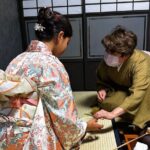
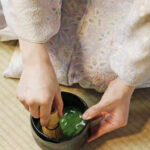
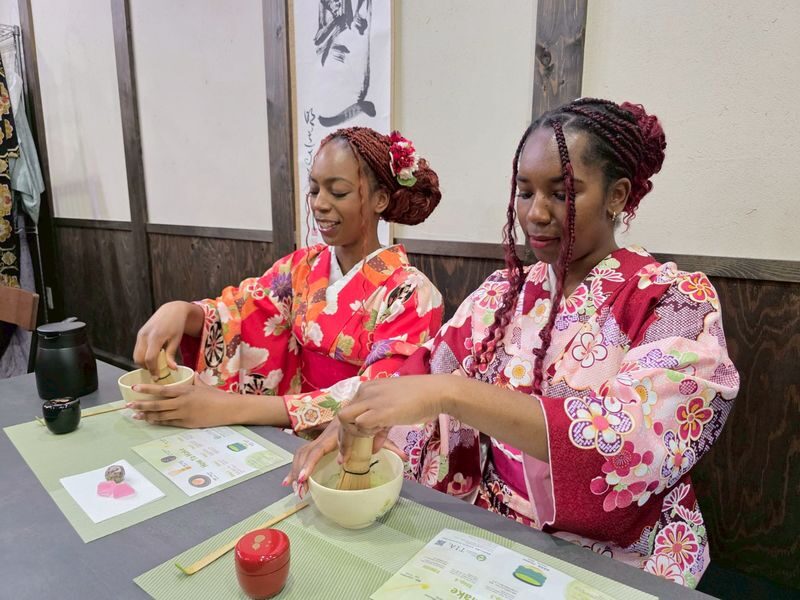
This is a hands-on introduction rather than a demonstration you simply watch. An English-speaking staff member guides you through the tea ceremony and matcha preparation, helping you understand what to do and why the steps matter. The aim is to make the experience accessible, not to test your knowledge of etiquette.
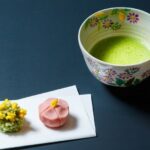
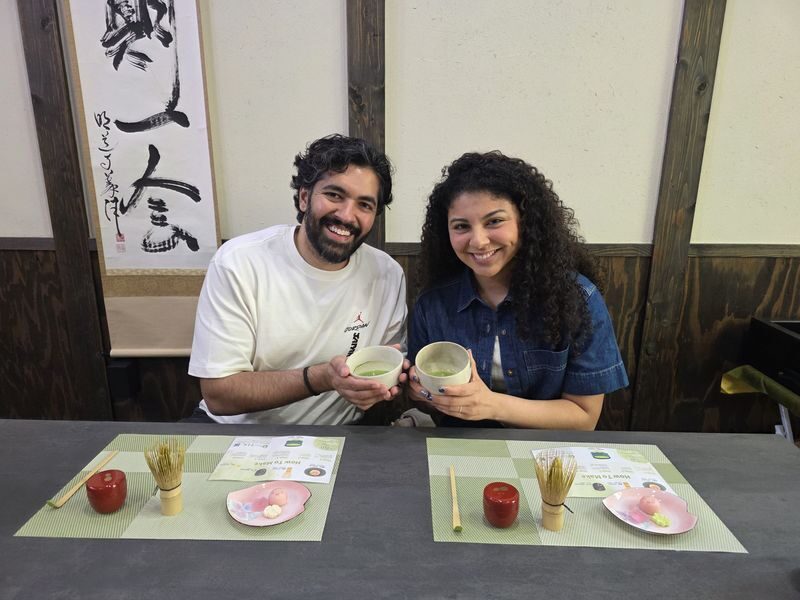
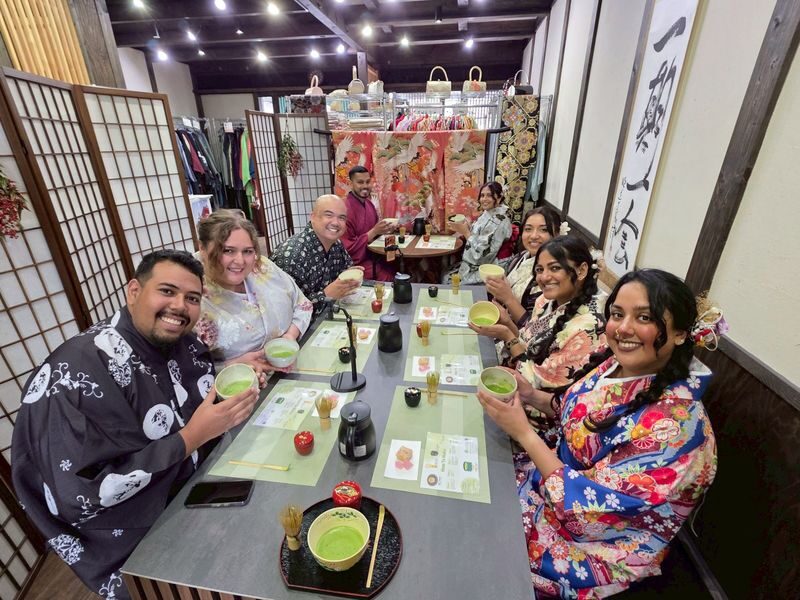
You can expect to taste premium local Uji matcha alongside a traditional Japanese sweet. The matcha and wagashi pairing is a small but important part of the visit: it gives you a taste of Kyoto beyond the tea itself, and offers a moment to slow down in a neighborhood where many itineraries are built around moving from one landmark to the next.
The tea is served in Kiyomizu-yaki bowls, a local detail that gives the ceremony a stronger sense of place. You are not only learning how to prepare matcha; you are seeing it presented with objects and flavors associated with Kyoto.
The session is intentionally compact. If you want to try matcha, learn a few basics, and leave with a clearer idea of what a tea ceremony involves, 20 to 30 minutes is a useful length. If you are hoping for a long, quiet ceremony with more time for detailed instruction, this format may feel too brief. The short duration is a practical trade-off, not a substitute for a more in-depth study of tea.
You can also read our reviews of more tours and experiences in Kyoto.


Kimono rental adds a second experience
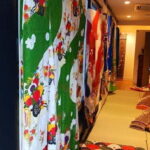
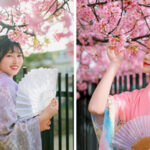
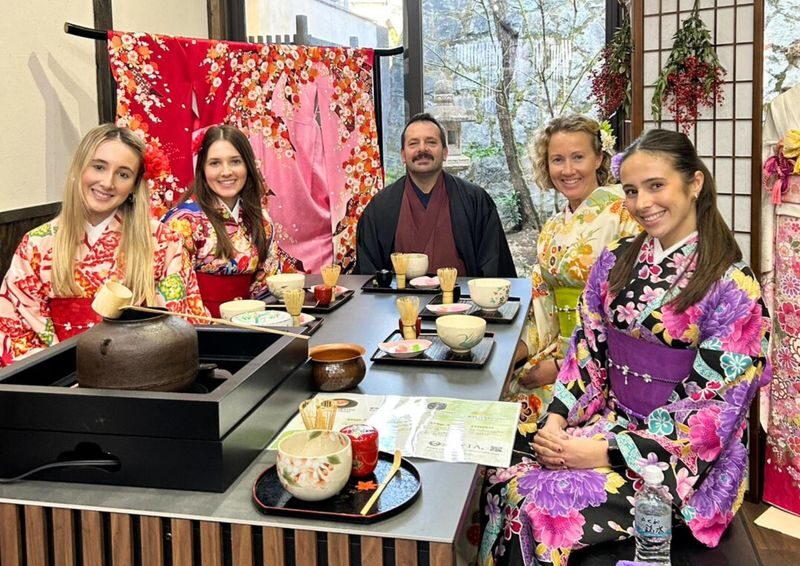
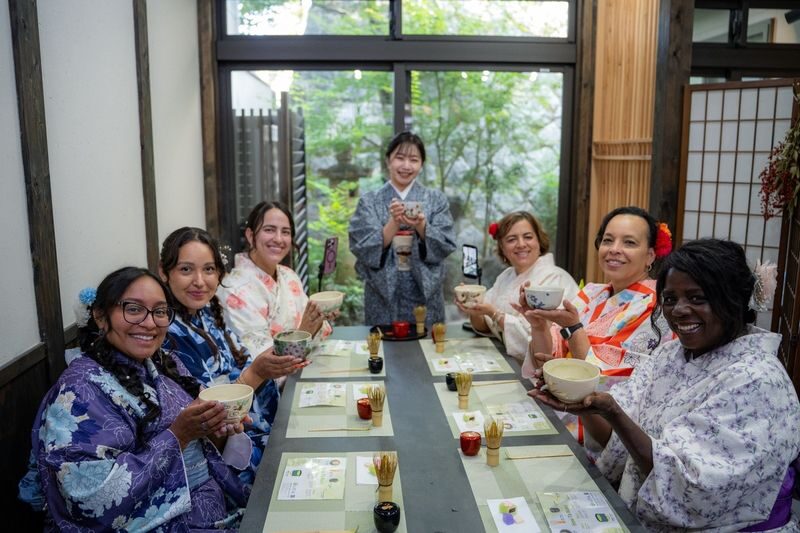
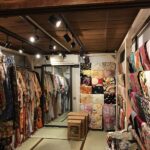
The kimono option changes the outing from a short tea lesson into a fuller cultural activity. The rental shop is next door, so you can get dressed before joining the ceremony rather than having to arrange a separate visit elsewhere. Staff help with dressing, and the available packages differ in how you can use the kimono.
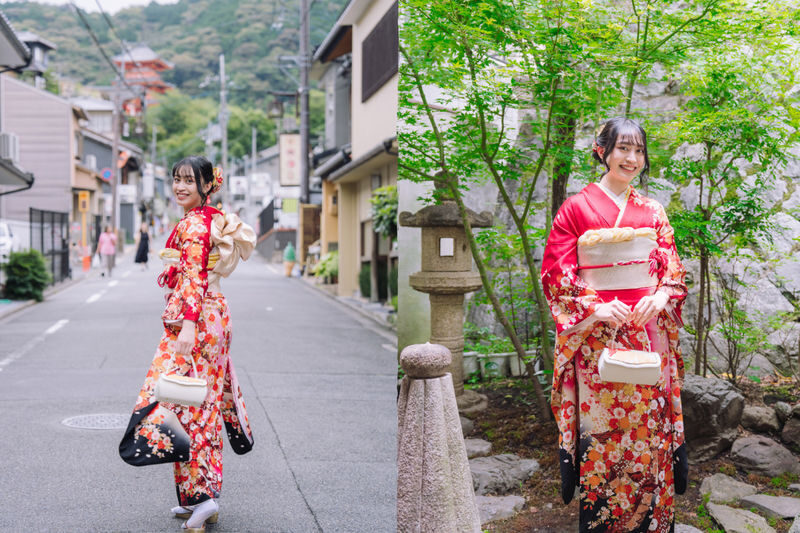
The indoor-only package is for wearing a kimono during the tea experience, without hairstyling. The outdoor-stroll package allows you to go out in the kimono and includes hairstyling for women. If you want time for photos around the nearby streets or temple area, that second option is the one to consider. Kimono rental is not included in the basic tea ceremony package, so check the exact package name before you book.
The chance to choose your own outfit is part of the appeal. People have described a good selection for both men and women, along with accessories and help from staff. The styling can make the preparation feel like its own activity, rather than a quick costume change before tea.
Do keep the extra time in mind. The ceremony itself is short, but selecting and putting on a kimono, and having your hair styled if included, will add to the visit. The package details provided do not specify how long the rental lasts, so confirm that point if you have a particular plan for walking around afterward.
Kiyomizu-dera is close, but find the shop first
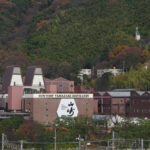
The address is 6-583-55 Gojobashihigashi, Higashiyama-ku, Kyoto 605-0846, Japan. TIA describes the shop as about a five-minute walk from Kiyomizu-dera, which makes the experience easy to pair with a temple visit. You can make tea before sightseeing, or use the ceremony as a quiet pause after exploring the area.
There is one practical wrinkle: a few people have had trouble locating the shop, and one person found a map app pointed to the wrong nearby spot. Another had to go to a different shop after arriving to find the original location closed. These are not reasons to avoid the experience, but they are good reasons to check the address and current venue details before you leave your hotel.
Use Google Maps as a sensible first step, but do not rely on an app alone if the directions seem off. Allow extra travel time, and make sure you know which shop is hosting your session. The activity runs on a fixed schedule; late arrivals may need to reschedule or may not be accommodated. In short, the five-minute walk is useful once you are oriented, but do not cut your arrival time close.
Friendly instruction, with room for photos
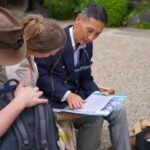
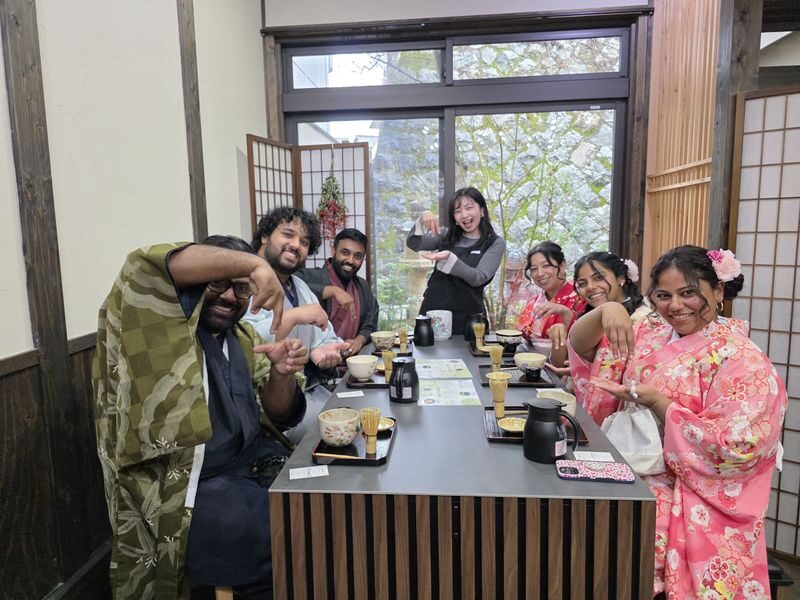
The tone is designed to be welcoming and easy to follow. English guidance is available, and staff also speak Chinese and Japanese. In practice, the staff’s role goes beyond explaining tea: they can help with the kimono process and, when appropriate, take photos with your phone. Photos and videos are allowed during the ceremony, so you can keep a record without needing to wait until the end.
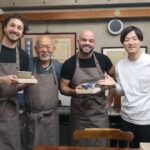
Individual staff members named by participants include Rina and Lilisa, who were praised for their clear explanations and kind help. Names and staffing can vary by session, of course, but the experience is set up for international visitors who may be new to both matcha preparation and tea etiquette. Families have also brought children, including a nine-year-old who enjoyed the activity.
The setting is indoors, which makes the tea portion a reliable choice in wet weather. That is useful in Kyoto, where a rainy day can complicate plans built around outdoor temples and walks. The kimono stroll, by contrast, is an outdoor option, so think about the weather and your comfort before choosing that package.
What the price gets you
The experience starts at $22.10, but that entry price is for the tea ceremony experience, not automatically a kimono rental. The basic session includes admission, a guided tea ceremony, matcha, and a Japanese sweet. If you want to dress in kimono, select one of the packages that explicitly includes rental.
For the base price, the main value is the combination of instruction, tasting, and location. You get a guided activity rather than simply ordering matcha at a café, and the short length makes it easier to fit around a temple visit. The local Uji tea, wagashi, and Kiyomizu-yaki bowls add specific Kyoto character to an experience that might otherwise feel like a generic demonstration.
The kimono packages cost more, but they also include a separate service: help choosing and wearing the outfit, with hairstyling for women in the outdoor-stroll option. That can make sense if dressing up and taking photos are central to your day. If your main interest is learning to make matcha, the tea-only package keeps the outing focused and avoids paying for an add-on you do not need.
Before booking, compare the package names carefully. The indoor-only kimono option does not include hairstyling, while the outdoor-stroll option does include women’s hairstyling. The stated starting price alone does not tell you which of these you are selecting.

Who will enjoy this most
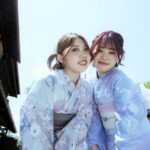
I would choose this for a first visit to Kyoto, especially if you want a manageable introduction to tea culture rather than a long formal lesson. It suits couples, friends, and families who would enjoy making matcha together. The kimono option is particularly appealing if you want photographs in traditional dress and time to walk around the area afterward.
It also fits a busy sightseeing day. A short session leaves room for Kiyomizu-dera and nearby streets, while the indoor setting gives you a useful rainy-day plan. The experience is not limited to people who already know how to prepare tea; the instruction is meant for beginners.
You may want a different activity if you are seeking a highly formal, extended ceremony or a detailed course in tea practice. One participant found the venue less authentic than expected, which points to a fair distinction: this is a friendly, visitor-oriented introduction, not a deep study of tea ceremony traditions. Its strengths are access, clear guidance, a local tea-and-sweets pairing, and the option to add a kimono.
Should you book it?
Book the tea-only session if you want a short, hands-on cultural stop near Kiyomizu-dera. Choose a kimono package if dressing up and taking photos matter as much as the tea. The combination is strongest for first-timers who want a clear explanation, a taste of matcha and sweets, and an activity that will not consume half the day.
Be precise about the package and the venue, and arrive with time to spare. With those details settled, this is a pleasant way to add a little Kyoto culture to a temple-focused day.
Kyoto Tea Ceremony & Matcha Making TIA KiyomizuChawanzakaShop
“started off a bit stressful as the location/shop given was closed on the day and we had no communication from either Klook or the shop about this b…”
FAQ
How long does the tea ceremony take?
The session lasts about 20 to 30 minutes.
Is the experience guided in English?
Yes. Sessions are guided in English, and staff also speak Chinese and Japanese.
Is kimono rental included in the starting price?
No. The starting price is for the tea ceremony experience. Choose a package that specifically includes kimono rental if you want to wear one.
Which kimono package includes hairstyling?
The outdoor-stroll package includes hairstyling for women. The indoor-only kimono package does not include hairstyling.
Can I go outside in the kimono?
The outdoor-stroll package allows you to wear the kimono outside. The indoor-only package is for use indoors.
Can I take photos during the ceremony?
Yes. Photos and videos are welcome during the experience.
Is the experience suitable for children?
Children can attend. Infants and children must be included in the passenger headcount, and children aged six and older are charged the adult rate.
What is the address?
The address is 6-583-55 Gojobashihigashi, Higashiyama-ku, Kyoto 605-0846, Japan. Confirm the location before setting out, as some people have had difficulty finding the shop.
Can I cancel for a refund?
A full refund is available if you cancel at least 24 hours before the activity date, using the destination’s local time.