Kyoto’s maiko are more than a lovely sight in silk and white makeup. This 90-minute group program gives you a close look at their work: watch a tea ceremony and dances, ask questions, join a game and take a photo together. It is an accessible way to meet a maiko without arranging a costly private visit.
I like that the program mixes performance with interaction, and that you can choose a simple plan or add lunch or dinner. The trade-off is the setting: this is a group event in a practical cultural center, not an intimate encounter in a traditional teahouse. Seating and the number of people in the room can affect your view.
- The essentials at a glance
- What meeting a maiko here is really like
- Tea, questions, dance and a game
- Choosing between the simple plan and a meal
- The room, the group and your view
- Is the price good value?
- Practical details before you book
- Who should book this Kyoto experience?
- FAQ
- How long does the experience last?
- What activities are included?
- Can I make tea myself?
- Is food included?
- Is this a private experience?
- What languages are available?
- Can children attend?
- Is a seat upgrade available?
- Where does the experience meet, and what times are offered?
- Can I cancel for a refund?
- The Best Of Kyoto!
- More Tours in Kyoto
- More Tour Reviews in Kyoto
The essentials at a glance
 1 / 8
 2 / 8
 3 / 8
 4 / 8
 5 / 8
 6 / 8
 7 / 8
 8 / 8
- A maiko-led program: Expect a tea ceremony demonstration, dance, a question period, a game and a commemorative photo.
- About 75 minutes with the maiko: The full experience lasts 90 minutes, leaving roughly 15 minutes after her portion of the program.
- Two ways to book: The simple plan is the lower-cost choice. Lunch and dinner courses are available for an added meal.
- A group, not a private meeting: The stated group size is 10 to 50, and the activity requires at least 10 participants.
- Seating can shape the experience: A seat upgrade costs extra. If a clear view matters to you, ask about it when booking.
- Plan for a cultural introduction, not a formal teahouse visit: The event is designed to make maiko culture approachable, but the venue and format are more functional than traditional.
👉 See our pick of the We Rank Kyoto’s 15 Top Workshops & Classes
What meeting a maiko here is really like
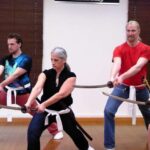
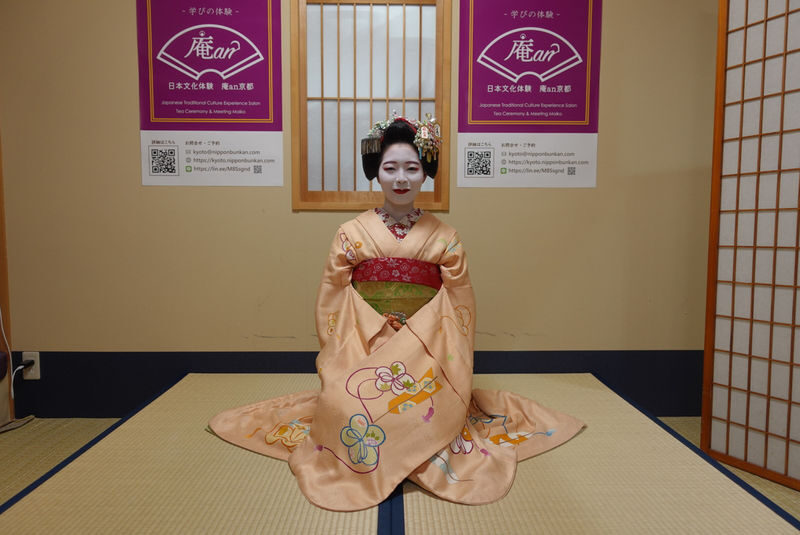
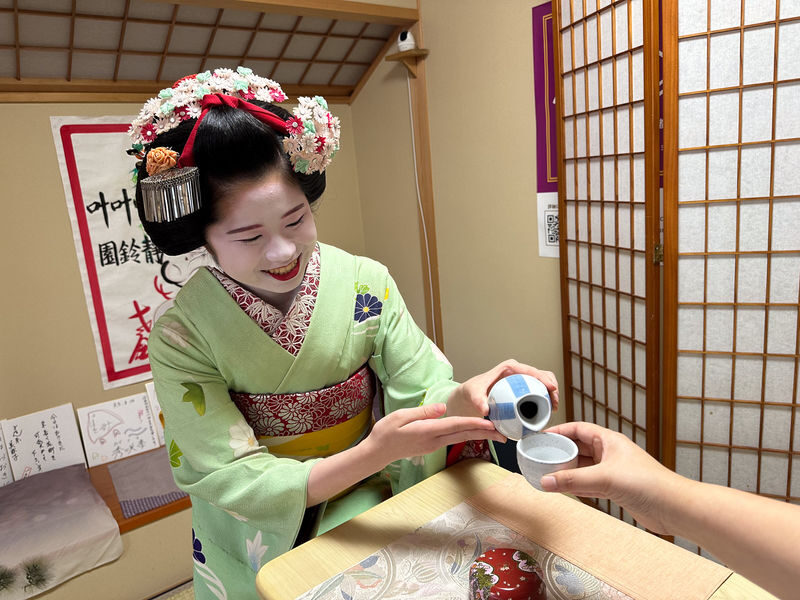
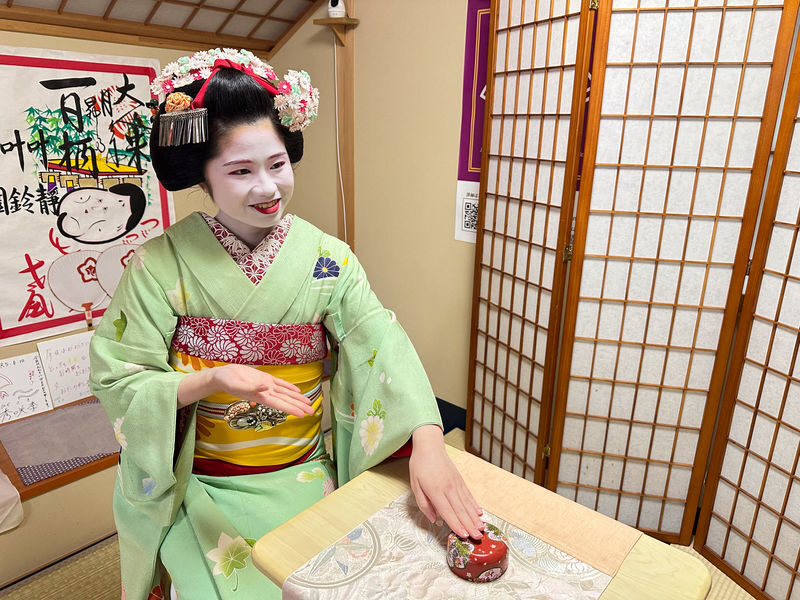
A maiko is a young apprentice in Kyoto’s geiko tradition. Seeing one up close can help put the familiar image of elaborate kimono, careful movement and dance into context. Here, the experience is built around a guided introduction rather than a private conversation or a night out at a teahouse.
That distinction matters. A traditional, personal encounter can be expensive and difficult to arrange, while this program offers a more affordable way to watch a performance and learn a little about the person behind it. You share the room with other people, and the event follows a set schedule.
The atmosphere depends partly on the group. At its best, the mix of demonstration, questions and play makes the room feel warm and lively. If people talk over explanations, arrive or leave during the program, or crowd the sightlines, the same group format can feel less focused. I’d go in expecting a cultural sampler, not a hushed, private ceremony.
You can also read our reviews of more tours and experiences in Kyoto.


Tea, questions, dance and a game
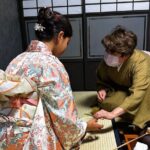
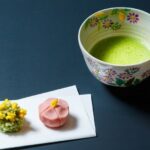
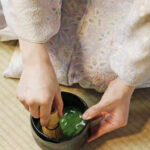
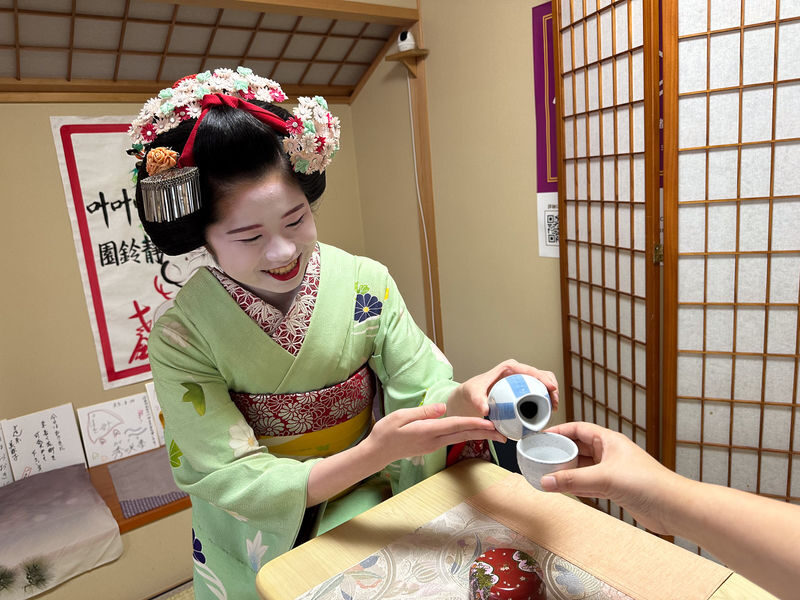
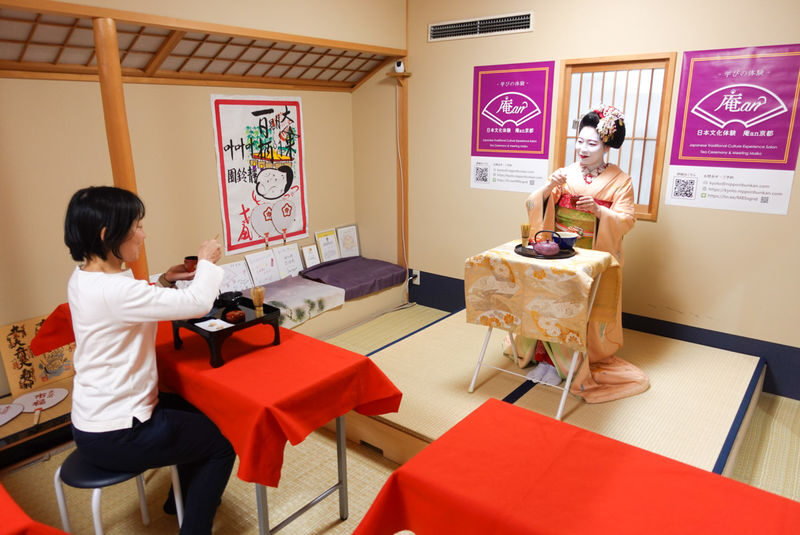
The program’s sequence brings you close to several different parts of maiko culture. First comes a tea ceremony performance. For the simple plan, treat this as a demonstration to watch, not a promise that you will prepare your own matcha. Making tea yourself is a separate option: the venue advises booking a tea ceremony, dance and game experience or a lunch or dinner with maiko package if you want tea-making or a meal. One participant also reported being offered tea-making for an additional 1,600 yen, so check the exact package details before you pay.
Next comes question time. This is your chance to ask about the maiko’s work and life, with a Japanese-speaking guide included. Language support can vary: some groups have had English interpretation, but foreign-language service is not guaranteed and may cost extra. If understanding the explanations is important to you, confirm what language will be available for your date.
The dance is often the emotional center of the event. You get to watch a trained performer work through gestures and movements at close range, rather than seeing a distant stage show. The program can include two dances, according to one participant’s experience, though the exact performance details may vary. A musical performance has also been part of the event, but the supplied program does not promise a fixed number of songs or dances.
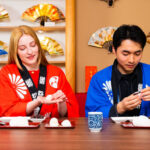
Then there is a traditional game, often called Konpira Fune Fune. The format invites audience participation, so it is a good moment to volunteer if you feel comfortable. The game adds a playful counterpoint to the more formal tea and dance. You can also take a commemorative photo with the maiko and receive a small gift from her.
The maiko is scheduled to remain for about 75 minutes. The final 15 minutes of the 90-minute booking are at your disposal, but the exact use of that time is not specified. Arrive ready to take part, and keep questions concise if the room is busy.
Choosing between the simple plan and a meal
The simple plan makes sense if your main reason for booking is the maiko herself. You still get the central program: a tea ceremony demonstration, questions, dance, game, photo and gift. It avoids turning the event into a meal outing, and it can be the best value if you want a cultural introduction without paying for food you may not care about.
Lunch and dinner courses add a meal to the experience. Food opinions vary, so I would not book this primarily for the cuisine. Some people find the meal tasty and plentiful; others describe it as basic, average or disappointing. One practical complication is that meal participants and people on other plans may share the room. Food service can bring staff in and out while the maiko program is underway.
That overlap has also made the format feel uneven for some people: one group is eating while another is watching the tea ceremony or dance. If you want the most focused view of the performance, the simple plan may suit you better. If having a meal is part of your ideal Kyoto evening, the meal package adds convenience, but set your expectations around a straightforward meal rather than a culinary highlight.
Dietary needs such as allergies, gluten intolerance and vegetarian diets can be accommodated, though a set menu may not be changeable in every case. Contact the operator in advance to confirm what can be arranged for your specific package.
The room, the group and your view
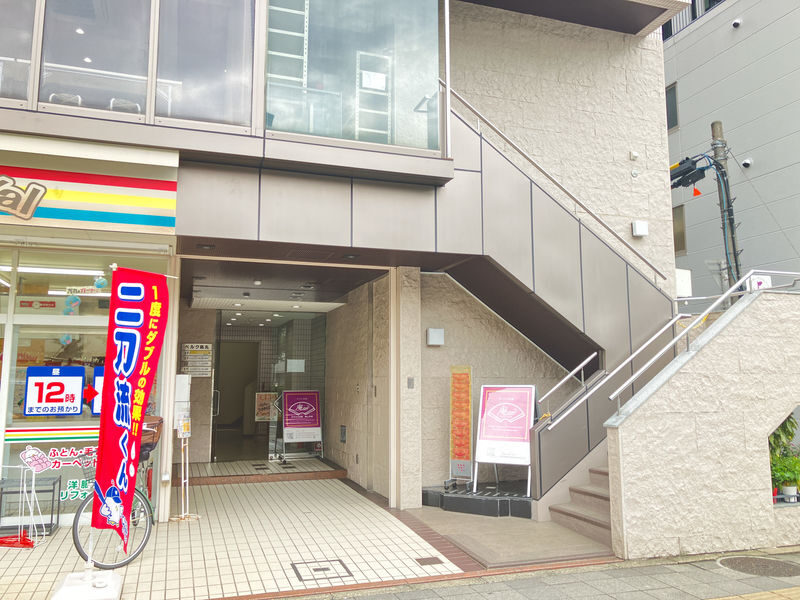
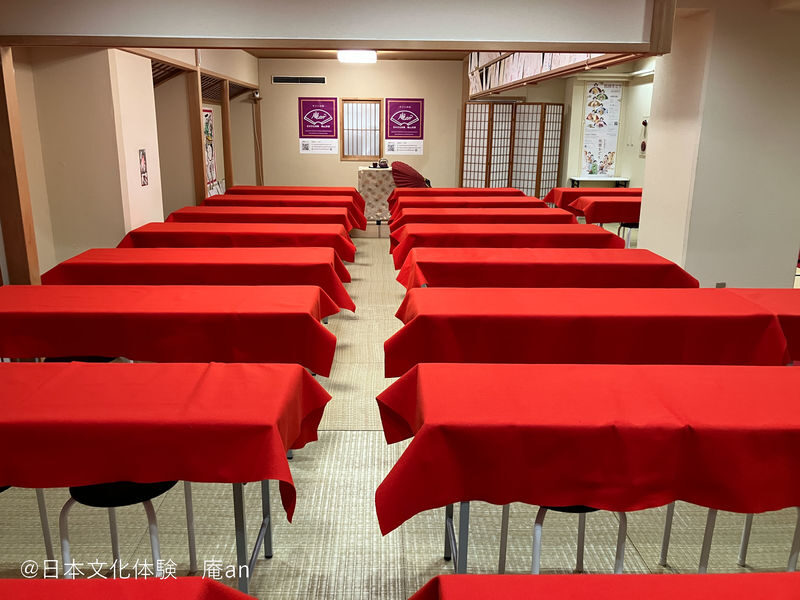
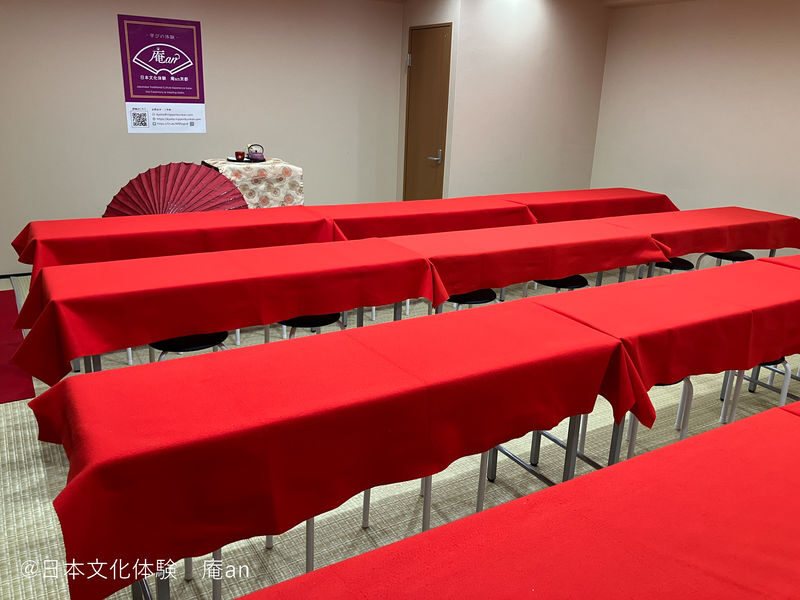
AN KYOTO is at Nippon Bunka An, on the second floor of the Berg Karasuma building in Shimogyo Ward. The venue is a cultural center, not a historic teahouse, and the room’s practical look is part of the deal. Some people find it plain or classroom-like. If atmosphere and traditional decor are central to your idea of an authentic experience, this may not meet that expectation.
The experience is listed for groups of 10 to 50, with a minimum of 10 participants. A larger room can make it harder to see, especially from the back or behind a column. Seating is not always something you can choose, and a paid seat upgrade is available. If unobstructed viewing matters to you, ask what the upgrade provides before booking rather than assuming your seat will be near the front.
The same group format brings a useful advantage: the price is much lower than arranging a private encounter. But it does mean you share the maiko’s attention and the room with other people. Keep your voice down during explanations and performances, and don’t touch the maiko. The event is an introduction to a living art, not a photo prop.
Is the price good value?
Prices start at $43.59, with the final cost depending on your chosen package and any upgrades. For that entry price, you get a structured cultural experience and a rare chance to meet a maiko up close. The value lies in the combination of performance and interaction, not in elaborate surroundings or luxury service.
The meal option can make sense if you want to pair the program with lunch or dinner, but it is not an automatic upgrade in quality. Food is the least consistent part of the experience. Compare the meal price with what you would spend elsewhere, and choose it because you want the convenience of eating during the event, not because you expect a standout meal.
Also consider the seat upgrade. A better view can matter more than a meal if your main goal is watching the dances. The right choice depends on what you value: the simplest plan keeps costs down, while a front seat may improve your view if the room is full.


Practical details before you book
The meeting point is 日本文化体験 庵an京都 AN KYOTO, at 〒600-8104 Kyoto, Shimogyo Ward, Manjujicho, 135, Berg Karasuma, 2F. The listed start times are 10:30, 13:00, 15:30, 18:00 and 20:30. Arrive five minutes early; late arrivals and no-shows are not refundable.
Children under two can attend free if they do not need a separate seat, but must be accompanied by a paying adult. Children aged two and older pay the adult rate. The activity is described as stroller- and wheelchair-accessible, but its access note says only stairs can be used. That wording is unclear, so contact the operator before booking if you need step-free access.
The voucher is valid only for the date and time selected, and you present it on your phone. Cancellations made at least seven days before the activity qualify for a full refund through Klook customer service. The operator may cancel for extreme weather or unforeseen events, in which case you can reschedule or request a refund. Rules differ for charters and groups of 10 or more.
Who should book this Kyoto experience?
Book it if you want a reasonably priced, guided introduction to maiko culture, especially if you are curious about dance, tea ceremony and the chance to ask questions. It suits first-time visitors who would like a close encounter but do not need a private or highly traditional setting. The simple plan is a sensible pick if the performance matters more to you than the meal.
Think twice if you expect a quiet, intimate evening, elaborate decor, a guaranteed front-row seat or a memorable dinner. You may also want another option if language support is essential and you have not confirmed it. For a first look at the art and person behind the costume, though, this offers a practical way to make that meeting part of a Kyoto visit.
Experience with Maiko in Kyoto
“We booked a dinner with a Maiko. The Maiko's performance, including her musical playing and two dances, was our absolute highlight. Otherwise, the…”
FAQ
How long does the experience last?
The full program lasts 90 minutes. The maiko is expected to stay for about 75 minutes, with the remaining 15 minutes at your disposal.
What activities are included?
The program includes a tea ceremony performance, question time, a maiko dance, a game, a photo with the maiko and a small gift from her. A Japanese-speaking guide is included.
Can I make tea myself?
The simple plan includes watching the tea ceremony, not preparing your own tea. If you want to make tea or have a meal, choose a tea ceremony, dance and game experience or a lunch or dinner package. Check the package details before booking.
Is food included?
Food is not included in the simple plan. Lunch and dinner courses are available as separate package options.
Is this a private experience?
No. It is a group experience, not a private one-on-one meeting. The group size is 10 to 50 participants, and at least 10 participants are required.
What languages are available?
A Japanese-speaking guide is included. Foreign-language service may be available depending on the situation, with an additional charge. Confirm language support for your date if you need it.
Can children attend?
Children aged zero to one can attend free with a paying adult, provided they do not need a separate seat. Children aged two and older pay the same rate as adults.
Is a seat upgrade available?
Yes. Seat upgrades require an additional charge. Seating can affect how clearly you see the performance, so ask about the upgrade when booking.
Where does the experience meet, and what times are offered?
The meeting point is Nippon Bunka An, 135 Manjujicho, Berg Karasuma, 2F, Shimogyo Ward, Kyoto. Listed start times are 10:30, 13:00, 15:30, 18:00 and 20:30.
Can I cancel for a refund?
Cancellations made at least seven days before the selected activity date qualify for a full refund through Klook customer service. The policy differs for charters and groups of 10 or more.