
You walk into a dark corridor and the floor starts breathing under your feet. Soft purple ripples spread out from each footstep, a chord swells from somewhere near the ceiling, and the wall to your left dissolves into a slow-moving forest you could swear smells of rain. Then you turn a corner and a giant projected jellyfish drifts past your shoulder. Cinema Mystica isn’t a museum — it’s the closest you’ll get to walking inside someone else’s daydream while still in central Budapest.
I’ve been twice now, and the first time I made the mistake of treating it like a regular gallery — quick walk through, ten minutes per room, done in 35 minutes. The second time I gave it two and a half hours, sat down in three different rooms, and finally got it. This guide is everything I wish someone had told me before that first visit.
In a Hurry?
If you just need a ticket and you’re heading straight there, here are the three I’d actually book:
- Best value: Cinema Mystica entry ticket — around $21. Skip-the-line, valid all day, the only ticket you actually need.
- If Cinema Mystica is sold out: IKONO Budapest — about $18. Different format, more interactive, faster visit.
- For art-history fans: Van Gogh Immersive Exhibition — about $18. Combo ticket also covers Klimt and Frida.
- In a Hurry?
- What Cinema Mystica actually is
- How tickets actually work
- Where to buy
- What slots to pick
- The three tickets I’d actually buy
- 1. Cinema Mystica Entry Ticket — around
- 2. IKONO Budapest Immersive Experience — about
- 3. Van Gogh Immersive Exhibition — about
- What you’ll see, room by room
- The big projection rooms
- The Solfeggio room
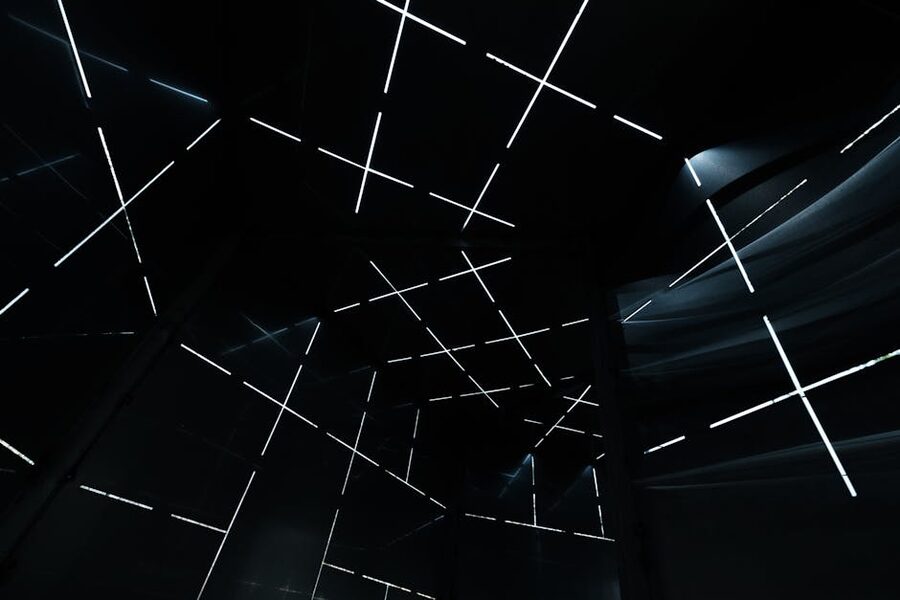
- The mirror corridor
- The interactive sculpture room
- The infinity rooms
- The interactive floor room
- How long to give it
- Who it’s for, and who should skip it
- For families
- Getting there
- By car
- What to do before and after
- Before
- After
- Photography tips
- For Reels and short video
- Practical bits I wish I’d known
- Accessibility
- How does it compare to other Budapest experiences?
- vs IKONO
- vs Van Gogh Immersive
- vs traditional Budapest sights
- When to visit
- How much should it cost?
- The history of the building
- Things to do nearby in the same trip
- What I’d do differently next time
- Other Budapest guides worth your time
What Cinema Mystica actually is
It’s a 12,000 square-metre walk-through inside a former cinema on Rákóczi út in District VIII, ten minutes from the Astoria metro stop. Inside there are 23 installations spread across 10 rooms. Some are projection-mapped — the room itself is the canvas — and some are physical: kinetic sculptures, lantern fields, mirror corridors, and a few interactive pieces where you trigger sound or light by moving.
It opened in 2023 in the old Corvin cinema building, which is part of why the rooms feel so big. There’s no narrative thread between them, which sounds like a flaw and is actually the point — each room is its own thing, and you walk through at your own pace. There’s no guide, no audio tour, no “now you’re entering room four.” You just keep moving until you’ve seen everything.
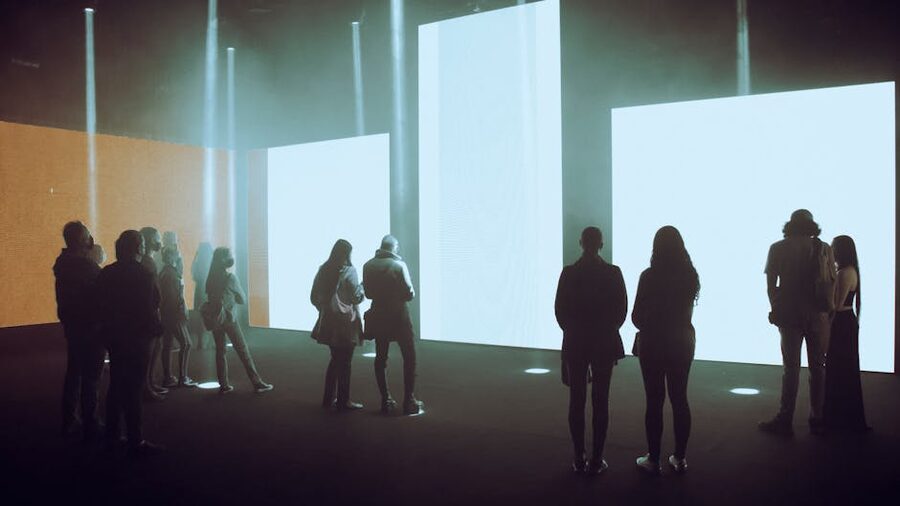
The closest comparison I can give is Porto’s Spiritus Show, but Cinema Mystica is bigger and less narrative. Spiritus is a 50-minute timed experience with a fixed running order. Cinema Mystica is open-ended — you wander.
How tickets actually work
You can buy at the door, but I genuinely wouldn’t. On Saturday afternoons in spring the queue runs along the Rákóczi út frontage and around the corner. Online tickets are timed entry: you pick a slot, show up within a 30-minute window, and walk straight in.
The ticket types are simple. There’s a standard adult ticket, a discounted student/senior ticket, and family tickets that knock a bit off the per-person rate. There’s no “skip the line” upgrade because the timed-slot system is already the skip-the-line. Once you’re in, you stay as long as you want — they don’t kick you out at the end of your slot.
Where to buy
I’d book through GetYourGuide for two reasons: the cancellation window is 24 hours instead of the venue’s stricter same-day policy, and you get an email reminder with the entrance address — useful, because the place isn’t easy to spot from the street. Viator also lists it. The official Cinema Mystica site sells direct, but the price is the same and you lose the cancellation flexibility.
What slots to pick
If you can swing it, the last two entry slots of the day are the quietest. The 10am opening slot also works — locals tend to arrive after lunch. Avoid Saturday between 1pm and 4pm if you don’t want to share rooms with school groups and family birthday parties. Weekday mornings are best for photographers — you can hold a room to yourself for ten minutes at a time.
The three tickets I’d actually buy
I went through every immersive-art ticket option for Budapest in our database. After filtering out the ones with thin reviews or limited availability, here are the three worth your time. Cinema Mystica is the headline pick — the others are alternatives if it’s sold out or if you want a second immersive stop in the same trip.
1. Cinema Mystica Entry Ticket — around $21
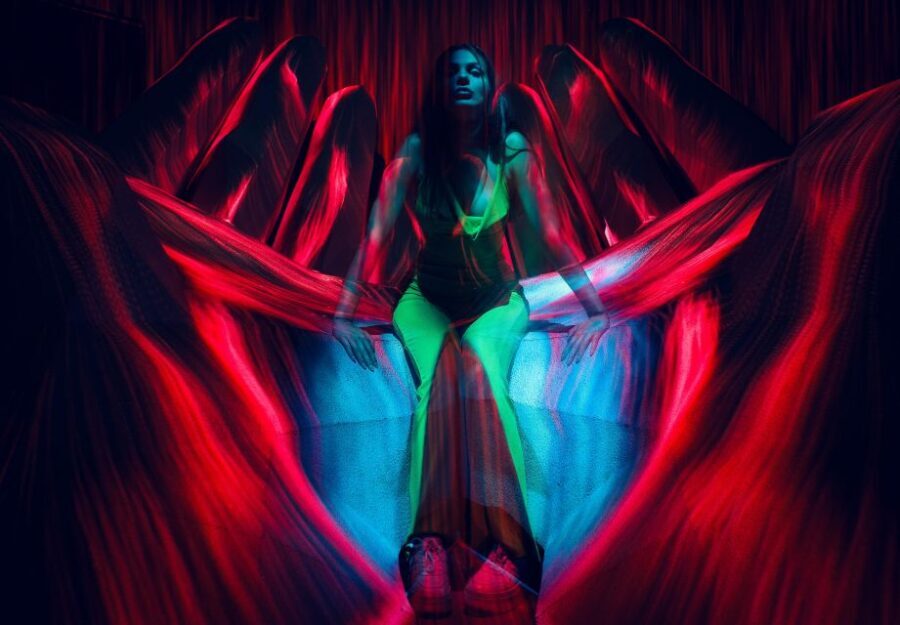
This is the obvious one. Our full Cinema Mystica review goes deeper on the room-by-room breakdown, but the short version is: 10 rooms, 23 installations, two hours minimum if you actually want to see it. The Solfeggio room is the surprise — most people walk past it because it looks empty, but sit down for five minutes and it’s the calmest spot in central Budapest.
2. IKONO Budapest Immersive Experience — about $18

IKONO is the one I’d pair with Cinema Mystica if you’ve got a half-day. Our IKONO review calls it a playground for the senses, and that’s the right framing — it takes about an hour, it’s more about silly photo moments than meditation, and the ball pit room is exactly as fun as it sounds. Different mood from Cinema Mystica, same neighbourhood vibe.
3. Van Gogh Immersive Exhibition — about $18
If your taste runs more art-history than experimental, this is the better fit. Our Van Gogh review covers the combo ticket angle — for not much more, you also get Klimt and Frida exhibits in the same building, which makes it a much better deal than the standalone Van Gogh ticket. About 40 minutes per exhibit, so plan two hours if you do all three.
What you’ll see, room by room
The room order changes seasonally — they rotate two or three of the installations every six months — but the rough flow has been consistent since I first went. Here’s what to expect, with the rooms most people skip flagged so you don’t make the same mistake.
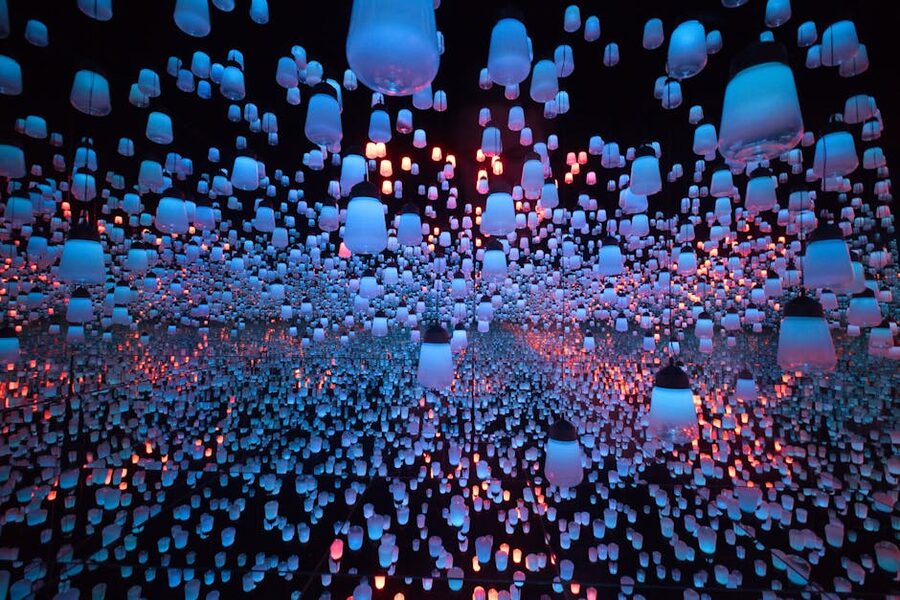
The big projection rooms
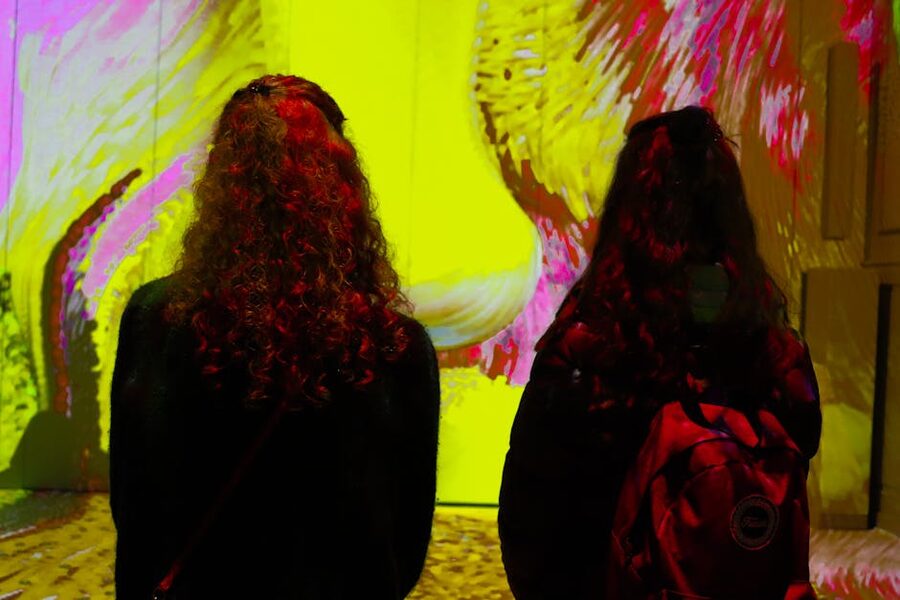
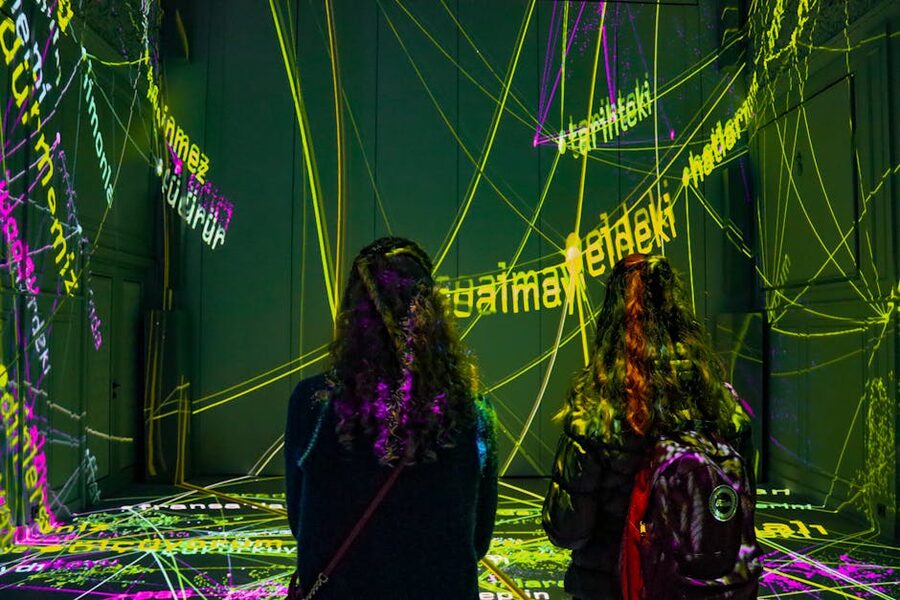
You start in two large projection-mapped rooms where the floor and walls share one continuous image. The first is built around a forest theme — trees that grow and dissolve, leaves that fall when you walk through them. The second is more abstract: geometric shapes that respond to a soundtrack composed specifically for the space. Most people stop in these for ten minutes each, take phone photos, and move on. I’d give them 20 minutes each — the cycles repeat every eight minutes or so, and the installations look different on the second loop because you’ve stopped trying to film and started looking.
The Solfeggio room
This is the one nearly everyone walks straight past, which is a shame. It’s a small dark room with low cushions on the floor and a soundtrack tuned to specific Solfeggio frequencies. The visuals are slow and minimal — pale shapes drifting on the ceiling. It’s basically a meditation room, and after the sensory load of the projection rooms it’s the perfect reset. I sat in there for 20 minutes on my second visit and it was the best part of the whole place.
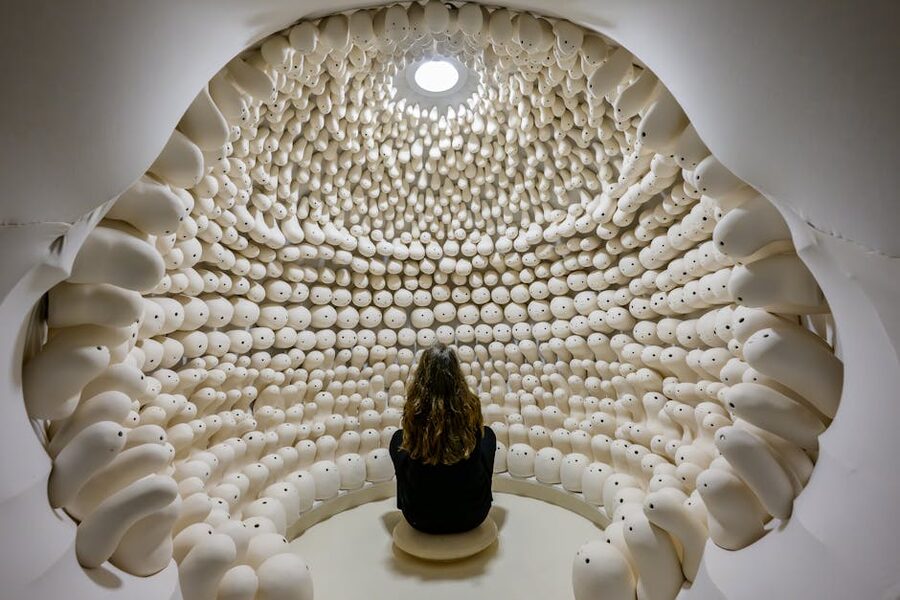
The mirror corridor
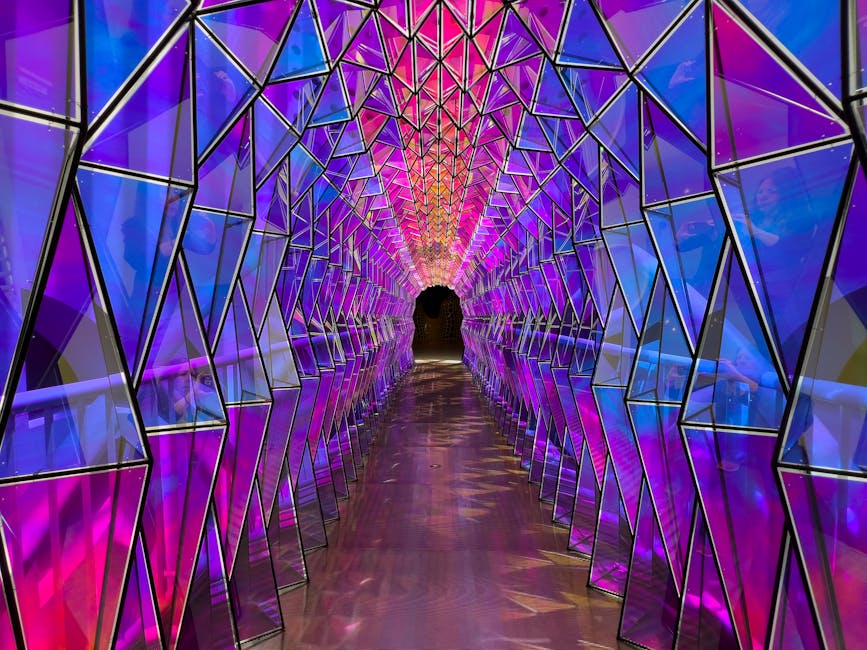
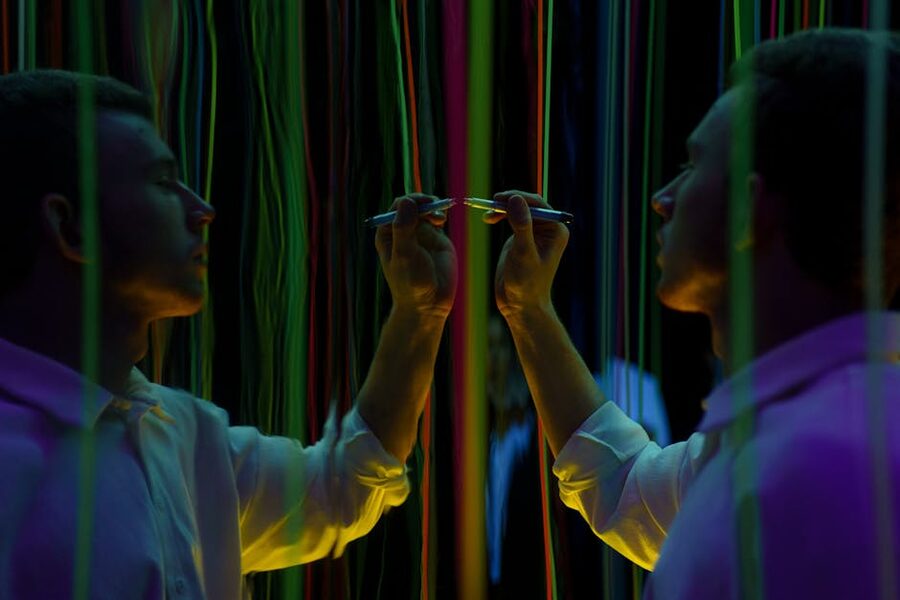
A short walk through a mirrored hallway with coloured LED accents. It’s gimmicky, takes maybe two minutes, and is the most photographed bit of the whole venue. Worth it. Don’t try to stop in the middle if a group is behind you — the corridor’s narrow.
The interactive sculpture room
This is the room that surprised me most. From the door it just looks like physical sculptures sitting in low light. What you can’t see from the door is that they respond to your proximity — step closer and they shift colour, stand still next to one and a tone builds. It’s subtle. Stop walking, give it 30 seconds, and the room opens up.
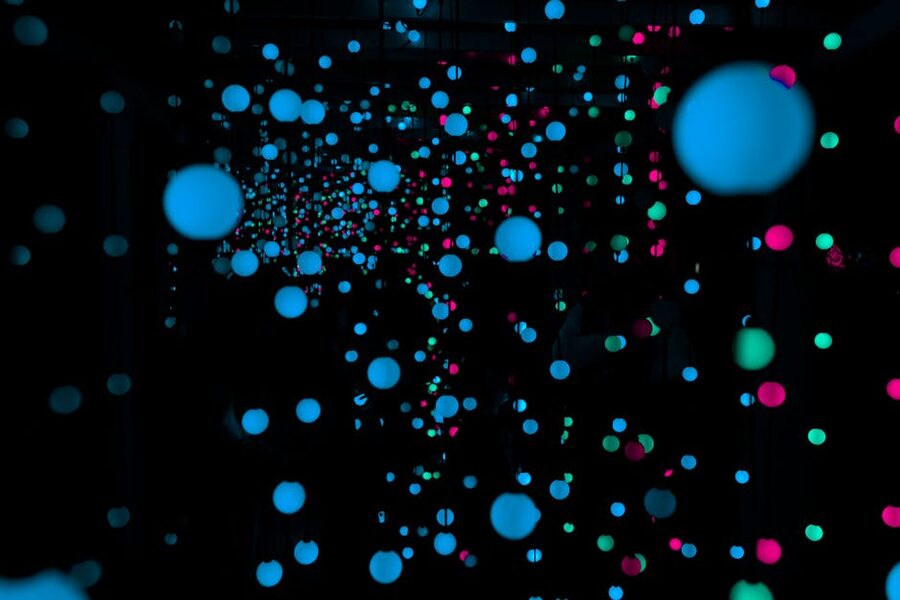
The infinity rooms
There are two — one with mirrored walls and floating LED orbs, one with mirrored walls and projected stars. Both are small enough that only six or seven people fit comfortably at once, so there’s a small queue at peak times. The orb room is the more impressive of the two if you only have time for one. The star room is calmer and quieter.
The interactive floor room
The floor projection responds to your footsteps. Walk through and you trail water lilies, ripples, or sparks depending on the cycle. Kids love this one. Adults pretend not to and then walk through it three times.
How long to give it
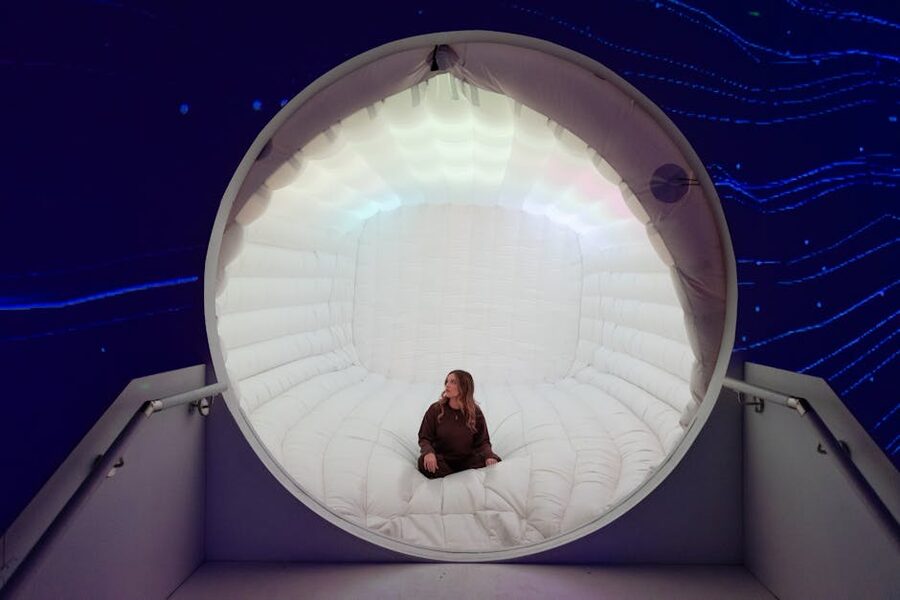
The official suggestion is 60 to 90 minutes. That’s nonsense. If you want to actually experience the place, give it two hours minimum. Two and a half if you’re going to sit in the Solfeggio room. Three if you’re a photographer and want to wait for the right cycles in each projection room.
The way I’d structure it: 20 minutes in the first projection room, 20 in the second, 15 in the Solfeggio, 10 in the mirror corridor, 15 in the sculpture room, 10 in each infinity room, 10 in the interactive floor room. That’s already 110 minutes and you haven’t paused for the smaller corridor pieces or the gift shop. Two hours is the realistic minimum.
Who it’s for, and who should skip it
Cinema Mystica works for almost everyone — but a few people I’ve taken there genuinely didn’t enjoy it, and I’d rather flag it now than have you find out at €20 a ticket.
It works brilliantly for first-time Budapest visitors who’ve already done the obvious sights — the Parliament tour, the basilica, the thermal baths — and want something that doesn’t fit the standard Budapest narrative. It works for couples on a rainy afternoon. It works for families with kids over about six (younger than that and the dark rooms can be unsettling). It works for solo travellers who want a couple of hours of low-pressure stimulation.
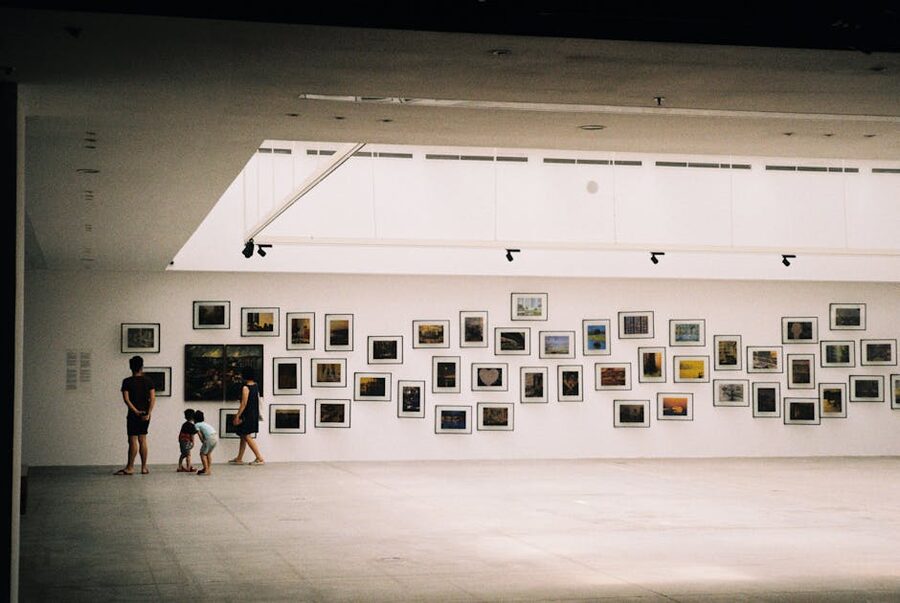
It doesn’t work for people who want narrative or context. There’s no plaques, no audio guide, no story arc. If you go in expecting a museum experience you’ll be frustrated within ten minutes. It also doesn’t work for anyone with severe photosensitivity — strobe-style transitions happen in two of the rooms (with warnings posted at the entrances). And if you’re someone who finds dark, low-stimulus spaces unsettling, the Solfeggio room and the infinity rooms might be too much.
For families
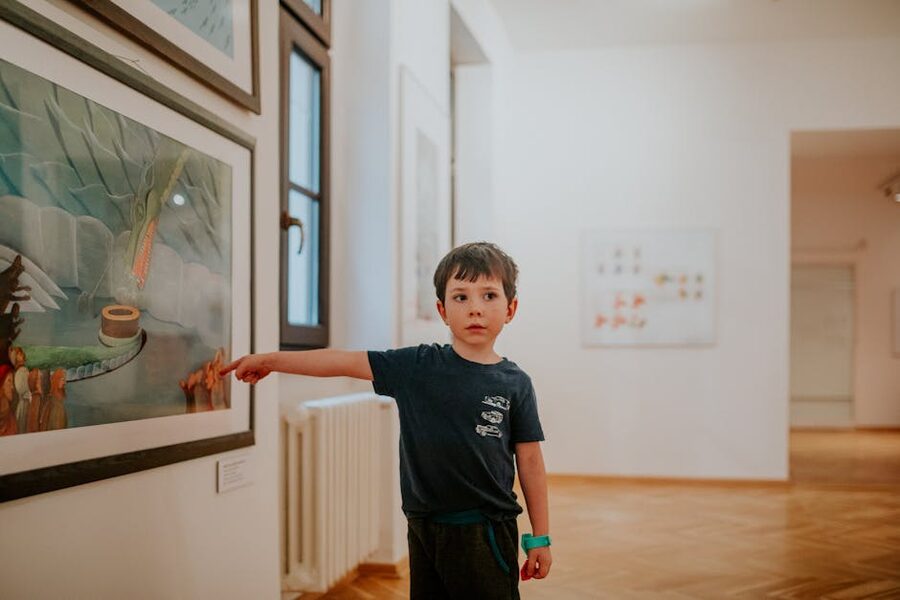
Kids over six tend to love it. Under six is hit-or-miss — the dark rooms can frighten younger children, but the interactive floor room usually wins them back. The venue is fully step-free between rooms, so prams are fine. There are no pushchair-parking spots though, so be ready to push through the corridors.
Getting there
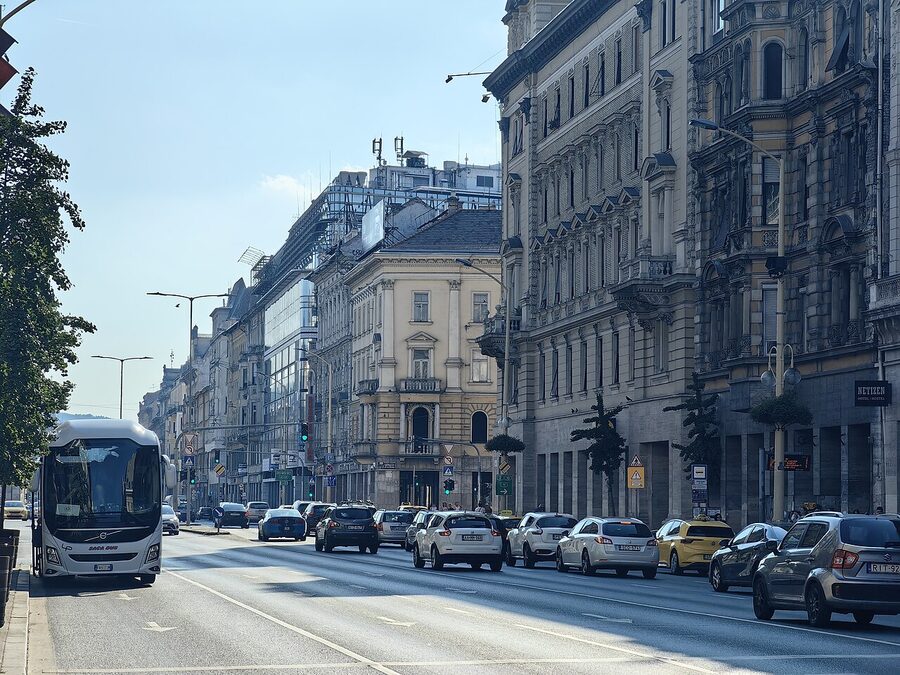
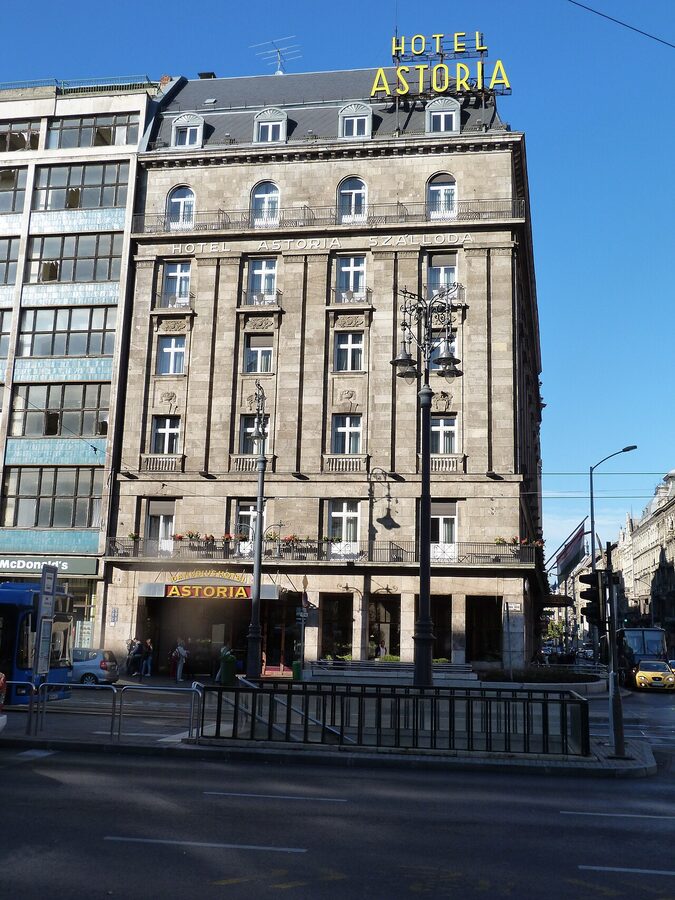
The venue address is on Rákóczi út in District VIII. The closest metro is Astoria on the M2 (red) line — five minutes’ walk. Blaha Lujza tér on the same line is also five minutes from the other direction. From Deák Ferenc tér (the city’s main interchange), it’s two stops on the M2 or a 12-minute walk along Rákóczi út itself.
.JPG)
If you’re coming from the Buda side, the easiest route is the 7 bus across the river — it stops at Astoria. Don’t walk it from Buda Castle unless you specifically want the walk: it’s about 35 minutes and includes a long stretch of nothing-special street between Erzsébet Bridge and Astoria.
The hop-on hop-off bus stops within walking distance too — the closest stop is at Astoria. Useful if you’ve already bought a 24-hour ticket for sightseeing earlier in the day.
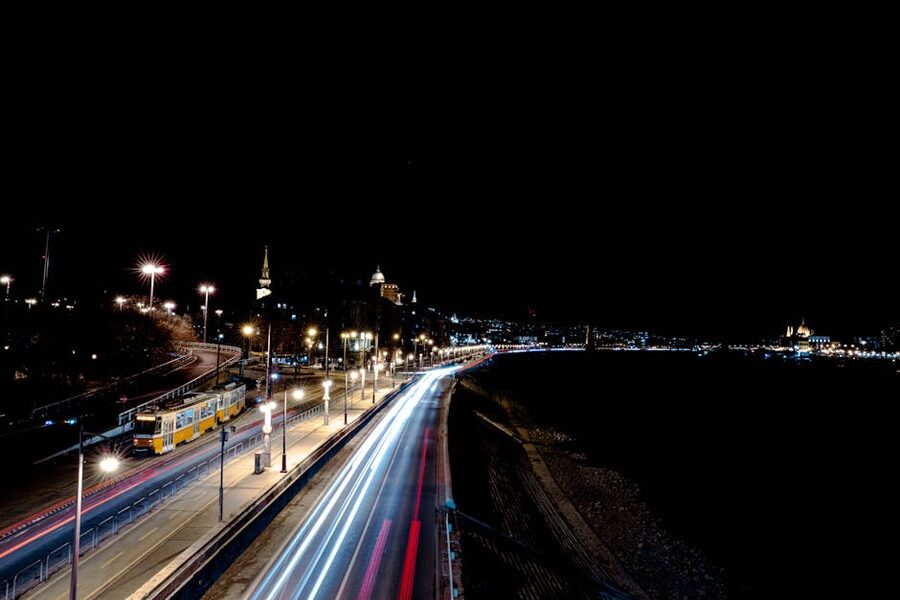
By car
Don’t. Parking in District VIII is awful and meter rates are high. If you absolutely must drive, there’s a paid garage on Tavaszmező utca about four minutes’ walk away, but it fills up on weekends. Take the metro.
What to do before and after
Cinema Mystica is in an unusually well-positioned spot for combining with other things. Astoria is on the edge of District V (the inner city) and District VIII (Józsefváros), which means you’ve got two completely different neighbourhood characters within a five-minute walk of the front door.
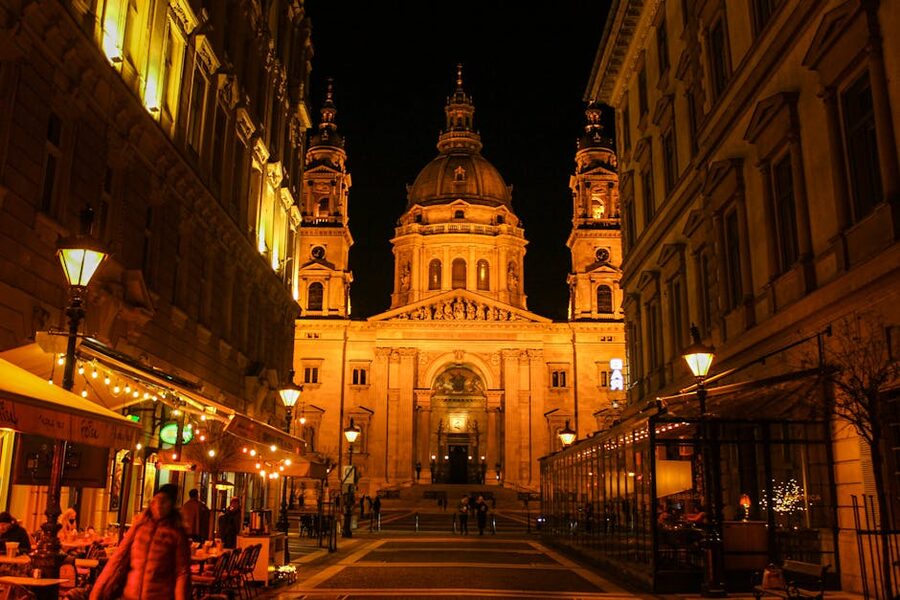
Before
If you’ve got an early evening slot at Cinema Mystica, walk over from St Stephen’s Basilica via Andrássy út — it’s a good 25-minute stroll that ends with you arriving fresh at Astoria. Or if you want something light, the cafés along Múzeum körút (running south from Astoria) are quieter and cheaper than the ones a couple of streets closer to the Danube.
After
Cinema Mystica usually leaves people slightly dazed. A drink at one of the ruin bars in District VII — Szimpla Kert is the famous one, ten minutes’ walk — is the obvious move. If you’re in town for a longer trip and you want a nightcap with a different mood, the Vampires & Myths night tour starts in the same neighbourhood after dark — a weird but oddly fitting follow-up to two hours of projection-mapped rooms.
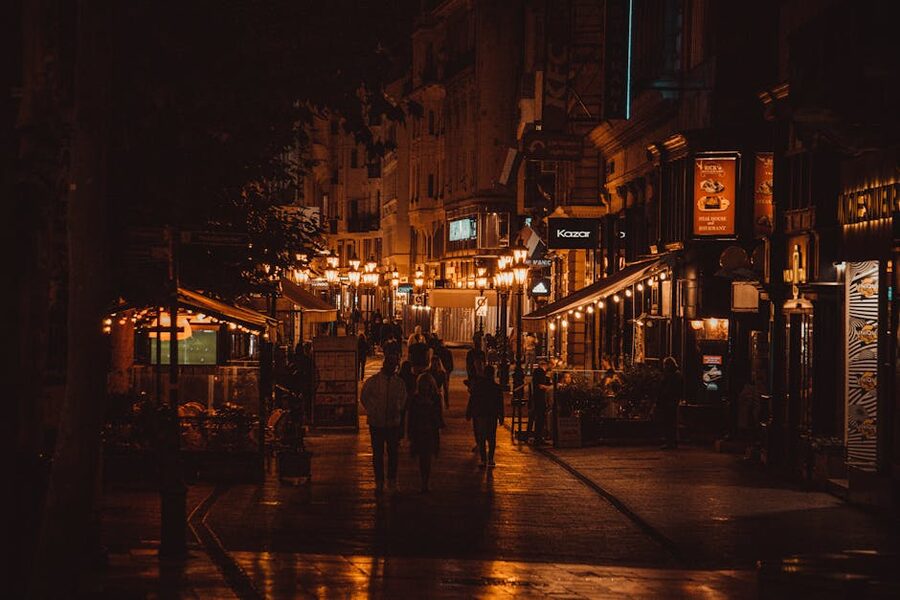
Photography tips
You can take photos and short videos throughout. Tripods aren’t allowed — the rooms are too small and tripod legs in dark rooms mean people tripping over them. No flash, obviously. Phones with night mode work surprisingly well; my iPhone shots from the projection rooms came out better than my mirrorless camera on auto.
For the best photos, weekday morning slots are unbeatable. The projection rooms cycle through different looks every few minutes, so wait until you’ve seen the room run through its full cycle before deciding which shot you want. Then wait again for that moment to come around. Two passes through the bigger rooms is normal for anyone wanting good photos.
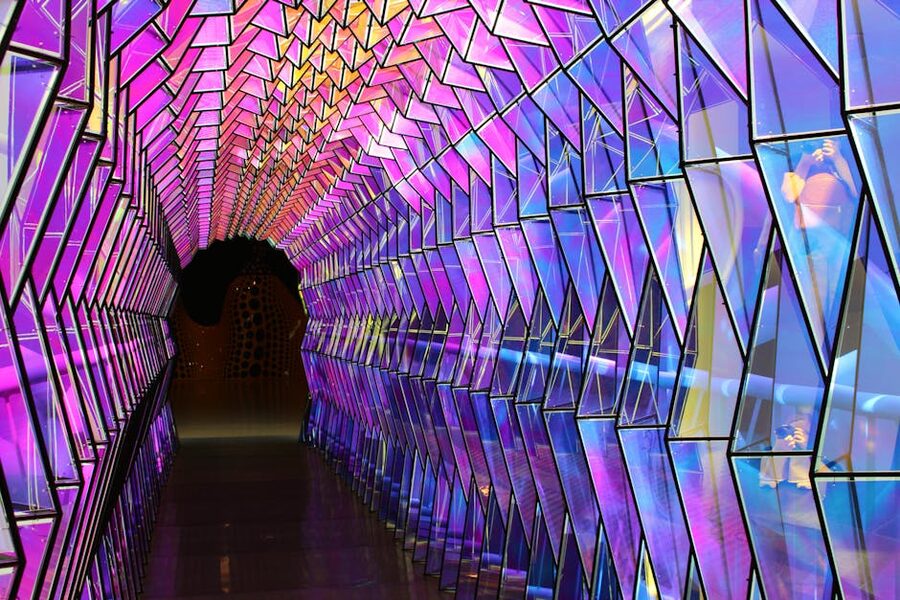
For Reels and short video
The rooms with directional movement work best — the interactive floor and the moving projections. Static rooms like the Solfeggio look flat on video. Shoot vertical, set exposure manually if your phone allows, and lean into the warm tones rather than fighting them with white balance correction.
Practical bits I wish I’d known
A few things you won’t see on the official site:
- There’s a coat check. It’s free and it’s right of the entrance. Use it — half the rooms are warm and you’ll regret carrying a winter coat through them.
- The seats matter. A few rooms have low cushions or benches. Sit. Standing through Cinema Mystica is the wrong way to do it.
- No re-entry. Once you leave the venue, you can’t come back on the same ticket. Use the toilets before you finish your last room.
- Food and drink aren’t allowed inside. There’s a small café in the entrance lobby, but plan to eat before you arrive.
- The gift shop is at the exit only. You can’t loop back to it after leaving — it’s the last room of your visit.
- Phones in airplane mode. Not enforced, but in the Solfeggio room a buzzing phone genuinely ruins the experience for the people sitting near you.
Accessibility
Step-free throughout. The rooms are dark but have low-level floor lighting — fine for most visitors but worth knowing if you have low-vision needs. There’s no audio guide, so deaf visitors aren’t missing anything narrative-wise. Soundtracks in some rooms are loud, so noise-sensitive visitors should be ready with earplugs.
How does it compare to other Budapest experiences?
Budapest has a lot of “experience” attractions — escape rooms, immersive exhibitions, ruin pubs, baths. Cinema Mystica is the most polished of the immersive-art bunch. Here’s where it sits relative to the alternatives.
vs IKONO
IKONO is more playful, more selfie-driven, and shorter. Cinema Mystica is more contemplative, more visually impressive, and longer. If you’ve got time for one, go to Cinema Mystica. If you’ve got time for both, do IKONO first and Cinema Mystica second — the order matters because IKONO is energising and Cinema Mystica is calming.
vs Van Gogh Immersive
Van Gogh is more conventional — painting reproductions projected onto walls. Pretty, but less surprising. Cinema Mystica is original work designed for the space; Van Gogh is repurposed art history. If you’re a Van Gogh fan, do both. If you’re not, skip the Van Gogh and put the money toward an extra hour at Széchenyi or Gellért.
vs traditional Budapest sights
Cinema Mystica isn’t replacing any of the standard Budapest experiences — it sits alongside them. It’s most worth your time if you’ve already done the Parliament, the basilica, and at least one bath. If you’re on a 48-hour Budapest trip, prioritise the classics. If you’re staying four days or more, Cinema Mystica is one of the best non-classic things to add.
When to visit
Cinema Mystica is indoors, climate-controlled, and dark — so weather doesn’t matter. It’s the best wet-day option in Budapest after the thermal baths.
Seasonally, the busy periods are the December holiday weeks (especially between Christmas and New Year), the long Easter weekend, and the summer school holidays. Outside those periods, weekday afternoons are quiet. Weekends are busy regardless of season.
Time-of-day patterns: 10am opening is quietest, then it builds steadily until 1pm, peaks 2-4pm, calms down 5pm onwards, and the last two slots before closing are often quiet again. Closing time is usually 9pm or 10pm depending on the season — check when you book.
How much should it cost?
Standard adult tickets sit at around $21 (about 7,500-8,000 forint depending on the day). Student and senior tickets are about 25% off with valid ID. Family tickets save a few euros on the per-person price. If you’re seeing more than one immersive venue, the Van Gogh + Klimt + Frida combo at Vincent Hall is the best value because you get three exhibitions for one ticket.
I would not pay for a “VIP” or “premium” tier even if one is offered — the experience is the same regardless of ticket level. The only premium worth paying for is private group bookings if you’re travelling with eight or more people and want an empty venue.
The history of the building
The venue itself is part of why Cinema Mystica works as well as it does. The building was the Corvin cinema — one of Budapest’s grand cinema palaces, opened in 1922, with a 700-seat auditorium and a big arched ceiling. It stayed a cinema for most of the 20th century, including a stint as a state-run art house during the socialist era. It closed in the 2000s and sat dark for over a decade.
When the operators took it over for the immersive experience in 2023, they kept the bones — the auditorium-scale rooms, the high ceilings, the long curved corridors that used to lead from the lobby to the screening rooms. The two big projection rooms are inside the original auditorium, which is why they feel bigger than anywhere else in the venue. If you stand in the middle of the first projection room and look up, you can still see traces of the original cinema ceiling between the projection-mapped surfaces.
This is part of the wider trend of repurposing old cinemas in Budapest — Pest had over 60 cinemas in the 1930s and most of them closed between 1990 and 2010. A few have been turned into theatres, two into ruin bars, and Cinema Mystica is the only one I know of that’s been converted into immersive art. The conversion was done well — the rooms feel intentional, not like an afterthought retrofitted into an old building.

Things to do nearby in the same trip
If you’re planning a half-day or full day around your Cinema Mystica visit, here’s how I’d build it. The venue is in central Pest, so most of Budapest’s classic sights are within 30 minutes.
For a morning-into-evening day: start with breakfast in the inner city, do the Széchenyi baths for two hours mid-morning, lunch in District VII (the Jewish quarter is a five-minute walk from Cinema Mystica), an afternoon Cinema Mystica slot at 2pm or 3pm, then dinner in District V along Király utca, and finish with an evening Danube cruise at 9pm. That’s a full day and it works because the geography is tight.
For a rainy-day cluster: Cinema Mystica plus IKONO plus a thermal bath. All three are indoor, all three work in any weather, all three are on the M2 metro line within four stops of each other. Easy.
For a couples’ trip: Cinema Mystica in the early evening, Danube cruise at sunset, dinner in District V or District VII afterwards. The progression — wandering, drifting, slowly winding down — works well.
What I’d do differently next time
If I were going for a third visit, three things would change. First, I’d book the very last entry slot — the venue is genuinely calmer in the final hour and the projection rooms look better when you’re not sharing them. Second, I’d skip the gift shop entirely and put the money toward a coffee at one of the District VII cafés afterwards. Third, I’d bring a notebook. The Solfeggio room is the kind of space where ten minutes of writing would be more useful than ten more minutes of looking.
None of which is to undersell what the place is. It’s the strongest single immersive-art venue I’ve been to outside of Tokyo’s teamLab venues, and at $21 it’s better value than most of them. Just go in expecting two hours, not 60 minutes.
Other Budapest guides worth your time
If you’re building a longer Budapest itinerary, a few of our other guides pair well with Cinema Mystica. The classics are obvious: the Parliament tour is the single most-photographed Budapest experience, and Buda Castle is the must-do view across the river. For relaxation, the Gellért Spa is the more atmospheric of the two big bath houses, and Széchenyi is the one with the famous outdoor pools. For getting around without thinking, the hop-on hop-off bus covers all the major sights in one ticket. And if you want a slightly weird night-time follow-up to Cinema Mystica’s vibe, the Vampires & Myths walking tour is the unexpected pick — it sounds touristy and is actually one of the better walking tours in town. The Buda Castle cave tour is another good rainy-day backup if Cinema Mystica is sold out and you still want a darkened-room experience. For a slower-paced day, a Danube evening cruise or a guided bike tour covers a lot of ground without burning your legs out.
Affiliate disclosure: some links in this article go to GetYourGuide and Viator. If you book through them we earn a small commission at no extra cost to you. We only recommend tours we’d book ourselves.