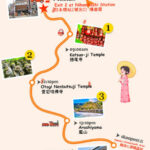
Katsuoji’s hillsides of red Daruma dolls make an unusual first stop, then the day moves from Arashiyama’s river and bamboo paths to Fushimi Inari’s vermilion gates. I like the mix of memorable sights and the option to finish in Kyoto rather than ride back to Osaka.
I also like that you get time to explore each area on your own, with a guide for context and transport between widely spaced stops. The trade-off is a tight schedule: this is a sampler, and the scenic railway ride is not included, despite its place in the tour’s name.
- Katsuoji’s Daruma displays: See the temple’s red dolls and allow for the 500-yen admission fee, which is not included.
- Three contrasting stops: The day pairs a hillside temple with Arashiyama’s river-and-bamboo setting and Fushimi Inari’s mountain shrine.
- Self-guided time: You have about 80 minutes at Katsuoji, 150 minutes in Arashiyama and 90 minutes at Fushimi Inari.
- Train ticket extra: The scenic railway is not included, and the scheduled stop does not promise a train ride.
- Choose your finish: The bus returns toward Osaka, with a Kyoto Hachijo Exit drop-off for those staying in Kyoto.
- Guide assignments vary: English or Chinese guidance is offered, but smaller groups may travel with a driver only.
- Three Kyoto-area sights in one long day
- Katsuoji and its hillsides of Daruma dolls
- Arashiyama: river views, bamboo and a railway question
- Fushimi Inari’s gates and mountain paths
- Guides, group size and the ride between stops
- The Osaka start and Kyoto-or-Osaka finish
- Is the price good value?
- Who should book this day trip?
- Should you book it?
- FAQ
- Where does the tour depart from?
- Can I finish the tour in Kyoto instead of Osaka?
- How long is the tour?
- Is the Arashiyama Scenic Railway ticket included?
- Is Katsuoji Temple admission included?
- Is a tour guide guaranteed?
- What is included in the tour price?
- The Best Of Kyoto!
- More Tours in Kyoto
- More Tour Reviews in Kyoto
Three Kyoto-area sights in one long day
 1 / 8
 2 / 8
 3 / 8
 4 / 8
 5 / 8
 6 / 8
 7 / 8
 8 / 8
At about $44.89, this is a practical way to connect three far-apart stops without planning the transfers yourself. The price covers shared round-trip transport from the meeting point, tolls, parking and fuel. It does not cover meals, personal expenses, tips, insurance, Katsuoji admission or the Arashiyama scenic train.
The appeal is not just the number of places. Each stop offers a different kind of visit: a temple known for its Daruma dolls, a walk beside Arashiyama’s river and bamboo, then a shrine route lined with torii gates. You get a broad first look at Kyoto’s best-known scenery without having to work out local connections between them.
That convenience comes with a clear limit. A bus day cannot give you the unhurried pace of staying in each neighborhood, and traffic or crowds can reduce time at the sights. Think of this as a well-packed introduction, not a slow cultural visit.
👉 See our pick of the We Rank Kyoto’s 15 Top Workshops & Classes
Katsuoji and its hillsides of Daruma dolls
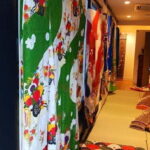
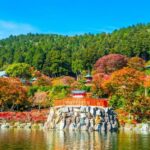
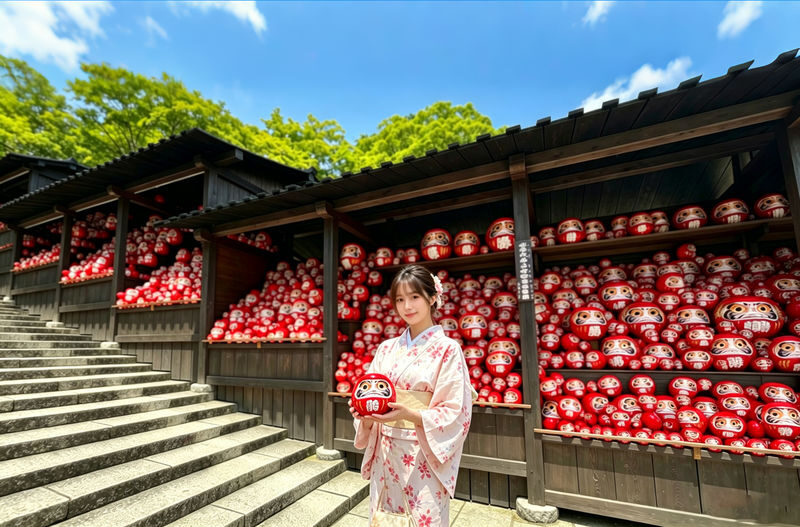
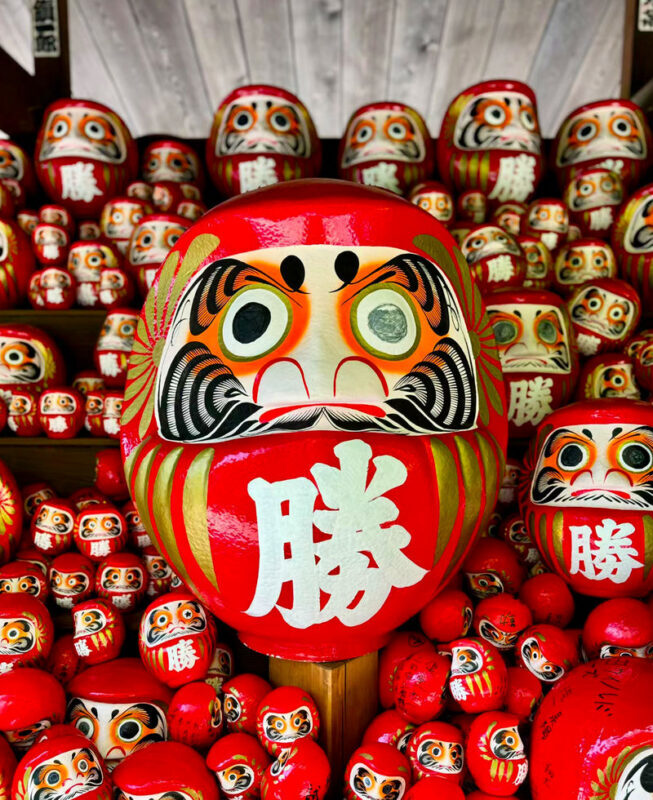
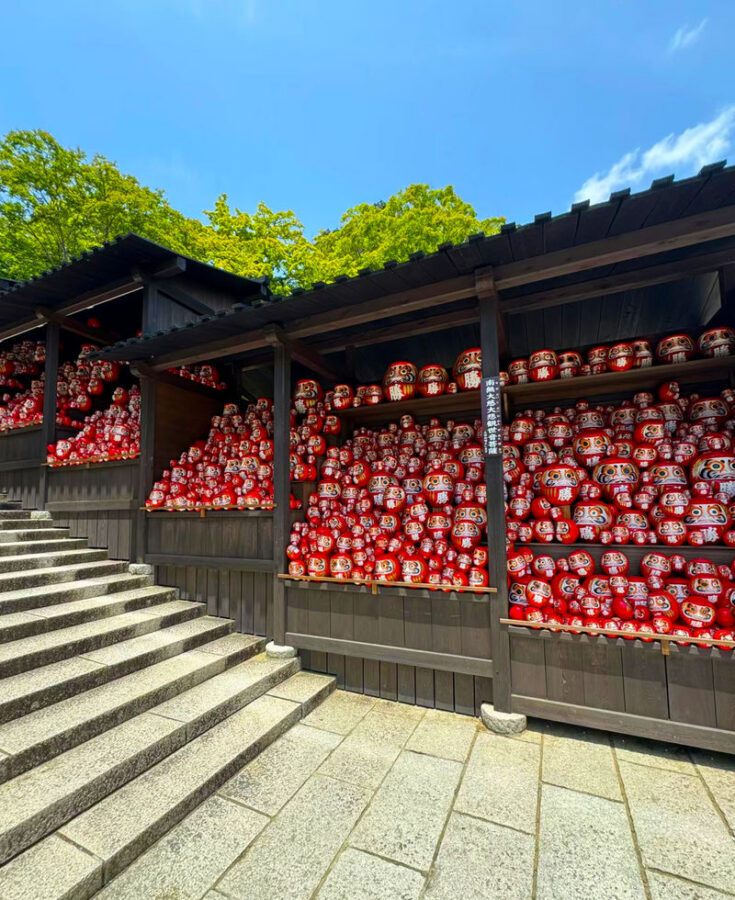
The day begins at Katsuoji, where the temple’s red Daruma dolls are the main attraction. The dolls are associated with wishes for victory and good fortune, and they give this hillside temple a distinctive look. You can explore the grounds, notice the displays and take photos, but remember that admission is 500 yen per person and is paid separately.
The planned stop lasts about 80 minutes. That is enough for a focused visit, but it is not a long temple ramble. If you want time to linger over details, take photos and pause between the uphill paths, keep an eye on the clock. The tour is carpool-based, and the group has to leave on schedule.
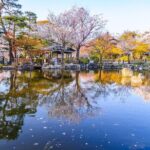
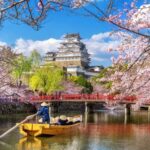
The temple is especially appealing in spring, when seasonal flowers and cherry blossoms may add color to the grounds. The timing of blooms varies, so treat the seasonal photos as an example of a good viewing period, not a promise about the day you visit. The same applies to any season: the scenery depends on the date and weather.
Arriving early can help with crowds, but the actual schedule and traffic determine when you get there. Keep some cash available for the admission charge, and wear shoes that feel secure on slopes and paths. The tour description does not specify how much of the grounds is level, so plan for some walking.
You can also read our reviews of more tours and experiences in Kyoto.
Arashiyama: river views, bamboo and a railway question
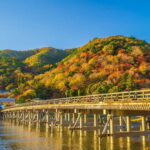
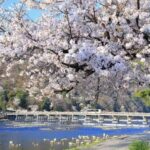
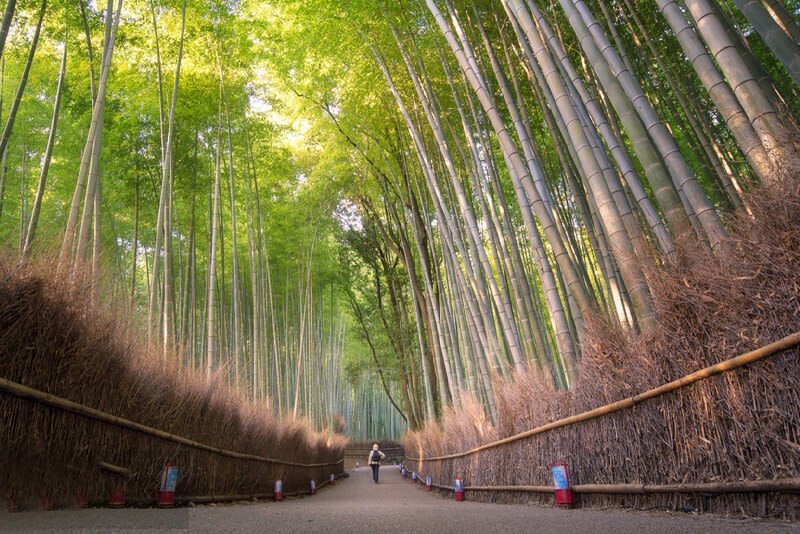
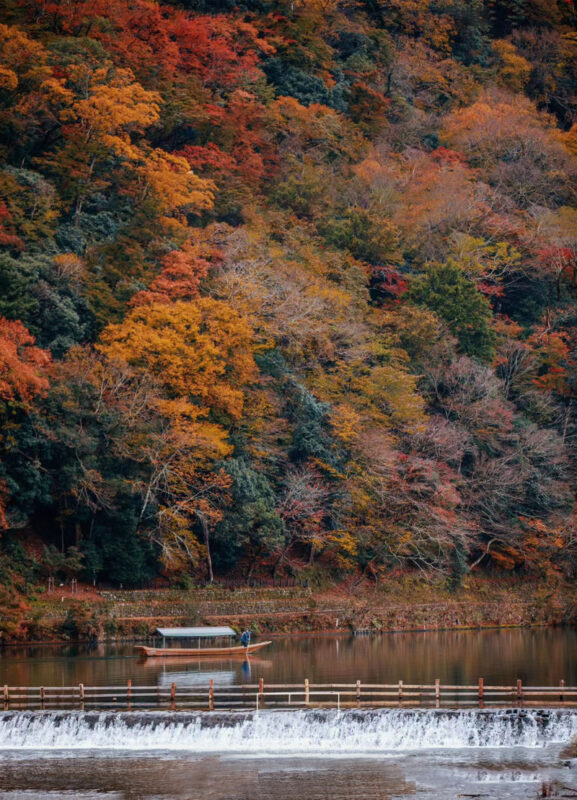
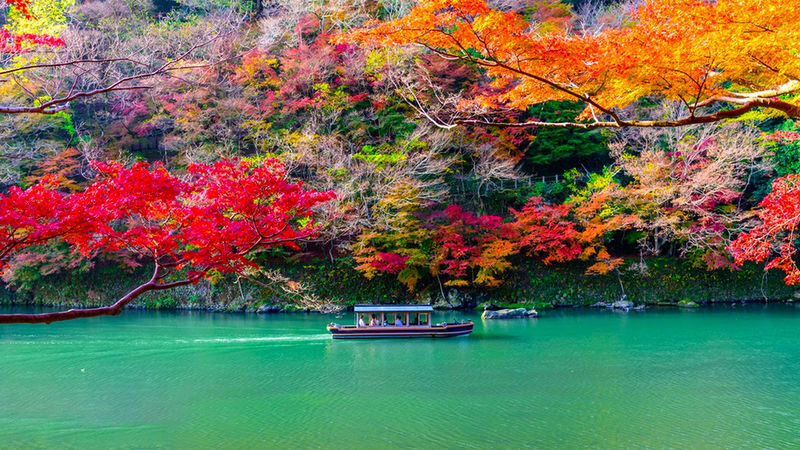
Arashiyama gets the longest stop, about 150 minutes, and it needs it. The area includes both Arashiyama and Sagano, with temples, shrines, river scenery and the well-known bamboo path. The tour names Togetsukyo Bridge and a small bamboo grove, giving you a good starting point for a self-guided visit.
Togetsukyo Bridge is the easy landmark to orient yourself around. From there, you can spend your limited time near the river and bridge, head toward the bamboo grove, or make a quick stop for food. The tour does not provide a meal, and the clock keeps running while you decide, so avoid trying to cover every temple and lane in the district.
The bamboo path is a popular photo stop, but it is only one part of Arashiyama. The area also has old temples and shrines, including Tenryu-ji, a World Heritage site, and seasonal scenery that changes through the year. The schedule does not say that admission to any additional attraction is included, so check costs and opening details before setting your heart on a particular temple.
Pay special attention to the scenic railway wording. The tour name mentions the Arashiyama Scenic Railway, but its listed inclusions exclude the train fare, and the itinerary describes free time in Arashiyama rather than a scheduled ride. One account of a tour departure also described the train as not included in practice. If the railway is a must for you, confirm directly with the operator before booking; do not assume this package includes a ride.
Spring is a lovely time to see the mix of blossoms, river, bamboo and old streets, but it is also a busy season. The same crowd pressure can affect weekends and holidays. A 150-minute stop gives you a useful taste, not enough time for every corner of the district.
Fushimi Inari’s gates and mountain paths
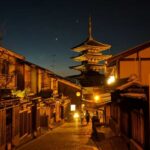
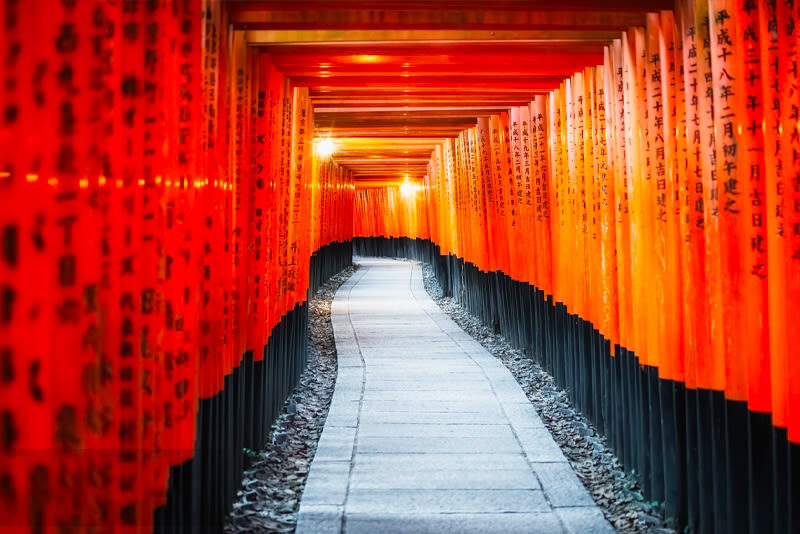
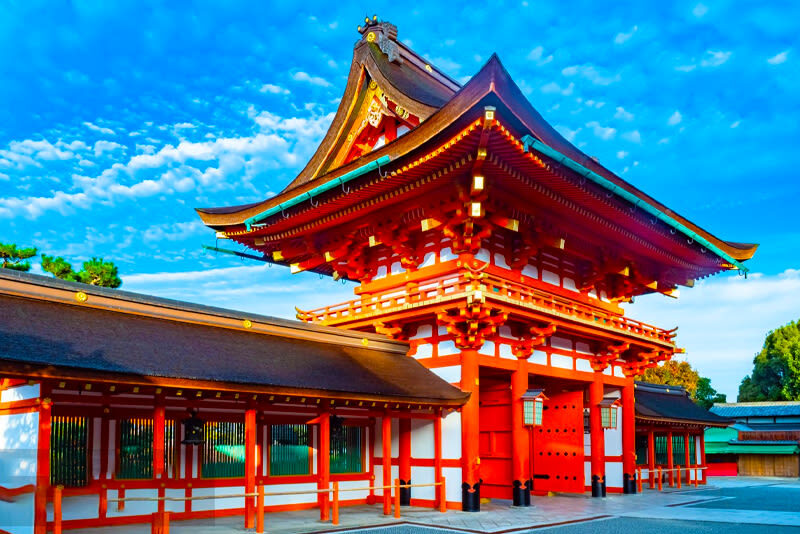
The final sightseeing stop is Fushimi Inari Taisha, with about 90 minutes to explore. Its long rows of vermilion torii gates wind up Mount Inari, creating the striking corridor most people come to see. Fox figures and images are also part of the shrine’s identity, as foxes are regarded as messengers of Inari Okami.
You can walk beneath the gates, take photos and get a feel for the route up the mountain. The full mountain walk is not a realistic target for most people on this schedule: the stop is limited, and you need to return to the bus on time. Go as far as feels comfortable, then allow enough time to retrace your steps and reach the meeting point.
There may be an extra 20 minutes at this stop for departures from May 1, according to the tour details. Treat that as a schedule note rather than a reason to plan a longer hike. The order of stops and time at each can change with traffic, weather and crowd conditions.
Comfortable walking shoes are a good idea here. The day includes several stops on foot, and you will be managing the return time yourself. If you want a slower climb and a quieter stretch of the shrine, consider visiting Fushimi Inari separately on another day.
Guides, group size and the ride between stops
The tour offers English or Chinese-speaking guidance, but staffing depends on group size. For groups of fewer than 12, the operator may use a vehicle with fewer than 14 seats and provide a driver without a separate guide. Larger groups are assigned a driver and guide. So, if commentary is important to you, check what is planned for your departure rather than treating a guide as guaranteed.
Guide names associated with departures include Bonn Lee, Zoey Zhou Qian, Nimo, Nathaniel, Candy and Yao. The comments about guides often emphasize clear explanations, helpful reminders and restaurant suggestions. Those are useful qualities on a fast-moving day, though you cannot book a specific guide in advance based on the information provided.
Some departures have had groups of about 20 people, but the precise group size can vary. The trip is shared, so punctuality matters. At each stop, the group must follow the agreed return time; the guide waits up to five minutes, after which you may have to make your own way to the next stop. That is a firm rule, not a flexible sightseeing suggestion.
The drive can be affected by traffic, especially on weekends, holidays and Japanese public holidays. The operator warns that delays of two to five hours are possible. If you have evening plans, keep them flexible, particularly if you are returning to Osaka.
The Osaka start and Kyoto-or-Osaka finish
The Osaka meeting point is Exit 2 at Nihonbashi, in the Namba and Shinsaibashi area. The stated meeting time is 7:50 a.m., with departure at 8:00 a.m. Arrive at least 10 minutes early. Late arrivals and no-shows are not refundable, so do not cut the connection close.
The return plan gives you a useful choice. The bus is due at Kyoto Hachijo Exit from about 4:45 p.m., which suits you if you are staying in Kyoto or want to continue there. The Osaka drop-off is listed for about 5:45 p.m. at Namba Parks Exit. Traffic can shift both times, so avoid booking a tight dinner or onward connection.
The tour also notes that passengers can board in Osaka with luggage and get off in Kyoto, but large luggage should be declared when booking. Keep passports and valuables with you. Sealed light snacks and unopened drinks may be carried on board, but eating inside the bus is not allowed.
Before the trip, check your email for the meeting details, vehicle information and guide contact. The information is expected the day before, and the timing is described slightly differently in the tour notices, with a window from late afternoon into evening. Check spam as well, keep your phone reachable and contact the operator if the message has not arrived by 9 p.m.

Is the price good value?
At the starting price of $44.89, the best value is the transport. You avoid arranging separate connections between Osaka, Katsuoji, Arashiyama and Fushimi Inari, and you can choose to finish in Kyoto. That can save planning time and make a multi-stop day more manageable, especially if you are new to the region.
Budget beyond the headline price. Katsuoji admission costs 500 yen per person, the scenic railway fare is excluded, and meals and drinks are on you. Other personal expenses and tips are also not included. The train may not be part of the scheduled visit at all, so do not count it as a value included in the fare.
I would judge the tour by whether you value transport and coverage more than depth. If you want a guided overview and three distinct stops in one day, the price is attractive. If you want a full mountain walk, a railway ride, long temple visits or a leisurely lunch, independent travel or separate day trips will give you more control.
Who should book this day trip?
This tour suits first-time visitors staying in Osaka who want an efficient taste of Kyoto-area highlights, and people who prefer a bus between distant stops to planning each transfer. The Kyoto drop-off also makes it handy if you are moving between cities and have arranged your luggage in advance.
It can work for families and older visitors who are comfortable with a full day of walking and fixed departure times. Children aged two and older pay the adult rate. Children under three may travel free if they do not occupy a seat, but the operator asks you to notify them in advance; participation is not recommended for children aged one to two. Seniors aged 65 and over must be fit for the trip and accompanied by someone aged 22 or older.
This is not suitable for everyone. The operator excludes people with high blood pressure, heart disease, acrophobia, asthma or epilepsy, as well as pregnant people. If motion sickness is a concern, prepare in advance for the long drive. Travel insurance is not included, so arrange your own cover if needed.
Should you book it?
Book this if you want three famous Kyoto-area stops, bus transfers and a Kyoto drop-off at a modest starting price. The most useful expectation is a busy sampler: Katsuoji’s Daruma dolls, a short Arashiyama wander and a taste of Fushimi Inari’s gate-lined paths.
Skip it if the scenic railway is your main reason for going, or if you want time to hike Mount Inari or explore Arashiyama at length. Confirm the train question before paying, budget for the extra costs and keep your return evening open. With those limits understood, it is a practical way to see a lot in one day.
Kyoto Arashiyama & Katsuoji Temple Internet-Famous Scenic Spots Check-in: Arashiyama Scenic Railway & Fushimi Inari-taisha Shrine Senbon Torii & Internet-Famous Katsuoji Temple Daruma Doll One-Day Tour | Depart from Osaka or Kyoto
“Our tour guide, Bonn Lee, was friendly, humorous, and entertaining throughout the journey. He always tried to crack jokes and keep everyone engaged…”
FAQ
Where does the tour depart from?
The Osaka meeting point is Exit 2 at Nihonbashi. Meet at 7:50 a.m.; departure is scheduled for 8:00 a.m. Arrive at least 10 minutes early.
Can I finish the tour in Kyoto instead of Osaka?
Yes. The listed Kyoto drop-off is at Kyoto Hachijo Exit, from about 4:45 p.m. The Osaka drop-off is at Namba Parks Exit, from about 5:45 p.m. Both times can change with traffic.
How long is the tour?
The activity is listed as a nine-hour tour. The schedule runs from the morning departure to the afternoon drop-off, with the Osaka return taking longer than the Kyoto stop.
Is the Arashiyama Scenic Railway ticket included?
No. The train fare is listed as not included. The schedule gives you 150 minutes for Arashiyama but does not promise a railway ride, so confirm with the operator if you want to ride.
Is Katsuoji Temple admission included?
No. The listed admission fee is 500 yen per person, paid separately.
Is a tour guide guaranteed?
No. English or Chinese-speaking guidance is offered, but groups under 12 may have a driver only, without a separate guide. Larger groups are assigned a driver and guide.
What is included in the tour price?
The price includes round-trip transfers from the meeting point, tolls, parking and fuel. Meals, drinks, Katsuoji admission, the Arashiyama train fare, personal expenses, tips and insurance are not included.