
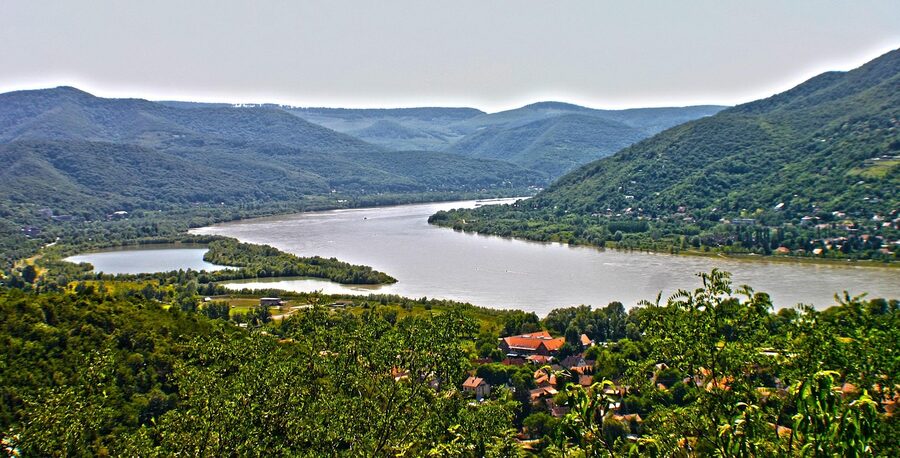
The road out of Budapest stays urban for a surprisingly long time. Apartment blocks, shopping plazas, the occasional billboard. And then somewhere past Szentendre the trees thicken on the right, the river opens up on your left, and the Danube starts to bend. You feel it before you see it — the highway curves to follow the water, the hills rise green and steep on both banks, and the city is just gone. That moment, when forest replaces concrete and the river is suddenly the whole view, is the reason you booked this tour.
The Danube Bend (Dunakanyar in Hungarian) is the dramatic curve where the river swings south through the hills north of Budapest before continuing on toward the capital. Most day trips hit three towns along it: Visegrád with its hilltop castle ruin, Esztergom with Hungary’s largest basilica, and Szentendre, the riverside artists’ town that’s basically a film set with marzipan shops. It’s the most popular full-day trip out of Budapest for good reason.

- In a Hurry? Top 3 Danube Bend Day Trips
- What the Danube Bend Actually Is
- Booking — How It Works and What to Watch For
- Three Tours Worth Booking
- 1. Danube Bend Day Trip in English —
- 2. Danube Bend & Szentendre Tour with Lunch — 8
- 3. Full or Half Day Danube Bend Cruises —
- Visegrád — Where the Bend Is
- Esztergom — Hungary’s Largest Basilica
- The Maria Valeria Bridge
- Szentendre — The Artist Town
- Should You Take the Boat or the Coach?
- When to Go
- What to Skip and What’s Worth the Effort
- Practical Logistics
- Cross-Tour Combinations Worth Knowing
- Three Quick Mistakes to Avoid
- The Affiliate Bit
In a Hurry? Top 3 Danube Bend Day Trips
Best value: Danube Bend Day Trip in English — $91, 8.5 hours, all three towns covered with a guide who explains the history along the way.
Most relaxed: Full or Half Day Danube Bend Cruises — $21 boat-only option that lets you skip the bus and watch the bend unfold from the water.
Lunch included: Danube Bend & Szentendre Tour with Lunch — $128, 9.5 hours, three-course Hungarian lunch in a riverside village. The longest of the three, but you eat properly.
What the Danube Bend Actually Is
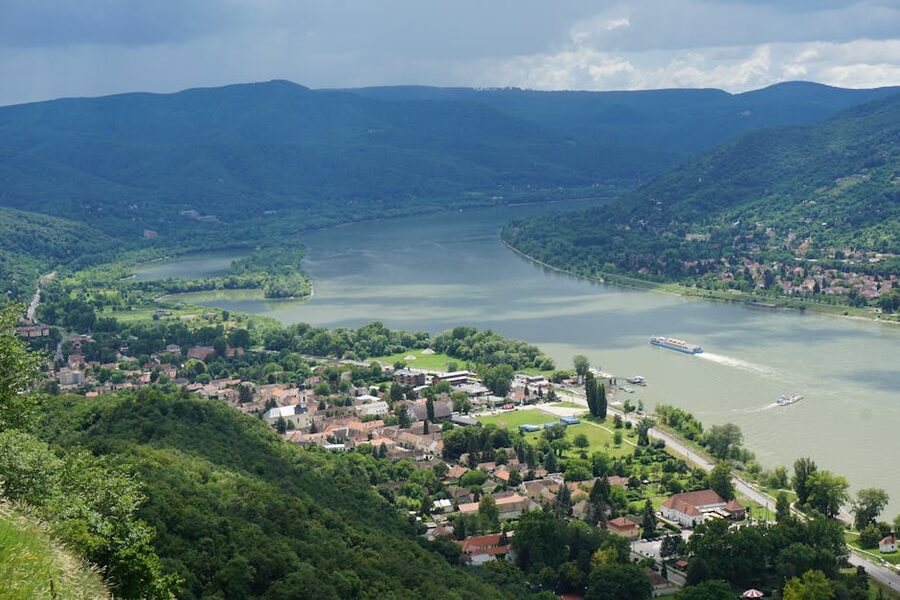
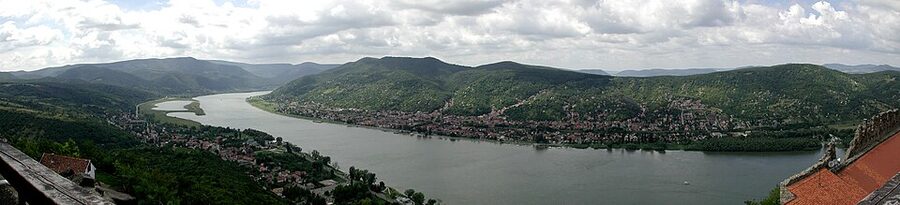
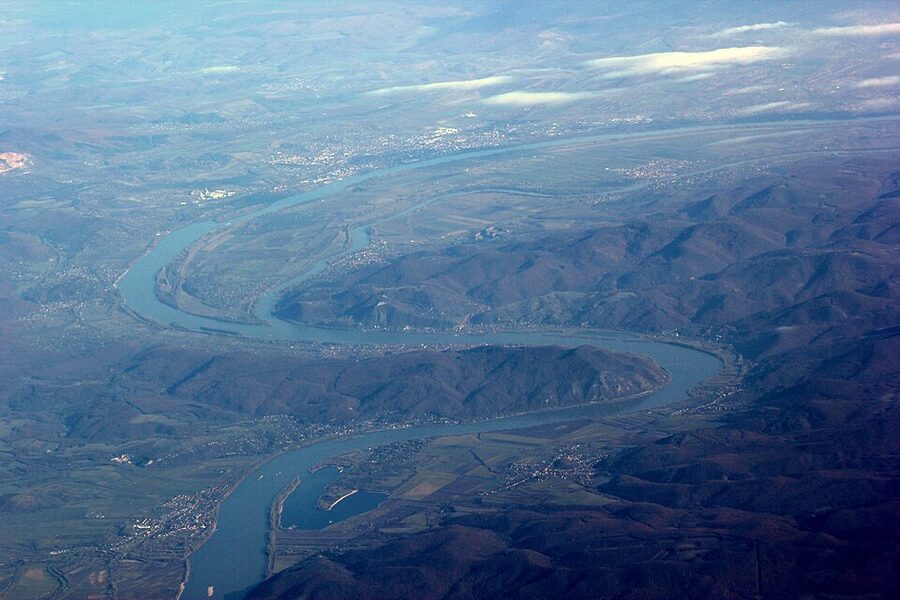
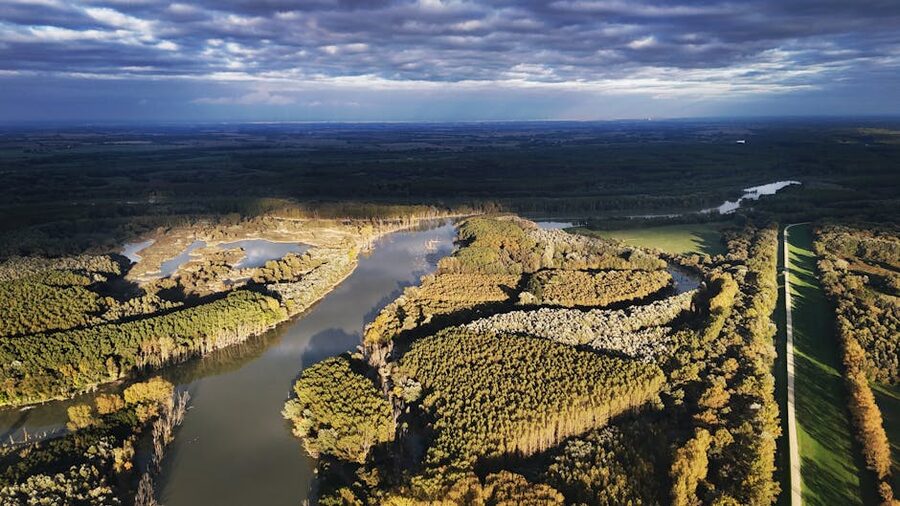
Worth getting this clear before you book. The Danube Bend isn’t one thing you visit — it’s a stretch of river about 30 km long, between Esztergom and Szentendre, where the Danube performs a sharp bend from west-flowing to south-flowing. The towns along it have been there for over a thousand years because the bend was militarily and commercially crucial. Castles control river traffic. Esztergom was the first Hungarian capital. Szentendre attracted Serbian refugees in the 1690s who never quite left.
What you do on a day trip: a coach (or boat in summer) takes you 90 minutes north out of Budapest. You stop in Visegrád to climb the castle ruin and look down on the bend. You drive to Esztergom for the basilica. You finish in Szentendre on the way back, by which point you’ve been on a coach long enough to just want to wander cobbled streets with an ice cream. Some tours run in opposite order, some include lunch. A few swap the coach back from Szentendre for a boat down to Budapest — the best version if you can find it.
Booking — How It Works and What to Watch For
Day trips run year-round but boat-included versions are seasonal — generally April through October, with a few stretching into November depending on water levels. Book the boat leg early in summer.
Prices range from $21 for boat-only up to $130 for a full coach tour with lunch and entrance fees. Most decent tours cluster around $90-100. The cheap ones (under $50) are usually shuttle-only — drop-offs with a meeting point and a return time, no guide. Fine if you’ve done your reading; frustrating if you wanted someone to tell you what you’re looking at.
Things I’d actually look for when booking:
- How long in each town. Three towns + transfer time + lunch + bathroom stops in 8-10 hours is tight. Some tours give you 90 minutes in Szentendre, which is enough. Others give you 30, which isn’t.
- Whether entry fees are included. Visegrád Castle and the Esztergom Basilica both have admission. Cheaper tours leave these as your problem (around 2,000-3,000 HUF each).
- Pickup location. Most are central, but some require you to make your way to a specific bus station — usually the Vörösmarty tér or Erzsébet tér departure points. Worth checking before you book.
- Group size. Anything over 35 people will feel like cattle herding by Szentendre. Smaller minibus tours (under 18 people) are noticeably more pleasant.
Booking through GetYourGuide or Viator gives free cancellation up to 24 hours before in most cases — the safety net I rely on when Hungarian autumn weather is being indecisive. Direct booking is sometimes cheaper but cancellation terms are usually stricter.
Three Tours Worth Booking
1. Danube Bend Day Trip in English — $91
This is the one I’d book first if I were doing this trip cold. It’s a small-group coach with a knowledgeable English-speaking guide who actually explains the history at each stop, and the timing is balanced — about an hour and a quarter in Visegrád, an hour at Esztergom, ninety minutes in Szentendre. Our full review of the Danube Bend day trip covers the lunch options (it’s not included, but the guide drops you at a recommended riverside spot in Visegrád) and what to expect at each entry point.
2. Danube Bend & Szentendre Tour with Lunch — $128
Same basic route stretched to 9.5 hours with a proper lunch slotted in around midday — usually goulash, schnitzel, or fish soup at a traditional Hungarian place (vegetarian on request, ask when booking). The trade-off is more time eating, less time wandering. Our deep dive on this tour covers what’s on the menu and how the timing breaks down.
3. Full or Half Day Danube Bend Cruises — $21
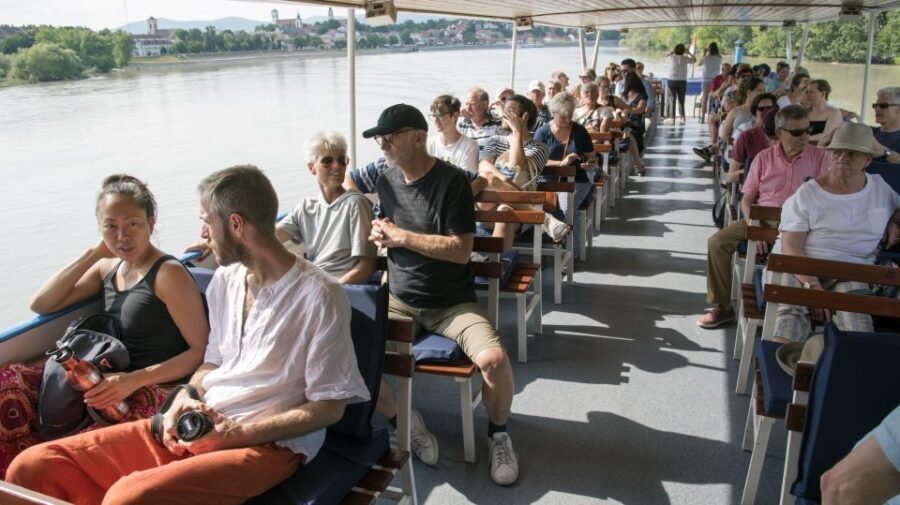
The boat answer if you’ve already done a coach day. You take the Mahart hydrofoil or a slower riverboat from Vigadó tér up to Visegrád or Szentendre, walk around, and come back. The slow boat is the better choice unless you’re tight on time — beer on deck, watch the river. Downside: it’s water-only, so no Esztergom. Read the cruise review for the schedule and which dock to leave from.
Visegrád — Where the Bend Is
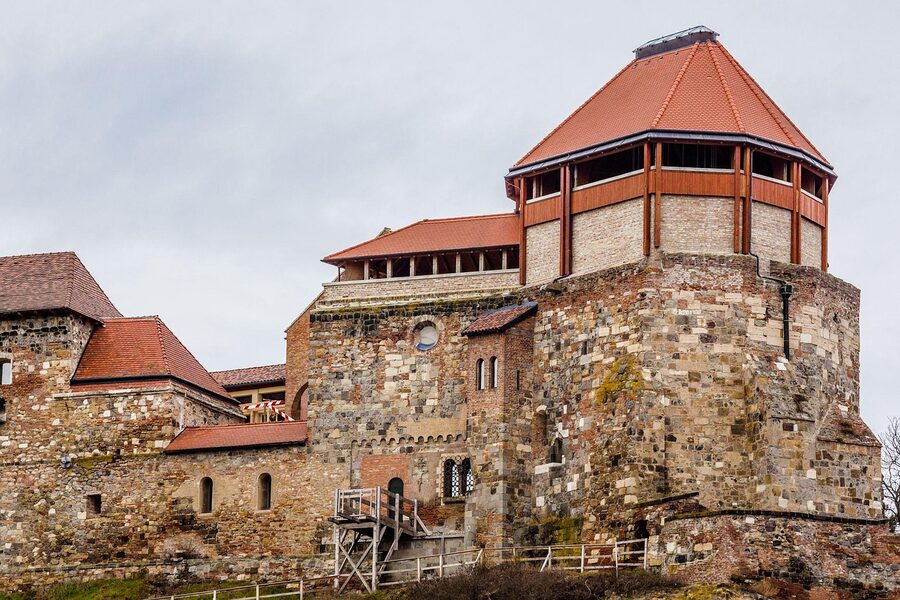
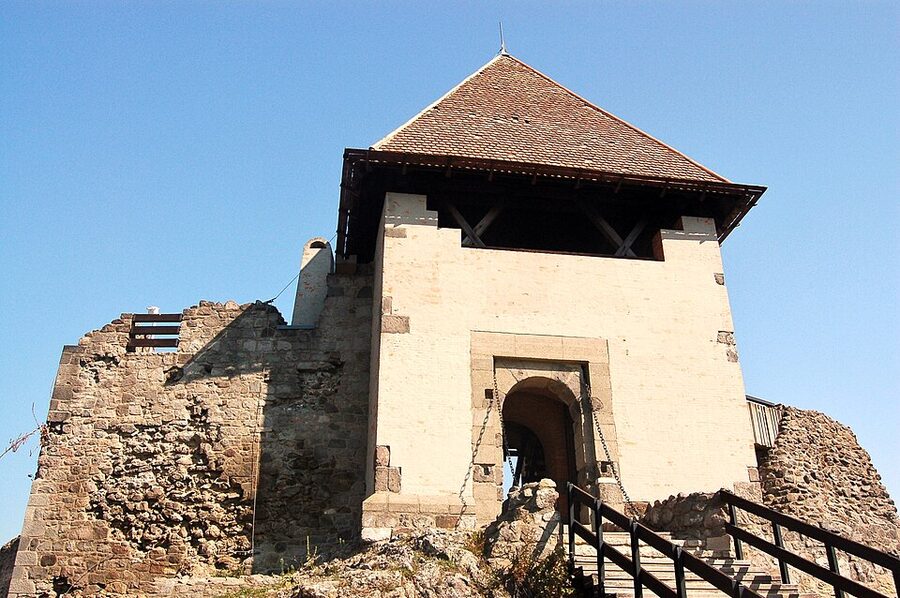
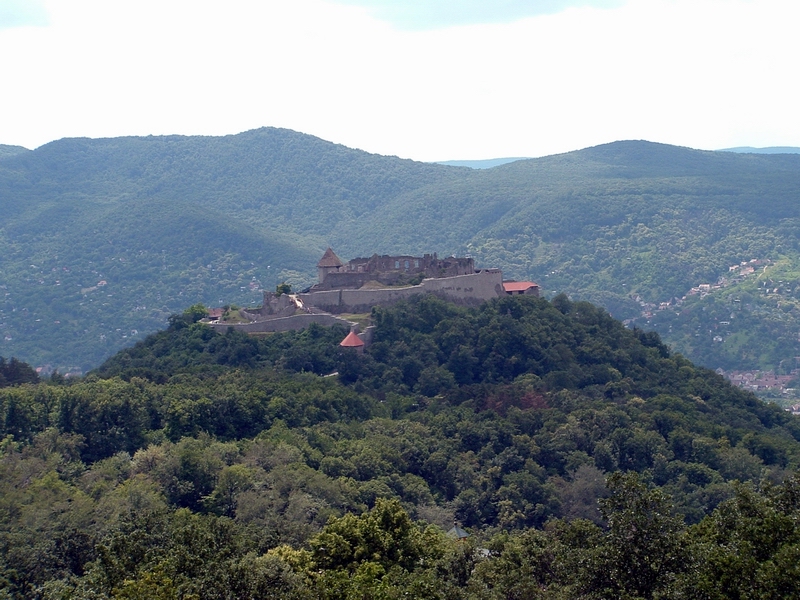
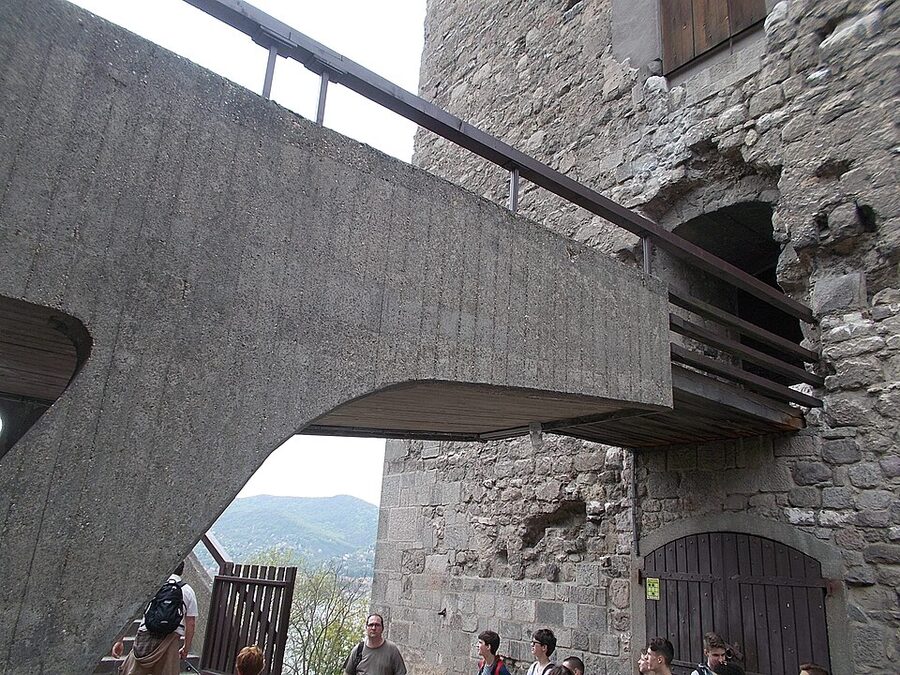
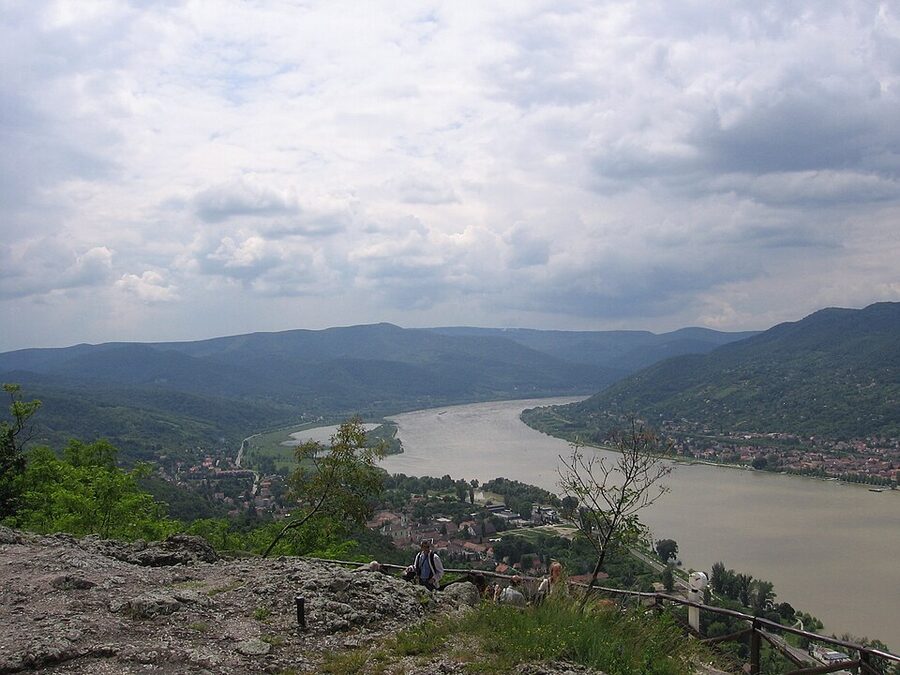
This is the geographic centerpiece of the day. Visegrád sits at the inside of the bend, with the medieval Royal Castle ruin perched on a hilltop almost directly above the river. The view from up there is the photo every Danube Bend article uses.
.jpg)
Town population around 1,800. Most tours give you 60-90 minutes. Three ways to spend them:
Option A — Up to the citadel (recommended). 5-minute coach ride or 25-minute steep hike. Entry around 2,300 HUF ($7). A small wax museum about King Matthias’s court, plus the panoramic terrace where everyone takes the same photo. Worth it. Allow 45 minutes minimum.

Option B — Salamon Tower at river level. If the upper castle is closed or you can’t manage the climb, the Salamon Tower houses a similar exhibition with views back up to the citadel. Lower views but more atmospheric ruins.

Option C — Skip the castle. Some people don’t care about ruins. Walk the riverside promenade instead. There’s a ferry across to Nagymaros on the opposite bank if you want to do something slightly weird (quiet beach, one good fish restaurant, then ferry back). Most coach groups don’t allow time for this; an option if you’ve come independently.
Lunch in Visegrád: Renaissance Medieval Restaurant by the river serves dishes mock-medieval-style with no cutlery — fun once, very touristy. Local picks: Don Vito Pizzeria for cheap pizza or Reneszánsz Étterem for Hungarian classics done properly.
Esztergom — Hungary’s Largest Basilica
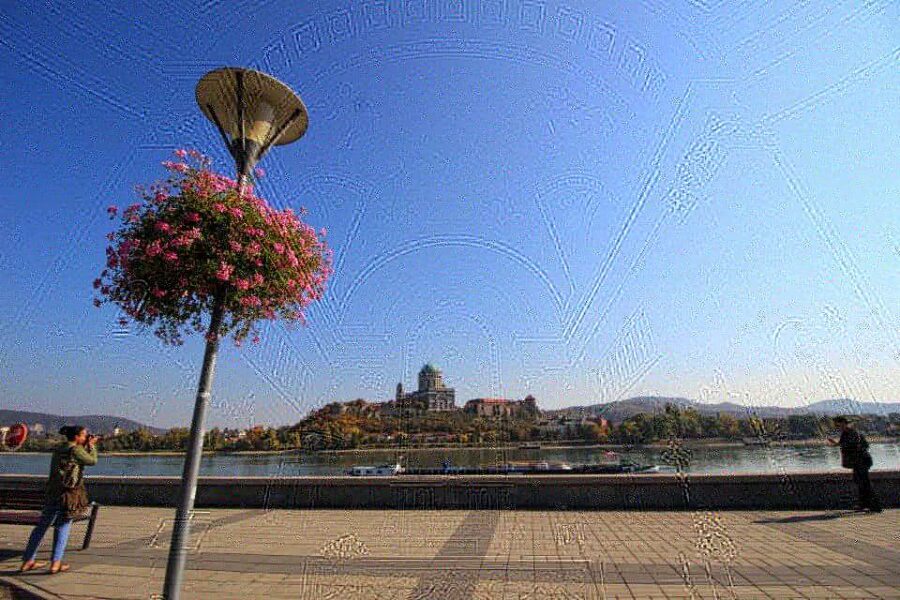
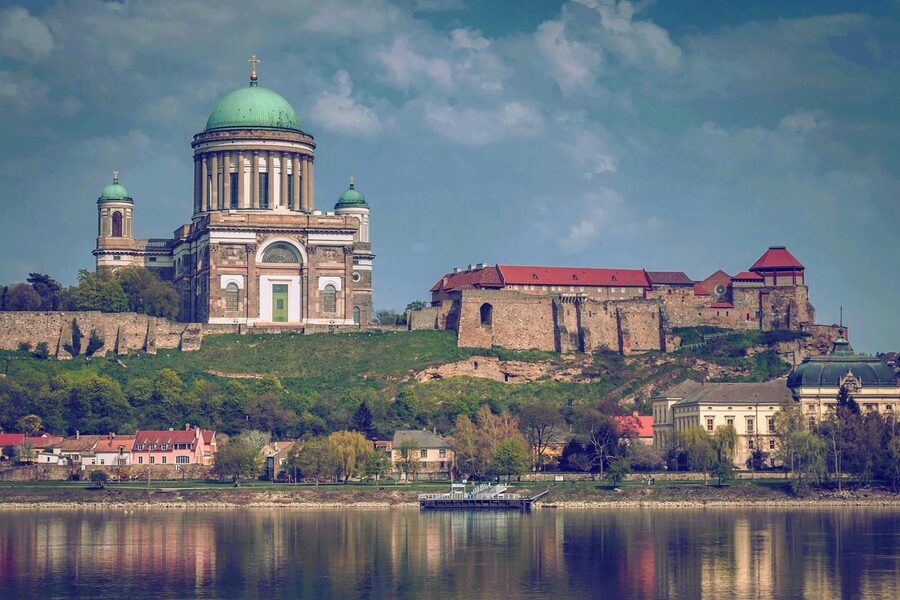
25 km west of Visegrád, Esztergom is where Hungary became a Catholic country. Saint Stephen was crowned here in 1000 AD. It was the capital until the Mongol invasion of 1241 forced everything south. What’s left is a quiet riverside town with one massive thing in it — the Basilica.
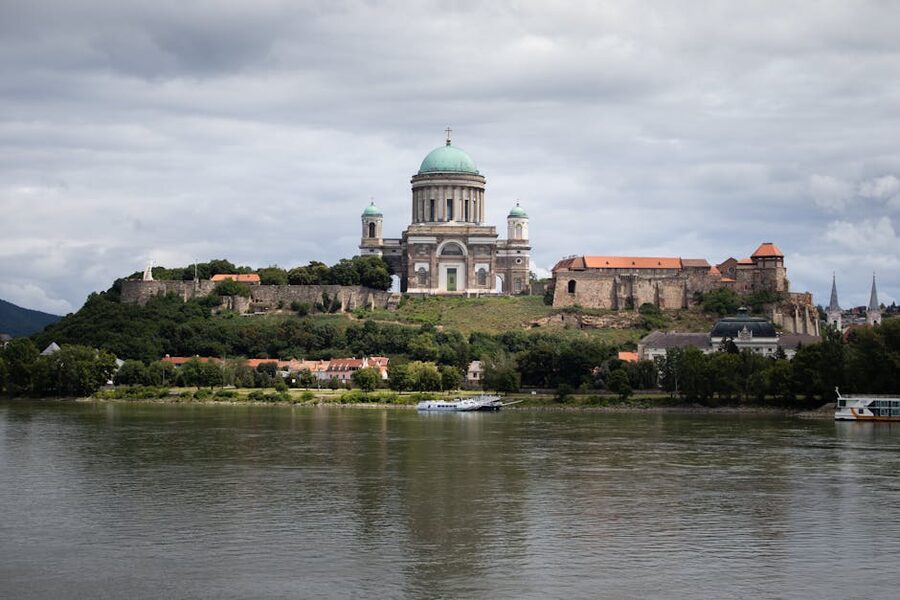

What you actually do at the Basilica:
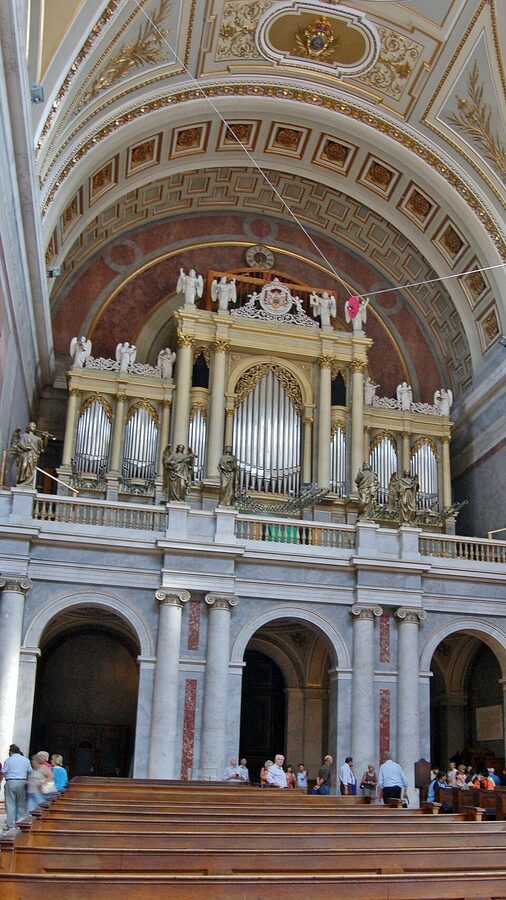
- The main church is free to enter. Vast, neoclassical, slightly cold. The painting above the main altar (the Assumption by Michelangelo Grigoletti) is supposedly the largest single-canvas religious painting in the world at 13 by 6 metres. You can see it from the entrance.
- The crypt (around 200 HUF) holds the tombs of cardinals and primates of Hungary including József Mindszenty, who’s a national figure for his resistance to both Nazi and Communist rule.
- The treasury (around 900 HUF) is small but rich — gold reliquaries, the coronation robe of King Stephen, medieval enamels.
- The cupola (around 900 HUF, separate ticket) is the climb you actually came for. About 360 steps up to the dome, then a panoramic walkway with views back across the bend toward Visegrád.


.jpg)
Coach tours give you 60-75 minutes — enough for the main church plus either crypt or cupola, not both. Fit and stairs-okay: climb the cupola. Want history at eye level: do the treasury and crypt. I’ve done both; the cupola wins the photo competition, the crypt is more moving.
The Maria Valeria Bridge
If you have time after the basilica (rare on a packaged tour), walk down to the Maria Valeria Bridge. It crosses directly into Slovakia — Štúrovo on the far side. Walk halfway, get a passport stamp if the EU border guard is in the mood, and look back at the basilica from a different angle. Good photo: 500 m of steel arch with the basilica framing the Hungarian end.
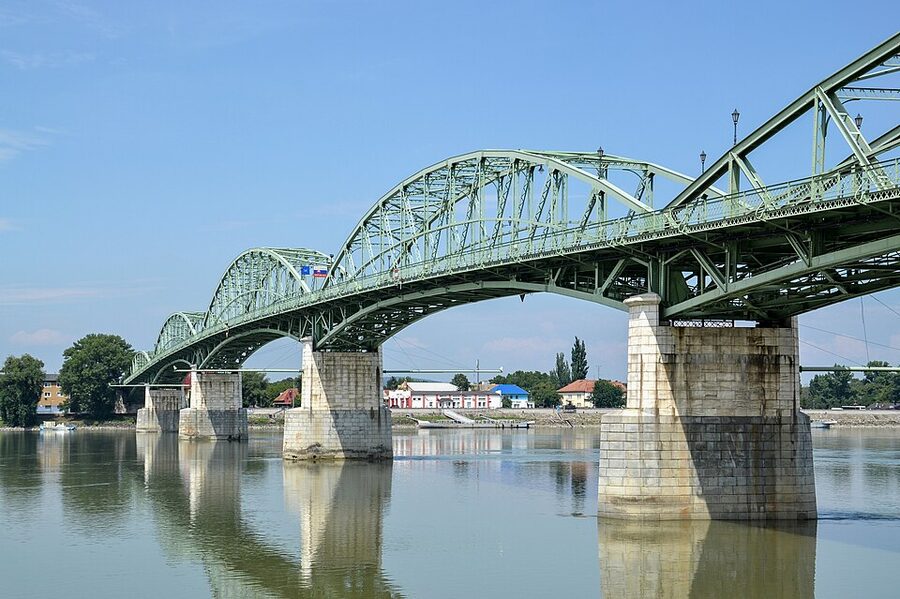

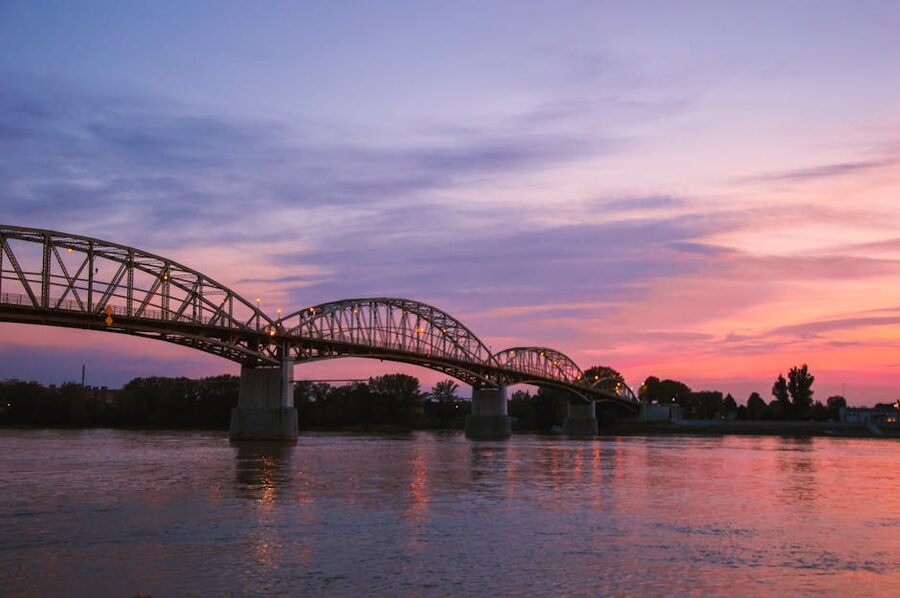
The Esztergom Basilica is genuinely impressive on a scale that’s rare for Central European churches — most country basilicas are smaller, fussier, more rococo. This one feels like it belongs somewhere bigger.
Szentendre — The Artist Town
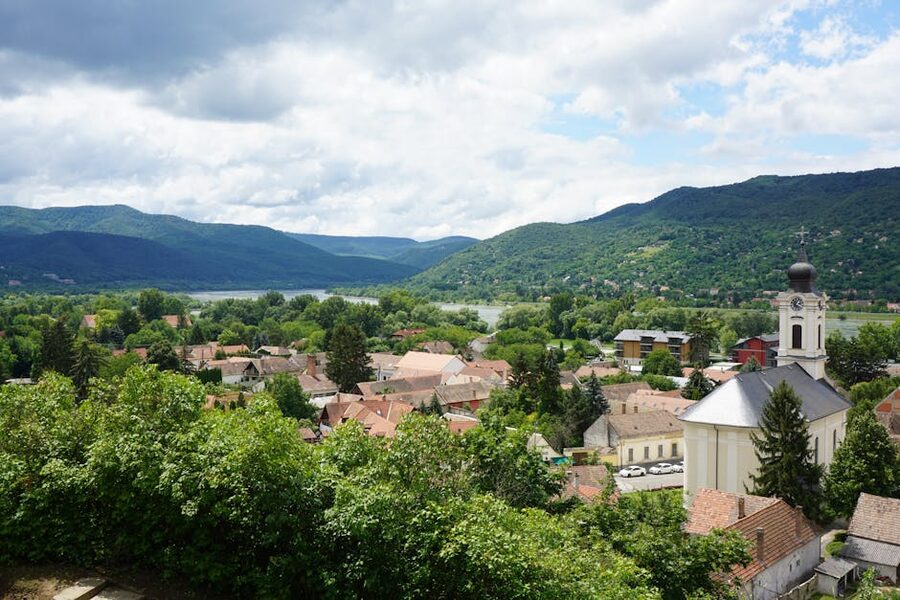
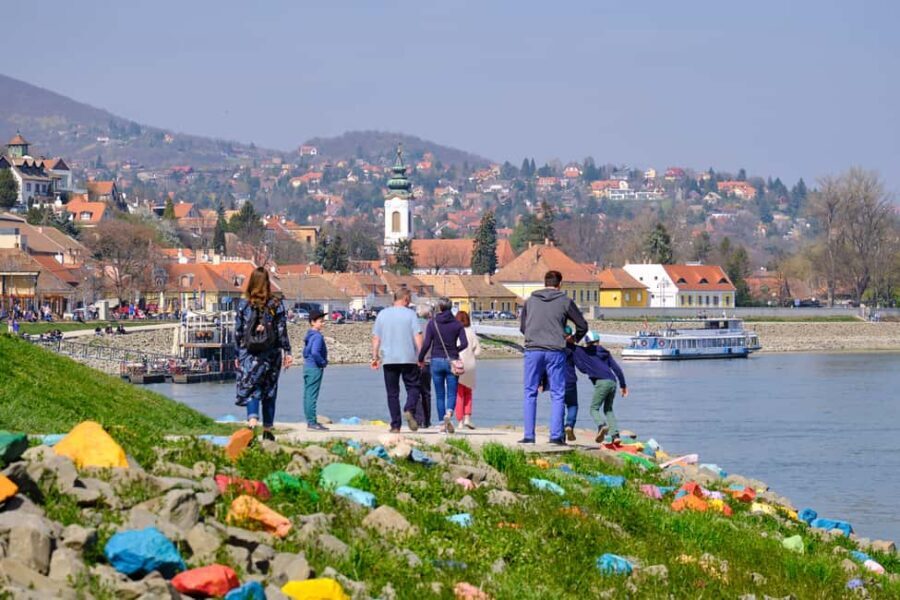
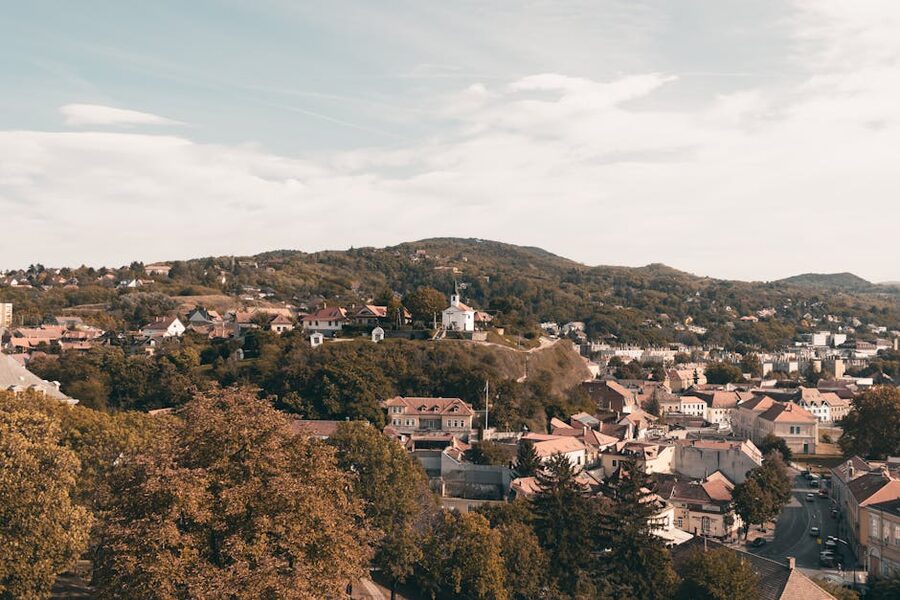
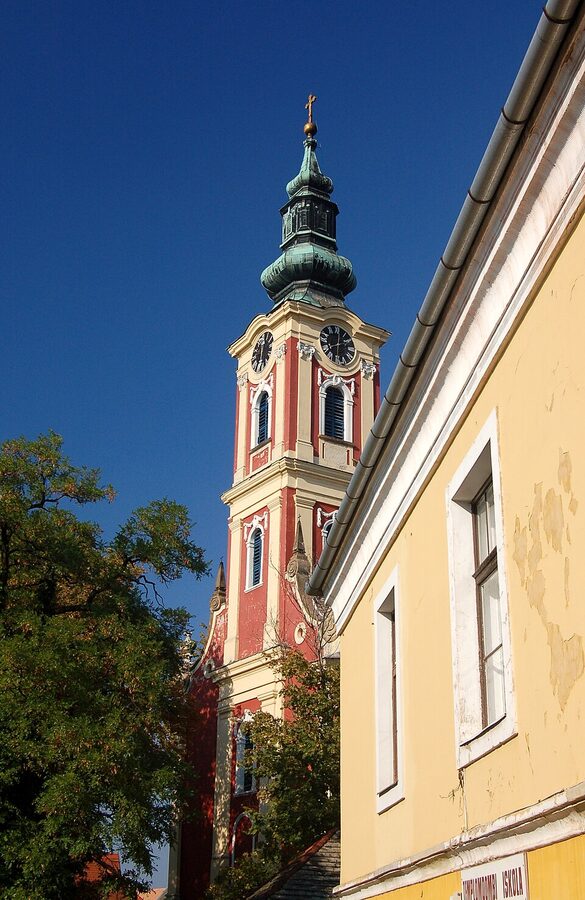
Different gear entirely. Szentendre is closest to Budapest (about 20 km north) and the most touristy by a wide margin. It’s a small riverside town that became an artists’ colony in the early 20th century and never quite stopped. Now: marzipan museums, ceramics studios, ice cream parlours, a Serbian Orthodox cathedral from the 1690s refugee community, and a lot of day-trippers.
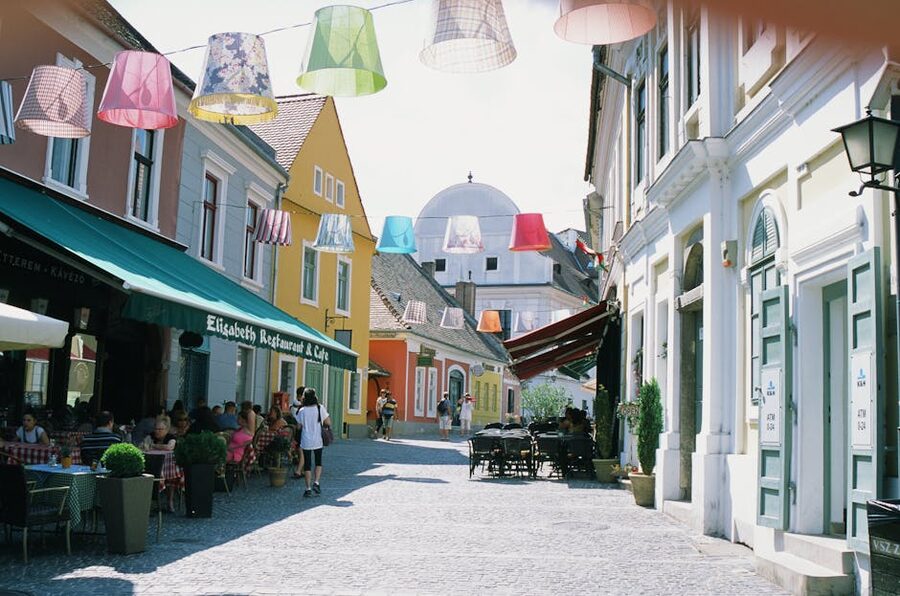
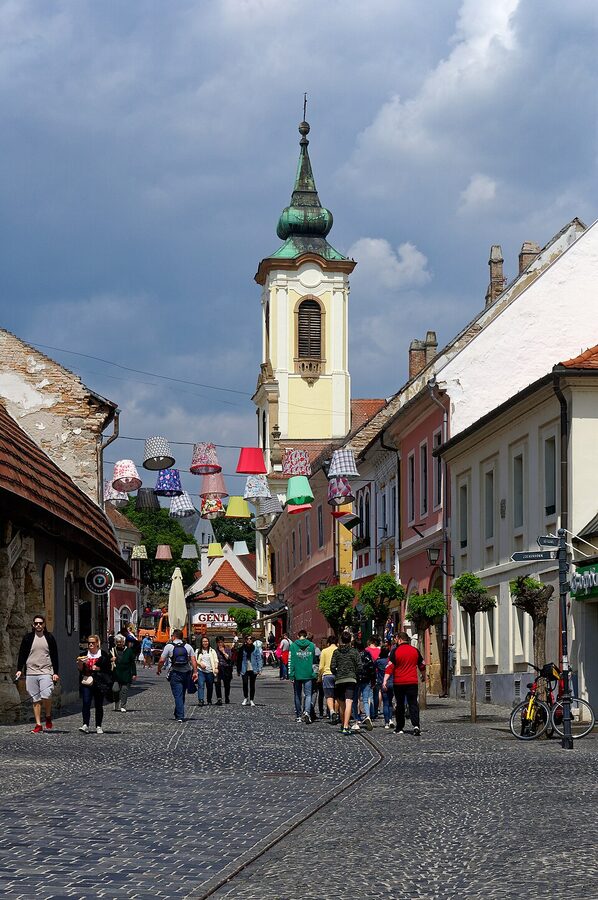

The Serbian Orthodox legacy is the unique thing here. In 1690 around 6,000 Serbian families fled the Ottomans and resettled around Szentendre under Habsburg protection. They brought their churches, their merchant trade, and their architecture — hence the slightly-not-Hungarian feel. The Belgrade Cathedral is the seat of the Serbian Orthodox Diocese in Hungary. Worth ducking inside if there’s no service; the iconostasis is from 1781.
.jpg)
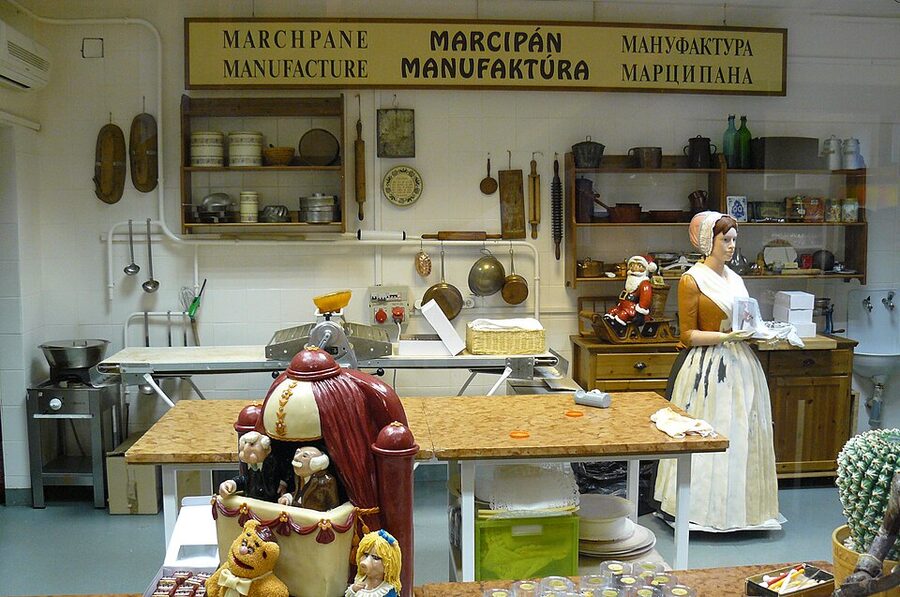
The other Szentendre thing: marzipan. The Szabó Marzipan Museum on Dumtsa Jenő Street has sculptures of historic figures, fairy tale scenes, and one of the Hungarian Parliament. Silly. Kids love it. Adults take a photo and move on. Entry around 600 HUF.

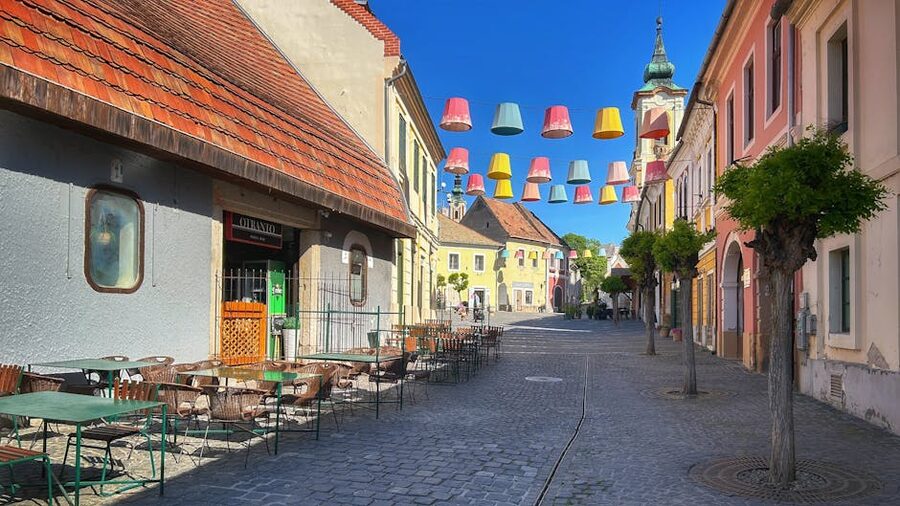
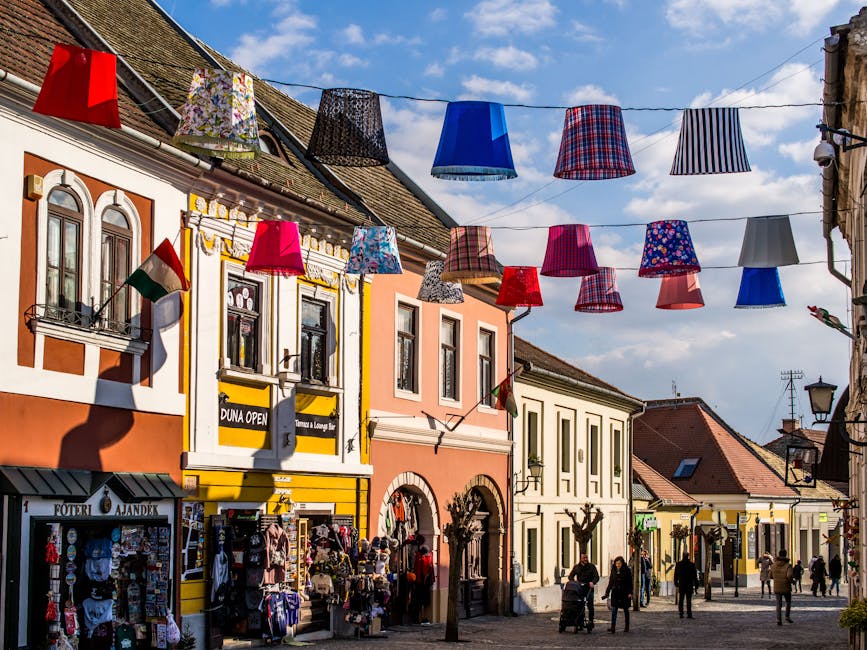

Szentendre is the easiest to do as a half-day on its own — the HÉV suburban train (H5) runs from Batthyány tér in 40 minutes for about 800 HUF return. The only one of the three towns accessible by city transport.
Should You Take the Boat or the Coach?
The coach is faster (90 minutes each way) and lets you see all three towns. The boat takes longer (around 3 hours from Budapest to Visegrád), only really gets you to Visegrád or Szentendre — Esztergom is too far by water — and the schedule is seasonal.
.jpg)
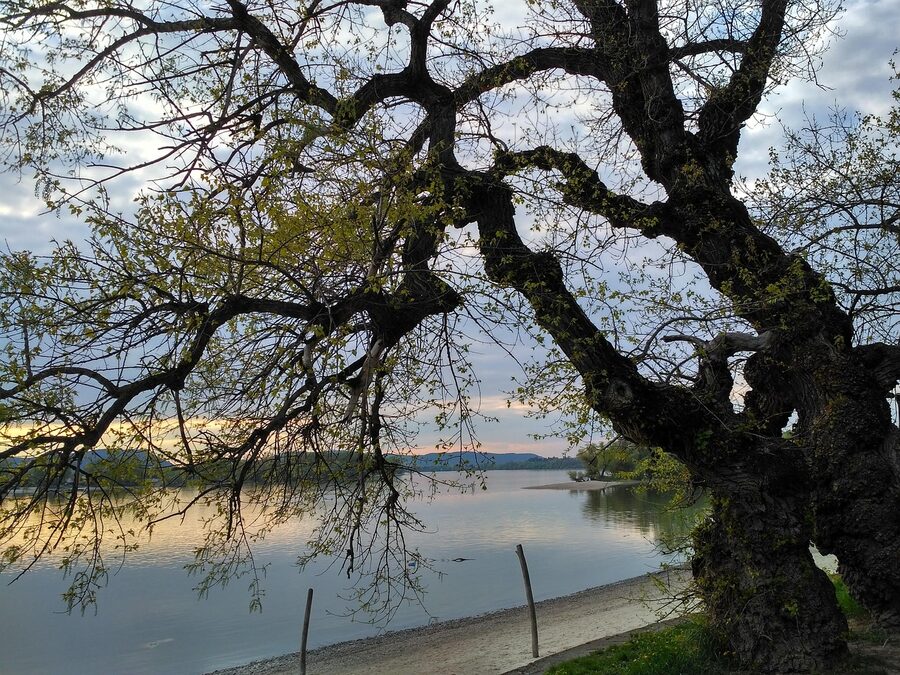
First visit, only one day: coach. You see more, get the historical context, can always come back for a boat trip. Second visit or done Hungary before: take the slow boat one way and the train back from Szentendre. You get the urban-to-forest transition and a proper afternoon to wander a single town instead of bouncing between three.
The hybrid option — coach up, boat down (or vice versa) — exists in summer with a couple of operators. Most expensive at around $120-140 but the version I’d recommend on a clear day. Look for tours that explicitly say “boat return” or “river return”; many use “scenic Danube cruise” to mean a 20-minute tour-boat leg that doesn’t go anywhere new.
When to Go
The Danube Bend is one of the few Hungarian destinations where the season really changes the experience. Quick breakdown:
April-May. Cool, often wet, river high from snowmelt. Wildflowers on the hills. Fewer crowds than summer. Boats start mid-April but the schedule is light. My favourite time of year — saturated colors and the towns not yet in peak tour-bus mode.
June-August. Peak season, hot (often 30°C+), busy. Boats run daily, Szentendre is packed by 11am. The upside: everything is open, days long enough to watch sunset from the Visegrád citadel (close to 9pm in late June). Bring water, expect waits at the basilica climb.
September-October. The best window for the bend itself. Forest turns red and orange, mornings crisp, afternoons still warm. Tour-bus volume drops noticeably from mid-September. October has the autumn light photographers come for — soft, low, golden.
November-March. Quiet. Boats stop by early November. Many Visegrád and Szentendre restaurants close or shift to weekends only. The basilica stays open. The castle ruin is open but bleak — bring waterproofs and accept the views may be hidden in mist. Doable, but probably not your one Budapest day trip unless you want the moody, empty version.
What to Skip and What’s Worth the Effort
Be honest about what you’ll actually enjoy. A few things that get sold harder than they deserve:
- The Visegrád wax museum inside the upper castle is small, dimly lit, and feels dated. If you only have 45 minutes at the citadel, skip the museum and spend the time on the panoramic terrace. Better light, better photos, more time outside.
- “Medieval banquet” experiences at the Renaissance restaurant in Visegrád are touristy in a way that’s fine if you’re with kids and want the spectacle. Adults travelling alone will find it embarrassing within ten minutes.
- The Szentendre Open-Air Ethnographic Museum (Skanzen). It’s good — properly good, in fact — but it’s outside town and needs at least 2 hours to do justice. No coach tour gives you that time. Visit it on a separate day if you’re interested in Hungarian rural architecture.
What’s actually worth the effort:
- The Esztergom cupola climb. 360 steps, but the view across the bend back toward Visegrád is the photo of the trip. Better than any standard panoramic shot from the citadel.
- An ice cream from anywhere on Fő tér in Szentendre. Specifically — Édeni Vegán has the best, but the queue is mostly tourists. Walk one block off the main square and you’ll find a small place locals use.
- The hike up to Visegrád citadel rather than the bus. Twenty-five minutes, mostly through forest, and you arrive at the views having earned them. If your tour bundles the bus ride to the top, ask the guide if you can walk and meet them at the summit.

Practical Logistics
Bathrooms. Each town has them, mostly free at coach stops. The basilica has clean facilities; the Visegrád citadel has basic ones near the entrance; Szentendre has paid public toilets near the tourist office (200 HUF) and free ones in cafés if you buy something.
Cash vs card. Cards work at the basilica and major sights. Smaller stalls (marzipan shops, outdoor food vendors) often want HUF cash. ATMs in each town. Bring 10,000-15,000 HUF for a comfortable day.
Walking shoes. Visegrád is steep, Esztergom has cobbles, Szentendre has more. Not the day for sandals or heels. Trainers minimum.
Weather layering. The wind on the Visegrád citadel can drop the perceived temperature by 5-7°C even in summer. Always bring a light jacket. Autumn and winter: bring two.
Travel sickness. The road to Visegrád twists once you leave the highway. If you’re prone to motion sickness, sit at the front of the coach and bring something for it.
Cross-Tour Combinations Worth Knowing
If you have a few days in Budapest, anchor yourself before heading out. The Budapest walking tour covers the city’s Saint Stephen / royal-Hungary timeline, which makes the Danube Bend’s history click into place once you’re standing in Esztergom. For a faster orientation the hop-on hop-off bus is the lazy version, and a tuk-tuk tour is the version that actually feels like fun.
If you’ve done the Danube Bend and want the same river from a different angle, the in-city Danube cruise covers the urban stretch between Margaret Bridge and Rákóczi Bridge. Liked Visegrád? The Buda Castle tickets guide covers the bigger sister fortress in the capital, and the Buda Castle walking tour is the guided version. The Buda Castle cave tour takes you under it.
For more church scale, the St Stephen’s Basilica guide covers the Budapest equivalent of Esztergom — smaller but more central to daily Hungarian Catholicism. The Hungarian Parliament tour is the other big-name building tour. And if you’ve done all the historic stuff and want to switch to wax figures of pop stars and Hungarian kings under the same roof, the Madame Tussauds Budapest guide is the right kind of palate cleanser. After all the walking, finish in the thermal water — Széchenyi Bath is the classic and Gellért Spa the prettier alternative. If your Saturday lands a particular way, Sparty at Széchenyi is the same baths, after dark, with a DJ and lasers.
Three Quick Mistakes to Avoid
1. Don’t book the cheapest shuttle without checking what’s included. Some “tours” at $35 are coach drops only — no guide, no lunch, no entries. You’ll get to each town and have to figure out the basilica entry queue yourself in Hungarian. Worth it if you’ve researched ahead, frustrating if not.
2. Don’t try to do the Danube Bend and a different day trip in the same Budapest visit unless you have at least four full days. Three day trips in three days will leave you exhausted and you’ll start mixing up which town had the basilica and which had the marzipan museum.
3. Don’t dismiss Szentendre as “too touristy” and skip it. Yes, it’s busy. Yes, the umbrella streets are clichéd. But the Serbian Orthodox heritage is unique in Hungary, and the riverside walk on the eastern edge of the old town (away from the main drag) is genuinely peaceful. Walk five minutes east and you escape 90% of the crowds.
The Affiliate Bit
Some of the booking links in this guide go to GetYourGuide. If you book through them I get a small commission at no cost to you — it keeps these guides running and lets me write more of them. The opinions on which tours are worth your money are mine, not bought. I haven’t been paid to recommend any specific operator and I’d happily tell you which ones to skip if any of them were bad. As of writing none of them are.