
You climb the worn stone steps from Hantverkargatan, push through the heavy wooden door, and there it is. The Blue Hall. Cathedral high, walls the colour of a brick oven, and so quiet your footsteps sound like someone else’s. This is the room. The same floor where every Nobel laureate has walked to dinner on December 10 since 1930. You’re allowed to stand right in the middle of it. That moment, on a guided tour that costs less than lunch, is the payoff for booking Stockholm City Hall.
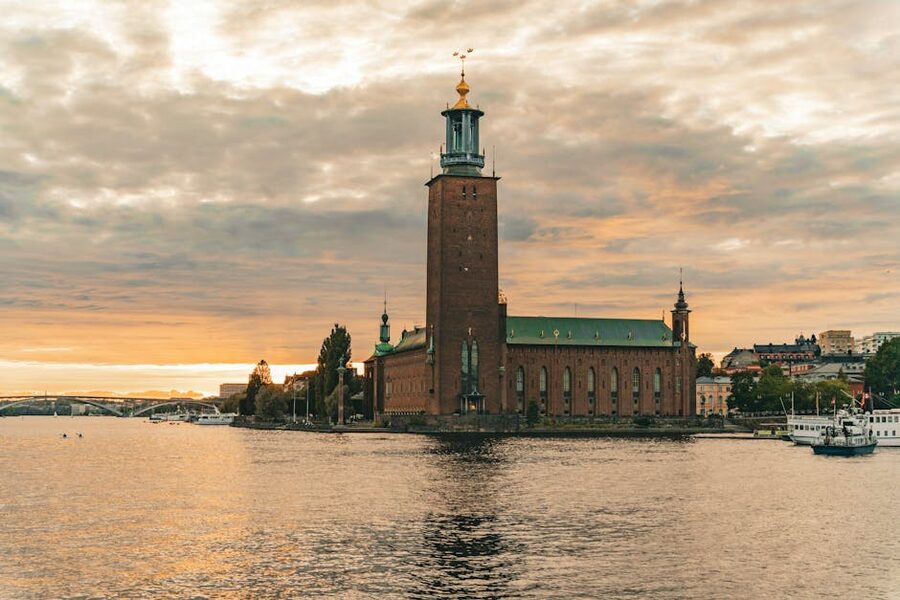
I keep coming back to Stadshuset because it does something most “must-see” landmarks don’t: it earns its reputation in 45 minutes, not three hours. You see the Blue Hall, the Golden Hall, the Council Chamber, climb (or skip) the tower, and you’re done. You can do it before lunch and still have a full Stockholm afternoon left.
Best three-stop combo: City Hall + Old Town + Vasa Walking Tour at $55. Three landmarks, three hours, one guide. The cheapest way to do the Stockholm trifecta.
Best half-day option: 5-Hour Stockholm Highlights with Vasa at $110. More time inside Vasa, more depth on Gamla Stan. Pricier but less rushed.
- How the City Hall Tour Actually Works
- What You’ll Actually See Inside
- The Blue Hall (which is not blue)
- The Italian staircase
- The Golden Hall
- The Council Chamber
- The Prince’s Gallery
- The Three Best City Hall Tours
- 1. Stockholm Highlights: City Hall, Old Town and Vasa Museum:
- 2. Half-Day Highlights with Extended Vasa Time: 0
- 3. Private Nobel Grandeur Tour: 5
- The Tower Climb (May to September Only)
- Tickets, Prices and the Stockholm Pass Question
- When to Visit (And When Not to)
- How to Get There
- A Quick Bit of History (You’ll Want This Before the Tour)
- The Cafe and the Garden (Free)
- Tips From the Last Five Visits
- What to Pair With City Hall
- One More Thing
- More to Plan in Stockholm
How the City Hall Tour Actually Works
You can’t wander Stadshuset on your own. It’s still a working city hall, with weddings on Saturdays, council meetings during the week, and the prime minister occasionally turning up. The only way in is on a guided tour.
Tours run in 45-minute blocks, in English, year-round. The summer schedule (May to September) is dense: roughly every half hour from 09:30 to 15:30. Off-season you get fewer slots, usually 10:00, 12:00 and 14:00 in English. Swedish tours run alongside. In summer they add German and Spanish, and you can usually snag a Russian or Italian slot if you ask.
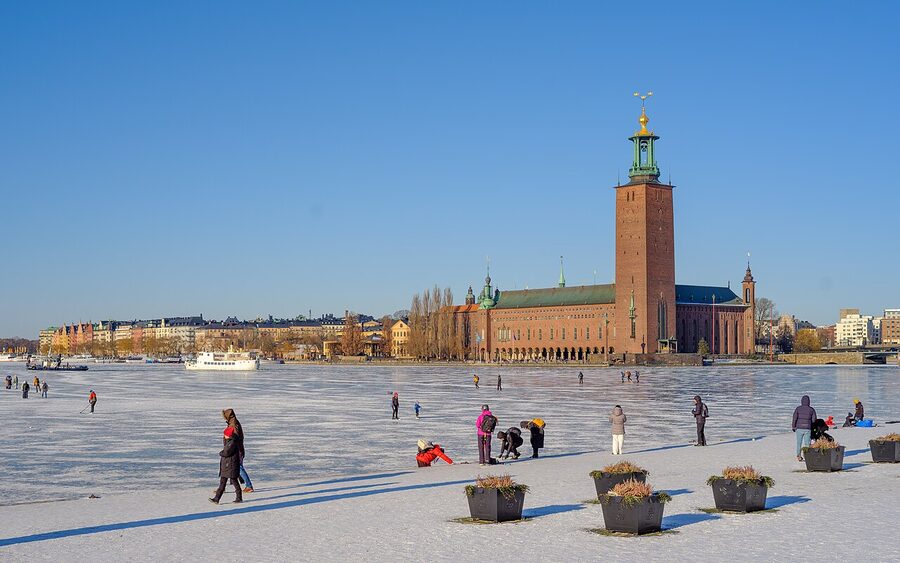
The tour entrance is on Hantverkargatan, not the waterfront side that everyone photographs from. Look for the sign that says “Borgargården / Tour Entrance” and queue at the small ticket office inside. You can’t reserve a specific tour time online for the standard public tour. Tickets are sold same day, first come first served, and you pick your time slot at the desk. In peak summer (mid-July to mid-August) the 10:00 and 11:00 slots can fill an hour ahead, so come at 09:30 and you’ll be fine.
If you absolutely need a guaranteed time, that’s where the third-party combo tours come in. They book ahead with the city hall, your time is locked, and you get a guide who handles entry. Worth the extra $20 to $40 if you’ve only got one morning in Stockholm.
What You’ll Actually See Inside
The tour route hasn’t changed much in fifty years and that’s a good thing. You start in the Blue Hall, climb the granite “Italian staircase” to the Golden Hall, peek into the Council Chamber, and finish in the Prince’s Gallery looking out at the lake. Forty-five minutes, four big rooms.
The Blue Hall (which is not blue)
,_the_place_of_the_Nobel_Price_banquet_-_Stockholms_stadshus_(24763390341).jpg)
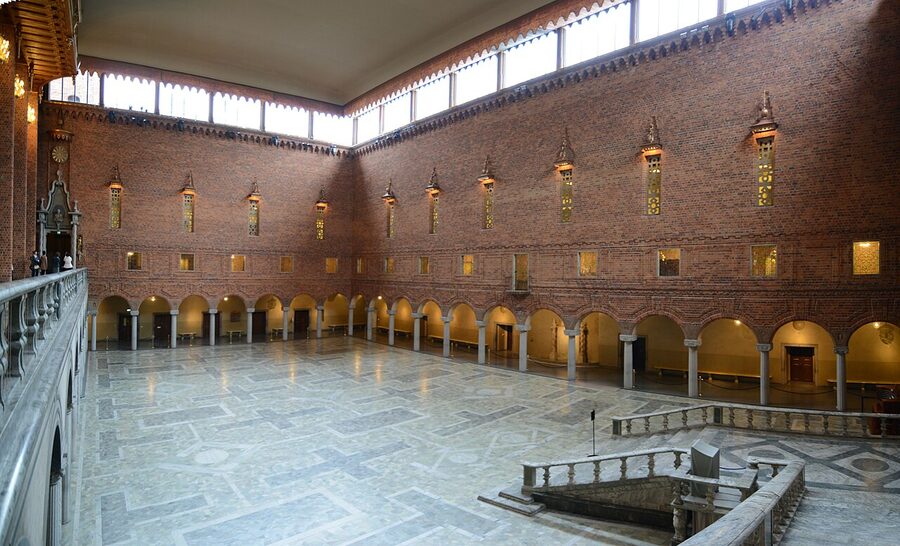
This is the room. The architect, Ragnar Östberg, originally planned to plaster the brick walls blue. Then he saw the brick going up, fell in love with the texture, and left it bare. Too late to rename the room. So you’ve got an enormous red-brick hall called the Blue Hall, and the contradiction is half the charm.
It’s not a single open space, it’s an indoor piazza. Two storeys high, open arcades around the upper level, a pipe organ at the south end with 10,270 pipes (it’s bigger than it has any right to be). On December 10 every year, the floor is set for 1,300 dinner guests, the king and queen take the high table, and the laureates eat the same five-course Nobel menu the foundation has rotated through for decades.
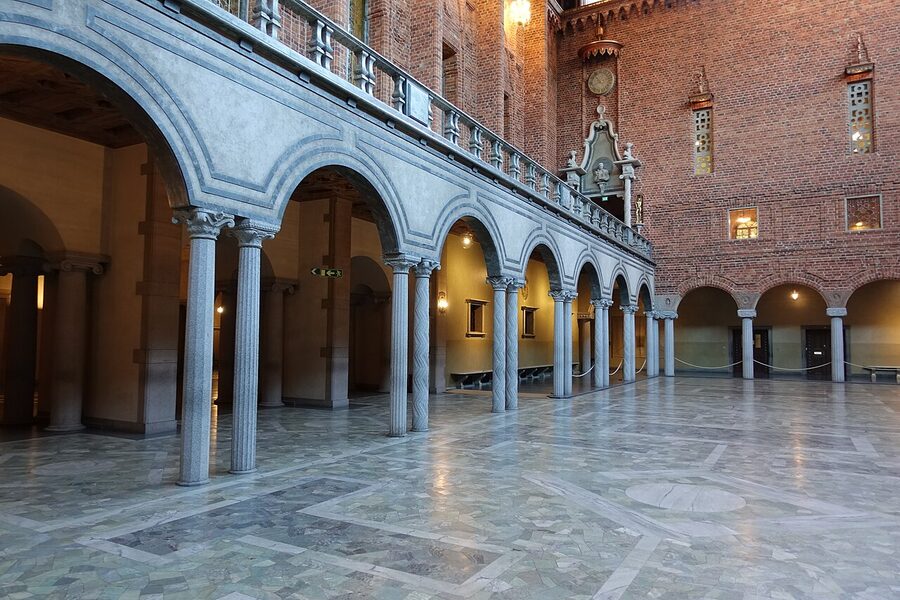

The guide will walk you to the centre of the floor and tell you to stop. That’s where Hemingway stood in 1954, where García Márquez stood in 1982, where every literature laureate from Doris Lessing to Bob Dylan to Han Kang has walked. Bob Dylan didn’t actually show up in 2016, but the rest did. Stand on that spot, look up at the arches, and the room earns its reputation.
The Italian staircase
From the Blue Hall you climb to the Golden Hall up a stone staircase Östberg designed after spending a decade studying Italian palazzi. The treads are deliberately shallow and wide. The whole point is to let women in long evening gowns descend gracefully without snagging hems on the lip of a step. He apparently sent his wife up and down it dozens of times in test gowns until the geometry was right.
Look at the railing. It’s carved with a quiet relief of Saint Erik, Stockholm’s patron, leading the city’s old guilds. You’ll miss it if you’re not told to look, which is one of the small reasons paying for a guide beats wandering with a brochure.
The Golden Hall
.jpg)
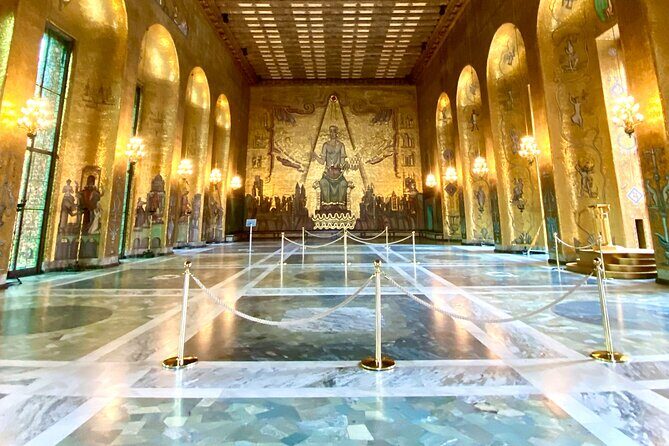
If the Blue Hall is the showpiece, the Golden Hall is the showoff. 18 million gold mosaic tiles cover every wall, top to bottom. Real gold leaf, fused between two layers of glass. The artist Einar Forseth designed it; the firm Puhl & Wagner of Berlin pressed and shipped the mosaics in numbered crates. They arrived just before WWII and stayed in those crates for years before the room was finally finished in 1923.
The big mosaic on the long wall, the Queen of Lake Mälaren, is the room’s signature. She’s a stylised allegorical figure with the world coming to her: an elephant from India, a Statue of Liberty from America, the Eiffel Tower behind her left shoulder. Look closely and the proportions are off; her head got squeezed because the artist underestimated the wall height. Locals call it the “Decapitated Queen” though the guide will be polite about it.
.jpg)
This is the room where the Nobel ball happens after dinner. They roll up the parquet protectors at midnight, turn the lights low, and 1,300 people in tuxedos and evening gowns dance under gold. It must be ridiculous in the best possible way.
The Council Chamber
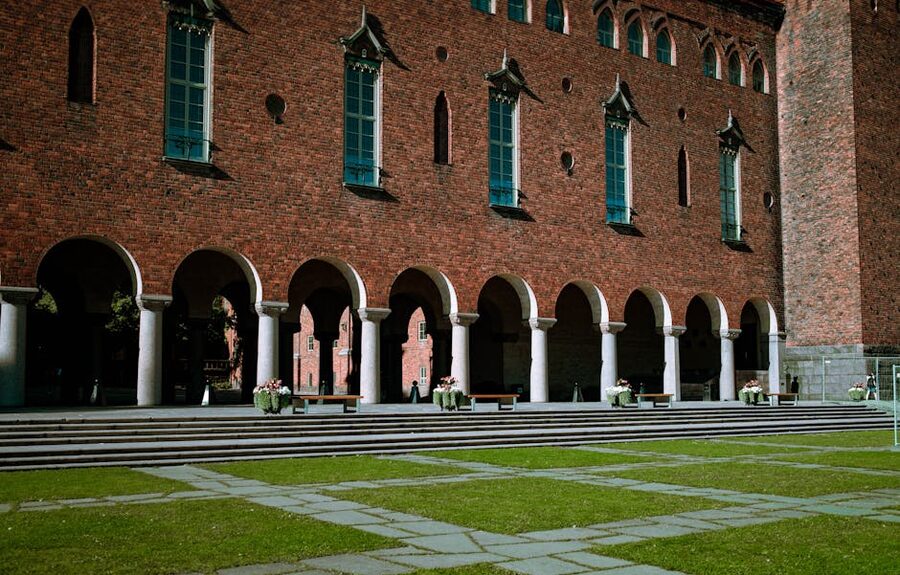
The next room is a complete tonal shift. The City Council still meets here every other Monday. The ceiling is shaped like an upturned Viking longhouse, beams painted in muted reds and golds, and the room smells faintly of old timber. There are 101 elected councillors, so 101 numbered seats arranged in a horseshoe.
The guide will point out the public gallery at the back. Anyone can sit there during meetings, including you on a Monday afternoon. It’s free, you don’t need to book, and Swedish democracy is one of the more polite spectator sports.
The Prince’s Gallery
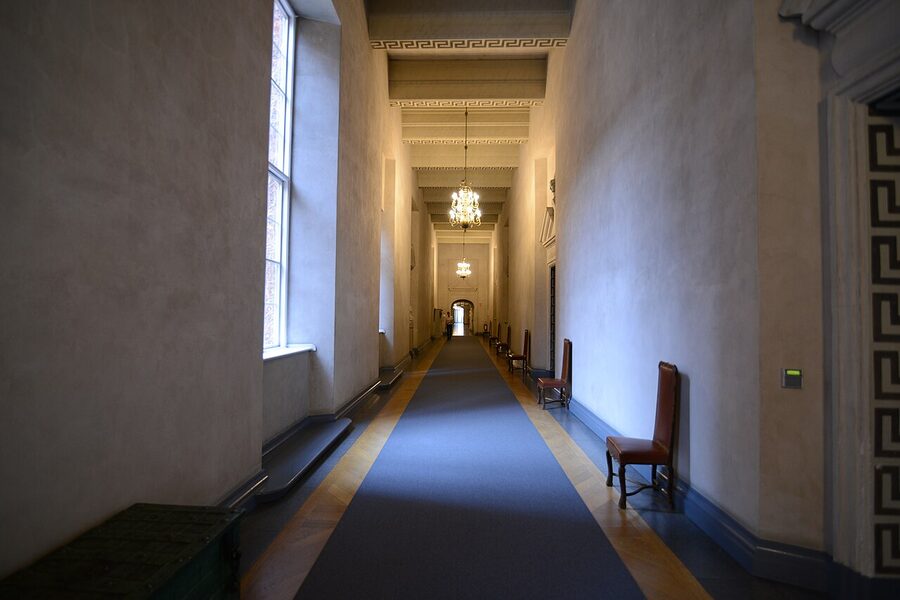
The last stop on the public tour. A long room with windows running the entire lake-facing wall, frescoes by Prince Eugen (a real Swedish prince who was also a serious painter) depicting Stockholm scenes. The frescoes are painted directly onto the wall opposite the windows, so when you stand at one end, the painted view of Riddarfjärden mirrors the actual view through the glass. It’s a quiet little optical trick and the calmest room on the tour.
The Three Best City Hall Tours
I’ve sorted these by what most travellers will actually want. The standard 45-minute Stadshuset tour is included in all three, but they bundle it differently.
1. Stockholm Highlights: City Hall, Old Town and Vasa Museum: $55

This is the one I’d book on a normal Stockholm trip. Three hours covers Stadshuset (the Blue Hall and Golden Hall, not the tower), a proper walk through Gamla Stan with the Royal Palace exterior, and the Vasa Museum at the end. Our full review of this tour goes into how Olesia handles the timing so nothing feels rushed.
Check Availability
Read our full review
2. Half-Day Highlights with Extended Vasa Time: $110
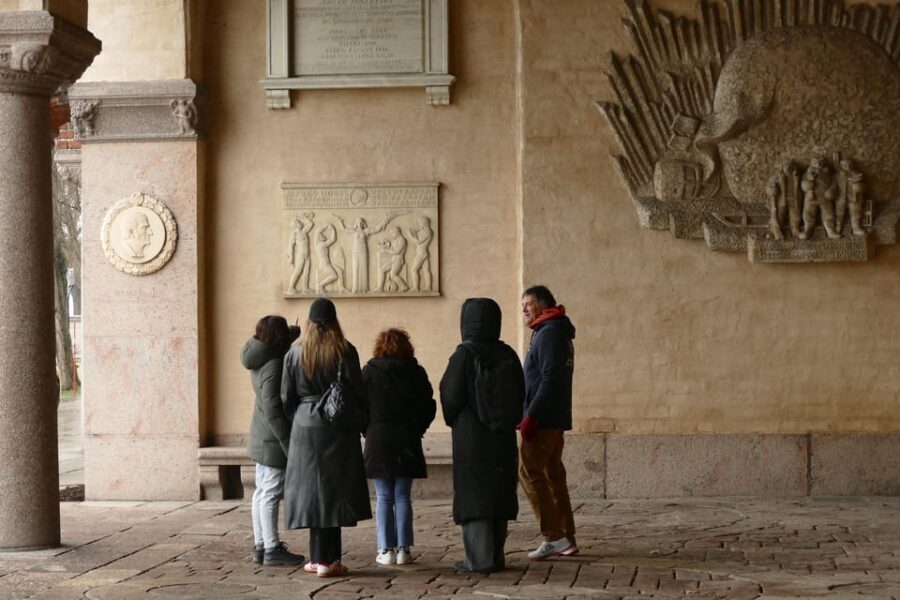
Same three landmarks as option 1 but stretched to five hours, with extra Vasa time and a wider Gamla Stan loop. Worth the price bump if you’re the type who wants to read every museum panel; our review of the half-day version covers what the extra two hours actually buy you.
Check Availability
Read our full review
3. Private Nobel Grandeur Tour: $115
This is the only one of the three that’s just City Hall, no add-ons. A private bilingual guide for 45 minutes inside Stadshuset, focused entirely on the Nobel-banquet rooms. Pricey for what you get, but if Nobel history is the reason you came to Stockholm, the private format is the right format. Our in-depth review of this private tour covers what the guide actually adds versus the public option.
Check Availability
Read our full review
The Tower Climb (May to September Only)
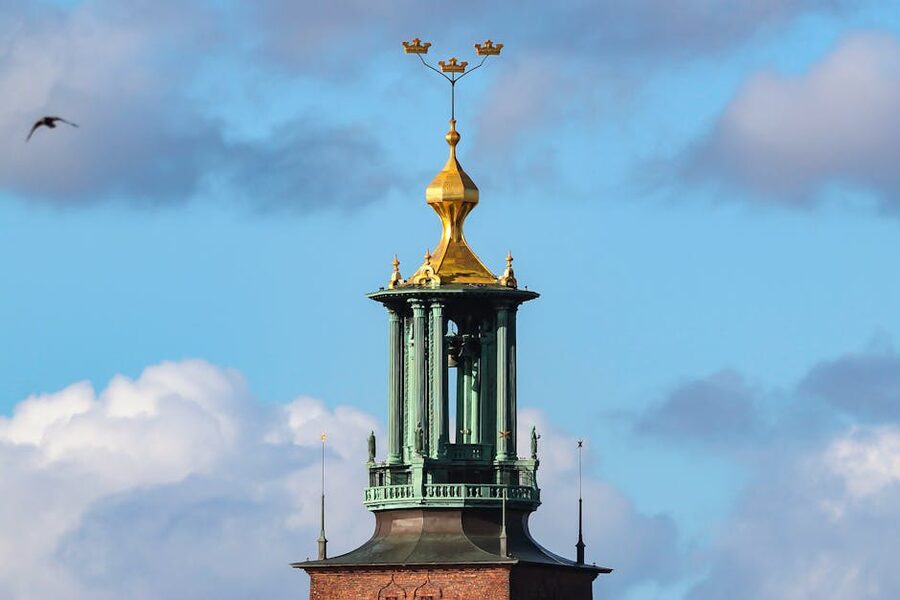
The tower is a separate ticket and a separate experience from the interior tour. It’s only open between May and September, and only 30 people are allowed up at a time. Tickets cost 80 SEK (about $8) and you buy them same day from a small office at the base of the tower, not the main ticket desk.
The climb is 365 steps but with two important caveats. First, there’s a small lift that takes you halfway up; you only walk the upper stairs. Second, the upper stairs are narrow, the railings are limited, and there are stretches that are basically a brick chimney with steps. If you’re claustrophobic or shaky on uneven stairs, this is genuinely not for you, and there’s no shame in skipping it.
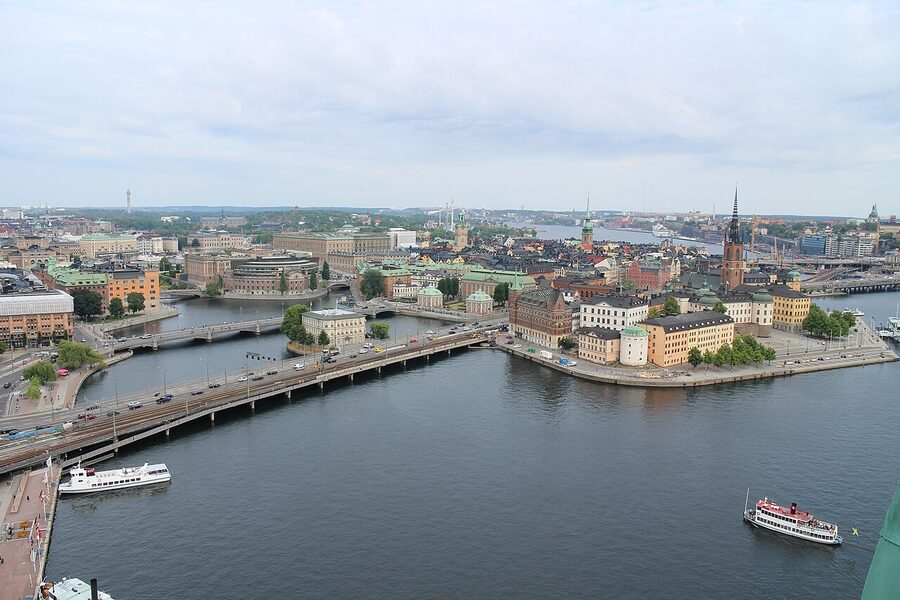

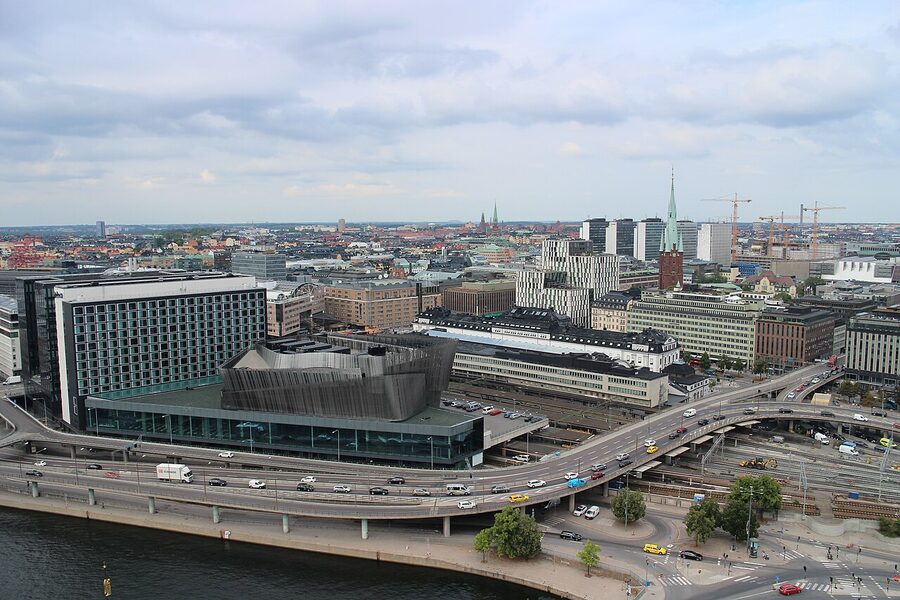

The view from the top is, in my honest opinion, slightly better than from the Katarinahissen elevator on Södermalm and noticeably better than from any of the rooftop bars. You’re at 106 metres, dead-centre on Riddarfjärden, with Gamla Stan to your east, Norrmalm to your north, and Långholmen and the open lake to your west. There’s a small viewing room halfway up where they keep the original 1923 town-hall bell, which weighs three tonnes and has its own room because it has to be that big.
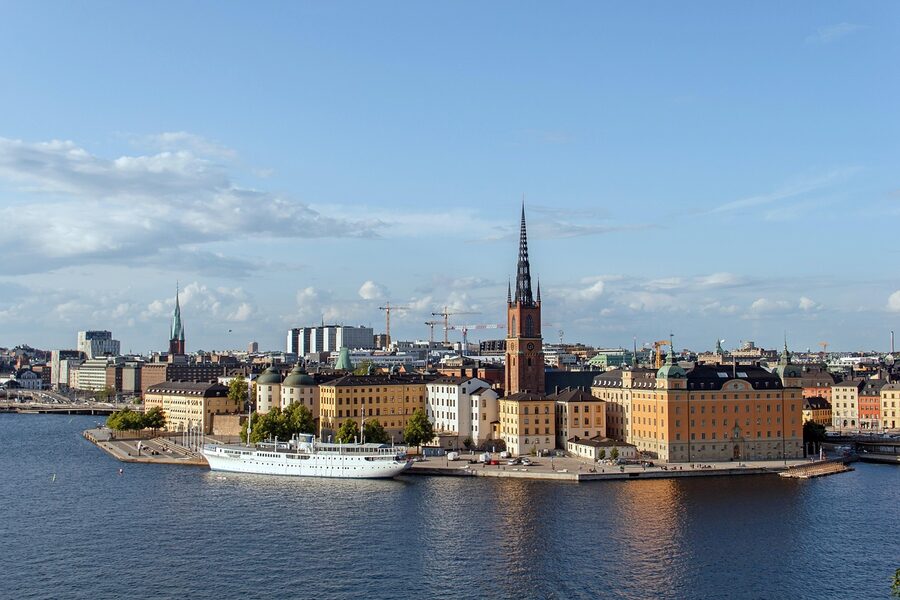
If the tower is closed (October to April) and you still want a high view, the climb up to the Riddarholmen Church spire isn’t quite as good but is open year-round. Or skip it entirely; the interior tour is the main event. Plenty of people do Stadshuset in winter and don’t feel cheated.
Tickets, Prices and the Stockholm Pass Question
The standard interior tour is 130 SEK (about $13) for adults, 110 SEK for students and seniors, free for under-12s. The tower is an extra 80 SEK from May to September. Pay cash or card at the desk. They take all major cards including Amex.
Does the Stockholm Pass cover it? Yes. Both the interior tour and the tower are included on the Go City Stockholm Pass, which is genuinely worth doing the maths on if you’re planning to also hit the Vasa Museum, Skansen, and the ABBA Museum. Three of those four plus the City Hall covers the cost of a 2-day pass. Just walk up to the desk with your pass on your phone, they’ll scan it, and assign you the next available tour slot.
One thing the pass doesn’t include: the third-party combo tours that bundle Stadshuset with Vasa and Gamla Stan. Those are separate operators, separate pricing. So if you’ve got a Stockholm Pass, your move is to do the interior tour solo with the pass, then book the third-party combo only if you also want the guided Old Town walk and a guide for Vasa. Otherwise the pass plus self-guided Gamla Stan is the cheaper play.
When to Visit (And When Not to)
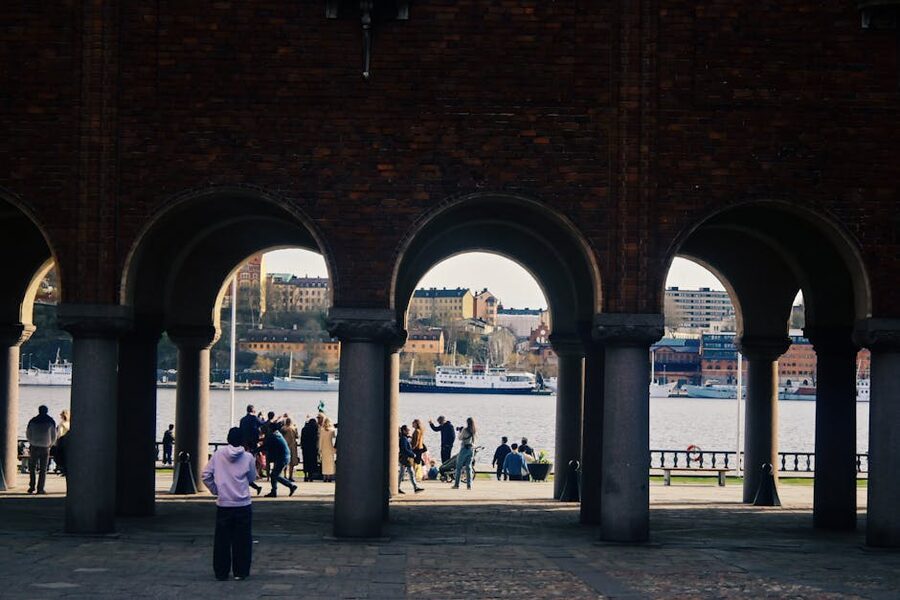
The honest calendar:
May, June, early September. Best time. Tower is open, summer schedule is on, Stockholm hasn’t filled with cruise-ship crowds yet, and the gardens are usable. I’d target the second half of May or the first week of September.
July to mid-August. Peak. The 10:00 and 11:00 English tours genuinely do sell out by 09:30, especially when there’s a cruise ship in port at Stadsgården. Either come at opening (09:00) or push your slot to 13:00 or 14:00 once the morning ships have moved on.
Late November to early December. Avoid the week of the Nobel ceremony itself (December 5 to 12). The Blue Hall is closed for set-up and the Golden Hall is being polished. The official tour is usually still running but skips two of the four main rooms, which is the worst possible visit.
December 11 to mid-January. Sneaky-good time. The Nobel set-up has been broken down but the building is in winter mode, with low light through the high windows, almost no tourists, and a warm hall that smells of brick. You can stand alone in the Blue Hall on a Tuesday at 14:00 and hear the city’s silence echo.
February and March. Cold, dark, and the tower is closed, but tour slots are uncrowded and the guides have time to talk. If you only want the interior, this is when you’ll get the most attentive tour.
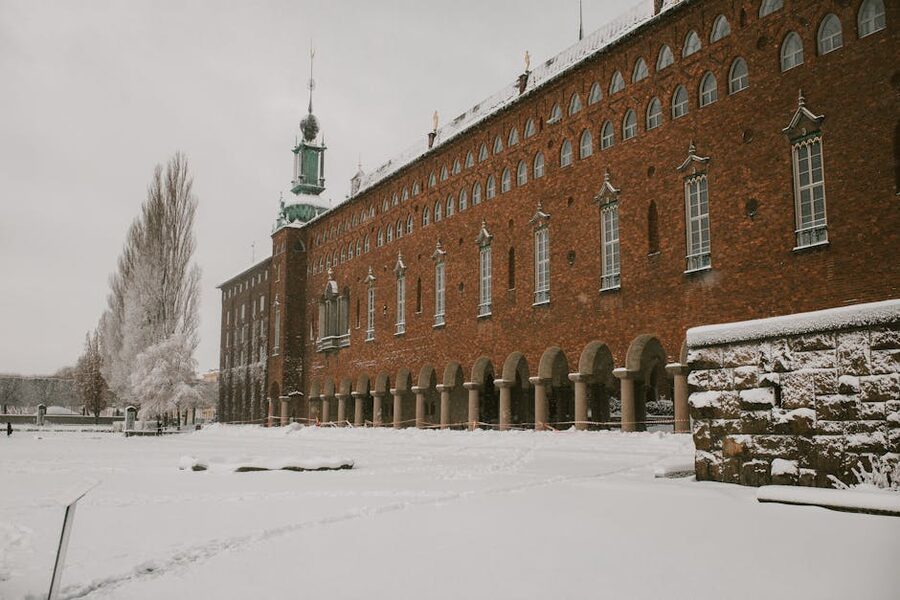
How to Get There
Stadshuset is on the eastern tip of Kungsholmen island, basically across the water from Gamla Stan. It’s a 12-minute walk from T-Centralen and a 6-minute walk from Rådhuset metro station (blue line). If you’re coming from Gamla Stan, just walk west along Vasabron and you’ll see the brick spire from the bridge.
From the Old Town the most fun way to arrive is the SL commuter ferry from Slussen or Klara Mälarstrand to Stadshusbron, which drops you 80 metres from the entrance. It’s an SL ticket, so it costs 42 SEK for a single, free with the regular Stockholm transit card. Ferry runs roughly every 15 minutes from May to September.
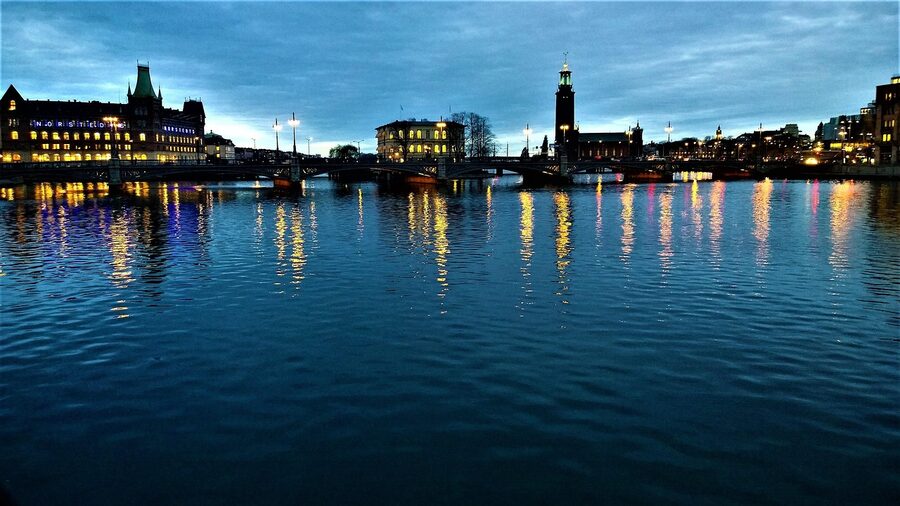
By bus, lines 3 and 50 stop at Stadshuset directly. Buses 53 and 54 stop on Hantverkargatan two minutes’ walk away. There’s no parking on site (it’s a working city hall). The closest paid garage is Q-Park Klara Strand on Klarabergsviadukten, about a six-minute walk over the bridge.
A Quick Bit of History (You’ll Want This Before the Tour)
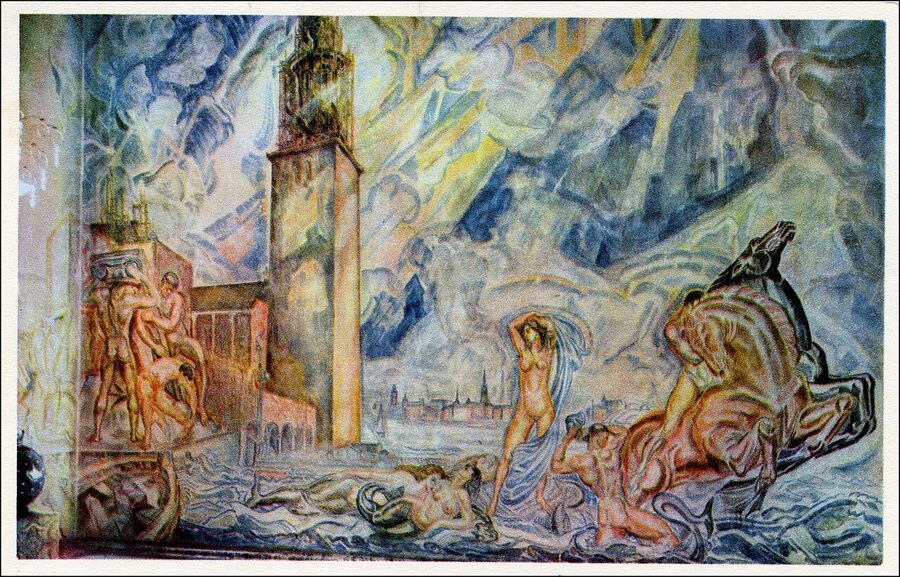
_(6966865602).jpg)
Östberg won the design competition in 1907 and spent the next 16 years building it. Originally the brief asked for a courthouse, but during construction the city decided it wanted a city hall instead, so Östberg adapted on the fly. He moved walls, added the Golden Hall, redesigned the tower three times.
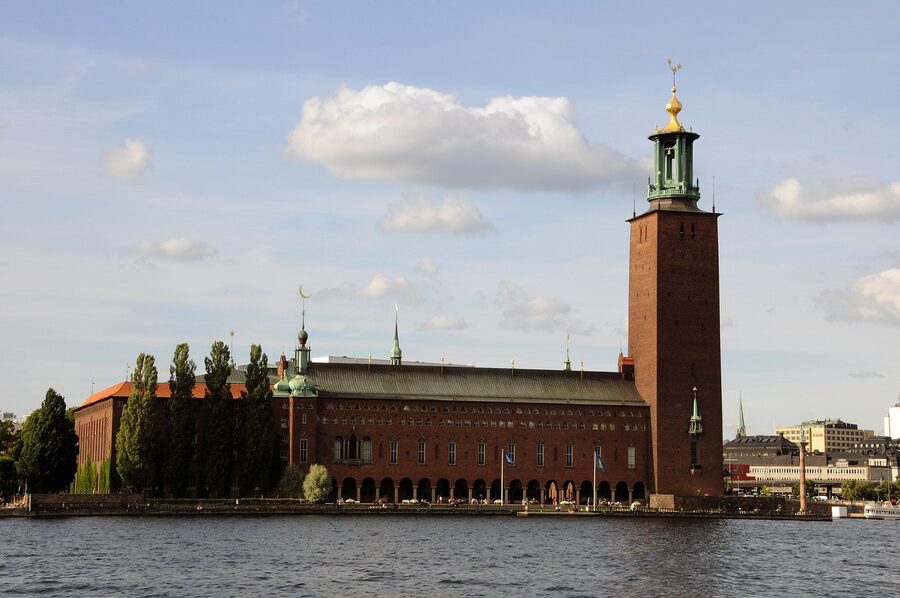
The whole place is built in what the architect called “National Romantic” style, which was a Nordic answer to Art Nouveau. The bricks are the fingerprint, about 8 million of them, each one slightly different in colour because they were fired in small batches at the Lina brickworks. Up close you can see the colour variation; from a distance it reads as a single warm red.
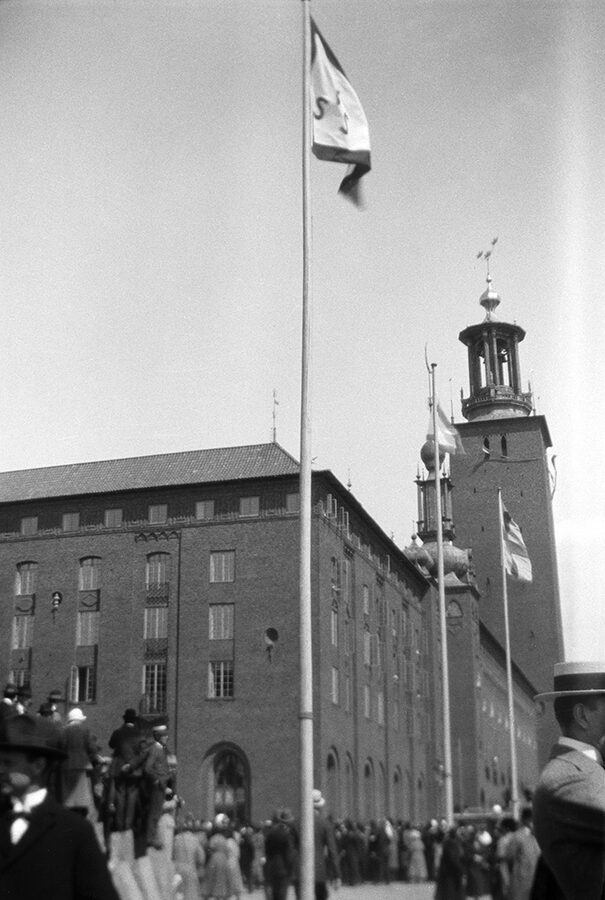
The hall opened on Midsummer’s Eve 1923. Östberg was 56 by then and had given up most of his other work to focus on Stadshuset. The Nobel Foundation moved the prize banquet here in 1930 and it’s been the venue ever since, with one war-time gap when the ceremonies were paused.
One detail worth knowing before the tour: the building was almost cancelled in 1915. WWI made bricks and cement scarce; the city ran out of money. Östberg argued his way through the budget hearings, the brickworks agreed to defer payment, and the project crawled forward. Half the building’s romance is that it almost didn’t happen.
The Cafe and the Garden (Free)
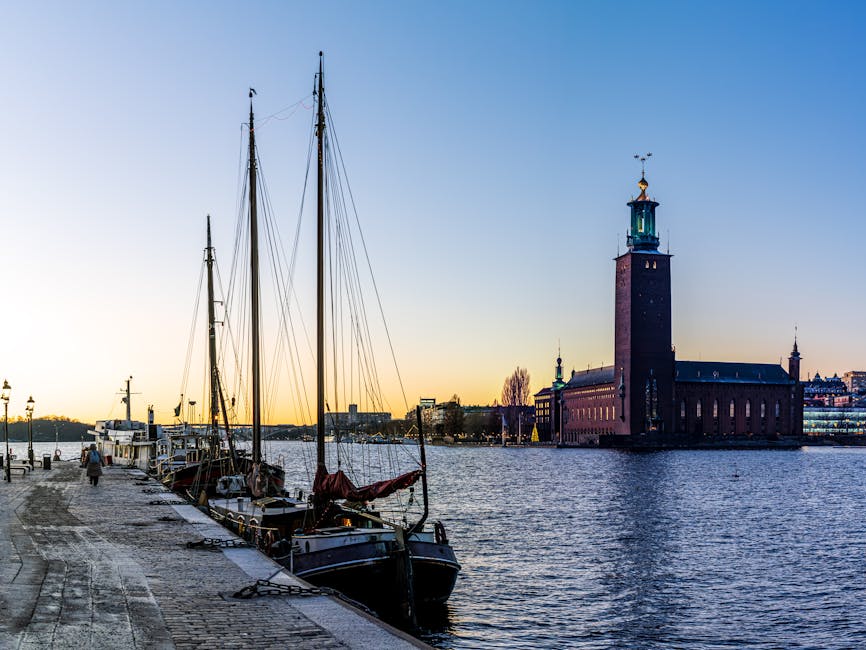
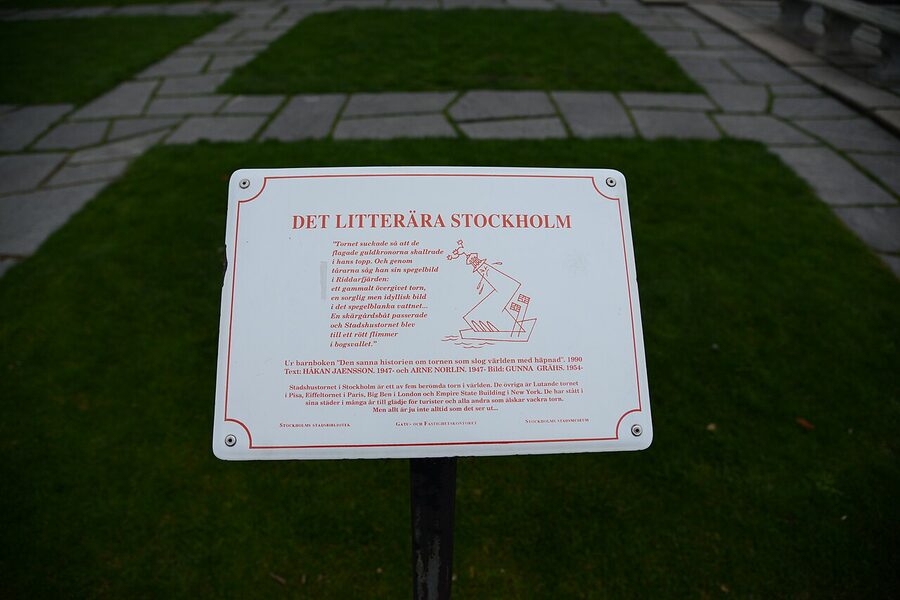
You don’t have to do the tour to enjoy the building. The lakeside garden is free, open daylight hours year-round, and includes the Stadshusparken with its old fountain and the famous Engelbrekt sculpture. The arcade walk along the lake is one of the better free strolls in central Stockholm.
The hall’s cafe (Stadshuskällaren has a pricey lunch service downstairs, but the smaller upstairs cafe inside the courtyard is reasonable) does coffee, kanelbullar, and a daily soup for about 95 SEK. If you’ve got 30 minutes between tour and ferry, it’s exactly the right length of break.
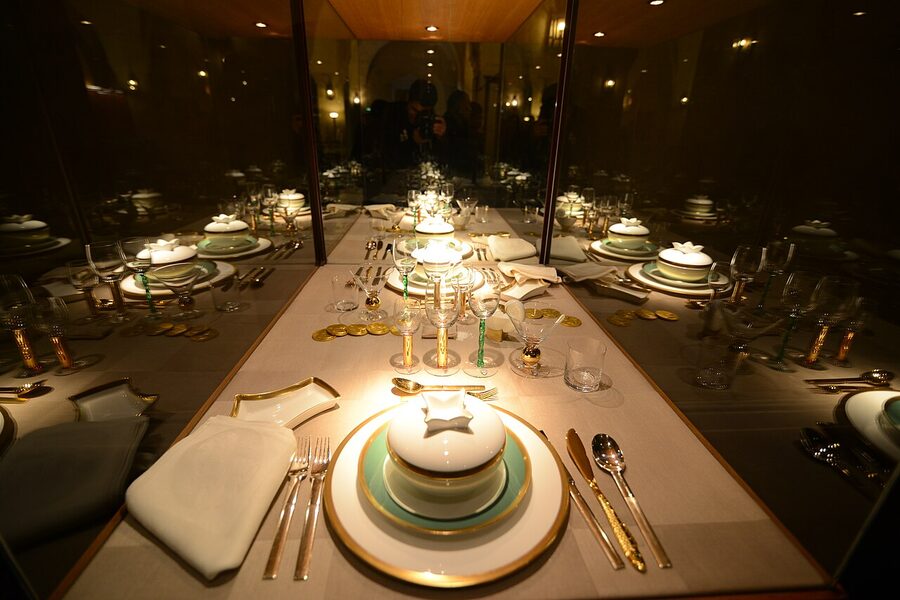
One slightly weird bonus: the Stadshuskällaren restaurant in the basement serves the actual Nobel banquet menu year-round. You can book a table and eat the same five-course meal the laureates ate in any given year (they have menus going back to 1901). It’s expensive (around 1,800 SEK per person) and you have to book weeks ahead, but if you’re a serious Nobel fan it’s a quietly extraordinary thing to do.
Tips From the Last Five Visits

A handful of small things that will make the visit better.
Wear quiet shoes. The Blue Hall echoes everything. Heels and hard soles annoy the guide and the rest of the group. Trainers, soft leather, anything quiet.
Photograph the Golden Hall last. Most people pull out cameras the second they enter. Walk around it once with no camera, look at the mosaics, then take photos. You’ll notice details you’d miss otherwise.
Sit in on a council meeting. Mondays at 16:00, every other week. The schedule is on the city’s website. Council meetings are in Swedish but the acoustics and pageantry are universal. Free, no booking, just walk in.
Skip the audioguide. The standard tour comes with a live guide. Don’t pay extra for a separate audioguide. The guide is half the value of the experience.
Book combo tours by 19:00 the night before. The popular slots fill up. If you’re booking on GetYourGuide or Viator, book the day before; same-day availability dries up by mid-morning in summer.
Bring water. The Blue Hall is heated in winter and stuffy in August. There’s no water fountain inside the tour route. You can carry a sealed bottle.
.jpg)
What to Pair With City Hall
Stadshuset is a half-day attraction even at its longest. You’ll have most of an afternoon left, and the obvious pair is the Vasa Museum on Djurgården. The two together cover Stockholm’s “great Swedish stories” angle: a 17th-century warship that sank ten minutes into its maiden voyage and a 20th-century city hall that became the home of the Nobel Prize.
If you’ve got the Stockholm Pass, the natural follow-on is Skansen for a calm afternoon outside, or the ABBA Museum if you want something completely different. They’re both on Djurgården, walking distance from each other.
For Nobel completists, walk back across the bridge after Stadshuset and head straight to Stortorget in Gamla Stan, where the Nobel Prize Museum handles the laureates’ biographies. Stadshuset gives you the room, the museum gives you the people. Doing both in one afternoon turns into a small pilgrimage.
If you’d rather get back out on the water, the classic boat tour of central Stockholm launches from Stadshusbron, which is a hundred metres from where your tour ends. You can step out of the City Hall and onto the boat in five minutes flat.
.jpg)
One More Thing
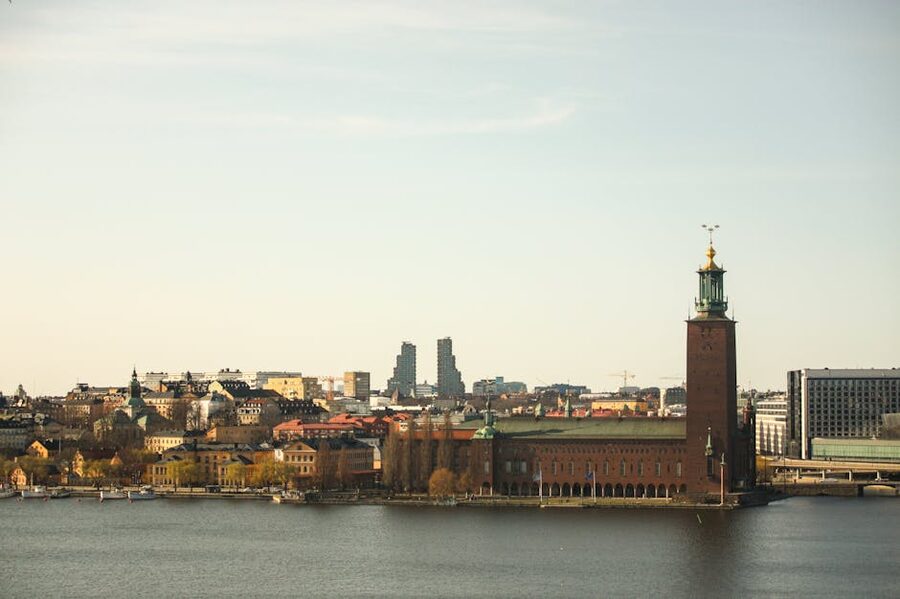
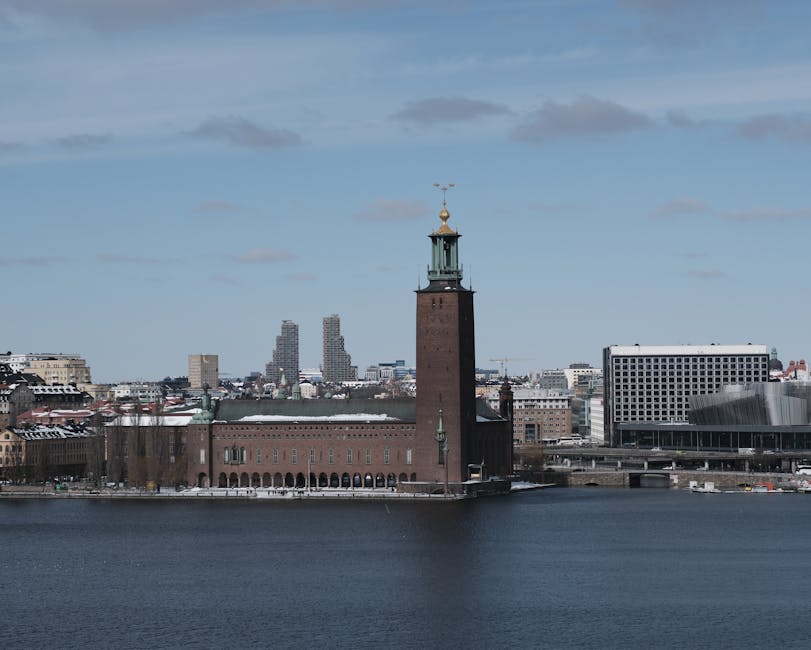
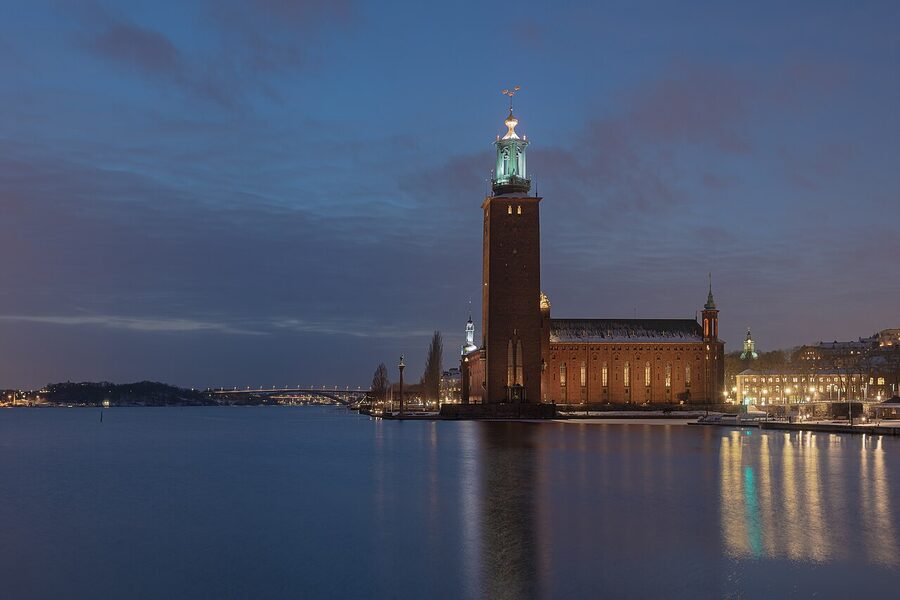
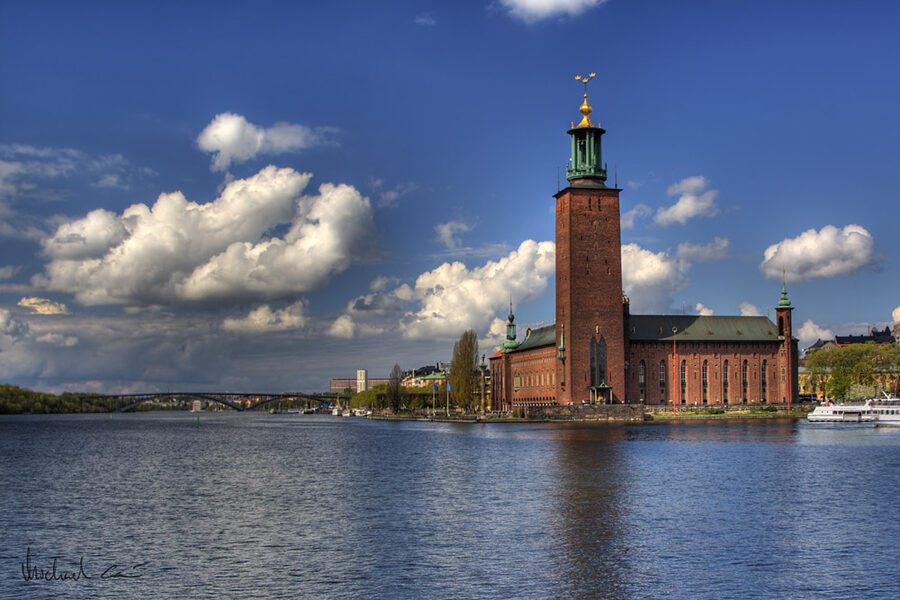
If you’re walking back to your hotel after the tour and you’ve got 15 minutes spare, do this: cross Vasabron, turn right onto the Söder Mälarstrand promenade, and walk south for about ten minutes until you hit Mariaberget. The viewpoint at the top of the cliff (free, open) gives you the full skyline shot of City Hall from across the water. It’s the photo you actually want to take home.
The official tour office closes at 16:00, the last tour leaves at 15:30, and the building goes quiet by 17:00. So if you book a 14:30 slot, you finish around 15:15, walk to the viewpoint by 15:30, and watch the brick turn gold for sunset. That sequence, on a clear summer evening, is one of the underrated free things about Stockholm.
More to Plan in Stockholm
Once you’ve ticked City Hall off, the rest of the city is mostly water and museums. If you only have one more day, my picks are the Vasa Museum in the morning and a half-day archipelago boat trip in the afternoon; that combination plus Stadshuset is the strongest 48 hours Stockholm offers. For a slower pace, the small-group walking tour of Gamla Stan covers the medieval Old Town in two hours, and a Stockholm food tour through Östermalms Saluhall is the easiest way to figure out what to eat the rest of the trip. If history’s your thing, the Royal Palace a few minutes’ walk from Stadshuset gives you another piece of the same Nobel-week ceremonial circuit, and the Fotografiska photography museum on Södermalm is the complete opposite atmosphere if you want a tonal break. For families, the amphibious bus hits the same waterfront as the City Hall view but from a much sillier angle.
Some links in this article are affiliate links. We may earn a small commission if you book through them, at no extra cost to you. We only recommend tours we’d happily book ourselves.