Hiroshima’s Peace Park, Miyajima’s floating shrine and Iwakuni’s five-arch bridge make a big day, and a private car links them without asking you to manage several train and bus connections. The format is especially useful for families or anyone who values a flexible pace.
I like that you get time to explore on your own at each stop, and that the driver can help with local context and practical needs. A past outing with English-speaking driver Nobu included Wi-Fi, phone chargers, umbrellas and tickets bought ahead to avoid a queue, though you should not assume every driver will provide those extras.
The trade-off is distance: three major stops in nine hours leave little room for lingering, and traffic or weather can change the schedule. Ferry fares, island entry tax, meals and attraction admission costs are extra, so the headline price is not the full day’s cost.
- At a glance
- A day linking Hiroshima, Miyajima and Iwakuni
- Starting with Hiroshima’s Peace Park
- A possible Miyajima service-area stop
- Three and a half hours on Miyajima
- Kintai Bridge: a brief final stop
- What the private car adds
- Price, language and extra expenses
- Who will get the most from this day
- Should you book this Hiroshima day trip?
- FAQ
- How long is the tour?
- Where can I be picked up?
- Is the driver English-speaking?
- Are ferry fares and attraction admissions included?
- How much time is set aside for each main stop?
- Can I bring luggage?
- Can I request a child seat or wheelchair assistance?
- The Best Of Hiroshima!
- More City Tours in Hiroshima
- More Tours in Hiroshima
- More Tour Reviews in Hiroshima
At a glance
 1 / 10
 2 / 10
 3 / 10
 4 / 10
 5 / 10
 6 / 10
 7 / 10
 8 / 10
 9 / 10
 10 / 10
- A substantial Peace Park visit: Allow about 1 hour 50 minutes for the Atomic Bomb Dome, museum, Children’s Peace Monument and Peace Flame.
- Three and a half hours on Miyajima: See Itsukushima Shrine, the Great Torii Gate, deer and the island’s shopping street at your own pace.
- A short stop at Kintai Bridge: The schedule gives you about 50 minutes in Iwakuni, enough for a look and a walk, but not an unhurried visit to every nearby sight.
- Private transport from Hiroshima: Hotel pickup and drop-off are available within 10 kilometers of JR Hiroshima Station, or you can meet at the station.
- Driver language affects the price: Japanese-speaking and English-speaking options are offered, with the English option priced higher.
- Plan for extra costs: Ferry fares, island entry tax, meals and admission fees are not included.
👉 See our pick of the Hiroshima’s 13 Top Workshops & Classes (With Prices)
A day linking Hiroshima, Miyajima and Iwakuni
This is a full-day outing for people who want to connect three very different places without piecing together the transport themselves. You start in Hiroshima at about 9 a.m. and return around 6 p.m. The car handles the road portions, while you explore each site independently.
The private format gives you room to adjust the day within the nine-hour limit. It does not mean unlimited time at every stop, however. The schedule is fairly tight, and any extension caused by traffic or a change of route may bring an extra charge. Think of it as a convenient sampler of Hiroshima’s essential sights, not a slow-paced tour of every corner.
The driver is described as a professional guide, but the experience at each stop is self-guided. If you want a full guided walk through the Peace Museum or Itsukushima Shrine, confirm that before booking. An English-speaking driver can introduce attractions, while the Japanese-speaking option uses a translation device to communicate.
You can also read our reviews of more city tours in Hiroshima

Starting with Hiroshima’s Peace Park
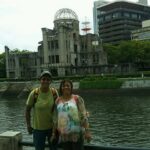
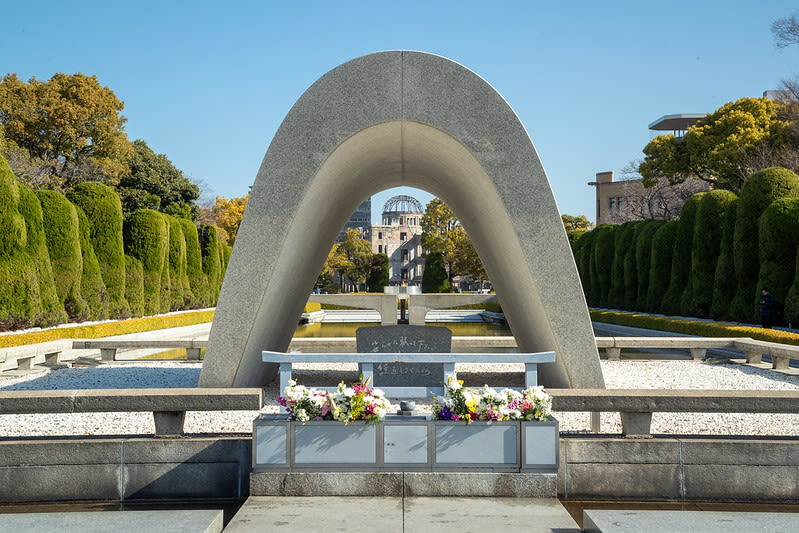
The morning begins at Hiroshima Peace Memorial Park, with about 1 hour 50 minutes set aside. That is enough time to see the main memorials and visit the Peace Memorial Museum, but you will need to keep an eye on the clock if you want to read every display.
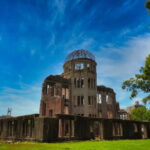
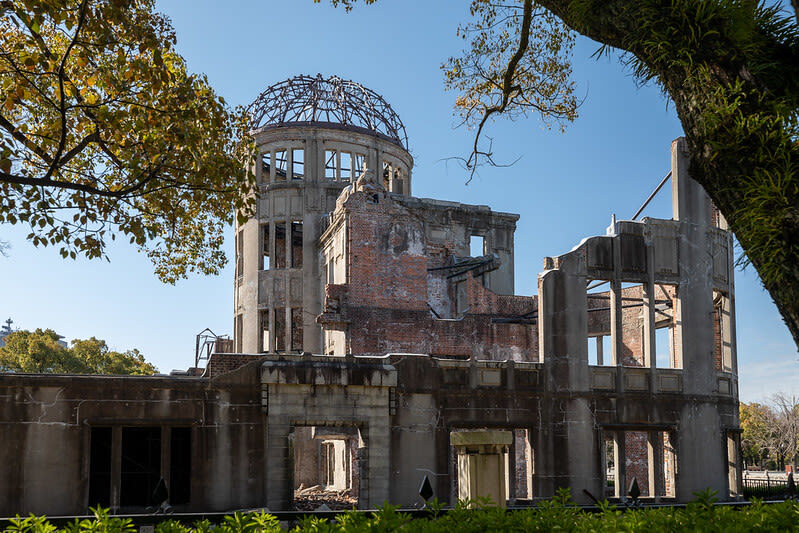
The Atomic Bomb Dome is the stark starting point. It is the preserved remains of the Hiroshima Prefectural Industrial Promotion Hall, left standing near the hypocenter after the atomic bombing on August 6, 1945. Its damaged frame is a powerful sight, and its UNESCO World Heritage status reflects its significance as a memorial to the bombing.
The Peace Memorial Museum adds personal detail to the history. Its exhibits include victims’ belongings, photographs, models of the explosion and video testimonies. I would give the museum your attention rather than treating it as a quick stop. The subject is difficult, and the objects and accounts can take time to absorb. If this is your main reason for visiting Hiroshima, consider whether a short scheduled visit will be enough for you.
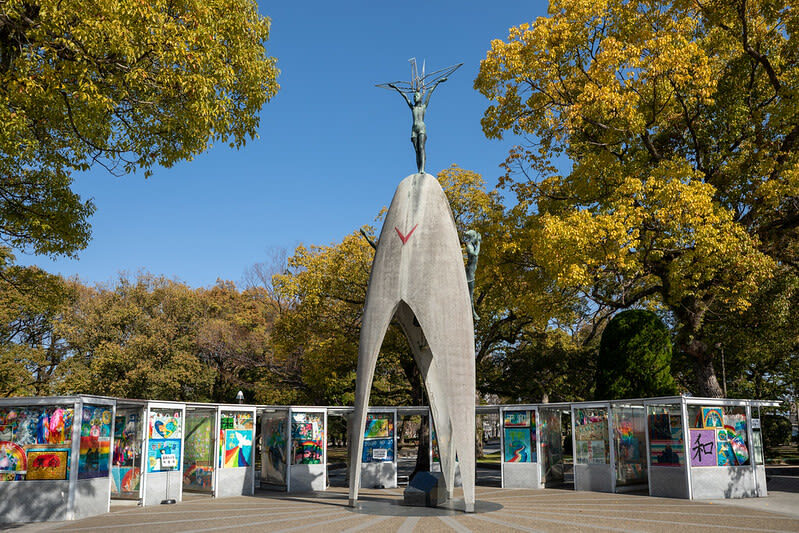
Outside, the Children’s Peace Monument and the Flame of Peace bring the park’s remembrance into view. The monument honors children who died in the bombing and is modeled after Sadako Sasaki. The flame, lit in 1964, is intended to burn until nuclear weapons are abolished.
The self-guided format lets you pause where you need to, but the car’s departure time sets a firm limit. Check museum opening dates before you go: the museum closes on December 30 and 31, as well as for three days in mid-February each year. If your visit falls near those dates, verify access in advance.
A possible Miyajima service-area stop
On the drive toward Miyajima, the itinerary allows for a brief stop at Miyajima Service Area. A limited-time Pikmin pop-up store has been promoted there, but it is seasonal, not a permanent part of the tour. Treat it as a bonus only if it is operating on your date, not as a reason to book.
This short break may be useful for a stretch or a quick purchase. It is not a substitute for time on the island, where the main part of the day begins.
Three and a half hours on Miyajima
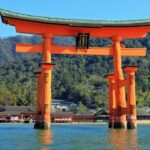
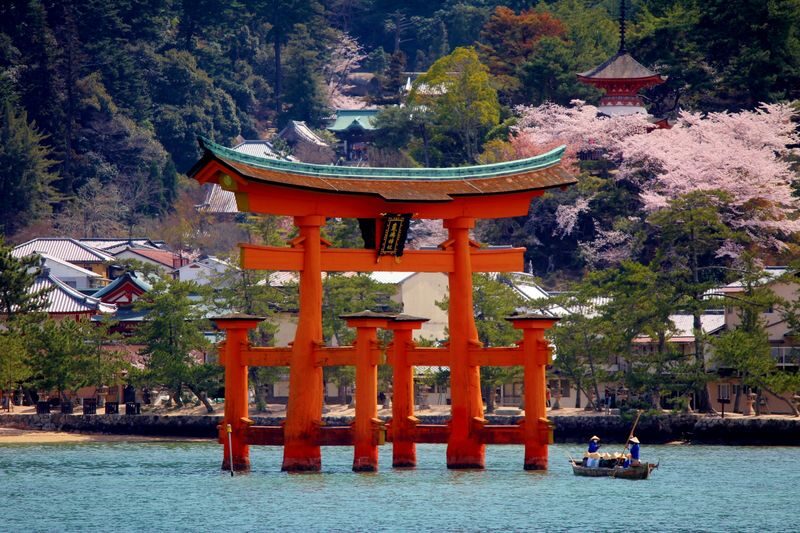
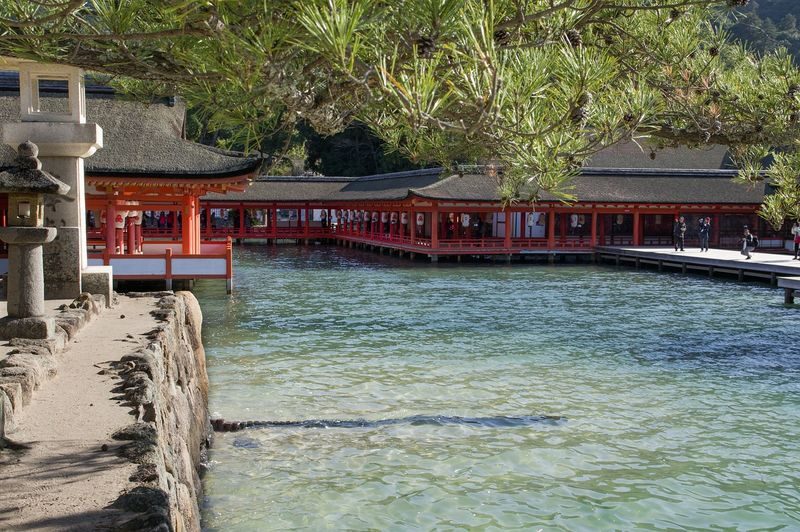
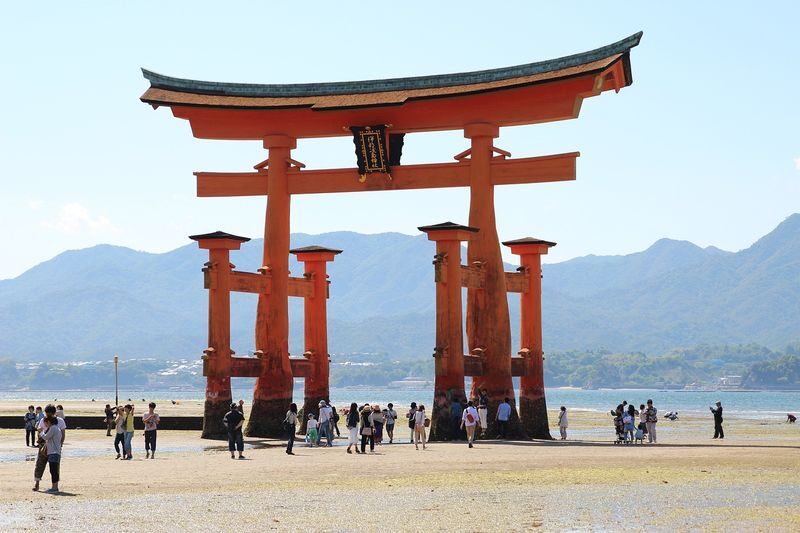
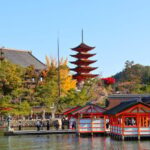
Miyajima gets the longest stop, about 3 hours 30 minutes. Itsukushima Shrine is the island’s headline sight, with buildings constructed over the water. At high tide, the shrine and its Great Torii Gate appear to float above the sea. The view changes with the tide, so check tide times if seeing the torii surrounded by water matters to you.
The shrine has a long history, traditionally dated to 593. Its present form is associated with the patronage of Taira no Kiyomori in the late Heian period. Admission to the shrine is not included, and the tour price also excludes the ferry fare and island entry tax. Confirm the current amounts before setting your budget.
You have time to walk the shopping street and look for local food, including Hiroshima-style okonomiyaki and grilled oysters. The schedule is self-guided, so you choose how to divide your hours between the shrine, food and a stroll. That freedom is useful, but it also means you need to keep track of the time and return to the pickup point when arranged.
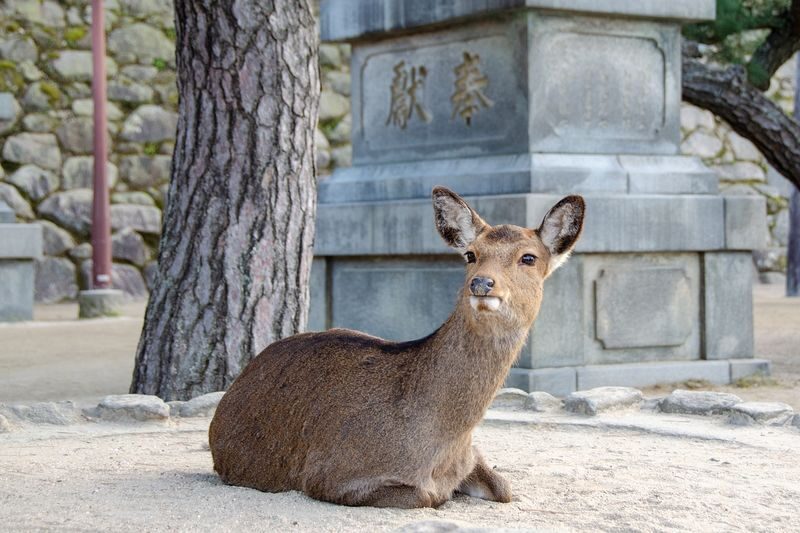
Miyajima’s deer roam freely around the island and are a familiar part of the visit. The island is considered part of Itsukushima Shrine’s precinct, and the deer are treated with respect. Enjoy seeing them, but keep food and belongings secure; the tour information does not describe supervised animal encounters.
The island visit involves a ferry, which is not included in the package. Allow for the crossing in your own plans, even though the schedule already assigns a block of time to Miyajima. Weather, queues or a change in traffic can affect the timing of the day, so avoid making tight onward connections after the return.
Kintai Bridge: a brief final stop
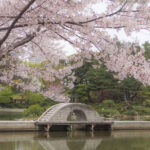
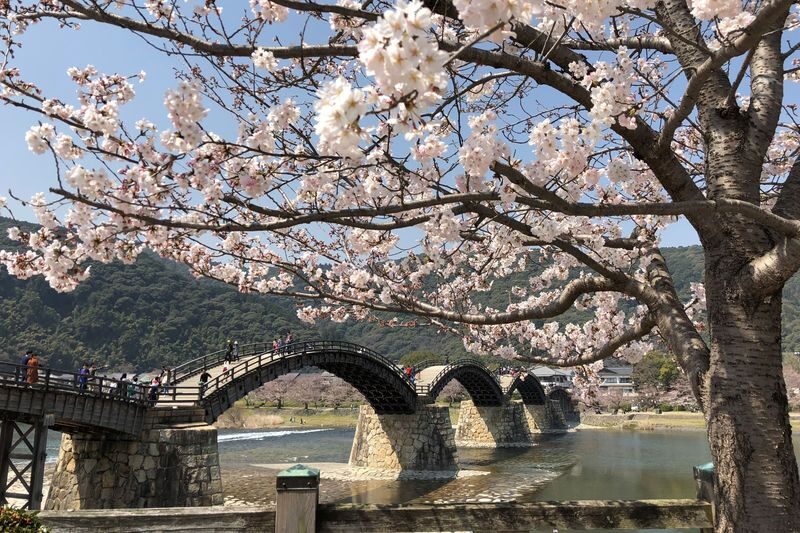
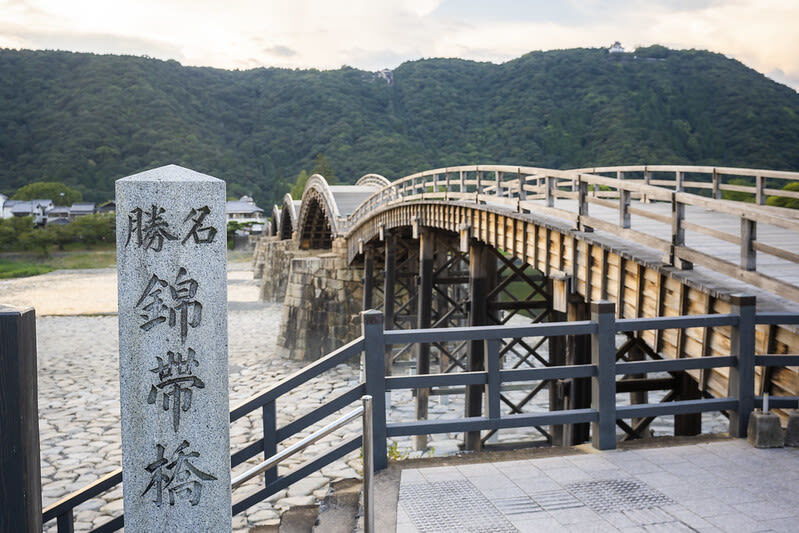
At around 4 p.m., the car heads to Iwakuni’s Kintai Bridge, with about 50 minutes to explore. The five-arch wooden bridge rests on stone piers and is counted among Japan’s best-known bridges. Its graceful shape and riverside setting make it a good change of pace after the memorials and shrine.
The bridge is designated a national scenic spot, with cherry blossoms in spring and autumn leaves later in the year. Admission is not included. Nearby are castle ruins and a cable car, but the short stop means you may have to choose between crossing or viewing the bridge, taking photographs, and exploring farther.
This is the day’s clearest compromise. Kintai Bridge is worth seeing, but 50 minutes is a quick visit, especially if you want to add the nearby sights. If the bridge is a major priority, ask before booking whether the itinerary can be adjusted, and understand that going beyond the planned route or nine-hour service may cost extra.
You can also read our reviews of more private tours in Hiroshima


What the private car adds
The car is the main practical advantage. You avoid arranging separate road transfers between Hiroshima, Miyajima’s ferry access and Iwakuni, and your group travels together. The driver handles tolls, parking and fuel as part of the package, which makes the day easier to manage than a do-it-yourself route with several changes.
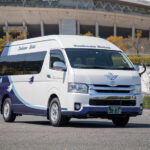
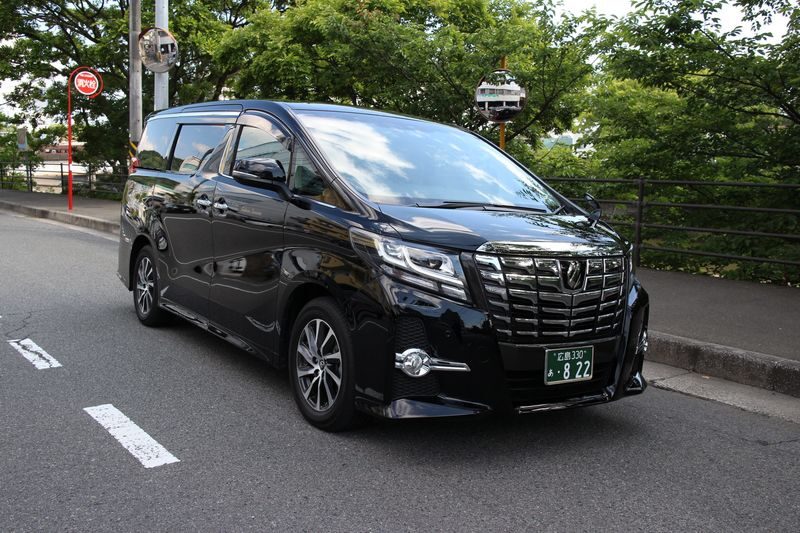
Pickup and drop-off are available at hotels within 10 kilometers of JR Hiroshima Station. You can also meet the driver at the station. The vehicle depends on group size: groups of up to six may use a Crown, GranAce or Alphard, while groups of seven or more use a HiAce. You cannot choose the exact model.
Luggage space varies, too. A standard five-seat car holds about two pieces of luggage; a larger vehicle can hold around seven. If you are traveling with bags, confirm the vehicle and capacity rather than assuming every private car has room for a full set of suitcases.
One past trip with driver Nobu included Wi-Fi, phone chargers, umbrellas and advance ticket purchases. Those are useful touches, especially in rain or with children, but they are not promised inclusions. The written package covers the driver, car, round-trip transfers, tolls, parking and fuel.
Price, language and extra expenses
The supplied starting prices do not match exactly: the summary gives a starting price of $524.15, while the Japanese-speaking driver option is shown from $544.15. The English-speaking option is listed from $867.45. Treat these as starting figures, check the price at checkout, and confirm which language is included in the fare you select.
The higher English-speaking price may be worthwhile if you want explanations during the drives and easier communication about timing or changes. With the Japanese-speaking option, the driver communicates using a translation device. Either way, the stops themselves are self-guided.
Include extra money for ferry fares, island entry tax, meals, drinks and admission charges. The stated exclusions specifically include Itsukushima Shrine and Kintai Bridge admission. Any other entrance fee should be checked before departure. If traffic or an unforeseen event pushes the private service beyond nine hours, the driver will advise the extension charge, which varies by vehicle. The stated example is 3,500 yen per 30 minutes, but the actual amount depends on the vehicle.
Who will get the most from this day
I would consider this tour for a family, a small group or anyone who values direct transport more than a low-cost public transit route. The ability to set your own pace at the stops can be helpful, and the past experience with Nobu shows how thoughtful practical support can make a difference. It is not a guarantee of the same driver or services, though.
Wheelchair assistance can be requested in the booking notes, and child or booster seats must also be requested in advance, subject to availability. A past outing used a spacious car that accommodated a wheelchair, but vehicle models vary. If you need specific mobility access, confirm the vehicle, loading space and stop arrangements before paying.
The tour is less suited to someone who wants long, guided visits at every attraction. The Peace Museum alone can take substantial time, and Kintai Bridge gets less than an hour. If you are content with the main sights and a brisk pace, the route makes good use of a day.
Should you book this Hiroshima day trip?
Book it if you want to see Peace Memorial Park, Miyajima and Kintai Bridge in one day without coordinating the road travel yourself. The private car, central pickup area and flexible self-guided stops are the strongest reasons to choose it.
Skip it if you want a slow visit, a fully guided experience at each attraction, or the lowest possible transport cost. Before booking, compare the driver-language prices, check the total with ferry and admission costs, and ask about accessibility or child seats if you need them. The best fit is a group that values convenience and can accept a busy schedule.
Hiroshima: 9-Hour Private Car Charter – Peace Memorial Park & Miyajima & Kintai Bridge in Iwakuni Day Trip (Departing from Hiroshima City)
“Nobu was amazing. We had my mom who was I a wheelchair and my kids and he was so patient with us. As soon as we got in he offered us WiFi and phone…”
FAQ
How long is the tour?
The private car service is scheduled for nine hours, departing around 9 a.m. and returning around 6 p.m. Traffic and weather can change stop durations and arrival times.
Where can I be picked up?
Hotel pickup and drop-off are available within 10 kilometers of JR Hiroshima Station. You can also meet the driver at JR Hiroshima Station.
Is the driver English-speaking?
You can choose an English-speaking or Japanese-speaking driver. The Japanese-speaking option uses a translation device, and the English-speaking package is listed at a higher starting price.
Are ferry fares and attraction admissions included?
No. Ferry fares, island entry tax and admission fees are not included. Itsukushima Shrine and Kintai Bridge admission are specifically listed as exclusions.
How much time is set aside for each main stop?
The schedule allows about 1 hour 50 minutes at Peace Memorial Park, 3 hours 30 minutes on Miyajima and 50 minutes at Kintai Bridge.
Can I bring luggage?
Capacity depends on the vehicle. A standard five-seat car holds about two pieces of luggage, while a larger vehicle holds around seven.
Can I request a child seat or wheelchair assistance?
Yes. Request a baby, child or booster seat, or wheelchair assistance, in the special requests field when booking. Seat availability may be limited, and an extra fee may apply for child seats.