A Kyoto knife workshop turns an everyday tool into the focus of your visit: you learn to sharpen and finish a Japanese kitchen knife, then carry your work home. This is a hands-on taste of Kyoto’s craft culture, not a full blacksmithing course, and the one-hour format keeps it easy to fit between other plans.
I like two things in particular: you do the work yourself, with a craft guide beside you, and you leave with a practical souvenir rather than a display piece. The English-speaking instructors, including guides such as Lu, Lucas, Ryu, and Yuzu, are often singled out for clear, patient help. No prior skill is required.
One thing to know before booking: the workshop focuses on the knife’s finishing process, especially sharpening and handle fitting, rather than forging a blade from raw metal. Optional engraving and some knife choices may cost extra, so check the available package and add-on prices before you start.
- Key points before you book
- A useful craft lesson, not a blacksmith demonstration
- One hour at Nippo Kyoto No. 2 Building
- What happens at the sharpening stones
- What the price buys, and what may cost extra
- The atmosphere and who will enjoy it
- Booking details that matter
- Should you book the Kyoto knife workshop?
- FAQ
- How long is the knife workshop?
- Where does the activity take place?
- What start times can I choose?
- Do I need experience with knives or sharpening?
- Is an English-speaking guide included?
- Can I take the knife home?
- Is engraving included in the price?
- Is there an age limit?
- Can I cancel or change my booking?
- The Best Of Kyoto!
- More Tours in Kyoto
- More Tour Reviews in Kyoto
Key points before you book
 1 / 5
 2 / 5
 3 / 5
 4 / 5
 5 / 5
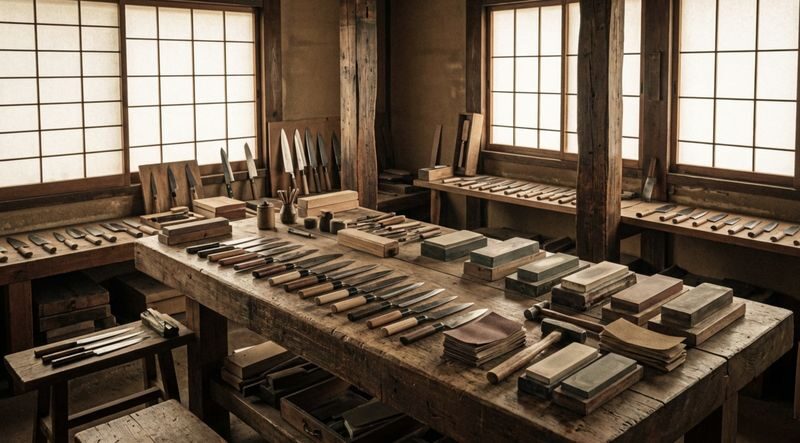
- You sharpen and finish a knife: The hands-on work centers on using whetstones and completing the knife, with guidance at each step.
- Beginners are welcome: No experience or specialized knowledge is required, and there is no stated age limit.
- You take the knife home: It is a usable keepsake, and some participants choose to add a name engraving for an extra charge.
- The workshop lasts one hour: Choose from scheduled start times at 10:00, 12:00, 14:00, 16:00, or 18:00.
- The venue can be easy to miss: The workshop is at 302 Nippo Kyoto 2nd Building, on the third floor. Check the Japanese address on your voucher.
- Know what you are paying for: The starting price is $67.89, while engraving and certain knife options may add to the cost.
👉 See our pick of the We Rank Kyoto’s 15 Top Workshops & Classes
A useful craft lesson, not a blacksmith demonstration
Kyoto is known for bringing careful design to everyday objects, and a kitchen knife is a fitting example. This workshop gives you a close look at the finishing work behind one of those tools. You are not watching a craftsperson work from a distance. With a guide’s help, you handle the knife, sharpen its edge, and complete it for use.
That distinction matters when deciding if the experience suits you. The activity is described as a knife-making workshop, but the work participants describe centers on sharpening, polishing, and fitting a handle to a prepared blade. If you want to learn the feel of a whetstone and take home a knife you helped finish, that can be satisfying. If you expect to forge steel, shape a blade from scratch, or spend an hour on the history of Japanese blades, this is not that kind of class.
The best part is that the skill has a life beyond your trip. The guide explains how to use sharpening stones, and you get to practise under supervision rather than trying to learn from a video at home. You finish with a knife and a clearer idea of how to care for its edge. That makes the workshop more than a souvenir stop, especially if you cook.
You can also read our reviews of more tours and experiences in Kyoto.



One hour at Nippo Kyoto No. 2 Building
The experience takes place at Nippo Kyoto No. 2 Building, at 302 Nippo Kyoto 2nd Building, Senshojicho, Shimogyo Ward, Kyoto 600-8076. It is a meet-up activity, not a hotel pickup or a sightseeing route. You arrive at the workshop and spend the hour there.
The scheduled start times are 10:00, 12:00, 14:00, 16:00, and 18:00. The return time is set one hour later, though available slots can depend on the time you choose. Arrive five minutes early. Late arrivals and no-shows are not refundable, and a short workshop leaves little room to catch up if you lose time finding the venue.
Pay particular attention to the address on your voucher. The English address and map results can be confusing, and some participants have ended up at the wrong place after relying on an English-language confirmation. Use the Japanese address shown on the voucher if it differs, and look for the Nippo Kyoto No. 2 Building. The workshop is on the third floor; staff may come down to meet you. Allow a little extra time to find the entrance rather than arriving at the last minute.
What happens at the sharpening stones
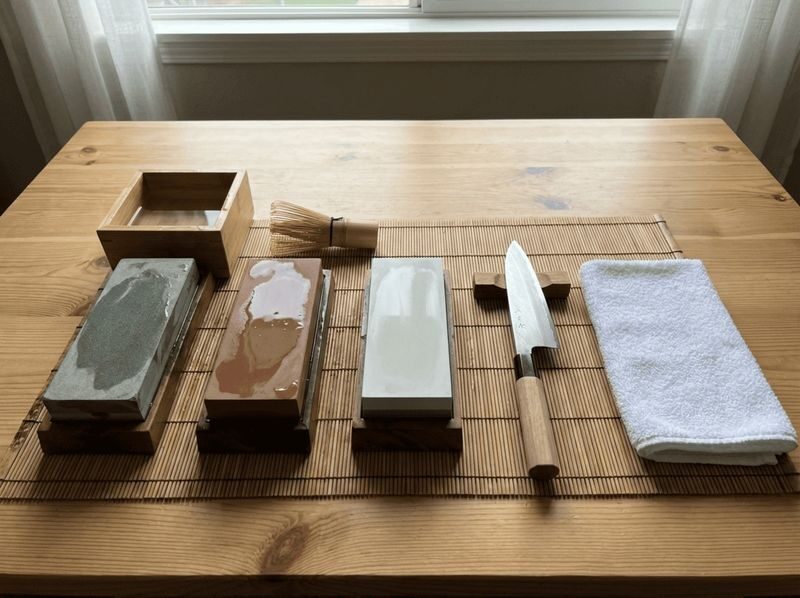
The session begins with an explanation of the tools, materials, and basic process. The guide makes the steps accessible to newcomers, so you do not need to know knife terminology or have sharpened a blade before. Instructors named by participants include Lu or Lucas, Ryu, Yuzu, and others. The particular guide depends on your session, but English-speaking instruction is included.
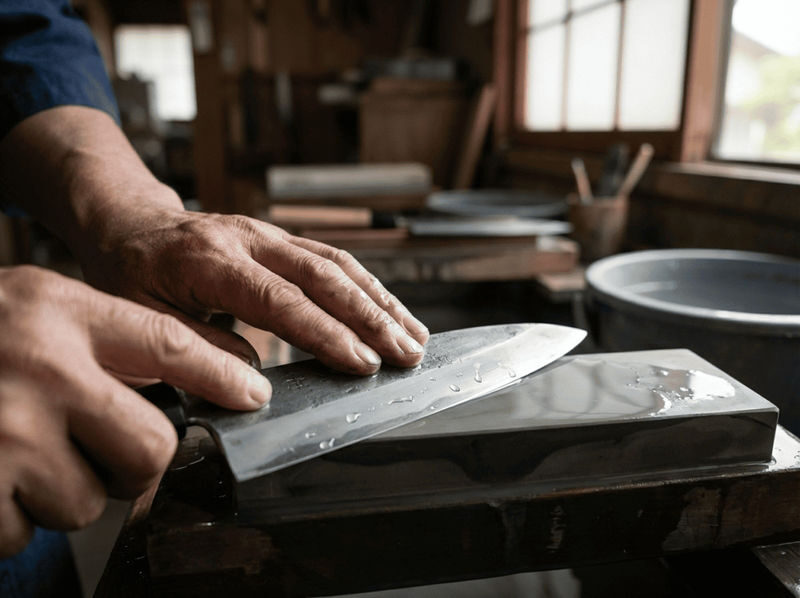
The hands-on portion is the heart of the class. You work on sharpening and polishing the blade with whetstones, learning how to hold and move the knife as the instructor supports you. The pace is practical: the aim is to help you complete the task, not to turn the hour into a technical lecture. This makes the workshop approachable for families, couples, and solo participants, though you should expect to concentrate and follow safety guidance.
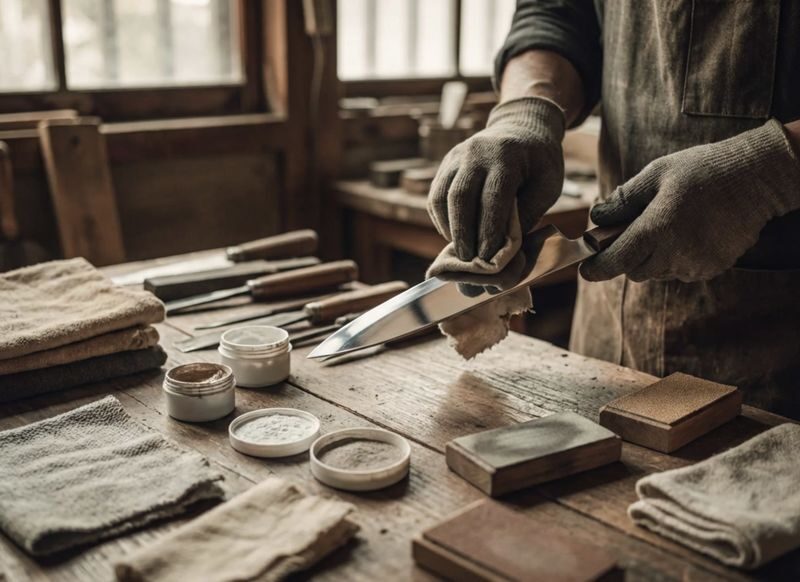
After sharpening, you finish the knife by fitting its handle. Some sessions also offer engraving on the handle for an additional charge. The engraving can make the knife feel more personal, but it is optional. Ask about the added price before choosing it, particularly if you are keeping to a set budget.
Knife options can vary. Participants have described choosing between styles such as a Santoku and a cleaver, and one account mentions a nakiri vegetable knife with a ¥2,000 surcharge. Treat those options and prices as details to confirm at booking or at the workshop, rather than assuming every style is included at the starting price. The core activity remains the sharpening and finishing process.
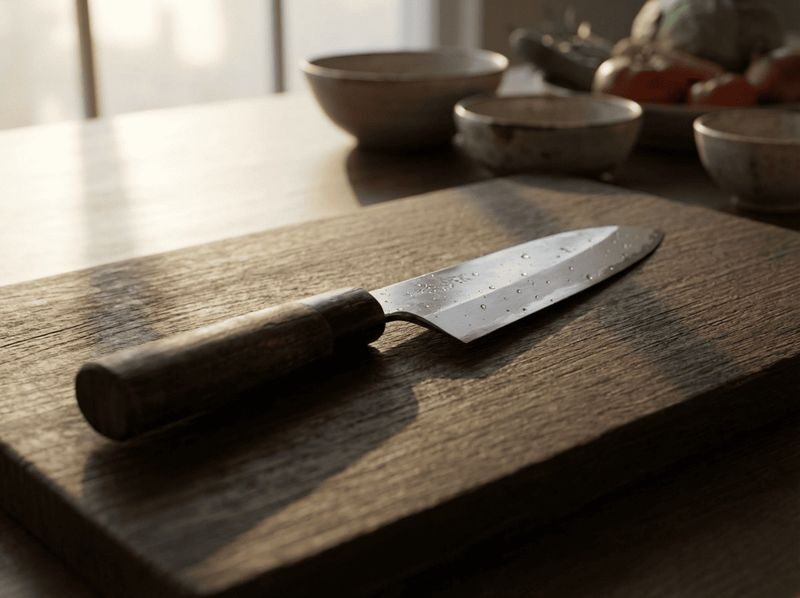
At the end, you take your completed knife home. It is a practical memento, not just a decorative object, though you will want to pack and transport it responsibly. The supplied information does not specify packing or airline rules, so check your carrier’s requirements before you fly.
What the price buys, and what may cost extra
The experience starts at $67.89 for a one-hour workshop. That is not bargain-bin pricing for a brief activity, but its value rests on the teaching and the object you leave with. You get a guided, hands-on introduction to sharpening, time to practise, and a finished knife you can use at home. If you enjoy learning through making, that is a more lasting return than a quick demonstration.
The price is easier to judge if you keep the workshop’s limits in view. You are paying for the finishing experience, not a complete blacksmithing course or a long seminar on Kyoto’s manufacturing traditions. One participant wanted more historical context, and that is a fair expectation to manage. The stated focus is explaining tools, materials, and process in an easy-to-follow way, with most of the hour spent doing the work.
Also plan for possible extras. Engraving costs more, and some knife styles may carry a surcharge. The exact add-on prices are not fully specified here, so confirm them before agreeing. This is the main budget caveat: the starting rate may not cover every customization or blade choice you have in mind.
The atmosphere and who will enjoy it
The workshop is small-group, but it takes place in a shared space where other activities may be running. That can make the room lively or noisy rather than hushed and traditional. If you are hoping for a quiet, private master-apprentice lesson, ask about the session setup before booking. If you are comfortable sharing a workspace, the activity still gives you direct instruction at your station.
The strongest part of the experience is the teaching. Guides are repeatedly described as friendly, encouraging, and helpful through the full process. That matters because sharpening can feel awkward at first; having someone correct your technique as you work is the difference between a hands-on class and simply being handed a knife and stone. Some guides also make time for questions about knife types and care, though the depth of history may depend on the instructor and the time available.
I can see this working especially well for families with older children, couples, and anyone who likes cooking or practical crafts. A parent and a 14-year-old have done the session together, and children have enjoyed it. There is no stated age limit, but the work involves handling a sharp blade, so each participant should be ready to listen carefully and follow instructions. It also makes a good rainy-day plan because the activity is indoors and lasts only an hour.



Booking details that matter
The workshop is valid only on the date and time selected. Choose a slot you can reach comfortably, and be at the venue five minutes before it begins. The activity offers free cancellation with at least 24 hours’ notice, based on local time, and bookings can generally be changed until 24 hours before the start. Some booking types have restrictions, so check the conditions tied to your voucher.
Confirmation is normally issued within minutes. If it does not arrive, contact customer support rather than assuming the booking is set. The activity includes admission and an English-speaking professional guide. Personal expenses and gratuities are not included.
The short duration is convenient, but it also makes punctuality important. Build in time to find the correct building and reach the third floor. If your day is packed with timed reservations, avoid placing this workshop too close to another commitment. The start and end times are fixed enough that a late arrival could cut into the hands-on portion.
Should you book the Kyoto knife workshop?
Book it if you want a friendly, beginner-level craft activity and would value learning to sharpen a Japanese knife you can take home. The clearest strengths are the patient, English-speaking instruction, the chance to do the work yourself, and the useful finished object. It is an easy way to spend an hour doing something more tactile than another temple visit.
Think twice if you expect a full forging lesson, extensive historical background, or a quiet, exclusive studio. The class emphasizes finishing rather than making a blade from raw material, the shared workshop may be busy, and extras can raise the price. If that matches your expectations, this is a memorable Kyoto activity with a practical payoff. Check your voucher’s Japanese address, confirm any add-on costs, and arrive early.
Experience traditional knife making in Kyoto
“Super enjoyable experience with my 14 year old Son who was way better than myself at it. Lucas was a legend at helping and supporting us talking us…”
FAQ
How long is the knife workshop?
The workshop lasts one hour.
Where does the activity take place?
It takes place at Nippo Kyoto No. 2 Building, 302 Nippo Kyoto 2nd Building, Senshojicho, Shimogyo Ward, Kyoto 600-8076. The workshop is on the third floor.
What start times can I choose?
Available start times are 10:00, 12:00, 14:00, 16:00, and 18:00. Availability can vary by date and selected session.
Do I need experience with knives or sharpening?
No. The activity is designed for beginners, and no experience or specialized knowledge is required.
Is an English-speaking guide included?
Yes. An English-speaking professional guide is included.
Can I take the knife home?
Yes. You can take the completed knife home with you.
Is engraving included in the price?
Engraving is optional and costs extra. Check the price at the workshop before choosing it.
Is there an age limit?
No age limit is stated for this activity.
Can I cancel or change my booking?
You can receive a full refund if you cancel at least 24 hours before the activity, based on destination local time. Changes are generally allowed until 24 hours before the start, though some booking types have restrictions.