In historic Gion, this one-hour tea ceremony gives you more than a quick cup of matcha. You hear about the spirit of omotenashi, watch a tea master prepare the drink, then whisk a bowl yourself, with Kyoto sweets alongside.
I like two things in particular: the class connects small movements to their meaning, so the ceremony feels less mysterious, and you do the whisking yourself instead of only watching. The chair seating also makes the session more comfortable than a formal floor-seated ceremony.
One consideration: this is a compact introduction, not a long, formal tea gathering. Arrive early, too. The class begins on time, and late arrivals may not be allowed to join.
- What makes this Gion tea class worthwhile
- A calm hour in the middle of Gion
- Starting with omotenashi and tea history
- Watching the tea master prepare matcha
- Tasting Kyoto wagashi with the tea
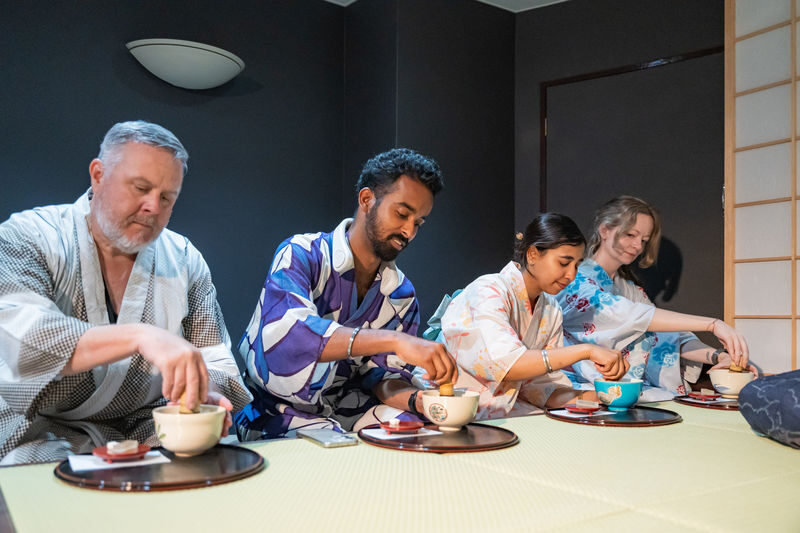
- Whisking your own bowl
- Seating, comfort, and the room
- Choosing a time and getting there
- Is the price fair for one hour?
- Who will enjoy this tea ceremony
- Should you book the Gion tea ceremony?
- FAQ
- How long does the tea ceremony last?
- Where does the class meet?
- What time can I book?
- Is the tea ceremony conducted in English?
- Do I get to make matcha myself?
- Are sweets included?
- Is chair seating available?
- What is the minimum age?
- Can I cancel for a refund?
- The Best Of Kyoto!
- More Dessert Tours in Kyoto
- More Tours in Kyoto
- More Tour Reviews in Kyoto
What makes this Gion tea class worthwhile
 1 / 10
 2 / 10
 3 / 10
 4 / 10
 5 / 10
 6 / 10
 7 / 10
 8 / 10
 9 / 10
 10 / 10
- You make your own matcha: The tea master guides you through whisking premium powder sourced from a local family-run tea farm.
- The sweets are part of the lesson: Traditional wagashi from established Kyoto confectioners are paired with the tea.
- The ceremony comes with context: Learn about omotenashi, tea history, and etiquette before trying the steps yourself.
- The setting is accessible and relaxed: Sessions use chair seating, and the activity is listed as wheelchair-accessible.
- You can choose from seven start times: Sessions run from 9:30 AM through 6:30 PM, subject to availability.
- You leave with a practical reminder: A simple matcha recipe helps you try the preparation again at home.

👉 See our pick of the We Rank Kyoto’s 15 Top Workshops & Classes
A calm hour in the middle of Gion
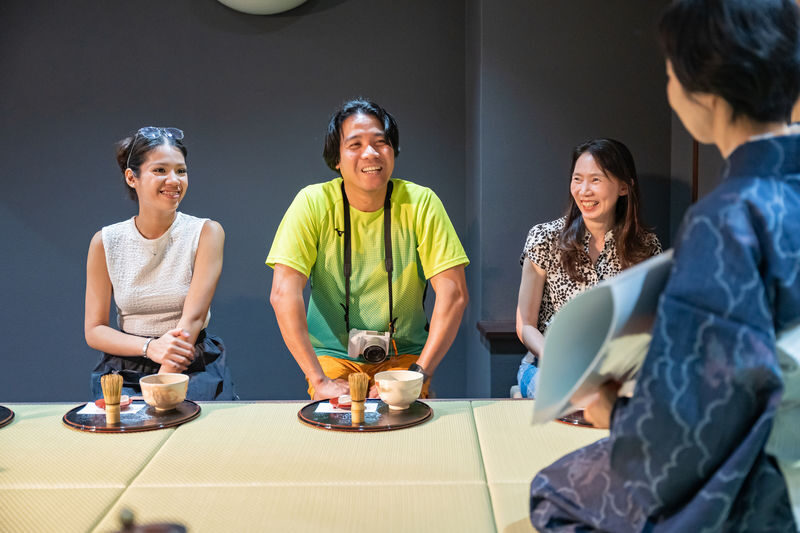
Gion is known for its traditional streets and teahouse culture, but you do not need to know much about tea to take part in this class. The aim is to introduce chanoyu, the Japanese way of tea, in a friendly setting rather than test you on rules. You can ask questions, follow the host’s lead, and focus on what each part of the ritual is meant to express.
That approach matters. Tea ceremony can look precise and formal from the outside, and visitors may worry about making a mistake. Here, the tea master explains the etiquette and shows the sequence before inviting you to try it. You get a taste of the form without being asked to master every custom in an hour.
The class takes place on the fifth floor of the Tea Ceremony Kyoto Gion by Japan Wonder Travel building at Yamatocho 1 in Higashiyama Ward. It is a meet-up activity, not a walking tour or a transfer from a hotel. You make your own way to the venue and return to the same address when the session ends.
You can also read our reviews of more tours and experiences in Kyoto


Starting with omotenashi and tea history
The session begins with an introduction to omotenashi, often described as thoughtful hospitality, and to the background of the tea ceremony. This gives you a useful lens for what follows: the ceremony is not simply a way to prepare a drink. The host explains how the actions, attention, and order of service contribute to the experience.
The history portion is designed for newcomers. You do not need to study tea beforehand or bring specialist knowledge. The English-speaking guide explains the subject in an approachable way, and the session leaves time for questions. Hosts named in past sessions include Yuko, Akemi, Kenta, and others, though you should not count on a particular tea master being assigned to your time.
I especially like this kind of introduction for a first visit to Kyoto. It gives you a small piece of cultural context you can carry into the rest of your day, rather than asking you to simply watch an elegant performance and guess at its meaning.
Watching the tea master prepare matcha
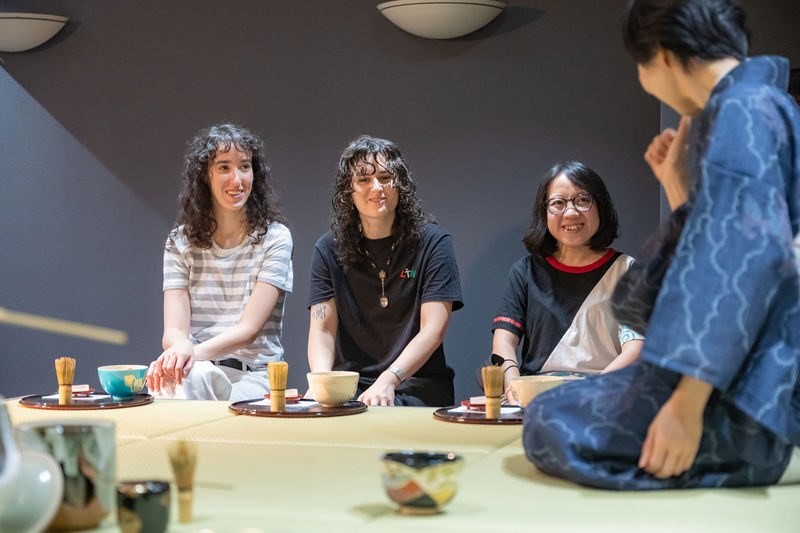
After the introduction, you watch a live demonstration of chanoyu. The tea master prepares the matcha and explains the movements and etiquette as they happen. Watching first gives you a clear model to follow when it is your turn.
The value is in noticing that the process is deliberate. The ceremony’s gestures and order are part of its character, and the guide helps you understand what you are seeing. You are not expected to perform a flawless formal ritual. Instead, you get a guided look at the method and its meaning, then a chance to take part.
This is a useful balance for a short class. A demonstration alone would leave you as a spectator; hands-on practice without context could feel like a recipe lesson. Here, the two parts support each other.
Tasting Kyoto wagashi with the tea
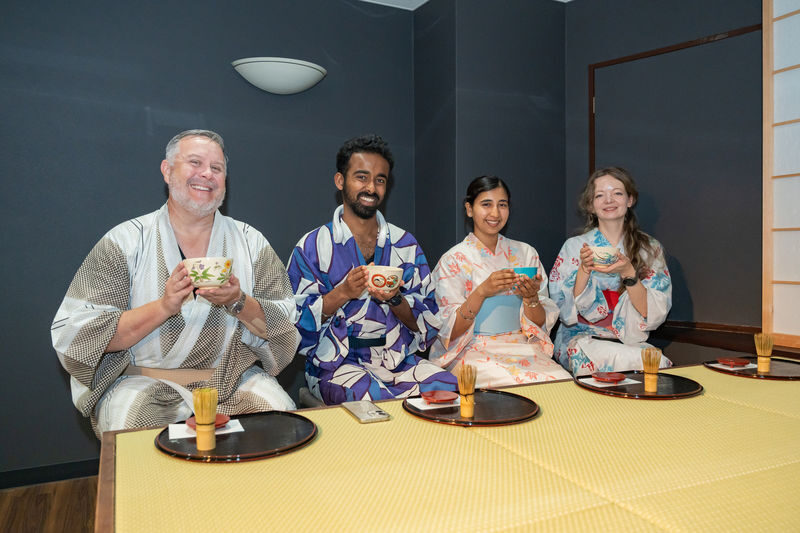
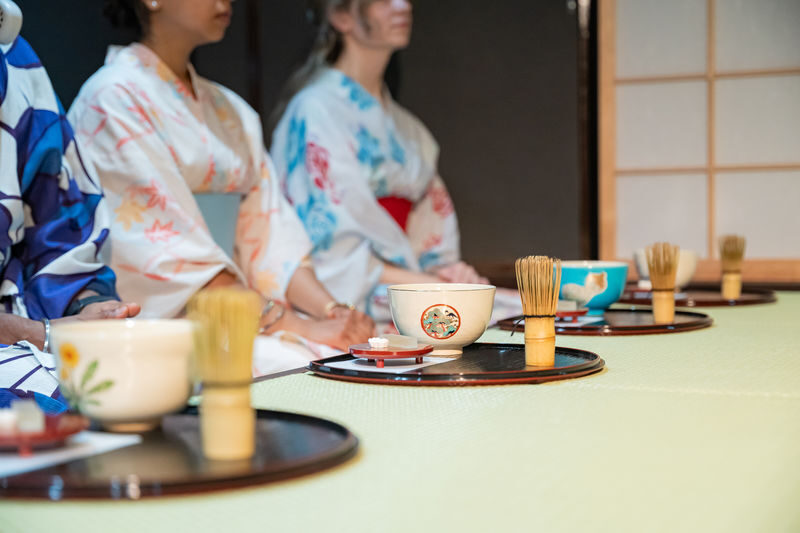
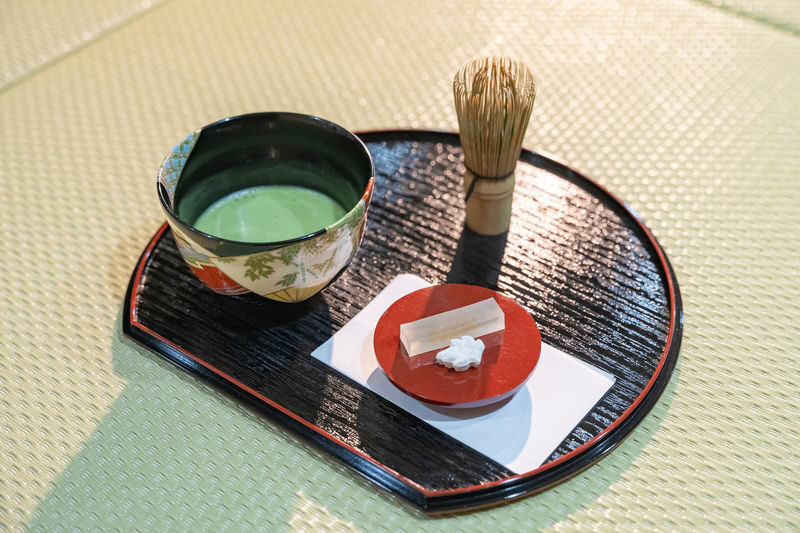
Traditional wagashi are served with the matcha. These Japanese sweets are carefully selected by the tea master and paired to complement the tea’s strong, distinctive flavor. The sweets are not an optional extra in the way a packaged snack might be; they help make the tasting feel like part of the ceremony.
If matcha is new to you, this pairing can be an especially helpful introduction. The experience is not only about preparing tea but also about tasting it in a traditional context. The sweets are a small part of the hour, but they add variety and give you another detail to remember.
The exact sweets can vary, so do not book expecting a particular confection. What is included is a serving of artisanal Japanese sweets selected for the session.
Whisking your own bowl
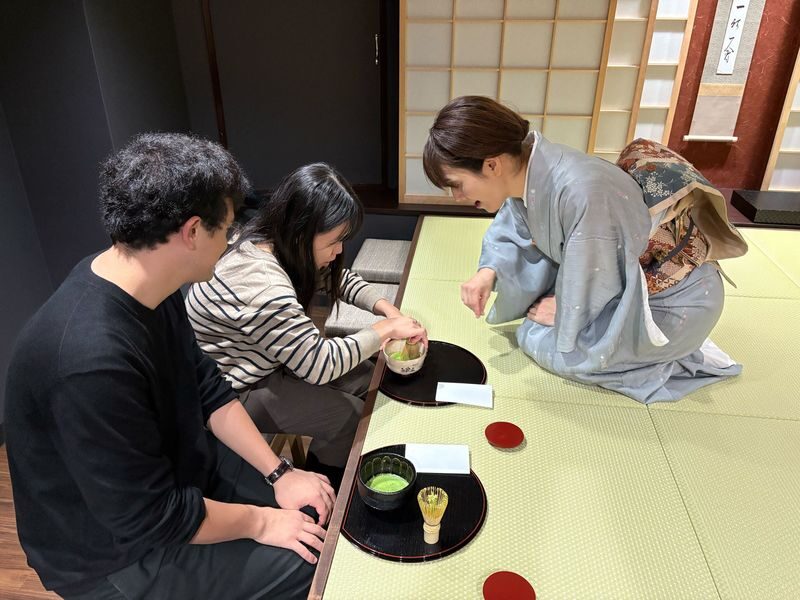
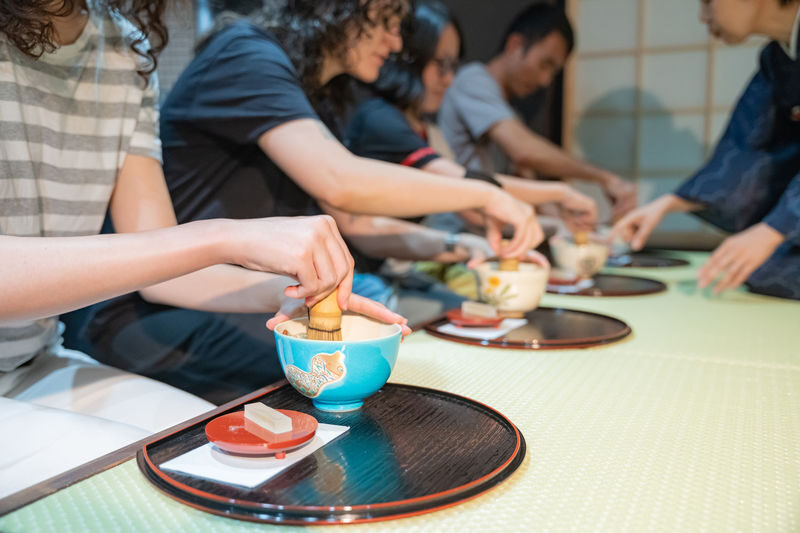
The hands-on part is the heart of the class. Using premium matcha sourced directly from a local family tea farm, you follow the tea master’s step-by-step directions and whisk your own bowl. You are shown how to prepare it and how to drink it with the appropriate etiquette.
This practical turn makes the experience useful beyond the room. You are not just watching someone else make matcha; you get a chance to feel how the whisk works and see the preparation up close. A recipe handout gives you a straightforward way to recreate the process at home. If you enjoy the taste, you may want to look for matcha and a whisk later, but the class does not require you to buy equipment.
The session is also a good introduction for anyone who is unsure about matcha. The tea has a strong flavor, and not everyone takes to it at first. But the class provides a little context, a carefully paired sweet, and a chance to try the drink in a setting where you can ask questions.



Seating, comfort, and the room
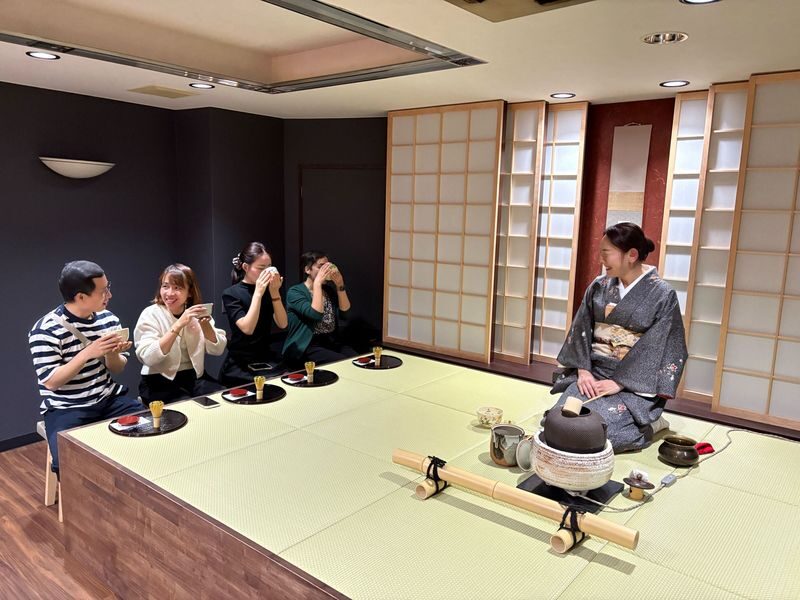
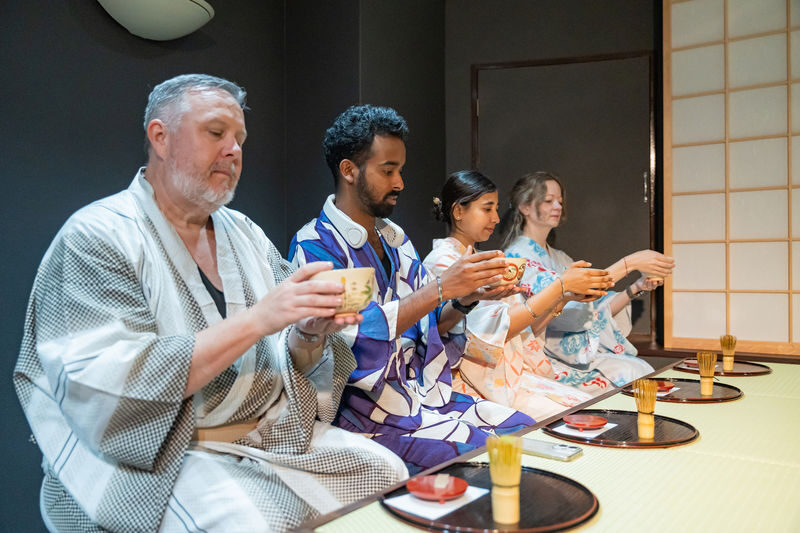
The session is designed to avoid the discomfort of sitting formally on the floor. Chair seating is provided, making the activity more approachable if kneeling is difficult or simply not your preference. Some participants describe the seating as benches or backless wooden stools arranged around an elevated square tatami mat, with a clear view of the host.
The venue is listed as wheelchair-accessible. If access needs are important to your plans, it is sensible to confirm any specific requirements with the operator before booking, since the general accessibility label does not describe every detail of the room.
You do not need to rent a kimono for the standard plan. A separate package combines kimono rental with the ceremony, so check the option you select if wearing one is part of your plan. The core tea class remains the same idea: history, demonstration, tasting, and your own matcha preparation.
Choosing a time and getting there
The available start times are 9:30 AM, 11:00 AM, 12:30 PM, 2:00 PM, 3:30 PM, 5:00 PM, and 6:30 PM. Each session lasts about an hour, with the corresponding return time set half an hour after the listed start. Availability can depend on the time you choose.
The morning session is a particularly appealing way to begin a day in Gion. It offers a quiet, focused activity before you head back out to explore. Later sessions can fit around other plans, and the wide range of start times makes it easier to place the ceremony in a busy Kyoto schedule.
Use the business name, Tea Ceremony Kyoto Gion by Japan Wonder Travel, when locating the venue. The building can be harder to identify by street address alone. The room is on the fifth floor, and you should arrive five minutes before your booked start. The operator says late arrivals cannot join once the class has begun, and no-shows or late arrivals are not refunded, so leave a little time to find the entrance.
Is the price fair for one hour?
At a starting price of $25.29, this is a reasonably priced cultural activity, particularly because the fee includes an English-speaking guide, a live demonstration, local matcha, wagashi, the hands-on preparation, and a take-home recipe. You are paying for guided instruction and cultural context, not just a cup of tea and a sweet.
The value is strongest if you want an activity that teaches you something and lets you participate. If you are mainly looking for a long, formal ceremony or a private session, this one-hour class may not meet that expectation. Its relaxed tone and compact length are advantages for many first-timers, but they also set clear limits on how much you can cover.
The listed price is for the standard plan. A kimono rental option is also available, but the details and price may differ. Other personal expenses are not included.
Who will enjoy this tea ceremony
This class suits first-time visitors who want a practical introduction to Japanese tea culture without a strict or intimidating atmosphere. It is also a good fit for anyone who likes learning by doing: you hear the explanation, watch the demonstration, then prepare matcha yourself.
Families can consider it as well. Children must be at least six years old to participate, and matcha contains caffeine, so it is not recommended for children under five. The activity is also not recommended for people with heart disease, other serious medical conditions, or those who are pregnant.
If you have several Kyoto activities planned, this is an easy one to schedule because it lasts about an hour and has multiple daily time slots. Just remember that the session is held at a fixed venue in Gion, so you must arrive independently and on time.
Should you book the Gion tea ceremony?
Book it if you want a welcoming, hands-on introduction to matcha and tea ceremony etiquette, with a guide who explains the meaning behind the steps. The local tea, Kyoto sweets, chair seating, and take-home recipe make the hour feel useful as well as pleasant.
Skip it if you are seeking a long, highly formal ceremony or a deep course in tea practice. For most first-time visitors, though, this is a thoughtful way to spend an hour in Gion. Choose a time that leaves breathing room before your next plan, arrive five minutes early, and go ready to whisk.
Kyoto: Traditional Tea Ceremony with Matcha and Sweets in Gion
“very informative, very interesting. learned a lot”
FAQ
How long does the tea ceremony last?
The activity lasts about one hour. The guided tea ceremony portion is listed as one hour.
Where does the class meet?
It meets at Tea Ceremony Kyoto Gion by Japan Wonder Travel, at Yamatocho 1 in Higashiyama Ward, Kyoto. The venue is on the fifth floor.
What time can I book?
Available start times are 9:30 AM, 11:00 AM, 12:30 PM, 2:00 PM, 3:30 PM, 5:00 PM, and 6:30 PM. Availability may vary.
Is the tea ceremony conducted in English?
An English-speaking guide is included. The tea master explains the ceremony and guides you through the activity.
Do I get to make matcha myself?
Yes. You watch a demonstration, then whisk your own bowl of premium local matcha with step-by-step guidance.
Are sweets included?
Yes. Traditional Japanese wagashi selected by the tea master are included with the tea.
Is chair seating available?
Yes. The session uses chair seating for comfort, and the activity is listed as wheelchair-accessible.
What is the minimum age?
Participants must be at least six years old. Matcha contains caffeine and is not recommended for children under five.
Can I cancel for a refund?
You can receive a full refund if you cancel at least 24 hours before the activity date, using destination local time. If extreme weather or another unforeseen event leads the operator to cancel, you can reschedule or request a full refund.