A brush, a pool of ink and a 150-year-old Kyoto townhouse make for a quieter kind of cultural stop. At JURAKU, you learn the basic strokes of Japanese calligraphy, write a Kanji character of your choice, and then tour the machiya where the class takes place.
I like two things about this setup: you grind your own ink and work at a chair-seated pace, so the focus is on the process rather than getting a perfect result; and your calligraphy lesson leads into a tour of the house, adding context to the traditional setting. One consideration: this is a compact, indoor activity, not a broad survey of Kyoto, and the advertised duration is inconsistent, at one hour in the summary and 75 minutes in the schedule.
- At a glance
- A slower way to meet Japanese calligraphy
- Grinding ink before the first stroke
- Learning strokes, then choosing a Kanji
- A 150-year-old machiya, not just a classroom
- Tea, seasonal sweets and a little breathing room
- What the price includes, and what it does not
- Who will enjoy this Kyoto stop
- Should you book the calligraphy and machiya tour?
- FAQ
- How long does the experience last?
- Where does the tour begin?
- How do I get to JURAKU?
- What departure times are available?
- Is the calligraphy lesson suitable for beginners?
- What languages does the guide speak?
- What will I take home?
- Are tea and sweets included?
- What is the cancellation policy?
- The Best Of Kyoto!
- More Workshops & Classes in Kyoto
- More Tours in Kyoto
- More Tour Reviews in Kyoto
At a glance
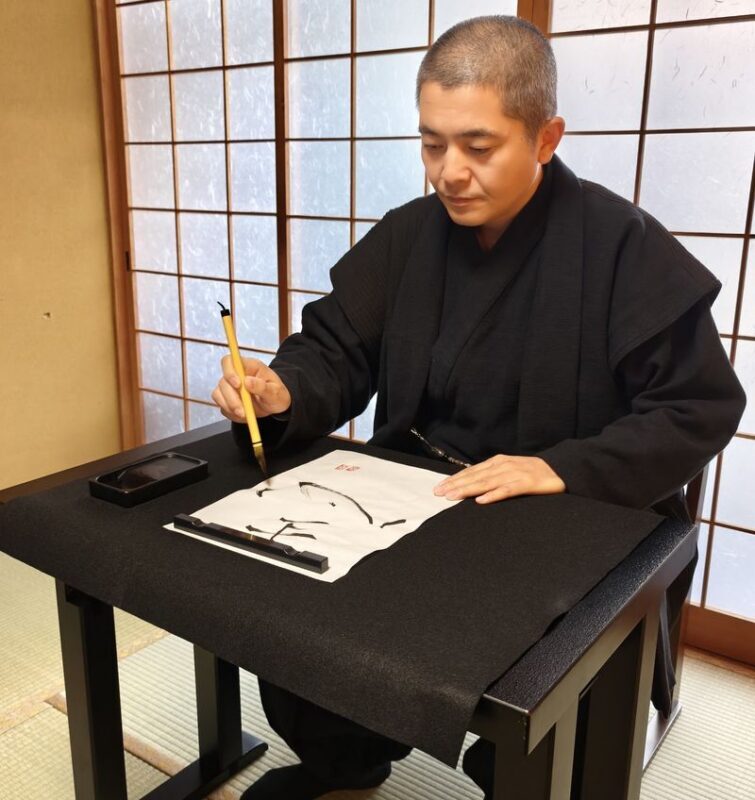
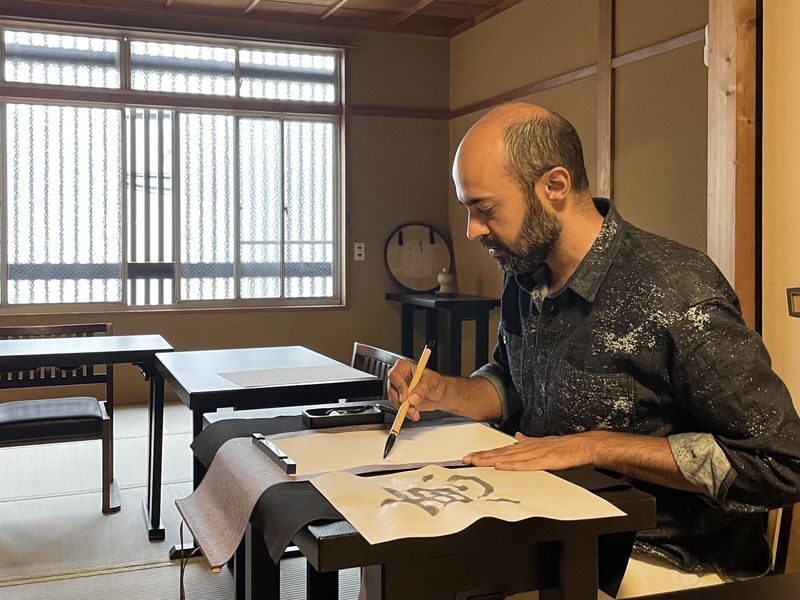
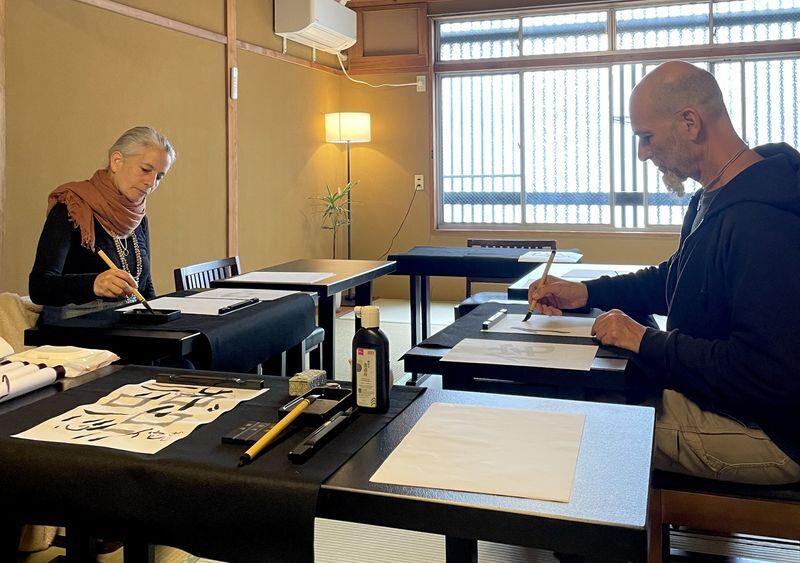
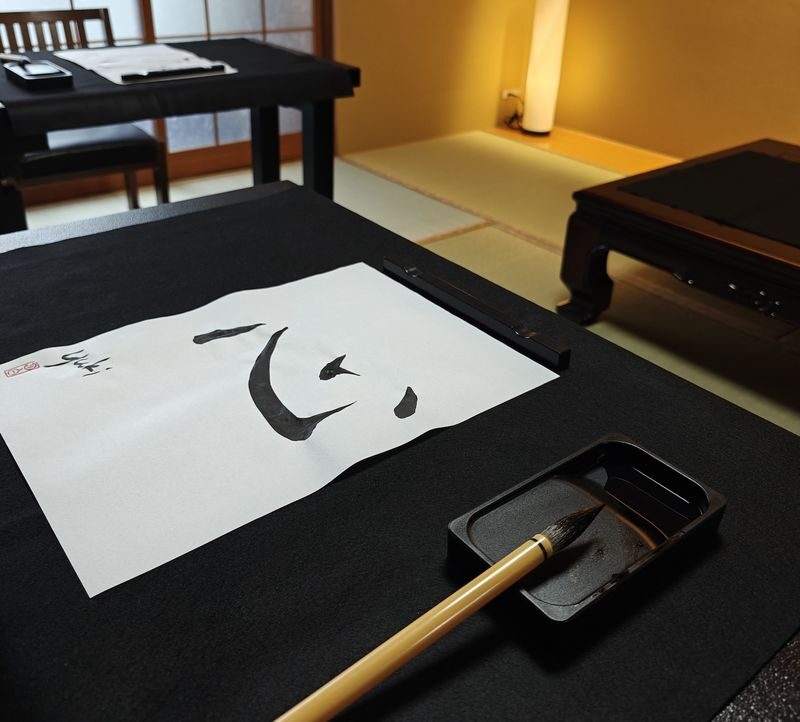
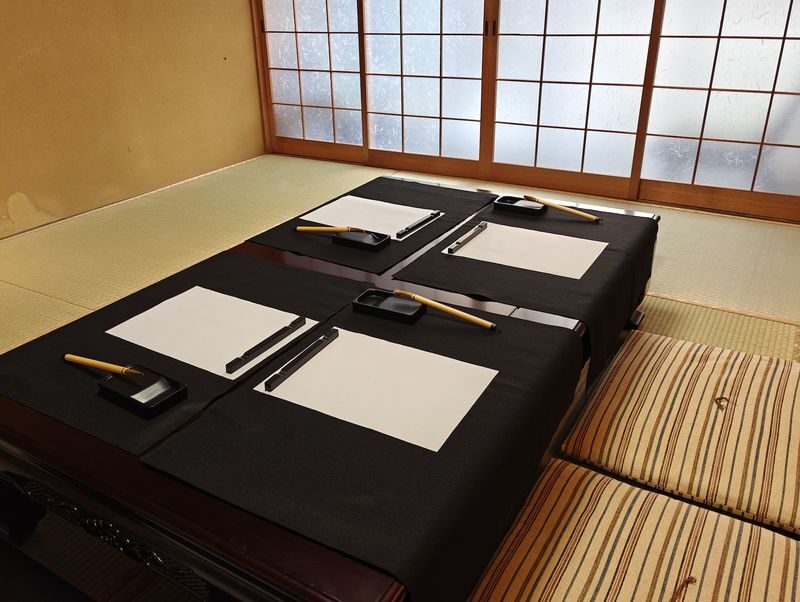
- Ink grinding is part of the lesson: Prepare your ink by hand while focusing on your breathing before you begin writing.
- Beginners can take part: The instructor teaches fundamental brush strokes step by step, with no prior calligraphy experience stated as a requirement.
- The venue is a historic machiya: The class is held at JURAKU, a Kyoto cultural hub in a 150-year-old townhouse.
- You choose a character: Write a favorite Kanji on traditional canvas and take the original artwork home.
- Tea and seasonal sweets round out the visit: There is time to relax and take photos after the class and house tour.
- Plan for about 75 minutes: The schedule lists 1 hour 15 minutes, though the summary gives a one-hour duration.

👉 See our pick of the We Rank Kyoto’s 15 Top Workshops & Classes
A slower way to meet Japanese calligraphy
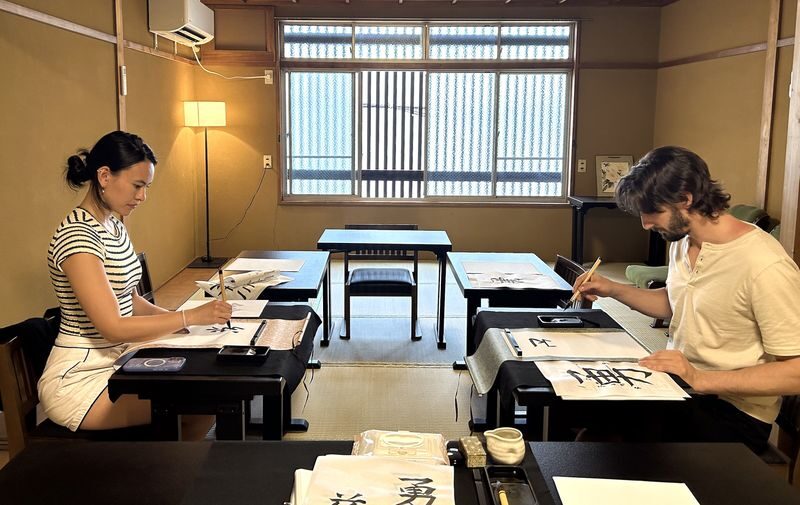
Calligraphy can look intimidating from the outside. The brush seems to demand a steady hand, and the characters can seem impossible to remember. This session takes a more welcoming route. You are guided through the fundamentals, with time to grind ink, settle your attention and practice before making a final piece.
That meditative element is central to the experience. You are asked to focus on breathing and clear your mind as you prepare the ink. It is not simply a quick demonstration followed by a photo. The process itself is part of the lesson, offering a chance to slow down in a city where it is easy to fill every hour with temples, shops and transit.
The class is described as beginner-friendly and chair-seated. That makes it a practical choice if you are curious about calligraphy but do not want a lesson that assumes prior skill or requires you to sit on the floor. There is no age limit stated, although the information does not spell out adaptations for particular needs.
You will learn basic brush strokes and the meanings behind Japanese Kanji characters. The exact characters taught are not specified, so do not expect a fixed script or promise of a particular word. Instead, the final piece is personal: you choose a favorite character and write it on traditional canvas to take home.
You can also read our reviews of more tours and experiences in Kyoto

Grinding ink before the first stroke
The first stage is preparing your own ink. Rather than start with a ready-made pool, you grind it by hand. That small task gives the session a measured beginning and makes the transition from sightseeing to practice more deliberate.
The instructor guides you through the exercise, including how to focus on breathing and clear your mind. The description frames this as a Zen practice, but you do not need to arrive with meditation experience. You can simply follow the instructions and let the repeated motion set the pace.
This is also where expectations matter. The aim is not to master calligraphy in an hour or produce a flawless work of art. You will have time to learn basic technique, practice and make an original piece, but the lesson is short. Think of it as an introduction and a hands-on cultural encounter, rather than a full course.
An English- or Chinese-speaking guide is included. No individual guide names are provided, so you cannot request a specific instructor based on the available information. The step-by-step format should still help keep the experience accessible if you are new to the subject.
Learning strokes, then choosing a Kanji
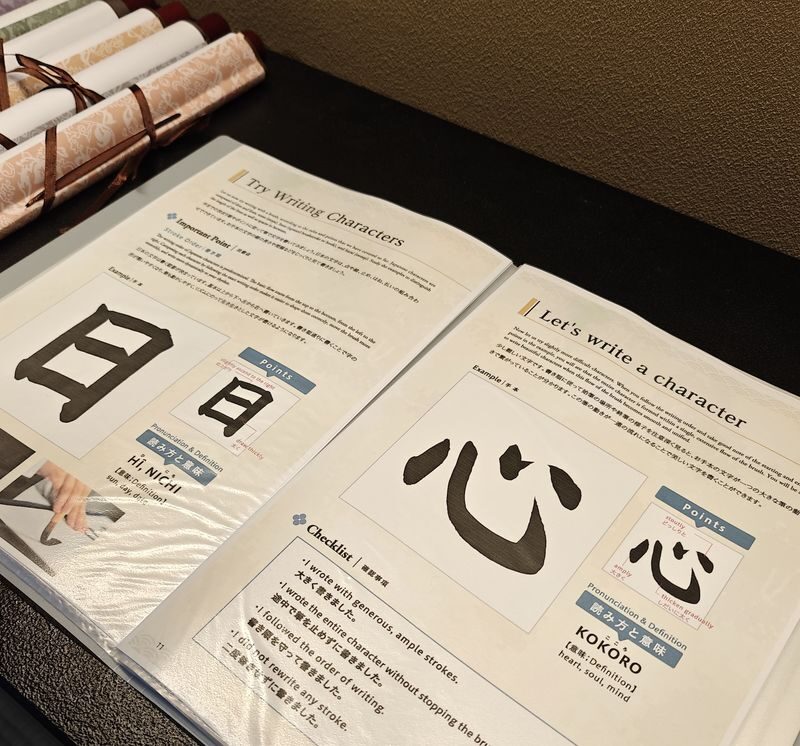
Once the ink is ready, the instructor introduces fundamental brush strokes. The lesson then connects those movements to Japanese Kanji, including the meanings behind the characters. This matters because calligraphy is not just drawing attractive shapes. Understanding that a character carries meaning gives you a more personal reason to choose one for your final work.
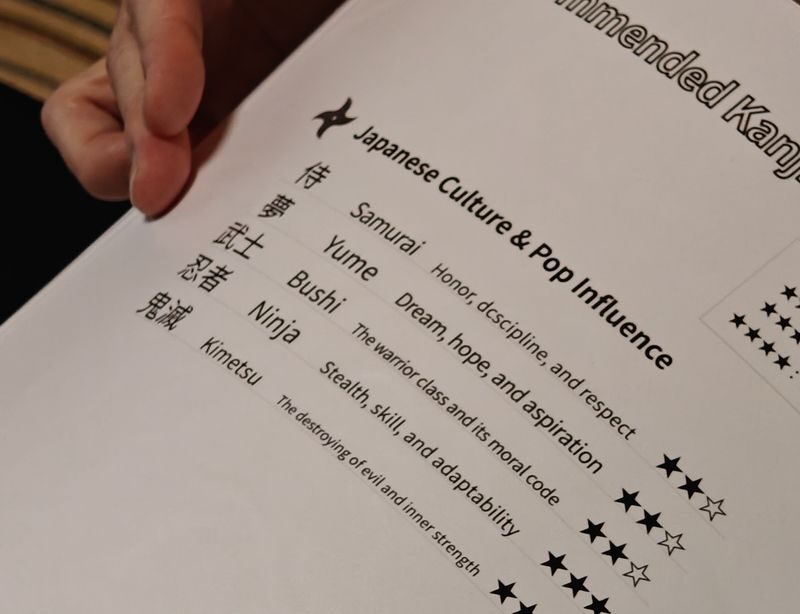
You do not need to arrive knowing which character you want to write. The experience says you will write your favorite character, but it does not state how choices are presented or whether the guide helps with translation. If you have a particular character in mind, consider checking its meaning beforehand and confirming it with the instructor during the session.
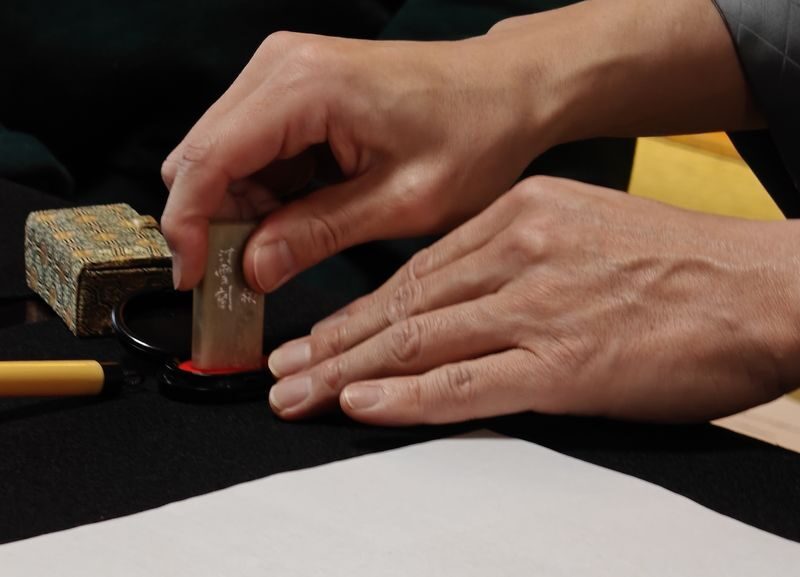
The practical payoff is a keepsake you have made yourself. Your artwork is included, along with the tools and materials needed for the activity. That is a more meaningful souvenir than a generic item from a shop, especially if the character you choose has a personal connection.
Still, keep the scale in mind. The class is designed to get you through a guided practice and one final work, not to offer lengthy individual coaching. If calligraphy is a serious interest, you might want a longer class. If you want a thoughtful first encounter and a tangible reminder, this format makes good sense.
A 150-year-old machiya, not just a classroom
After the calligraphy session, the guide takes you around the historic machiya and explains its architecture and traditional Kyoto lifestyle. The building is part of the experience, not simply a room rented for a workshop. A house tour gives you a chance to connect the activity with the setting and learn how a traditional townhouse fits into Kyoto’s cultural life.
The venue is JURAKU, at 85-1 Itsutsujicho in Kamigyo Ward. It is described as away from the crowds, which may appeal if you want a quieter stop between busier sightseeing plans. The available details do not specify which rooms or architectural features are included, so treat this as a guided introduction to the house rather than a detailed architectural study.
The location also calls for a little planning. It is a five-minute walk from the Imadegawa Jofukuji bus stop, or about a 19-minute walk from Imadegawa Station. The venue is next to Honryu-ji Temple and near Tori Iwarou restaurant, useful landmarks if you are finding your way there.
The townhouse visit is likely to be most valuable if you enjoy seeing how cultural practices fit into everyday spaces. You are not only learning a brush technique; you are spending time in a traditional Kyoto home and hearing about its architecture and lifestyle. That combination gives the short activity more depth than a calligraphy lesson alone.
Tea, seasonal sweets and a little breathing room
The experience ends with Japanese tea and seasonal sweets. These are included, as is time to enjoy them and take photos. After the focused, hands-on part of the session, this gives you a gentler finish and a chance to look over the artwork you have just made.
The sweets are seasonal, so the selection can vary. No particular tea or sweet is named, and the information does not describe a formal tasting. Think of this as a relaxed refreshment break, not a food tour.
Photography assistance is also included. That can be useful if you want a picture of your calligraphy or a memory of the machiya without having to ask another person to take it. You should not assume that every part of the house is open for photography, though. Follow the guide’s direction about where photos are appropriate.
The calm atmosphere is one of the experience’s strongest draws. The sole published rating is five out of five, and the accompanying comment specifically praises the historic setting and peaceful, meditative session. That is a positive signal, but it is based on just one rating, so it is best treated as an early indication rather than a broad record of consistent feedback.



What the price includes, and what it does not
The experience starts at US$47.19. For that price, the package includes an English- or Chinese-speaking guide, hands-on practice and tools, the machiya and cultural explanation, tea and seasonal sweets, photography assistance, and your finished calligraphy artwork.
The value comes from the combination. You are not paying only for a short brush lesson. The visit also includes ink preparation, guidance on Kanji, a tour of a historic townhouse, refreshments and a take-home piece. If you enjoy hands-on cultural activities, those parts make the price easier to justify than a brief demonstration with no personal participation.
On the other hand, the activity is short, and personal expenses beyond the listed inclusions are not covered. It is not a full-day cultural program, and you should not book it expecting extensive calligraphy instruction or a meal. The one-hour summary and 75-minute itinerary also make it wise to leave a little breathing room before your next timed plan.
The listed sessions begin at 10:00, 13:00 and 15:00. The return times shown are 11:15, 14:15 and 16:15, depending on the departure you select. Arrive five minutes early at the venue. Late arrivals and no-shows are not eligible for a refund.
Who will enjoy this Kyoto stop
I would consider this activity if you want a quiet, structured break from temple visits and shopping, or if you are looking for a cultural experience where you make something yourself. It suits beginners, couples, families and solo visitors who are comfortable following a guided lesson. The stated absence of an age limit makes it broadly open, though the details do not specify age-based teaching arrangements.
It is also a good fit if you like the idea of calligraphy but feel unsure about where to start. The chair-seated format and step-by-step instruction lower the barrier. The finished work gives you a clear endpoint, while the house tour and tea make the visit feel less like a classroom appointment.
You may want to choose another activity if you are after a long workshop, a highly technical study of Japanese writing, or a broad historical tour of Kyoto. The information promises fundamental strokes, meanings of Kanji and an explanation of machiya architecture and lifestyle, not expert-level instruction or an extended museum-style visit.
Practical booking details are straightforward. Choose one of the available departure times and attend that selected session. The voucher is valid only on the date and time booked. Cancellations made at least 24 hours before the activity date, in Kyoto local time, qualify for a full refund. If the operator cancels because of extreme weather or another unforeseen event, you can reschedule.
Should you book the calligraphy and machiya tour?
Book it if the appeal is a calm, hands-on introduction to calligraphy in a traditional Kyoto setting. The strongest elements are the ink grinding, personal Kanji artwork and guided machiya visit, with tea and seasonal sweets giving the hour a relaxed finish. At US$47.19, the package offers a useful blend of activity and cultural context.
Skip it if you need a long lesson, a guaranteed character choice or a detailed architectural tour. And allow roughly 75 minutes, despite the one-hour summary, so the experience does not make you rush to your next stop. For a compact cultural pause with a keepsake to carry home, it is a sensible Kyoto choice.
Hands-on Zen Calligraphy & 150-Year-Old Kyoto Machiya Tour
“Such a great experience in a beautiful historic place. The session was incredibly peaceful and meditative. I truly enjoyed it!”
FAQ
How long does the experience last?
The schedule gives a duration of 1 hour 15 minutes, while the summary describes it as one hour. Allow about 75 minutes to be safe.
Where does the tour begin?
It begins at JURAKU, Kyoto Cultural Hub, at 85-1 Itsutsujicho, Kamigyo Ward, Kyoto.
How do I get to JURAKU?
The venue is a five-minute walk from the Imadegawa Jofukuji bus stop and a 19-minute walk from Imadegawa Station. It is next to Honryu-ji Temple and near Tori Iwarou restaurant.
What departure times are available?
The listed departure times are 10:00, 13:00 and 15:00. Choose your session when booking and arrive five minutes before it begins.
Is the calligraphy lesson suitable for beginners?
Yes. The experience is described as beginner-friendly, with step-by-step guidance on fundamental brush strokes.
What languages does the guide speak?
An English- or Chinese-speaking guide is included.
What will I take home?
You will make an original calligraphy artwork on traditional canvas and take it home. The necessary tools and materials for the practice are included.
Are tea and sweets included?
Yes. Japanese tea and seasonal sweets are included, along with time to enjoy them and take photos.
What is the cancellation policy?
You can receive a full refund if you cancel at least 24 hours before the activity date, in Kyoto local time. If the operator cancels because of extreme weather or another unforeseen event, you can reschedule.