
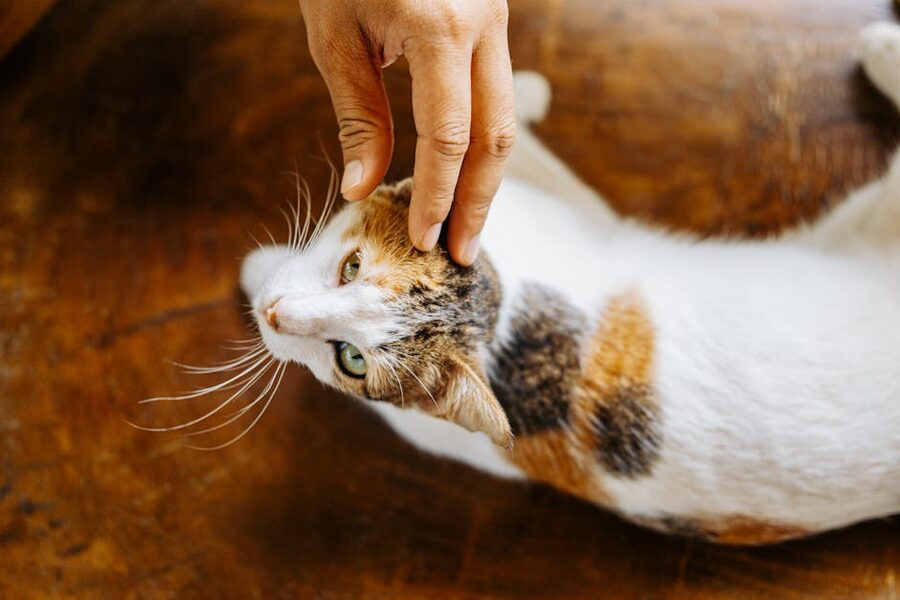
Budapest has a museum where the exhibits walk over to your lap, settle in, and start purring. The Cat Museum on Vadász utca, a quiet side street in central Pest, is exactly what it sounds like — a small, two-floor space dedicated to cats in art, cats in culture, and ten very real cats who actually live there. You book a 90-minute slot, pet whichever cats are awake, look at painted versions of cats from across the centuries, and drink a free coffee in a room with forest soundtracks. It shouldn’t work, and yet it does.
Most travel guides skip this place because it doesn’t sound like a “real” Budapest stop. The big-name museums on Heroes’ Square and Buda Hill take all the oxygen. But if you’ve already done Buda Castle, the parliament, and a thermal bath, and you want something that’s nothing like those — this is genuinely a different kind of afternoon.
- In a Hurry?
- What the Cat Museum Actually Is
- How to Book Your Tickets
- The Tours Worth Booking
- 1. Budapest Cat Museum Entry Ticket (GetYourGuide) — about
- 2. Cat Museum Budapest Entry Ticket (Viator) — about
- Meet the Cats
- Cats & Art: The Lower Floor
- The Upstairs: Porcelain, Jungle Room, and the Relax Nook
- The Watercolour Workshop
- What to Do If the Cats Are Asleep
- Getting There
- Opening Hours and Practical Notes
- Who This Is Right For
- Combining With Other Budapest Stops
- Why a Cat Museum, in Budapest, in 2022?
- Other Budapest Stops Worth Knowing About
In a Hurry?
Best overall: GetYourGuide entry ticket — about $14 per person, 90-minute slot, free drink included. The version most visitors book.
Same product, Viator side: Viator entry ticket — same museum, same slot length, around $13. Use whichever platform you have credit on.
Skip the queue if you book direct: catmuseumbudapest.eu — adult tickets at 3,990 Ft (roughly $11), painting workshops at 10,900 Ft. The site books in Hungarian forint.
What the Cat Museum Actually Is
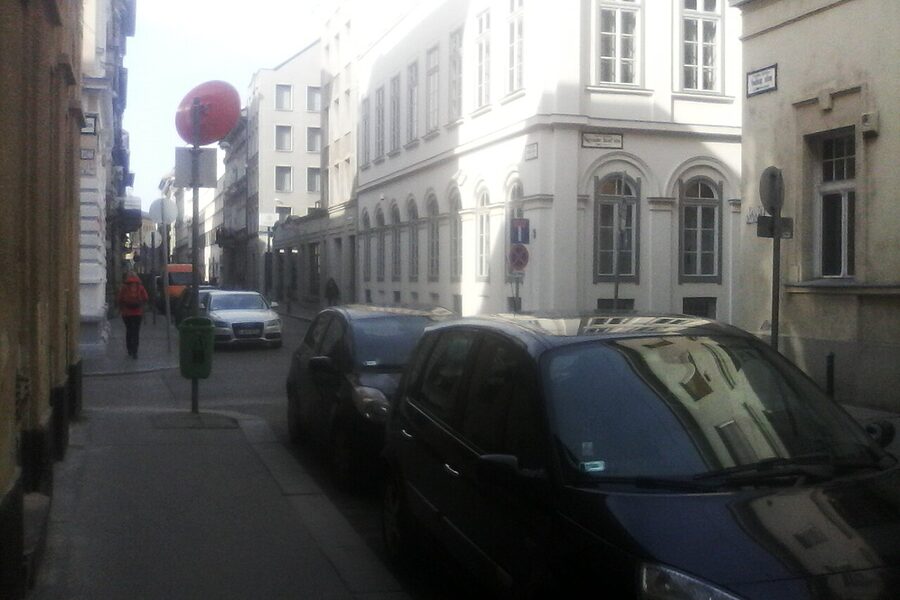
It’s a private museum, opened in 2022, on the ground floor of a residential building at 1054 Budapest, Vadász utca 26. Two storeys. Lower level is the “Cats & Art” exhibition — paintings, prints, and reinterpretations of famous works with the human subjects swapped for cats. Upper level has porcelain (Zsolnay, Herendi, Hollóházy, plus some international pieces), a “Jungle Room” with biology and breed information, a tablet quiz, a children’s drawing corner, and a Relax Nook with forest soundtracks.
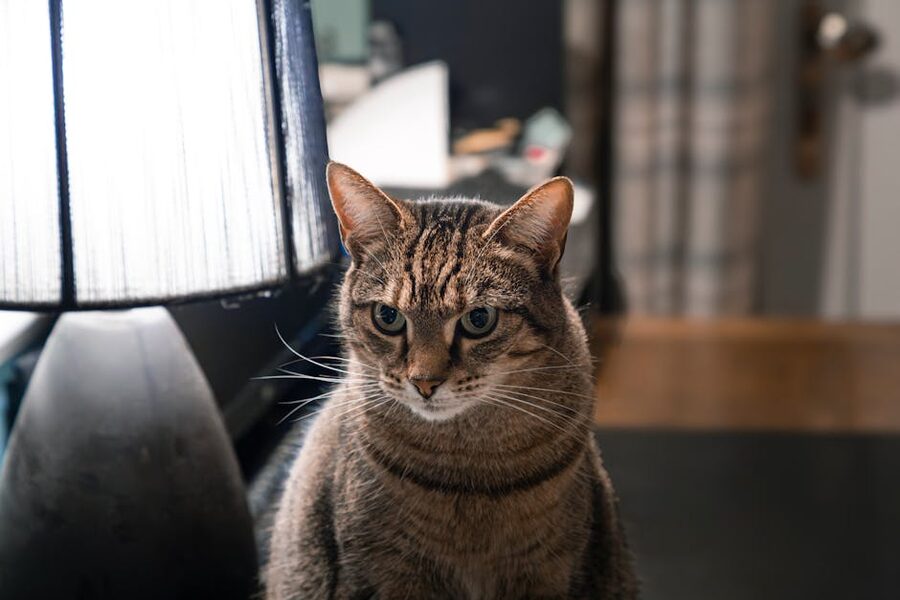
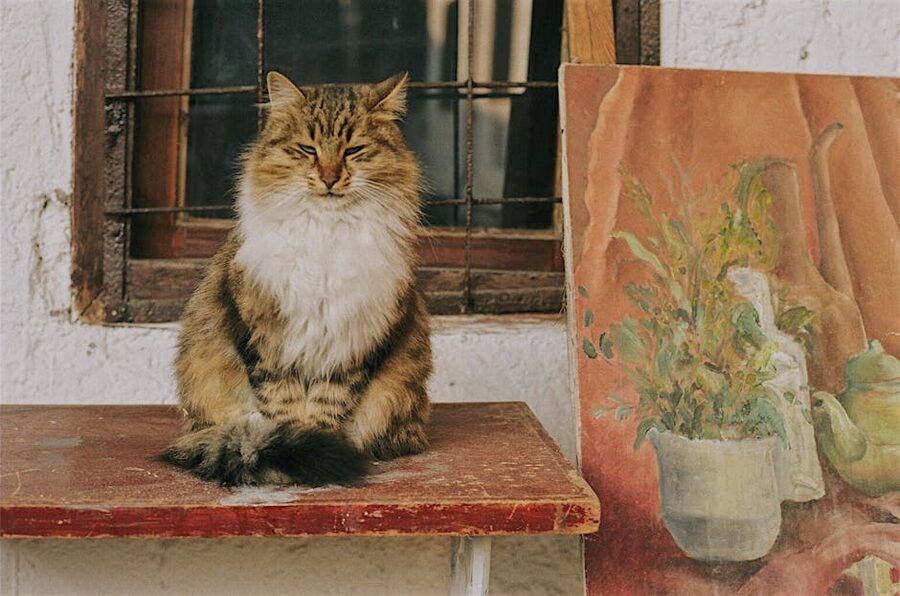
And ten cats. They’re not in cages and they’re not on a strict schedule. They sleep where they want, eat where they want, climb on a chair you’re sitting in if they’re in the mood. The staff are clear about this from the moment you walk in: the cats will do whatever the cats want to do.
Slot length is exactly 90 minutes, which sounds short but is genuinely about right. After an hour, you’ve seen everything, you’ve petted whoever wanted to be petted, and the cats are starting to wonder why you’re still there.
How to Book Your Tickets
Booking ahead is required. Not “highly recommended” — required. The museum runs on timed slots, the slots are small, and if you turn up without a reservation you will be turned away. The official site is blunt about this in three different places.
You have three real booking routes:
1. GetYourGuide. Around $14 per adult. Free 24-hour cancellation. Paid in your home currency. The booking sits in the GYG app, which is convenient if you’re already using it for other Budapest stops — say a Danube cruise or a Buda Castle walking tour. Most international visitors take this route.
2. Viator. Roughly $13. Same product, same operator. The cancellation policy is identical. Pick this one if you have Viator credit or you’re already planning the rest of your Budapest sightseeing through Tripadvisor’s ecosystem.
3. Direct on catmuseumbudapest.eu. Cheapest at 3,990 Ft (about $11) for adults, 3,590 Ft for children aged 8-12. You pay in forint, which is genuinely simpler if you’re already using a Revolut/Wise card with HUF balance. The direct booking system also handles the painting workshops and the gift voucher options, which the marketplaces don’t carry.
If you’re choosing on price, direct is cheapest by a few dollars. If you’re choosing on convenience, GYG and Viator both win because the booking sits next to all your other Budapest activities. Either route gets you the same 90 minutes with the same cats.
The Tours Worth Booking
There’s really one product here — entry tickets — sold under two different platforms. Both link to the same physical museum. Below is what we’d actually book, ranked.
1. Budapest Cat Museum Entry Ticket (GetYourGuide) — about $14

This is the version we’d default to for most travellers. The 90-minute slot is the same as buying direct, the price difference is a few dollars, and the GYG cancellation window is generous. Our full review covers what’s actually in the audio guide section, which exhibits run on a tablet, and what to do if your slot lands at a sleepy time of day for the cats.
2. Cat Museum Budapest Entry Ticket (Viator) — about $13
If you’re already booked into other Viator activities for your Budapest stay, lump this in with them. Mobile ticket, English, all the usual. Our Viator-side review goes into how the operator handles late arrivals (they’re firm about the slot start, less firm about a 5-minute delay).
That’s it for the marketplace tour cards — there genuinely aren’t five distinct products here. If you want a workshop instead of a basic visit, the direct booking page handles the watercolour painting class (10,900 Ft, two hours, max 12 people), which is the one extra option worth knowing about. We’ve covered that in the workshop section below.
Meet the Cats
There are ten cats. Their names and breeds, taken straight off the museum’s own roster:
- Candy — Siberian red silver point, male
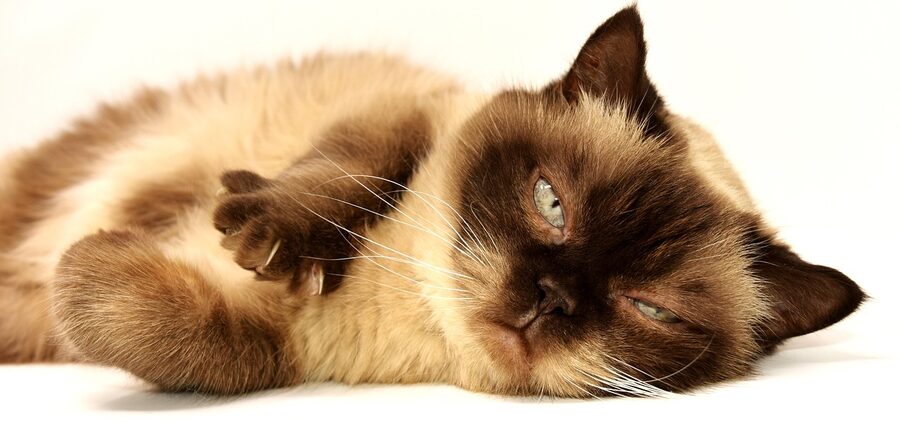
- Jasmine — British shorthair, female
- Mona Lisa — Ragdoll, female
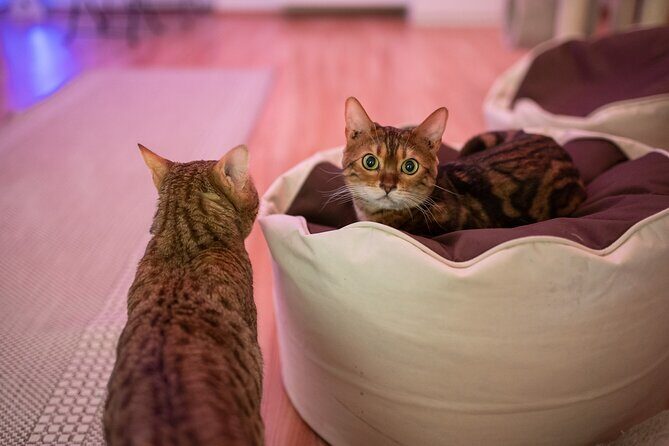
- Maya — Bengal, female
- Leonardo — Maine Coon, male
- Anubis — Devon rex, male
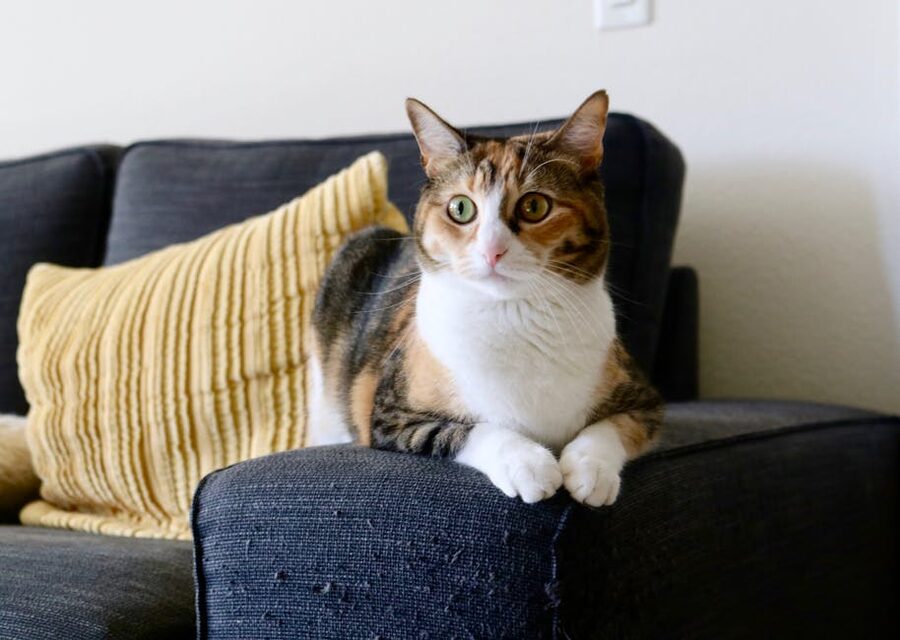
- Pirate — domestic calico, female
- Cicero — Scottish shorthair, female
- Simba — Bengal, female
- Maki — medium-haired domestic mixed, female
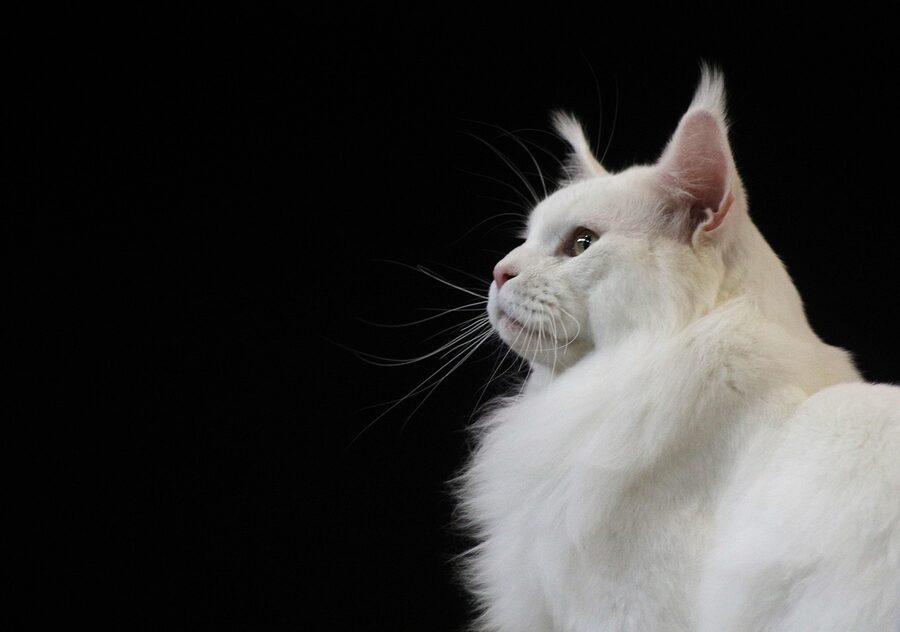
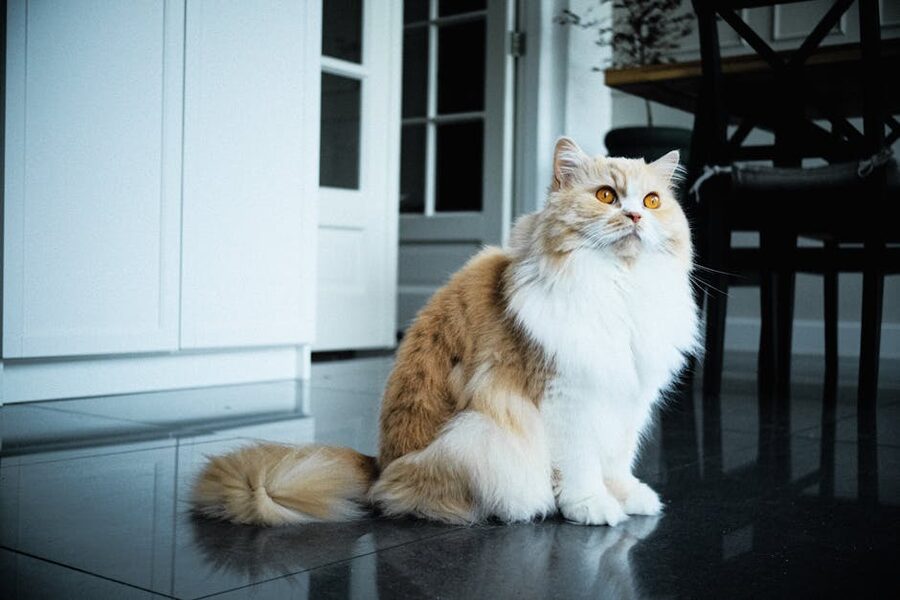
You will not see all ten on a single visit. Cats sleep around fourteen hours a day. Some of them will be tucked into a windowsill, a bookshelf, or one of the dedicated cat shelves and will not be available for petting no matter how charming you are. The museum is clear about this on every page of its website. It’s the single most-repeated message they put out, because they’re tired of explaining it: the cats are on cat schedule, not visitor schedule.
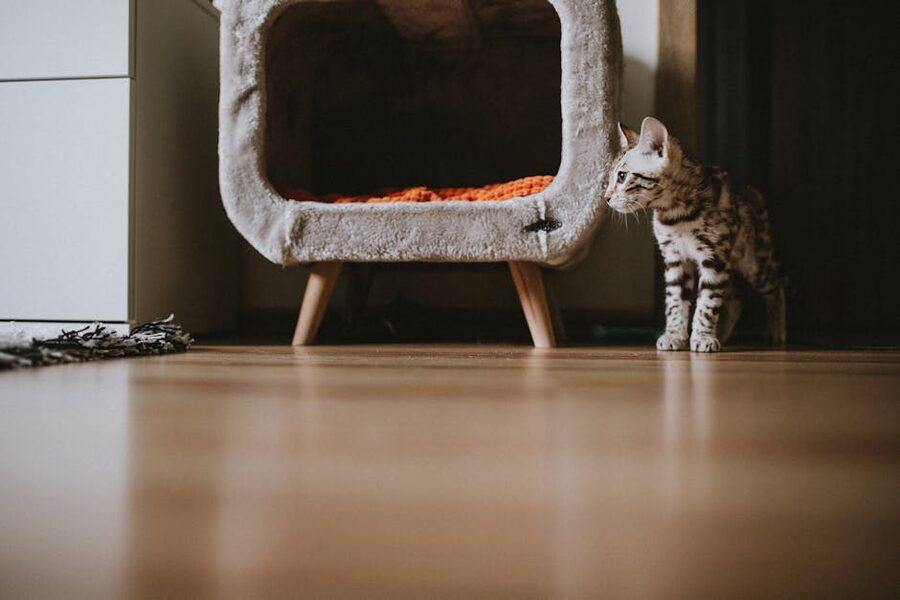
If you want to maximise actual cat interaction, book a slot from 16:00 onwards. Mornings are nap time. Late afternoon and early evening, especially the 17:00 slot, tends to be when the breeds with higher energy (Bengal, Devon rex) are awake and looking for a lap.
Cats & Art: The Lower Floor
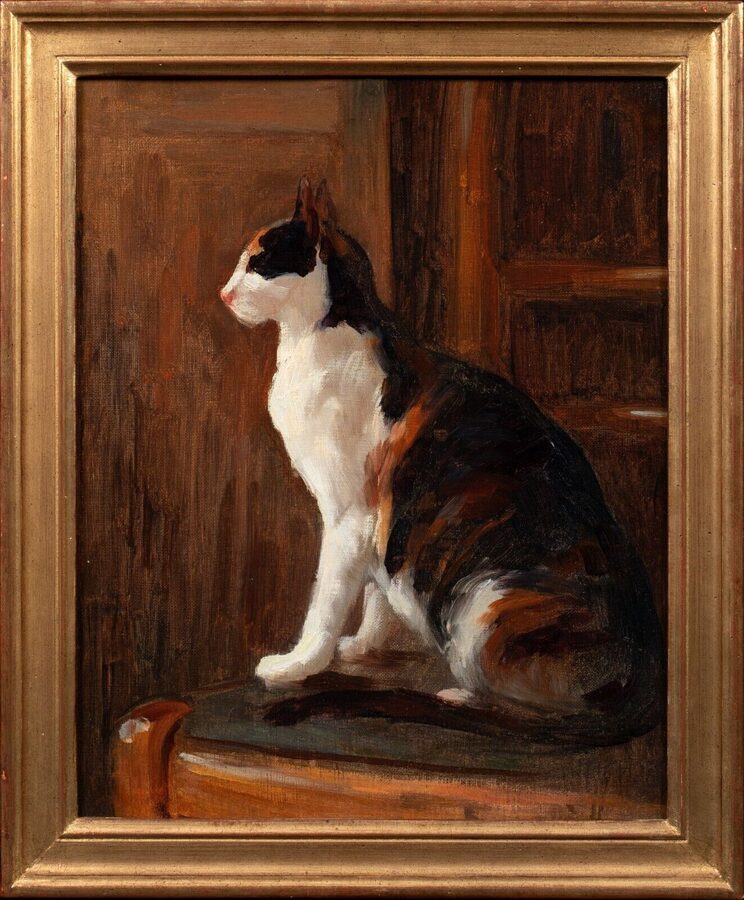
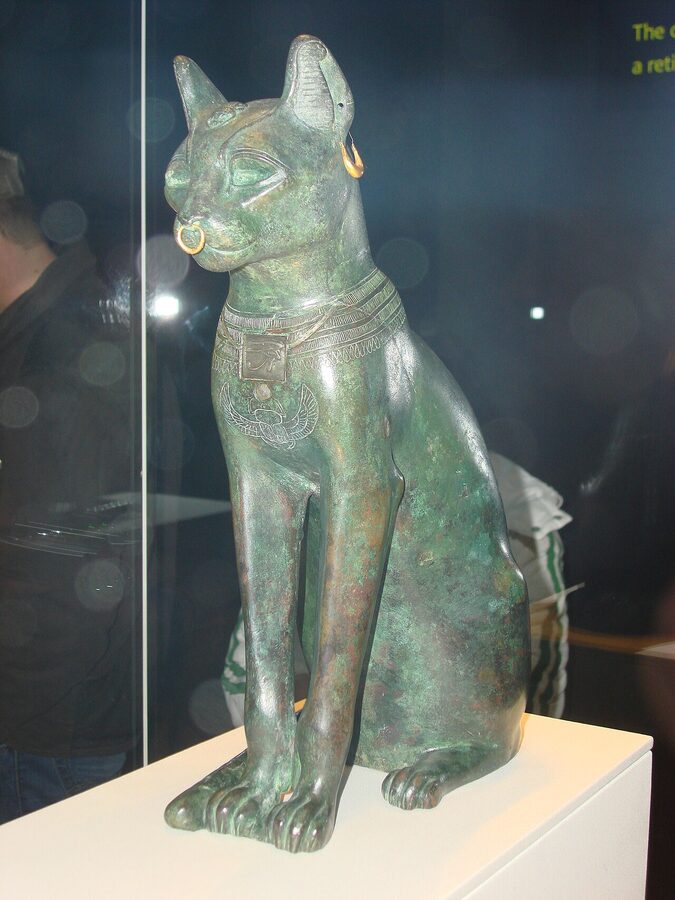
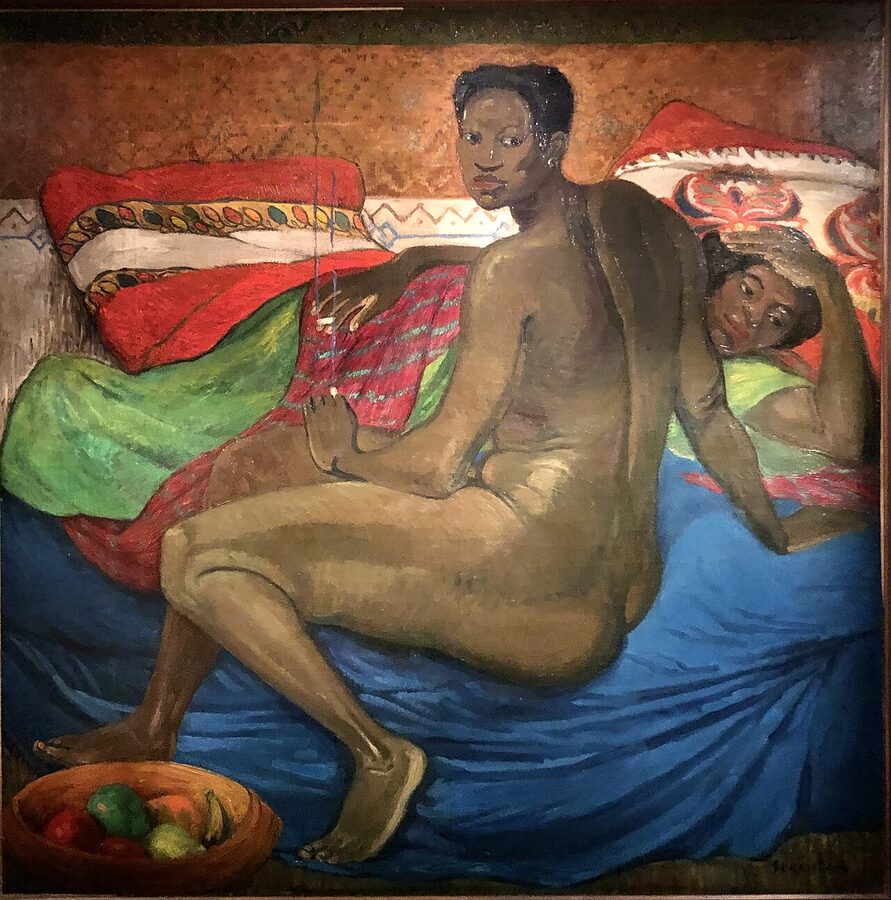
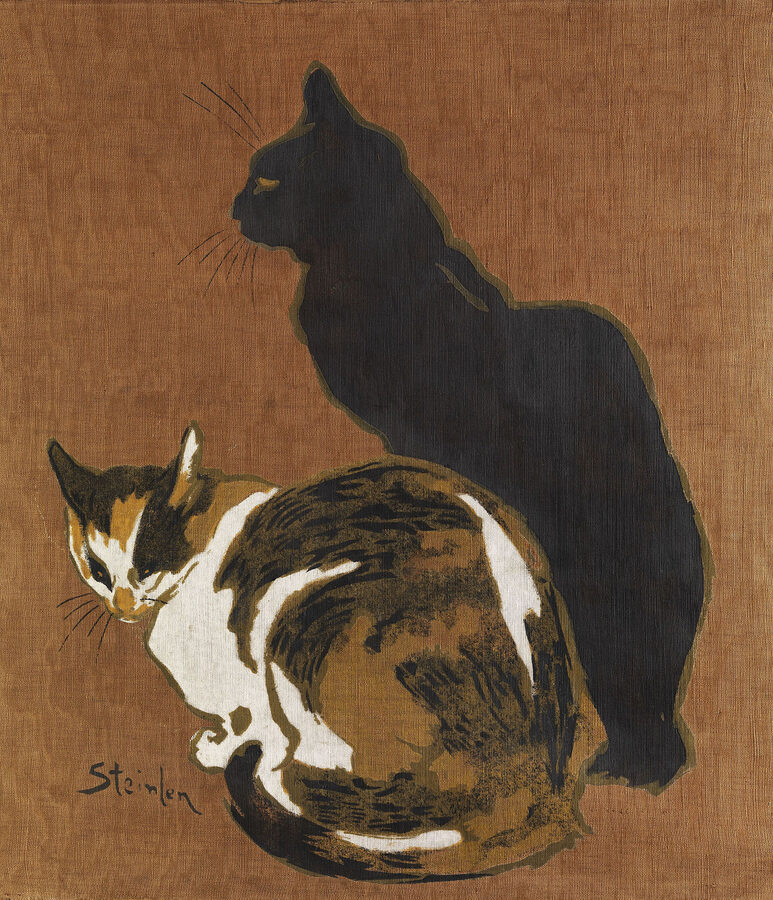
The downstairs exhibition is called “Cats in the World” and it’s mostly framed prints and reinterpretations. Famous paintings reproduced with the central figure replaced by a cat. A Mona Lisa cat, a Last Supper of cats, a fair amount of Steinlen reproductions because the late-19th-century French illustrator basically built his career on cats. The work isn’t original — these are licensed prints — but the curation is decent and the captions are bilingual.
The Egyptian Photo Wall is at the back of the lower floor. It’s a green-screen-style backdrop with a couple of pharaoh-era cat headdresses and a selfie stand. It looks slightly tacky on first glance and then you realise the staff have leaned into it deliberately — kids love it, parents take their photo, the lighting is genuinely good. It’s not a serious historical reconstruction. It’s a photo prop, and it works.

The Children’s Corner is set up with crayons, colouring sheets of cats, and a small drawing table. If you’re travelling with kids aged 8-12 (the museum’s minimum is 8), this is where they’ll spend half the visit. There’s no separate ticket for it.
The Upstairs: Porcelain, Jungle Room, and the Relax Nook
The first floor is structured into three rooms. The front room holds the porcelain. Zsolnay, Herendi, and Hollóházy — the three big Hungarian fine porcelain houses — are all represented, plus a smaller scattering of European pieces. Most of it is cat-themed (cat figurines, cat plates, cat-handled teapots), which sounds gimmicky and looks gorgeous. Hungarian porcelain is genuinely world-class and the museum got a respectable selection.
Behind that is the Jungle Room, which is a slight misnomer. There’s no jungle and no greenery. What’s there is a wall of breed information — biological traits, where each breed originated, what they’re known for. There’s a movie running on a small screen showing big cats (lions, tigers, leopards) and how they relate to domestic cats. And a tablet quiz. You take the quiz, get a score, and if you pass you get to pick a small souvenir from the lucky bag on your way out. We got a fridge magnet. Other visitors have got little pin badges, keyrings, the occasional postcard. None of it is high-value; all of it is unironically charming.
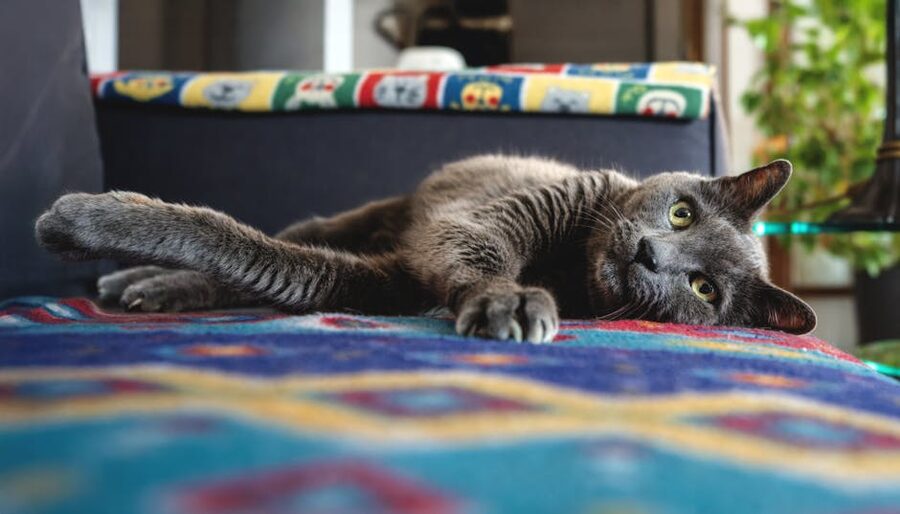
The Relax Nook is the part you’ll remember. It’s at the back of the upstairs floor: low cushions, soft lighting, a quiet ambient soundtrack of birds and rustling leaves. This is where the cats settle when they’re done with the rest of the museum, which means it’s where you settle when you want to actually have a cat decide you’re worth sitting next to. We had Pirate (the calico) walk over within four minutes. Other visitors say the same thing — sit, don’t move, wait.
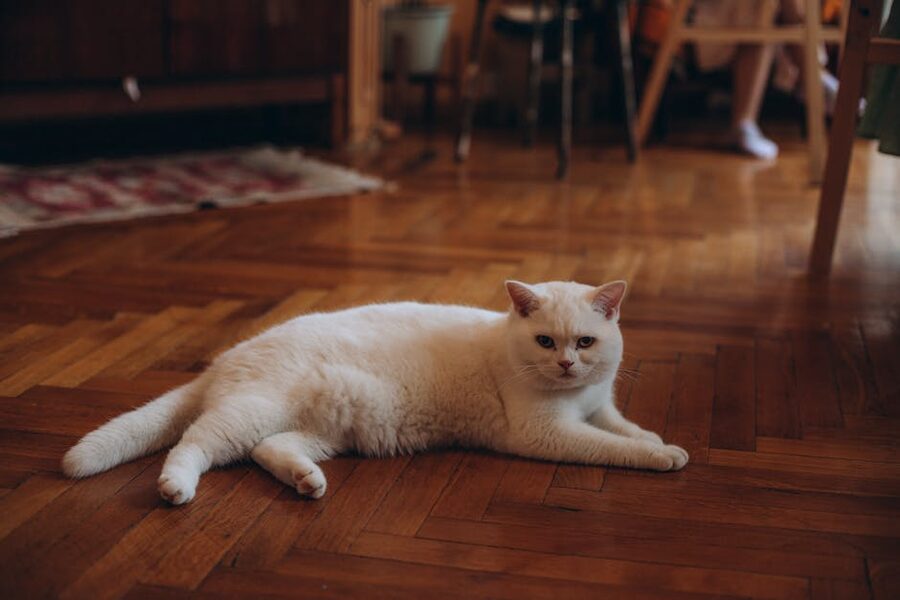
Your free drink (coffee, tea, hot chocolate, or a soft drink) is brought to you in the Nook if you ask. Coffee is decent, hot chocolate is better than expected, and the tea is fine.
The Watercolour Workshop
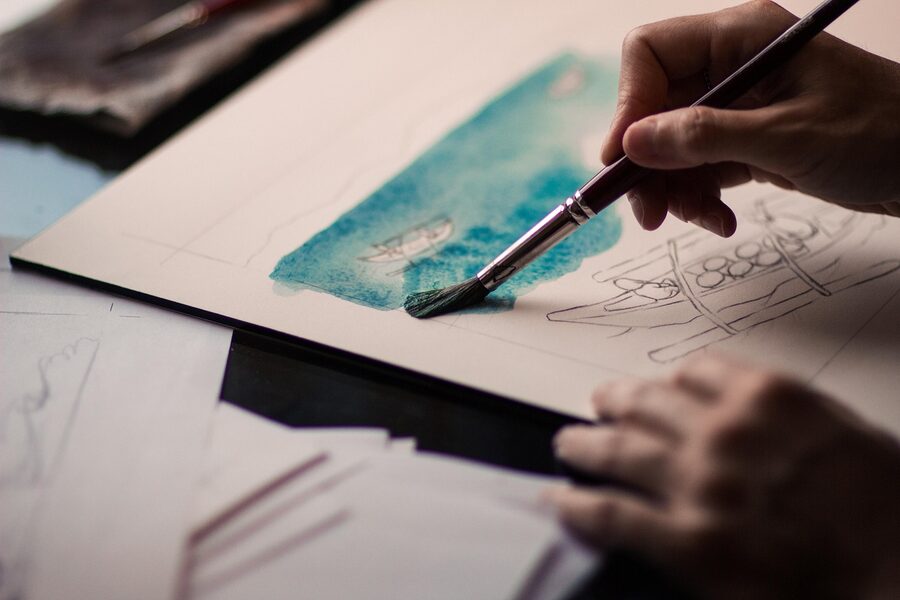
The single best add-on is the Aquarell painting workshop with cats. Two hours, 10,900 Ft (about $30), maximum 12 people, runs only when at least 5 sign up. You learn watercolour technique specifically for painting cats — the staff bring you the supplies, walk you through the basics, and the resident cats wander around the workshop space while you’re painting them. Or while they’re sleeping on your reference photo. Either way.

If you can paint two pieces in the time slot, they let you. Most people get one finished. Drinks are included (coffee, tea, or hot chocolate) and the participation fee covers all materials, so you walk in with nothing and walk out with a watercolour painting of a cat. The minimum age is 8, same as the basic ticket.
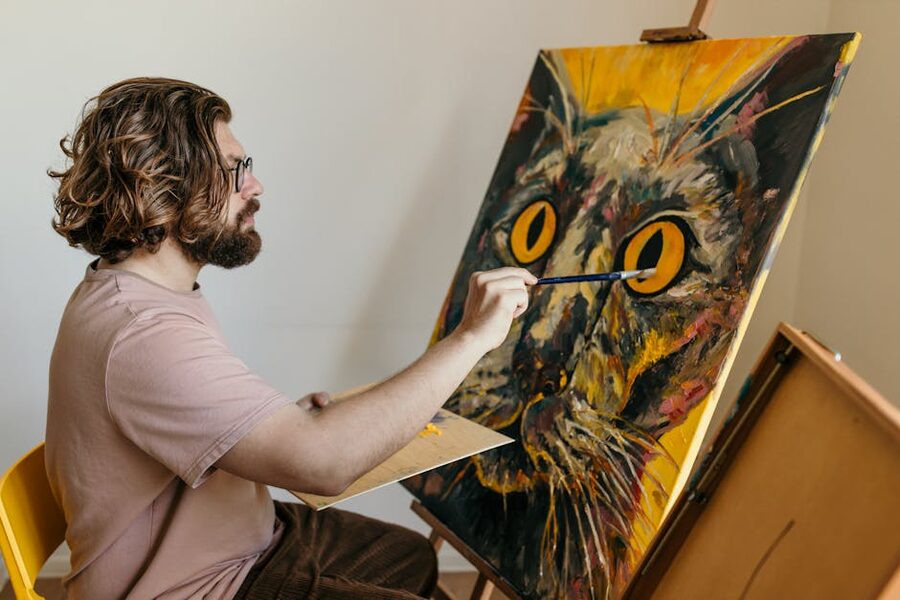
This isn’t a “tourist art class” with a bored instructor. The lead teacher actually teaches watercolour, which is rarer in Budapest than you’d expect. If you’ve been wanting an excuse to try painting and you happen to like cats, book this instead of the basic entry. It costs about three times as much but you get an extra 30 minutes, all your supplies, a painting, and the cats.
What to Do If the Cats Are Asleep
This will happen. There is no way around it. Cats sleep, especially during the day, especially in heated rooms with cushions and natural light, which is exactly what the museum has built. If you arrive at 12:00 and most of the cats are tucked away, here’s what to do:
Sit in the Relax Nook for at least 10 minutes. Don’t get up, don’t try to find them. The cats know which room you’re in and will check on you eventually. The Nook is the highest-traffic spot in the museum for cat appearances precisely because it’s the lowest-traffic spot for human movement.
Look at the porcelain instead. Honestly, the Hungarian porcelain collection is good enough on its own that even if you saw zero active cats it would still be worth the ticket. Most visitors skim it on the way through and never come back. Slow down at the Zsolnay case in particular — the iridescent glaze is unique to that house.
Take the tablet quiz. It’s longer than it looks. The questions are mostly about cat biology and history, not Hungarian-specific trivia, so you don’t need any prep. The lucky-bag souvenir at the end gives the visit a small payoff regardless of how the cats behaved.
Book a second visit. If you really want guaranteed cat time, the Cat Museum Pass is 25,900 Ft (around $72) for nine 90-minute visits. The pass is not nominative — multiple people can use the occasions — so a couple can split it five-and-four, or a family of four can do it across two days. For locals or anyone in Budapest for more than a long weekend, the pass is a steal.
Getting There
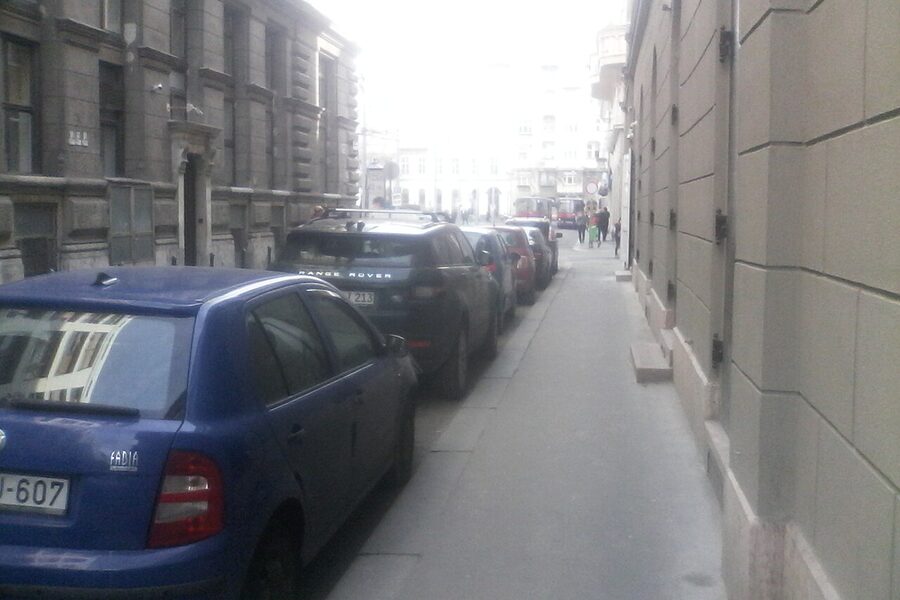
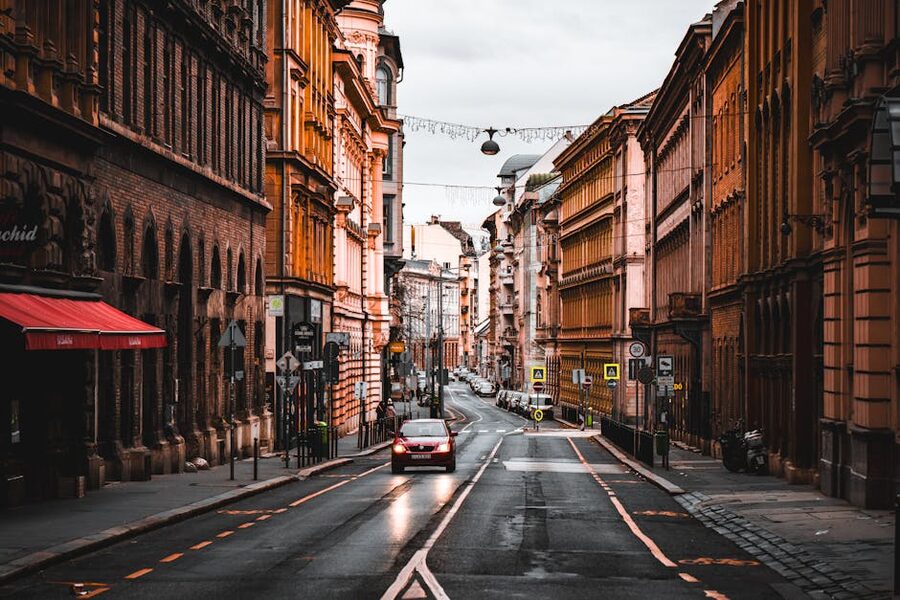
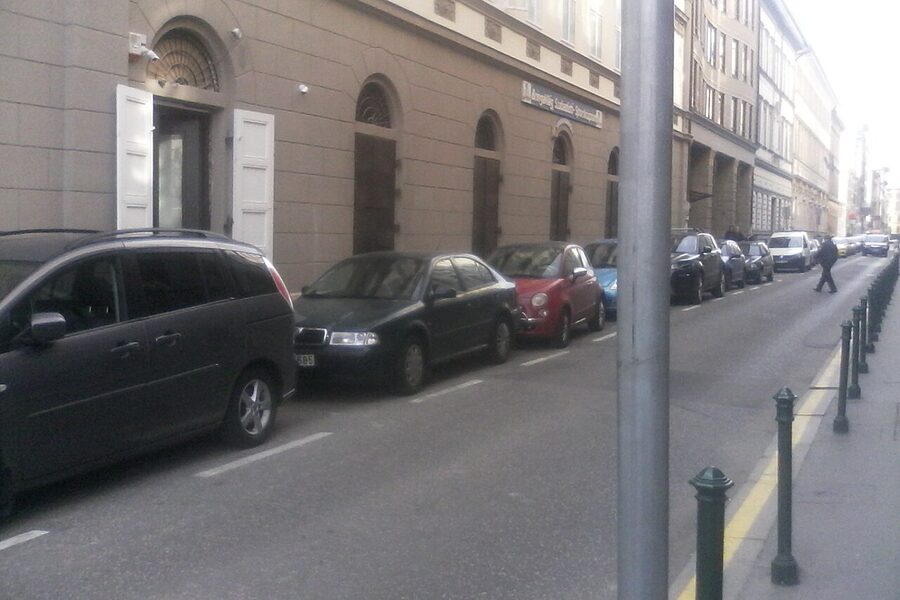
The address is 1054 Budapest, Vadász utca 26. That’s District 5 (Lipótváros / Inner City), which is the same district that holds St Stephen’s Basilica, the Parliament, and most of the river-front sights. If you’ve spent the morning at the Parliament, the Cat Museum is roughly an 8-minute walk south-east.
Closest metro: Arany János utca (M3, blue line), one street over. From there it’s a 3-minute walk. From Deák Ferenc tér (the M1/M2/M3 interchange in the absolute centre) it’s about 7 minutes on foot.

If you’re arriving by tram, take the 2 along the river to Kossuth Lajos tér or Petőfi tér, then walk inland four minutes. Tram 2 is the most photogenic line in Budapest and a slightly more interesting way to arrive than the metro.
By taxi, ask for “Cat Museum, Vadász utca 26” — drivers may not know the museum, but they’ll know the street. Bolt is widely used in Budapest and takes about 8 minutes from Buda Castle, 15 from the airport bus drop at Deák.
Opening Hours and Practical Notes
The museum is open 11:00 to 18:30, every day — Monday through Sunday. Last entry slot is 17:00 (the slot is 90 minutes and the last hour gets reserved for the cats winding down). They don’t close for public holidays unless they explicitly announce it on social media.
Minimum age is 8. Children under 12 must be accompanied by an adult. There’s no upper age limit; we saw a group of three retirees on our visit who were having an excellent time.
Tickets are non-refundable and non-modifiable once booked. This is on every page of the official site for a reason — they get a lot of last-minute cancellations and decided to stop accommodating them. If you’re booking through GYG or Viator, the platform’s standard 24-hour cancellation usually applies, which is more lenient than the direct booking.
You can bring your own pet to the museum. This is a slightly weird sentence to write but it’s genuinely true — the website notes that you can come with your own cat or small dog as long as the dog gets along with cats. Most people don’t, but it’s an option.
There’s a gift shop on the way out with cat jewellery, T-shirts, pillows, postcards, and small ceramic pieces. Prices are reasonable. The hand-illustrated cards are the standout — these are made locally and you won’t find them in the standard tourist shops on Váci utca.
Who This Is Right For
Skip this if you’re a hardcore museum person looking for a serious art-historical collection. It’s not that. The lower floor is reproductions and the upper floor is a small porcelain cabinet plus interactive bits. Go to the Museum of Fine Arts or the Hungarian National Museum if that’s what you want.
Skip it if you have allergies. Severely allergic people should not even consider this — there are ten cats in two rooms with carpet and cushions, and the dander is real. Mild allergies (occasional sniffles) are usually fine but bring antihistamines.
Skip it if you don’t actually like cats. We mean this literally. The whole product is “spend 90 minutes with cats.” If you’d rather be doing anything else with cats than that, you’ll find this overpriced and slow. Try the Széchenyi Baths or the Buda Castle Cave Tour instead.
Book it if you’ve already done one or two of the major Budapest attractions and you want a complete change of pace. Book it if you’re travelling with kids aged 8-12 who are starting to flag on the standard tourist circuit. Book it if you live with a cat at home and you’re missing them. Book it if the weather has turned and you need something indoors that isn’t another church or palace. And book it if you’re on a date and you’re sick of the standard “drinks at a bar in District 7” routine — the museum’s website specifically pitches itself as a date venue, and they’re not wrong, it’s a much better conversation starter than another vampire tour.
Combining With Other Budapest Stops
Because the slot is only 90 minutes and the museum is in District 5, this slots cleanly into a half-day in central Pest. A few combinations that work:
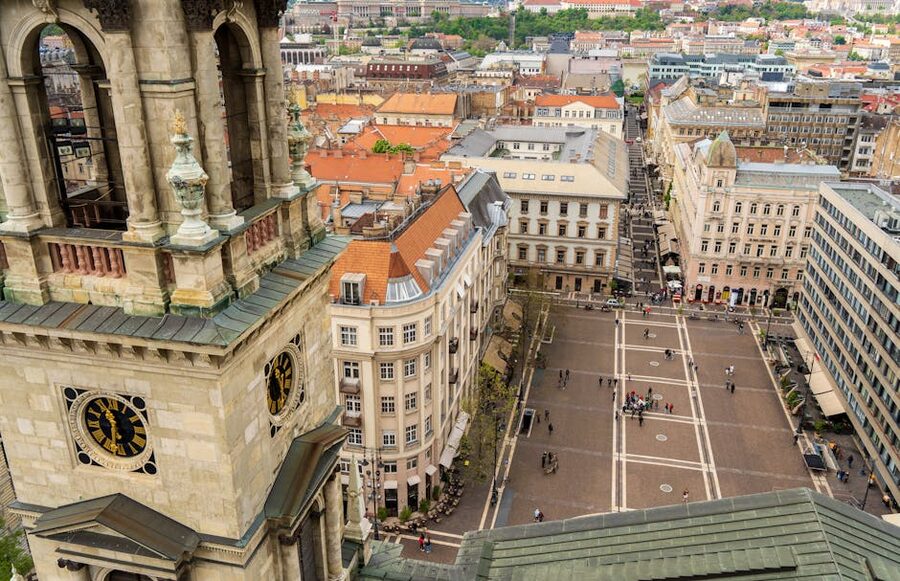
Morning Parliament + lunch + Cat Museum at 14:00. Tickets to the Parliament sell out weeks in advance, so book that first. Have lunch around Liberty Square. Walk south to Vadász utca for an afternoon slot. The whole sequence takes about six hours and covers the most distinctive of Budapest’s offbeat and headline sights in one go.
St Stephen’s + Cat Museum + dinner. The basilica is a five-minute walk from the museum. Hit the basilica in the late morning, head to Vadász utca for a 14:00 cat slot, then walk back across the centre for dinner in District 7.
Cat Museum + thermal bath. If you do a 12:00 cat slot, you finish at 13:30, eat, and head to the Gellért Baths or the Mandala Day Spa for the afternoon. Cats first, then warm water — the structural opposites of each other, somehow they pair well.
Family day with kids. Cat Museum at 11:00 (slot opens), Floating Bus tour in the afternoon. Both are kid-friendly, both have a “wait, what?” novelty factor, both are short. The museum’s minimum age is 8, the bus has no minimum.
For repeat visitors. If you’ve been to Budapest before and done all the standards, the Cat Museum pairs beautifully with the Cinema Mystica or a Buda Castle walking tour. The combination — quirky museum, immersive cinema experience, classic walking tour — covers three completely different sides of the city in one day.
Why a Cat Museum, in Budapest, in 2022?
The museum opened in June 2022. The founders’ pitch is straightforward: cats reduce stress (there is some American research to support this — purring frequencies have a documented calming effect), Budapest had no equivalent space, and lots of people who can’t keep cats at home — apartment-dwellers, allergic family members, travelling renters — would still pay to spend time with friendly ones.
It’s not a non-profit. The founders are clear about that — it’s a business, the cats are well-cared-for residents, the staff are paid (and visible — they work the floor and answer questions, they’re not hiding in an office). The model has worked. Three years in, it’s one of the more reliable independent museums in the city.
The “did you know?” panels around the museum push gentle indoor-cat advocacy: cats kept indoors live longer, are protected from disease, and bond more closely with their humans. None of this is preachy. It’s there if you want to read it, ignored without comment if you don’t.
Other Budapest Stops Worth Knowing About
Budapest has more quirky-museum and small-attraction options than most Eastern European capitals, and the Cat Museum is a good gateway to the rest of them. If you liked the format — small, focused, niche — your next stops are the Cinema Mystica, an immersive film and projection experience near the basilica, or the Buda Castle Cave Tour, which takes you through the limestone tunnels under the castle district. If you want the full range of small-format Budapest, the Vampires & Myths Night Tour is the wildcard pick — completely different in tone, similar in being something most travellers don’t know exists.
For something on the water, the Danube cruise is the easiest evening add-on and gives you the night-lit Parliament from the river. For city-wide context before or after the museum, the hop-on hop-off bus covers all the headline sights and lets you get off in District 5 within walking distance of Vadász utca. If you’ve got more time and want to see Budapest by bicycle, the city bike tour is the best way to cover the riverbank in a few hours. For the full Buda-side experience, Buda Castle tickets are the headline pairing, and a guided castle walk adds the historical context the museums alone don’t quite deliver.
Affiliate disclosure: this article contains affiliate links to GetYourGuide and Viator. We may earn a small commission if you book through these links, at no extra cost to you. The opinions, picks, and rankings are entirely our own.