Making sushi in Tsukiji is more than a neat lunch stop: you get a hands-on hour with ingredients connected to a family whose ties to the market span more than 100 years. I like the chance to make 10 different pieces, and the fresh wasabi and wooden bento box turn a quick lesson into a meal you’ll remember.
The main consideration is timing. This is a one-hour class, not a guided walk through the market, and many Tsukiji shops close around 2 PM. Choose the 10:30 AM session if you want time to browse before or after; the later class leaves less room for market shopping.
- What makes this class worth considering
- A short class with a proper Tsukiji connection
- Making nigiri, rolls, and a bento
- The instructor and the learning atmosphere
- Getting the timing right at Tsukiji
- Is .85 good value?
- Who will enjoy this most
- A few practical details before you book
- Should you book this Tsukiji sushi class?
- FAQ
- How long is the sushi-making class?
- What sushi will I make?
- Do I need cooking experience?
- Where is the meeting point?
- Can children join the class?
- What should I know about cancellation?
- The Best Of Tokyo!
- More Shopping Tours in Tokyo
- More Tours in Tokyo
- More Tour Reviews in Tokyo
What makes this class worth considering
 1 / 9
 2 / 9
 3 / 9
 4 / 9
 5 / 9
 6 / 9
 7 / 9
 8 / 9
 9 / 9
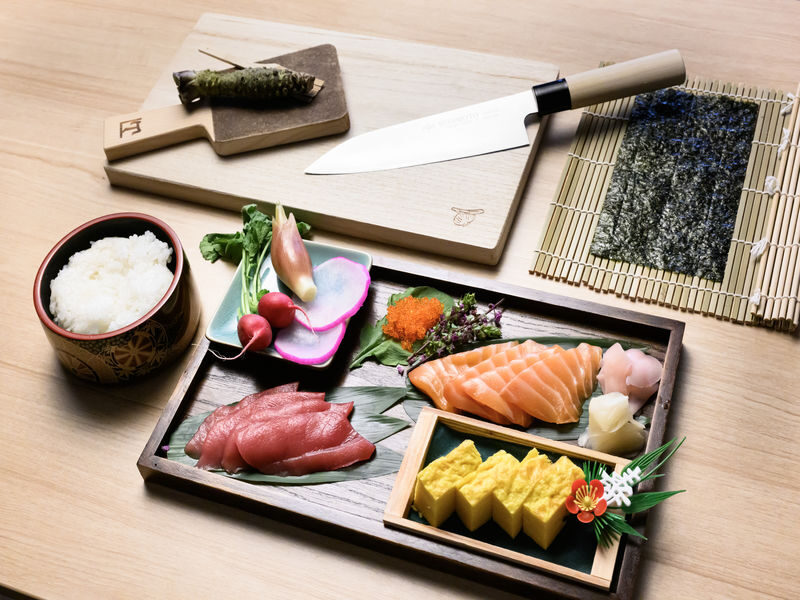
- Make 10 pieces of sushi: The menu includes tuna and salmon nigiri, vegetable sushi, inari sushi, and a tuna roll. Ingredients may change with the season and availability.
- Grate real fresh wasabi: You’ll handle fresh wasabi as part of the class, alongside the sushi-making steps.
- Pack a wooden bento box: Arrange your finished sushi yourself, then take photos before enjoying the meal.
- Learn in English, step by step: No cooking experience is needed, and the class is designed to be accessible to beginners and families.
- Meet instructors with familiar names: Instructors named Kenji, Akiko, Mia, Masa, and Komi have led classes. Your instructor may be different.
- Keep the schedule compact: The class lasts about an hour, leaving room for other Tokyo plans that day.

👉 See our pick of the Our Picks For The 11 Best Workshops & Classes In Tokyo
A short class with a proper Tsukiji connection
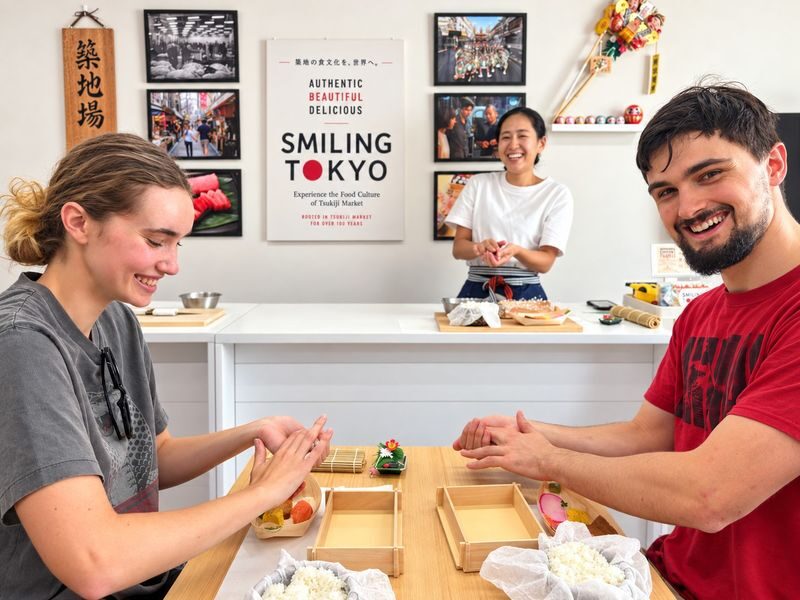
Tsukiji is a natural place to learn about sushi. The class team has family ties to the market going back more than 100 years, with connections to local specialty shops and food culture. That background matters most in the ingredients and the setting: this is a hands-on food activity in the Tsukiji area, not a generic cooking lesson relocated to a convenient room.
The class centers on making sushi rather than touring market stalls. You won’t be led through the market as part of the hour, so plan your own walk around Tsukiji Outer Market if you’d like to browse shops and food counters. That distinction is useful when planning: the class offers a structured taste of the area’s food culture, but it doesn’t replace time spent exploring the market independently.
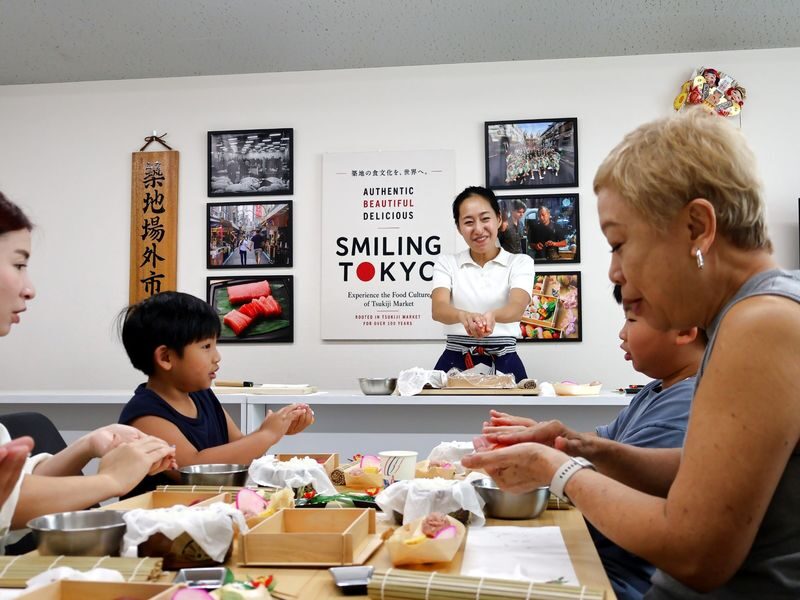
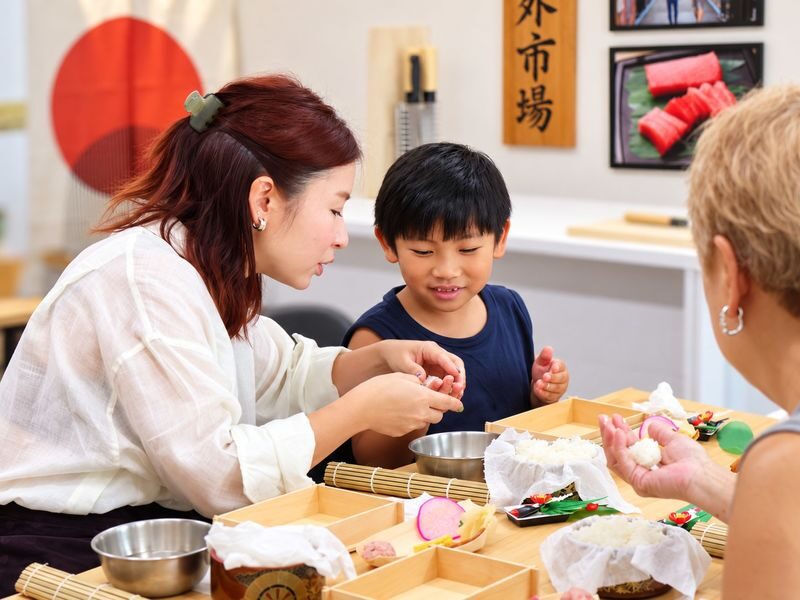
The pace is aimed at first-timers. An English-speaking instructor demonstrates the steps, then guides you as you make nigiri, inari, vegetable sushi, and a tuna roll. The instructions are described as clear and beginner-friendly, including for people who don’t speak English fluently. You don’t need to arrive knowing how to shape rice or use a sushi knife.
You can also read our reviews of more shopping tours in Tokyo



Making nigiri, rolls, and a bento
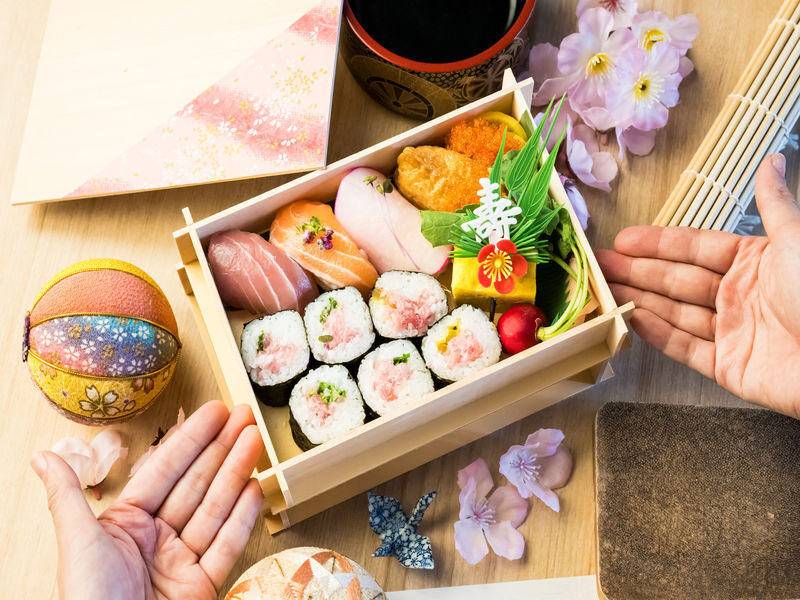
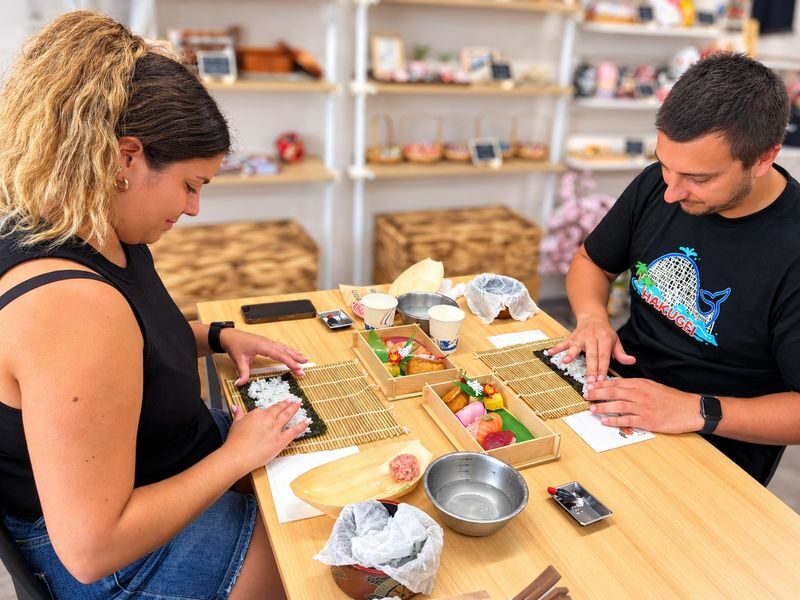
The core task is to prepare 10 pieces of sushi, then arrange them in a wooden bento box. The mix includes tuna and salmon nigiri, vegetable sushi, inari sushi, and a tuna roll. It’s a varied enough menu to give you a feel for different forms of sushi without turning a one-hour activity into a long cooking course.
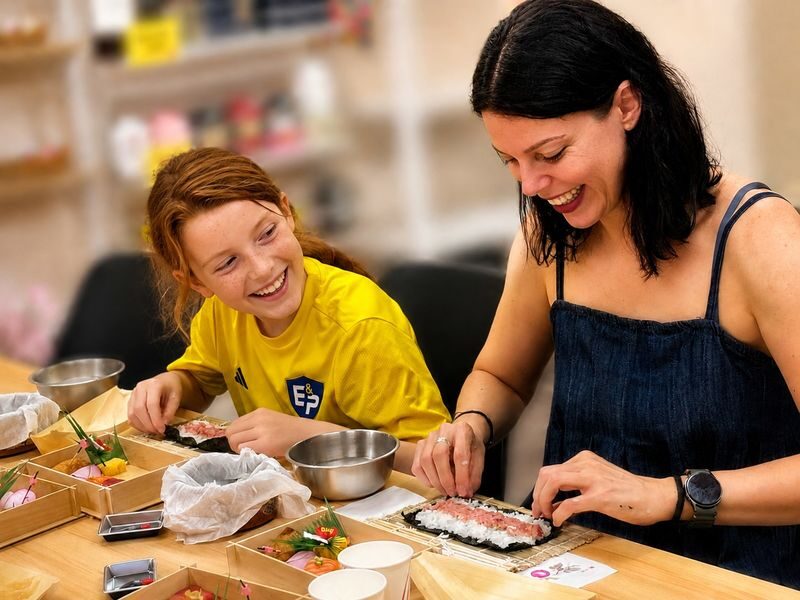
Nigiri is a useful place to learn because its simple appearance can make it seem easier than it is. You’ll shape sushi rice and pair it with fish, with the instructor showing you how to work through the steps. One participant also described learning to use a Japanese sushi knife, though the exact tools and tasks may depend on the instructor and the day’s setup.
The tuna roll adds a different kind of handwork, while inari and vegetable sushi offer alternatives to fish. The menu may change depending on the season and ingredient availability, so don’t treat the listed selection as a guarantee of every piece. If you have a particular favorite, it’s sensible to ask about the current menu before booking.
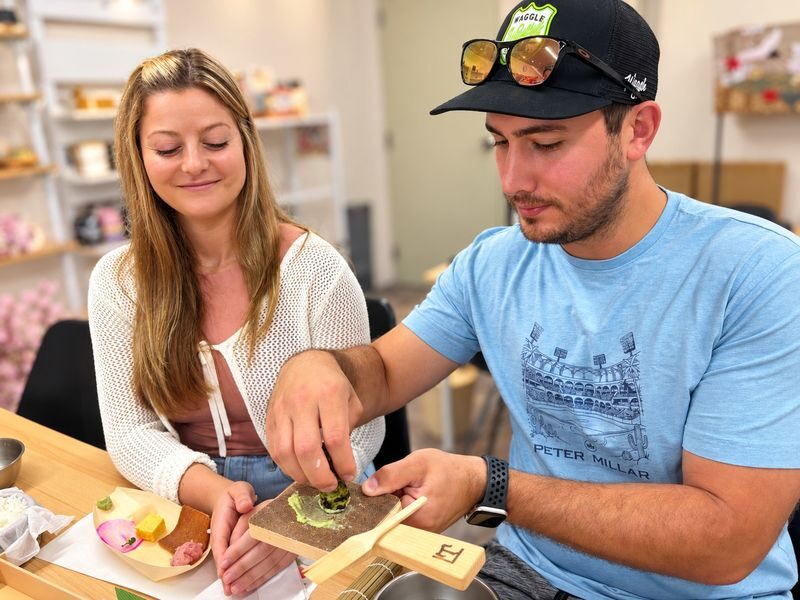
Fresh wasabi is another small but memorable part of the class. You’ll grate it yourself, rather than simply receiving a dab on the side. It adds a practical detail to the lesson and a chance to try an ingredient that’s often treated as a minor garnish.
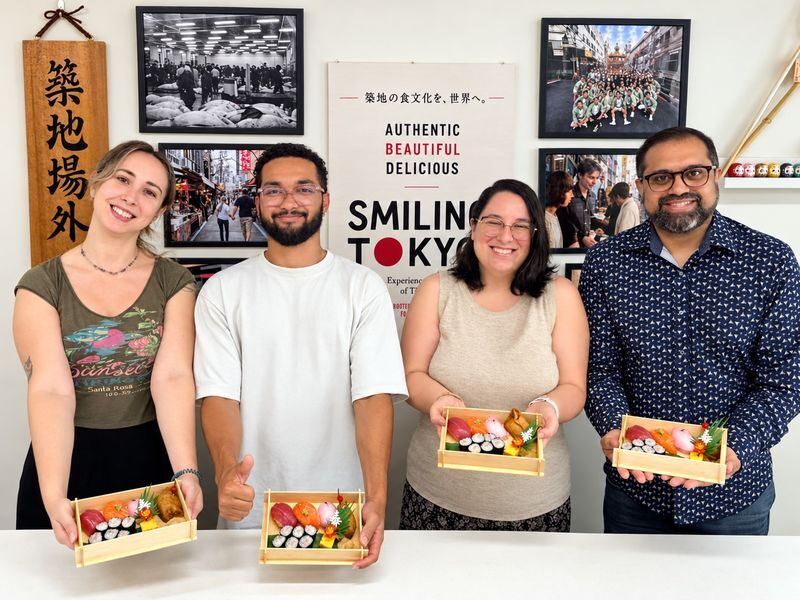
Once the sushi is ready, you arrange it in your wooden bento box. This final step is not just presentation for a photo: it gives you a moment to think about shape, color, and how the pieces sit together. Many people find that part rewarding because the result can look more polished than they expected from a first attempt. Then it’s time to say itadakimasu and eat what you’ve made.
The instructor and the learning atmosphere
The teaching style is a key part of this experience. The class is designed for beginners, and the instructions are broken into clear steps, so you can follow along even if sushi-making is new to you. You’re not expected to master a professional technique in an hour. Think of it as a friendly introduction, with a meal at the end.
Instructors named Kenji, Akiko, Mia, Masa, and Komi have been associated with the class. Kenji has been praised for warm, easy-to-follow teaching; Akiko for making the session fun; and Mia and Masa for clear English guidance. Komi has also been named as a welcoming host. Since the team may assign different instructors, treat these names as examples rather than a promise about who will lead your session.
The setting is suitable for solo participants as well as families. Solo attendees have found the atmosphere comfortable, while parents have brought preteen children who enjoyed the activity. Children aged 10 and older pay the adult rate. Children aged 0 to 2 can join free if they don’t need a separate seat, but infants and children must still be included in the passenger count when you book.
A one-hour class naturally limits how much culinary technique you can cover. If you want a long, detailed cooking course, this may feel quick. But if you want practical participation, a friendly introduction, and a satisfying lunch without giving up half a day, the shorter format is a strength.
Getting the timing right at Tsukiji
You can choose a 10:30 AM or 12:30 PM start. If you want to explore Tsukiji Outer Market, the earlier session is the better fit: many shops open early and close around 2 PM. Arrive with time to spare and browse beforehand, or use the hour after class to see what is still open. Some local shops accept cash only, so bring yen if you plan to shop.
The class begins and ends at the same address: Sanki Building, 3rd floor, room 302, at 4-chome-10-6 Tsukiji in Chuo City. The building also houses Sushizanmai Bekkan, an annex of the sushi restaurant. There are several Sushizanmai locations in Tsukiji, so check that you’re at the Bekkan building, then use the narrow path on the building’s right side to reach the elevator.
The activity is independent of the restaurant. Don’t rely on restaurant staff to direct you or answer questions about the class. Arrive 10 minutes before your chosen start time; late arrivals and no-shows aren’t refunded. The voucher is mobile and valid only for the date and time booked.
After the class, you can continue with other plans. Some people pair it with an afternoon visit to teamLab or another Tokyo attraction. The short format makes that workable, but allow time for getting between locations and don’t assume the class includes transport or a market tour.
Is $37.85 good value?
At a starting price of $37.85, the value comes from the combination of instruction, ingredients, and the meal you make. You’re not paying just to watch a demonstration: you prepare 10 pieces, try fresh wasabi, use the tools provided for the lesson, pack a wooden bento, and eat your sushi. For a hands-on activity in central Tokyo, that’s a useful bundle.
The price makes more sense if you’re curious about Japanese food culture or want a practical activity to break up sightseeing. It’s less compelling if you’re only looking for the cheapest possible lunch, since you’re paying for the lesson as well as the food. And if you already make sushi at home, the beginner pace may offer less new technique than it does for a first-timer.
The package details identify breakfast and lunch as included, while the experience itself describes eating the sushi you prepare. Treat the sushi meal as the main food offering and ask the operator if you need clarification about what else is included. Personal expenses are not included.
You can also read our reviews of more tours and experiences in Tokyo



Who will enjoy this most
I’d recommend this class to first-time sushi makers, curious food lovers, and families looking for an activity that’s both practical and easy to follow. It suits solo visitors, too: the session is structured, and you can join without bringing a companion. The compact timing is also helpful if you want to fit a food activity into a full Tokyo day.
It may not be the best match if you want an in-depth culinary course, a guided Tsukiji Market tour, or a meal built around a wide selection of dishes beyond the sushi you make. The class has a clear focus and short run time. Those are limitations if you want a long outing, but advantages if you want a simple, participatory experience with a meal at the end.
The strongest reason to book is the combination of local market ties and direct participation. You’ll get a sense of how sushi takes shape in your own hands, rather than only seeing it arranged at a counter. That’s a modest lesson, not a masterclass, but it can make your next sushi meal more interesting.
A few practical details before you book
The menu can change with the season and ingredient availability. Pets are not allowed, and participants who appear intoxicated may be refused service without a refund. Confirmation is normally sent within minutes; contact customer support if it doesn’t arrive.
You can cancel for a full refund at least 24 hours before the activity date, using the destination’s local time. If severe weather or another unforeseen event leads the operator to cancel, you can reschedule or request a full refund. Late arrivals and no-shows are not eligible for refunds or changes.
Should you book this Tsukiji sushi class?
Book it if you want a short, hands-on introduction to sushi, fresh ingredients, and Tsukiji’s food culture, especially if you’re new to making sushi. The 10:30 AM start is the better choice if market browsing is part of your plan. If you want a longer class or a guided market walk, look for a different activity. For a compact lesson that ends with your own bento, this is an appealing use of an hour.
1-Hour Sushi Bento Making in Tsukiji Fish Market
“KENJI's warm and friendly teaching made this experience really special. It was so much fun, and the sushi was absolutely delicious! I'm so glad I b…”
FAQ
How long is the sushi-making class?
The class lasts about one hour. The listed start times are 10:30 AM and 12:30 PM, with return times of 11:30 AM and 1:30 PM.
What sushi will I make?
You’ll make 10 pieces, including tuna and salmon nigiri, vegetable sushi, inari sushi, and a tuna roll. The menu may change with the season and ingredient availability.
Do I need cooking experience?
No. The class is designed for beginners, with step-by-step English guidance.
Where is the meeting point?
The meeting point is on the 3rd floor, room 302, of the Sanki Building at 4-chome-10-6 Tsukiji, Chuo City, Tokyo. The building houses Sushizanmai Bekkan, but the class is independent of the restaurant.
Can children join the class?
Yes. Children aged 10 and older pay the adult rate. Children aged 0 to 2 can join free if they don’t occupy a separate seat, but they must still be included in the passenger count.
What should I know about cancellation?
A full refund is available if you cancel at least 24 hours before the activity date, using local time. Late arrivals and no-shows aren’t refunded.