Wagyu is the headliner here, but the better reason to book is the chance to make it part of a full Japanese meal. In three hours, you’ll cook wagyu sukiyaki alongside seasonal sides, soup, rolled egg and a small sweet, with English-speaking staff to guide you.
I like two things in particular: you learn more than one showpiece recipe, and the meal gives you a taste of how different Japanese ingredients work together. The family-friendly format and options for several dietary needs also make this a useful choice for mixed-age groups.
The main caution is finding the venue. It is a five-minute walk from JR Shinanomachi Station, but the exact address and map link arrive with your voucher, and some people have had trouble following directions. Confirm the location before you set out, rather than relying on a generic map search.
- The key points before you book
- A wagyu lunch, not a beef-only demonstration
- What the three hours are likely to feel like
- The best parts of the menu
- Why this class suits families
- Dietary accommodations, with some limits
- Finding the meeting point without losing time
- Is US.50 good value?
- Who should book this cooking class?
- FAQ
- How long is the cooking class?
- Where is the meeting point?
- What food will I learn to make?
- Is lunch included?
- Is the class taught in English?
- Can vegetarian or vegan diners take part?
- Can the class accommodate halal requirements?
- Can young children attend?
- Is transportation included?
- When can I cancel for a full refund?
- The Best Of Tokyo!
- More 3-Hour Experiences in Tokyo
- More Tours in Tokyo
- More Tour Reviews in Tokyo
The key points before you book
 1 / 8
 2 / 8
 3 / 8
 4 / 8
 5 / 8
 6 / 8
 7 / 8
 8 / 8
- Wagyu is part of a full-course lunch: You cook sukiyaki, not just a single beef dish, and eat the meal you prepare.
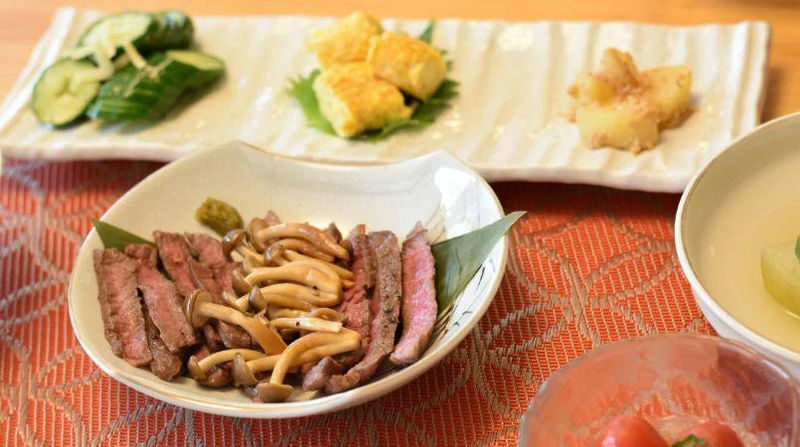
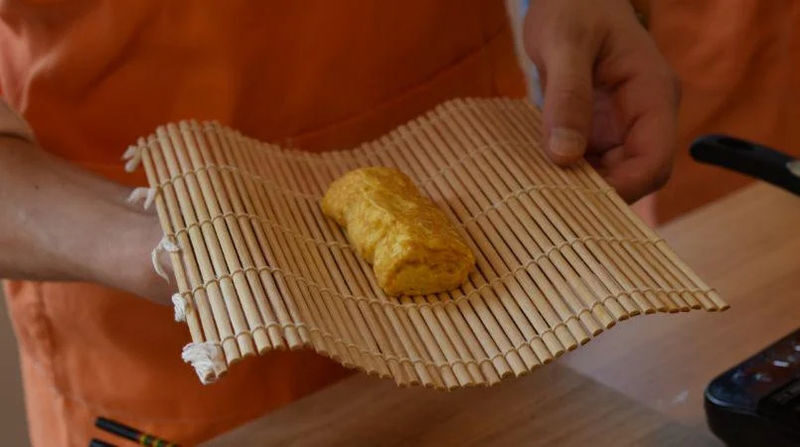
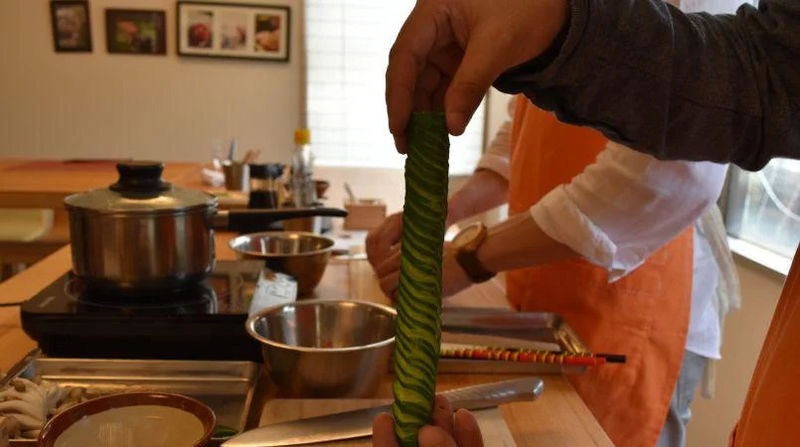
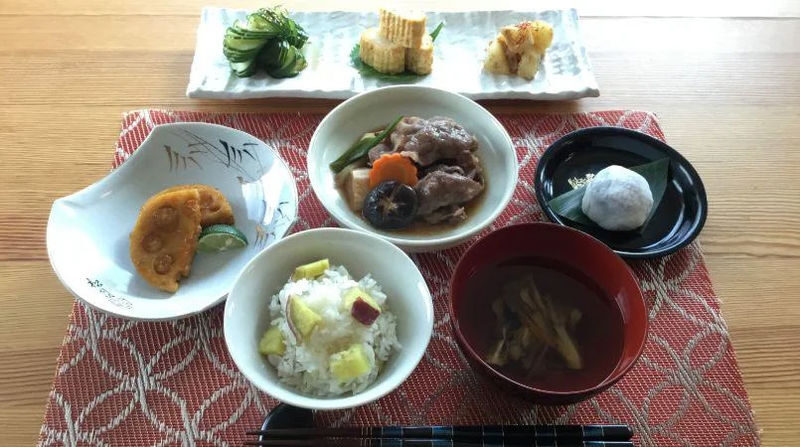
- The menu has seasonal variety: Expect cucumber salad, rolled egg, miso soup, tsukudani, Shinodamaki with seasonal vegetables, sesame and miso sauce, and a mini sweet.
- The class lasts three hours: That gives you time to cook several dishes and sit down to eat, without taking up an entire day.
- English-speaking staff are included: You can ask questions as you work, and the class is intended for all ages.
- Dietary needs require advance notice: Several options are supported, but halal-certified meat is not used.
- The venue is close to two stations: JR Shinanomachi is about five minutes away on foot; Yotsuya-Sancho-me Station is about a ten-minute walk.

👉 See our pick of the Our Picks For The 11 Best Workshops & Classes In Tokyo
A wagyu lunch, not a beef-only demonstration
The class is designed around a meal, and that changes what you take away from it. You will prepare wagyu sukiyaki, but the rest of the menu gives you a broader introduction to familiar Japanese home-style dishes and ingredients.
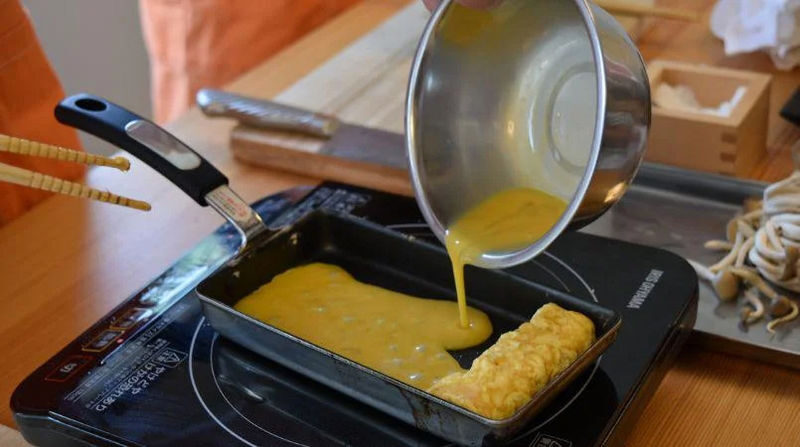
The listed menu includes accordion cucumber salad with sesame and miso sauce, rolled egg, kombu and umeboshi tsukudani, miso soup, Shinodamaki with seasonal vegetables, wagyu sukiyaki and a mini dorayaki-style sweet. The class describes the meal as seven dishes; the menu also names sauces and accompaniments, so think of it as a set of related preparations rather than seven large courses.
Seasonality is part of the appeal. The vegetables and some flavors may vary with the time of year, so you are not necessarily signing up for an identical meal on every date. That makes this a better fit if you want a practical introduction to Japanese cooking than if you are set on a fixed menu.
You can also read our reviews of more tours and experiences in Tokyo


What the three hours are likely to feel like
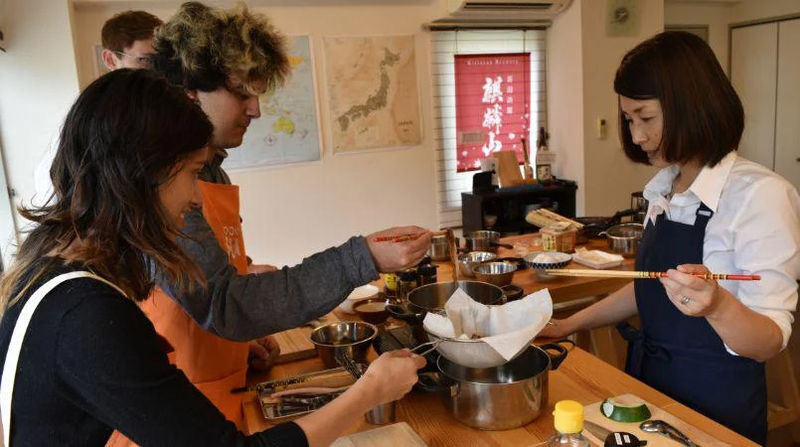
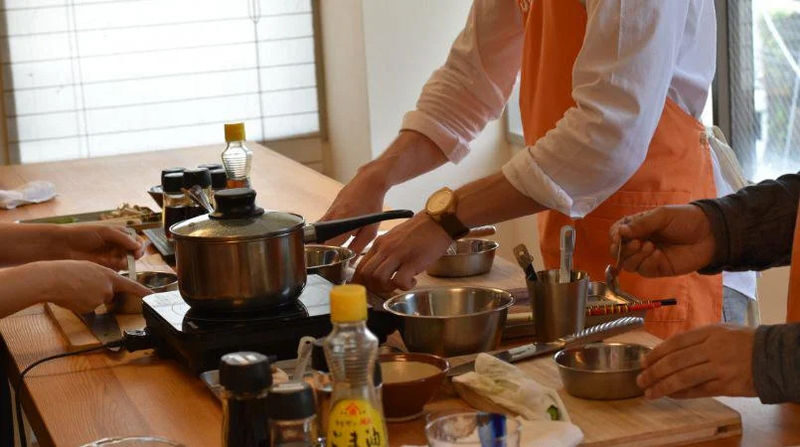
You meet near Shinanomachi Station and spend the session learning to prepare the dishes with ingredients and cooking tools supplied. The class is described as English-speaking, which helps if you want to follow instructions and ask about unfamiliar ingredients as you go.
The available details do not set out a minute-by-minute schedule, so don’t expect a precise sequence in advance. The useful thing to know is that the cooking and meal are both part of the three-hour booking. You are not simply watching a chef prepare lunch, and the food is not a separate restaurant meal afterward.
The menu moves between different kinds of preparation: fresh cucumber, a rolled egg, soup, a savory preserve, seasonal vegetables, and the hot wagyu sukiyaki. That range gives you more to take home than a single recipe. Even if you don’t often cook Japanese food, you can see how small sides and a main dish fit together into a meal.
The class also ends on a sweet note with a mini dorayaki-style item. It is a small part of the menu, not the main event, but it rounds out the lunch and makes the session feel like a meal rather than a cooking demonstration with a tasting spoon.
The best parts of the menu
Wagyu sukiyaki is the clear draw. The beef gives you a chance to cook with a celebrated Japanese ingredient, while the class places it in a familiar dish rather than treating it as a luxury tasting on its own. If wagyu is high on your Tokyo food list, this is a hands-on way to try it.
The sides make the session more instructive. Kombu and umeboshi tsukudani introduces a savory, preserved flavor; miso soup brings a well-known staple to the table; and cucumber with sesame and miso offers a fresh contrast to the richer main dish. You may find some of these flavors more assertive than what you are used to, which is part of the point.
The rolled egg and Shinodamaki with seasonal vegetables broaden the cooking beyond beef and soup. The ingredients are supplied, and utensils and tools are included, so you can concentrate on the dishes rather than bringing equipment.
Why this class suits families
This is one of the more practical food activities for a family because children can take part, and the class is described as suitable for all ages. Children under five can join free, but they do not receive food ingredients as part of that arrangement. Infants and children still need to be included in the passenger headcount.
Children aged six to twelve must attend with a paying adult. From age thirteen, the adult rate applies. If you are bringing a young child, consider what participation will mean for your family: a four-year-old may be able to help with parts of the cooking, but the included ingredients are not provided for children under five.
A family with four adults and two children found the instructors kind and the ingredients easy to follow. Their four-year-old helped when able, while their nine-month-old slept through the session. That is a useful picture of the class’s flexibility, but do not count on a baby sleeping or assume every child will want to cook. It is still a three-hour activity, so a child’s interest and your own ability to supervise matter.
Dietary accommodations, with some limits
You can request accommodations for gluten intolerance, vegetarian, vegan and pescetarian diets, and the activity information also lists kosher needs. Tell the host about restrictions in advance. Do not wait until class time to explain an allergy or a strict dietary requirement.
For vegetarian and vegan diners, meat and fish can be replaced with vegetables and other ingredients. The stated substitutions include thick fried tofu instead of meat and okra instead of minced chicken. These changes mean you can still take part in the cooking, though your meal will differ from the wagyu-centered version.
There is an important distinction for halal diners: halal-certified meat is not used. The host can remove alcohol components or ingredients from the recipe, but that does not make the meat halal-certified. If certification is essential, this class may not meet your needs.
Kosher is named among the dietary requirements that can be accommodated, but the available details do not describe the specific changes. Contact the provider before booking if you need to know how the menu will be adapted. The same rule applies to serious allergies: share the details early and confirm that the arrangement works for you.



Finding the meeting point without losing time
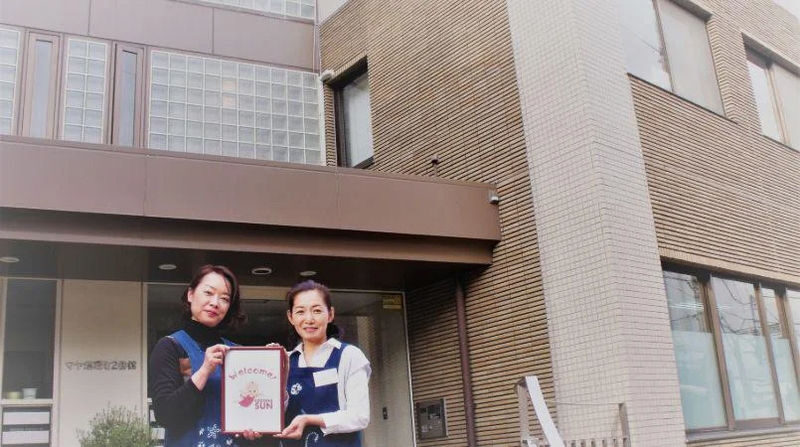
The meeting point is Shinanomachi Station, with the venue about a five-minute walk from JR Shinanomachi Station. Yotsuya-Sancho-me Station on the Marunouchi Subway Line is about ten minutes away on foot. Transportation to and from the venue is not included.
The full address and Google Maps link are supplied on the voucher after booking confirmation. Make a point of checking those details, because map directions have caused trouble for people trying to find the class. One family arrived late after following the wrong address, though the instructors allowed them to join without making them feel unwelcome. That kindness is reassuring, but it is not a reason to risk missing part of a three-hour class.
Use the voucher’s location information rather than searching only by the activity name. If anything is unclear, resolve it before the day of your class. The venue’s proximity to the station makes the final walk short, but only if you have the right destination.
Is US$77.50 good value?
The three-hour class starts at US$77.50. The price includes English-speaking staff, ingredients for wagyu and the Japanese dishes, and the utensils and tools used in class. It does not include your journey to the venue.
I see the value in the combination: you get instruction, several preparations, a full lunch and a hands-on activity in one booking. If you only want to eat wagyu, a restaurant meal may be a simpler way to spend your money. If you want to learn how a range of Japanese dishes come together and enjoy the food you make, the class offers more than a plate of beef.
The starting price is not necessarily the final amount for every party or date, so check the rate shown for your booking. Also factor in the time and cost of getting to Shinanomachi. The class works best when you are interested in the cooking itself, not just in sampling the menu.
The activity is provided by Tablecross Inc. The company has a 95 percent good review rate across 1,147 reviews, though that broader figure cannot guarantee what your own class will be like. The two specific accounts available for this activity give a consistent practical picture: people valued the kind instructors, clear-to-follow ingredients and enjoyable food, while both accounts flagged difficulty locating the venue.
Who should book this cooking class?
Book it if you want a hands-on food activity that gives wagyu a place in a larger Japanese meal. It is especially appealing for families with school-age children, curious home cooks, and anyone who prefers learning a few dishes to spending the same time at a restaurant.
It can also work well for vegetarians, vegans, pescetarians and people with gluten intolerance, provided you contact the host in advance and are comfortable with the proposed substitutions. Halal diners should be clear-eyed about the lack of halal-certified meat; removing alcohol from a recipe is not the same as halal certification.
Skip it if you want a quick tasting, need a guaranteed fixed menu, or cannot spare three hours. And if finding a meeting point stresses you out, prepare ahead: check the voucher’s exact address and map link before leaving. That small bit of planning can make the difference between arriving ready to cook and starting lunch in a hurry.
Learn To Cook Japan’s Famous Wagyu Beef In Tokyo (3 Hours)
“This was a great experience for my family! The instructors were so kind and the ingredients were easy to follow. The food was delicious and fun to…”
FAQ
How long is the cooking class?
The class lasts three hours.
Where is the meeting point?
The meeting point is Shinanomachi Station. The venue is about a five-minute walk from JR Shinanomachi Station, and its detailed address and map link are supplied on the voucher.
What food will I learn to make?
The menu includes wagyu sukiyaki, accordion cucumber salad, sesame and miso sauce, rolled egg, kombu and umeboshi tsukudani, miso soup, Shinodamaki with seasonal vegetables, and a mini dorayaki-style sweet.
Is lunch included?
Yes. You prepare a full-course lunch during the class and eat the food you make.
Is the class taught in English?
English-speaking staff are included.
Can vegetarian or vegan diners take part?
Yes. Meat and fish can be replaced with vegetables and other ingredients. Thick fried tofu is used instead of meat, and okra instead of minced chicken. Tell the host about your requirements in advance.
Can the class accommodate halal requirements?
Halal-certified meat is not used. The host can remove alcohol components or ingredients from the recipe.
Can young children attend?
Children under five can participate free of charge, but without food ingredients. Children aged six to twelve must be accompanied by a paying adult, and children aged thirteen or older are charged the adult rate. Infants and children must be included in the passenger headcount.
Is transportation included?
No. Transportation to and from the venue is not included.
When can I cancel for a full refund?
You can receive a full refund if you cancel at least 72 hours before the activity date, using the destination’s local time.