At its best, this is a spring day of vivid contrasts: millions of blue nemophila on open hills, a red shrine gate facing the Pacific, then wisteria and other flowers at Ashikaga Flower Park. It packs three very different sights into one trip from Tokyo, without asking you to solve the transport connections yourself.
I like the nemophila fields at Hitachi and the chance to pair them with the coastal Kamiiso Torii, a striking Shinto landmark on a rocky reef. I also like that the day finishes among Ashikaga’s famous spring flowers, with a chance to see the park’s seasonal evening lights when timing and conditions allow.
The trade-off is a long day with a tight schedule. Traffic or a late arrival can shorten a stop or cancel the torii visit, and the phrase Wisteria Season does not guarantee flowers or darkness at Ashikaga. Check the bloom forecast and ticket details before booking.
- The details that matter most
- Three spring sights, one ambitious day
- Hitachi Seaside Park: blue hills and a broad walk
- Kamiiso Torii: a shrine gate at the water’s edge
- Ashikaga Flower Park: wisteria, roses and the evening question
- The bus, guide and pace of the day
- What to bring and who will enjoy it
- FAQ
- Where does the tour leave from?
- What time does the tour return to Tokyo?
- Are admission tickets included?
- How much are the park admission fees if they are not included?
- Is the Kamiiso Torii stop guaranteed?
- Does the tour guarantee Ashikaga’s night illumination?
- Is lunch provided?
- Can I bring a child or luggage?
- More 1-Day Tours in Ashikaga
- More Tours in Ashikaga
- More Tour Reviews in Ashikaga
The details that matter most
 1 / 7
 2 / 7
 3 / 7
 4 / 7
 5 / 7
 6 / 7
 7 / 7
- Hitachi’s nemophila bloom is the main spring draw. The park’s hills turn blue when the flowers are in season, but the display changes with the weather and time of year.
- The Kamiiso Torii stop is conditional. If the group reaches Hitachi Seaside Park at 1 p.m. or later, the torii visit may be dropped.
- Ashikaga is more than wisteria. Roses and other seasonal flowers can still make the park worthwhile after the wisteria has faded.
- Expect about 10.5 hours away from Tokyo. Departure is at 11 a.m., with a reference return time of 9:30 p.m.
- Park admission fees are unclear in the tour details. Several sections say tickets are not included, so budget for them unless your booked package confirms otherwise.
- The group may include several languages. English, Chinese or Japanese service is offered, but the assigned guide and the amount of live interpretation can vary.
Three spring sights, one ambitious day
The appeal is variety. Hitachi Seaside Park offers broad flower fields and open space; the Kamiiso Torii brings a coastal shrine setting; Ashikaga Flower Park is known for its wisteria and seasonal displays. You get a sampler of Ibaraki and Tochigi without arranging separate trains, buses and connections.
That convenience has a price beyond the fare: you surrender flexibility. The group follows a shared schedule, and traffic can force the guide to reorder, shorten or cancel stops. This matters most in April and May, when the flower displays draw large crowds and the road schedule is least predictable.
The tour departs from the Shin-Marunouchi Building, under the BEAMS sign near JR Tokyo Station. Be there at least 10 minutes early. The bus cannot wait for late arrivals, and missed departures are not refundable.
The listed price starts at $70.25, which can be good value if you want transport to all three places and are content with a brisk visit at each. But add the possible park admission fees, meals and personal expenses when comparing the total cost. The tour details give Hitachi admission as ¥450 per person, or ¥800 from April 3 to May 6, 2026, and Ashikaga admission as roughly ¥1,200 to ¥2,300 depending on flowering conditions. Other sections contradict this by saying admission is included. Confirm what your selected package covers before paying.
You can also read our reviews of more tours and experiences in Ashikaga
Hitachi Seaside Park: blue hills and a broad walk
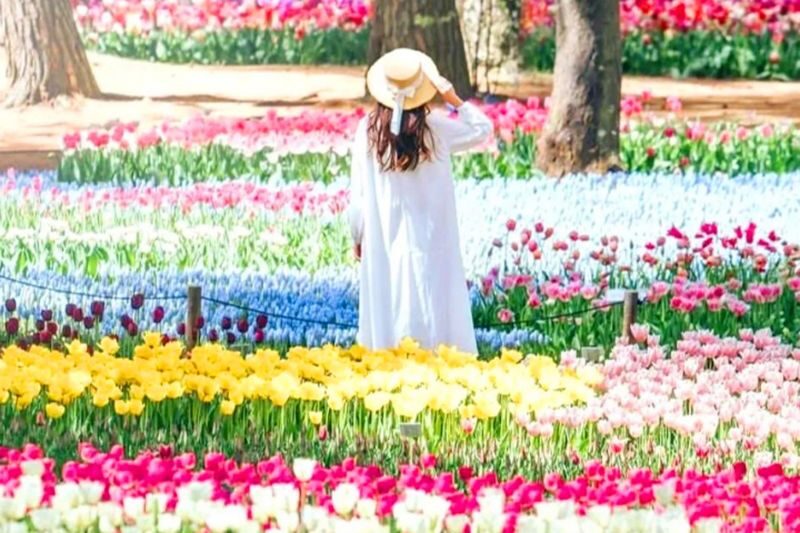
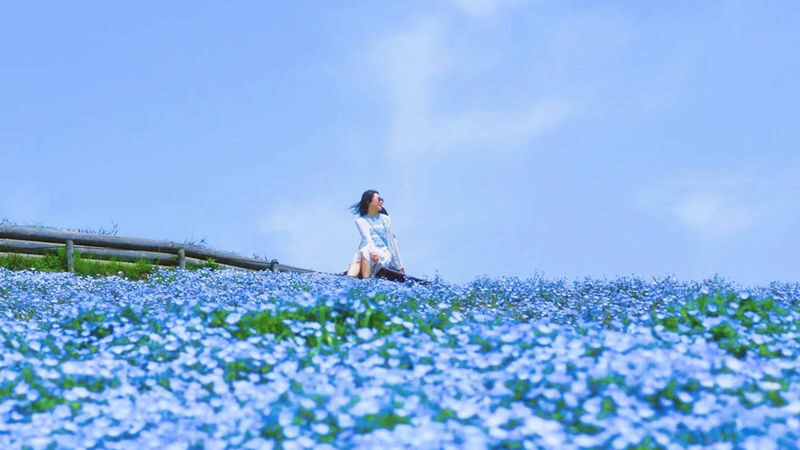
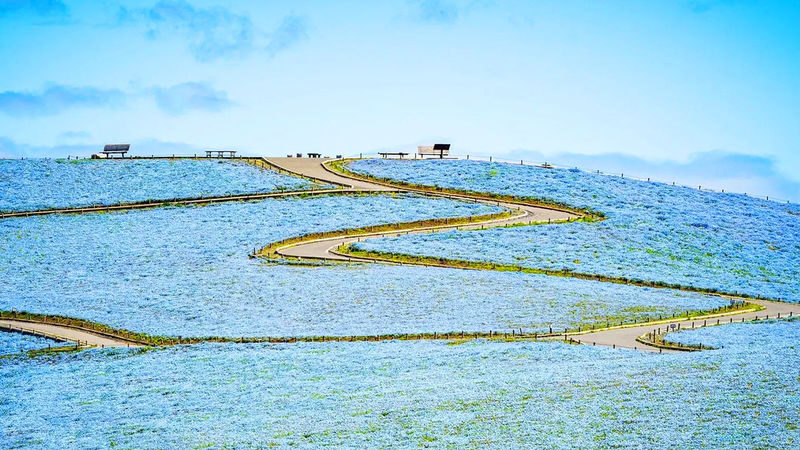
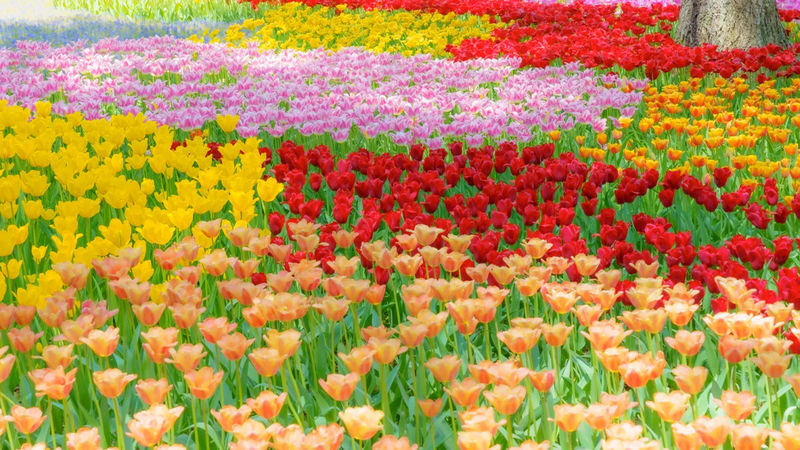
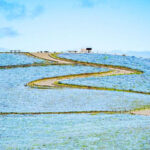
The first major stop is Hitachi Seaside Park, in Ibaraki Prefecture. It is a large park with lawns, sandy beach areas and bicycle paths, and its flowers change through the year. Spring nemophila is the draw for this particular trip: the tour description cites 4.5 million flowers, carpeting the hills in blue and white.
The park is open rather than intimate. You can walk among the flower fields, take photographs and enjoy the wider views, but the two-hour stop is not enough to explore every part at a leisurely pace. Decide what matters most once you have the map. If the nemophila are your priority, head for the flower area first rather than assuming you can wander and still see everything.
This is also the first place where timing has a knock-on effect. The planned arrival is around 1 p.m., a point that matters because the tour warns that reaching the park at or after 1 p.m. may mean the Kamiiso Torii stop is canceled. The itinerary gives the torii as a later stop, so you should treat it as a possibility, not a promise.
A few practical points help here. Bring water and something to eat, since lunch is not included and the stop is short. Food options are available at the attractions, but a meal can use up precious flower-viewing time. If you have a particular photo in mind, use the first minutes to get oriented and choose a route.
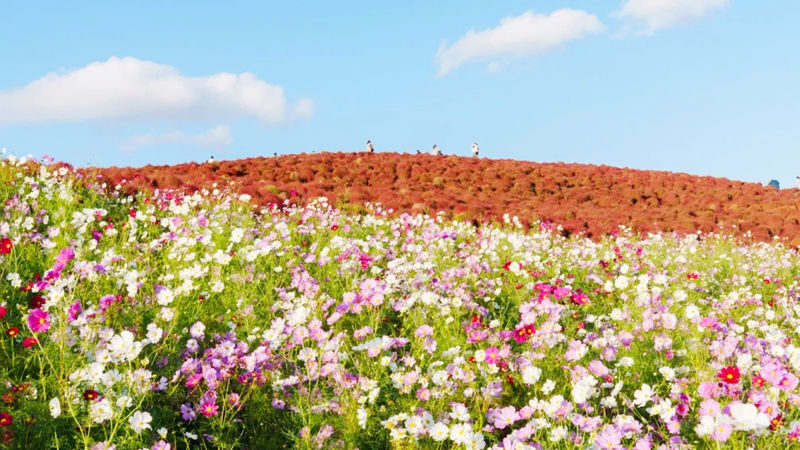
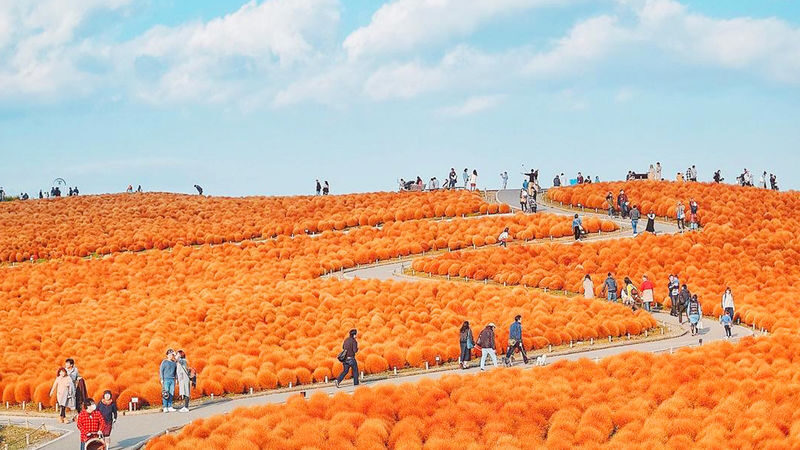
The park’s appeal also depends heavily on the season. Hitachi has flowers beyond nemophila, including tulips in spring and cosmos in autumn, while kochia turn red later in the year. But this is sold as a spring flower trip, so do not assume that a late visit will still deliver the blue fields. The tour does not offer compensation if weather or flowering conditions disappoint.
Kamiiso Torii: a shrine gate at the water’s edge
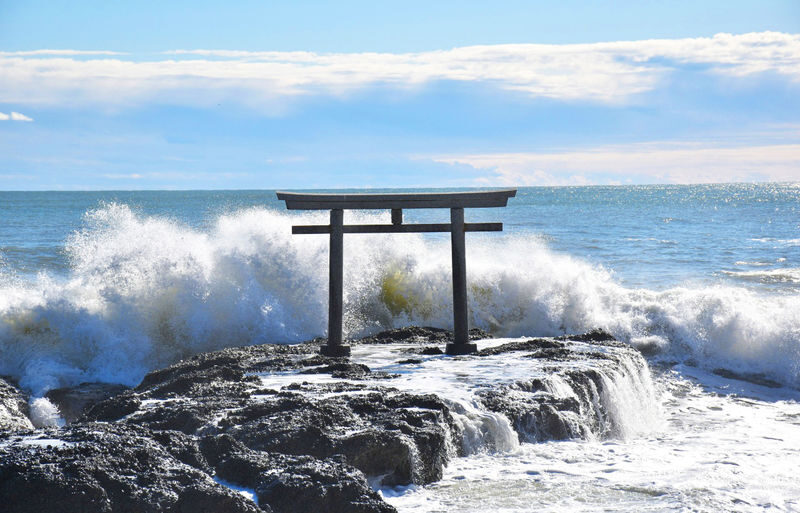
The Kamiiso Torii stands on a rocky reef by the Pacific and is associated with Oarai Isosaki Shrine. Its red frame against the sea gives this stop a different mood from the flower parks: less about walking through acres of blooms, more about pausing to take in a single coastal scene.
Sunrise is described as the most striking time, when waves, rocks and the torii meet in the early light. This tour visits in the afternoon, so keep expectations grounded. You will still see a distinctive seaside landmark, but not the sunrise scene often linked with the site.
The planned stop is only about 30 minutes. That is enough for a look and photographs if the group arrives on time, but there is little room for lingering. More important, the stop may be canceled if the first park visit runs late. Traffic and conditions at the attractions can prompt further changes, so do not make this the only reason you book.
If the torii is essential to your plans, a tour with more time devoted to the coast may suit you better. Here, it is one part of a three-stop itinerary, and the flower parks take priority.
Ashikaga Flower Park: wisteria, roses and the evening question
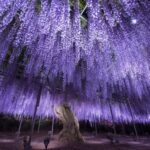
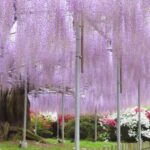
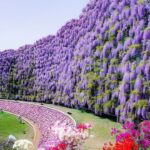
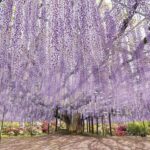
Ashikaga Flower Park in Tochigi is the grand finale. It is best known for its wisteria, including a celebrated old specimen described as about 160 years old, and a large trellis that turns the flowering branches into a canopy. In peak bloom, the hanging clusters and wisteria tunnel are the sort of display that gives the park its spring reputation.
The tour allows about 90 minutes at the park. That is enough for a focused visit, but not a slow one, especially if the grounds are crowded or you want to see several flower areas. Some departures have had less time in practice, and the schedule has drawn criticism when groups left before the evening illumination began. The listed stop time and the actual departure can vary with traffic and the driver’s legal working-hour limits.
This is the key point to settle before booking: a wisteria-season tour does not necessarily mean a night illumination visit. The stated 2026 illumination period is April 19 through May 17, but the group still needs to arrive and stay long enough for the lights to be useful. Some departures have left around sunset or before it was fully dark. Ask the operator whether your date is expected to include the illuminated display, rather than reading the tour title as a guarantee.
Nor is wisteria the park’s only attraction. Spring flowers change with the season, and roses have provided a colorful alternative when wisteria was nearly over. That flexibility can save the visit, but it will not make a faded wisteria display feel like peak bloom if that was your main reason for going.
The park admission is listed at about ¥1,200 to ¥2,300, with the amount set according to flowering conditions. Since the tour information gives conflicting answers about whether tickets are included, confirm the exact arrangement for your chosen date and package.
The bus, guide and pace of the day
This is a shared group tour for one to 45 people. The vehicle may be a van, minibus or larger coach, depending on the group size, and seats are assigned on a first-come basis. You cannot choose the vehicle. The day includes round-trip transport from Tokyo, tolls, parking and fuel, which is a real convenience when the stops span two prefectures.
Guides are offered in Chinese, English and Japanese, but an English-speaking guide is not a guarantee of a particular person or style. Guide names associated with departures include Elsa, Liu, Leo, Jimmy and others. Some have been praised for clear instructions, local background and keeping groups organized; one English-language account described communication as very limited. If detailed interpretation is important to you, consider that variation before booking.
Clear instructions are particularly useful on a packed day. At a large park, knowing the route and return time can save you from spending half your visit finding the main flower area. Keep the guide’s contact information handy, listen carefully to the meeting-point directions and be back on time. A group cannot wait for one person without affecting everyone else’s schedule.
The stated schedule runs from 11 a.m. to 9:30 p.m., though the return time is only a guide. Traffic, weather and other delays can shift the order or reduce time at a stop. Do not plan a flight, performance or fixed appointment that evening.
What to bring and who will enjoy it
Pack a small lunch or plan for a quick meal at a park. Food and drinks are not included, and a long day with short stops is not ideal for a leisurely restaurant break. Cash is useful for incidental purchases, and the tour information asks you to bring your passport with at least six months of validity.
One standard-size piece of luggage is allowed if you note it when booking. Bringing it without advance notice may leave too little room in the vehicle, and boarding can be refused. Child seats are not available. The activity is not wheelchair-accessible and is not recommended for people with limited mobility or pregnant women.
I would consider this trip if you are in Tokyo during peak spring bloom, want to see all three sites, and value transport more than a relaxed pace. It suits flower fans, photographers willing to work quickly and anyone who would rather let a guide handle the long-distance driving.
I would look elsewhere if you need guaranteed wisteria, a confirmed night-light visit, a full meal break or substantial time at each attraction. The best value here comes from seeing several seasonal sights in one day, provided you accept that the schedule is ambitious and nature does not follow a booking calendar.
Wisteria Season Limited: Day Trip from Tokyo: Hitachi Seaside Park + Kamisuso Torii Gate + Ashikaga Flower Park
“Great tour if you'd like to visit 2 flower parks in one day + a coastal Shinto shrine. Hitachi Seaside Park is vast, and the nemophilia field is ma…”
FAQ
Where does the tour leave from?
It leaves from under the BEAMS sign at the Shin-Marunouchi Building near JR Tokyo Station. Arrive at least 10 minutes before the 11 a.m. departure.
What time does the tour return to Tokyo?
The reference return time is 9:30 p.m. The actual arrival may be earlier or later depending on traffic and the day’s conditions.
Are admission tickets included?
The tour information conflicts on this point. Several sections say Hitachi Seaside Park and Ashikaga Flower Park tickets are not included, while another says they are included. Confirm the ticket arrangement for your selected package before booking.
How much are the park admission fees if they are not included?
The stated reference fee for Hitachi Seaside Park is ¥450 per person, rising to ¥800 from April 3 to May 6, 2026. Ashikaga Flower Park is listed at roughly ¥1,200 to ¥2,300, depending on flowering conditions.
Is the Kamiiso Torii stop guaranteed?
No. If the group reaches Hitachi Seaside Park at or after 1 p.m., the Kamiiso Torii visit may be canceled. Traffic and other on-site conditions may also change the schedule.
Does the tour guarantee Ashikaga’s night illumination?
No. The stated 2026 illumination period is April 19 to May 17, but the time at the park may not extend until dark. Confirm the expected timing for your date if the lights are important to you.
Is lunch provided?
No. Meals and drinks are not included. You can arrange lunch yourself, buy food at the attractions or bring something with you.
Can I bring a child or luggage?
There is no age limit. Children aged 0 to 3 may join free if they do not need a separate seat, while children aged 3 and older pay the adult rate. Child seats are not available. Each person may bring one standard-size piece of luggage, but you should note it when booking.