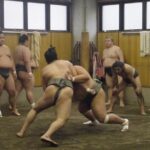
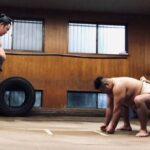
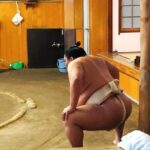
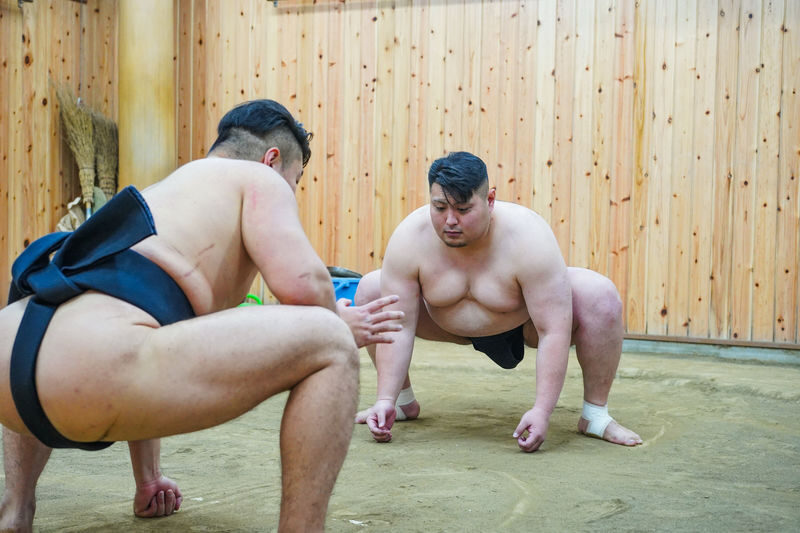
At 8:30 in the morning, you leave the station for a real sumo stable, where the wrestlers are training rather than performing for an audience. From close range, practice is a study in ritual and force: the room grows quiet, then bodies collide with a sound that makes the sport’s physical demands plain.
I like two things here: first, you see working training, not a staged demonstration; second, a guide explains the rules and customs that help make the quiet moments meaningful. Guides named Marie, Hiro, and Masao have led tours, and the experience can include a photo with wrestlers afterward if the stable allows it.
One caution: ring-side does not guarantee an unobstructed view. Seating is limited and may be assigned first-come, first-served, while some front seats may be reserved. You’ll also need to sit quietly on tatami for much of the visit, and the photo opportunity is not guaranteed.
- What to know before you book
- A working stable, not a staged bout
- Starting at Kiyosumi-Shirakawa
- Learning the rules before the action
- Inside the stable: quiet, close, and physically demanding
- Ring-side seats, with an important caveat
- Photos and the end of practice
- Is .45 a fair price?
- Who will get the most from this morning?
- Should you book the sumo practice tour?
- FAQ
- How long is the tour?
- Where is the meeting point?
- How early should I arrive?
- What is included in the price?
- Can children join?
- Will I definitely sit in the front row?
- Can I take photos during practice?
- Is the tour wheelchair- or stroller-accessible?
- Can I cancel for a refund?
- The Best Of Tokyo!
- More Morning in Tokyo
- More Tours in Tokyo
- More Tour Reviews in Tokyo
What to know before you book
 1 / 4
 2 / 4
 3 / 4
 4 / 4
- Training, not a tourist show: You watch wrestlers at a working sumo stable, where the routine and rules come first.
- A close but variable view: The room can feel intimate, but seat position and sightlines depend on the stable and the group.
- Quiet is part of the experience: Expect to watch without chatting, eating, or drinking, and follow the stable’s etiquette.
- An English-speaking guide sets the context: The guide explains sumo’s traditions, rules, and what you’re seeing.
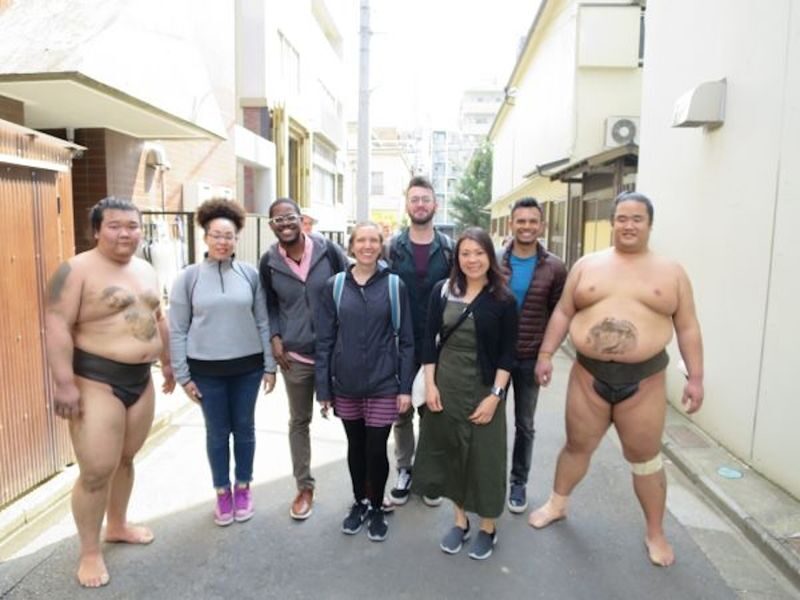
- Photo opportunities depend on permission: A group photo may be offered at the end, but each stable sets its own photography rules.
- An early, compact outing: The scheduled tour runs from 8:30 to 10:30, leaving much of the day free.

👉 See our pick of the Our Picks For The 11 Best Workshops & Classes In Tokyo
A working stable, not a staged bout
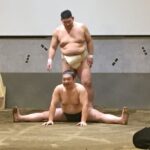
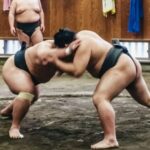
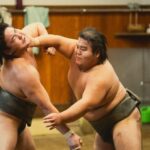
Sumo is easy to recognize and harder to understand from the outside. A tournament match gives you the dramatic finish, but practice reveals the discipline behind it: repeated exercises, careful preparation, and bouts in which wrestlers test strength and balance. The tour’s appeal is that you enter a place where training is the reason for being there.
That distinction matters. You are not buying a guaranteed show with a fixed sequence of performances. The stable’s schedule and the wrestlers’ condition take priority, so the length and exact shape of practice can vary. On some mornings, the action may be more intense or last longer than on others.
The setting is small and close enough to make the force of the collisions apparent. A guide can help you understand what is happening, but the atmosphere is deliberately restrained. You are there to observe, not to cheer or interrupt.
For someone who has only seen sumo on television, that change in scale and sound can be striking. You may notice the wrestlers’ effort, physical contact, and focus in a way that a match from the stands does not show. The sport is not made gentle by its ritual. One person who attended described seeing bruises and even a little blood, a reminder that this is demanding athletic work, not pageantry.
You can also read our reviews of more tours and experiences in Tokyo
Starting at Kiyosumi-Shirakawa
The meeting point is Kiyosumi-Shirakawa Station’s A1 exit, at 1-chome-6-13 Shirakawa in Koto City. Look for a guide holding a red or orange Magical Trip sign, and arrive ten minutes before the 8:30 departure. The tour starts promptly, and late arrivals cannot join or receive a refund.
That firm start is worth taking seriously. The stable is not a place you can simply wander into later, and the group’s access depends on moving together. Make sure you have the correct station exit and meeting address before leaving your hotel; one visitor had trouble finding the exact spot, although the operator was able to direct them to the nearby stable.
The visit is a meet-up tour, not a hotel pickup. Meals, drinks, and personal expenses are not included. Use the restroom before the group sets off, since restroom access may not be available during practice.
The scheduled return is at 10:30, at 3 Chome-11-1 Kiyosumi, with another supplied location reference at 3-chome-6-2 Kiyosumi. The practice itself can run shorter or longer, so treat the timing as an estimate rather than a promise. Traffic, weather, or a change at the stable may also affect the schedule.
Learning the rules before the action
Before entering the stable, your English-speaking guide gives you an introduction to sumo, its rules, and its traditions. The tour includes a short sumo guidebook, which can help you follow the basics once you are seated. That context is useful because practice does not pause to explain itself, and the stable is not the place to ask questions aloud.
Guide quality can shape the visit. Marie has been praised for explaining the culture and discipline clearly; Hiro has been described as especially good at answering questions, while Masao’s enthusiasm has helped make the sport accessible. The guide assigned to your departure can vary, so do not book on the assumption that you will have a particular person.
The best payoff from the introduction is that you begin to see more than size and impact. As one visitor noted, balance and the rule about keeping your feet on the ground make the contests more tactical than they first appear. Even during practice, small shifts in position can help explain why a bout turns quickly.
You should still expect the guide’s English and the amount of explanation to vary. Some people would welcome more detail, while others find the introduction sufficient for a first visit. If you already follow sumo closely, you may want to ask questions before entering, when conversation is easier.
Inside the stable: quiet, close, and physically demanding
Inside, the stable’s customs are part of the visit. You are expected to remain silent and avoid eating or drinking; you must also follow the rules given by your guide and the stable. Only designated tatami areas are open to visitors, and other parts of the stable are off limits.
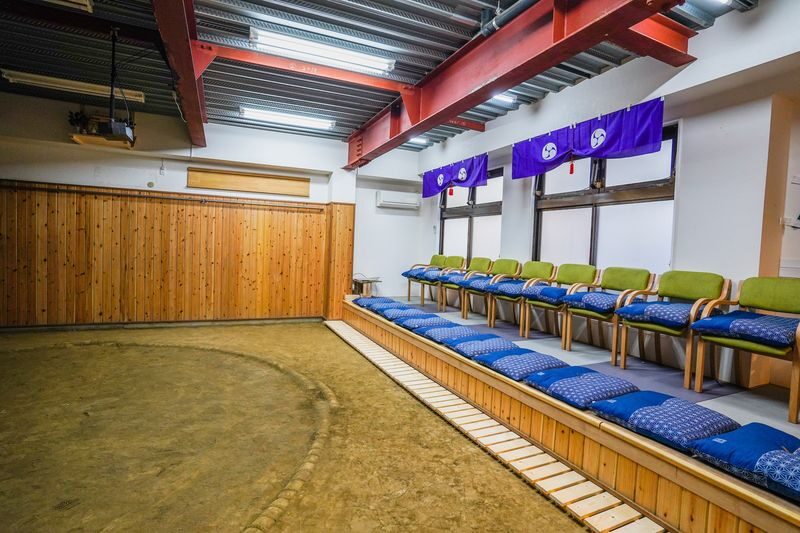
Most stables do not provide chairs. Plan to sit directly on tatami, and be ready to remain in place for much of the practice. A few hours on the floor may be uncomfortable if you have trouble sitting that way, and this is not a wheelchair- or stroller-accessible activity.
The silence changes how you experience the training. Without a running commentary or crowd noise, the impacts and pauses become more noticeable. It also means this is a poor choice if you or a child cannot stay quiet and still for an extended stretch.
The tour is limited to people aged 12 and older. That rule is firm: children under 12 are not permitted inside the stable, even if they are accompanied by an adult. For teenagers who can follow the etiquette, it can be a memorable way to see the effort behind a sport they may know mainly from television.
Ring-side seats, with an important caveat
The tour is sold around close viewing, and the small setting can make the wrestlers feel remarkably near. But do not read ring-side as a guarantee that every person will sit in the front row. Seating is first-come, first-served, and some front places may be reserved for others associated with the stable.
A few visitors have had a poor view from farther back, especially when people in front blocked the ring. One person said standing was the only way to see clearly, but you should not assume standing will be allowed or solve the problem. Arrive on time, follow the guide’s directions, and understand that the operator cannot promise a particular seat.
The group may also be divided among different stables depending on the number of participants. If you are travelling with friends who booked separately, put a request to visit the same stable in the booking notes. The operator cannot change the assigned stable on the day.
If a clear view is essential to you, this uncertainty is worth weighing before you book. The intimacy of the room is a major part of the appeal, but it also means a few people or a badly placed seat can affect what you see.



Photos and the end of practice
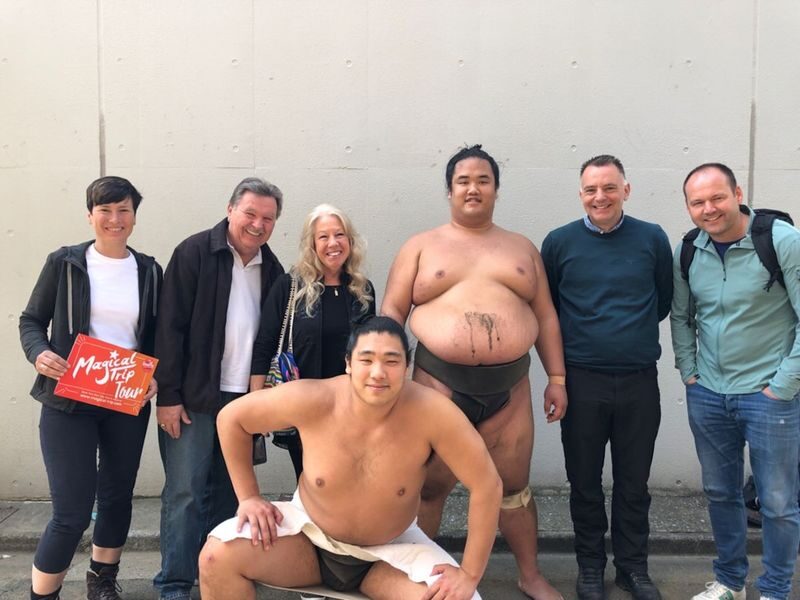
The tour includes a photo opportunity with wrestlers at the end, and many visitors value it as a personal finish to an unusual morning. It is not a guaranteed part of every visit, however. Photography during practice and photos with the wrestlers are governed by the stable’s policy, which can change by day.
Set your expectations accordingly: bring a phone or camera if you like, but do not count on taking pictures during training. If a photo is permitted, follow the guide’s instructions and treat the moment as a privilege rather than a scheduled photo session. The stable’s rules come first.
That caveat is important because the photo is a highlight for some people and a source of confusion for others. The tour includes a photo shoot in its description, but the additional rules state that the stable may not allow photos. If the chance to take a picture is the main reason you are booking, ask the operator about current permission before you pay.
Is $88.45 a fair price?
At a starting price of $88.45 for two hours, this is not a low-cost way to fill a morning. Its value lies in the stable access, the English-speaking guide, and the chance to observe a real practice from close range. Admission, the guide, and the sumo guidebook are included; food, drinks, and personal expenses are not.
I think the price makes more sense if you care about the cultural and athletic context, not just a photo or a quick look at large wrestlers. The guide’s explanation helps turn a silent viewing into a more legible experience, and the small stable can give you a sense of being close to the training. But if you expect a polished performance, guaranteed front-row seating, or a long opportunity to talk with the wrestlers, the cost may feel harder to justify.
The tour is also short enough to leave most of your day open. That is a practical advantage in Tokyo, where an early start can still fit around other plans. Just keep in mind that practice may end sooner or later than expected, so avoid scheduling something that requires a precise arrival immediately afterward.
Who will get the most from this morning?
This suits you if you are curious about sumo beyond its tournament image, enjoy seeing how athletes train, and can respect a quiet viewing space. It is especially useful if you cannot attend a tournament but want a close look at the sport’s physical demands and customs.
It is less suited to anyone who needs a guaranteed seat with a clear view, cannot sit on the floor, or wants to take photos freely. Families should pay close attention to the age limit: no one under 12 may enter, and even older children need to manage a silent practice session.
Weather matters too. The tour takes place in the morning, but Japan’s temperatures can range from summer heat up to 40°C (110°F) to winter lows around -5°C (20°F). Dress for the season, and remember that the stable’s indoor viewing conditions may not offer the comfort or flexibility of a conventional attraction.
Should you book the sumo practice tour?
Book it if your priority is an authentic look at training, with a guide to explain what you are seeing and a chance to be near the action. The strongest part is the contrast between strict ritual and very physical practice. It can leave you with a more grounded respect for what sumo demands.
Skip it if the photo, a guaranteed front-row view, or a staged bout is what you want. The stable controls the schedule and photography, seating can be uneven, and the rules call for patience. Go in ready to listen, sit quietly, and accept the occasional uncertainty, and this short morning can offer a rare view of sumo as it is practiced.
Tokyo Sumo Morning Practice Tour with Ring-Side Seats + Photo Shoot
“Hiro is a fantastic guide, super knowledgeable and the experience what all that we'd hoped!”
FAQ
How long is the tour?
The scheduled tour runs from 8:30 to 10:30, for about two hours. Practice length can vary, so the finish may be earlier or later.
Where is the meeting point?
Meet at Kiyosumi-Shirakawa Station’s A1 exit, at 1-chome-6-13 Shirakawa, Koto City, Tokyo. Look for a red or orange Magical Trip sign.
How early should I arrive?
Arrive ten minutes before the 8:30 departure. Late arrivals cannot join, and missed tours are not refunded.
What is included in the price?
Admission to a sumo stable, an English-speaking guide, a sumo guidebook, and a photo opportunity with wrestlers where the stable permits it are included. Meals, drinks, and personal expenses are not.
Can children join?
Only participants aged 12 and older may take part. Children under 12 are not allowed inside the stable.
Will I definitely sit in the front row?
No. Seating is first-come, first-served, and some front seats may be reserved. The group may also be split among different stables.
Can I take photos during practice?
Photography depends on the stable’s rules. A photo with wrestlers may be possible at the end, but it is not guaranteed.
Is the tour wheelchair- or stroller-accessible?
No. The activity is not wheelchair- or stroller-accessible, and visitors may need to sit on tatami because most stables do not provide chairs.
Can I cancel for a refund?
You can receive a full refund if you cancel at least 24 hours before the activity date, using destination local time. If the stable cancels, you can request a full refund or reschedule.