
Zori-making gives you more than a souvenir: you learn how decorative straps are fitted to traditional sandals, then leave with a pair you made yourself. I like two things in particular: you choose your zori and straps, and a skilled local artisan guides the hands-on work. It is a compact way to meet traditional craft without setting aside half a day.
I also like that the finished sandals are wearable, not just something to pack carefully and admire at home. The main consideration is the short format: one hour is enough for the guided strap-fitting activity, but not a long lesson in every part of sandal-making. The workshop is for ages 13 and up, and transport to the shop is not included.
At a glance
- Make zori you can take home: Your finished sandals are yours to keep.
- Choose your design: Select your zori and straps before you begin.
- Learn Hanao-Suge: A local artisan demonstrates and guides the traditional strap-fitting technique.
- Plan for one hour: The workshop takes place at Ichihara Shouten in Asakusa.
- Arrive on your own: The shop is a five-minute walk from Asakusa Station on the Tokyo Metro Ginza Line.
- Check the age limit: Participants must be at least 13 years old.

👉 See our pick of the Our Picks For The 11 Best Workshops & Classes In Tokyo
- At a glance
- What the one-hour zori workshop involves
- Choosing straps and making the sandals your own
- From reception to finished pair at Ichihara Shouten
- Why a traditional craft makes a better souvenir
- The Asakusa location and getting there
- Is .39 good value for an hour?
- Who will get the most from this craft session
- Should you book the Asakusa zori workshop?
- FAQ
- How long does the zori-making workshop take?
- Where does the workshop take place?
- How do I get to Ichihara Shouten?
- What time can I book?
- What is included in the price?
- Can beginners take part?
- What is the minimum age?
- Can I cancel and receive a refund?
- The Best Of Tokyo!
- More Tours in Tokyo
- More Tour Reviews in Tokyo
What the one-hour zori workshop involves
 1 / 6
 2 / 6
 3 / 6
 4 / 6
 5 / 6
 6 / 6
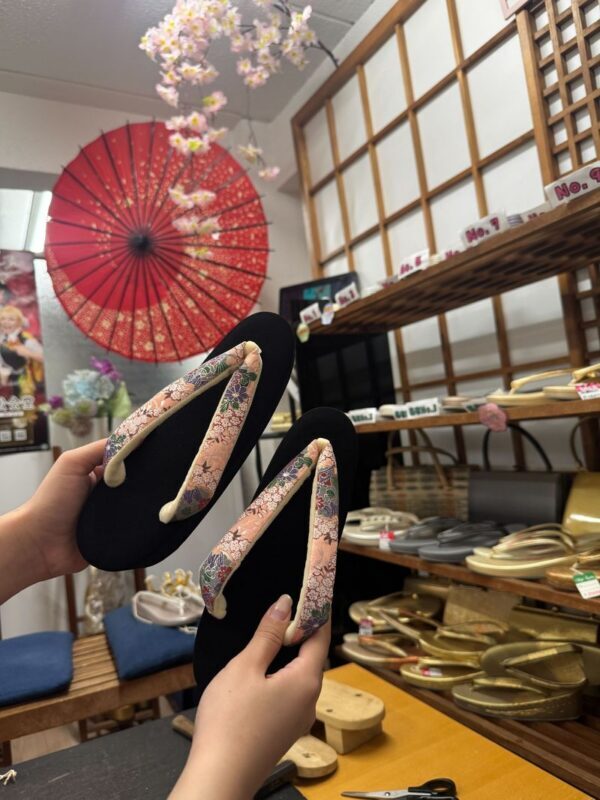
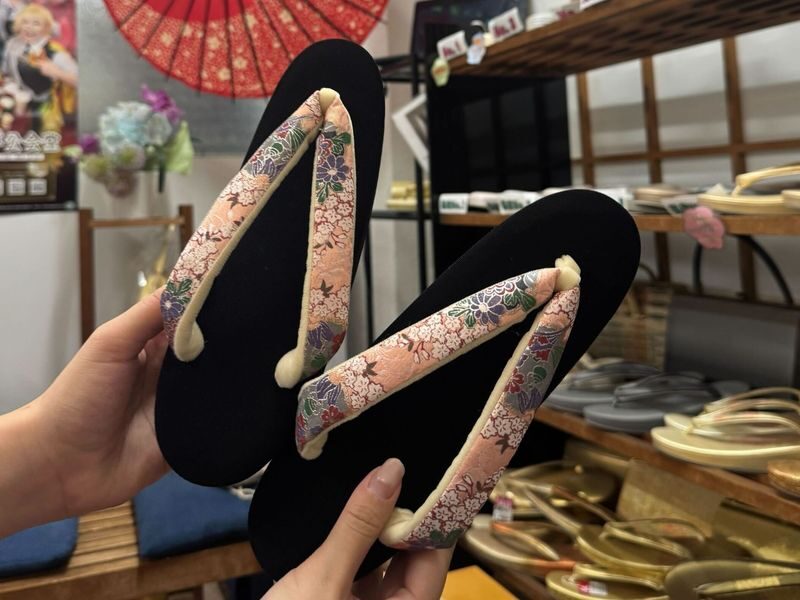
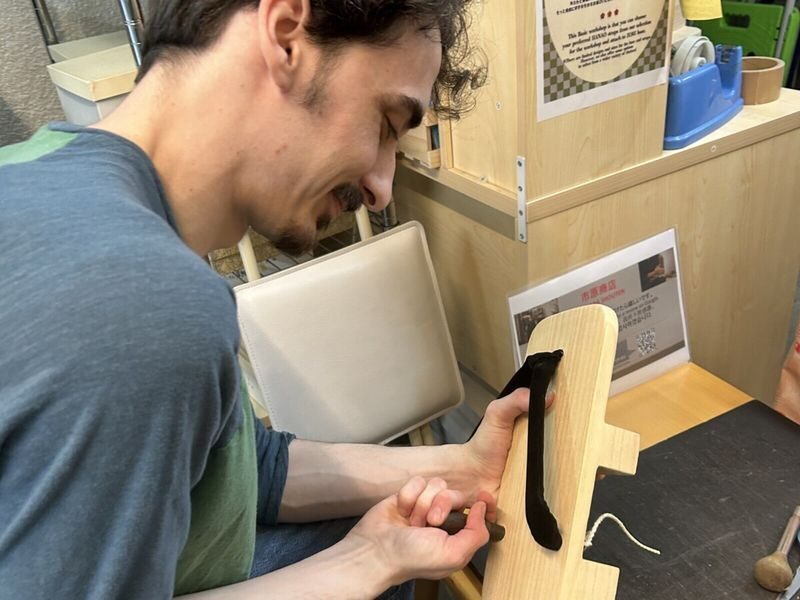
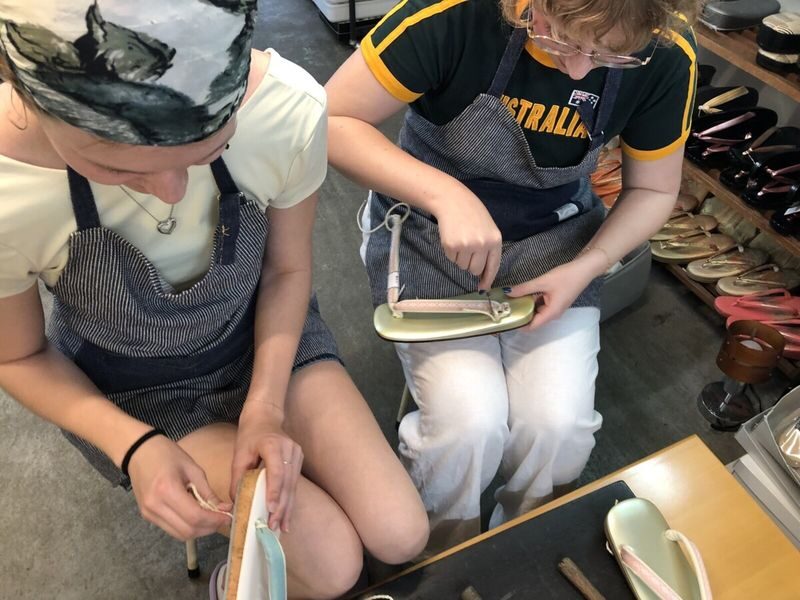
The focus here is Hanao-Suge, the process of fitting Hanao, or decorative straps, to traditional footwear. You select your zori and straps, then learn how the pieces are attached under an artisan’s guidance. The result is a pair of sandals made to your chosen combination.
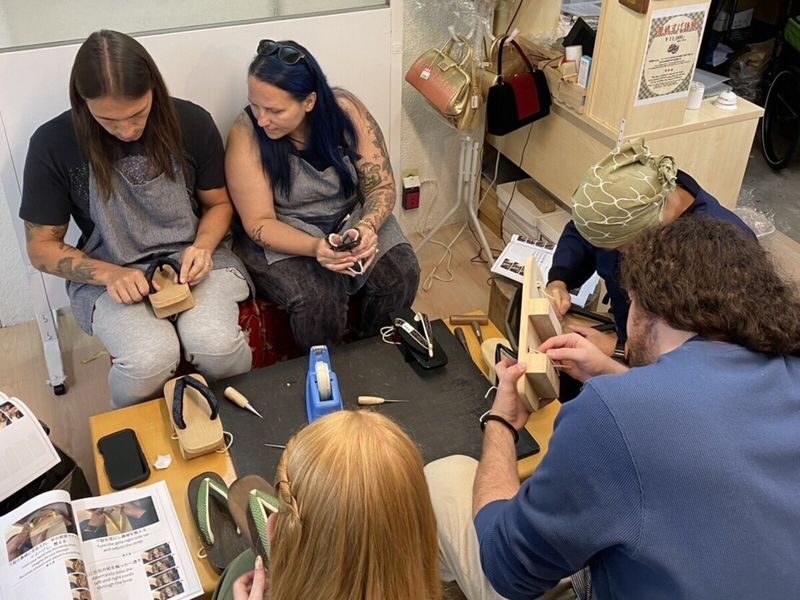
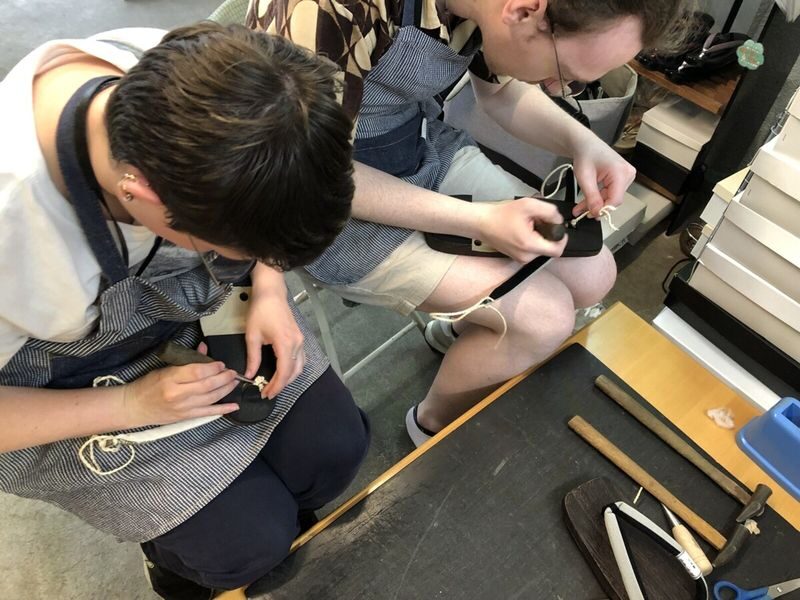
That hands-on element is the point. You are not simply watching a demonstration or browsing finished goods. You take part in the work, with step-by-step help that makes the activity suitable for first-timers. The craft has been practiced for centuries, but the workshop keeps the task manageable: learn one specific technique and use it to complete your own pair.
The experience is described as zori-making, while the craft explanation also refers to strap-fitting for geta. The scheduled activity is specifically centered on choosing zori and straps and attaching them. If your main interest is making an entire pair of wooden geta from scratch, this is not presented as that kind of workshop.
A Japanese-speaking staff member is included, and the instruction comes from a skilled artisan. No individual instructor’s name is provided, so you will not be booking a session with a named teacher. You can expect guidance from the person leading the craft, rather than a separate sightseeing guide.
You can also read our reviews of more tours and experiences in Tokyo.



Choosing straps and making the sandals your own
The design choice is a small but meaningful part of the hour. You pick your zori and straps, then bring them together in a pair that reflects your taste. The available information describes customization through the footwear base and strap selection, though it does not give a full inventory of colors, patterns, or sizes. If you have a particular style in mind, do not assume every option will be available.
This is a good fit for anyone who likes souvenirs with a personal connection. A ready-made trinket can be pleasant, but a useful object you worked on yourself carries a story: you chose the parts, learned how they fit, and left with the finished sandals. You will also have a better sense of the skill involved in getting a traditional strap to sit properly.
I would approach the activity as a craft introduction, not a test of artistic talent. The workshop is designed for beginners, and the instruction is step by step. A participant who completed it described the teacher as kind and helpful, and praised his skill as a craftsman. That is the strongest clue about the teaching style: expect support, not a sink-or-swim lesson.
The workshop is recommended for couples and friends, which makes sense. You can compare choices and see how different strap combinations change the look of each pair. Still, the main task is individual, so you do not need a partner to get value from it. If you are traveling solo and enjoy making things, you can focus on your own design and technique.
From reception to finished pair at Ichihara Shouten
The visit begins at the shop’s reception desk. An apron is provided, then you choose your zori and straps. That opening is simple, but it matters: you get to make a design decision before the practical work begins, rather than receiving a fixed pair to assemble.
Next comes the strap-fitting lesson. The artisan guides you through Hanao-Suge and helps you attach the straps to the footwear. The craft’s appeal lies in that connection between appearance and construction. A strap may look like a decorative detail, but it also needs to be fitted properly to make the sandal wearable. You get to work with that detail yourself.
The listed duration is one hour, so expect a focused workshop rather than a sprawling class. That is useful if you are fitting a craft activity into a day of sightseeing around Asakusa. It also sets a sensible expectation: the session teaches a particular technique and lets you complete the zori, rather than promising an extensive course in Japanese footwear.
At the end, you take the completed zori home. That makes the souvenir practical, though the information does not specify whether you will wear them immediately or how the finished sandals should be cared for. If you are buying them as a gift, remember that they are made to your own choices and feet, so they may be more personal than a standard shop purchase.
The activity ends at the same shop where it begins. There is no separate return journey or sightseeing stop built into the hour. Treat this as a workshop appointment, not a guided tour of Asakusa.
Why a traditional craft makes a better souvenir
Zori are traditional Japanese sandals, and Hanao-Suge offers a close look at one small part of how they are put together. That focus is useful. Instead of receiving a broad cultural talk with little time for questions or practice, you work on a specific object and see how the straps become part of it.
The finished pair also gives the activity a clear payoff. You leave with something you helped make, and the process gives you a story to tell about it. The sandal is not merely marked as Japanese by its appearance; you have taken part in a traditional fitting method. That is a more personal connection than buying a souvenir off a shelf.
There is a limit to what an hour can cover. The workshop does not claim to teach every stage of footwear production or provide a broad history lesson. If you want a deep technical course, this may feel brief. If you want a guided introduction with a tangible result, the compact format is its strength.
The craft is also an appealing change of pace from sightseeing that keeps you moving between landmarks. You spend the hour concentrating on materials, choices, and handwork. For a couple or a pair of friends, it offers a shared activity that does not depend on language-heavy conversation, though the included staff speaks Japanese. The provided details do not specify whether instruction is available in other languages, so ask before booking if that matters to you.
The Asakusa location and getting there
The workshop takes place at Ichihara Shouten, at 2-8-4 Hanakawado, Taito City, Tokyo. It is a five-minute walk from Asakusa Station on the Tokyo Metro Ginza Line, making it a fairly straightforward stop to add to an Asakusa day. There is no guide waiting to meet you elsewhere, so make your own way to the shop.
Choose a start time when you book. Available departures are listed from 10:00 in the morning through 17:00, at hourly intervals. You are asked to arrive five minutes before your selected time. Do not treat the selected slot as a loose window: the instruction is to take part at the time you booked.
The stated return time depends on the departure time and the one-hour duration. Since the workshop ends at the shop, you can continue your day from there without arranging transport back to a meeting point. Transportation costs are not included, so budget separately for your trip to Asakusa.
The location makes the activity convenient, but it is not a reason to leave arrival until the last minute. Find the address before you set out, allow time to reach the shop, and arrive a little early. The time is short enough that a late start could eat into the craft itself.
Is $69.39 good value for an hour?
The starting price is US$69.39 per person. That is not a bargain-priced craft table, but it pays for more than an hour of entertainment. You receive guided instruction in a traditional technique, choose the components of your zori, and take the finished sandals home.
Value depends on what you want from the session. If you are looking for a quick, inexpensive activity to fill a gap, the price may feel high for one hour. If you value hands-on instruction and a useful keepsake, the cost is easier to justify. The sandals are the tangible return, while the artisan’s guidance and the chance to handle the craft are part of what you are paying for.
Compare it with other workshops by asking what you want to bring home. This activity gives you a wearable item that you help assemble, rather than a decorative object alone. But the details provided do not specify the full range of materials or designs included, so do not count on choosing from unlimited options.
A full refund is available if you cancel at least 24 hours before the activity date, using Tokyo local time. The voucher is valid only for the date and time specified. Confirmation is normally issued within minutes; if it does not arrive, contact customer support.
Who will get the most from this craft session
I would recommend this for couples or friends who enjoy making things together, and for solo visitors who like a practical souvenir with a story behind it. It is also a good choice if you want a cultural activity that fits neatly into a day in Asakusa rather than taking up a full afternoon.
The age limit is 13 and older, so it is not an option for younger children. Beginners are welcome, and step-by-step guidance is part of the session. You do not need to arrive with craft experience, but you should be interested in doing the work yourself rather than only watching an artisan.
It may be less satisfying if you want a long, highly technical course, a named instructor, or a guaranteed choice of particular colors and styles. Those details are not specified. Go in ready to make choices from the options available on the day, and treat the hour as an introduction to one traditional skill.
Should you book the Asakusa zori workshop?
Book it if you want a short, hands-on cultural activity and like the idea of leaving with sandals you helped make. The best parts are the direct guidance from a skilled artisan, the chance to choose your zori and straps, and the fact that the result is useful rather than purely decorative.
Skip it if your priority is a low-cost activity, a long class, or a broad lesson covering all stages of traditional footwear-making. For the right person, though, this is a neat and memorable way to spend an hour in Asakusa. Plan your route, arrive five minutes early, and enjoy taking home a pair with your own choices built into it.
Asakusa Zori-Making: Craft Your Own Traditional Sandals
“I had a great experience and love my new self-made sandals! The teacher was really nice and helpful. He was really skilled at what he does and is a…”
FAQ
How long does the zori-making workshop take?
The activity lasts one hour. It includes choosing your zori and straps, guided strap-fitting, and taking the finished sandals home.
Where does the workshop take place?
It is held at Ichihara Shouten, 2-8-4 Hanakawado, Taito City, Tokyo 111-0033.
How do I get to Ichihara Shouten?
The shop is a five-minute walk from Asakusa Station on the Tokyo Metro Ginza Line. You need to make your own way there.
What time can I book?
Available start times are listed hourly from 10:00 through 17:00. Your selected time is confirmed after booking, and you should arrive five minutes early.
What is included in the price?
The activity includes Japanese-speaking staff and guided practice attaching zori straps under the direction of a skilled artisan. Transport and transportation fees are not included.
Can beginners take part?
Yes. The workshop is described as beginner friendly, with clear, step-by-step guidance.
What is the minimum age?
Participants must be at least 13 years old.
Can I cancel and receive a refund?
You can receive a full refund if you cancel at least 24 hours before the activity date, using the destination’s local time.




















