
Ninja+Kabuki Tokyo brings live taiko drums, kabuki-inspired swordplay and ninja stunts together in a small basement venue in Shinjuku’s Kabukicho. You get an 80-minute performance designed to tell its story through movement, music and visual effects, not spoken Japanese.
I like two things here: the show gives you a quick, accessible introduction to traditional performance, and the audience participation puts you in the action rather than keeping you in your seat all evening. The trade-off is that the drumming takes up a noticeable share of the program, while the plot and sword-fighting may feel less substantial than the title suggests.
- What to know before you go
- A compact cultural show in Kabukicho
- The opening: live drums and a big sound
- Kabuki-inspired movement and swordplay
- The ninja segment: join in, not just watch
- Timing, seats and finding the basement entrance
- What the ticket includes, and what costs extra
- Who will enjoy this show most
- A few practical details to keep in mind
- Should you book Ninja+Kabuki Tokyo?
- FAQ
- How long is the Ninja+Kabuki Tokyo show?
- Do I need to understand Japanese to follow the performance?
- Where is the venue?
- How do I find the basement entrance?
- Are seats assigned in advance?
- Can children attend?
- Can children take part in the ninja activity?
- Are drinks included in the ticket?
- The Best Of Tokyo!
- More Tours in Tokyo
- More Tour Reviews in Tokyo
What to know before you go
 1 / 6
 2 / 6
 3 / 6
 4 / 6
 5 / 6
 6 / 6
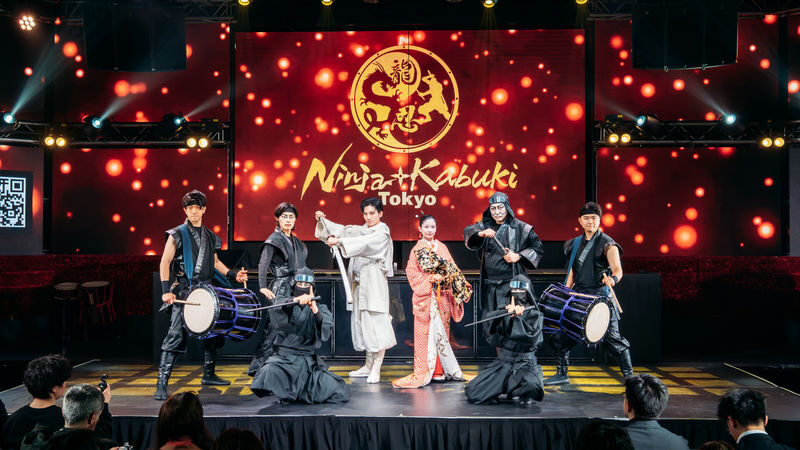
- Live taiko sets the tone: The show opens with powerful wadaiko drumming, one of its most prominent features.
- Kabuki and ninja share the stage: Expect traditional dance and kabuki-style combat alongside ninja performance, lighting and effects.
- Audience participation is part of the fun: The ninja segment invites audience members to learn gestures and movements, with some volunteers joining the action.
- The finale includes a cast photo opportunity: You can meet the performers and take a photo after the show.
- The ticket covers admission only: Drinks and other personal expenses cost extra, and venue prices can feel steep.
- Arrive with time to find the entrance: The venue is in a basement at WARP SHINJUKU, and the entrance can be easy to miss.

👉 See our pick of the Our Picks For The 11 Best Workshops & Classes In Tokyo
A compact cultural show in Kabukicho
This is an indoor stage show, not a museum visit or a lesson in traditional theater. Its aim is to bring several Japanese performance styles into one short, visual story, so you can follow the action without Japanese language skills or prior knowledge of kabuki and ninjas.
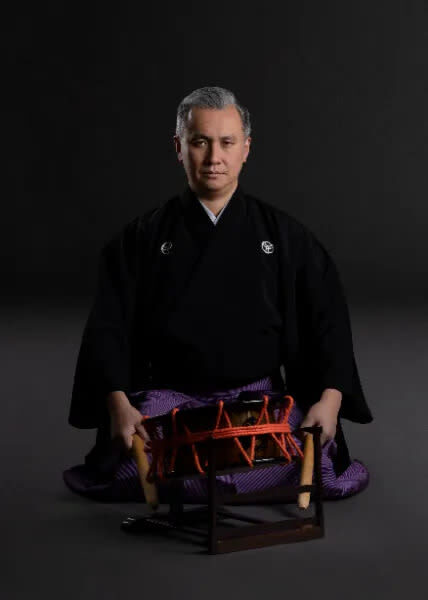
The production opened in 2024 and is supervised by the Japan Ninja Council and kabuki master Denjiro Tanaka. That pairing gives the concept a connection to established traditions, though the result is made for a modern, international audience. Think theatrical entertainment with cultural elements, rather than a full-length, formal kabuki performance.
The setting is lively Kabukicho, a useful spot if you want to pair the show with dinner or an evening walk around Shinjuku. The performance takes place indoors, so it can fill a rainy evening or give your feet a rest after a day of shopping. The venue is in the basement of the Daini Toua Kaikan Building, at WARP SHINJUKU.
You can also read our reviews of more tours and experiences in Tokyo.



The opening: live drums and a big sound
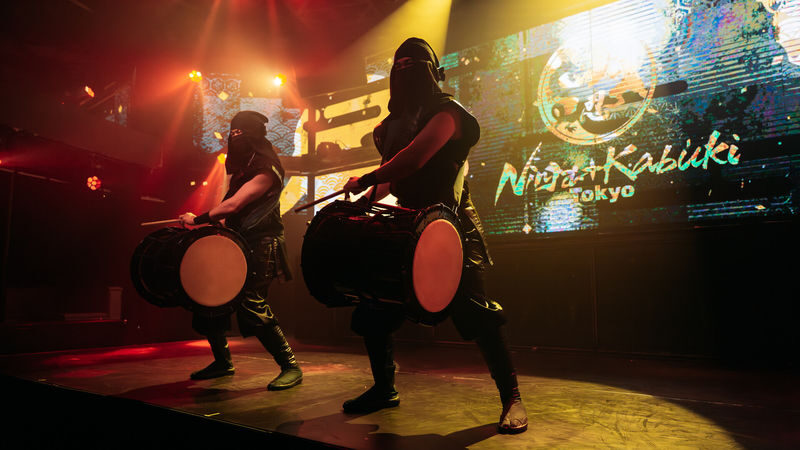
The show begins with live wadaiko, Japanese drums played with force and theatrical flair. The drummers are a major part of the experience, and their rhythms help establish the mood before the story moves into its other elements.
Expect the sound to be loud. The drums are a clear highlight for many, but they also take up a substantial part of the performance. If you are hoping for near-constant sword fights or ninja action, the opening may feel long. If you enjoy percussion and stage spectacle, it gives the show a strong start.
The lighting and visual effects add atmosphere, but they do not always make the plot easy to follow. I would treat the story as a frame for the music, dance and movement, not as a tightly explained historical narrative. That makes the show accessible across languages, though it can leave you wanting a clearer account of what is happening.
Kabuki-inspired movement and swordplay
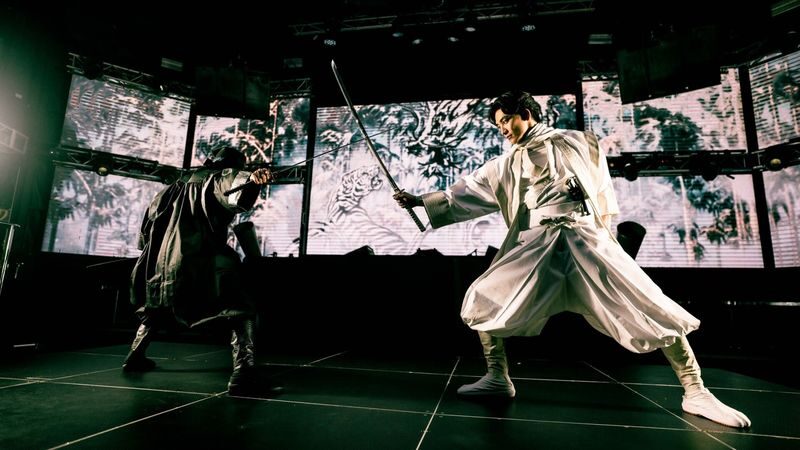
After the drumming, the performance shifts among kabuki-inspired sword fights, stylized movement and traditional Japanese dance. The contrast is part of the appeal: sharp action gives way to more controlled, graceful performance, then back to a faster pace.
The kabuki elements offer a brief introduction to theatrical gestures and heightened stage style. They are not a substitute for seeing a full kabuki production, and the show may feel simplified if you already know the form well. For a first encounter, however, it gives you a sense of how expressive movement, costume and music can carry a scene without much spoken explanation.
A practical expectation check: the stage is compact, and the swordplay is not the whole show. Some visitors come expecting a long run of flashy combat and find that the balance leans more toward drums and dance. Go for a mixed performance, and you are less likely to feel short-changed by the action scenes.
The ninja segment: join in, not just watch
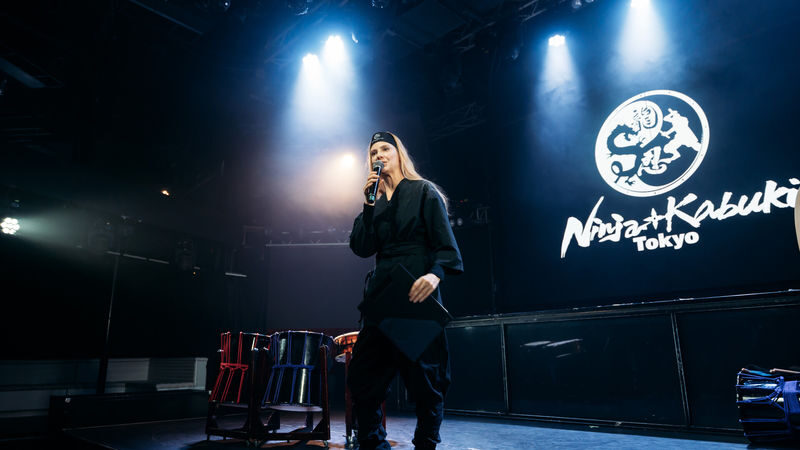
The interactive ninja portion is one of the show’s most distinctive features. The performers teach the audience ninja gestures, including kuji-in hand signs, and demonstrate movements. Some audience members may be invited to take part in stage combat or other onstage activity.
Participation is not compulsory, so you can watch from your seat if that suits you better. The ninja experience is open to participants aged five and older. If you are attending with younger children, they can still watch, but they cannot join this part.
The hands-on moment changes the pace after the stage performance and gives families a reason to stay engaged. It also helps make the evening feel less like a conventional theater visit. The finale brings the full cast together, followed by a chance to take photos with the performers.
Timing, seats and finding the basement entrance
The performance itself is listed as 80 minutes, though the full visit can take longer once you include arrival and any break in the program. Doors open 20 minutes before each scheduled show, while reception opens 15 minutes before. Arrive early if you want time to locate the entrance and settle in without rushing.
There is no advance seat selection. Staff guide you to your seat after checking your reservation, so you should not expect to choose a specific spot when you book. Arriving early is sensible if you care about where you sit, but your final seat is assigned at the venue.
The listed schedule changes by date. From December 2025, performances are scheduled for 4:00 to 5:20 p.m. and 6:00 to 7:20 p.m. From January 2026, the first show is listed for 3:00 to 4:20 p.m., with the second still at 6:00 to 7:20 p.m. Operating hours may change, and temporary closures are possible, so check your selected date and time before setting out.
The address is 1-21-1 Kabukicho, Shinjuku City, in the Daini Toua Kaikan Building basement. Shinjuku Station is the nearest station. To reach the venue, look for the entrance next to Daikoku Drugstore and the SEGA Game Center. The basement entrance can be confusing, and the elevator does not provide access to the basement, so plan to use the outside stairs.



What the ticket includes, and what costs extra
Tickets start at $35.40, with the exact price depending on the booking. The admission ticket covers the performance, not food, drinks or other personal expenses. The value depends on what you want from the evening: for an 80-minute show with live musicians, costumes, effects and audience interaction, the entry price may feel fair. If you expect a long, detailed theater production, it may feel expensive for the length.
Drinks are sold at the venue, but they are not included. A drink price of 1,500 yen has been reported, so budget for a costly refreshment or skip it. Outside food and drinks are not allowed, and bottles and cans are prohibited. Alcohol must be consumed at the venue, is not served to anyone under 20 or to people who are driving, and requires valid ID for age checks.
The show is a better value if you enjoy the full mix of drumming, dance, costumes and participation. It is a weaker match if you mainly want ninja combat or a rigorous account of Japanese history. The ticket price buys an entertaining evening, not a deep study of either kabuki or shinobi culture.
Who will enjoy this show most
Families with school-age children are a natural fit, especially if the children like ninjas and do not mind loud music. Children aged six and under enter free, but you still need to obtain a free ticket for each child. Children aged seven and older pay the adult rate, and anyone aged 15 or younger must attend with a paying adult. The interactive ninja activity is for ages five and up.
The show also suits you if you want an easy-to-follow cultural activity in central Shinjuku, particularly after a day of shopping. You do not need Japanese language skills, and the visual format makes it approachable for a mixed-language group. The cast photo at the end is a nice extra if you enjoy meeting performers after a show.
You may prefer another activity if you are well versed in Japanese theater and want a traditional, full-length performance, or if you expect elaborate sword fights throughout. The plot can be hard to read, and parts of the show may feel slow if drums and dance are not your thing. This is best approached as a lively introduction, not a definitive account of either art form.
A few practical details to keep in mind
Reservations are required, and your voucher is valid only for the date and time selected. You can enter by showing your reservation screen to staff at the WARP SHINJUKU entrance. Bring valid ID so staff can verify your order information.
Free cancellation is available up to 24 hours before the activity date, using the destination’s local time. After purchase, changes and refunds for personal reasons are not available, so confirm the date and ticket details before booking. Operations may also be suspended or postponed, and travel costs to reach the venue are not reimbursed if that happens.
The venue does not provide meals for children or accommodate allergy-specific or vegetarian meals. Outside food and drink are not permitted, and pets are not allowed except service animals with valid identification. People who appear intoxicated may be refused entry without a refund.
Should you book Ninja+Kabuki Tokyo?
Book it if you want an indoor, language-free evening that combines taiko, kabuki-inspired movement and an interactive ninja segment. It is especially appealing for families and first-time visitors who want a playful introduction to Japanese performance without committing to a longer theater production.
Skip it if your main goal is extended swordplay, a clear historical narrative or a traditional kabuki performance. The drumming is prominent, the story may take some effort to follow, and drinks add to the cost. Set your expectations around a compact variety show, arrive early to find the basement entrance, and the experience is easier to judge on its own terms.
Ninja+Kabuki Tokyo
“Great production and costumes. Host is hilarious and engaging. Talanted performers and a cool atmosphere.”
FAQ
How long is the Ninja+Kabuki Tokyo show?
The performance lasts about 80 minutes. Plan for extra time to find the entrance and take your seat before the show.
Do I need to understand Japanese to follow the performance?
No. The show is designed to be understood without Japanese-language skills or prior knowledge of Japanese culture.
Where is the venue?
It is at WARP SHINJUKU in the basement of the Daini Toua Kaikan Building, 1-21-1 Kabukicho, Shinjuku City. Shinjuku Station is the nearest station.
How do I find the basement entrance?
Look for the entrance next to Daikoku Drugstore and the SEGA Game Center. The basement cannot be reached by elevator, so be prepared to use the outside stairs.
Are seats assigned in advance?
No seat selection is available when booking. Staff guide you to your seat after checking your reservation, so arrive early if you want time to get settled.
Can children attend?
Yes. Children aged six and under enter free, but need a free ticket for attendance tracking. Children aged seven and older pay the adult rate, and children aged 15 or younger must be accompanied by a paying adult.
Can children take part in the ninja activity?
The ninja experience is for participants aged five and older. Younger children can attend the show but cannot join that activity.
Are drinks included in the ticket?
No. The ticket includes admission only. Drinks and other personal expenses cost extra, and outside food and drinks are not allowed.

















