Tsukiji is more than a place to eat sushi. This half-day walk pairs a look at morning prep in a 60-year-old restaurant with tastings of tuna, uni and ikura, giving you a taste of the work behind the food as well as the finished bites.
I like two things in particular: you get a guided introduction to unfamiliar seafood, including the differences among zuke, chutoro and otoro, and you also visit Tsukiji Honganji Temple before exploring the market. Guides such as Molly, Ken and Kanako have been praised for explaining food and customs clearly and helping groups find good stalls.
The main consideration is value. At $92.29, this is not simply a paid way to walk through a market you can visit on your own. You are paying for a guide, a seafood lunch and tastings, but the tour is closer to a few hours than a full day, and some market samples may also be available to buy on your own.
- Compare four tuna preparations: Taste zuke, chutoro, otoro and the less common nakaochi.
- See a restaurant at work: Watch morning preparation at a local restaurant that has been operating for 60 years.
- Try more than sushi: The food stops can include uni, ikura, tamagoyaki and eel skewers.
- Get context for the meal: A guided visit to Tsukiji Honganji adds a look at how faith and food customs meet.
- End with a city view: The route includes a guided stop at Shiodome Tower, with a high-floor view mentioned by people who took the tour.
- A taste of Tsukiji beyond the fish counter
- Tsukiji Honganji sets the cultural context
- The restaurant stop shows the work behind the meal
- Tuna, uni and ikura make the tasting the main event
- Market snacks add texture to the seafood tasting
- Shiodome Tower brings the route above street level
- The guide makes the difference
- Is .29 good value for a few hours?
- Who should book this Tsukiji walk?
- FAQ
- How long does the Tsukiji Fish Market tour last?
- What food is included?
- Are vegetarian or vegan options available?
- Where does the tour start and end?
- Is the tour wheelchair- or stroller-accessible?
- Can I cancel for a refund?
- The Best Of Tokyo!
- More Shopping Tours in Tokyo
- More Tours in Tokyo
- More Tour Reviews in Tokyo
A taste of Tsukiji beyond the fish counter
 1 / 9
 2 / 9
 3 / 9
 4 / 9
 5 / 9
 6 / 9
 7 / 9
 8 / 9
 9 / 9
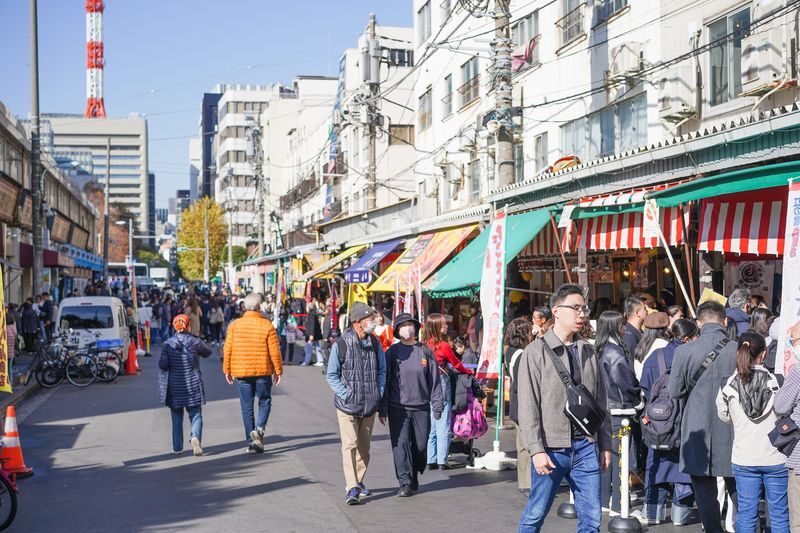
Tsukiji Outer Market is a place to shop, snack and watch the daily business of food unfold. Its narrow lanes can be hard to read at first, especially when you are deciding what is worth trying and what is simply a good-looking stall. A guide helps you move with purpose and gives you someone to ask about ingredients, quality and where to buy.
This is a walking tour, not a visit to every part of the old wholesale fish market. The route focuses on Tsukiji Outer Market and nearby sights, with tastings along the way. Expect a guided introduction rather than a long, technical lesson on the entire history of Tokyo’s seafood trade.
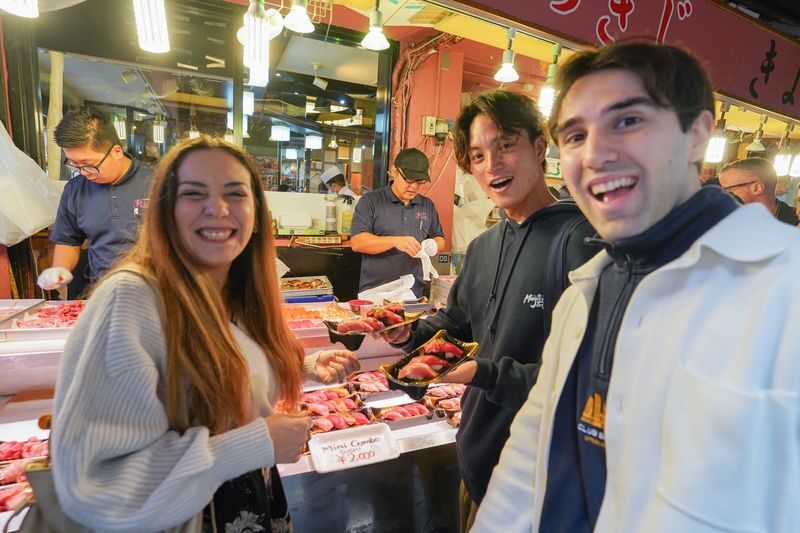
The market is also a place where food is sold in small portions. That makes it easier to sample several things without committing to a full meal at every stop. The tour includes a seafood lunch as well as two or three market food samplings, while the advertised tasting selection features premium tuna, uni and ikura.

👉 See our pick of the Our Picks For The 11 Best Workshops & Classes In Tokyo
Tsukiji Honganji sets the cultural context
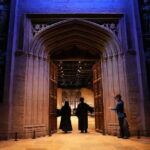
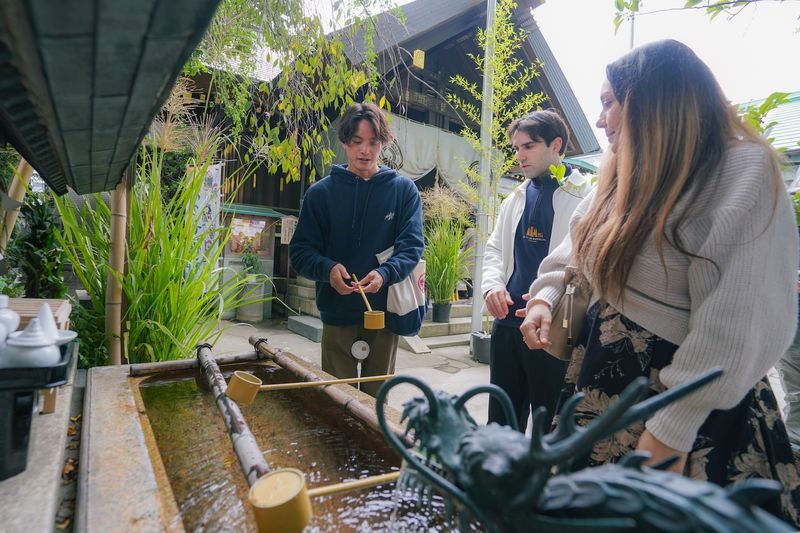
The tour starts at Tsukiji Honganji Temple, where the guide leads a visit before the market walk. That opening stop gives you a quieter place to get oriented before stepping into the food lanes, and it puts the meal in a broader cultural frame.
The temple visit is more than a photo stop if you are interested in Japanese religious customs. One participant appreciated hearing about temple protocols and rituals, details that can help you feel more at ease at shrines and temples elsewhere in Japan. The tour description also links the visit to the way Japanese faith shapes gratitude for seafood.
Still, expectations matter. If you are booking mainly for fish and food, the temple portion may feel like a detour. One person felt it took time away from the market, while others valued the cultural explanation. I would see it as a bonus for anyone who wants more than a tasting crawl, and less of a draw for someone intent on spending every minute shopping for food.
You can also read our reviews of more shopping tours in Tokyo



The restaurant stop shows the work behind the meal
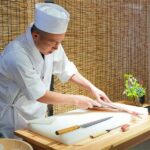
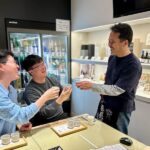
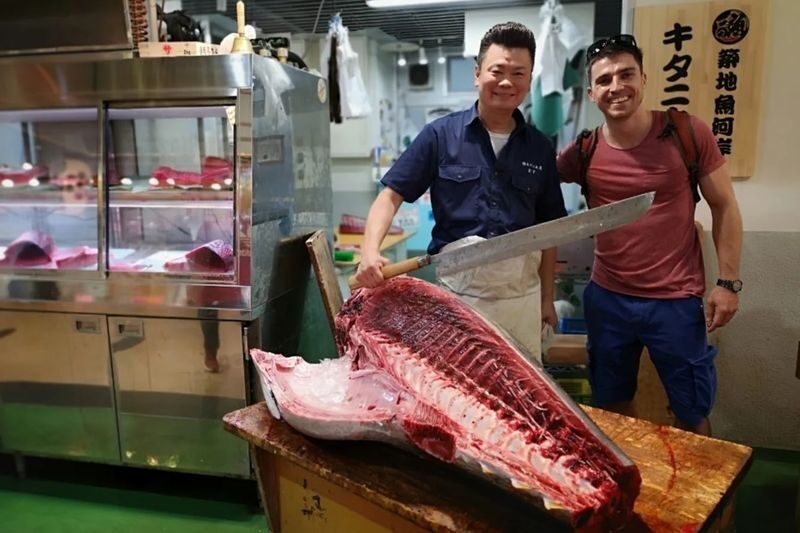
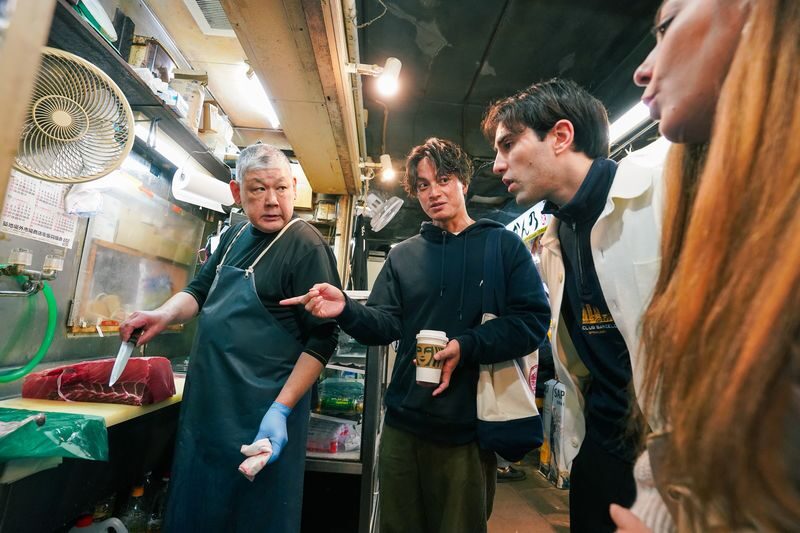
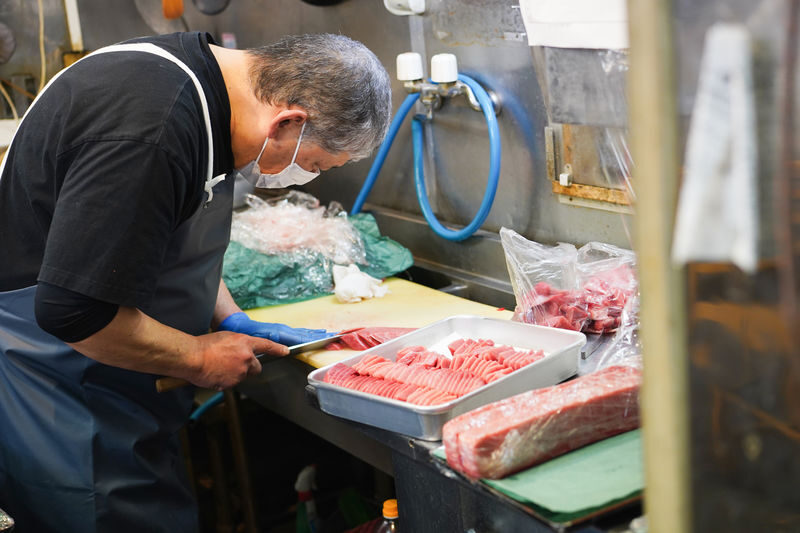
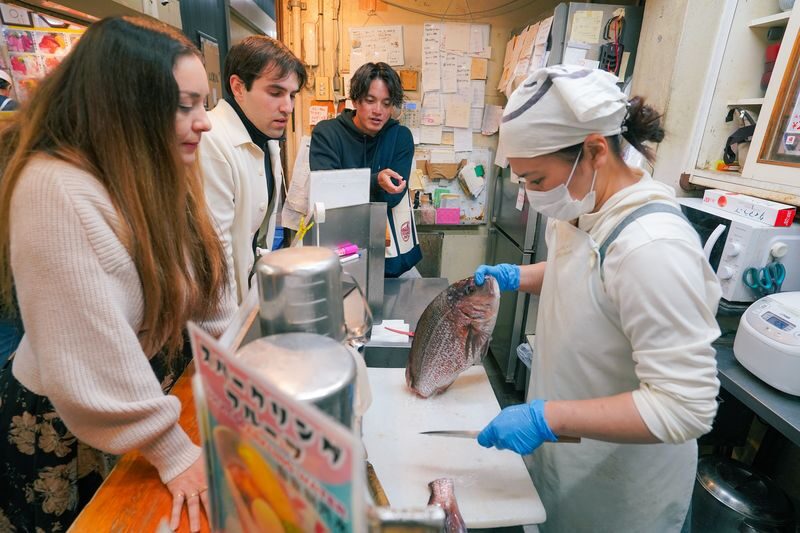
One of the tour’s more distinctive features is a visit to a local restaurant that has been open for 60 years. You can watch the chefs’ morning preparation and hear how the market works from the perspective of people who use it to serve their customers.
That behind-the-scenes view gives the seafood tastings a useful frame. Instead of seeing fish only as something to order or photograph, you get a glimpse of the care and routine that go into preparing it. The precise preparation details can depend on what is happening that morning, so think of this as an introduction to kitchen work, not a cooking class.
The stop also helps explain why a guide can add value here. You can walk into Tsukiji on your own, but it is harder to know what you are seeing, which questions to ask or how a restaurant’s daily prep connects to the market stalls outside. Guides have been praised for explaining food origins, cuts and differences in quality in plain terms.
Tuna, uni and ikura make the tasting the main event
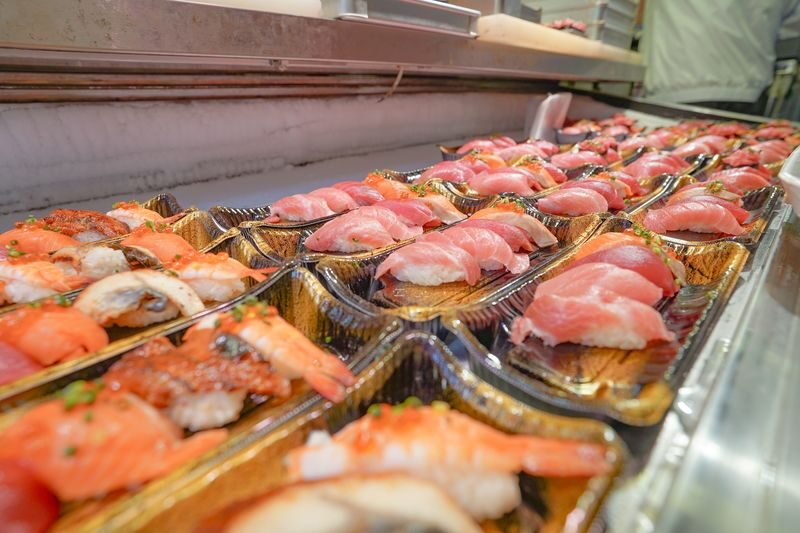
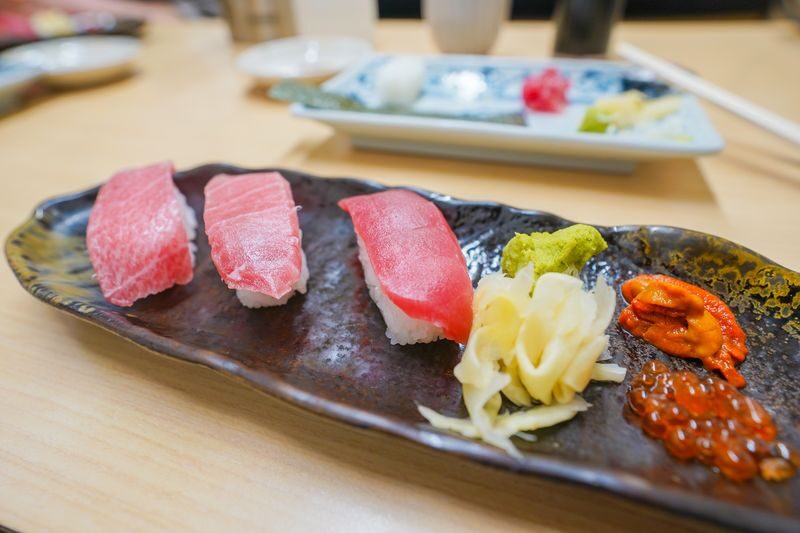
The featured seafood tasting centers on three cuts or preparations of tuna: zuke, chutoro and otoro. Zuke is marinated tuna, while chutoro and otoro refer to different levels of fattiness. Tasting them side by side gives you a more useful comparison than ordering one piece of tuna sushi and trying to guess what makes it special.
The tour also features nakaochi, a less common cut, plus uni and ikura. Uni is sea urchin, and ikura is salmon roe. Both are prized foods with strong, distinct textures and flavors, so small tasting portions make sense even if you are not sure they will become new favorites.
There is also an opportunity to make your own gunkan sushi. That hands-on moment gives the tasting a little more variety than simply eating a sequence of prepared bites. The listed seafood lunch is part of the package, but the tour does not promise a set menu or exact portion sizes, so arrive curious rather than expecting a large restaurant meal.
The package name refers to 10 seafood tastings, but the included details also describe a seafood lunch and two or three market samplings. The exact combination can vary, so if you have a particular dish in mind, do not assume every item will be served on every departure.
Market snacks add texture to the seafood tasting
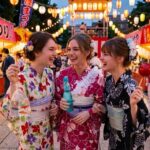
The market walk is not limited to raw fish. Food stops may include tamagoyaki, a Japanese rolled omelet, and eel skewers. These cooked bites are a welcome contrast to tuna, roe and sea urchin, and they give you a feel for the range of foods sold in the market.
You may also browse Japanese knives and pottery. The guide can help explain what is on offer and where to shop, which is useful if you want to take home something practical rather than another souvenir. Amy, for example, was praised for giving advice on what seemed like a good or poor deal at the market. That kind of guidance is valuable because market shopping can be difficult to judge when you are short on time and unfamiliar with local prices.
There is a trade-off: a guided group needs to keep moving. If you want to linger at a particular stall, compare several knives or browse at your own pace, you may prefer to return after the tour. Treat the walk as a guided introduction, then use any remaining time to revisit the spots that caught your eye.
Shiodome Tower brings the route above street level
After the market, the itinerary includes a guided stop at Shiodome Tower. A high-floor view of Tokyo and the bay has been part of the experience, adding a change of pace after the close quarters of the market lanes.
This is a useful final stop if you want the tour to include more than food. From above, you can take in the wider city and get a sense of where Tsukiji sits in relation to the surrounding area. The exact details of the stop may change with weather or other conditions, so consider the view a welcome part of the route rather than the main reason to book.
The end point is outside Exit 1 of Tsukiji Station, while the meeting point is at Tsukiji Honganji Temple. That makes the route easy to connect with the local rail system, but take care not to confuse Tsukiji Station with Tsukijishijo Station. They are separate stations.
You can also read our reviews of more tours and experiences in Tokyo

The guide makes the difference
The strongest part of this tour is the guide’s role in turning a sequence of stops into a coherent morning. Food names can be hard to remember, and a market has plenty of visual noise. A guide who can explain what you are tasting, answer questions and keep the group moving makes the experience much easier to follow.
Several guides have received particular praise, including Molly, Ken, Yufi, Amy, Kanako, Inok, Kiyo, Yoichi and Mihori. The specific guide on your departure will vary. Past guides have been described as attentive and upbeat, and Kanako was noted for explaining where food came from, which part of the fish was being served and how quality differed.
A guide can also help with practical needs. One group appreciated that its guide kept everyone together, accommodated requests and helped find places to eat without long waits. Another person who got lost said the guide waited briefly. That is reassuring, though it is still wise to arrive on time: late arrivals and no-shows are not eligible for a refund.
Is $92.29 good value for a few hours?
At $92.29, this tour costs more than simply wandering through Tsukiji and buying snacks as you go. The price includes an English- or Japanese-speaking guide, a seafood lunch, two or three market samplings and photos. You are also paying for a structured route, help understanding what you are eating, and the restaurant prep and temple stops.
The value depends on how you like to explore. If you are new to Japanese seafood or want someone to explain the differences among tuna cuts, the guide can make a handful of tastings feel more rewarding. If you already know Tsukiji well, speak Japanese comfortably or prefer to choose every dish yourself, you may find it easier and cheaper to visit independently.
Duration is worth checking before you book. The activity is described as a half-day tour, with departure choices at 9:00, 10:00 or 11:00 and return choices at 12:00, 13:00 or 14:00, depending on the itinerary. That points to roughly three hours, though one departure was described as lasting closer to two and a half. It is a morning outing, not a full four- or five-hour excursion.
Starting earlier is a sensible choice if you want more of the day left for other plans. The 11:00 departure may suit a slower morning, but it leaves less time for independent market browsing afterward. The schedule can change with weather and other conditions.
Who should book this Tsukiji walk?
I would choose this tour if you want a guided food introduction, especially if tuna, uni and ikura are high on your list. It also suits first-time visitors who want help navigating the market and would enjoy pairing food with a temple visit and a city view.
Families can join because there is no age limit, but the route is not stroller- or wheelchair-accessible, and child seats are not available. Pets are prohibited. The market portions involve walking through places that may not be accessible to everyone, so consider that before booking.
This tour is not suitable for vegetarians or vegans. The operator cannot guarantee an allergy-free meal or cater to dietary restrictions because the food is prepared in kitchens outside its control. Substitutions may not be possible at some stops, so anyone with allergies or strict food needs should not count on the tasting menu being adaptable.
My call: book it for the seafood comparisons, local guidance and chance to see restaurant prep, not because you expect a full day or a bargain lunch. If you want a relaxed, self-directed market visit, go on your own. If you want someone to help you understand what is on the plate and how the market works, this guided route offers a fuller experience for the price.
Tsukiji Fish Market Tour: Behind the Scenes & 10 Seafood Tastings
“Molly the guide was exceptional! Her knowledge about the market history, culture and general background information was first class. We had fun, en…”
FAQ
How long does the Tsukiji Fish Market tour last?
The available schedules run from 9:00 to 12:00, 10:00 to 13:00 or 11:00 to 14:00, depending on the departure selected. One departure has been described as lasting about two and a half hours, so check the schedule shown for your booking.
What food is included?
The tour includes a seafood lunch and two or three market food samplings. Featured tastings include zuke, chutoro, otoro, nakaochi, uni and ikura, with market snacks such as tamagoyaki or eel skewers also possible.
Are vegetarian or vegan options available?
No. Vegetarian and vegan options are not available, and the operator cannot guarantee allergy-free food or accommodate dietary restrictions.
Where does the tour start and end?
The meeting point is Tsukiji Honganji Temple at 3-chome-15-1 Tsukiji. The return point is outside Exit 1 of Tsukiji Station. Take care not to go to Tsukijishijo Station by mistake.
Is the tour wheelchair- or stroller-accessible?
No. The activity includes locations that are not accessible by wheelchair or stroller, and child seats are not available.
Can I cancel for a refund?
You can receive a full refund if you cancel at least 24 hours before the activity date, using local time at the destination. Late arrivals and no-shows are not refundable.