
Tokyo opens up at street level on this three-hour bike ride, linking the temple precincts of Shiba Park with central landmarks and the streets around Shibuya. You get more than a checklist of sights: moving by bike lets you see how the city shifts from formal avenues to quieter lanes and busy shopping districts.
I like two things in particular: the choice of cross bike or e-bike makes the ride more accessible, and guides such as Ken, Atsu, Kei and Rinto are often praised for their clear explanations and care in traffic. A guide can also help you connect places you might otherwise see as separate stops on a train map.
The main consideration is that this is an active ride, not a sightseeing bus. You need to be comfortable cycling in city traffic, keep pace with the group and handle slopes or crowded sections. Route and stops can change with weather, traffic or capacity.
- A route across central Tokyo: The tour links Shiba Park, palace-area sights and western districts such as Harajuku and Shibuya.
- Two bike choices: Pick a cross bike for a conventional ride or an e-bike if hills, distance or stamina are a concern.
- Local context along the way: English-speaking guides explain landmarks and share local tips, with guide names including Ken, Atsu, Kei and Rinto.
- A compact three-hour outing: It gives you an active overview without taking a full day from your Tokyo plans.
- Some cycling confidence is essential: Participants must be at least 14 and able to ride safely; the activity is classed as intermediate.
- A point-to-point finish: The tour ends in Jinnan, near Yoyogi Park and within walking distance of Shibuya Station.
- From Shiba Park toward the heart of Tokyo
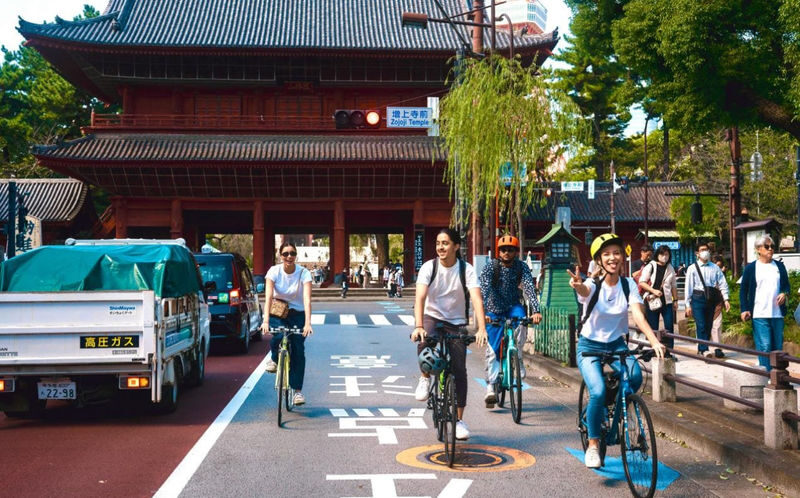
- Zojo-ji and the temple grounds of Shiba
- Palace grounds, Tokyo Station and grand avenues
- Akasaka Palace and the route west
- Yoyogi Park, Harajuku and Shibuya
- What the ride feels like on two wheels
- Guides, safety and how much you learn
- Is .25 good value?
- Booking details worth checking
- Should you book this Tokyo bike tour?
- FAQ
- How long is the Tokyo bike tour?
- What time does the tour depart?
- Where is the meeting point?
- Can I choose an e-bike?
- Is the tour suitable for beginners?
- What is the cancellation policy?
- The Best Of Tokyo!
- More Cycling Tours in Tokyo
- More Tours in Tokyo
- More Tour Reviews in Tokyo
From Shiba Park toward the heart of Tokyo
 1 / 5
 2 / 5
 3 / 5
 4 / 5
 5 / 5
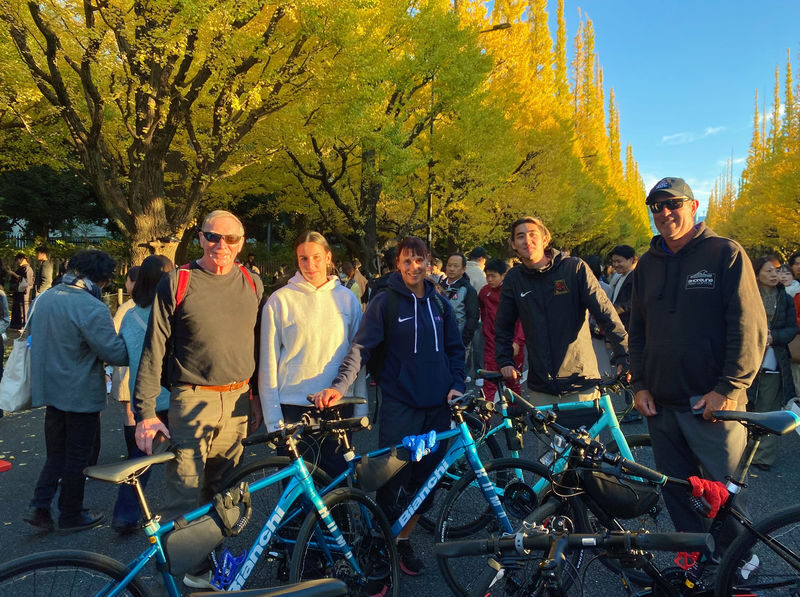
The ride begins around Shiba Park, near the statue of Commodore Perry. There is a little confusion in the meeting details: one instruction names the Perry statue and a short walk from Daimon Station, while another points to the main entrance of Shiba Park and a walk from Shiba Koen Station. Check the map and meeting instructions sent with your booking rather than guessing which station to use.
Arrive 15 minutes before departure. The tour offers 10:00 and 14:00 starts, with the return time generally set three hours later. The operator does not refund late arrivals, and the terms say that arriving five minutes late or more can rule out a refund. That is a strict start, so build in extra time for finding the correct park entrance.
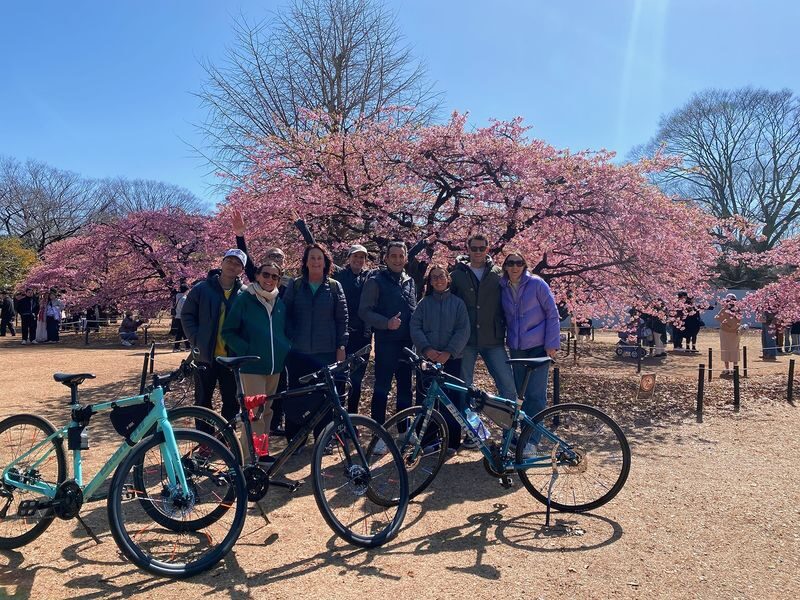
Once everyone is ready, the guide fits riders to their bikes and sets the group on its way. The advertised group size is one to seven, though the operation may split a larger party into smaller groups. Riders describe guides checking the front and back of the group and helping riders through traffic. That matters in Tokyo: even a well-planned route still asks you to pay attention to cars, pedestrians and the riders ahead.

👉 See our pick of the Our Picks For The 11 Best Workshops & Classes In Tokyo
Zojo-ji and the temple grounds of Shiba
Zojo-ji is one of the most meaningful early stops, set beside the modern city and close to Tokyo Tower. The temple grounds offer a change of pace from the roads and a chance to see a historic religious site in a district better known to many visitors for offices and transport links.
The tour description also points to historic temples in Shiba Park. This is a useful place for a guide to add context: a quick look at a temple gate or courtyard means more when you know what you are seeing and how the site fits into Tokyo’s past. Expect brief stops rather than a long temple visit. The purpose is to see a range of neighborhoods and landmarks within three hours.
You can also read our reviews of more cycling tours in Tokyo


Palace grounds, Tokyo Station and grand avenues
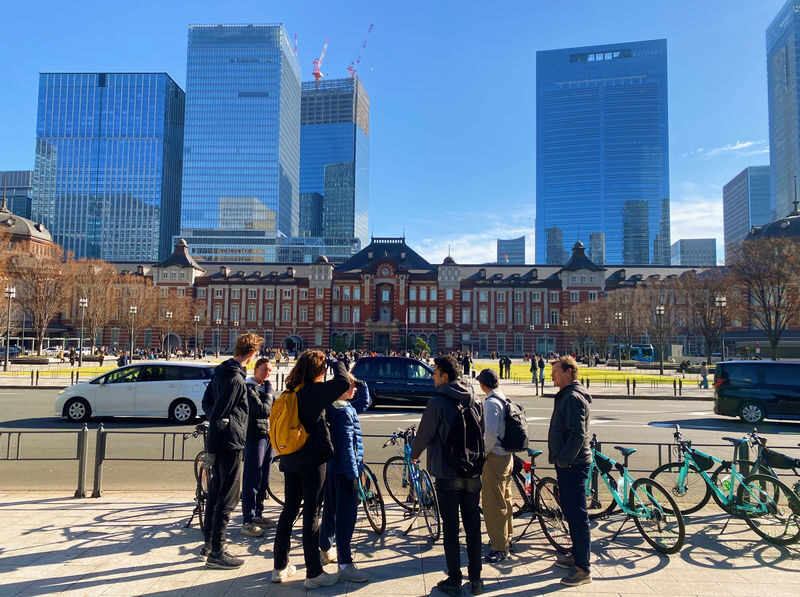
The route may take in the Imperial Palace area and Tokyo Station, two very different expressions of the capital. The palace grounds offer broad open space and a reminder of the city’s imperial seat, while Tokyo Station is a major transport hub with a striking historic facade. Together, they show how Tokyo’s civic and transport centers sit alongside older landmarks.
These are also places where traffic and the day’s route can affect how much time you spend. The schedule can change with weather or road conditions, and some attractions may be skipped due to capacity. Treat the named sights as a route framework, not a guarantee that you will stop at every one.
A bicycle is especially useful here because you can link these districts without spending the outing underground on trains. You still see the city moving around you, and the guide can point out details while the group pauses. But if your main goal is a long, quiet visit inside a museum or palace building, this format is not designed for that.
Akasaka Palace and the route west
Akasaka Palace is another listed sight, adding a formal architectural stop to the ride. The route’s variety is part of its appeal: a temple, palace-area streets, major civic landmarks and commercial neighborhoods make for a fuller introduction than a loop around one single district.
The tour is a moving overview, so each location gets limited time. You may get a short explanation, a chance to look around and perhaps a photograph, then continue. If one site matters most to you, tell your guide early and ask what the day’s route allows. The itinerary is flexible, and traffic or weather can change the sequence.
Yoyogi Park, Harajuku and Shibuya
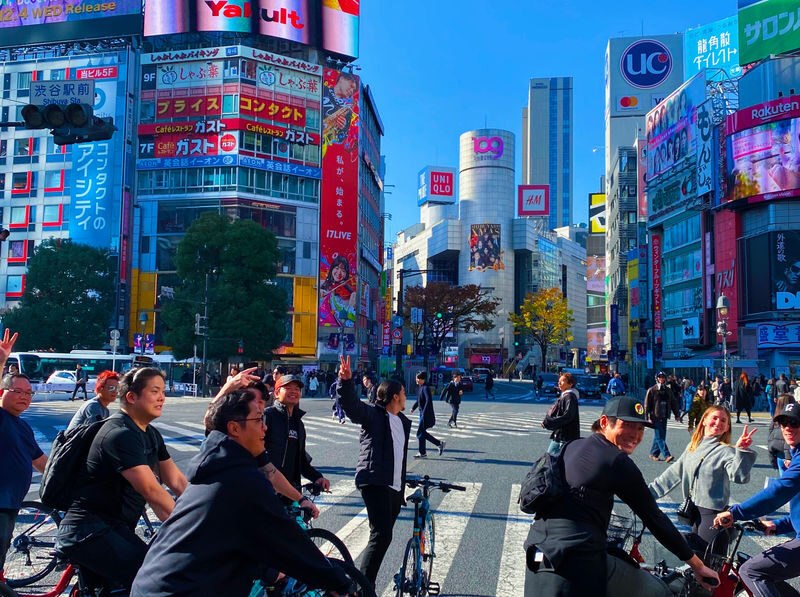
The ride heads toward western Tokyo, with Yoyogi Park, Harajuku and Shibuya among the named areas. This shift is one of the tour’s strongest features. You can feel the city change from temple and government districts toward parkland, fashion streets and dense shopping zones, all within a few hours.
Yoyogi Park is a welcome contrast after cycling through built-up areas. The tour ends in Jinnan, a shopping and dining district between Yoyogi Park and Shibuya. From the finish, it is about a five-minute walk to Yoyogi Park and a ten-minute walk to Shibuya Station, making it easy to continue exploring or find a meal.
The Japan National Stadium is also listed among the sights. The route may pass or stop near several of these places, but the operator reserves the right to skip attractions depending on capacity and weather. Plan for the overall sweep across Tokyo rather than a promise of an extended visit at every landmark.
What the ride feels like on two wheels
The cross-bike option suits riders who cycle regularly and are comfortable with a steady city ride. One rider described the route as just under 20 kilometers, though the actual distance can vary with the day’s itinerary. A three-hour tour at that scale is manageable for many active cyclists, but it is not a casual stroll with a few pedals between stops.
An e-bike makes the outing a sensible choice if you do not cycle often, have limited stamina or would rather save energy for the rest of your day. Riders have used e-bikes successfully alongside people on regular bikes, and the operator specifically recommends the electric option for those who find longer distances uncomfortable. It does not remove the need to steer, brake and stay alert in traffic.
The tour is not recommended for pregnant participants, and it is not suitable for anyone who cannot ride safely. Staff can refuse participation if they judge that cycling would be difficult or dangerous, without a refund. Sunglasses are on the suggested packing list. The activity is not stroller- or wheelchair-accessible, and the details do not confirm whether helmets are supplied, so ask the operator if you need to know before booking.
You can also read our reviews of more city tours in Tokyo

Guides, safety and how much you learn
The guide is central to the value here. People who enjoyed the ride often single out guides such as Ken, Atsu, Kei, Rinto, Show and Tam for friendliness, clear English, historical detail and help navigating busy streets. Some guides also share restaurant suggestions, take photos or make space for questions. Those small touches can turn a route between attractions into a useful introduction to the city.
The quality and amount of commentary can vary. Some riders have found the explanations full and engaging, while others wanted more information about each sight. If you want a history lecture at every stop, this may feel light. If you want a local guide to orient you, answer questions and keep the group moving, it is a better fit.
The pace is another practical point. Guides work to keep the group together, but you need to be able to follow along and ride near other cyclists. In narrow streets and busy areas, stay alert and listen closely to instructions. One useful approach is to ask questions during stops rather than trying to talk while navigating traffic.
Is $55.25 good value?
At a starting price of $55.25 for three hours, the tour costs more than renting a bike and setting off alone. The added value is the route planning, bike, guide, local context and the ability to cover several districts without figuring out every turn yourself. For a first day in Tokyo, that overview can help you decide which areas deserve a longer return visit.
The price is less compelling if you already know central Tokyo well, prefer to explore at your own pace or want lengthy visits at individual sights. Meals, drinks, personal expenses and gratuities are not included, and there is no audio guide. You are paying chiefly for guided cycling and the route, not admission to attractions or a meal.
With cross-bike and e-bike packages, choose based on your real cycling habits, not your ideal ones. If you rarely ride, the e-bike is likely the more comfortable option. The goal is to enjoy the city, not prove a point to a hill.
Booking details worth checking
The tour has English- and Japanese-speaking guides, and English-speaking staff are available. Participants must be 14 or older. Book for one of the stated departure times, 10:00 or 14:00, and present your mobile voucher on the specified date and time.
Free cancellation is available if you cancel at least 24 hours before the activity, using the destination’s local time. Changes are also allowed until 24 hours before the start, subject to stated booking restrictions. In extreme weather or other unforeseen events, the operator may cancel and offer a reschedule or full refund. Late arrivals and no-shows are not refundable.
Should you book this Tokyo bike tour?
Book it if you want an active first look at central Tokyo, enjoy cycling and value a guide who can connect the districts as you ride. The e-bike option makes it more approachable if you are unsure about stamina, while the cross bike suits confident riders who want a more traditional workout.
Skip it if you are not comfortable riding in traffic, need an accessible or stroller-friendly activity, or want to spend substantial time inside each attraction. Before paying, confirm the precise meeting point and choose your bike carefully. For the right rider, this is a practical way to see how Tokyo’s temples, civic center, parks and shopping streets fit together.
Tokyo 3-Hour Bike/E-bike Tour of the Central City Areas
“If you need something to do try this educational experiment experience. Writing will never be the same!”
FAQ
How long is the Tokyo bike tour?
The guided ride lasts three hours. The schedule may change with traffic and weather, and some attractions may be skipped.
What time does the tour depart?
Departure options are 10:00 and 14:00. Choose your time when booking and arrive 15 minutes early.
Where is the meeting point?
The instructions refer to meeting near the statue of Commodore Perry around Shiba Park. They also mention the main entrance of Shiba Park, so check the map and final meeting details provided with your booking.
Can I choose an e-bike?
Yes. The available packages include an e-bike tour and a cross-bike tour. The e-bike is recommended if long distances feel uncomfortable or your stamina is limited.
Is the tour suitable for beginners?
You must be able to ride comfortably and safely. The activity is classed as intermediate, and some slopes or crowded areas may be challenging. The operator may refuse participation if it considers riding unsafe.
What is the cancellation policy?
You can receive a full refund if you cancel at least 24 hours before the activity date, using local time at the destination. Late arrivals and no-shows are not refundable.
























