Van Gogh’s Starry Night and Sunflowers take over a room-sized screen here, joined by music and moving color. I like two things in particular: the scale of the projections, and the chance to settle on a cushion or chair and watch at your own pace.
The main display is the star, not a traditional gallery packed with original paintings. The venue is smaller than some people expect, and the ticket can feel steep if you only stay for the roughly 30-to-40-minute show.
- At a glance
- What the projections actually show
- The visit, from first room to last
- Finding a good place to watch
- Two smaller spaces worth seeking out
- How long to stay, and what the ticket buys
- Getting there in Ariake
- Who will get the most from it
- Should you book RÊVE DES LUMIÈRES?
- FAQ
- How much does admission cost?
- How long should I allow for the visit?
- What art is featured?
- What are the Infinity Horizon and 360° Cube?
- What are the opening hours?
- How do I get to the venue by train?
- Can preschool children visit?
- Is the venue wheelchair accessible, and can I take photos?
- The Best Of Tokyo!
- More Tours in Tokyo
- More Tour Reviews in Tokyo
At a glance
 1 / 5
 2 / 5
 3 / 5
 4 / 5
 5 / 5
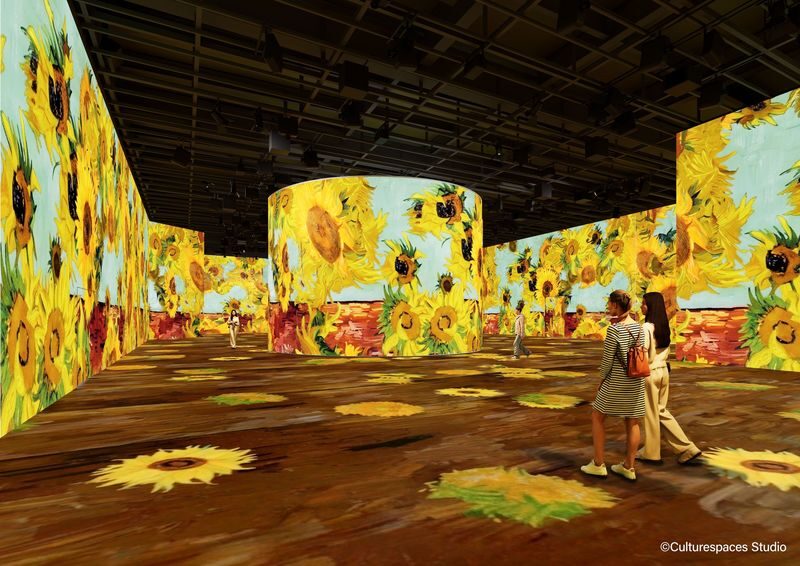
- Van Gogh fills the main hall: Projections cover four walls and a central pillar in a space with ceilings up to 8 meters high.
- Gaudí gets a shorter film: The program also looks at the architect and the Sagrada Família.
- Two extra spaces add variety: Look for the mirrored Infinity Horizon and the all-around 360° Cube.
- Set aside more than one show: A 60-to-90-minute visit is recommended, though you can stay longer within your ticket time slot.
- Find a cushion early: Floor cushions and some lounge chairs offer a more comfortable way to watch, but chair numbers are limited.
- Reach it by train: Tokyo Big Sight Station is about a 5-minute walk away; Kokusai-Tenjijo Station is about 9 minutes away.

👉 See our pick of the Our Picks For The 11 Best Workshops & Classes In Tokyo
What the projections actually show
RÊVE DES LUMIÈRES, or Dream of Light, brings a format made famous by the French digital art museum ATELIER DES LUMIÈRES to Tokyo’s TOKYO DREAM PARK. The dedicated space covers about 1,500 square meters, with ceilings reaching 8 meters. Instead of viewing paintings one by one on a wall, you stand or sit as images spread across the room.
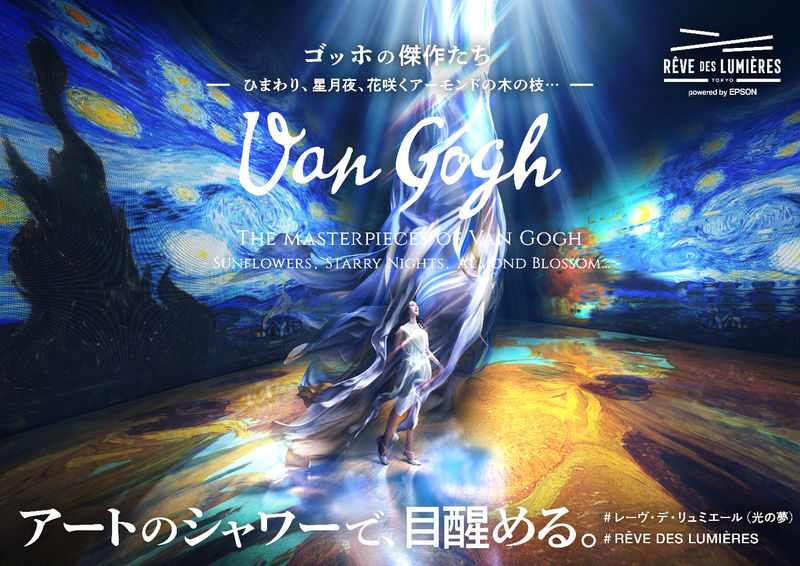
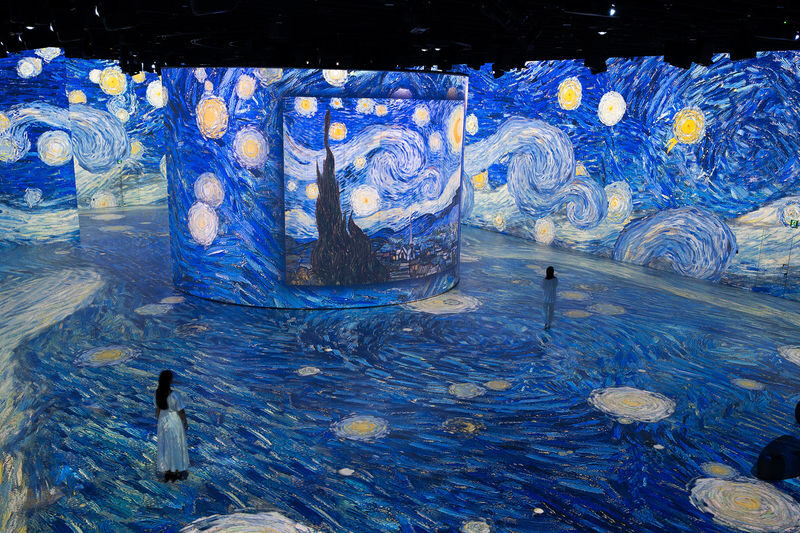
Van Gogh anchors the first program. Familiar works such as Sunflowers, Starry Night, and Almond Blossom in Bloom appear in large-scale projections, with color and detail shifting across the surfaces. The display is designed to surround you, so your view changes as you move around the hall or look up toward the walls and central pillar.
Music accompanies the images. That pairing helps make the work feel like a continuous sequence rather than a set of slides, though the music is a matter of taste. If you prefer quiet gallery rooms, this is a different kind of art visit. You come for visual scale, sound, and movement, not for a close study of an original canvas.
A shorter film on Gaudí and the Sagrada Família gives the program a second subject. It’s a useful contrast: Van Gogh’s painted scenes and Gaudí’s architectural forms lend themselves to very different kinds of projection. If you’re especially interested in Gaudí, keep your expectations in check. The Van Gogh presentation is the main event, while the Gaudí segment is shorter.
You can also read our reviews of more tours and experiences in Tokyo.


The visit, from first room to last
Think of the experience as several related spaces rather than a long sequence of traditional exhibits. The central projection hall takes up most of your attention and time. Smaller rooms and installations provide pauses and different ways to look at the art, but the venue is not a sprawling museum.
The program begins with material about Van Gogh, then moves through art installations before the main light-and-sound presentation. The exact order and layout may vary, so use the signs on site to find each area. There are also one or two smaller rooms with Van Gogh works, but they are not the main reason to come.
In the large hall, the projections cover four walls and a central pillar. You can watch from ground level or take the stairs to an upper viewing area. Each position changes the angle and scale of the images, so it’s worth shifting spots rather than finding one place and staying there for the whole show.
Bring a little patience. The main sequence has been described as roughly 30 to 40 minutes, but you don’t need to leave when it ends. The show can be worth seeing again from another angle, and the full visit often takes an hour or more. The venue recommends 60 to 90 minutes; if you like to sit and take your time, allow extra room in your schedule.
Finding a good place to watch
There are floor cushions and some beach-style lounge chairs. The chairs are the easiest option for a long viewing, but there are only a few. If you see one available, you may want to claim it before the room fills. Otherwise, pick up a cushion and settle on the floor.
You can watch from different sides of the hall, and a second viewing may feel different when you change your position. The show is built for looking around, not just straight ahead. That makes it an easy activity to share with someone who enjoys a quiet, unhurried visit, even if you don’t agree on the music.
Photography is allowed in designated areas, so check the signs before taking pictures. The changing light can make for memorable images, but a phone screen is a poor substitute for the scale of the room. Take a few photos, then give yourself time to watch without framing every moment.
Two smaller spaces worth seeking out
The Infinity Horizon is a panoramic mirrored room designed to seem as if it continues into the distance. It offers a change of pace from the large projection hall and can be a striking photo stop. The 360° Cube surrounds you with projections from all sides, giving you another compact visual experience.
These spaces add variety, but they don’t turn the visit into a full-day museum outing. The venue itself is not huge, and the main program remains the draw. I’d treat the extra rooms as pleasant additions rather than expect a long list of separate galleries.
How long to stay, and what the ticket buys
Admission starts at US$18.99 for the general ticket. For that, you get access to the attraction, including the featured program and its spaces. There are no personal expenses included, so souvenirs or other purchases are extra.
The price makes the most sense if you plan to stay for the full show, see the additional rooms, and perhaps watch the main presentation a second time. If you only want to walk through quickly, you may feel you’ve paid a lot for a short visit. The central room’s scale and the music are what give the ticket its value, rather than the number of separate exhibits.
A useful way to plan is to reserve at least 60 to 90 minutes. Some people spend closer to two hours, especially when they sit through the program and return to favorite parts. You can stay for the duration of your chosen time slot, so don’t book a slot that leaves you rushing to another appointment.
Getting there in Ariake
The venue is at TOKYO DREAM PARK, 8F, 3-3-8 Ariake, Koto-ku, Tokyo 135-0063. From Tokyo Big Sight Station on the Yurikamome Line, it’s about a 5-minute walk. From Kokusai-Tenjijo Station on the Rinkai Line, allow about 9 minutes on foot.
There is paid parking at Tokyo Dream Park, but spaces are limited. Public transport is the more practical choice if it fits your plans. Check your map before setting out and confirm the venue address, since a wrong map pin can send you to the wrong place.
The exhibition is open daily from 10 a.m. to 7 p.m., with last entry at 6:30 p.m. Hours can change or be shortened, so check the calendar for your date. A special early closing is listed for Friday, July 10, 2026, when the museum closes at 3 p.m.
Who will get the most from it
This is a good choice if you like Van Gogh, enjoy large-scale visual displays, or want a quieter indoor activity in Ariake. It can also suit families who want an art experience that doesn’t require children to stand in front of one painting for a long time. Preschool children enter free, but they must be accompanied by a guardian aged 18 or older.
You don’t need deep art knowledge to follow the show. The images, music, and changing scale do much of the work. If you want detailed explanations of each painting, however, this format may feel light on information. Audio guides are available, but check on site for the details that matter to you.
The venue has wheelchair-accessible routes through most areas. Since access is not described as universal in every part, it’s sensible to check with the venue if you need to confirm a specific route or facility before visiting.
If you’re already going to Ariake or Odaiba, this fits neatly into a day out. It’s also easy to combine with a meal in Toyosu, which is suggested as a nearby itinerary pairing. Just avoid treating it as a huge museum that will fill an entire afternoon on its own.
Should you book RÊVE DES LUMIÈRES?
Book if you want to see Van Gogh’s work presented at room scale, enjoy music with visual art, or are curious about digital exhibitions. The biggest strengths are the expansive main hall, the option to watch seated, and the extra mirrored and 360-degree spaces.
Think twice if you’re mainly looking for original artworks, detailed gallery interpretation, or a large museum with hours of exhibits. The venue is compact, and the Gaudí film is shorter than the Van Gogh program. For the best value, choose a time when you can stay at least an hour, take a cushion, and give the main show time to unfold.
REVE DES LUMIERES – Immersive Digital Art Experience (Van Gogh & Gaudi)
“A beautiful and memorable experience! Seeing Van Gogh's paintings and Gaudí's architectural creations brought to life through light, colour, and mu…”
FAQ
How much does admission cost?
General admission starts at US$18.99. The ticket includes admission to the attractions; personal expenses are not included.
How long should I allow for the visit?
The recommended visit is 60 to 90 minutes. The main projection sequence is roughly 30 to 40 minutes, and you can stay longer within your selected time slot.
What art is featured?
The first program features Van Gogh, including Sunflowers, Starry Night, and Almond Blossom in Bloom. A shorter film covers Gaudí and the Sagrada Família.
What are the Infinity Horizon and 360° Cube?
The Infinity Horizon is a panoramic mirrored space designed to appear endless. The 360° Cube is a projection space that surrounds you from all directions.
What are the opening hours?
The usual hours are 10 a.m. to 7 p.m., with last entry at 6:30 p.m. Hours may change or be shortened, so check the calendar for your date.
How do I get to the venue by train?
Take the Yurikamome Line to Tokyo Big Sight Station and walk about 5 minutes, or take the Rinkai Line to Kokusai-Tenjijo Station and walk about 9 minutes.
Can preschool children visit?
Yes. Preschool children can enter for free, but they must be accompanied by a guardian aged 18 or older.
Is the venue wheelchair accessible, and can I take photos?
Wheelchair-accessible routes are available in most areas. Photography is permitted in designated areas, so follow the signs on site.