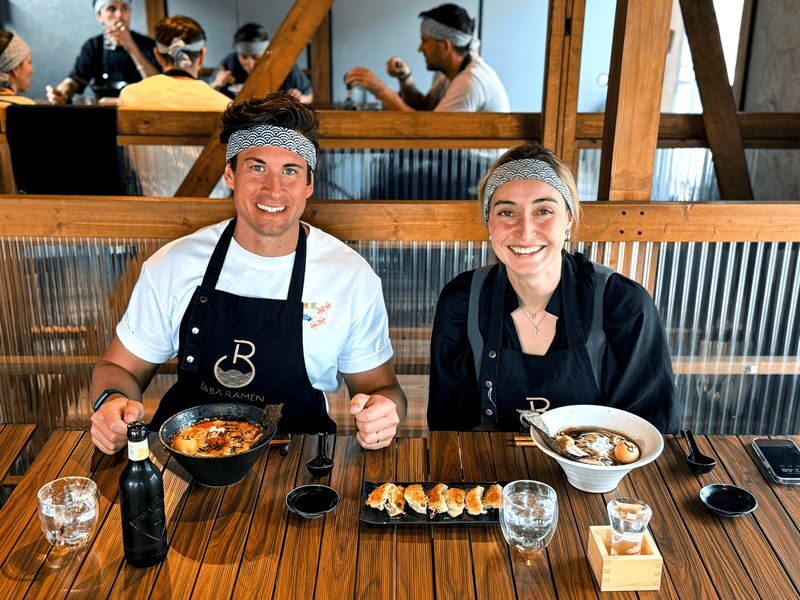
The best part of this Tokyo class is that you make the components that usually stay mysterious: broth from scratch and handmade noodles. You work in a professional restaurant kitchen with bilingual ramen chefs, then sit down to eat the bowl you have made.
I like two things in particular: the class teaches the history and science behind noodle-making before the hands-on work, and the menu can accommodate several dietary needs if you tell the team in advance. You also make gyoza, so the meal is more than a bowl of ramen.
One practical caution: the published details give different locations and durations. The daytime schedule is listed as 9 a.m. to 12:30 p.m., but another summary says three hours, and the venue information names both Minami Aoyama and Meguro. Confirm the exact meeting point and end time before you set out.
- What makes this ramen class worth your time
- A restaurant kitchen, not a staged cooking demo
- From flour to noodles, with the reasoning included
- Choosing between tonkotsu and shoyu
- Gyoza rounds out the meal
- The 9 a.m. start and the address to verify
- Is US1.40 good value?
- Who will enjoy this most
- A few booking details to settle first
- Should you book this ramen masterclass?
- FAQ
- How long does the daytime ramen class last?
- Which ramen broth can I choose?
- Can the class accommodate dietary requirements?
- Where does the class meet?
- What do I take home after the class?
- What is the cancellation policy?
- The Best Of Tokyo!
- More Dining Experiences in Tokyo
- More Tours in Tokyo
- More Tour Reviews in Tokyo
What makes this ramen class worth your time
 1 / 9
 2 / 9
 3 / 9
 4 / 9
 5 / 9
 6 / 9
 7 / 9
 8 / 9
 9 / 9
- You make the broth and noodles from scratch. This is a hands-on cooking session, not a demonstration where you watch a chef do the difficult work.
- You choose tonkotsu or shoyu ramen. These are distinct broth options, so think about your preferences when you book.
- Gyoza is part of the cooking. You’ll prepare this alongside the ramen, then eat the finished meal.
- Chefs explain the method, not just the steps. The class covers noodle-making basics, including its history and science, before you begin cooking.
- Dietary needs can be accommodated with advance notice. Vegetarian, vegan, gluten-friendly, and pork-free options are listed, along with other requirements.
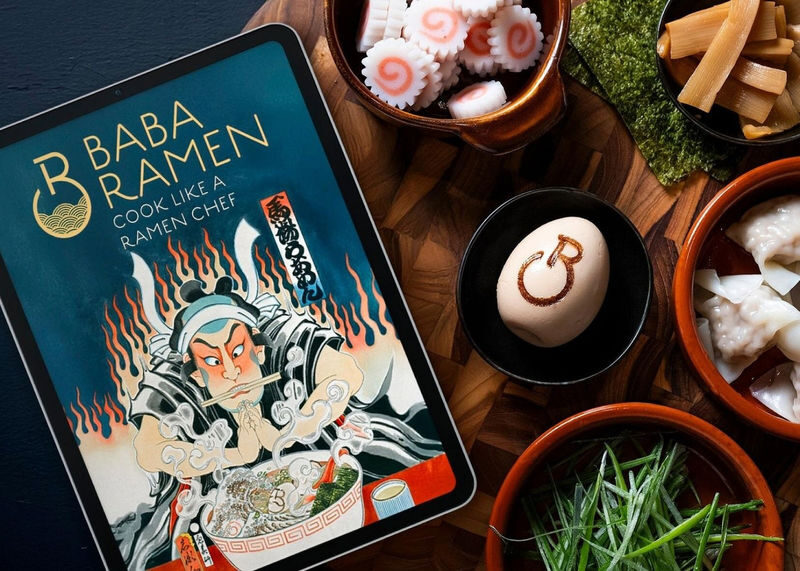
- You leave with recipes and photos. The digital recipe e-book gives you a reference for trying the process again at home.

👉 See our pick of the Our Picks For The 11 Best Workshops & Classes In Tokyo
A restaurant kitchen, not a staged cooking demo
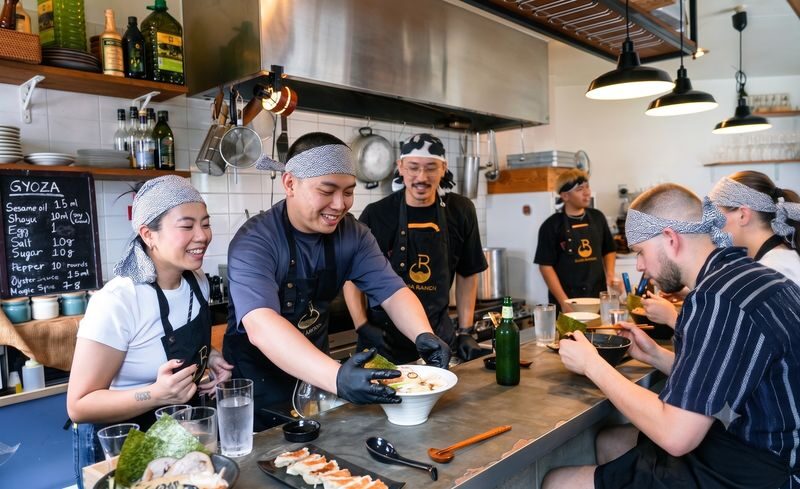
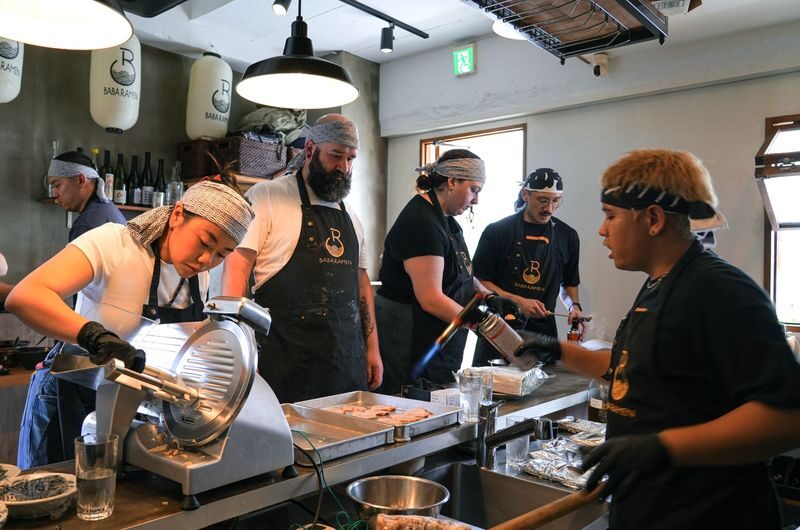
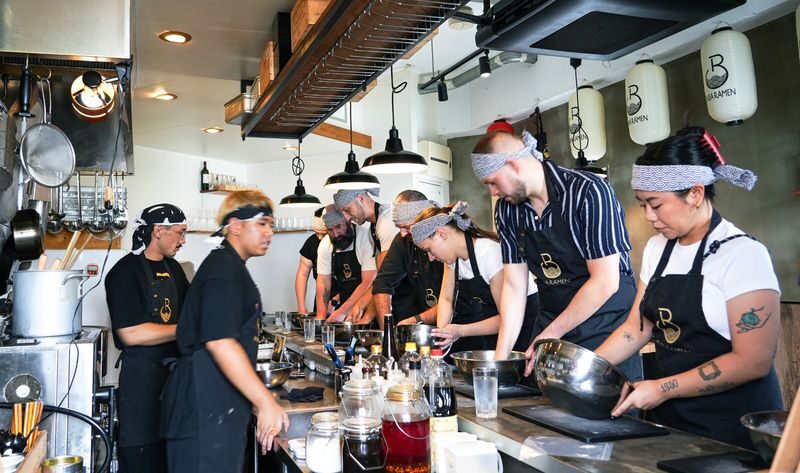
The central appeal here is the setting. You cook inside a Tokyo restaurant kitchen alongside professional ramen chefs, which gives the class a more workaday feel than a lesson built around a polished studio counter. You are there to make food, learn the reasoning behind it, and eat the result.
That distinction matters if you want more than a pleasant meal. Ramen depends on several parts working together: the broth, noodles, and toppings all shape the final bowl. Making broth and noodles yourself gives you a clearer sense of how much craft sits behind a dish that can look deceptively simple when it arrives at a restaurant table.
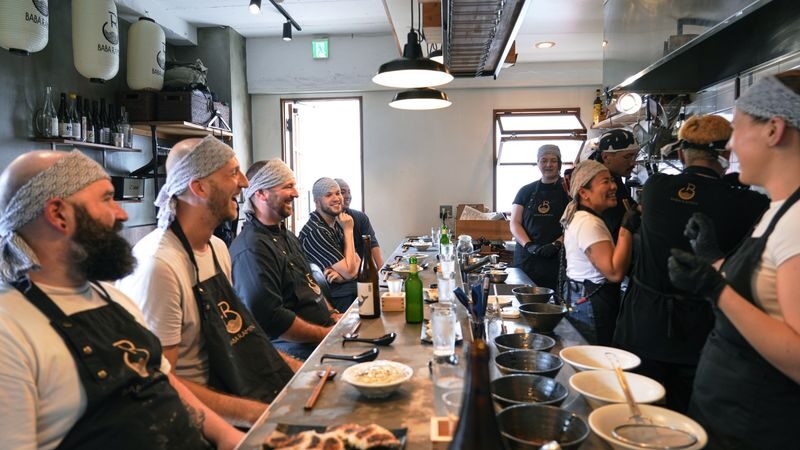
The chefs are bilingual, so you can follow instruction and ask questions in a class designed for an international mix of participants. No individual chef names are provided, so you should not expect a particular named instructor. The format is small-class and guided, though an exact group-size limit is not specified.
One especially useful feature is the teaching order. The class begins with the basics, including the history and science of noodle-making, then moves into practice. That may sound academic, but it has a clear payoff: when a chef explains why a measurement or sequence matters, you can make sense of the technique rather than simply copying a recipe.
A Japanese participant who joined the class described making Chinese-style noodles from scratch for the first time, despite living in Japan. That is a good reminder that this is not only a visitor activity. It may suit you just as well if you already know ramen as a diner and want to understand how the components come together.
You can also read our reviews of more tours and experiences in Tokyo


From flour to noodles, with the reasoning included
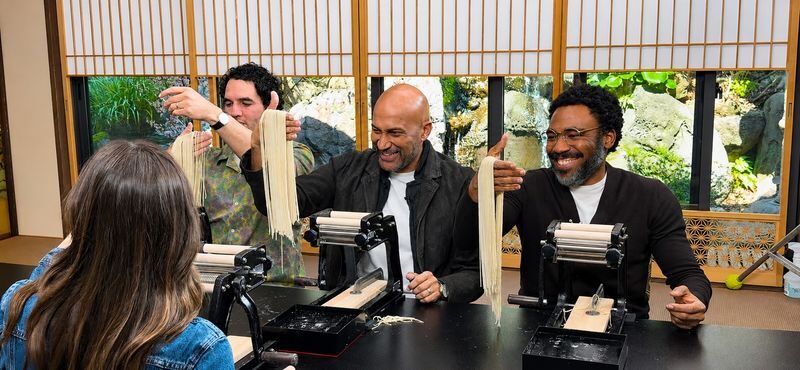
The class’s noodle work is one of its strongest selling points. Handmade noodles are not just a novelty to pose with; they are a chance to see how ingredients and method affect the finished bowl. The class teaches the fundamentals before the hands-on stage, so you have some context for what you are doing.
You will not find a detailed minute-by-minute cooking sequence in the published program, and the exact techniques are not specified. So go in expecting guided instruction rather than a promise of particular tools, recipes, or advanced skills. The emphasis is on learning the process from professional chefs.
That approach makes the session useful for beginners. You do not need to arrive with cooking experience or a working knowledge of Japanese food. If you are a confident home cook, you may still appreciate the structure and the chance to ask why the method works.
The class is also a better fit for curious eaters than for anyone seeking only a quick lunch. It takes time to prepare a meal from the ground up, and the point is partly to learn. If you want to sit down, order ramen, and be on your way, a restaurant visit will be simpler and cheaper.
Choosing between tonkotsu and shoyu
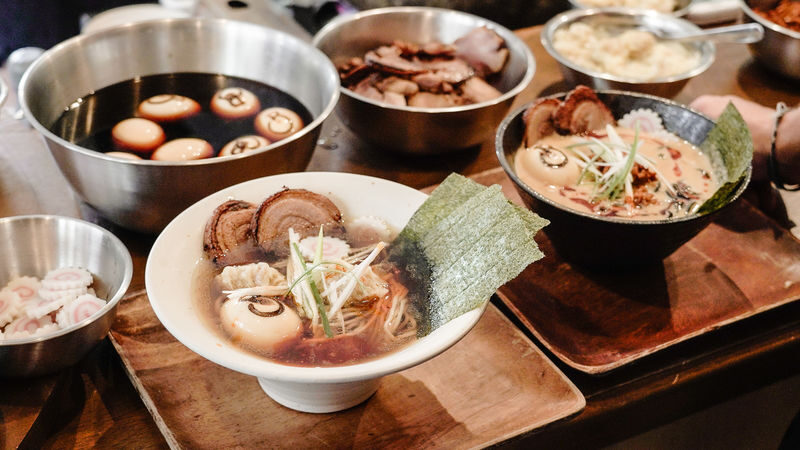
The daytime masterclass offers a choice between tonkotsu and shoyu ramen. The information provided does not spell out the exact ingredients or preparation differences for each broth, so it is sensible to ask the provider about the available option and any dietary implications when you book.
The choice is valuable because broth is central to the character of a ramen bowl. You are not simply following one fixed recipe regardless of taste; you can choose the style that appeals to you. If you are unsure, tell the chefs what you typically enjoy and ask which option fits.
The class also makes a point of preparing broth from scratch. That is a meaningful distinction from a session built around assembled ingredients or a ready-made base. You get a closer look at the work that gives ramen its depth, even if the exact broth-making stages and ingredients are not listed in advance.
A word for vegetarians, vegans, and anyone avoiding pork: the class says it can accommodate those needs, as well as gluten-friendly requests and other dietary requirements, if you provide notice. Since tonkotsu is commonly associated with pork, do not assume that every broth choice suits every diet. Contact the provider ahead of time and confirm what your version will include.
Gyoza rounds out the meal
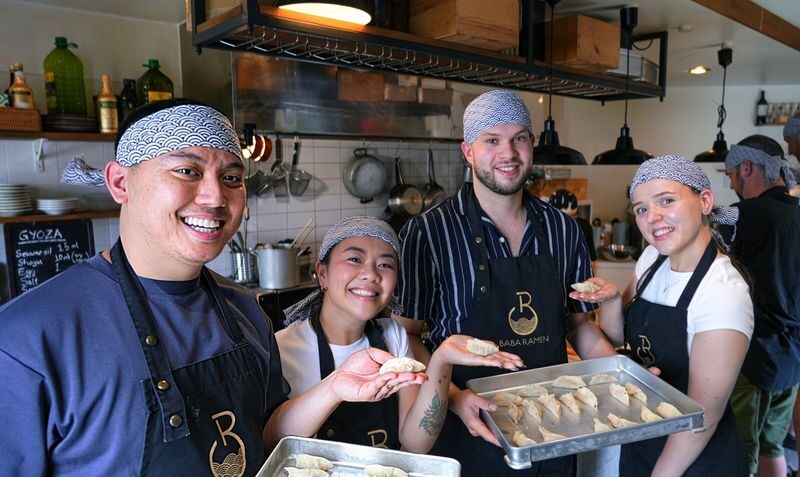
Ramen is the headline, but gyoza is part of the experience too. That makes the cooking session feel more like preparing a full meal than focusing on one bowl alone. You will make the dumplings and then eat the food you have prepared in a restaurant setting.
The menu may change with the season and ingredient availability. That flexibility is sensible in a working food business, but it means you should not expect every detail to remain identical on your chosen date. If a specific dish or ingredient matters to you, check before booking.
The meal is also the natural reward at the end of the work. You have made the noodles, broth, and gyoza, and then get to taste them together. That connection between effort and lunch is what gives the class its appeal: you are not just taking home a recipe, you are eating the result while the steps are fresh in your mind.
The 9 a.m. start and the address to verify
The daytime schedule lists a 9 a.m. start in Tokyo and a 12:30 p.m. return, for a stated span of three and a half hours. Elsewhere, the experience is described as three hours. Treat 9 a.m. to 12:30 p.m. as the published schedule, but confirm the expected finish time with the provider.
The location details need the same double-check. The address information includes Glade Park Minami Aoyama, formerly Mace Minami Aoyama, while the meeting-point details also give Baba Ramen Cooking Class Meguro at 101 3-chome-7-32 Shimomeguro, Meguro City, Tokyo 153-0064. Those are not the same place, so do not rely on a name alone when planning your route.
The departure time is confirmed after booking. Once you have that confirmation, check the venue address against the message you receive and contact the provider if the location is still unclear. A cooking class is much easier to enjoy when you are not trying to solve a Tokyo address puzzle at the last minute.
The class needs at least two participants to run. If that minimum is not met, it may be rescheduled, or you may receive a refund. Traffic and weather can also affect the schedule, and the menu can change with the season and available ingredients.



Is US$151.40 good value?
At a starting price of US$151.40, this is a premium cooking class, not a budget meal. The value depends on whether you want instruction and participation as well as lunch. You are paying for a three-hour-plus activity in a working restaurant kitchen, professional guidance, scratch-made broth and noodles, gyoza, a meal, and a digital recipe e-book with photos.
If you compare it with the cost of ordering ramen, the price will seem high. That is the wrong comparison if the cooking is your main reason for booking. The closer comparison is with a guided food activity: here, you get to handle the process yourself and learn why the sequence and measurements matter.
The downloadable recipes add value if you cook at home. They give you a way to revisit what you learned, though the provided details do not say whether every ingredient or technique will be easy to reproduce outside Japan. Think of the e-book as a useful reference, not a guarantee that your home kitchen will turn out an identical bowl.
There is also an evening option, described as a two-hour Wagyu ramen class, from the same starting price. Its details differ from the daytime masterclass, so compare the package carefully rather than assuming it includes the same broth choices, dishes, or lesson plan.
Who will enjoy this most
I would choose this class if you like cooking, want to understand ramen beyond its menu description, or are looking for a Tokyo activity that gives you something to do with your hands. It also suits groups with mixed ages or nationalities: the class has been described as bringing together participants from different backgrounds, and the instruction is bilingual.
It can work for complete beginners, but it is not limited to them. The lesson starts with fundamentals and explains the logic behind the process, which helps if you have never made noodles. More experienced cooks may value the chance to learn from restaurant chefs and ask detailed questions.
Dietary flexibility makes the class more practical for people who cannot simply eat a standard ramen bowl. Still, advance notice is essential, and you should confirm exactly what the kitchen can prepare for you. That is especially important if you avoid pork, gluten, or animal products.
Skip it if you are mainly after a fast lunch, dislike structured instruction, or are unwilling to spend several hours cooking. The class’s value comes from the work as much as the meal. You should also hold off until the meeting location is clear, since the conflicting venue details could complicate the morning.
A few booking details to settle first
Confirmation is normally sent within minutes, and the voucher is valid only for the date and time specified. If you need to change plans, changes are allowed until two days before the activity, subject to the stated exceptions and availability.
You can receive a full refund if you cancel at least 48 hours before the activity date, using Tokyo local time. Late arrivals of 30 minutes or more are not eligible for a refund. Since the start time is confirmed after booking, check your confirmation promptly and allow yourself enough time to reach the correct venue.
Should you book this ramen masterclass?
Book it if you want a hands-on food lesson and are happy to pay more than you would for a restaurant meal. The strongest reasons are the from-scratch broth and noodles, the chefs’ explanation of the method, and the chance to eat what you have made. The recipe e-book and photos are useful extras, especially if you hope to recreate the experience later.
Before paying, settle two details: the exact address and the scheduled duration. Then tell the provider about any dietary needs and confirm the broth that fits. If those points are clear and cooking is part of the fun for you, this is a thoughtful way to spend a Tokyo morning.
Become a Ramen Chef for a Day: Authentic Tokyo Restaurant Experience
“Both the staff and the other participants were incredibly kind, so even though my English isn't the best, I had a wonderful time. I am Japanese, bu…”
FAQ
How long does the daytime ramen class last?
The schedule lists a 9 a.m. start and a 12:30 p.m. return, or three and a half hours. Another description gives the duration as three hours, so confirm the timing after booking.
Which ramen broth can I choose?
The daytime masterclass offers a choice of tonkotsu or shoyu ramen. Contact the provider if you need details about ingredients or which option suits your diet.
Can the class accommodate dietary requirements?
Vegetarian, vegan, gluten-friendly, and pork-free options are listed, along with other dietary needs. You must let the provider know in advance and confirm what can be prepared.
Where does the class meet?
The venue details name Glade Park Minami Aoyama, formerly Mace Minami Aoyama, while the meeting-point information also lists Baba Ramen Cooking Class Meguro at 101 3-chome-7-32 Shimomeguro, Meguro City. Confirm the exact meeting point before traveling.
What do I take home after the class?
You receive a digital recipe e-book and photos. The experience also includes eating the meal you have prepared.
What is the cancellation policy?
A full refund is available if you cancel at least 48 hours before the activity date, using local time at the destination. No refund is available for participants who arrive 30 minutes late or more.