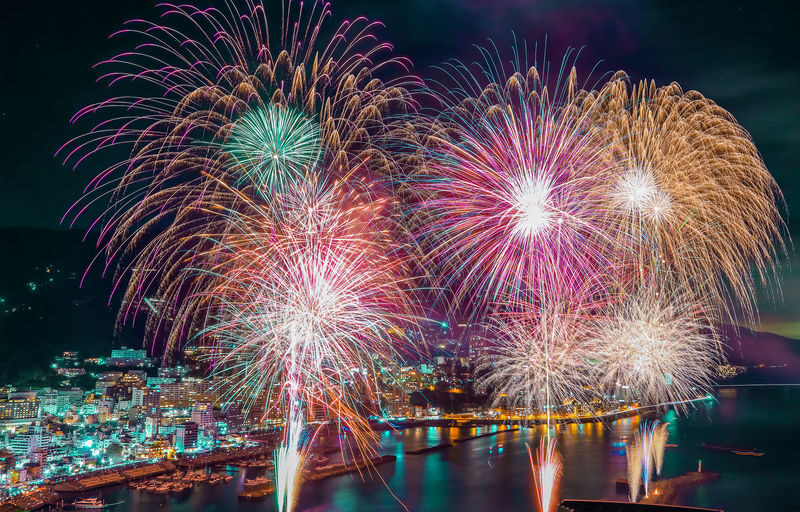
Atami’s fireworks are the payoff: bursts over the sea, backed by surrounding mountains that amplify each boom. This long day trip pairs the show with a choice of Izu’s volcanic coast or Hakone’s lake and geothermal sights, then brings you back to Tokyo by car.
I like two things here. Hotel pickup and drop-off spare you the work of coordinating a late return by public transport, and the route combines a real local event with scenery you might not fit into a Tokyo-only trip. The show is scheduled for about 25 minutes, so plan the day around the full outing, not just the fireworks.
The trade-off is the drive. Traffic, cable-car queues, and shared pickup stops can squeeze the sightseeing schedule, and the Izu route has lost attractions on congested days. Choose this tour for convenience and a chance to see Atami’s fireworks, not for a leisurely visit at every stop.
- At a glance
- Two routes, one fireworks finale
- Mount Omuro’s green crater
- Jogasaki Coast’s black rock and white surf
- A breather in Atami before the show
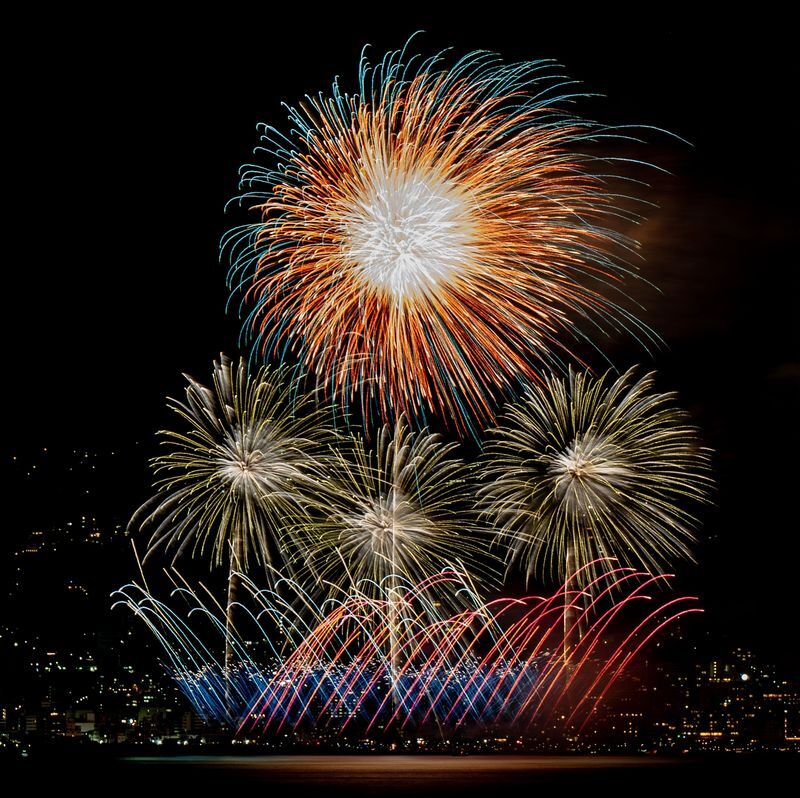
- Fireworks over the sea
- What the ride and pickup are really worth
- Is good value?
- Who should book this day trip?
- FAQ
- How long is the Atami fireworks display on this tour?
- Which route can I choose?
- Is the Mount Omuro cable car included?
- Are meals included?
- Where is hotel pickup available?
- What is the latest expected return time?
- More 1-Day Tours in Atami
- More Tours in Atami
- More Tour Reviews in Atami
At a glance
 1 / 9
 2 / 9
 3 / 9
 4 / 9
 5 / 9
 6 / 9
 7 / 9
 8 / 9
 9 / 9
- The fireworks are the main event: Atami’s seaside display is scheduled for about 25 minutes, with the sound carrying through the surrounding hills.
- Pick one scenic route: Route A visits Mount Omuro and Jogasaki Coast. Route B visits Lake Ashi and Owakudani.
- The day can run long: Pickup begins between 11:30 a.m. and 12:30 p.m., with the return to your hotel or address listed around 11 p.m. to 11:50 p.m.
- Mount Omuro costs extra: The cable car is not included, and queues can use up much of the time allotted for the stop.
- Atami offers a pause before the show: The schedule allows time for the Ginza shopping street, food, and a walk by the beach, though traffic may shorten this window.
- It is a shared small-vehicle tour: Capacity is nine passengers, not including the driver, and pickup is not available in Ikebukuro or Shinagawa.
Two routes, one fireworks finale
This is not a tour that covers Izu and Hakone in a single day. You choose one route, then meet the group in Atami for the fireworks.
Route A heads to Izu for Mount Omuro and Jogasaki Coast. It is the stronger choice if you want volcanic scenery, an open-air ride up a distinctive green mountain, and a rugged shoreline. The published schedule allots 90 minutes at Mount Omuro and 50 minutes at Jogasaki Coast, but those are targets, not guarantees.
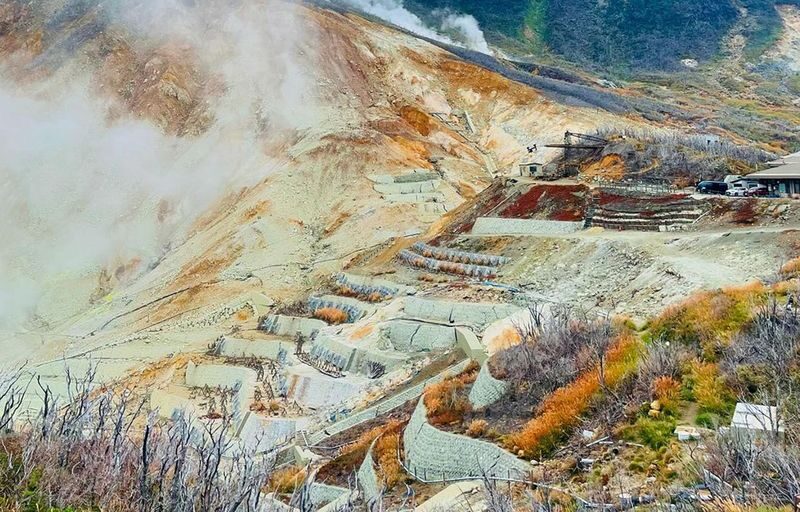
Route B visits Lake Ashi and Owakudani in Hakone before the fireworks. Lake Ashi is known for its mountain views, lakeside Hakone Shrine, and pirate-ship cruises. Owakudani brings a very different mood: a volcanic area where white geothermal steam rises from the ground and sulfur scents the air. The detailed stop timings provided for this tour are for Route A, so check the operator’s current schedule for Route B before booking.
Both versions are built around the same practical idea: avoid arranging a long-distance rental car or piecing together the trip by train and bus, then stay in Atami for the evening show. That convenience matters most on the way home, when the fireworks crowd and late hour make a Tokyo return more complicated to plan independently.
You can also read our reviews of more tours and experiences in Atami
Mount Omuro’s green crater
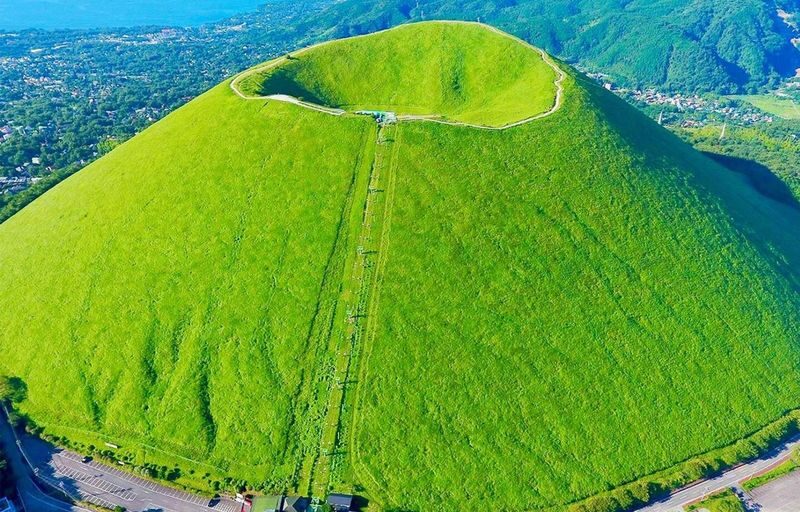
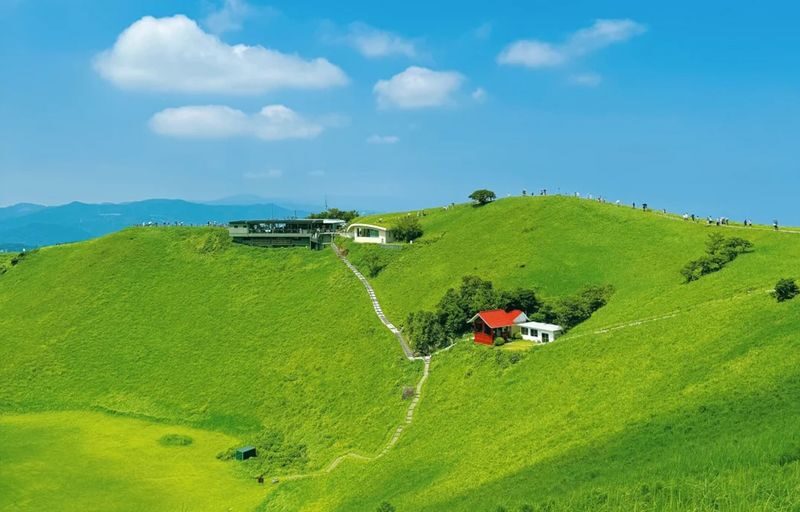
On Route A, Mount Omuro is the day’s most unusual stop. The mountain’s rounded, grass-covered shape gives the summit crater the look of a wide green bowl. A cable car carries you up, and you can walk around the rim for broad views across the surrounding area.
The cable car fee is not included, so budget for it separately. More important, the line can be slow. The stop is listed as 90 minutes, but that time has to cover queuing, the ride, and time at the top. A long wait can leave little room for the walk or even make the visit impractical if the schedule is already behind.
Bring a light snack. The tour information warns that lunch may not fit into the day, especially if the queue is long. You will be glad to have something handy rather than counting on a relaxed meal between stops.
The vehicle may need to leave promptly to keep the rest of the day moving. In practice, that means arriving early or moving quickly can help, but it cannot overcome a major traffic delay or an unexpectedly long line. Some days, the driver may need to shorten or skip a later stop. If seeing Mount Omuro is your highest priority, accept that the rest of the schedule may shift around it.
Jogasaki Coast’s black rock and white surf
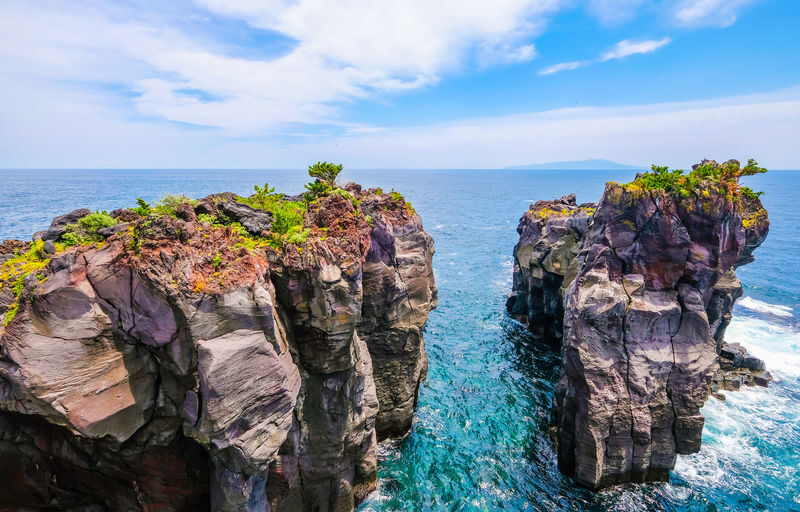
The coast is a striking change of pace after the mountain. Its cliffs were formed from lava that flowed from Mount Omuro, then weathered by the sea over time. The result is a rugged stretch of dark rock, pale breaking waves, and views out to the water.
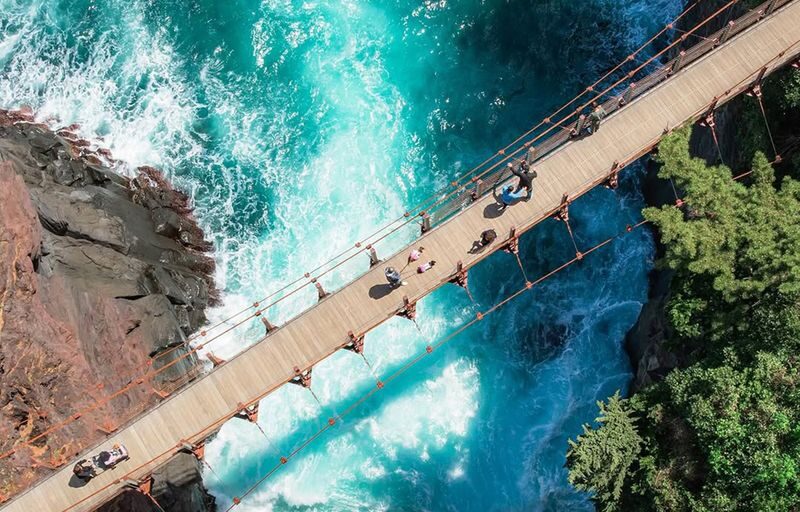
The planned visit is 50 minutes, with time to walk toward Kadowaki Suspension Bridge. The bridge hangs above the sea and gives you a close look at the rough shoreline below. Wear comfortable shoes, and keep an eye on the time: this is a self-guided stop, so you need to return to the vehicle when instructed.
Daylight can make a big difference here. In late autumn and winter, sunset comes early, and the coast may be dim by the time the vehicle arrives. A visit that would be about the views in bright conditions can turn into a short walk in fading light. If you are travelling in a season with shorter days, keep a small flashlight on your packing list, but do not expect it to replace daylight for seeing the coast.
The scenery is worth the stop, but it is also one of the places most vulnerable to a compressed itinerary. If traffic or the Mount Omuro queue eats into the schedule, Jogasaki may be shortened or missed. Treat it as a welcome bonus, rather than the one part of the day you are certain to get.
A breather in Atami before the show
The group then heads to Atami Ginza Shopping Street, with a scheduled 80 minutes for food, a look around, or a walk by the beach. This is your best chance to stretch your legs, find a meal, and settle in before the crowd gathers for the fireworks.
Keep expectations flexible. A late arrival can reduce this stop, and shops may be closed by the time you reach the area, particularly outside the brighter, longer days of summer. Carry snacks in case you have less time to eat than planned. The tour does not include meals or drinks.
Atami itself is a useful part of the experience, not just a waiting room. The town’s seaside setting makes the fireworks feel connected to the place, rather than like a show staged in an anonymous venue. Still, the time here is limited. If you want a long dinner or a proper wander through town, this outing may feel rushed.
Fireworks over the sea
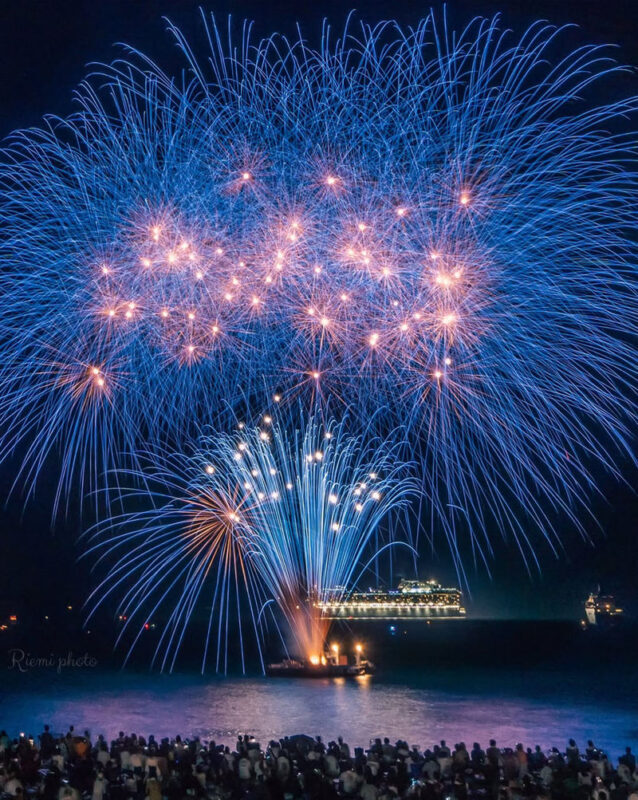
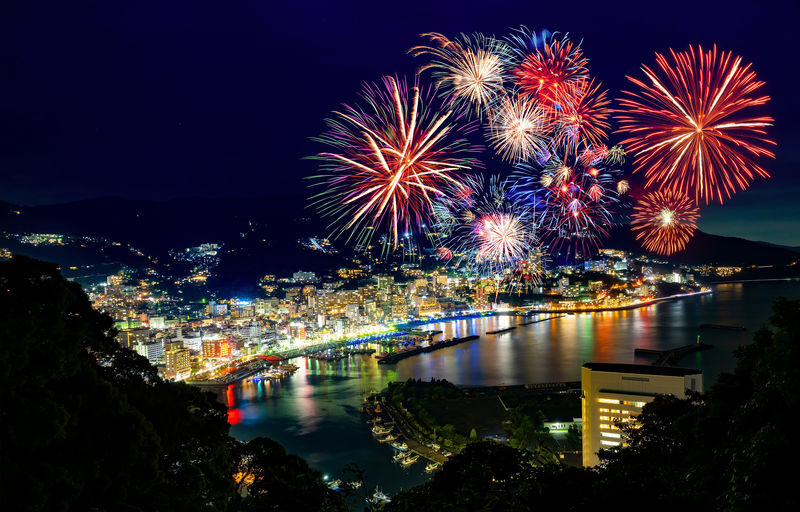
Atami’s fireworks are launched near the shore. The surrounding mountains form a natural basin, helping the sound roll back toward the audience. That echo adds force to the bursts and gives the display a different character from fireworks viewed over an open field.
The schedule gives the show about 25 minutes. Some descriptions of Atami’s fireworks refer to longer displays, but the time allocated on this tour is the figure to use when planning. The show itself is self-guided, while the driver or guide handles the group’s transport arrangements and directs you to the meeting point afterward.
A viewing spot can make or break the evening. Some groups have been taken to a less crowded area with a clear view, which is a real advantage when you do not know the town or want to avoid searching for a place on your own. But listen closely to the post-show instructions. In a crowded area after dark, a changed or unclear pickup point can mean an unnecessary wait.
Expect a late ride back. The return is listed between about 11 p.m. and 11:50 p.m., with actual arrival depending on traffic. Do not schedule a tight connection, dinner reservation, or other fixed plan for the same night.



What the ride and pickup are really worth
The tour starts with shared hotel pickup, arranged by the driver according to route and distance. Your exact time is confirmed the day before. Be ready five minutes early, and remember that a shared pickup can run earlier or later than the time you first expect.
The vehicle holds up to nine passengers, excluding the driver. That small capacity can make moving between stops easier than travelling in a large coach, and it saves you from arranging transfers yourself. On the other hand, the day still involves a substantial amount of driving. One account of the trip described roughly half the outing as time in the vehicle, and that is a fair possibility on a congested day.
The route covers a lot of ground, and weekend or holiday traffic can be heavy. The operator may change the order of stops or shorten visits to keep the fireworks portion possible. In the sharpest cases, the Izu route has arrived too late for a proper Mount Omuro visit and lost the coast stop altogether. That is the central risk to weigh against the convenience.
A Chinese-speaking driver or guide is included. Guides contact passengers the day before, with information sent by email around 6 p.m.; WeChat users may also be contacted to join a trip group, and LINE users are sent a group link by email. Check your spam folder if the message does not appear. One driver named Le Xixi earned particular praise for calm driving and managing a difficult traffic day, but the assigned driver can vary.
Is $79 good value?
At a starting price of US$79, this can be good value if you want the fireworks and countryside in one outing without arranging a car. The fee covers hotel transfers in eligible areas, tolls, parking, fuel, and the driver or guide. It does not cover Mount Omuro’s cable car, meals, drinks, or personal expenses.
The real value is the transport and the chance to see Atami’s display without handling the late-night return yourself. If you are comfortable with a long day and a schedule that may change, the price is appealing. If you want unhurried time at each sight, the value is less convincing: a cheap seat does not give you control over traffic, queues, or how long you can stay at a stop.
For Route A, calculate the extra cable-car cost and bring food. For either route, pack rain gear, sun protection, comfortable walking shoes, a portable charger, and a snack. Keep your plans after the tour loose. The operator advises against booking a Shinkansen, flight, or dinner reservation that depends on a precise return time.
Who should book this day trip?
I would consider this tour if you are staying in Tokyo, want to see the Atami fireworks, and prefer a driver to arranging several legs of transport yourself. It suits people who are happy to trade flexibility for convenience and can enjoy a scenic ride even when traffic makes the day feel long.
Route A is the pick for Mount Omuro and a dramatic coast. Route B is for Lake Ashi and Owakudani. Do not choose Route A expecting guaranteed time at all three stops: Mount Omuro queues and road conditions can force changes. If a specific attraction is non-negotiable, a private or independently planned trip would give you more control.
The tour is not suitable for people aged 70 or older, according to the stated eligibility rules. It is also not recommended for pregnant people, and the operator excludes seniors and people with high blood pressure, heart disease, or other cardiovascular conditions. Infants and children must be included in the passenger count. Confirm your pickup area before paying, as Ikebukuro and Shinagawa are excluded.
My call: book it for the fireworks, the convenient transport, and the chance to pair the show with one scenic region. Skip it if you need a guaranteed, leisurely visit to every stop or a precise return time.
Fireworks Special | Includes Hotel Pickup: Atami Fireworks Festival + Izu Omuroyama or Hakone Lake Ashi Day Trip | Departure from Tokyo
“Although the journey was a bit long, it felt very worthwhile. The scenery from the cable car up Mount Omuro was vast and beautiful, and the Atami f…”
FAQ
How long is the Atami fireworks display on this tour?
The tour schedule allows about 25 minutes for the fireworks. Plan around that figure.
Which route can I choose?
Route A visits Mount Omuro and Jogasaki Coast. Route B visits Lake Ashi and Owakudani. Both routes include the Atami fireworks.
Is the Mount Omuro cable car included?
No. The cable-car fee is extra, and you may need to queue even with a reservation.
Are meals included?
No. Meals and drinks are not included. Bring a light snack, as the schedule may leave little time for lunch.
Where is hotel pickup available?
Pickup and drop-off are provided for eligible hotel or personal-address locations in Tokyo. The service is not available in Ikebukuro or Shinagawa. The exact pickup time is confirmed the day before.
What is the latest expected return time?
Return is listed between about 11 p.m. and 11:50 p.m. Traffic can affect the arrival time, so avoid making a tight connection or other fixed plans afterward.