
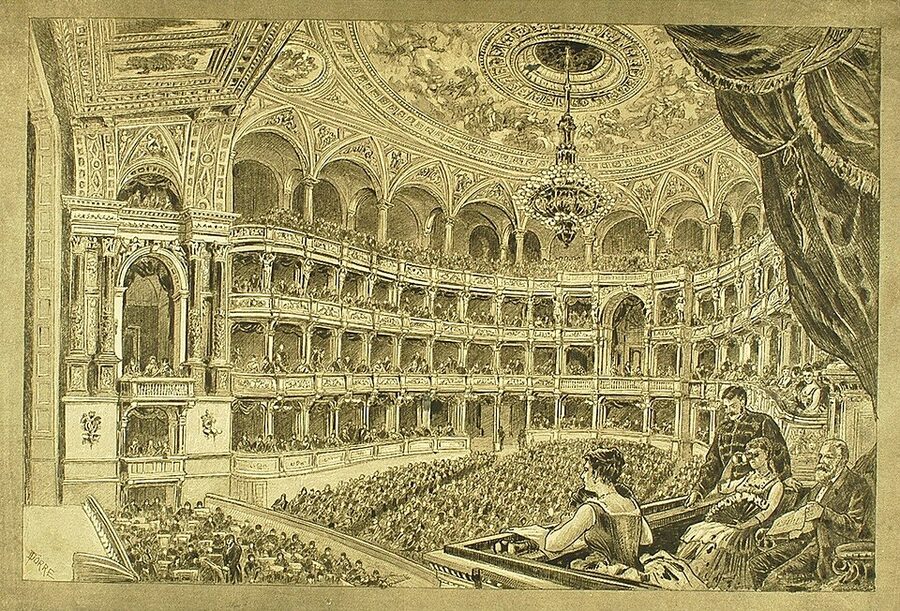
You walk up the worn red carpet on the grand staircase, the guide stops you halfway, and then someone pushes open the auditorium doors. Whatever you were expecting, that first second flattens it. Gold leaf everywhere. A painted sky above your head. A chandelier the size of a small car. Three tiers of red-and-gold balconies curving away from a stage that looks far too small to deserve all this.
That’s the moment you came for. Booking the Hungarian State Opera House tour is mostly an exercise in timing — the place runs three English tours a day, they sell out, and rehearsals occasionally cancel them. Below is what I’d actually do, with a single tour I’d recommend, what to expect on the route, and how the tour differs from booking a real performance later in the week.

- In a Hurry? The Quick Pick
- The Tour I’d Actually Book
- 1. Budapest: Opera House Guided Tour —
- Where to Buy Tickets — and Which Channel Saves Headaches
- Mid-Tour Cancellations Are a Real Thing
- What the Tour Actually Walks You Through
- Watching a Real Performance Is a Different Decision
- Tour Times and Languages
- Practical Stuff Most Guides Don’t Mention
- The Building’s Backstory in 90 Seconds
- Combining the Tour with the Rest of Your Day
- When to Visit Across the Year
- Getting There from Anywhere in Budapest
- One Last Thing on the Mini-Concert
- Other Budapest Guides Worth Your Time
In a Hurry? The Quick Pick
The only one to book: Budapest: Opera House Guided Tour — $33. Sixty minutes inside the auditorium, royal box and grand staircase, with a short live opera mini-concert at the end. Three English departures daily. Book a day or two ahead — afternoon slots sell out fastest.
The Tour I’d Actually Book
There’s really one product that matters here. The Opera House runs its own guided tour and every reseller — GetYourGuide, Viator, the various Budapest blogs — points to the same one. Below is the tour I keep recommending, plus what’s good about it and what to know.
1. Budapest: Opera House Guided Tour — $33
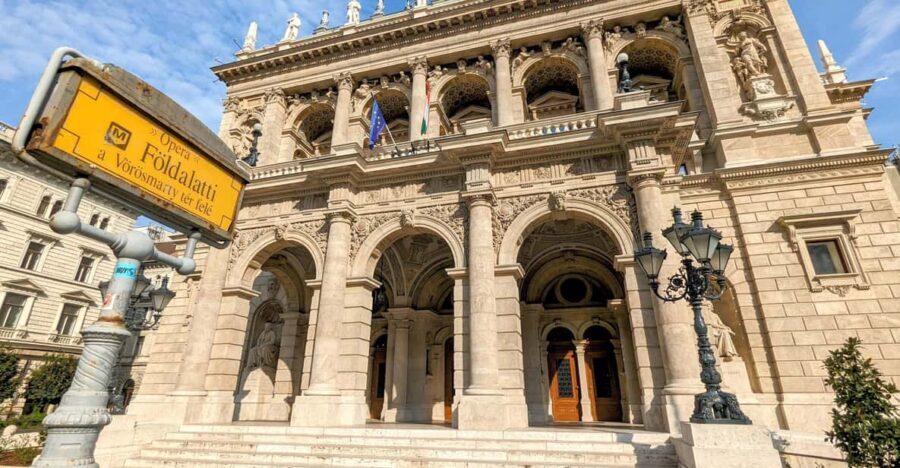
This is the same official tour the Opera House sells on its own website, just resold through GetYourGuide with the booking flow most travellers find easier. Our full review goes through the route in more detail, including which seat I’d grab during the mini-concert. Sixty minutes is the right length — long enough to get the royal box, the bar, the grand staircase and the auditorium, short enough that you don’t feel restless.
Honest note: I tried to find a second product worth recommending and couldn’t. There are city passes that include the Opera House (the Budapest Card has a partial discount, not free entry), and a few combination tours that pair the Opera with St Stephen’s Basilica or a Danube cruise — but the Opera segment of those is the same 60-minute walk-through, just with a guide who’s already herding you to a different attraction afterwards. If your time is tight and you’re piecing together a Budapest day, the standalone tour is the one to book.
.jpg)
Where to Buy Tickets — and Which Channel Saves Headaches
Three real options. Each has tradeoffs.
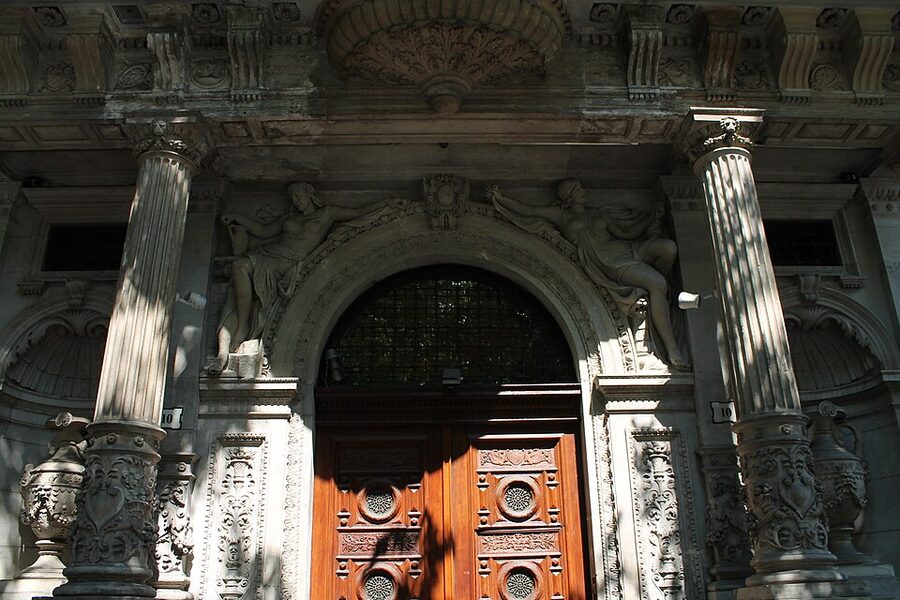
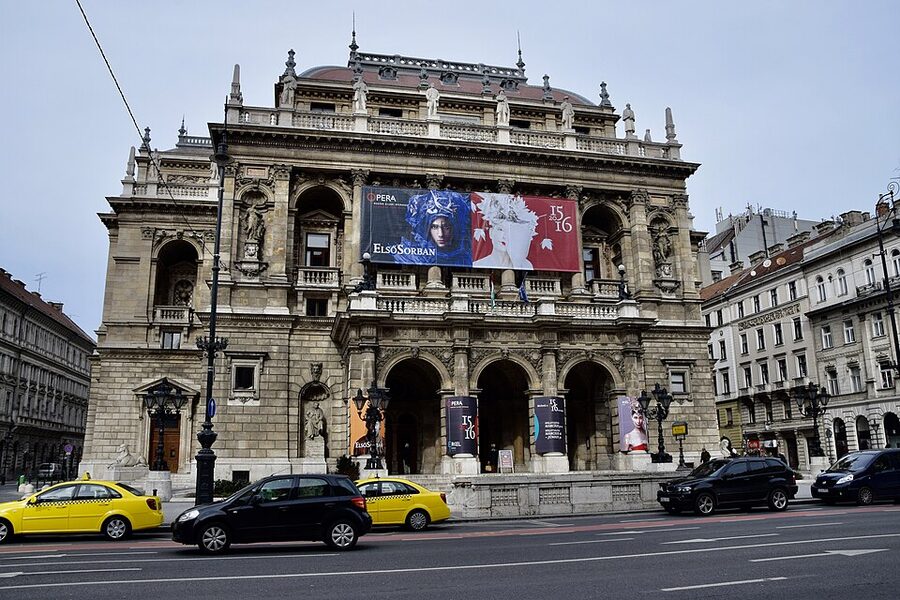
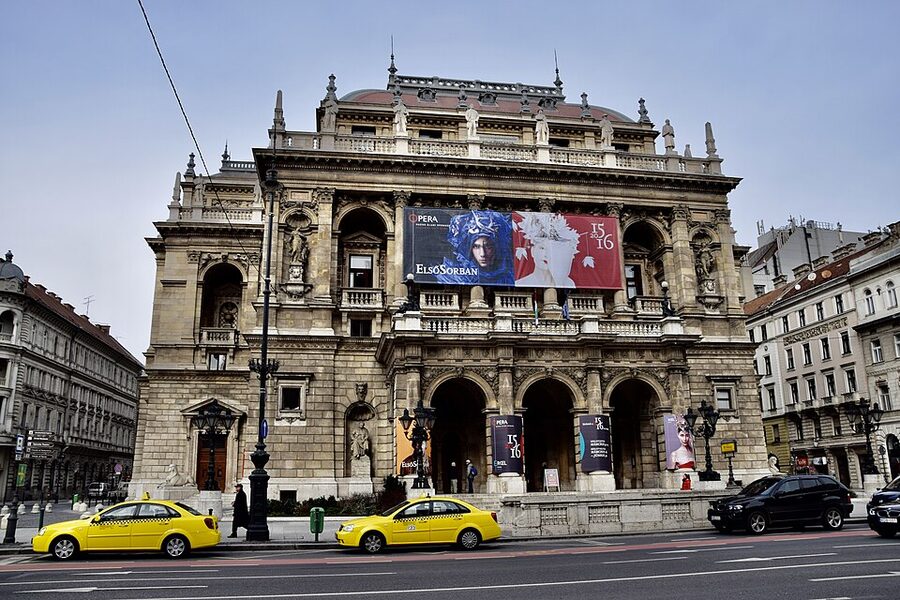
1. The official Opera House website (opera.hu). This is where the tour itself is run from. You pay 10,500 HUF (about $33) for the English tour, 5,800 HUF for the Hungarian one. Children under six are free. You’ll get a PDF or QR ticket and you show it on your phone at the entrance on Hajós utca 13-15. It works, but the site is in Hungarian by default with an English toggle that occasionally drops you back into Hungarian mid-checkout.
2. GetYourGuide. Same tour, slightly nicer booking experience, and you get the GYG free-cancellation buffer up to 24 hours before. Marginally pricier in some currencies but the ticket is fully refundable, which matters because rehearsals do sometimes cancel afternoon tours.
3. The on-site box office at Hajós utca. Open weekdays 10:00 to 17:00. If you’re in town more than two days and want to be flexible, you can walk up and grab a slot for tomorrow. Don’t expect day-of availability in summer — the 13:30 slot fills first and the others go by lunchtime.

If you want the simplest path: book GYG the night before. If you want flexibility and you’re staying in Pest near the opera, walk to the box office in the morning of your first day and grab whichever slot has room. If you’re a planner with fixed dates, book opera.hu directly — same product, the operator gets to keep more of the margin.
Mid-Tour Cancellations Are a Real Thing
One thing the tour-listing pages bury: the Opera House is a working theatre. Rehearsals run during the day. If a production needs the auditorium for tech or staging on a specific afternoon, the 15:00 or 16:30 tour might get bumped — sometimes the morning of, sometimes hours before. This is the single biggest reason I recommend GetYourGuide over a direct booking. The cancellation comes through to the platform automatically and you don’t have to fight in Hungarian email to get your refund.
Practical tip: if you only have one shot at this, book the 13:30 slot. It almost never gets bumped because rehearsals tend to run later in the afternoon when the cast is warmed up and tech crews are setting evening cues.
What the Tour Actually Walks You Through

The route is well-paced. You assemble at the entrance on Hajós utca, the guide does a quick headcount in the foyer, and then you spend the next hour moving through the building roughly in this order:
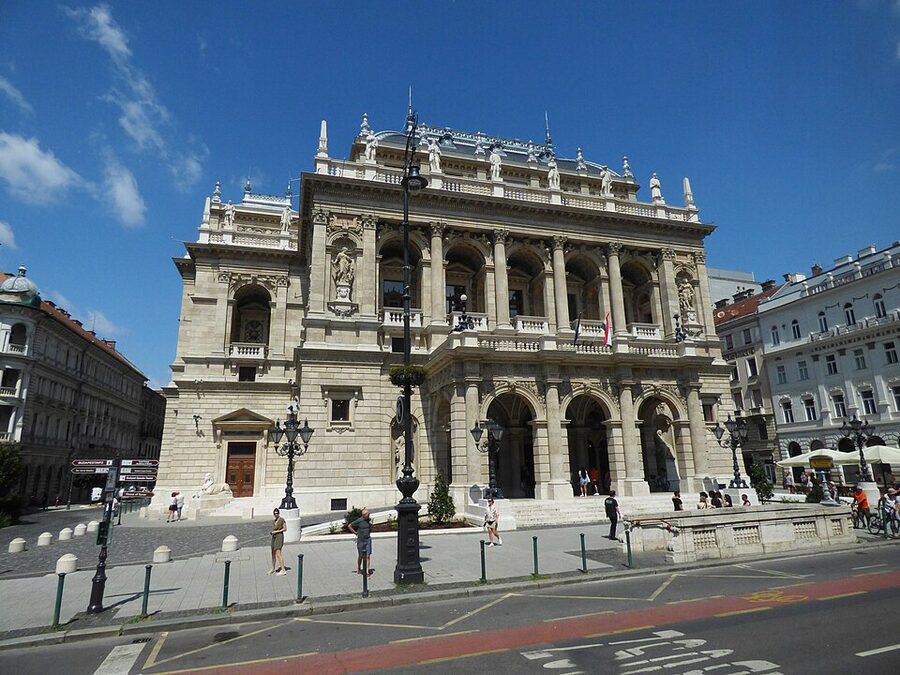
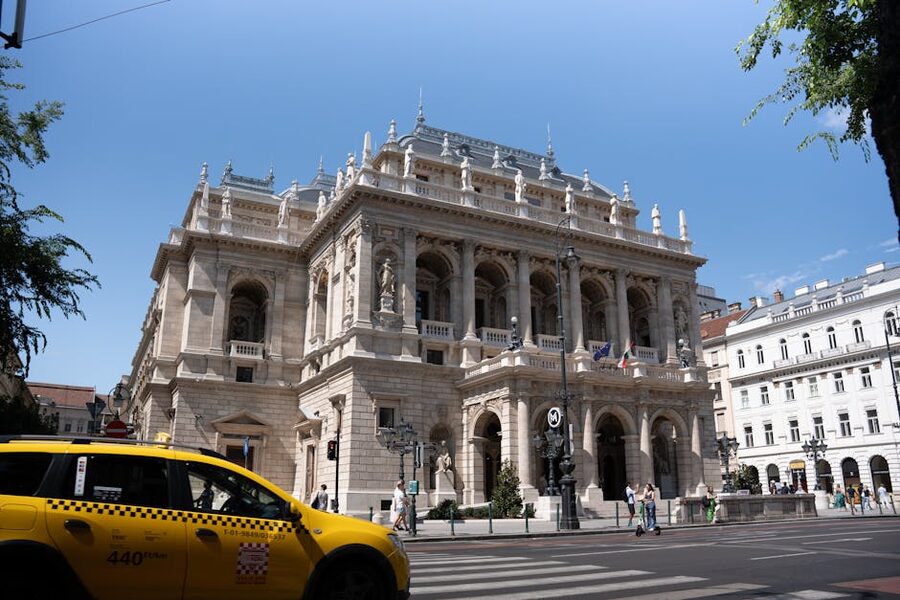
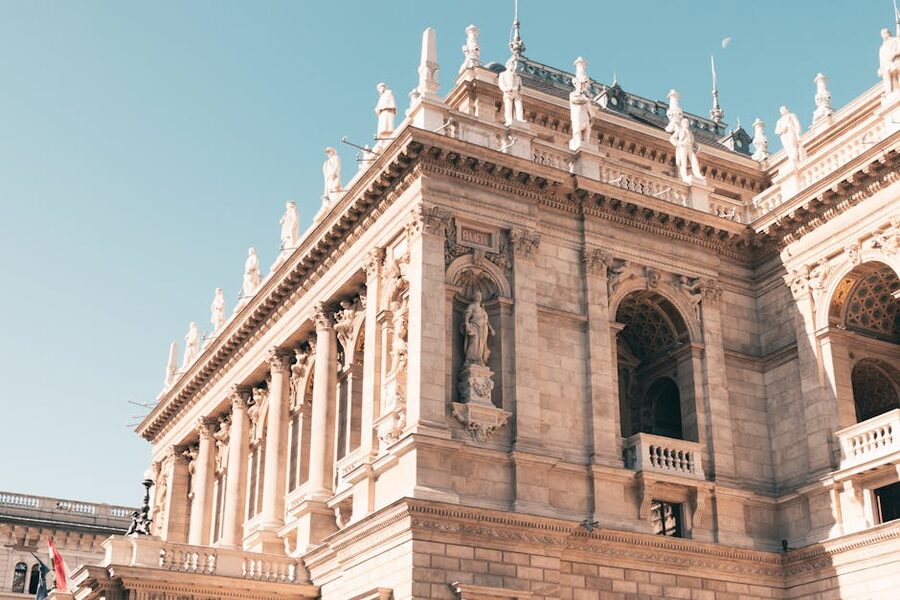
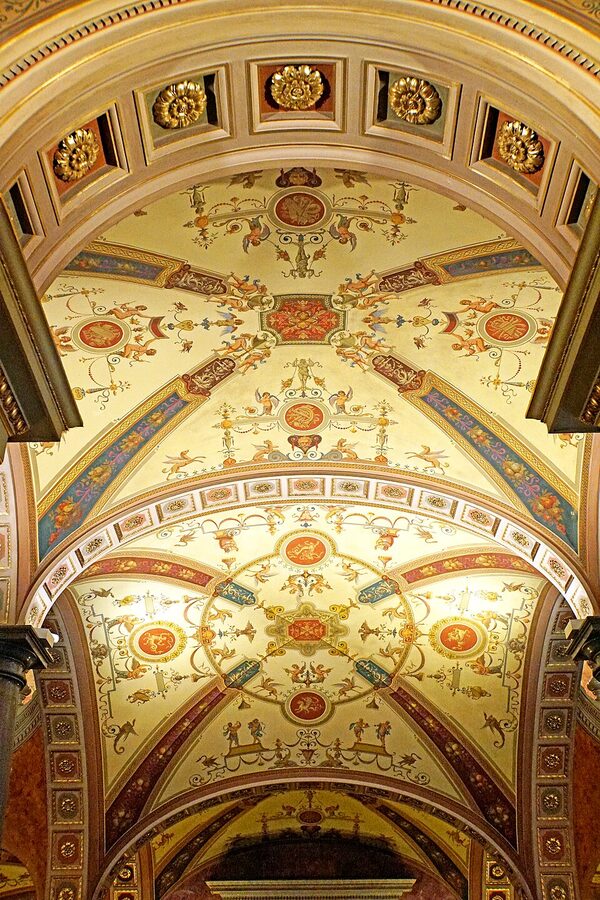
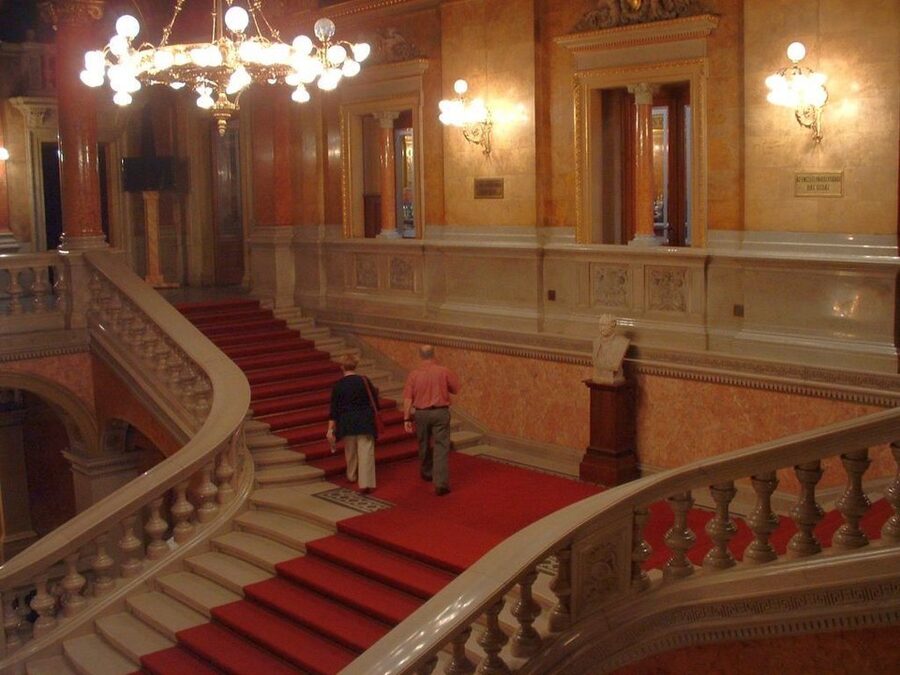
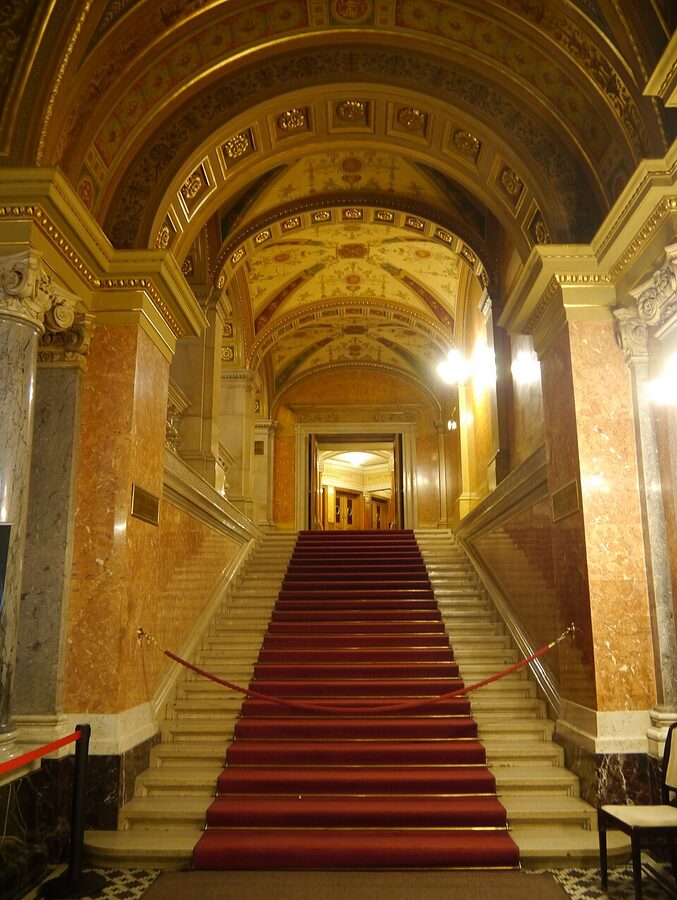
The entrance hall and grand staircase. Marble columns, painted floor, and that staircase. Most groups stop here for the building’s origin story — Miklós Ybl winning the design competition in 1873, construction starting in 1875, the building opening in 1884 with Emperor Franz Joseph in attendance. Ybl was 60 when construction began and 70 when the doors opened. He died less than two years later.

The royal box and the Royal Parlour. Designed for Franz Joseph and his family, who in fact only used it once. The Habsburgs preferred the Vienna State Opera and treated Budapest’s house with a certain amount of imperial side-eye. A persistent local story has it that Franz Joseph attended the opening night and never returned — supposedly because he realised, partway through, that the Budapest opera was more beautiful than Vienna’s. It’s probably apocryphal, but every guide I’ve heard tell it gets a laugh.
The Royal Parlour itself is small — a private retiring room, not a full suite. The portraits on the walls are Hungarian opera singers, not royals. If you’re moving through with a busy group, this is the room where most people just take a phone photo and move on. Spend an extra 30 seconds and look at the door handles. Solid bronze, original from 1884, and they’re shaped like little lyres.
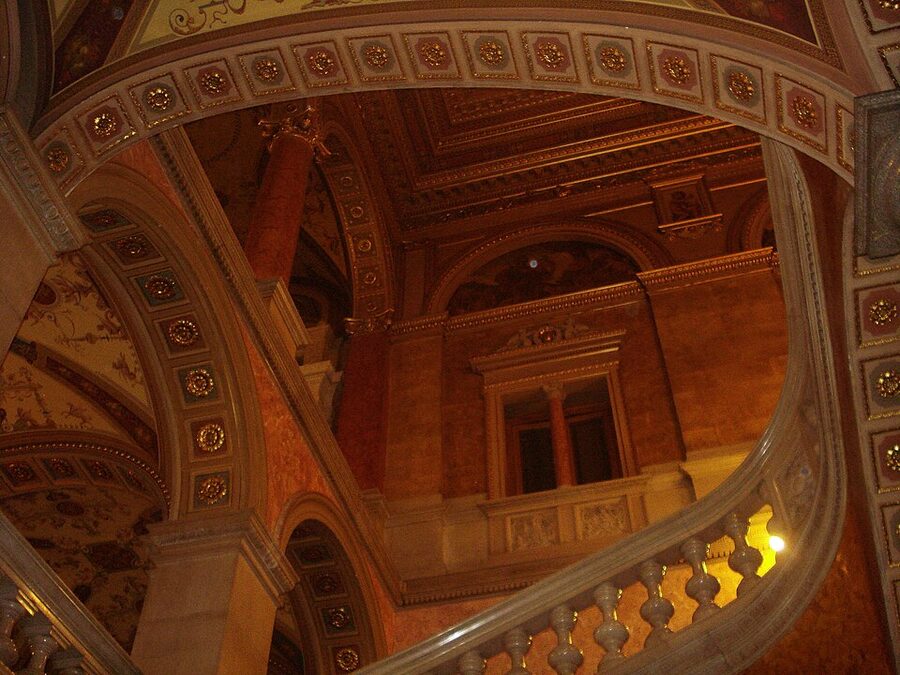

The bar and lounge area. High ceilings, more frescoes — these ones with nature themes rather than the music themes downstairs. There’s a small terrace off the bar that opens onto Andrássy. On the tour you only see it through the glass, but if you come back for a real performance, you can stand out there during the intermission and look up the avenue toward Heroes’ Square.
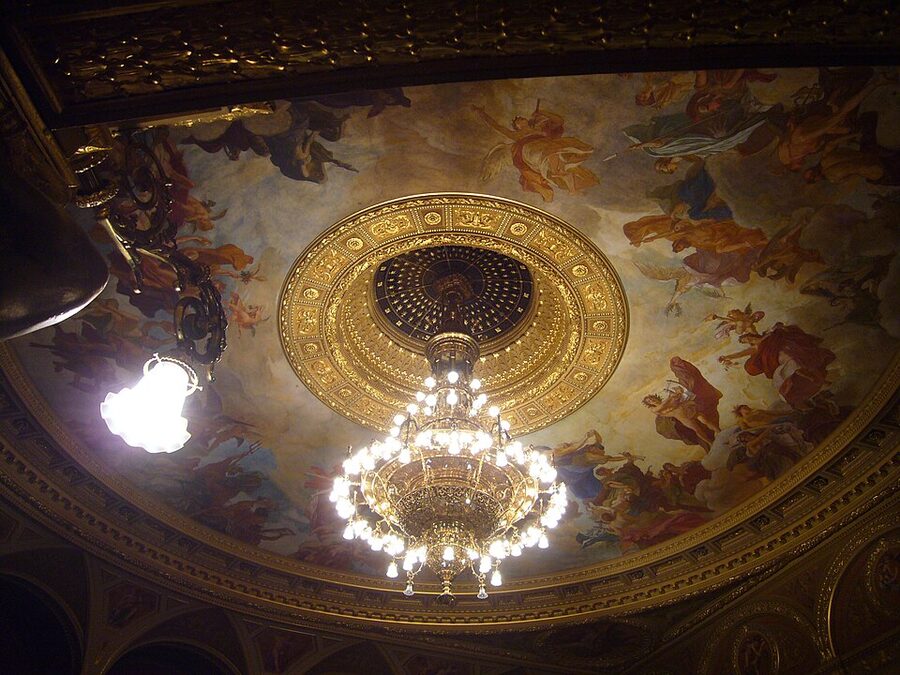
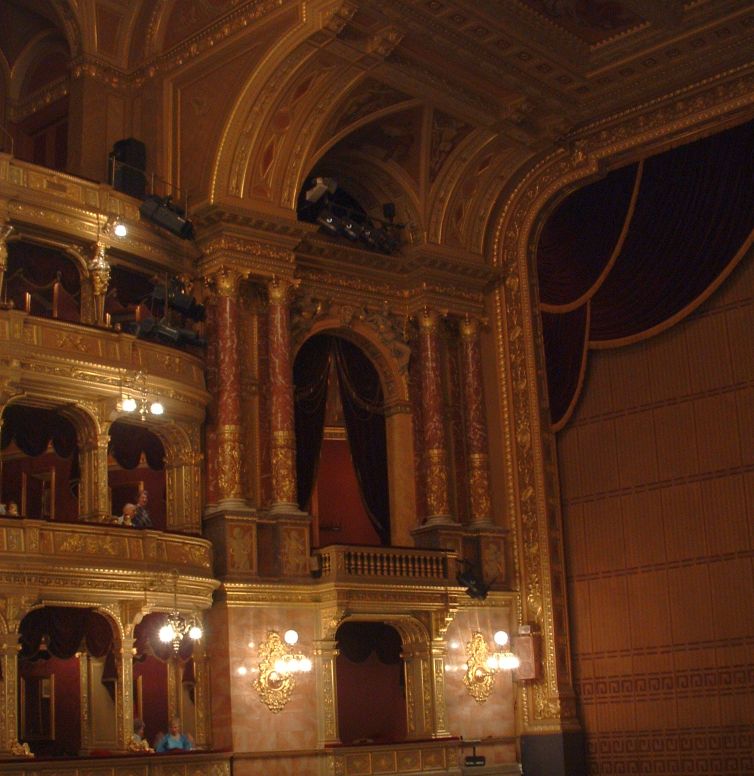
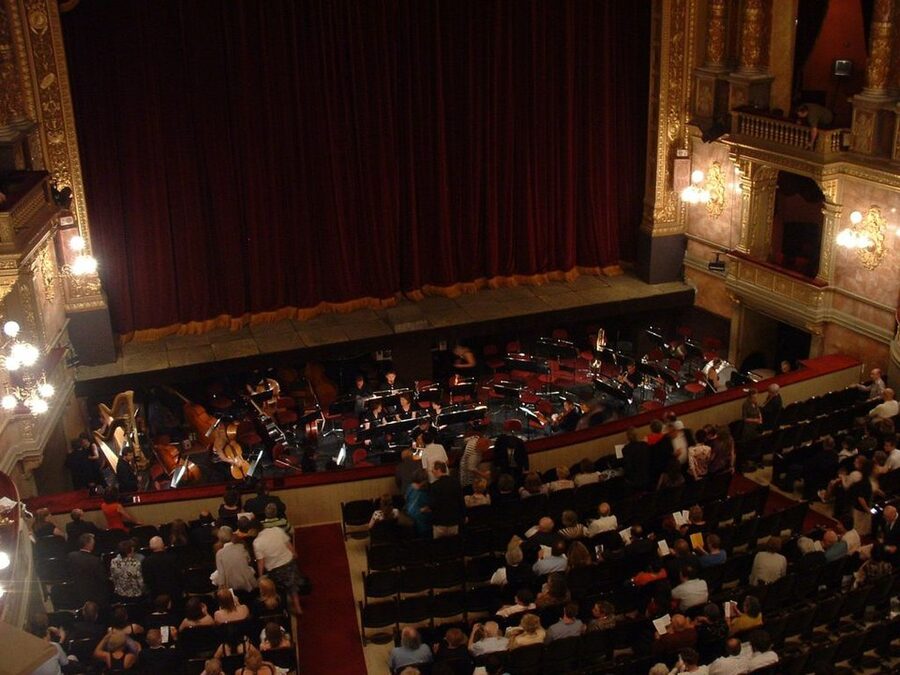
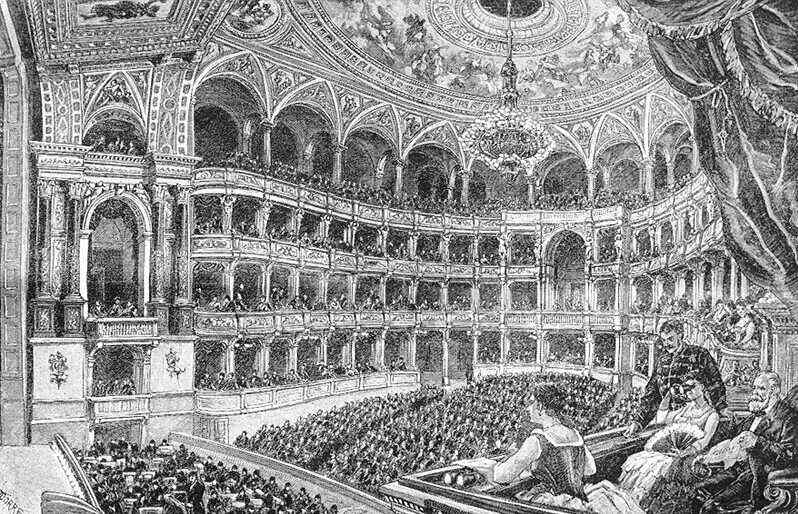
The auditorium. The reveal. Three balcony tiers, the boxes ringed in deep red velvet and gold leaf, a stage that’s surprisingly compact, and Károly Lotz’s massive ceiling fresco of Greek gods on Olympus directly above the chandelier. The chandelier itself weighs around 3,050 kilograms and gets lowered to the parterre floor once a year for cleaning — the only night a year you’d see it up close, and obviously not on a tour day.
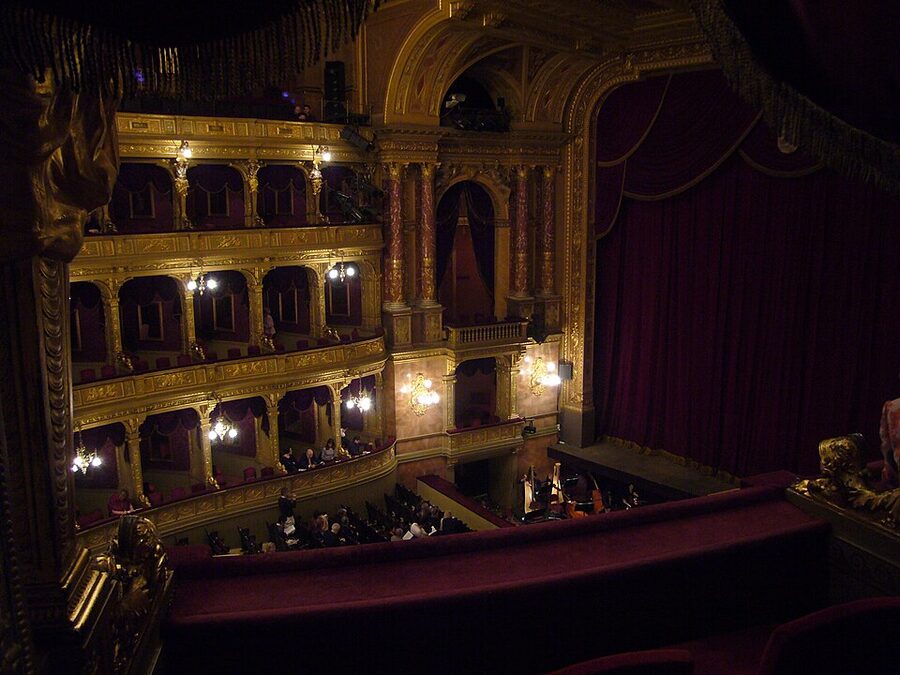

You’ll be in the parterre (ground floor) for ten or fifteen minutes. The guide gives you most of that time to wander, take photos from different angles, and try the seats. Sit in one. Look up at the ceiling for thirty seconds. The acoustic in here is famously good for an opera house its size — it’s the third-largest in Europe by floor area but the auditorium is intimate, only about 1,200 seats. There’s no seat further than maybe 35 metres from the stage, which is part of why singers love performing here.


The mini-concert. The tour ends back on the grand staircase, where two opera singers — usually a soprano and either a tenor or baritone, drawn from the company’s chorus — perform two short pieces a cappella or with light piano accompaniment. It runs about ten minutes. The first time I saw it, the soprano did “O mio babbino caro” from Gianni Schicchi from the third step of the staircase, with the audience seated on the marble landing above. The acoustic on that staircase is bizarrely good. Worth the price of the tour by itself.

Watching a Real Performance Is a Different Decision
The tour gets you into the building. A real performance gets you into Hungarian opera culture. They’re not the same thing, and depending on what you actually want, you might do one, the other, or both.
Tickets to performances are absurdly cheap by international standards. A decent parterre seat for a Verdi or Puccini production runs 8,000 to 18,000 HUF (roughly $25 to $55). The cheapest restricted-view seats in the upper galleries can dip below 3,000 HUF — under $10. For comparison, the equivalent seat at the Vienna State Opera would be three to four times that. A standard parterre seat at the Met in New York would be ten times.
The repertoire leans on the warhorses — Verdi, Mozart, Wagner — but there’s almost always a Hungarian production in the mix, which is genuinely worth seeing. Erkel’s Bánk bán is the Hungarian national opera and gets staged a couple of times a season. It’s in Hungarian, the surtitles run in Hungarian and English, and the music is gorgeous, full of folk-derived motifs you won’t hear anywhere else.
If you’re combining the tour with a performance later in the trip, here’s a useful rhythm. Take the 13:30 tour on day one. While the moment is fresh, walk over to the box office and pick a performance on day two or three. You’ll know exactly which seats look good. The third-row parterre is a sweet spot for sound. The first-tier boxes (földszinti páholy) cost a bit more but you get a small private space and a better angle on the stage. Avoid anything labelled “korlátozott látás” (restricted view) unless price is the deciding factor.
One important note: dress code matters in Budapest more than at most European houses. Smart casual is the floor, not the ceiling. People still genuinely dress up here. Jeans and trainers will get you in but you’ll feel underdressed. A blazer or a nice dress is appropriate for anything mid-week and onwards.
Tour Times and Languages
The English tour runs three times a day, every day except for occasional rehearsal blackouts:
- 13:30 — the most reliable slot, books out 1-2 days ahead in summer
- 15:00 — popular with cruise day-trippers who arrive on the morning boats
- 16:30 — the most likely to be cancelled or shortened due to evening performance prep
Hungarian tours run earlier in the day at 11:00, in case you happen to read or speak Hungarian and want the cheaper ticket. Italian, Spanish, German and French tours run on request — you have to email [email protected] at least 48 hours ahead and they’ll confirm based on guide availability. Group rates kick in at 10 people for any language.
_01.jpg)
Practical Stuff Most Guides Don’t Mention
The bag rule. Backpacks larger than a small daypack go in the cloakroom and you’ll need a 200 HUF coin (or Hungarian credit card) for the locker. Bring change. The cloakroom attendants will not accept euros for the locker deposit.
Photography. Allowed throughout the tour. No flash. Tripods technically need permission but nobody on a tour brings one and nobody seems to enforce it. Phone photography is fine in every room except — strangely — the Royal Parlour, where you’re asked not to photograph the portraits. Nobody will throw you out if you do, but the guide notices.
The lift situation. The Opera House has minimal step-free access. The grand staircase is the centrepiece of the route and there’s no alternative path. If stairs are difficult, there’s a small lift that connects the entrance level with the parterre, but you’ll miss the staircase reveal and most of the upper-floor rooms. Email [email protected] in advance and they’ll arrange a modified route, but be honest that it’s a partial tour.
Toilet break. Use the ones in the foyer before the tour starts. The mid-tour route doesn’t loop back and the bar-area toilets are technically locked off during tour hours.
The gift shop. Skip it unless you’re an opera nerd. Overpriced fridge magnets and a few moderately interesting books on the building’s restoration. The cheapest decent souvenir is a current-season programme — 1,000 HUF and they’re often beautifully designed.
_05.jpg)
The Building’s Backstory in 90 Seconds
Hungary in the 1870s was riding the dual monarchy compromise that made Budapest a co-capital of the Habsburg empire. There was money, ambition and a bit of national pride desperately looking for an outlet. Building an opera house to rival Vienna’s was politics as much as culture.
The site on what was then Sugár út (later renamed Andrássy út) was chosen in 1873. Miklós Ybl, the architect who’d been shaping Budapest’s skyline for two decades, won the design competition. He was already working on St Stephen’s Basilica down the avenue. Construction took nine years. The interior decoration alone employed nearly all of the leading Hungarian artists of the period — Bertalan Székely, Mór Than, Károly Lotz painting the ceiling fresco, Alajos Stróbl carving the marble.
The opening on 27 September 1884 was a state event. Franz Joseph and Empress Elisabeth (Sisi) attended. The opening programme included pieces by Ferenc Erkel, who had been the country’s leading opera composer for decades and who had already directed Hungary’s earlier, smaller opera company in another building. Erkel conducted his own work that night. He was 74. He died nine years later.
The 20th century was rough. The Opera House survived the siege of Budapest in 1944-45 with relatively minor damage compared to the rest of the city — the Buda side took the worst of it. Soviet troops used the building as a billet briefly. After 1948, communist-era cultural policy turned the Opera into a state company, ran it on subsidies, and put on a lot of Soviet-friendly repertoire alongside the standard Verdi and Puccini.
The most recent chapter is a five-year, top-to-bottom restoration that closed the building from 2017 to early 2022. They cleaned every fresco, replaced the seating, redid the wiring and HVAC, and brought the stage technology up to modern standards while preserving every visible historical detail. That’s why the place looks scrubbed and bright today — it genuinely is. If you saw photos from before 2017, the gold leaf was tarnished and the upholstery was decades faded. Now it shines like 1884.

Combining the Tour with the Rest of Your Day
The Opera House sits roughly halfway up Andrássy Avenue between Deák Ferenc tér (the central transport hub) and Heroes’ Square. There’s a Metro 1 station — the historic yellow line, itself a UNESCO heritage element — directly outside, called Opera. From there it’s two stops north to Oktogon and four stops to Heroes’ Square. Two stops south takes you to St Stephen’s Basilica.
If you’ve taken the 13:30 tour, here’s a sensible afternoon and evening. Walk south on Andrássy fifteen minutes to St Stephen’s Basilica — the dome viewing platform is open until late afternoon and you’ll see the opera house from above on a clear day. From there it’s a flat ten minutes east to Parliament on the Danube. By the time you’re done at Parliament, it’s getting close to dinner — the Buda side has the best restaurants for an opera-night dinner if you’ve also booked a performance, and you can ride up to Buda Castle on the funicular for the view.
If you’ve taken the 15:00 or 16:30 tour and don’t have anything booked for the evening, the Opera area is one of the better pre-dinner zones in Pest. Liszt Ferenc tér is a five-minute walk and is lined with bars and restaurants that open onto the square. Or push north to the Jewish Quarter ruin bars — Szimpla Kert is fifteen minutes on foot.
If you’ve got an evening performance, aim to be at the entrance 30 minutes before curtain. The crowd outside is part of the show.
When to Visit Across the Year
The Opera House runs tours year-round but the season for performances runs roughly September through June, with a summer break in July and August. If you’re visiting in summer, you’ll only get the tour, not a performance — the company is on tour or on holiday.
For tours specifically, the busiest months are May, June and September, when Budapest’s tourist numbers peak. December is also surprisingly busy because of the Christmas markets on Vörösmarty tér drawing the same demographic that wants a cultural afternoon indoors. January and February are the quietest — you might walk up to the box office and grab a same-day ticket without trouble.
If you’re booking a performance: the season-opening week in mid-September is harder to get into than anything else. December gala nights sell out months ahead. The most accessible months for performance tickets are October, November, March and April — full season, fewer tourists.
Getting There from Anywhere in Budapest
The Opera Metro station (M1, the yellow line) puts you twenty seconds from the entrance. M1 also stops at Deák Ferenc tér (transfer to M2 or M3) and Vörösmarty tér (the central pedestrian square in Pest), so almost any hotel in central Budapest will get you here in under fifteen minutes.
From Buda, the easiest path is M2 to Deák Ferenc tér, then M1 one stop east to Opera. The ride is part of the experience — M1 is the oldest underground line in continental Europe (1896) and the original wooden carriages have been kept in use as a heritage feature.
If you’re staying near the river, the hop-on hop-off bus stops within two blocks of the entrance — useful if you’ve got a multi-stop afternoon planned. Walking from the Chain Bridge takes about 18 minutes through some of the prettiest Pest streets.
Driving is genuinely a bad idea. There’s no parking on Andrássy itself, the side streets are 1-hour limit, and the area is heavily ticketed. If you must drive, the closest paid garage is at Szervita tér — eight minutes’ walk away.
One Last Thing on the Mini-Concert
The mini-concert at the end of the tour gets quietly downplayed in most listings. It shouldn’t be. It’s the difference between a building tour and an experience. Two professional opera singers, ten metres from you, with the marble staircase as a natural amplifier. No microphones. No backing track. Just voices.
If your tour group is large (over 25 people), try to position yourself on the second or third step from the bottom of the upper landing during the concert. You’ll be slightly above the singers and the sound carries up better than down. If the group is small, the parterre landing right opposite the staircase is the prime spot.
The pieces vary day to day depending on which singers from the chorus are on rotation. I’ve heard “Habanera” from Carmen, “O mio babbino caro,” and a snippet from a Mozart concert aria. Twice the soprano has done something playful at the end — once a Hungarian folk arrangement, once a hammed-up cabaret bit that broke up the audience. It’s the kind of moment that turns a tour into a memory.
Other Budapest Guides Worth Your Time
If you’re working out a Budapest itinerary that includes the Opera, a few other things tend to fit naturally with it. The classical-music angle pairs neatly with St Stephen’s Basilica — they run organ concerts in the basilica itself, and pairing one of those with the opera tour gives you a strong music-themed day. For something completely different in the same neighbourhood, the Cinema Mystica immersive show is a five-minute walk from the opera and runs evening sessions that fit after a 13:30 tour.
For first-time visitors who want context before exploring on their own, a general Budapest walking tour is a good day-one anchor — most of them pass the opera house facade and your guide can point you to the side-street ticket office. If you’re more drawn to Buda and want history that goes back further than 1884, the Buda Castle walking tour covers the medieval centre, and the cave tour underneath the castle is a great rainy-afternoon option.
For the second-day classics: the Széchenyi Bath in City Park is a 25-minute walk or three M1 stops from the opera, the Gellért Spa is the more historic alternative on the Buda side, and the Danube cruise is the easy evening close-out. Cruise day-trippers from Vienna usually spend their afternoon doing exactly that loop — opera tour, Andrássy walk, Parliament photo, dinner cruise — and it works.
One quirky add that fits a music-theme day: the Vampires & Myths night tour covers Budapest’s gothic literary side, including Bram Stoker’s connection to the city, and ends near the Opera area. Pairs oddly well with an evening Verdi performance if you want a dramatic 24 hours.
Affiliate disclosure: this article includes affiliate links. If you book through them, we earn a small commission at no extra cost to you. We only recommend tours we’d actually take ourselves.