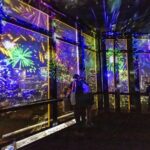
Small Worlds Tokyo makes a city-sized impression by shrinking Tokyo and other worlds to model scale. At 1/80 scale, the new Shibuya display turns familiar streets into a scene you can study from above, while tiny aircraft move across a detailed airport and rockets launch in the space exhibits.
I like two things here: the patient, intricate model-making, which rewards a slow look, and the moving, button-activated scenes, which give children and curious adults something to do beyond looking through glass. One consideration is the size: it is not a vast museum, and if miniatures or anime mean little to you, the ticket may feel costly for a short visit.
Small Worlds Tokyo at a glance
- Shibuya at 1/80 scale: Study familiar streets from a giant’s viewpoint and find photo angles among the tiny buildings.
- Kansai International Airport: Watch miniature planes taxi, take off and land in a detailed airport scene.
- Space through time: See a 1960s Apollo-era setting and a futuristic space center, with moving rockets and astronauts.
- Anime settings: Visit displays inspired by Evangelion and Pretty Guardian Sailor Moon.
- Buttons with a purpose: Some interactive controls switch on lights, sounds and even scents.
- A useful rainy-day stop: The museum is indoors, with seating, a café, vending machines and toilets.

👉 See our pick of the Our Picks For The 11 Best Workshops & Classes In Tokyo
- Small Worlds Tokyo at a glance
- Small Worlds Tokyo: Tiny Scenes, Patient Looking
- Shibuya and the Pleasure of Looking Closely
- The Airport: Movement in Miniature
- Space Missions, From Apollo to Tomorrow
- Anime Worlds: Evangelion and Sailor Moon
- Global Village and the Wider View
- Interactive Details, Seating and a Break
- How Long to Stay and When to Go
- Getting to Ariake and Using Your Ticket
- Is Small Worlds Tokyo Worth the Ticket?
- FAQ
- How long should I plan to spend at Small Worlds Tokyo?
- What are Small Worlds Tokyo’s opening hours?
- How do I get to Small Worlds Tokyo by train?
- Can I get there by bus?
- Can I take photos inside?
- Is Small Worlds Tokyo suitable for children?
- Can I eat inside the museum?
- Does the ticket include the 3D miniature figure experience?
- What is included with the Takeya shopping package?
- The Best Of Tokyo!
- More Tickets in Tokyo
- More Tours in Tokyo
- More Tour Reviews in Tokyo
Small Worlds Tokyo: Tiny Scenes, Patient Looking

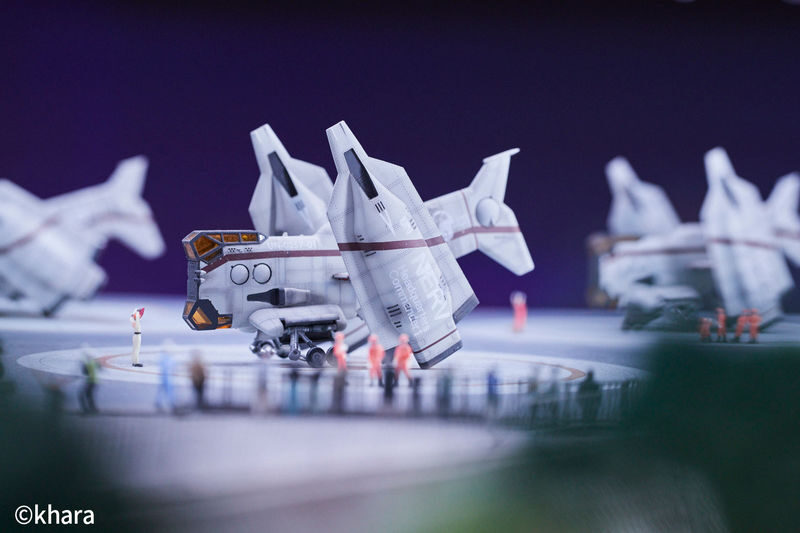
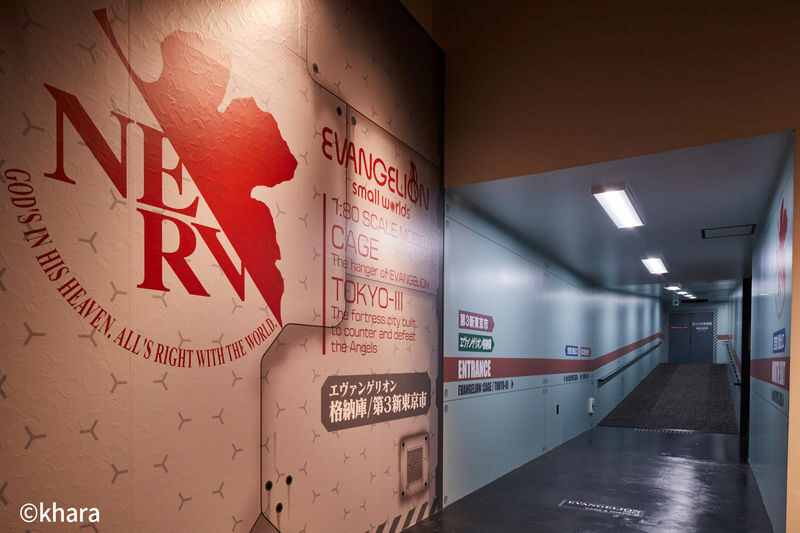
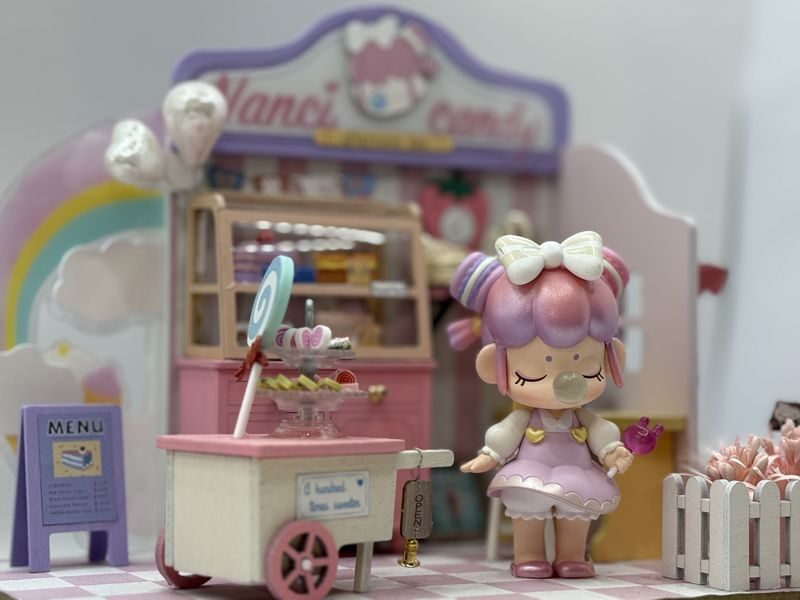
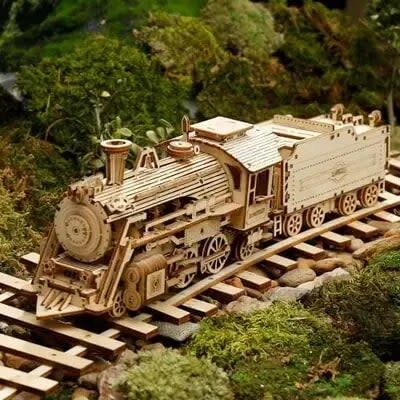
Small Worlds is an indoor miniature museum in Ariake, on the Odaiba side of Tokyo. Its appeal is not just the fact that everything is small. The models have movement, lighting and day-to-night changes, and the tiny scenes hide details that are easy to miss if you hurry.
The displays cover real places and imagined ones. You can move from city streets and an airport to space missions and anime settings without leaving the building. It makes a practical change of pace from Tokyo’s larger, louder attractions, especially on a wet or very hot day.
The room is not enormous, and that is worth knowing before you plan your day. Some people spend about 1.5 hours; if you like taking photographs, testing the interactive buttons or hunting for details, allow closer to three hours. I would not schedule it as a full-day attraction on its own.
You can also read our reviews of more tours and experiences in Tokyo



Shibuya and the Pleasure of Looking Closely
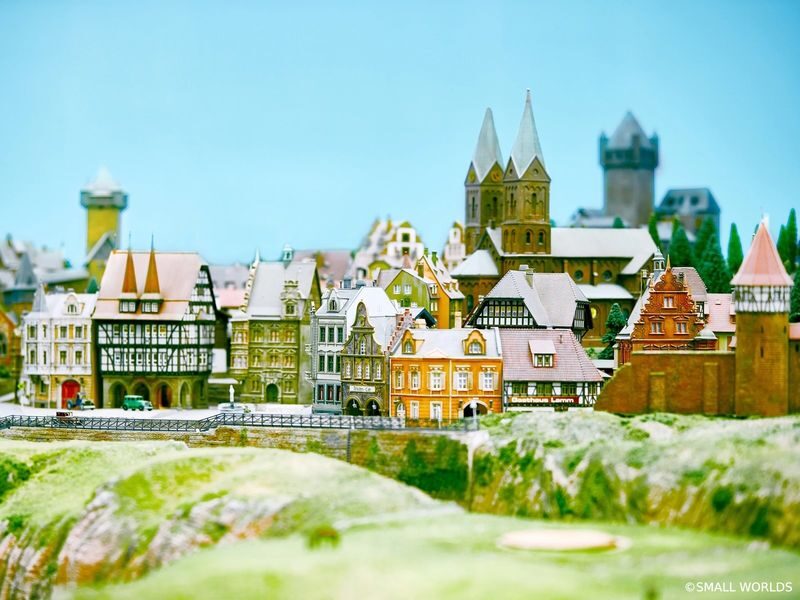
The new Shibuya area is one of the most immediately appealing displays. At 1/80 scale, the streets and buildings give you the feeling of looking down on a city from an impossible height. You can frame photographs from above, but the better reason to linger is the miniature street life and the small details tucked into the scene.
This is a place to slow down. Look beyond the main buildings and scan the smaller corners. The museum’s models invite a kind of visual scavenger hunt, and a careful look can turn a quick circuit into a longer visit. If you are with children, make a game of spotting details together rather than trying to cover every display at speed.
There is a trade-off: miniature city scenes are more fun when you enjoy the craft itself. If you prefer hands-on rides or large-scale spectacle, Shibuya may impress you less than it does a model-making fan or someone who enjoys photography.
The Airport: Movement in Miniature
The Kansai International Airport model is a reliable place to pause. Its runways, airport buildings and departure lounge create a detailed setting, while miniature aircraft taxi, take off and land. The movement gives the display a clear focal point, so it is satisfying even if you are not an aviation enthusiast.
Watch for a full sequence rather than glancing once and moving on. The planes’ activity is one of the exhibits that gives the museum its sense of life. The airport lounge section also has seating, making it a welcome rest point in the middle of your visit. Vending machines are available, so you can take a break without leaving the display area.
Children who like planes and trains may spend longer here than you expect. Adults can enjoy the engineering and the way the tiny airport is arranged. The scale can make the model feel almost like a real terminal seen from a high window, though it remains a display rather than an interactive airport simulator.
Space Missions, From Apollo to Tomorrow
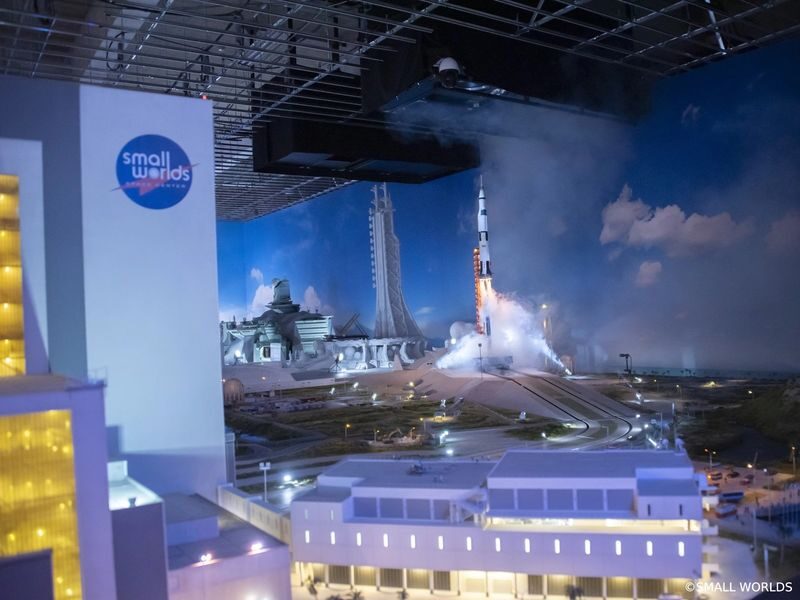
The space center takes you from a 1960s Apollo-era setting toward a futuristic space facility. Miniature rockets launch, and astronauts appear to float in zero gravity. These moving scenes add a different rhythm from the city displays: instead of searching for a street-level detail, you can wait for the next moment in a small mechanical performance.
The Saturn V launch is a particularly memorable sequence. Give it time to play out, and look around the wider scene while you wait. The contrast between the historic space program and a future-facing center gives the section more variety than a single rocket model could provide.
The subject matter also makes this a good stop for families with children who are interested in space. It is still miniature work rather than a full space museum, so do not expect extensive explanations or a long historical exhibit. The pleasure lies in seeing familiar missions recreated at a scale where the movement and craftsmanship are visible at once.
Anime Worlds: Evangelion and Sailor Moon
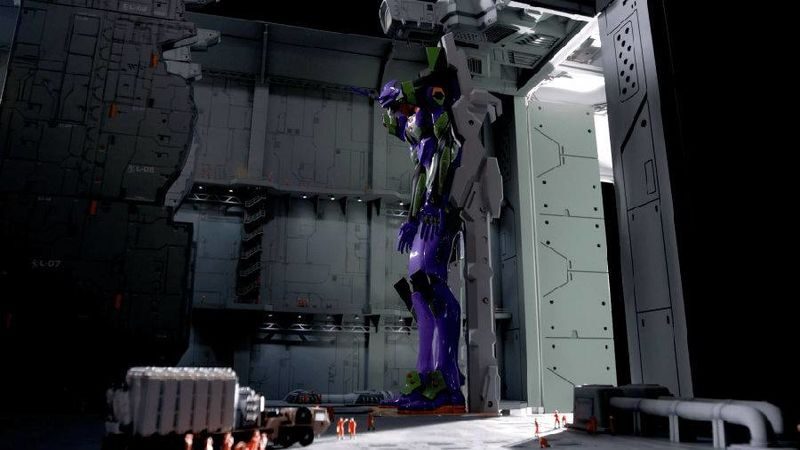
Anime fans have a clear reason to put Small Worlds on their Tokyo list. The museum includes miniature scenes inspired by Neon Genesis Evangelion, as well as a Pretty Guardian Sailor Moon display recreating Azabu Juban from the anime. These areas add a pop-culture angle to what might otherwise be a museum focused only on model cities and transport.
If you know the series, you will have more context for the settings and characters. If you do not, the display can still be enjoyable as miniature art, but the references may not carry the same weight. That distinction matters when weighing the ticket price: the anime sections are a bonus for some visitors and a main attraction for others.
The Evangelion models are a natural highlight for fans, while the Sailor Moon scene connects a fictional world to a real Tokyo neighborhood. Take a moment to compare the miniature setting with the city beyond the museum. This is the sort of exhibit that works best when you recognize the world it is bringing to life.



Global Village and the Wider View
The Global Village gathers miniature places and cultural settings inspired by parts of Asia and Europe. It offers a quick trip between regions, with small buildings and scenes that reward close inspection. Rather than expecting a detailed survey of each country, think of this as a compact set of visual impressions built around architecture and atmosphere.
The cityscape displays add another layer, with tiny vehicles, street markets and buildings arranged to suggest daily activity. Day-and-night transitions change the feel of the scenes, and some controls trigger lights or sounds. Those small effects help make the displays more than static models.
The museum’s appeal comes from variety, but not every section will interest you equally. You may spend a long time in the airport or anime areas and skim the village scenes, or the reverse. That freedom is useful: there is no need to give every display the same amount of attention.
Interactive Details, Seating and a Break
Some exhibits have buttons that activate lights, sounds and scents. Look for the controls as you go, since they can be easy to miss when your attention is on the models. They add a simple hands-on element without turning the museum into a ride-based attraction.
Seating is available throughout, including at the airport lounge display. That is a practical detail for families, anyone who wants to study the models at leisure, or anyone who has spent the day walking around Tokyo. The museum also has toilets, vending machines and an on-site café.
The café is convenient, but keep expectations modest. It has a limited food and drink selection, and the quality may not be the reason you come. Think of it as a place to fill a gap and rest, not a destination meal. Outside food and drinks are not allowed inside.
You can also make a 3D miniature figure of yourself using scanning technology and place it in the miniature world. Treat this as an optional add-on experience rather than assuming it is included with admission. The museum also offers miniature-making workshops, and the shop sells small models and themed souvenirs.
How Long to Stay and When to Go
Plan for roughly 1.5 to 3 hours. A quick visit can work if you focus on a few favorite displays, but photography, interactive controls and careful searching will stretch the visit. If model-making or anime is a special interest, leave extra time rather than squeezing it between two tightly scheduled attractions.
Weekdays, especially near opening time, are a sensible choice if you want room to take photographs and examine the scenes without feeling rushed. The museum is often quieter than Tokyo’s headline attractions, but weekends and public holidays can bring more people. Check the current opening hours before setting out: the stated hours are 9 a.m. to 7 p.m., with last entry at 6 p.m., and hours or closures may vary by season. A full-day closure for inspection is listed for October 20.
Because the museum is indoors, it is a good option in rain, summer heat or when you want a break from outdoor sightseeing. You can pair it with other stops in the Ariake, Toyosu or Odaiba area, but allow for the time needed to travel between them.
Getting to Ariake and Using Your Ticket
The address is 1-3-33 Ariake, Koto-ku, Tokyo. By train, take the Yurikamome Line to Ariake Tennis no Mori Station, then walk about three minutes. The Toei Bus East 16 or TO05-2 also serves the Ariake Tennis no Mori stop, a short walk from the museum.
The ticket is a mobile voucher, but it does not provide direct entry. Show it to staff and follow their instructions, and expect to wait in the admission line if one has formed. Booking ahead can save a ticket-office stop, though it does not remove the need to follow the entry process.
Admission starts at $16.19, with the actual price depending on the package available when you book. One listed option includes a 500-yen digital shopping voucher for Takeya. It can be used only on purchases of 5,000 yen or more, and some products are excluded, so do not count it as a simple cash discount on the museum ticket.
Children aged 0 to 3 enter free; the age band for elementary-school children and younger is listed as 4 to 11. Check the ticket details for the package you select, and do not buy a ticket for a child who qualifies for free entry. The voucher is valid for 180 days from booking confirmation, but the ticket is non-refundable and cannot be used with other coupons.
Is Small Worlds Tokyo Worth the Ticket?
I would book Small Worlds if you enjoy miniatures, detailed models, photography, aviation, space displays or anime. Families with children who like trains, planes and small interactive features should find plenty to explore, while adults can appreciate the craftsmanship even without children in tow.
I would think twice if you want a large attraction with hours of activities, or if you have little interest in looking closely at models. The museum can feel small for the price if you make only a quick pass through it. Give it time, use the buttons, wait for the moving scenes and look for the details that are easy to overlook.
For a rainy-day visit in Odaiba, or a relaxed stop between other Tokyo plans, it offers something distinctive. Book if the miniature worlds themselves appeal to you, and plan your visit around the exhibits you care about most.
Small Worlds Tokyo Ticket
“A great experience and one of the most accessible I've experienced in Japan. There was plenty to see and I could have spent ages looking for the li…”
FAQ
How long should I plan to spend at Small Worlds Tokyo?
Allow about three hours if you want to explore the exhibits and interactive displays carefully. A shorter visit of around 1.5 hours may be enough if you move quickly or focus on a few areas.
What are Small Worlds Tokyo’s opening hours?
The stated hours are 9 a.m. to 7 p.m., with last entry at 6 p.m. Hours may change by season, so check before you go. A full-day closure for inspection is listed for October 20.
How do I get to Small Worlds Tokyo by train?
Take the Yurikamome Line to Ariake Tennis no Mori Station. The museum is about a three-minute walk from the station.
Can I get there by bus?
Yes. Toei Bus East 16 and TO05-2 serve Ariake Tennis no Mori. From the stop, the museum is about a three-minute walk.
Can I take photos inside?
Yes. Photography is allowed, and the miniature displays provide many photo opportunities.
Is Small Worlds Tokyo suitable for children?
Yes. It is designed as an attraction for all ages, with moving models and interactive buttons. Children aged 0 to 3 enter free.
Can I eat inside the museum?
Outside food and drinks are not allowed. The museum has a café and vending machines, with a limited selection of food and drinks.
Does the ticket include the 3D miniature figure experience?
The ticket information describes admission, while the 3D scanning experience is presented as an additional activity. Check the package details before booking if you want to make a figure.
What is included with the Takeya shopping package?
It includes a 500-yen digital shopping voucher for Takeya. The voucher applies to purchases of 5,000 yen or more, and some products are not eligible.