A sumo ring is not just a place to watch a match. At Tokyo Sumo Stable, you enter a former training ground associated with Yokozuna Kitanoumi, hear the basics in English, and see retired professional wrestlers face off at close range. The setting gives this lively introduction a sense of place that a theater set cannot quite match.
I like two things in particular: the English explanations make sumo easier to follow, and the chance to step onto the dohyo turns a demonstration into something personal. The 11 a.m. and 7 p.m. sessions also add chanko hot pot, the hearty stew associated with sumo wrestlers.
One thing to weigh: this is a tourist-friendly show, with humor and audience participation, not a tournament or a view of current wrestlers at a regular practice. The 3 p.m. session costs less, but it does not include the meal.
- What makes this sumo experience worth considering
- Inside a stable with a sumo past
- What happens during the visit
- Choosing between the three session times
- A show, not a tournament
- Chanko, family visits, and other practical details
- Is the price good value?
- Who should book this experience?
- FAQ
- How long does the sumo experience last?
- Where is Tokyo Sumo Stable?
- Is the experience conducted in English?
- Does every session include chanko hot pot?
- Can I take part in the sumo experience?
- Are children allowed?
- Is a vegetarian meal available?
- What is included in the price?
- The Best Of Tokyo!
- More Tours in Tokyo
- More Tour Reviews in Tokyo
What makes this sumo experience worth considering
 1 / 5
 2 / 5
 3 / 5
 4 / 5
 5 / 5
- A real stable, not a stage set: The venue is described as a former sumo training ground where Yokozuna Kitanoumi served as an oyakata, or stable master.
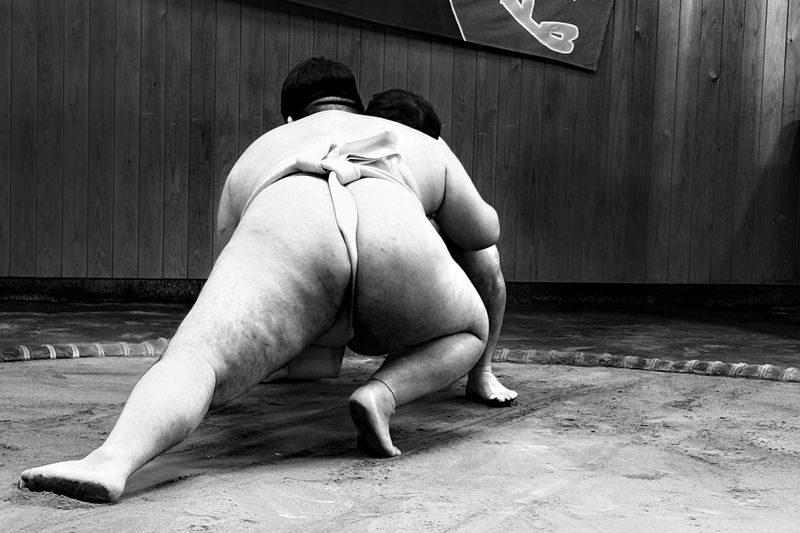
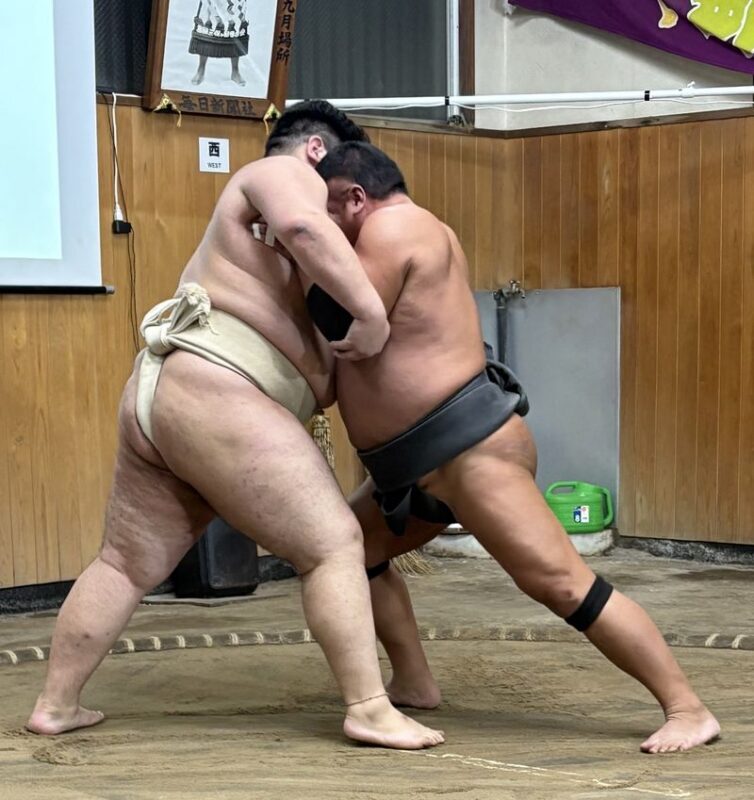
- Retired wrestlers explain the sport through action: Expect demonstrations of sumo moves and rules, plus close-up bouts that make the size and force of the wrestlers easier to grasp.
- A few people can try the ring: Up to seven participants per time slot can take part in the sumo experience. Everyone can go onto the dohyo for a photo at the end.
- English helps you follow the action: An English-speaking guide and staff explain sumo history, the rules, and what you are seeing.
- Chanko hot pot comes with select sessions: The 11 a.m. and 7 p.m. options include the meal. The 3 p.m. option does not.
- The show leans into entertainment: A lively host and comic moments help keep the event accessible, but the format may feel more like a performance than a serious training session.

👉 See our pick of the Our Picks For The 11 Best Workshops & Classes In Tokyo
Inside a stable with a sumo past
Tokyo Sumo Stable is presented as an actual former training space, not a room dressed up to resemble one. Its connection to Kitanoumi, one of sumo’s great Yokozuna, gives the visit a useful historical anchor. An oyakata is a stable master, responsible for guiding wrestlers and running the stable.
That context matters because sumo is not only a sport. Its rules, rituals, and training traditions can seem mysterious if you have only seen brief clips or a tournament bout. Here, the setting and English explanations give you a way into those customs before the demonstrations begin.
Still, keep the venue’s history in proportion. You are attending a hosted show in a former stable, not joining a professional training session or watching an official competition. The wrestlers taking part are retired professionals, and the event is built for an audience that may be new to sumo.
That mix is part of the appeal. You get an intimate setting and a guided introduction, without needing to know the rules beforehand. If you want to see elite wrestlers compete in a formal tournament, this is a different kind of experience.
You can also read our reviews of more tours and experiences in Tokyo.



What happens during the visit
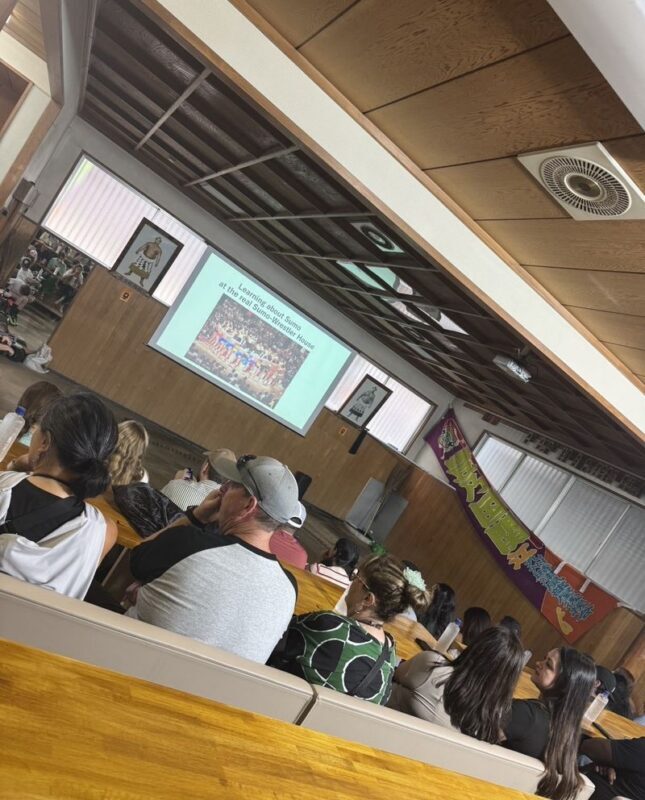
The program starts with an English-language introduction to sumo, including its history and basic rules. The host explains what it takes to win and helps you read the action, so the demonstrations have more meaning than two large men pushing each other around a ring.
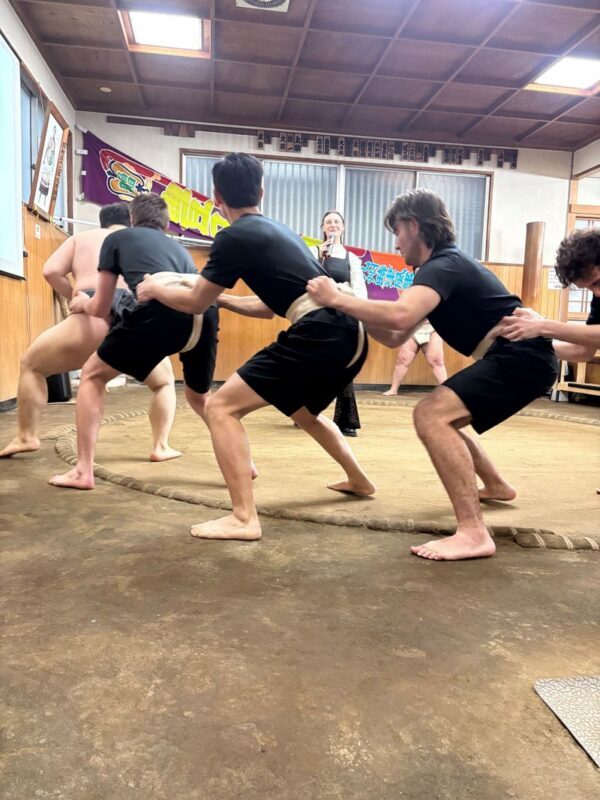
The tone is friendly and often comic. A lively presenter keeps the room engaged, and audience members may be invited to test their strength against a wrestler. The contrast between your effort and a professional’s balance and power can make for a memorable moment, and it also gives you a practical sense of why sumo technique matters as much as size.
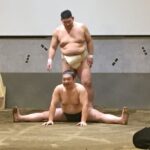
Next, retired wrestlers demonstrate moves and face off. Expect physical action at close range, with the presenter explaining what is happening as the show unfolds. The event includes a wrestling demonstration, though it should not be mistaken for a full-length tournament match. One account of the format describes only a brief bout of more formal wrestling, so book for the overall introduction and interaction rather than a long series of competitive bouts.
Participation is limited to seven people per time slot. If you want to try sumo, raise your hand when the opportunity comes up rather than assuming you will be selected. If you do not take part, you are still allowed onto the dohyo at the end for a commemorative photo with the wrestlers.
The schedule gives a 15:00 start and a 16:30 return, but the activity is also described as lasting one hour. It may end early if few people want to try sumo. Plan around the stated meeting and return times, but be aware that the actual event length can vary.
Choosing between the three session times
The 3 p.m. session is the least expensive listed option, from $63.20. It includes the sumo viewing and experience, but not chanko hot pot. This is a sensible choice if your priority is the introduction, demonstrations, and chance to step onto the ring.
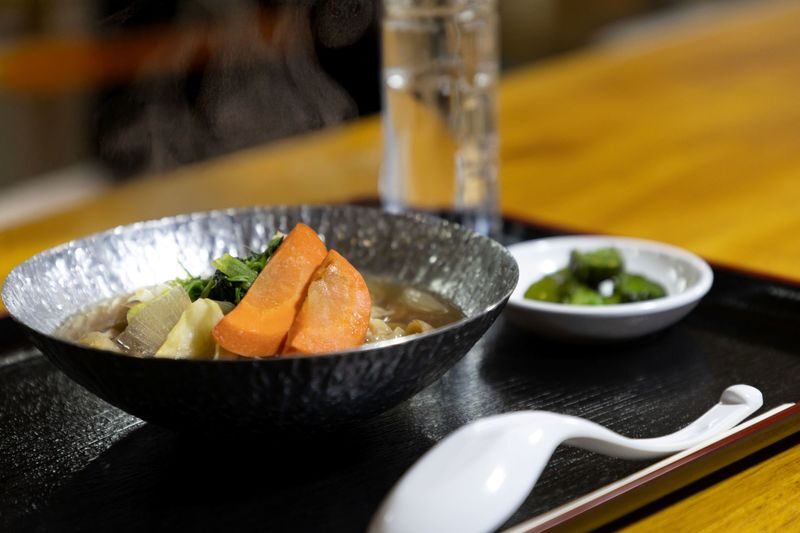
The 11 a.m. and 7 p.m. sessions start from $75.85 and include chanko hot pot. The meal is a meaningful extra: chanko is the hot pot associated with sumo wrestlers, and a few people have found it a highlight of the visit. The 11 a.m. option suits a daytime plan; the 7 p.m. option makes the event more like an evening meal and show.
Vegetarians should tell staff on the day. A vegetarian option has been available, but it is still wise to raise the request directly rather than assume the meal will be adapted automatically.
The price difference between the meal and no-meal sessions is about $12.65 at the stated starting prices. If you want dinner and are curious about the stable’s food tradition, that extra cost may be worthwhile. If you already have a meal planned or mainly want to see the demonstrations, the afternoon option keeps the price down.
A show, not a tournament
The event is designed to entertain and teach newcomers. The host’s energy, audience interaction, and comic moments are central to the format. That can be a real plus if you are visiting with family or want a relaxed introduction rather than a formal lecture.
It also sets expectations. The demonstrations are performed for the audience, and the experience is rehearsed as a show. You will see retired professionals display sumo skills, but you should not expect to watch a stable’s daily practice or an official match with tournament stakes.
The host can make a big difference to the mood. The event has been led by an engaging English-speaking presenter, and stable manager Mayuko has been praised for being kind and accommodating. Names and staffing can change, so treat those as examples of the welcoming style rather than a promise that a particular person will be there.
Chanko, family visits, and other practical details
Chanko hot pot is included only in the 11 a.m. and 7 p.m. packages. It is described as part of a sumo stable’s daily food tradition, not simply a standard restaurant meal added on. If the food matters to your decision, check that you are booking one of the two meal sessions.
Children who can sit on an adult’s lap and watch are free because they do not need a seat. The format can work for children who are curious about sumo, but it is still a live presentation in a shared room. If your child may struggle to sit through explanations and demonstrations, consider whether the timing and atmosphere will suit them.
The event is at 2-10-11 Kiyosumi, Koto City, Tokyo. Allow time to find it: entering only the street address into a map app has led to confusion. Search for Tokyo Sumo Stable by its business name and check the venue location before you set out.
Arrive 10 minutes before the scheduled departure. Late arrivals and no-shows are not refundable, and hotel pickup and drop-off are not included. Your mobile voucher is used for entry, and it is valid only for the date and time you booked.



Is the price good value?
At $63.20 for the 3 p.m. session, you are paying for a small-group introduction in a distinctive setting, English explanations, demonstrations by retired professionals, and the chance to try the ring or take a photo. That is more than a short talk, but the value depends on what you want from sumo.
Choose it for accessible context and human interaction. Seeing a wrestler demonstrate balance and force just a few feet away can bring the sport to life in a way that a quick online clip cannot. The optional participation adds a fun memory, even if you have no interest in wrestling yourself.
The higher-priced meal sessions make sense if you want the hot pot as part of the outing. If you judge the experience mainly by the amount of serious wrestling, however, the price may feel less compelling. The event is a compact show with educational and comic elements, not an extended program of competitive bouts.
Who should book this experience?
I would recommend it to first-time visitors who want to understand basic sumo, families with children who can enjoy a hosted presentation, and anyone curious about stepping onto a dohyo. You do not need prior knowledge, and the English guide helps make the rules and demonstrations clear.
It is also a good option if you want something more hands-on than a museum visit but do not need a formal tournament atmosphere. The audience interaction and photo opportunity give you a direct connection to the wrestlers, while the old stable setting adds a layer of authenticity.
Think twice if you expect to watch current wrestlers train, see a full formal bout, or spend a long time on the activity. The schedule is short, the show is designed for visitors, and the session can finish early when few people choose to participate. For a lively introduction with a real sumo setting, it offers a memorable hour or so. For serious competition, look for a different sumo event.
Tokyo Sumo Stable: Sumo Viewing & Experience
“Fun evening! Very enjoyable way to learn more about sumo history and training. The emcee was great, funny, related well to audience and engaging, s…”
FAQ
How long does the sumo experience last?
The activity is described as one hour, while the 3 p.m. schedule lists a 15:00 departure and a 16:30 return. It may finish early if few participants want to try sumo.
Where is Tokyo Sumo Stable?
The address is 2-10-11 Kiyosumi, Koto City, Tokyo, Japan. Search for Tokyo Sumo Stable by its business name, since using only the street address in a map app can lead to the wrong place.
Is the experience conducted in English?
Yes. An English-speaking guide and English-speaking staff are included.
Does every session include chanko hot pot?
No. Chanko hot pot is served with the 11 a.m. and 7 p.m. sessions. It is not served with the 3 p.m. session.
Can I take part in the sumo experience?
Yes. Up to seven people per time slot can try sumo training with the wrestlers. Anyone who does not participate can still go onto the dohyo at the end for a commemorative photo.
Are children allowed?
Yes. Children who can sit on an adult’s lap and watch are free if they do not need a seat.
Is a vegetarian meal available?
Tell the staff on the day if you are vegetarian. A vegetarian option has been offered with the meal session.
What is included in the price?
Admission, an English-speaking guide, and English-speaking staff are included. Hotel pickup and drop-off, along with personal expenses, are not included.