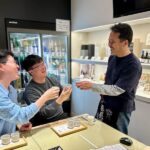
A pair of chopsticks begins as a simple piece of wood, but here you shape it yourself with a hand plane, sand it smooth, and finish it with oil. This one-hour Ginza workshop turns an everyday Japanese utensil into a useful souvenir you made with your own hands.
I like two things in particular: you get to work with traditional tools, and you can choose from more than 20 types of wood. The workshop also suits families and first-time crafters, with staff guiding you through each step. One thing to watch is the price: the standard package includes a choice of two free wood types, while specialty woods can add substantially to your bill.
- What to know before you book
- A Ginza craft break with a useful result
- Choosing wood without a surprise bill
- Shaping the chopsticks with a hand plane
- A one-hour class with helpful staff
- Engraving turns a souvenir personal
- A good family activity, with a little help
- Is it worth the cost?
- Who should book this Ginza workshop?
- Should you book?
- FAQ
- How long does the chopstick-making workshop take?
- Where does the workshop take place?
- How many types of wood can I choose from?
- What do I do during the workshop?
- Can I take my chopsticks home the same day?
- How much does name engraving cost?
- Is the workshop suitable for beginners?
- Is the workshop suitable for children?
- Can I choose a specialty wood?
- The Best Of Tokyo!
- More Tours in Tokyo
- More Tour Reviews in Tokyo
What to know before you book
 1 / 10
 2 / 10
 3 / 10
 4 / 10
 5 / 10
 6 / 10
 7 / 10
 8 / 10
 9 / 10
 10 / 10
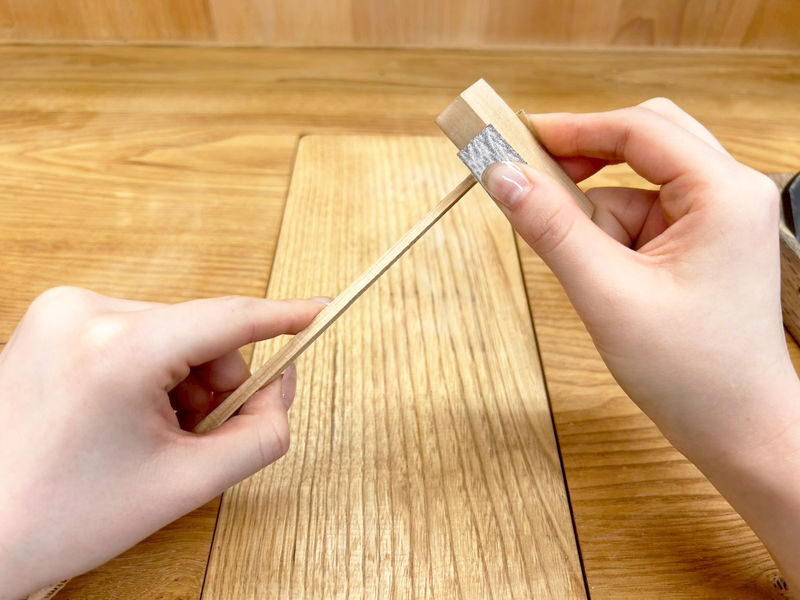
- The main craft is hands-on: You shape the wood with a hand plane, then smooth the tips and edges with sandpaper.
- Wood choice affects the price: The basic package includes one of two free wood types. Other options may cost extra, so check the price before choosing.
- Engraving is optional: Add a name or other personal touch for ¥1,100.
- You take your chopsticks home the same day: The activity lasts about an hour, making it easy to fit into a Tokyo day.
- It works for couples, families, and friends: The process is beginner-friendly, though younger participants may need a helping hand with the plane.
- English guidance is available: Staff have explained the process in simple English, and some have helped participants choose kanji for names.
👉 See our pick of the Our Picks For The 11 Best Workshops & Classes In Tokyo
A Ginza craft break with a useful result
Ginza is known for its shops, but a craft workshop offers a different way to spend an hour in the neighborhood. At Ginzabashi Chopstick, you step away from browsing and make something you can use long after your Tokyo visit. The finished pair is more personal than a packaged souvenir, and the process gives you a small taste of Japanese woodworking.
This is not a long cultural lecture or a full-day class. It is a compact, practical activity: choose wood, shape it, sand it, oil it, and take it home. That makes it a good fit if you want to add a hands-on stop to a city itinerary without giving up half a day.
I would think of the workshop as an introduction to craft rather than a deep course in woodwork. You learn by doing, with staff showing you the basic technique and helping when needed. The appeal is partly the finished object, but also the satisfaction of seeing a rough piece of wood take shape under your hands.
You can also read our reviews of more tours and experiences in Tokyo.



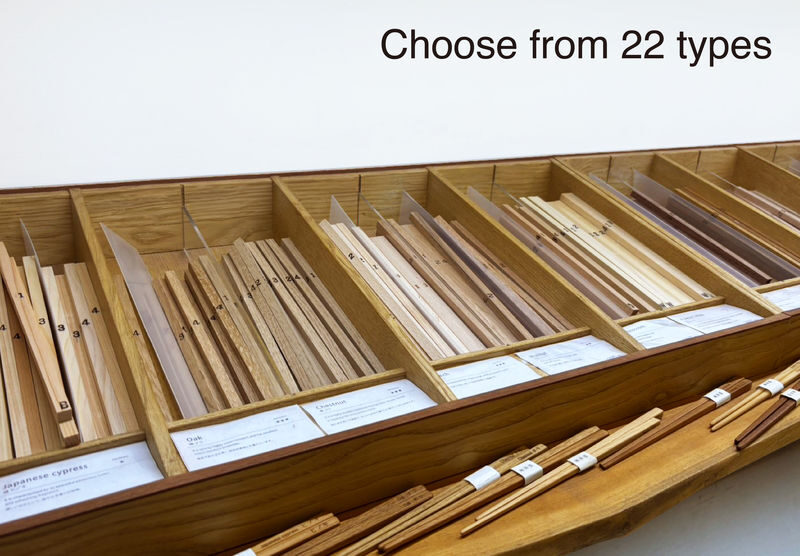
Choosing wood without a surprise bill
The workshop offers more than 20 types of wood, giving you a chance to compare different materials and select a pair that feels personal. The standard option includes a choice of two free wood types. Other woods may cost extra, with some options reported to carry much higher charges than the basic upgrade range.
That price distinction matters. The activity title can make the cost look like a simple low-price range, but the wood you choose can change the final total. Before you settle on a specialty timber, ask staff to confirm its price. One family reported a very high charge for a particular wood, while other participants described upgrades in the range of ¥0 to ¥3,000. The gap suggests you should not assume every premium option costs roughly the same.
I would treat the free wood choices as a perfectly sound starting point. If the grain or color of a specialty wood matters to you, decide on an upgrade only after you know the exact amount. This is especially useful when booking for several people: a modest extra charge per person can add up quickly across a group.
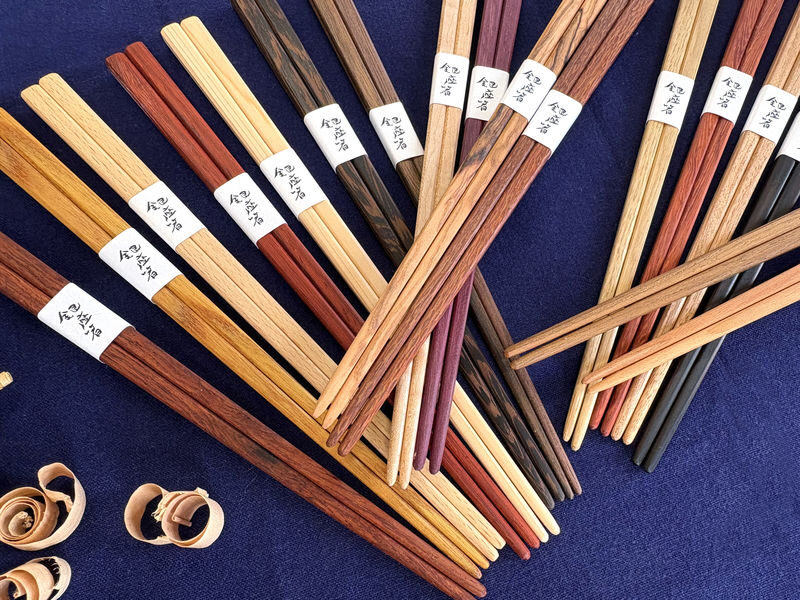
The choice is not only about cost. Different woods can give each pair a distinct look, and participants have made several different pairs using different materials. Still, you do not need an expensive material to make the activity worthwhile. The hands-on work and the fact that you made the chopsticks yourself are the heart of it.
Shaping the chopsticks with a hand plane
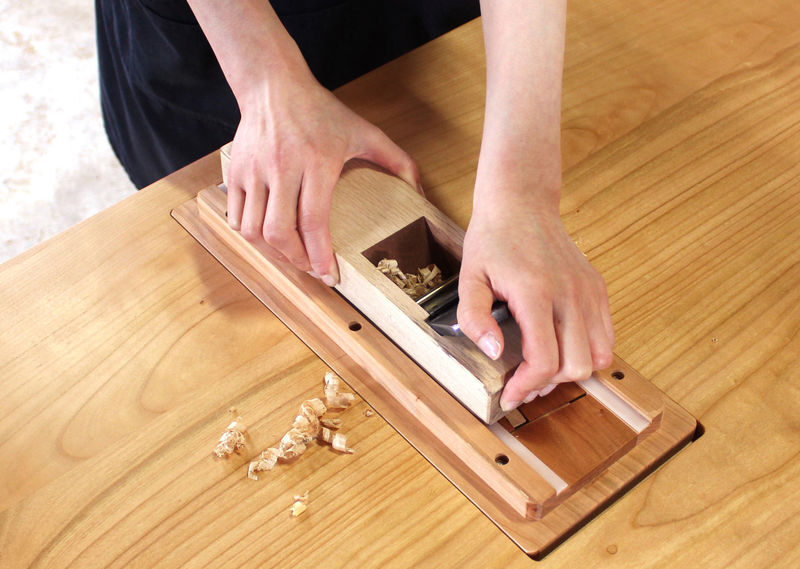
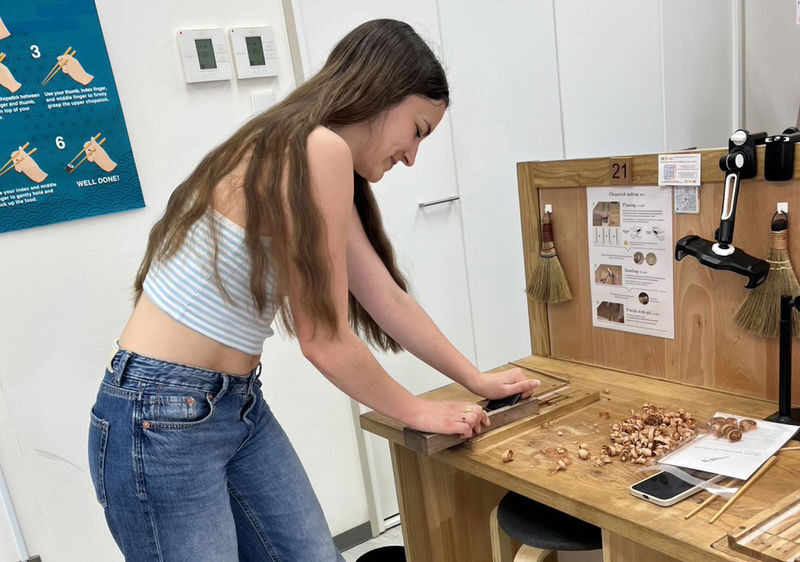
Once you have chosen your wood, you place the chopsticks on a stand and use a plane to shave them into shape. This is the most distinctive part of the workshop. Sanding is familiar to many people; using a hand plane gives you a direct feel for how a craftsperson removes material and refines a piece of wood.
The process takes some care. You are not simply decorating a finished object: you are helping form the shape. The staff demonstrate and explain what to do, and beginners can follow the steps. A few participants found the guidance clear and patient, while one person felt the introduction moved quickly and that one instructor had to assist several people at once. If you are unsure, ask for help before taking another pass with the plane.
The work can be physically demanding for a child or anyone who finds the tool hard to control. One family found that a 12-year-old needed staff assistance with hardwood. That does not mean children cannot take part; families have found the class enjoyable and easy to understand. It does mean that an adult may want to stay close and be ready to help.
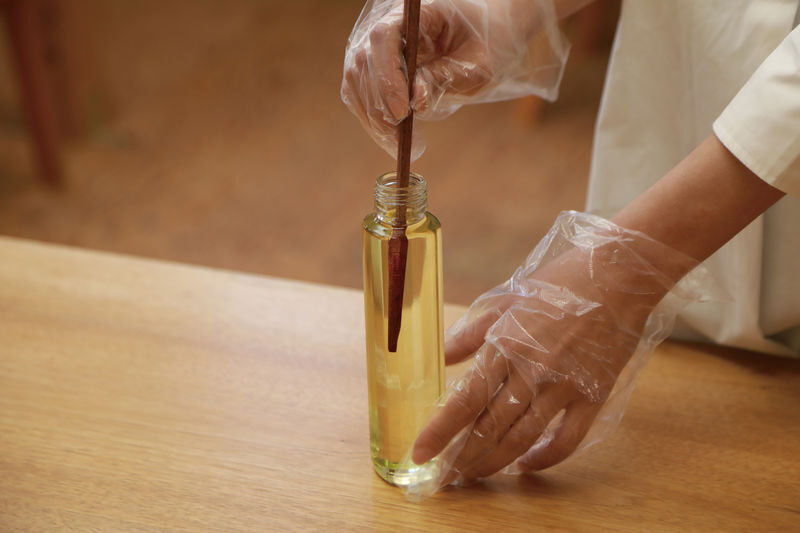
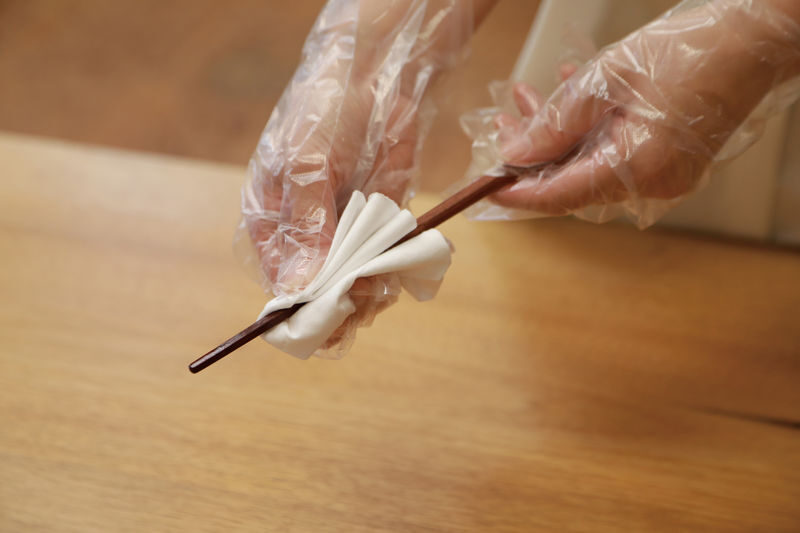
After planing, you use sandpaper to smooth the tips and edges. This finishing stage takes patience, but it gives you a chance to refine the feel of the chopsticks rather than rushing to the end. You then apply oil to finish the wood. The sequence is easy to remember: shape, smooth, finish.
A one-hour class with helpful staff
Plan for about an hour from start to finish. The exact pace may depend on how many people are in the room and how much help each person needs. Several participants have found the class quick and straightforward, while one reported waiting about 20 minutes before getting started. If you have a tight schedule, allow a little breathing room around the booked activity rather than planning an immediate dash to your next stop.
Staff assistance is one of the workshop’s strongest features. People have praised instructors for being kind, patient, and clear, with names including Yuka, Mahana, Tina, Moeka, and Cristina mentioned by participants. Those names are useful to know, but staffing can vary by session. Some instructors have also helped visitors find kanji for their names, which can make the optional engraving more meaningful.
English explanations have been described as simple and understandable. That is a practical plus if you do not speak Japanese: the process is visual, and each stage has a clear task. Still, instruction may feel brisk in a busy session. Listen through the demonstration, then ask for a repeat if you missed a step. The goal is not to finish first; it is to make a pair you will be happy to use.
The workshop has also been described as clean and spacious, with air conditioning. That is welcome in Tokyo’s hot summer weather, and the indoor setting makes this a handy option on a rainy day. It is a straightforward way to keep an hour enjoyable when outdoor plans are less appealing.
Engraving turns a souvenir personal
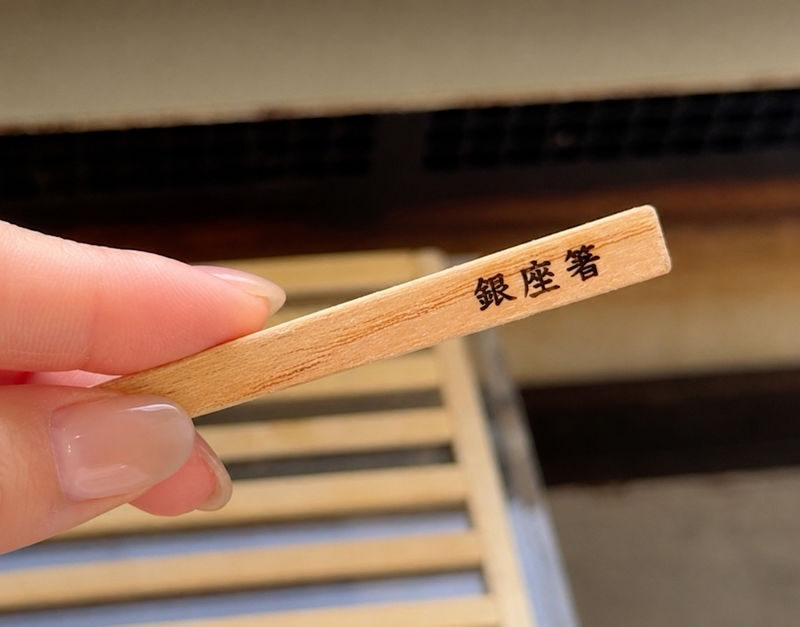
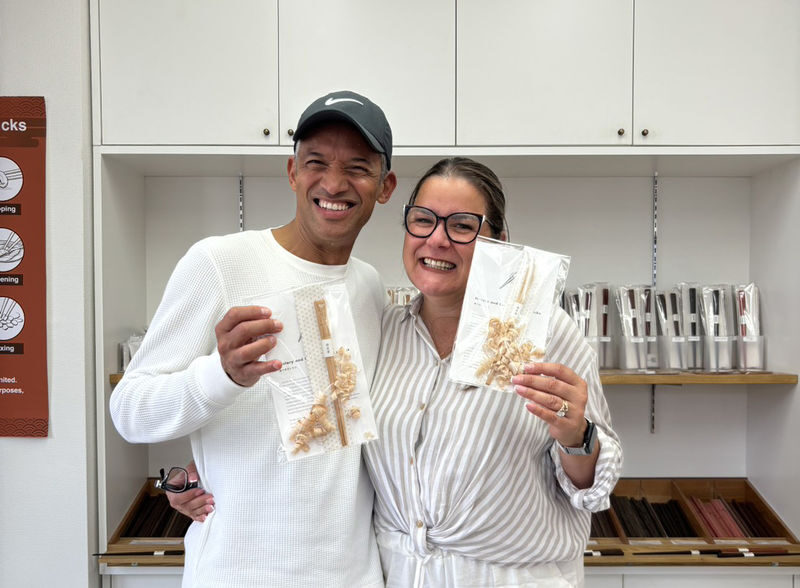
After making the chopsticks, you can choose to have a name engraved for an additional ¥1,100. This is optional, so you can keep the cost down by taking home the finished wood without engraving. If you are making a gift, the extra personalization may be worth it.
Some participants have had staff help them choose kanji for a name. That can be a nice touch, particularly if you want the engraving to connect the object to your trip. Do not assume the workshop is a language class, though. The focus remains on making the chopsticks, with name selection as an add-on.
Engraving also makes the finished pair easier to distinguish from someone else’s, especially if you are attending with family or friends. If you want this option, remember to include its cost when comparing the total price. A low initial booking price can look different once you add both premium wood and engraving.
A good family activity, with a little help
This workshop works well for families because it is active, short, and ends with something children can take home. The steps are tangible: use a plane, sand the wood, apply oil. Staff have explained the process in child-friendly terms, and parents have valued the chance for children to see how a familiar object is made.
The main limitation is the physical work. Planing hardwood can take strength and control, so a younger child may need an adult or instructor nearby. Sanding is a gentler task, but the whole process still calls for attention. I would choose this for a child who enjoys making things and can follow basic instructions, rather than expecting a passive demonstration.
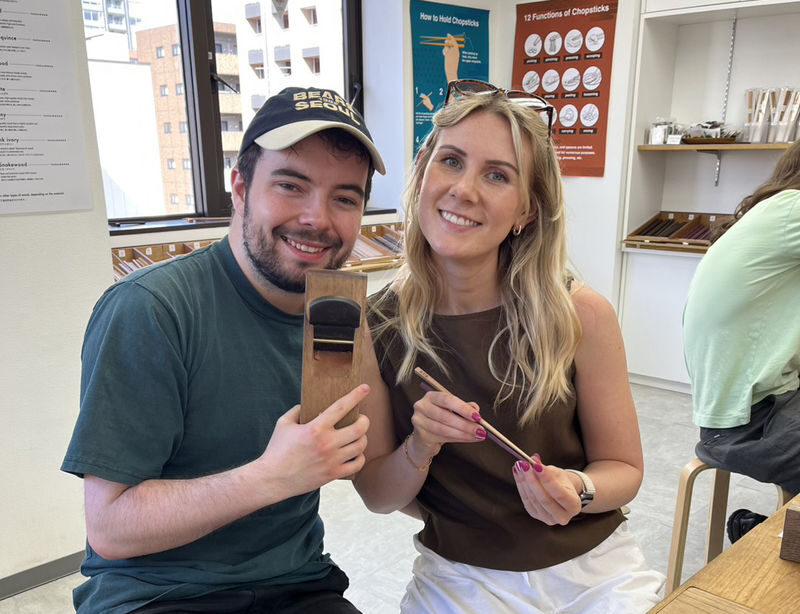
Couples and groups of friends should find it easy to share the hour. You can choose different woods and compare the finished pairs, or make matching chopsticks as a small keepsake. Some groups have been the only people in the room and received what felt like individual attention, but that is not something to count on. In a fuller class, staff may need to divide their time among several participants.
Is it worth the cost?
The value depends on what you want from a souvenir. If you only need a cheap pair of chopsticks, a shop will be quicker and likely cost less. Here, you pay for the instruction, the time at the bench, the wood, and the satisfaction of making the item yourself. The finished pair carries a story that a ready-made purchase does not.
The basic package is the clearest value if you want the activity without extras. You get the core process and can choose from two free wood types. Engraving adds ¥1,100, while other woods may carry additional charges. Since specialty wood prices can vary sharply, the best value is not necessarily the rarest timber. It is the combination of a material you like and a total price you have agreed to before starting.
For a group, calculate the cost per person with upgrades included. Several modest additions can turn an inexpensive hour into a much larger purchase. Ask about the wood price before choosing, and treat engraving as a deliberate extra rather than part of the base activity.
Overall, I see this as good value for a hands-on cultural activity in central Tokyo, especially if you want a useful keepsake and enjoy making things. It is less compelling if you are mainly looking for a low-cost souvenir or expect a long, highly technical lesson.
Who should book this Ginza workshop?
Book it if you enjoy practical activities, want a break from shopping and sightseeing, or are looking for a personal gift to bring home. It is particularly suited to couples, families with children who can follow directions, and friends who would enjoy making different versions side by side.
You do not need woodworking experience. The staff guide you through the steps, and the tools and materials are part of the activity. You should, however, be comfortable paying attention while using a hand tool, and be willing to ask for help if the plane feels difficult.
If you are price-conscious, stick with one of the two included wood types and decide in advance whether engraving is worth ¥1,100 to you. If you are drawn to specialty woods, confirm the surcharge before committing. That small check can protect the workshop’s pleasant, relaxed feel from an unwelcome bill at the end.
Should you book?
I would book this if you want an hour of hands-on craft and a souvenir you can actually use. Making chopsticks is simple enough to be approachable, but shaping them yourself gives the activity more substance than a quick photo stop or a shop purchase. The same-day finish and convenient Ginza location make it easy to fit into a city visit.
Go in with clear eyes about the add-ons. The base wood selection and the optional engraving price are straightforward, but specialty timber can raise the total considerably. Ask before choosing, and you can enjoy the best part of the workshop: turning a plain piece of wood into something personal.
800yen to 400yen: Design Your Own Chopsticks in Ginza
“Great souvenir from a visit to Japan. The experience was interesting and easy to follow. The guidance was a bit quick, and there was mainly one per…”
FAQ
How long does the chopstick-making workshop take?
The activity takes about one hour.
Where does the workshop take place?
It takes place at Ginzabashi Chopstick in Ginza, Tokyo.
How many types of wood can I choose from?
The workshop offers more than 20 types of wood. The standard package includes a choice of two free types, while other options may cost extra.
What do I do during the workshop?
You shape the chopsticks with a hand plane, smooth the tips and edges with sandpaper, and finish the wood with oil.
Can I take my chopsticks home the same day?
Yes. You can take your finished chopsticks home the same day.
How much does name engraving cost?
Optional name engraving costs an additional ¥1,100.
Is the workshop suitable for beginners?
Yes. Staff explain the process and guide participants through the steps. Some participants may need extra help using the plane, particularly with hardwood.
Is the workshop suitable for children?
Families with children have taken part, and staff have explained the process in child-friendly terms. A child may need help with the strength required to plane harder wood.
Can I choose a specialty wood?
Yes. More than 20 wood types are available, but options beyond the two included types may cost extra. Confirm the price before making your selection.