Mount Fuji is the star, but the route gives you several ways to see it: beside swans at Lake Yamanaka, mirrored in calm water at Hirano Beach, and framed by a red torii gate near Fujiyoshida. This is a photo-focused day trip, not a hiking tour or a deep visit to one town.
I like the two lakeside stops, which offer different views of Fuji, and the long lunch break near Hikawa Clock Shop, where you can eat and photograph the old street without being rushed. The catch is a long day in a vehicle, and clouds can hide Fuji just when you arrive.
- At a glance
- A photo route built around Mount Fuji
- Leaving Tokyo from Ueno or Ikebukuro
- Swan Beach at Lake Yamanaka
- Reflections at Hirano Beach
- Lunch and street photos by Hikawa Clock Shop
- The Golden Torii near Fujiyoshida
- Lawson at Kawaguchiko Station
- What the schedule means in practice
- Is 2.49 good value?
- Small preparations that make the day easier
- Should you book this Mount Fuji day trip?
- FAQ
- Where does the tour depart from?
- What time does the tour return to Tokyo?
- Which stops are included?
- Is lunch included?
- Is Mount Fuji guaranteed to be visible?
- What should I bring?
- What language does the driver-guide speak?
- What is included in the price, and what is not?
- The Best Of Tokyo!
- More 1-Day Tours in Tokyo
- More Tours in Tokyo
- More Tour Reviews in Tokyo
At a glance
 1 / 10
 2 / 10
 3 / 10
 4 / 10
 5 / 10
 6 / 10
 7 / 10
 8 / 10
 9 / 10
 10 / 10
- Two lakes, two moods: Look for swans at Lake Yamanaka’s Swan Beach, then try for a reflection of Fuji at Hirano Beach.
- A generous midday stop: You have about 1 hour 40 minutes near Hikawa Clock Shop, including time for lunch.
- Five planned photo stops: The route also includes the Golden Torii and Lawson near Kawaguchiko Station.
- No transfers between stops: Round-trip transport, fuel, tolls, and parking are included.
- A driver-guide, not a named guide: Chinese- and English-speaking professional driver-guides are offered, but no individual guide is named.
- Weather sets the limit: Fuji’s visibility depends on cloud cover, and the lakefront can be windy.

👉 See our pick of the Our Picks For The 11 Best Workshops & Classes In Tokyo
A photo route built around Mount Fuji
This trip strings together five familiar Fuji-area photo locations in one day. You start in Tokyo, travel by vehicle to Lake Yamanaka, then continue toward Fujiyoshida and Kawaguchiko before returning to the city. The appeal is simple: you don’t have to plan train connections, work out local buses, or find each viewpoint yourself.
The stops are self-guided. Your driver-guide takes care of the transport, while you use the allotted time to walk, take photos, grab a snack, or look around. That gives you some freedom at each location, but it also means you should not expect a long guided explanation of the region at every stop.
The tour is described as a small-group experience, though no maximum group size is provided. If that detail matters to you, check it before booking. The minimum is four participants, and the activity may be rescheduled or refunded if that number is not reached.
You can also read our reviews of more tours and experiences in Tokyo



Leaving Tokyo from Ueno or Ikebukuro
You can board in Ueno at 7:00 or at Ikebukuro Station’s West (North) Exit at 7:30. Both are central meeting points, so you can choose the one that is easier from your accommodation. Arrive at least 10 minutes early. Late arrivals and no-shows are not refundable.
The morning pickup is useful if you want a straightforward start without piecing together a rail-and-bus route. In return, expect a substantial amount of time on the road. Bring a portable charger, snacks, and a neck pillow if those make long drives easier for you. If you are prone to motion sickness, the tour information recommends preparing medicine in advance.
The driver-guide speaks Chinese or English, depending on the service provided. No guide names are listed, so you cannot choose a particular person. One account of the trip praised the driver’s professional manner and accommodating attitude, and noted that the journey remained relatively smooth despite traffic. That is encouraging, but traffic can still affect the schedule.
Swan Beach at Lake Yamanaka
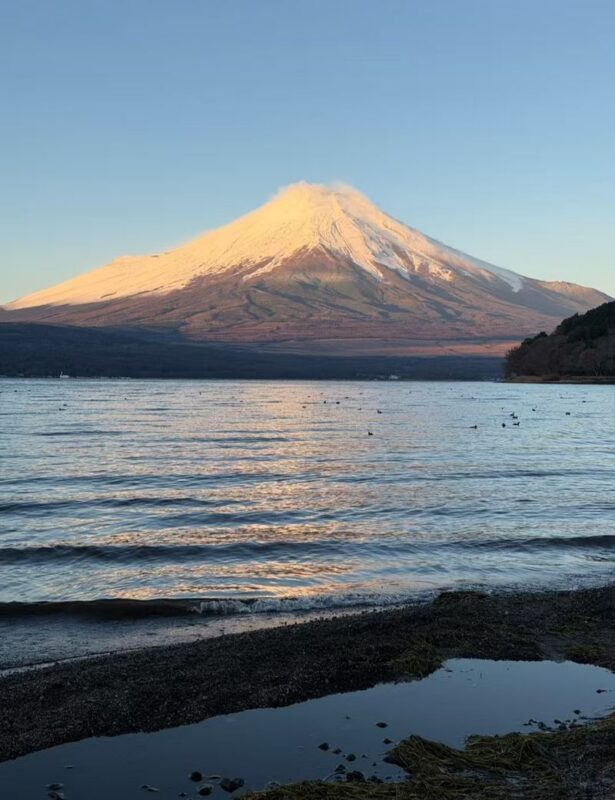
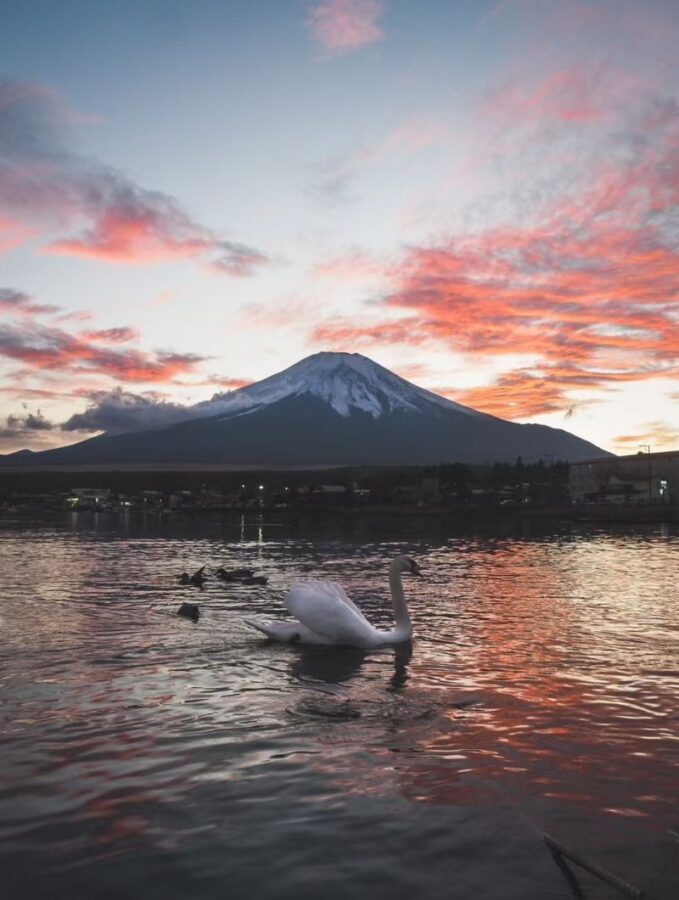
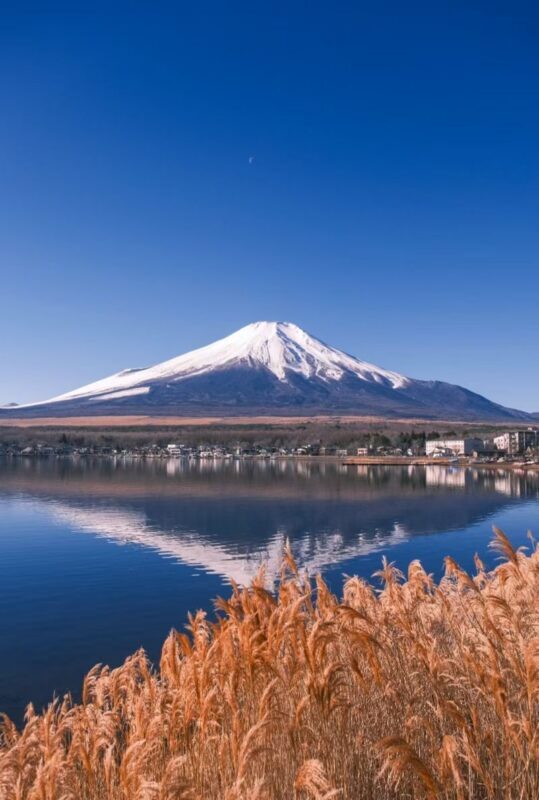
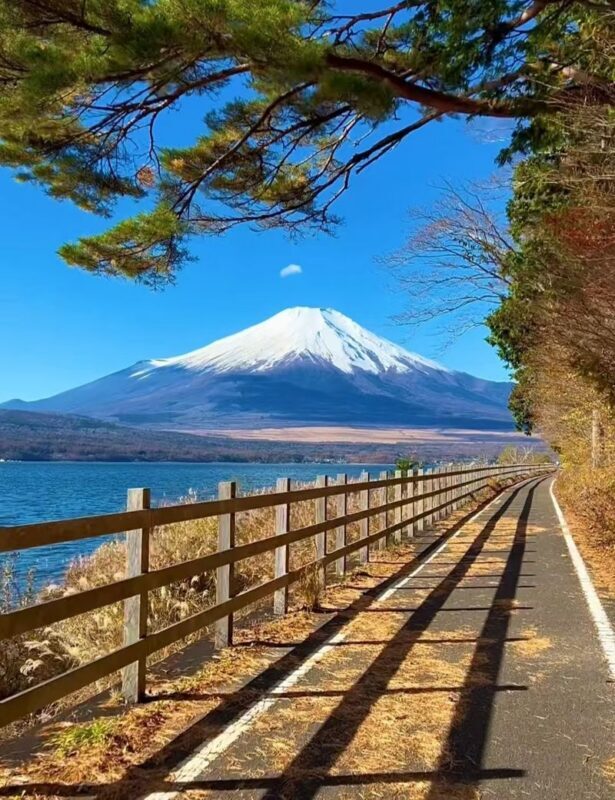
The first stop is Shiratorihama, also called Swan Beach, at Lake Yamanaka. You have about 40 minutes to walk along the shore and look for swans. The lake is the largest of the Fuji Five Lakes, and on a clear day the broad water and mountain make a fine setting for photos.
The swans are part of the appeal, but they are wildlife, not a staged photo opportunity. Their presence and position can vary. Give them space, and don’t count on getting a perfect swan-and-Fuji frame in a short visit.
This stop is a good opening because it lets you stretch your legs after the drive and take in a wide lake view. It is also exposed: the lakeshore can be windy, so bring a windproof jacket and hat. Keep a safe distance from both the water and the road while taking pictures.
Reflections at Hirano Beach
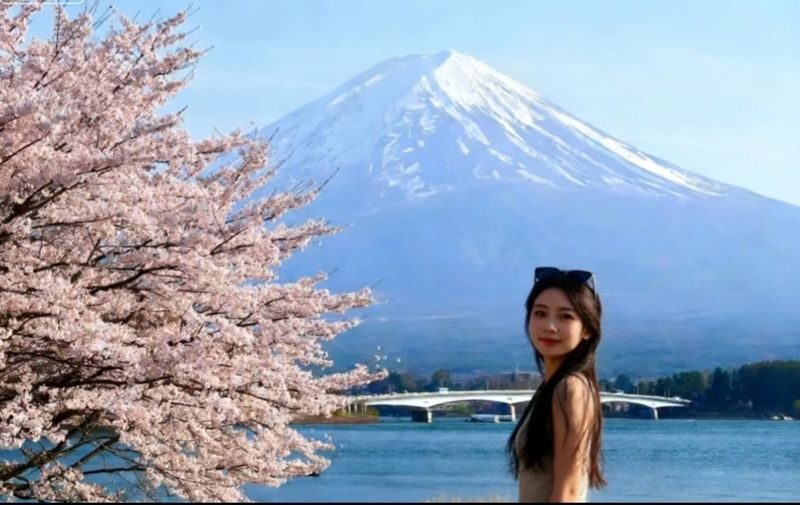
About an hour later, you get another 40 minutes at Hirano Beach, another Lake Yamanaka viewpoint. The draw here is the possibility of an inverted Fuji, with the mountain reflected in the lake. Calm water and clear skies help; wind or cloud can spoil the effect.
That uncertainty is worth understanding before you book. The stop is scenic even when the reflection does not appear, but the famous image is never guaranteed. Fuji is a natural sight, and cloud cover can change quickly. Treat the reflection as a bonus rather than the whole reason for the trip.
The two lake stops are close enough in theme to feel connected, but they are not identical. Swan Beach gives you a chance to watch the shoreline and look for birds, while Hirano is presented as the stronger spot for a mirror-like mountain view. Together, they give you more than one chance to catch a clear view of Fuji.
Lunch and street photos by Hikawa Clock Shop
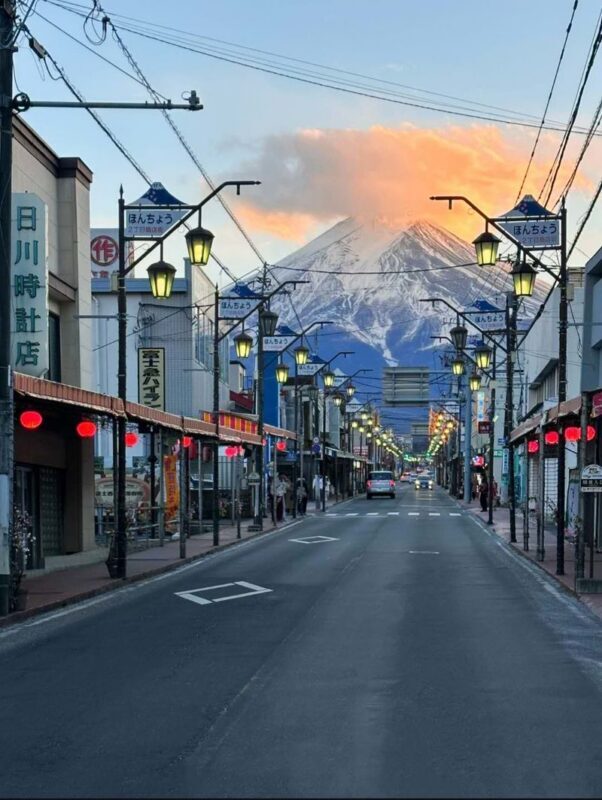
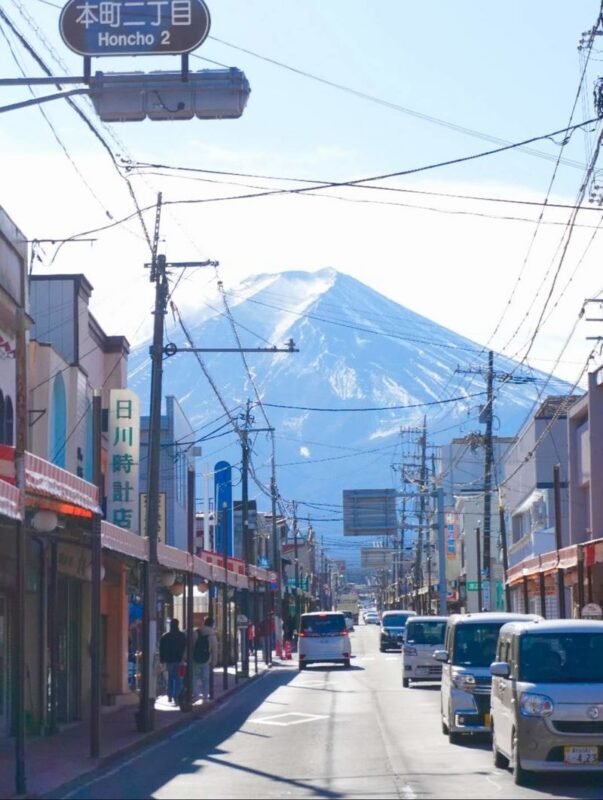
The longest stop is near Hikawa Clock Shop, where you have about 1 hour 40 minutes. The shop sits on a sloping street that points toward Mount Fuji, giving the area its well-known Japanese-town photo angle. The old-fashioned Showa-era feel is a change of pace from the open lakeshore.
This is also your main lunch window. Meals and drinks are not included, so bring snacks or buy food at a nearby restaurant. Use the time with care: lunch, a walk down the street, and photos all compete for the same stretch of free time. If the street is crowded, be considerate and avoid blocking the path while you compose a shot.
The generous stop is one of the tour’s strongest practical features. Rather than squeezing lunch into a short break, you have room to eat and explore. Still, this is a popular photo area, not a quiet backstreet guaranteed to be empty. Keep your expectations realistic and be ready to wait briefly for a clear view.



The Golden Torii near Fujiyoshida
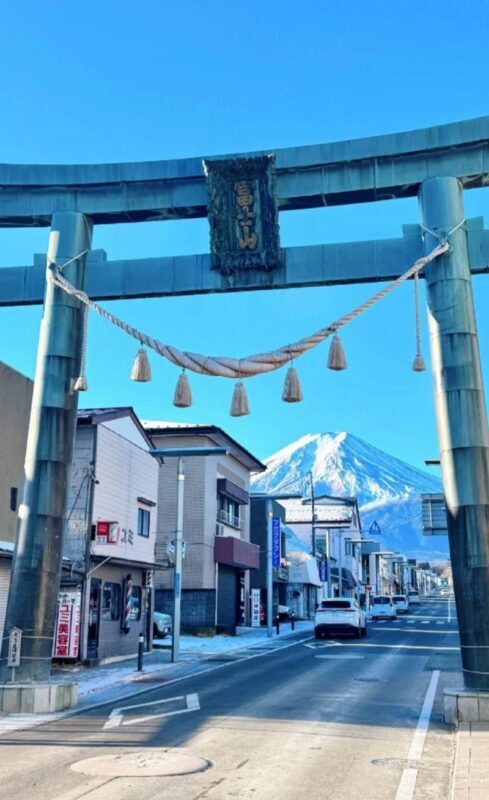
The next stop is Mount Fuji’s Golden Torii, with about 20 minutes on site. The red gate and Fuji create a striking contrast, and the torii connects the mountain views to the area’s religious traditions. It is a compact stop, so you will need to move promptly if you want photos and a closer look.
Twenty minutes is enough for a quick visit, not an unhurried exploration. The site can draw plenty of people, so be patient and respectful as you take pictures. This is one of the tour’s shortest pauses, but it adds a cultural note to a route otherwise centered on lakes, streets, and recognizable photo spots.
Lawson at Kawaguchiko Station
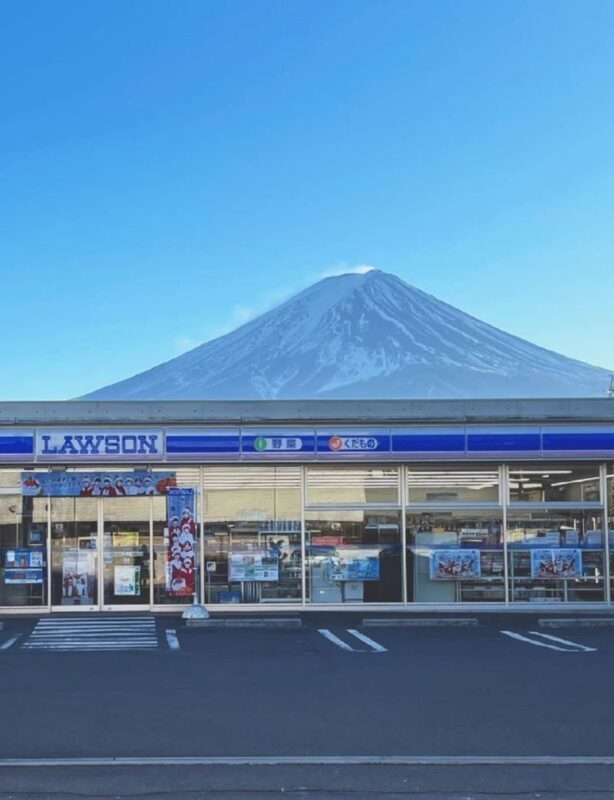
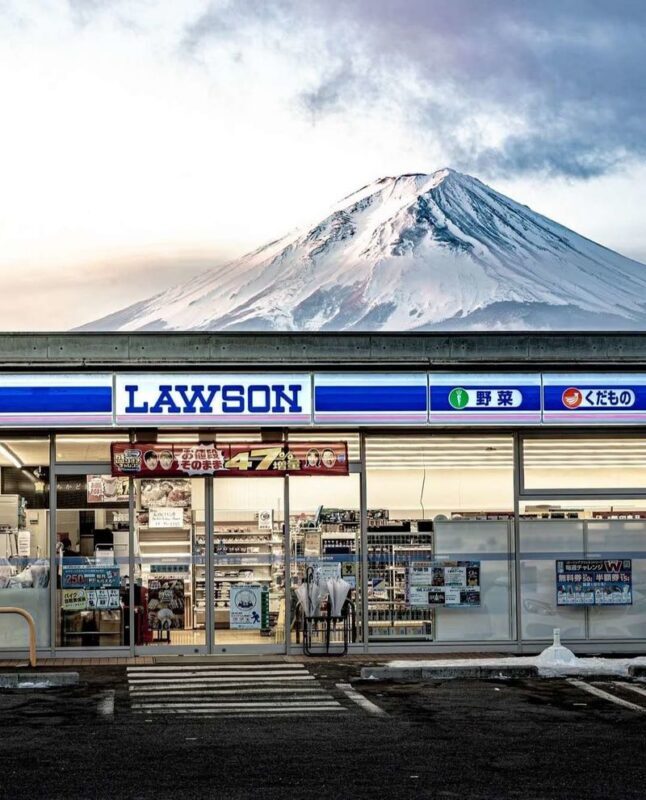
The final planned photo stop is the Lawson convenience store in front of Kawaguchiko Station. You have about 20 minutes. Its familiar red-and-blue sign, set against a Fuji view when the mountain is visible, has become a popular Japanese street scene.
This is a brief stop in a busy area, so keep your photos quick and don’t block the pavement or shop entrance. You can also buy snacks or drinks, including Fuji-themed items, but purchases are your own expense. The store is a familiar convenience shop, not a special attraction in itself; the appeal is the view and the everyday Japanese setting.
By this point, you will have seen several versions of the Fuji area in one day. The quick sequence is handy if you want the classic photo locations, but it leaves little room to linger or add your own stops.
What the schedule means in practice
The listed schedule begins with Tokyo departures at 7:00 from Ueno and 7:30 from Ikebukuro. The first lakeside stop is planned for 9:30, followed by Hirano Beach at 10:30, Hikawa Clock Shop at 11:40, the Golden Torii at 13:30, and Lawson at 14:00. The return journey begins in the afternoon.
The stated drop-off estimates are 16:30 at Ueno and 17:00 at Ikebukuro, though traffic and weather can change the timing. Keep your evening plans flexible rather than booking a tight dinner or onward connection. You return by the same vehicle to the original boarding points, with no transfers.
The schedule is fixed enough to cover all five stops, but your time at each is limited. The longest pause is for lunch and the Hikawa street; the torii and Lawson visits are only 20 minutes each. If you prefer to spend half a day at one lakeside town, this route will feel brisk. If you want a sampler of the familiar photo spots, the structure saves a lot of planning.
Is $102.49 good value?
The price starts at $102.49 per person. Included are round-trip transfers, a Chinese- or English-speaking professional driver-guide, tolls, parking, fuel, and tax. You pay separately for meals, drinks, personal purchases, and any admission fees. No specific paid attraction is listed as part of the route.
The value comes mainly from convenience. Reaching several of these places independently would mean arranging transport between Tokyo, the Fuji Five Lakes area, and individual stops. Here, you get a single vehicle, five planned locations, and no need to manage transfers. The price is easier to justify if you value a low-effort day and want several photo locations in one outing.
It is less compelling if you want a slow visit, a detailed guided tour, or certainty that Fuji will be visible. You are paying for transport and access to a planned route, not for guaranteed mountain views or included meals. The two available ratings are both 5.0, but that is a very small sample. One detailed account praised the driver’s attitude and the time available at the stops, while noting that traffic still occurred. I’d take that as a useful sign, not a promise about every departure.
Small preparations that make the day easier
Dress for wind at both Lake Yamanaka beaches, and bring a hat or jacket you can pack away later. Take water and snacks for the drive, plus a portable charger if you plan to use your phone for photos throughout the day.
At Hikawa Clock Shop, decide whether lunch or photography matters more if time starts to feel tight. At the Golden Torii and Lawson, be ready to take a few quick pictures and move along. These are popular locations, and considerate behavior makes the stops easier for everyone.
Keep your phone accessible in case the guide needs to contact you. Return to the vehicle on time at every stop; the schedule is shared, and a late return can delay the whole group. Confirmation is issued within 48 hours. If the minimum of four participants is not met, you can request a full refund or choose another date. You can also cancel for a full refund at least 24 hours before the activity date, based on local time.
Should you book this Mount Fuji day trip?
Book it if you want a practical way to see Lake Yamanaka, Hirano Beach, Hikawa Clock Shop, the Golden Torii, and Kawaguchiko Station in one day, without handling local transfers yourself. The longer lunch stop and two different lake viewpoints make the schedule more useful than a quick drive-by tour.
Skip it if your ideal Fuji visit means hiking, a slow lakeside afternoon, or a guaranteed view of the mountain. No tour can control the weather, and this route is built around short visits to popular photo spots. If you accept those limits, bring a windproof layer, plan a simple lunch, and think of the day as a convenient sampler rather than an in-depth visit.
Mount Fuji Instagram-Worthy Day Trip: Small Group Tour/Photogenic Route & Lake Yamanaka Swan Beach + Hirano Beach + Nikawa Clock Shop + Kawaguchiko Station Entrance Kintorii (Departure from Ikebukuro/Ueno)
“The driver was professional, had a great attitude, and was accommodating. Although there was traffic in the middle, it was still relatively smooth….”
FAQ
Where does the tour depart from?
You can board in Ueno at 7:00 or beside the public restroom at the West (North) Exit of Ikebukuro Station at 7:30. Arrive at least 10 minutes before departure.
What time does the tour return to Tokyo?
The stated drop-off times are 16:30 at Ueno and 17:00 at Ikebukuro. Traffic and weather may affect the schedule, so keep evening plans flexible.
Which stops are included?
The planned stops are Swan Beach at Lake Yamanaka, Hirano Beach, Hikawa Clock Shop, Mount Fuji Golden Torii, and Lawson in front of Kawaguchiko Station.
Is lunch included?
No. Meals and beverages are not included. The stop near Hikawa Clock Shop lasts about 1 hour 40 minutes and includes time for lunch, with nearby restaurants and the option to bring snacks.
Is Mount Fuji guaranteed to be visible?
No. Fuji’s visibility depends on weather and cloud cover. The lake reflection at Hirano Beach also depends on conditions, including how calm the water is.
What should I bring?
A windproof jacket and hat are recommended for the lakeside stops. A neck pillow, portable charger, snacks, and motion sickness medicine may also be useful on the long drive.
What language does the driver-guide speak?
The tour includes a professional driver-guide who speaks Chinese or English. No individual guide name is provided.
What is included in the price, and what is not?
Round-trip transfers, the driver-guide, tolls, parking, fuel, and tax are included. Meals, drinks, accommodation, personal expenses, and any admission fees are not included.