Okutama offers a striking change of pace from central Tokyo: mountain roads, cedar-scented forests, quiet villages and the broad waters of Lake Okutama. This half-day e-bike tour covers about 20 kilometers, and local guide David adds stories about the area’s history and traditions along the way.
I like two things in particular: the electric assistance makes the hilly route manageable without serious cycling fitness, and the wasabi tasting connects the scenery to a local food tradition. You also get a small-town stop and a guide who can help you find your way to the meeting point.
The main catch is the distance from some parts of Tokyo. One ride to the meeting area took nearly two and a half hours from Asakusa, so this is a longer outing than the half-day label alone might suggest. Factor in the train journey before you book.
- What makes the Okutama ride worth considering
- A mountain escape within Tokyo Metropolis
- The train journey is part of the day
- Setting out on an e-bike
- Lake Okutama and the quieter roads
- Wasabi fields, a shop and a fresh tasting
- What David adds to the experience
- Is 1.35 good value?
- Who should book this ride?
- Should you book the Okutama cycling tour?
- FAQ
- How long is the cycling route?
- Do I need to be an experienced cyclist?
- Where does the tour take place?
- Who is the guide?
- What is included in the wasabi tasting?
- How long does it take to reach the meeting area?
- What happens if I need to cancel?
- The Best Of Tokyo!
- More Food & Drink Experiences in Tokyo
- More Tours in Tokyo
- More Tour Reviews in Tokyo
What makes the Okutama ride worth considering
 1 / 8
 2 / 8
 3 / 8
 4 / 8
 5 / 8
 6 / 8
 7 / 8
 8 / 8
- About 20 kilometers on an e-bike: Electric assistance helps on steep sections, so regular cycling experience is not required.
- Lake Okutama and mountain roads: The route brings together lake views, forested roads and quiet mountain villages.
- History from guide David: Expect local context on the area’s historical roads, culture and traditions, not just a ride between viewpoints.
- A freshly grated wasabi tasting: A visit to a wasabi shop adds a local flavor to the outing.
- A slower side of Tokyo: Okutama feels far removed from the city’s fast pace, even though it is within Tokyo Metropolis.
- A real journey to reach the start: The train ride can take close to two and a half hours from Asakusa, depending on where you set out.

👉 See our pick of the Our Picks For The 11 Best Workshops & Classes In Tokyo
A mountain escape within Tokyo Metropolis
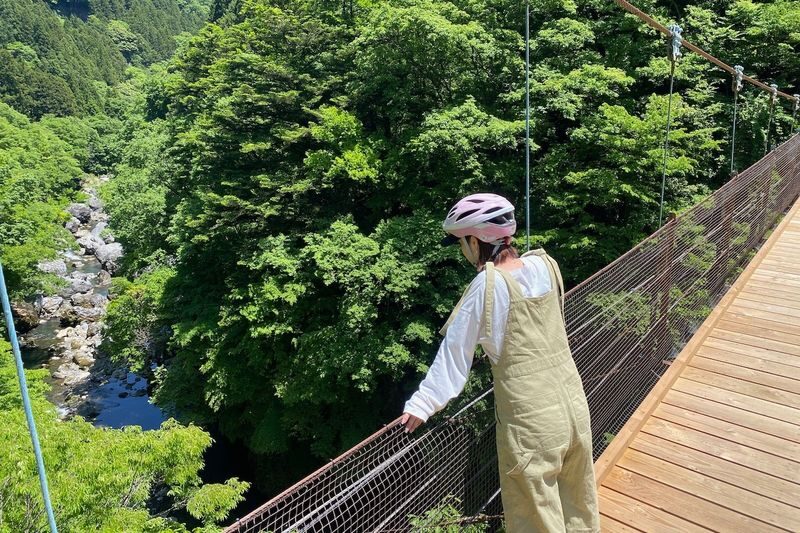
Tokyo is not only towers, rail stations and crowded shopping streets. Okutama, in the western part of Tokyo Metropolis, trades city blocks for mountain roads, forests, rivers and a large lake. This tour is built around that contrast. You spend the ride moving through a quieter, more rural side of the region, with a local guide to explain what you are seeing.
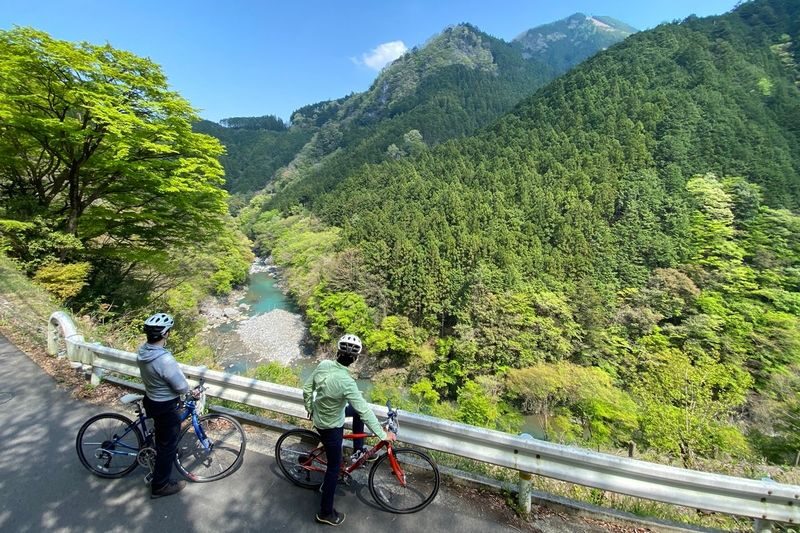
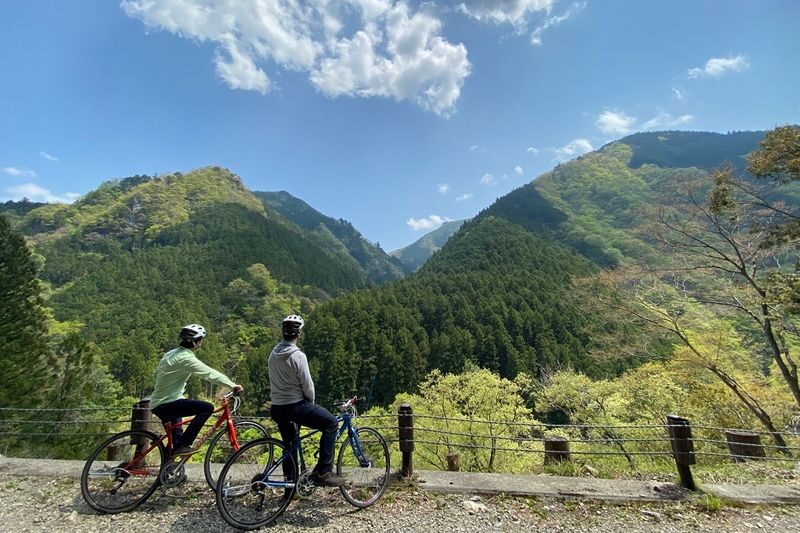
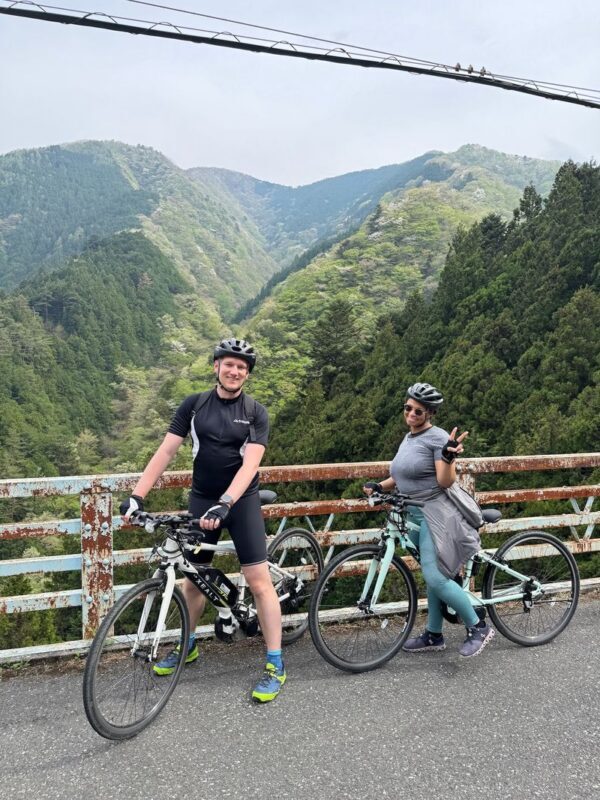
The route follows historical roads through the area and passes peaceful mountain villages. Lake Okutama is one of the main visual highlights, with its open water set against the surrounding hills. The ride is a good fit if you want to get outdoors but would rather see the countryside from a bike than spend the day on a strenuous hike.
A ride of roughly 20 kilometers is enough to make this feel like an active outing, but the e-bikes change the calculation. Their electric assistance helps with hills, and the pace is described as relaxed. You still need to be comfortable on a bicycle and ready to pedal, but you do not need to arrive as a seasoned road cyclist.
You can also read our reviews of more food & drink experiences in Tokyo



The train journey is part of the day
Getting to Okutama is the first practical question to settle. One visitor traveling from Asakusa found the train ride took nearly two and a half hours. That account is a useful warning: the tour may be half-day cycling, but your total commitment can be much longer if you are starting in eastern Tokyo.
The journey itself can be scenic, and the train ride was described as easy to manage. Still, build in time and check your own route to the meeting point before booking. A visitor also appreciated David’s help with transport directions and navigation, and he met the group at the station. That kind of local guidance can make a distant meeting point feel less daunting, especially if you are not used to Japanese train connections.
The tour includes instant confirmation, but that does not remove the need to plan your route. Arrive on time: late arrivals and no-shows are not eligible for a refund or amendment. Free cancellation is available up to 24 hours before the activity, in local time. If extreme weather or another unforeseen event leads the operator to cancel, you can reschedule or request a full refund.
Setting out on an e-bike
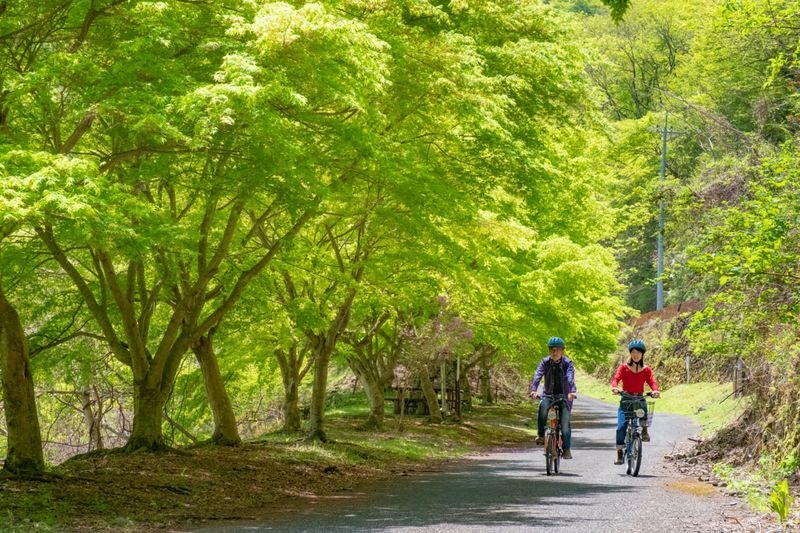
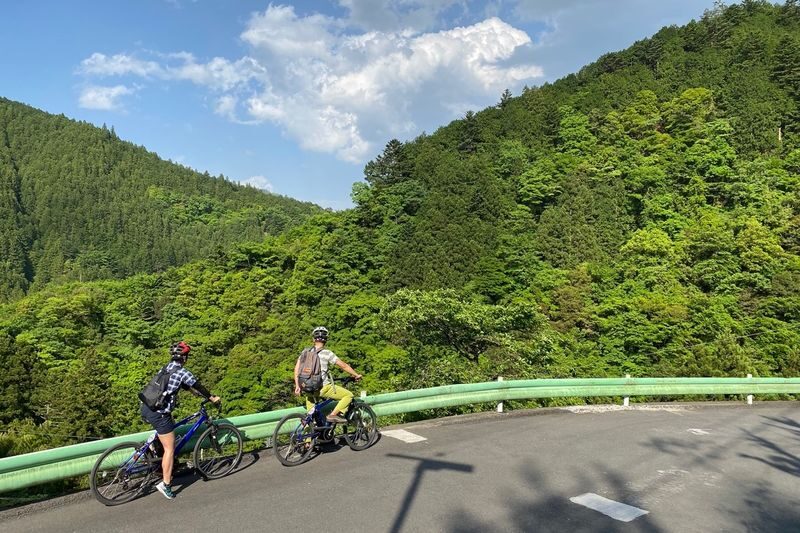
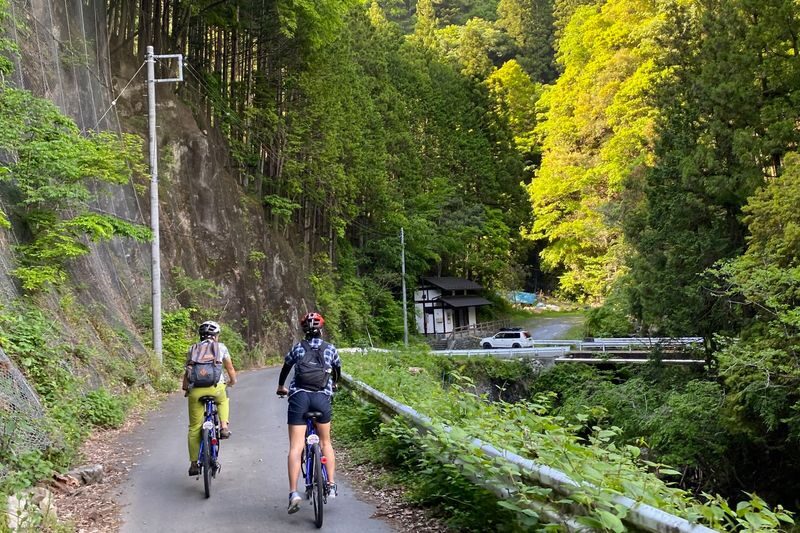
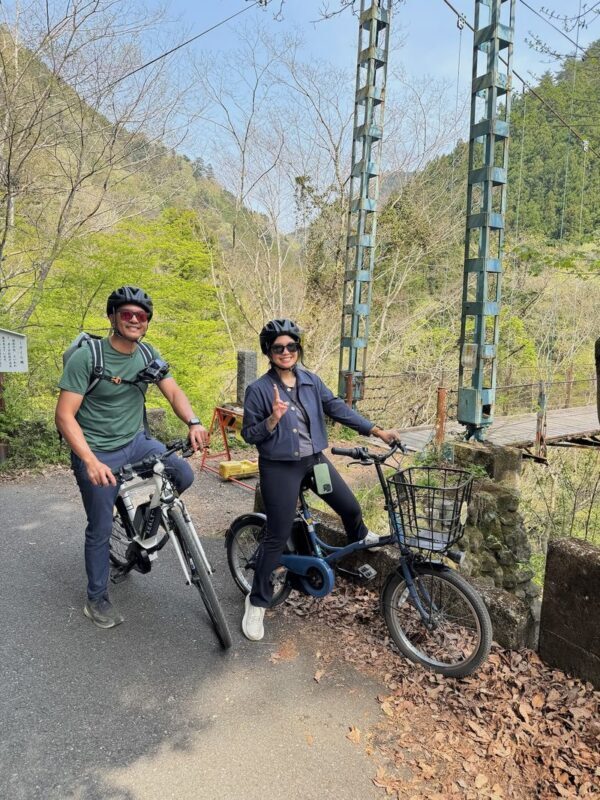
The ride itself is the heart of the experience. You cover about 20 kilometers on an e-bike, following Okutama’s historical roads through mountain scenery and village areas. The route offers a mix of movement and pauses to take in the surroundings, rather than a hard push to cover distance as fast as possible.
The electric assist matters here. One city cyclist who expected the ride to feel easy found the hills were still a good reason to be glad for the e-bike. Another rider with experience on other bike tours found this route comfortable and the pace easy. Those details make the tour sound approachable, but not effortless: you are still spending time outdoors and riding through hilly country.
The bikes have been described as modern and comfortable, and easy to handle even on steeper slopes. That is useful if you are unsure about cycling in a mountain area. You do not need to be a strong cyclist to enjoy the outing, though you should be at ease riding a bike and prepared for a sustained ride.
Lake Okutama and the quieter roads
Lake Okutama gives the route one of its most memorable views. Its wide water and surrounding mountains offer a marked change from Tokyo’s dense streets. The route also passes forests and local roads, where the quieter pace helps you notice details that are easy to miss from a train or car.
The countryside is not just scenery to pass through. The area’s historical roads and villages give David a chance to talk about local life, culture and traditions. The guide’s role is a major part of the tour’s appeal: he has been praised for sharing historical facts, local legends and information about spiritual rituals, as well as for keeping the ride at a comfortable pace.
One visitor described a bear encounter in the woods during a ride. David responded with a whistle and spray and shared safety information with people along the way. That is a specific incident, not a promise that you will see wildlife or encounter a bear. It does, however, underline that this is a mountain outing, and that following your guide’s safety advice matters.
Wasabi fields, a shop and a fresh tasting
The wasabi stop gives the ride a distinctly local finish. Okutama’s wasabi is grown in mountain settings where spring water runs over cultivated beds. A visit to the fields or a wasabi shop helps explain why the plant is tied to the area, rather than making the tasting feel like a generic snack break.
The tasting involves freshly grated wasabi, a detail worth noting if you have only tried the paste served with sushi. The fresh version is a small but memorable taste of local food culture. After the ride, David has also taken visitors to a wasabi shop and shown them around the quaint town. The exact stops may vary, so think of the shop and tasting as a highlight of the experience rather than a promise of a long farm visit.
The wasabi element also adds balance to the day. The ride is not only about scenery and exercise; it offers a simple way to connect the landscape with local work and food. If you are curious about regional ingredients, this stop is likely to be more interesting than a standard café break.
You can also read our reviews of more cycling tours in Tokyo


What David adds to the experience
A guided ride can be little more than someone leading the way. Here, David’s local knowledge appears to be central to the outing. He has been described as friendly and attentive, with stories about local history, culture, legends and traditions that give the route more meaning.
He also seems to take care with the practical side. He has helped with transport and directions before the ride, met participants at the station, and kept the pace comfortable. If you are traveling on your own or are uneasy about finding a rural meeting point, that communication can be especially valuable.
This is not a formal history lecture, and the available details do not specify a fixed set of stops or a precise route order. Instead, expect a ride through the area with commentary that responds to the roads and places you encounter. That flexible, place-based approach suits the countryside better than a rigid checklist.
Is $151.35 good value?
At a starting price of $151.35, this is not a bargain activity by Tokyo standards. Its value depends on what you want from a day out. You are paying for a guided ride on e-bikes, local interpretation, time around Lake Okutama and a wasabi tasting, as well as access to a countryside experience that would take more effort to organize on your own.
The price is easier to justify if you want a guided outdoor day and would otherwise be unsure about navigating the route or handling the hills. David’s help with the meeting point and transport can be useful, and the e-bike makes the distance more accessible. If you already have a bicycle, know the area and prefer to explore independently, you may decide that the guided format is less important.
Remember to consider the train fare and travel time separately when judging the cost of the day. The starting price is for the activity, and the information provided does not say that transport from central Tokyo is included. Your total budget and schedule should account for getting to the meeting point and returning afterward.
Who should book this ride?
I would put this tour high on the list if you want a nature break from Tokyo but do not want an intense cycling challenge. The e-bike, relaxed pace and guide make the route accessible to people who ride casually, while the scenery and local stories give experienced cyclists something more than a simple spin.
It also suits visitors who value cultural context alongside outdoor activity. The historical roads, village life, local traditions and wasabi tasting make this more than a scenic ride. If you are traveling with someone who would rather not spend a full day cycling, keep in mind that the ride is about 20 kilometers and the journey to Okutama may add several hours.
This is less suitable if you have a tight Tokyo schedule, dislike train journeys or want a short activity close to the city center. The half-day label describes the cycling experience, not necessarily the full door-to-door outing. On the other hand, if you can spare the time, Okutama offers a quieter and more rural side of Tokyo that many visitors never see.
Should you book the Okutama cycling tour?
Book it if you want a guided, moderate ride with mountain scenery, Lake Okutama and a local wasabi tasting, and you are willing to spend time getting to the meeting point. The combination of an e-bike, David’s local explanations and the small-town stop gives the outing more substance than a basic rental ride.
Skip it if you need a quick activity near central Tokyo or want to avoid hills and a long train journey. For everyone else, this is a practical way to trade the city’s pace for countryside roads, without needing to be an expert cyclist. Check your travel time before you commit, then leave room in the day to enjoy the ride rather than rushing back.
Tokyo Okutama Mountain Half-Day Cycling Adventure with Wasabi Tasting
“We book the tour trying to escape from the heat from city centre, it turned out to be a fantastic gat away!! I commute with bicycle a lot in the ci…”
FAQ
How long is the cycling route?
The ride covers about 20 kilometers. The activity is described as a half-day cycling tour.
Do I need to be an experienced cyclist?
No advanced cycling experience is needed. The e-bikes provide assistance on steep hills, and the ride is described as relaxed-paced. You should still be comfortable riding a bicycle.
Where does the tour take place?
The tour takes place in Okutama, within Tokyo Metropolis, Japan. The route includes historical roads, mountain villages and Lake Okutama.
Who is the guide?
The guide is David. He shares local history and information about the area, and has helped participants with directions to the meeting point.
What is included in the wasabi tasting?
The experience includes a visit to a wasabi shop and a tasting of freshly grated wasabi. A stop near wasabi fields is also part of the local experience described for the tour.
How long does it take to reach the meeting area?
Travel time depends on where you start. One journey from Asakusa took nearly two and a half hours by train, so check your own route before booking.
What happens if I need to cancel?
You can cancel for a full refund if you do so at least 24 hours before the activity, based on local time. If extreme weather or another unforeseen event leads the operator to cancel, you can reschedule or request a full refund. Late arrivals and no-shows are not eligible for refunds or changes.