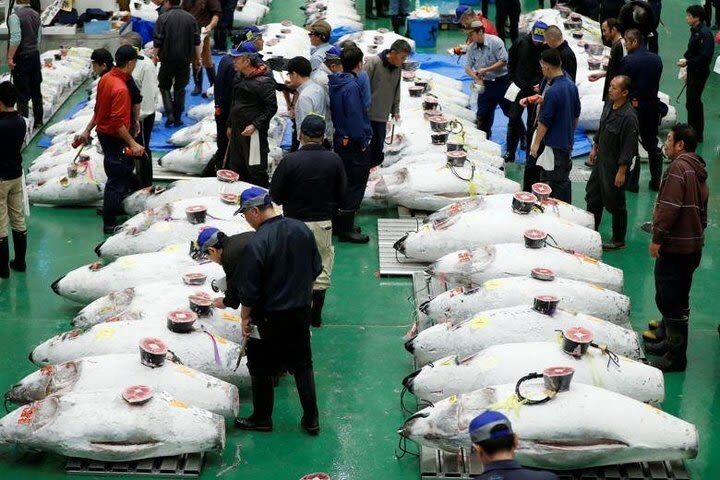
Toyosu’s tuna auction is a rare chance to see Tokyo’s seafood trade at work before most of the city has started its day. From a public viewing area, you can watch the auction activity without entering the working floor, where fish must be kept sanitary.
I like two things here: a guide helps make sense of the market’s routines, and the tour connects Toyosu with Tsukiji, giving you a wider look at Tokyo’s food culture. It also leaves room to stay for breakfast after the guided portion.
The trade-off is the 5 a.m. start and a $354.75 starting price for a three-hour walking tour. Transport and meals are extra, so the value depends on how much you want expert context and help navigating a very early market visit.
- Key points before you book
- What the early Toyosu start is really for
- From Toyosu’s auction area toward Tsukiji
- How the three-hour morning unfolds
- Guides make the difference
- Is 4.75 good value?
- Who will get the most from this visit?
- Practical details to settle ahead of time
- Should you book the Toyosu and Tsukiji morning tour?
- FAQ
- What time does the tour start and finish?
- Where does the tour meet?
- Can I enter the tuna auction floor?
- Does the tour include Tsukiji?
- Are meals and drinks included?
- Is transportation included?
- What languages does the guide speak?
- Is the tour suitable for children and wheelchair users?
- What is the cancellation policy?
- The Best Of Tokyo!
- More Food & Drink Experiences in Tokyo
- More Tours in Tokyo
- More Tour Reviews in Tokyo
Key points before you book
 1 / 6
 2 / 6
 3 / 6
 4 / 6
 5 / 6
 6 / 6
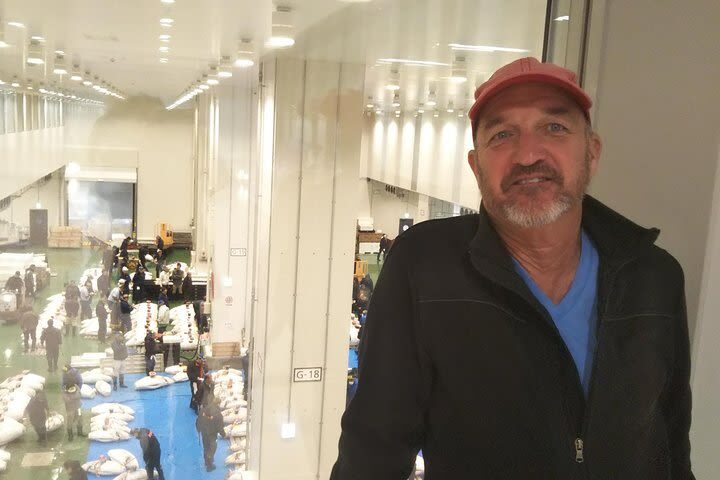
- The tuna auction is viewed from the third-floor public area. You cannot enter the main auction floor, which is a working space.
- The day begins at 5 a.m. in Toyosu. The tour is scheduled to finish at 8 a.m., though traffic or weather can change the timing.
- The route includes Toyosu and Tsukiji. The exact order and time spent at each are not specified, so confirm the plan with your guide.
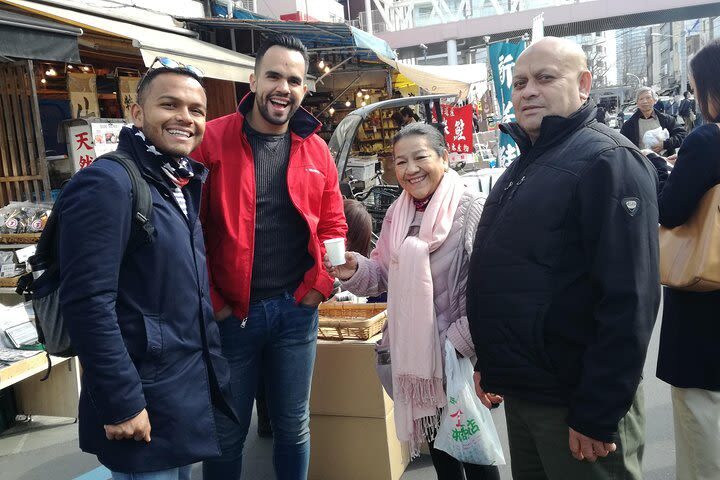
- You get an English- or Japanese-speaking guide. Toru, Kei, and Naoko are names associated with past tours, but you cannot assume a particular guide will be assigned.
- Transport, food, and drinks are not included. Bring Japanese yen for local transport and budget separately for breakfast.
- It is a private walking tour. No private vehicle is provided, and you may use public transport or taxis between locations.

👉 See our pick of the Our Picks For The 11 Best Workshops & Classes In Tokyo
What the early Toyosu start is really for
This tour is built around a working market, not a staged show. Arriving early gives you a chance to see the tuna auction while the market is active, and a guide can explain what is happening and why chefs come to buy fresh ingredients. You watch from a public space on the third floor, not from the auction floor itself.
That boundary matters. Toyosu handles food for sale and consumption, so visitors cannot walk among the auction activity. If you expect to stand beside the tuna or hear every bid up close, reset those expectations: the view is from a designated public area, and the length of the auction varies each day.
The guide’s role is more than pointing out the action. The market’s scale and routines can be hard to read without context. A guide can connect what you see to the market’s operation and history, and explain why its daily business matters to Japan’s top chefs. That background is useful even if you have watched a tuna auction on television. Seeing a real market at work gives the subject a different weight.
You can also read our reviews of more food & drink experiences in Tokyo


From Toyosu’s auction area toward Tsukiji
The experience is presented as a visit to both Toyosu and Tsukiji, two names closely tied to Tokyo’s fish trade. Toyosu is the morning’s anchor: you meet there or arrange to meet your guide at your hotel, then head to the market for the auction viewing. The stated meeting point is at Toyosu Wholesale Fish Market, at 6-chome-6-6 Toyosu, Koto City.
The tour is a walking experience, and a private vehicle is not included. Your guide may use public transportation or local taxis to transfer between sites, with those costs paid separately. One participant described a guide arranging taxis to the auction area, but that should not be treated as a guaranteed service. Confirm your pickup and route after booking, and keep yen handy for fares.
Tsukiji is part of the food-market focus, but the exact stops and amount of time there are not specified. That makes it wise to ask what the day’s route will cover, especially if Tsukiji is your main reason for booking. The tour’s strongest promise is a guided look at the two markets’ food culture, rather than a fixed list of stalls or tastings.
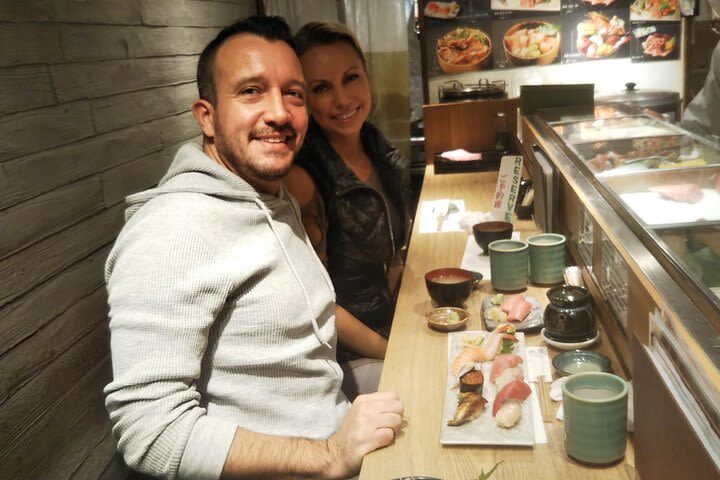
After the guided portion, you can stay in the market and have breakfast or lunch at your own pace. That flexibility is welcome: the tour does not include meals, so you can choose whether to sit down for a full meal or simply browse and buy something that appeals to you. A past participant particularly valued an impromptu sushi breakfast suggestion. It is a good example of the practical help a guide may offer, but no meal or restaurant choice is guaranteed.
How the three-hour morning unfolds
The advertised schedule runs from 5 a.m. to 8 a.m. Expect an early start, several hours on foot, and a morning that depends in part on market activity. The auction length changes from day to day, and the schedule may shift due to traffic or weather, so treat the end time as a plan rather than a promise to the minute.
At the start, you meet your guide at Toyosu or arrange a hotel meeting. The meeting details should be settled directly after your reservation, since both options are mentioned and the listed meeting point is the market. If you choose a hotel pickup, check the exact time and whether you need to reach Toyosu by a certain hour.
At Toyosu, the main event is viewing the tuna auction from the third-floor public area. The guide can explain the market’s history and operation while you watch. You are seeing a place of business, not entering a visitor-only attraction, so follow the guide’s directions and respect the rules that protect food sanitation.
The route then takes in the wider market theme, including Tsukiji. Because the exact walking route is not laid out, ask your guide what is planned and how transfers will work. The tour ends around 8 a.m., with the option to remain for a meal or more market time on your own.
Guides make the difference
This tour’s appeal depends heavily on the guide. A market can be visually striking yet confusing if you do not know what you are looking at. The guide is there to explain the auction and market operations, answer questions, and help make the transition between locations less of a puzzle.
Past participants have named Toru, Kei, and Naoko. Toru was praised for explaining the auction and how the markets operate. Kei was described as making the morning entertaining, while Naoko was noted for clear communication in English, confirming meeting details by email and WhatsApp, and arranging taxis. These are useful indications of the kind of guide support you might get, but guide assignments can vary.
The language options are English and Japanese. If you need a particular language, confirm it before the tour rather than assuming every guide speaks both. The available information also does not specify group size beyond describing the tour as private, so ask how that affects your party and the final price if those details matter to you.
Is $354.75 good value?
At a starting price of $354.75 for three hours, this is a premium morning outing. The cost is easier to justify if you value a private walking tour and a guide who can explain the market, help with transport, and tailor the conversation to your interests. It is less compelling if you mainly want a quick look at the auction and are comfortable finding your own way around.
Remember that the advertised price does not cover transport, food, drinks, admission to attractions, or personal expenses. You should budget extra for any train or taxi rides between locations and for whatever you choose to eat afterward. The tour’s practical value is partly in saving you the work of figuring out the market visit alone, not in bundling meals or transport.
This is a food-focused experience, but it is not a tasting tour with a set menu. You will need to pay separately for breakfast, and the choice is yours. That can be an advantage if you prefer to decide on the spot, though it means the final cost will vary.
You can also read our reviews of more tours and experiences in Tokyo

Who will get the most from this visit?
I would consider this tour if you are curious about how Tokyo’s seafood trade works and want more than a quick photo of an auction. It is especially suited to food-minded visitors, cooks, and anyone who likes seeing the working side of a city. The guide’s explanations can help you connect what happens at the market with the ingredients that reach restaurant kitchens.
It can also suit families with older children. Children aged 12 and over are charged the same rate as adults, so the cost can rise quickly for a family. The activity is listed as stroller- and wheelchair-accessible, but it is still a walking tour. Contact the provider to discuss your specific needs and the route before booking.
The early hour is the main personal test. You need to be ready to leave around 5 a.m., and you may be on your feet for much of the morning. If your group has trouble with early starts or prefers a relaxed breakfast first, this is probably not the right fit.
Practical details to settle ahead of time
Use your mobile voucher on the specified date and time. Confirmation is expected within minutes; if it does not arrive, contact customer support. The voucher is valid only for the date and time booked.
Before the day, confirm whether you are meeting at Toyosu or your hotel, the exact pickup time, how you will travel between sites, and what the planned Tsukiji portion includes. Luggage storage and delivery are not provided, so do not arrive with bags you need someone else to hold.
You can cancel for a full refund at least 24 hours before the activity date, using the destination’s local time. Children aged 12 and up pay the adult rate. These details are worth checking early, especially when coordinating a family schedule or an onward train.
Should you book the Toyosu and Tsukiji morning tour?
Book it if you want a guide’s help understanding the tuna auction and market routines, and you are happy to pay extra for transport and breakfast. The combination of Toyosu’s auction viewing and a Tsukiji food-market visit offers a useful window into Tokyo’s culinary trade, with the guide providing the context that a self-guided walk may lack.
Skip it if you want to enter the auction floor, expect a meal to be included, or are looking for a low-cost market visit. You cannot enter the working auction area, and the high starting price only makes sense if the private guide and early-morning structure matter to you.
Before paying, pin down the meeting arrangement and ask how the route covers Tsukiji. If those answers fit your plans, this is a strong choice for a focused, behind-the-scenes-style morning that still leaves you time to eat at your own pace.
Toyosu Market Morning Tuna Auction and Tsukiji Food Tour with Guide
“Toru is an amazing guide and we loved his knowledge and understanding of the auctions and the operation of the market's. would highly recommend”
FAQ
What time does the tour start and finish?
The listed schedule is 5 a.m. to 8 a.m. The timing may change because of traffic or weather.
Where does the tour meet?
The stated meeting point is Toyosu Wholesale Fish Market at 6-chome-6-6 Toyosu, Koto City. A hotel meeting can also be arranged, so confirm the exact location with your guide.
Can I enter the tuna auction floor?
No. You view the auction from a public space on the third floor. The main auction floor is off limits to visitors for food-sanitation reasons.
Does the tour include Tsukiji?
Yes, it is described as a food tour covering Toyosu and Tsukiji. The exact stops and route are not specified, so ask your guide what is planned.
Are meals and drinks included?
No. Food and drinks are extra. You can stay at the market after the tour to have breakfast or lunch at your own expense.
Is transportation included?
No private vehicle is included, and transport costs are not covered. Public transportation or local taxis may be used between sites, so bring Japanese yen.
What languages does the guide speak?
The guide service is offered in English or Japanese. Confirm the language you need when arranging the tour.
Is the tour suitable for children and wheelchair users?
Children aged 12 and over are charged the adult rate. The activity is listed as stroller- and wheelchair-accessible, but it is a walking tour, so confirm any specific access needs in advance.
What is the cancellation policy?
You can receive a full refund if you cancel at least 24 hours before the activity date, using the destination’s local time.