The best reason to leave Tokyo for this day is the contrast: a wave-battered shrine, a working-port seafood market and broad flower fields all fit into one outing. I like that the route pairs coastal scenery with lunch, rather than making the day only about photos.
I also like the included round-trip transport, tolls and parking, which save you the work of arranging three separate stops. The trade-off is a long drive and fixed stop times. Crowds or traffic can squeeze time, especially at the market, so this suits you better if you can keep lunch simple and watch the clock.
- At a glance
- A coastal shrine, a fish market and a flower park in one day
- Oarai Isosaki Shrine: a torii at the water’s edge
- Nakaminato Seafood Market: fresh fish, busy lunch hour
- Hitachi Seaside Park: choose the season, not just the photo
- What the fare covers, and what it does not
- Timing, meeting points and small rules worth knowing
- Is this Ibaraki day trip right for you?
- FAQ
- How long is the tour?
- Which stops are included?
- Is Hitachi Seaside Park admission included?
- When is the best time to see nemophila?
- Are meals included?
- What is included in the tour price?
- How much luggage can I bring?
- Can I cancel for a refund?
- The Best Of Tokyo!
- More Food & Drink Experiences in Tokyo
- More Tours in Tokyo
- More Tour Reviews in Tokyo
At a glance
- Kamiiso Torii faces the Pacific: Oarai Isosaki Shrine’s sea-facing gate is a striking coastal sight, though the walk and conditions can limit your visit.
- Lunch is your own choice: Nakaminato’s stalls sell fresh seafood, but queues can take a bite out of your roughly 90-minute stop.
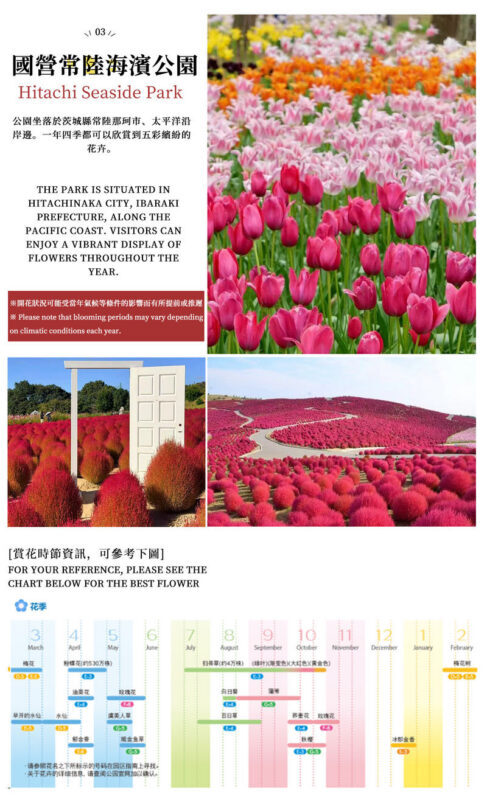
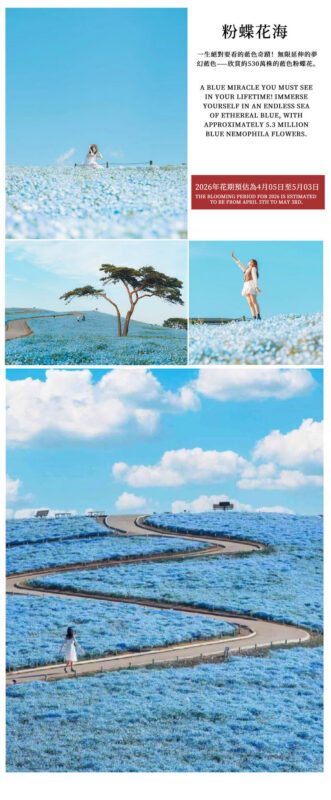
- Flower timing matters: Nemophila is usually best from late April to late May. The park’s displays change through the year.
- Park admission costs extra: Budget ¥450 per adult, or ¥800 during designated seasonal periods.
- Expect a long day on the road: The trip runs about ten hours, and traffic can delay your return to Tokyo.
- The guide changes by departure: Guides have included Elsa, Cora, Sherry and others, but no particular person is guaranteed.

👉 See our pick of the Our Picks For The 11 Best Workshops & Classes In Tokyo
A coastal shrine, a fish market and a flower park in one day
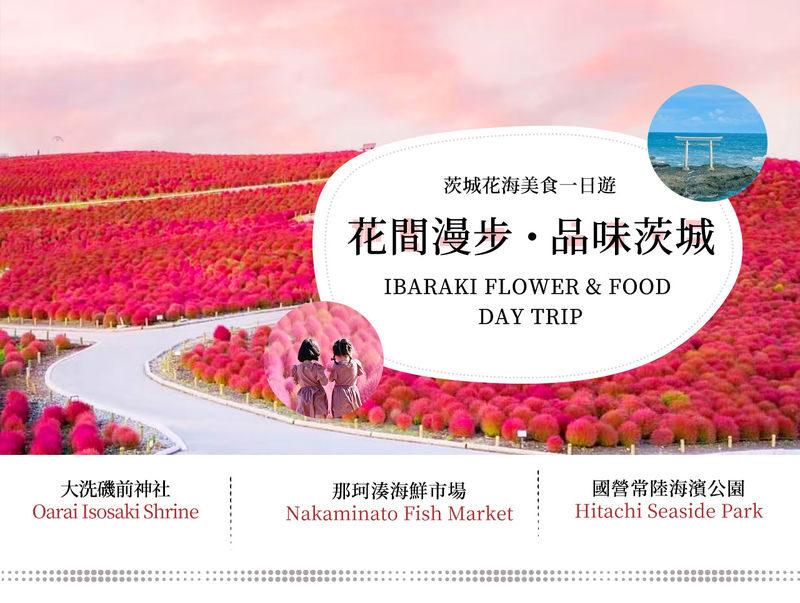
This is a practical way to see three very different sides of Ibaraki without planning the transport yourself. You start at Oarai Isosaki Shrine, continue to Nakaminato Seafood Market for lunch, then spend the afternoon at Hitachi Seaside Park before heading back to Tokyo.
The order makes sense. The shrine is a brief, atmospheric first stop, the market supplies the meal, and the park gives you the most time to walk around. Still, this is a group tour on a fixed route, not a private car. You share the vehicle with other passengers, and you cannot ask the driver to stop elsewhere along the way.
The day is advertised at around ten hours, with departures listed at 8:00 or 8:30. The schedule can shift with road conditions, weather and crowds. The return is generally planned for the early evening, but arrival in Tokyo may fall between 18:00 and 20:00. I would keep the evening free rather than book a dinner reservation or a show.
You can also read our reviews of more food & drink experiences in Tokyo


Oarai Isosaki Shrine: a torii at the water’s edge
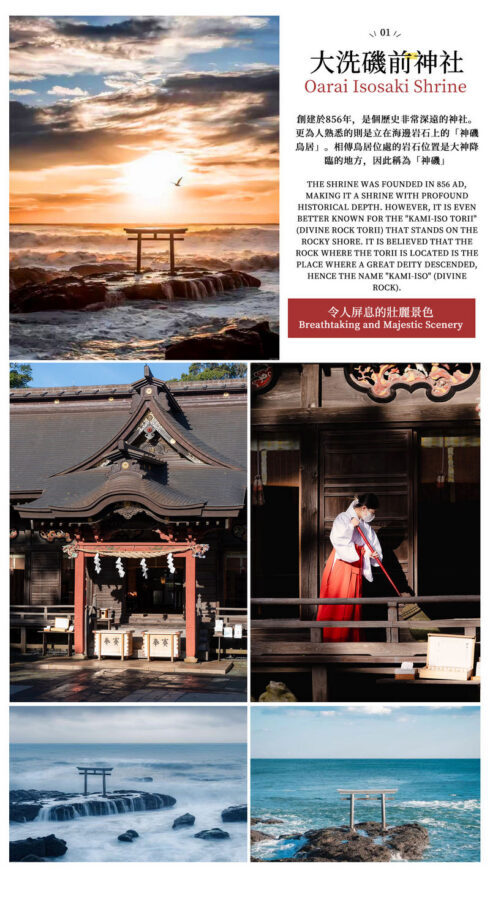
Oarai Isosaki Shrine sits beside the Pacific in Oarai, where waves break against a rugged shore. Its Kamiiso Torii, set on rocks by the water and facing east, is the main draw. The gate is a memorable sight against the open sea, and sunrise is a particularly appealing time to see it. This tour reaches the shrine around 10:30, though, so treat the stop as a coastal visit rather than a sunrise excursion.
You have about an hour to look around on your own. That should allow time to see the shrine grounds and make your way toward the sea-facing torii, but it is not a long visit. The shoreline can be windy, and bad weather may make the walk uncomfortable or prevent you from reaching the gate. Wear shoes you can walk in and bring a layer, even if Tokyo feels mild when you set out.
The shrine offers a change of pace from the city and a sense of place tied to the coast. I like that it is not simply a quick photo pullout: the approach and the setting give you time to pause. But the stop is short, so if you want a slow visit or extensive photography, an independent trip would give you more control.
Nakaminato Seafood Market: fresh fish, busy lunch hour
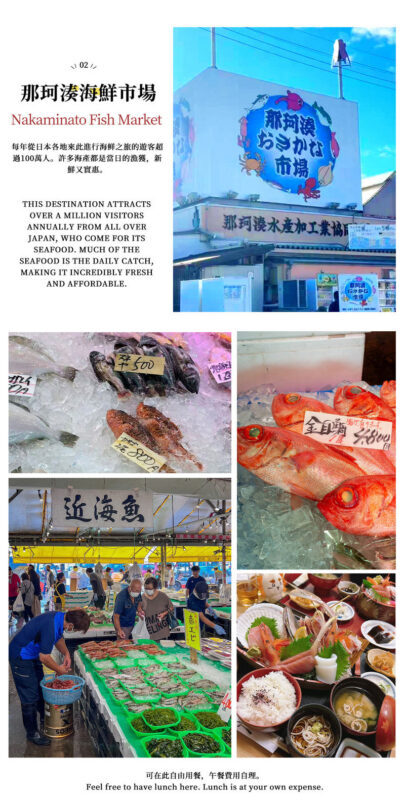
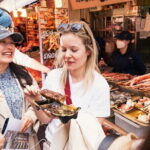
At roughly 11:40, the tour reaches Nakaminato Seafood Market, beside the fishing port in Hitachinaka. Its stalls sell a range of seafood, and you can choose from cooked dishes, snacks and fresh items. Visitors have singled out grilled prawns, scallops, oysters and seafood bowls; freshly shucked oysters are a tempting choice if you enjoy them.
The schedule allocates about an hour and a half here. That sounds generous until you factor in walking from the vehicle, choosing a place to eat, waiting for a table and getting back on time. At busy periods, restaurant queues can run 15 to 20 minutes or longer. Some eateries may also be closed, and a sit-down meal is not guaranteed to fit comfortably into the stop.
My practical advice: decide what matters most before you arrive. If a proper meal is your priority, head straight to a restaurant and accept that you may have little time to browse. If you want to sample the market, consider quick food from a stall instead of waiting for a table. Keep track of the meeting time and confirm exactly where the bus will pick you up. Congestion can force the vehicle to park farther away than expected, and the walk back may take more time than you planned.
The market is an appealing stop, but it is the tightest part of the day. Long lines have caused people to miss the next departure, and the bus cannot wait indefinitely without affecting the rest of the group. Do not assume that the full stop is leisure time. Leave a margin to return, even if it means skipping one more stall.
Hitachi Seaside Park: choose the season, not just the photo
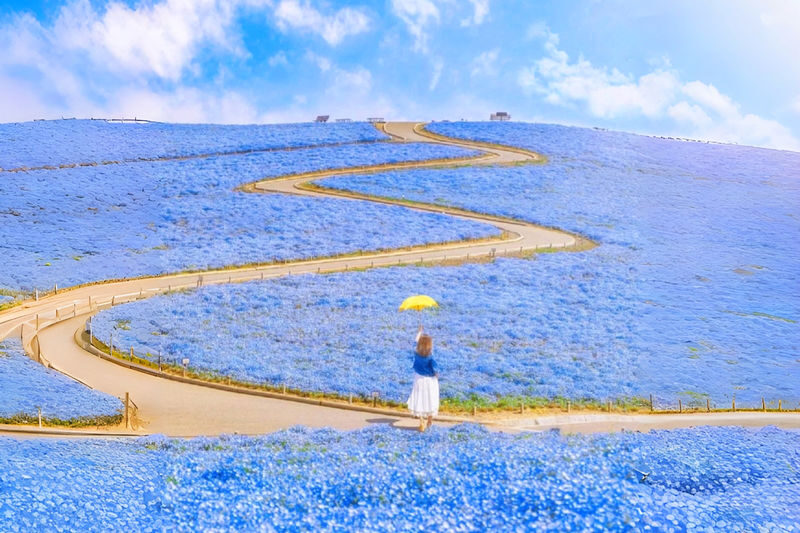
The afternoon stop is Hitachi Seaside Park, a large coastal park in Hitachinaka with flower displays that change during the year. The tour gives you about two hours and 20 minutes to explore independently. That is enough for a focused visit to the main seasonal display, but the park is broad, so you will want to choose an area rather than try to see everything.
For many people, the target is nemophila, the small blue flowers that cover Miharashi Hill in spring. The usual viewing period is late April to late May, but it shifts with weather and plant growth. A seasonal adult ticket costs ¥800 during designated spring and autumn windows; outside those periods, adult admission is listed at ¥450. The park sets the seasonal dates based on growing conditions.
Do not book based on a flower photo alone. The display may peak earlier or later than usual, and there is no refund if the flowers are past their best or not yet in bloom. Other flowers appear through the seasons, but the exact mix changes. Some visitors have found the park worthwhile even without a major bloom, enjoying the open space and a relaxed walk; others have been disappointed when a field was bare. Check the park’s current flower information close to your date and set your expectations accordingly.
You may also want to budget for getting around inside the park. One visitor chose the park tram to reach the flower fields, and cycling has also been enjoyed there. Those are optional activities, not included in the tour price. With your time limited, check distances and transport options as soon as you enter, then head to the flowers or area you came to see.
What the fare covers, and what it does not
The starting price is $51.79 per person. It includes round-trip transport from the designated Tokyo meeting point, tolls, parking and fuel, as well as a Chinese, English or Japanese-speaking guide. For a route that links three out-of-town stops, that can be good value, especially if you would rather not work out the transfers yourself.
The price does not include Hitachi Seaside Park admission, meals, drinks or personal purchases. Add at least the park entrance fee to your budget, and more if you want a seasonal ticket, a sit-down seafood meal or an optional ride inside the park. The real cost is still generally easier to understand than a bare ticket price: you are paying for transport between destinations as well as admission-free time at the shrine and market.
The vehicle is shared, and group size can range from four to 48. Depending on the number of people booked, a smaller vehicle may be used, with the driver also acting as guide. In that case, commentary may be briefer. The experience depends in part on the guide and on how smoothly the group keeps to its meeting times.
Guide names associated with departures have included Elsa, Cora, Sherry, Liu Bin, Jennifer and others. Guides vary by date, so you cannot count on a particular person. Good guides have helped explain the stops, answer questions and keep the day organized, but the tour’s core value is the transport and route rather than an in-depth guided visit at every site.
You can also read our reviews of more tours and experiences in Tokyo

Timing, meeting points and small rules worth knowing
You meet at a designated Tokyo pickup point, with departure times listed as 8:00 and 8:30. Arrive ten minutes early. The guide does not normally contact you in advance, so check your email between 16:00 and 22:00 Japan time the day before for the latest vehicle and guide details. If more than one message arrives, use the most recent one.
Late arrival or missing the tour is not refundable. You must also stay with the group and follow the time limits at each attraction. If you leave the tour partway through, you are treated as having given up the remaining service and are responsible for your own arrangements and safety.
One piece of luggage per person is allowed at no charge. Extra bags cost ¥2,000 each, and you need to note them when booking. Child seats are not available. Children aged three and older pay the adult rate; children aged zero to two can travel free if they do not need a separate seat. Infants and children still need to be included in the passenger count.
The activity is not recommended for people with epilepsy, heart disease, asthma or other serious medical conditions. People aged 70 and older should present a medical certificate, while those over 70 and pregnant participants must request and sign the operator’s liability waiver at least a day before departure. Pets are not allowed. Free cancellation is available if you cancel at least 24 hours before the activity date.
Is this Ibaraki day trip right for you?
I would choose this trip if you want a straightforward day outside Tokyo, enjoy coastal scenery and seafood, and are willing to accept a fixed pace. It is especially appealing during the nemophila season, when reaching Hitachi Seaside Park on your own can take extra planning. The shrine and the market also give the day more variety than a park-only excursion.
I would think twice if you want a long lunch, a slow shrine visit or several hours at the park. The drive is substantial, and queues or traffic can reduce the time you have at the stops. Go with a flexible attitude, check the seasonal flowers before booking, and treat the market as a quick-choice lunch rather than a guaranteed leisurely meal. If that sounds like your kind of day, the combination of sea, seafood and open parkland makes this a useful escape from Tokyo.
A Perfect Day Trip: Ibaraki Flower Park & Gourmet Food: Oarai Isosaki Shrine, Nakaminato Seafood Market, Hitachi Seaside Park | Departs from Tokyo
“The itinerary wasn't too rushed and the arrangements were very comfortable. Thank you, Sherry.”
FAQ
How long is the tour?
The tour is scheduled for about ten hours, with departures listed at 8:00 or 8:30 and a return to Tokyo planned for around 18:00 to 20:00. Traffic, weather and crowds can change the schedule.
Which stops are included?
The route includes Oarai Isosaki Shrine, Nakaminato Seafood Market and Hitachi Seaside Park.
Is Hitachi Seaside Park admission included?
No. Adult admission is listed at ¥450, with a seasonal ticket price of ¥800 during designated spring and autumn periods. The park determines those seasonal dates based on plant growth.
When is the best time to see nemophila?
The usual viewing period at Hitachi Seaside Park is from late April to late May. Bloom timing can vary with the natural conditions of each year, and flowers are not guaranteed to be at their peak on your date.
Are meals included?
No. Meals and beverages are not included, so plan to pay separately for lunch and any drinks.
What is included in the tour price?
Round-trip transfers from the designated meeting point, tolls, parking and fuel are included. A Chinese, English or Japanese-speaking guide is also provided.
How much luggage can I bring?
One piece of luggage per person is allowed free. Each additional piece costs ¥2,000, and you should note extra luggage when booking.
Can I cancel for a refund?
You can receive a full refund if you cancel at least 24 hours before the activity date, based on local time.