DOMYO has been braiding silk in Tokyo since 1652. In Kagurazaka, you get more than a craft lesson: first you see historical examples and hear how kumihimo was used in court clothing, sword fittings, and kimono accessories, then you try the work yourself.
I like two things in particular: the history is tied to real objects and working craft, not a generic introduction, and the hands-on section gives you a useful keepsake made with 100% silk. English-speaking instructors, including teachers called Yuki-san, Makiko-san, and Maki, are praised for clear, patient guidance.
The main consideration is time and price. At from $69.49, it is not a quick, low-cost souvenir stop, and the workshop asks you to concentrate on a repeated sequence of movements. If you want a calm, guided activity rather than a fast demonstration, that focus is part of the appeal.
- At a glance
- A working craft house, not just a classroom
- The first 30 minutes: see the braids before making one
- The workshop: a steady rhythm with silk
- Matcha while your piece is finished
- What the price buys
- Getting there and planning your visit
- Who will enjoy this workshop most?
- Should you book it?
- FAQ
- How long does the kumihimo experience take?
- What will I make?
- Is the workshop suitable for beginners?
- Is instruction available in English?
- What is included in the price?
- What is the minimum age to participate?
- The Best Of Tokyo!
- More Historical Tours in Tokyo
- More Tours in Tokyo
- More Tour Reviews in Tokyo
At a glance
 1 / 7
 2 / 7
 3 / 7
 4 / 7
 5 / 7
 6 / 7
 7 / 7
- A 370-year-old braiding house: DOMYO was established in 1652 and continues to make kumihimo by hand.
- History before handiwork: A 30-minute introduction covers historical braids, materials, and the craft’s uses.
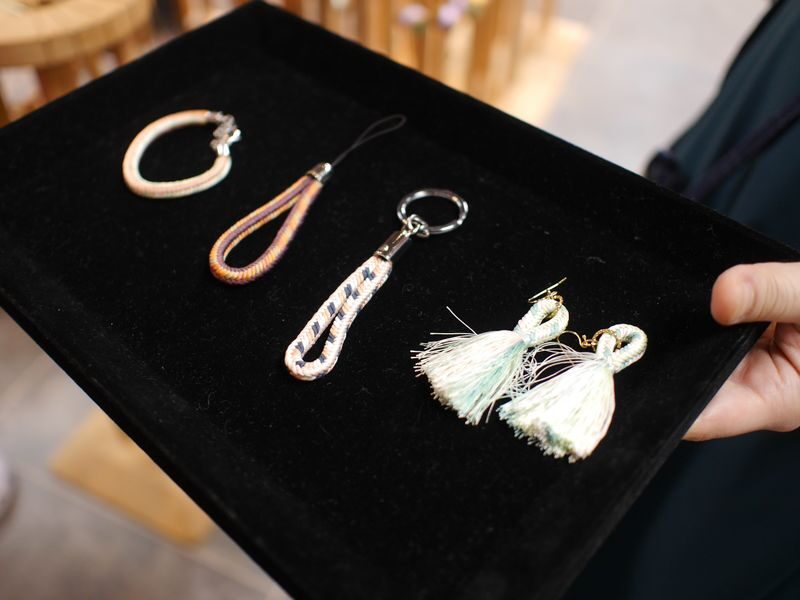
- A silk project to take home: Make a strap, key chain, or bracelet using 100% silk and the Naragumi technique.
- English-speaking instruction: Staff explain the steps and help as you work.
- A proper pause at the end: Matcha is served while your piece is finished.
- Plan on about two hours: The activity is open to participants aged seven and older.

👉 See our pick of the Our Picks For The 11 Best Workshops & Classes In Tokyo
A working craft house, not just a classroom
DOMYO’s name comes with a long history: the company was founded in Tokyo in 1652. Its braids have served the imperial family, and the company has reproduced braids held as national treasures in museums. That background gives the workshop a useful sense of scale. Kumihimo is not simply a decorative cord; it has been part of garments and accessories, from court dress to sword knots and kimono sash bands.
The company says it still handles the work by hand, from spinning and dyeing silk threads through to braiding. You won’t be doing every stage in this workshop, but seeing examples and hearing how the materials are made puts your own small project in context. A silk braid is easier to appreciate when you know it represents a chain of skilled work rather than a ready-made craft kit.
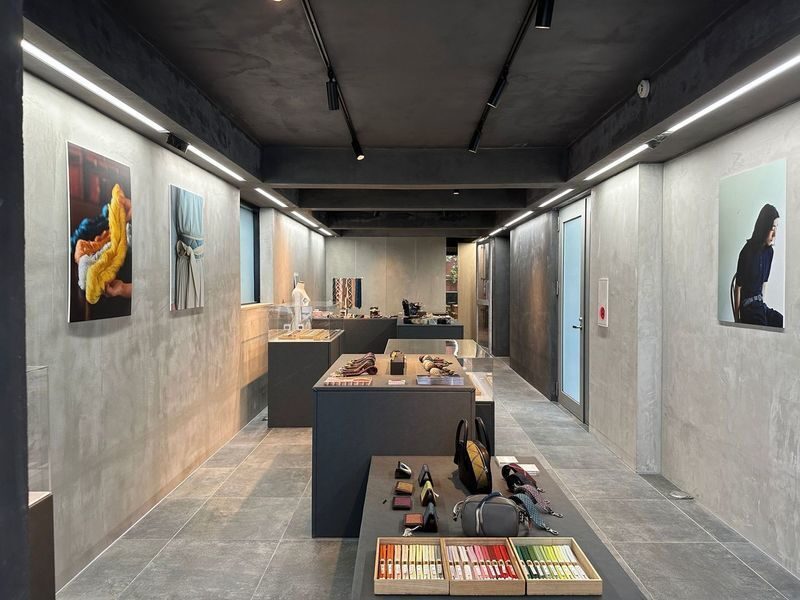
The experience is held at DOMYO’s Kagurazaka store, at 6-chome-75 Kagurazaka, Shinjuku City, Tokyo 162-0825. There is a lounge reserved for participants and lockers for luggage, which is handy if you are coming straight from sightseeing or carrying bags.
You can also read our reviews of more historical tours in Tokyo



The first 30 minutes: see the braids before making one
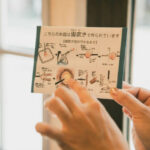
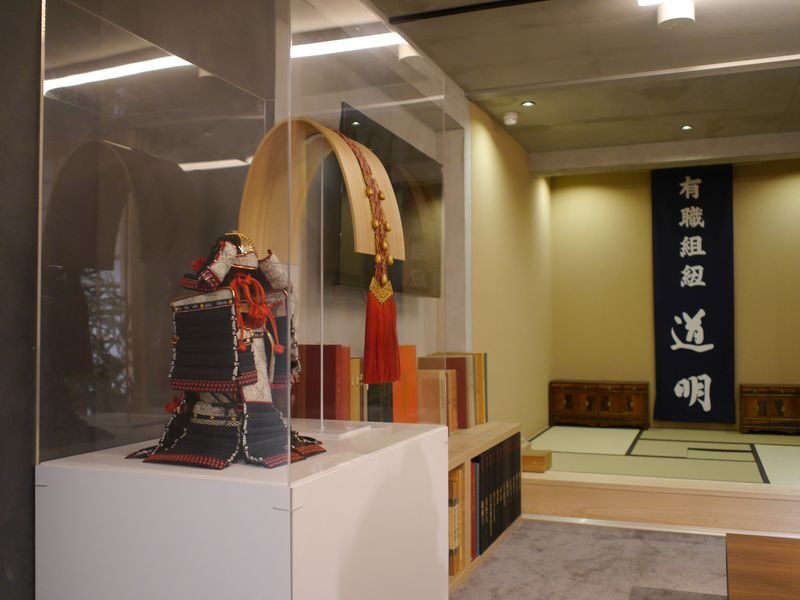
The session begins with an introduction to kumihimo and a tour of historical materials, replicas of older braids, and the tools used to make them. This is the part that turns the activity from a pleasant craft hour into a cultural lesson. You can see how patterns and techniques relate to different uses, and why the braid was prized for more than its appearance.
The shop also gives visitors a chance to observe craftsmen demonstrating the braiding process. The company’s own work includes reproducing historic examples, so the displays connect traditional objects with ongoing research and making. You are not just being told that the craft is old; you are shown examples that help explain how it has changed and endured.
English-speaking staff lead the introduction. Instructors such as Yuki-san, Makiko-san, and Maki have been praised for patient explanations, but staff may differ on the day. The useful point is that English instruction is included, so you can ask questions about the history and process without relying on a translated handout.
This tour is relatively short, about 30 minutes, and it gives you the background you need before the practical part. If you arrive mainly to make an accessory, don’t treat the introduction as filler. It helps you understand why the materials and technique matter.
The workshop: a steady rhythm with silk
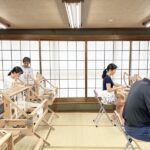
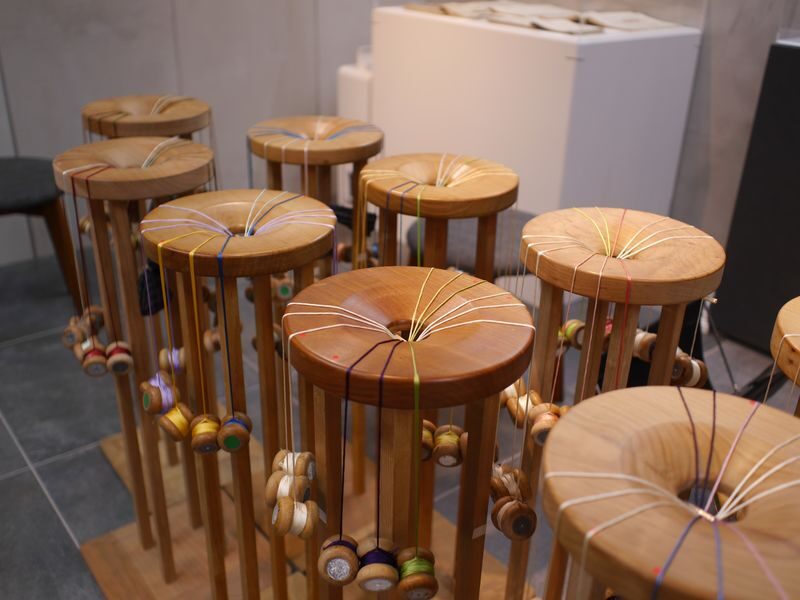
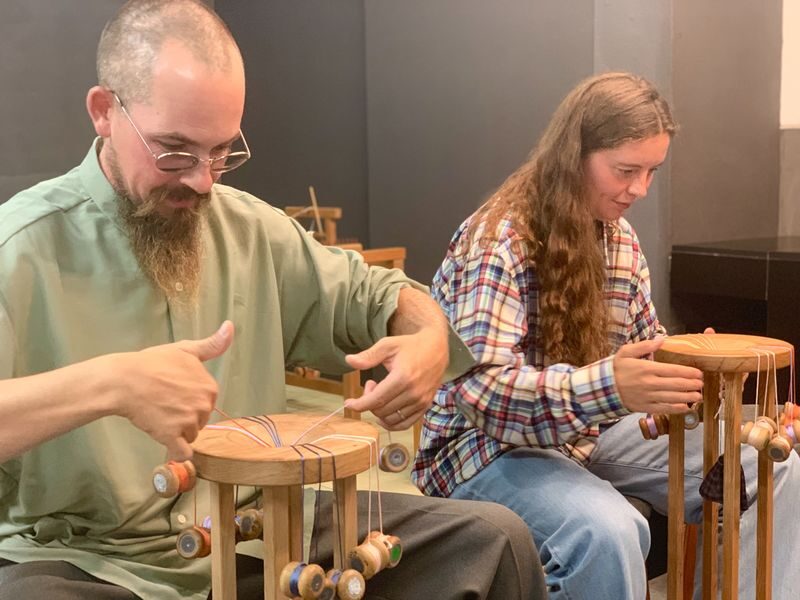
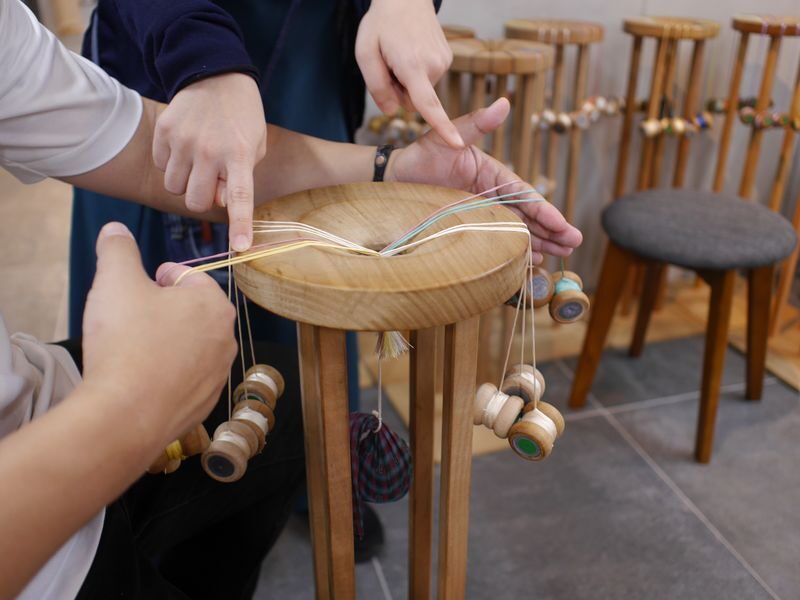
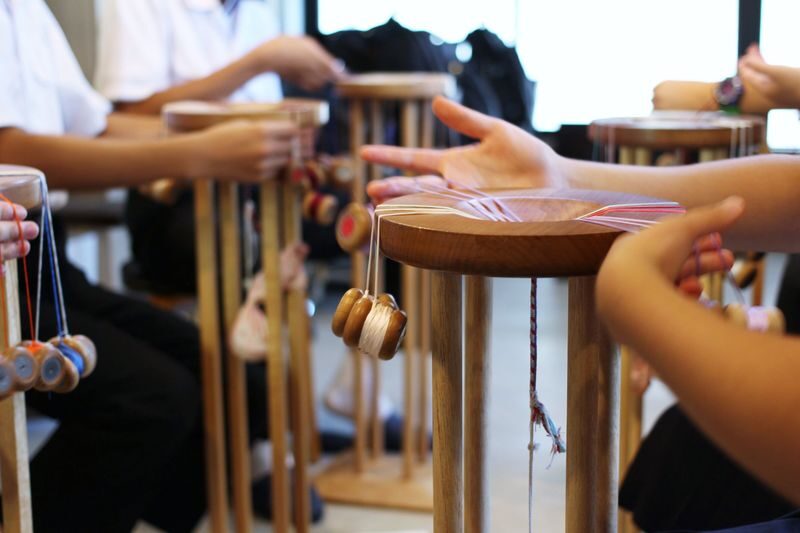
For roughly an hour, you learn Naragumi braiding and make a strap, key chain, or bracelet. The session uses tools and 100% silk materials. You work through a repeated sequence, with the instructor demonstrating the movements and helping you correct them as needed.
This is beginner-friendly, but it does ask for attention. The technique is not described as difficult to learn, and children have completed their own pieces, but you need to follow the pattern rather than rush. Several participants describe the process as calming or meditative. That makes sense: once you understand the sequence, the work gives your hands something simple to do and your mind a short break from Tokyo’s pace.
You do not need knitting or braiding experience. If you are worried about having awkward hands, the instructor is there to explain each step and offer help. One useful detail from a past session is that the number of threads can vary: one participant noticed a 12-strand setup while others had 24 strands. If the level of complexity matters to you, ask what you are choosing before you begin. The activity details do not promise a particular strand count.
Color combinations are selected from prepared sets, rather than presented as an unlimited palette. This keeps the choice manageable and helps you get started without spending half the class comparing shades. It also means you should not expect to design every aspect of the braid from scratch.
By the end, you have made a small item that is personal and genuinely tied to the craft you have just learned. The workshop’s appeal is not that you leave as an expert. It is that you leave knowing how the braid is formed and holding something you made yourself.
Matcha while your piece is finished
After the braiding, there is a break of about 30 minutes. You can enjoy matcha while your order is finished and assembled. The pause is a thoughtful close to the session, and gives the instructors time to prepare the completed item rather than rushing you out as soon as the braiding ends.
Refreshments are included, while other personal expenses are not. Matcha and a small sweet have been part of the experience described by participants. If you usually find matcha too strong, this may still be worth trying as part of the workshop, though the exact refreshments could vary.
The whole schedule runs about two hours: a 30-minute museum tour, a 60-minute braiding lesson, and a 30-minute break. The listed sessions begin at 11:00 or 14:00, with the later session following the same pattern. Give yourself enough time to arrive, settle your luggage, and be ready at the start.
What the price buys
At $69.49 and up, this costs more than picking up a mass-produced accessory. The value is in the combination: access to DOMYO’s historical displays, an English-guided introduction, an hour of instruction, quality silk, and a finished handmade piece. You are also learning at a company that has kept this craft in production for centuries.
The price makes the most sense if you enjoy hands-on cultural activities and want more than a demonstration. If you only want a souvenir, buying a finished item may be faster. If you are curious about traditional Japanese making, though, the chance to handle the process adds meaning to what you take home.
There is no guarantee that the finished item will be a bracelet, since the activity offers straps, key chains, or bracelets. Check the current package details when booking if you have a particular type of item in mind. The package listed here is the kumihimo experience.
You can also read our reviews of more tours and experiences in Tokyo



Getting there and planning your visit
The meeting point is DOMYO’s Kagurazaka store at 6-chome-75 Kagurazaka, Shinjuku City, Tokyo 162-0825. The address is also written as 6-75 Kagurazaka, Shinjuku-ku. Use the full address in your map app. One useful navigation tip: the final turn may take you down a small, residential-looking street, so trust the map and look for the clearly marked location when you arrive.
The activity is for ages seven and up. Children can take part, and the step-by-step instruction makes it a reasonable family activity for children who can focus on a repeated task. It is also well suited to solo visitors, couples, and anyone who wants a quieter change of pace from sightseeing.
Booking confirmation is expected within 48 hours. If no confirmation email arrives, contact customer support. The voucher is valid only for the date and time specified, and cancellation at least 48 hours before the activity, using Tokyo local time, qualifies for a full refund.
Who will enjoy this workshop most?
I would choose this for someone who likes learning how objects are made, values traditional craft, or wants a souvenir with a story behind it. The format also suits a family looking for a shared activity that is creative without requiring prior skill. The age minimum is seven, and the instructors’ patient approach helps make the technique accessible.
It may be less satisfying if you want a fast-paced class, a large choice of designs, or a long, advanced lesson. The activity offers a single technique, a prepared selection of colors, and a compact project. Its strength is the balance of context and practice, not endless customization.
Should you book it?
Book the DOMYO workshop if you want to understand kumihimo as well as make it. The museum tour, English instruction, real silk, and matcha break make the two hours feel complete, while the finished braid gives you a personal reminder of the visit. At this price, it is best seen as a craft lesson and cultural visit with a keepsake, not simply a souvenir-making stop.
If you are unsure, ask yourself whether you would enjoy concentrating on a simple pattern for an hour. If the answer is yes, this is a thoughtful way to spend part of a Tokyo day. If you would rather browse displays or shop without taking part, the workshop may not be the right fit.
Kumihimo Workshop at a Historic 370-Year-Old Braiding Shop in Tokyo
“Loved the experience! It was very unique and enjoyable. They explained the history of Kumihimo and showed beautiful recreations of historical ones….”
FAQ
How long does the kumihimo experience take?
Plan on about two hours. The schedule includes a 30-minute museum tour, a 60-minute workshop, and a 30-minute break while your piece is finished.
What will I make?
You will use the Naragumi braiding technique to make a strap, key chain, or bracelet. The activity details do not specify that every participant can choose any item at every session.
Is the workshop suitable for beginners?
Yes. The instructor demonstrates the braiding steps and provides guidance as you work. No prior braiding experience is listed as a requirement.
Is instruction available in English?
Yes. English-speaking staff are included, and the workshop’s history and practical instructions are given in English.
What is included in the price?
The package includes the kumihimo experience, English-speaking staff, and refreshments. Other personal expenses are not included.
What is the minimum age to participate?
Participants must be at least seven years old.