
So how do you actually get tickets to the Light Art Museum in Budapest, and is it worth swapping a couple of hours of historic Pest for a basement full of lasers and projection mapping? Short answer: book online a few days ahead, pick an evening slot, and yes — if you’ve got even passing interest in light, science, or contemporary art, this is one of the most distinctive things you can do in the city right now.
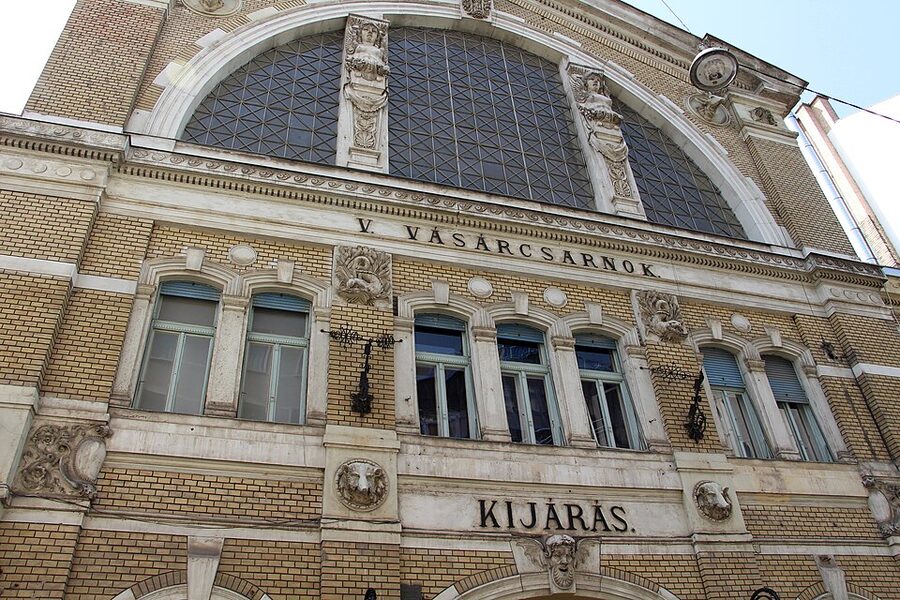
I was sceptical going in. Budapest already has the Parliament, the spas, the ruin bars, the river. Adding an “immersive light experience” to that itinerary felt a bit Las Vegas. But the LAM (that’s what locals call it — Light Art Museum, or “lám” in Hungarian) sits in the old Hold Street Market Hall, a working covered market built in 1896 that’s now been carved into a 2,000 square metre playground for digital and projection-based art. The building alone is worth the walk. The exhibitions just happen to be very, very good.
In a Hurry? Top Picks
Best value: Light Art Museum Skip-the-Line Entry Ticket — around $21 / €18 per adult. Lets you walk past the queue at the desk and head straight in. The only ticket you actually need.
Pair it with a similar vibe: IKONO Budapest Immersive Experience — about $18. Think LAM’s playful younger sibling. Less science, more “step in and pose for the camera.”
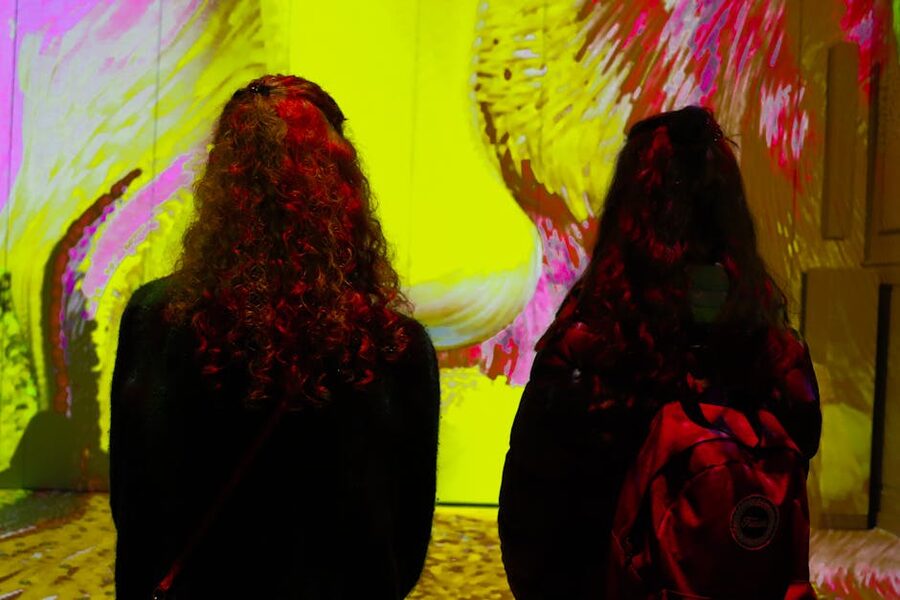
If Klimt or Van Gogh sounds good: Van Gogh Immersive Exhibition — $18. A different kind of light show — projections of paintings rather than original light installations. Combo ticket also covers Frida Kahlo and Klimt halls.
- In a Hurry? Top Picks
- What the Light Art Museum Actually Is
- How Tickets Work and What You’ll Pay
- Combo tickets — are they worth it?
- Best Tours and Tickets to Book
- 1. Light Art Museum Skip-the-Line Entry Ticket — around
- 2. IKONO Budapest Immersive Experience — about
- 3. Van Gogh Immersive Exhibition —
- The Rooms You Actually Want to See
- The Airship
- The Infinite Mirror Room
- The E=mc² Sculpture
- Phantom Vision (18+ only)
- The Root Room and Other Interactive Pieces
- How to Get There
- Opening Hours and When to Go
- Tips That Will Save You Time
- Eating before or after
- A Bit of Context: Hungarian Light Artists
- Who LAM Is For (and Who It Isn’t)
- What to Pair It With
- How LAM Compares to Other Budapest “Light” Attractions
- Money, Wi-fi, Accessibility
- Booking — The Actual Mechanics
- Other Budapest Reads You’ll Want
What the Light Art Museum Actually Is
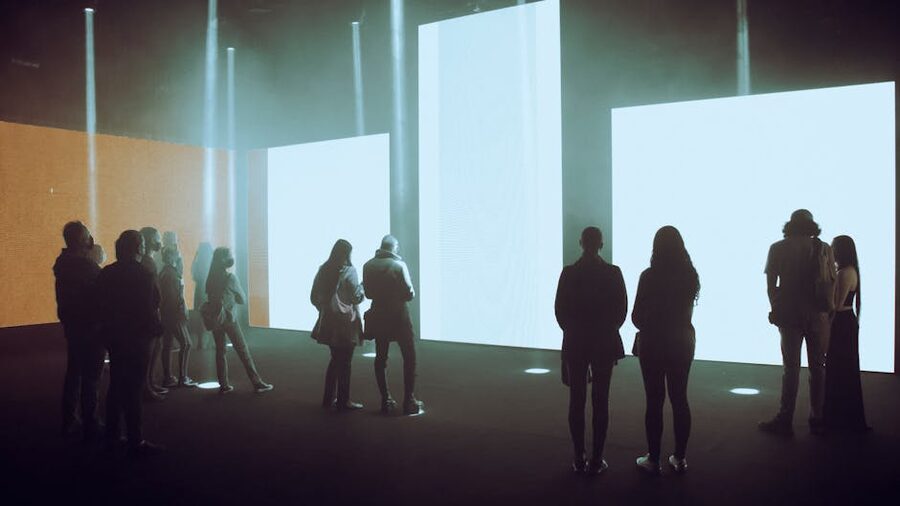
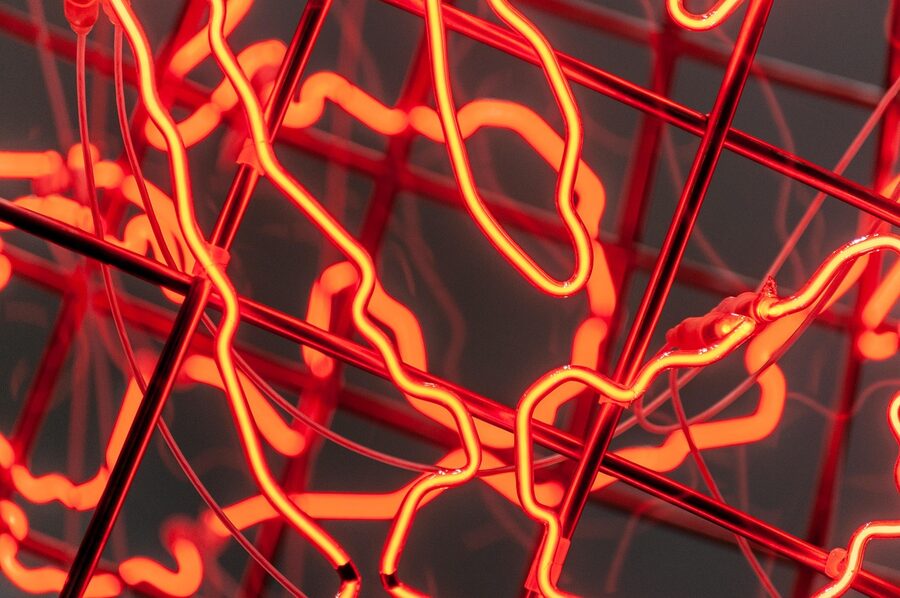
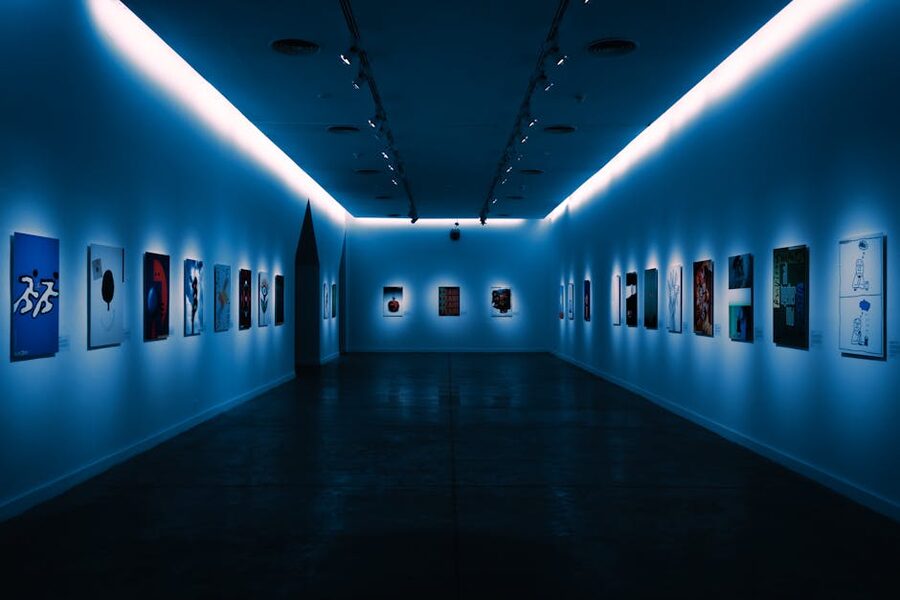
LAM bills itself as one of the world’s first museums dedicated entirely to light as an artistic medium. That’s a slightly grand way of saying: every room you walk into is using light, projection, lasers, mirrors, or screens to do something a regular gallery can’t. There are no oil paintings on white walls here.
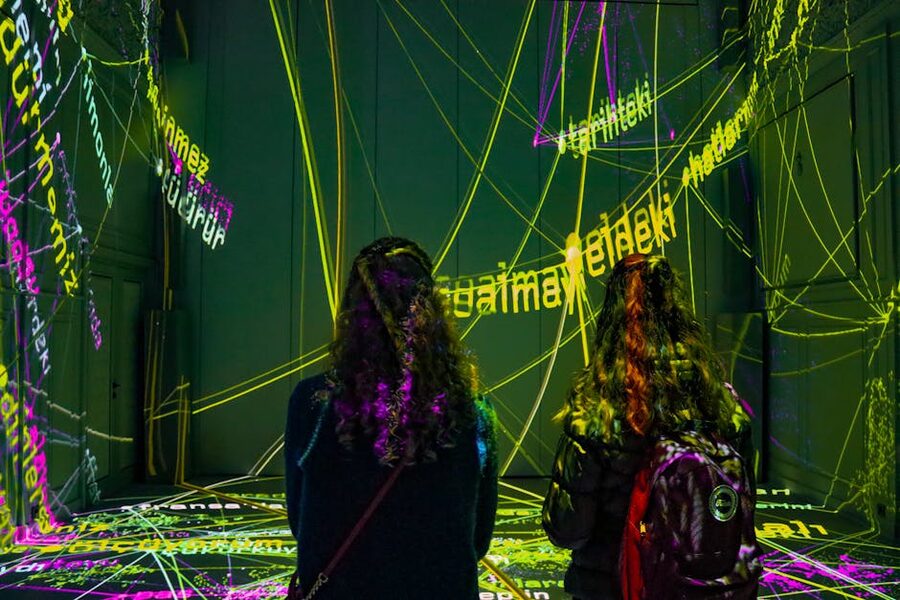
The place opened in 2022. It was put together by four founders — László Laki, Viola Lukács, Márton Orosz and László Zsolt Bordos — who turned the bones of the old Hold Street market into exhibition spaces. You can still see the cast-iron columns and the high vaulted ceiling. The contrast between 1896 architecture and digital projections is half the point.

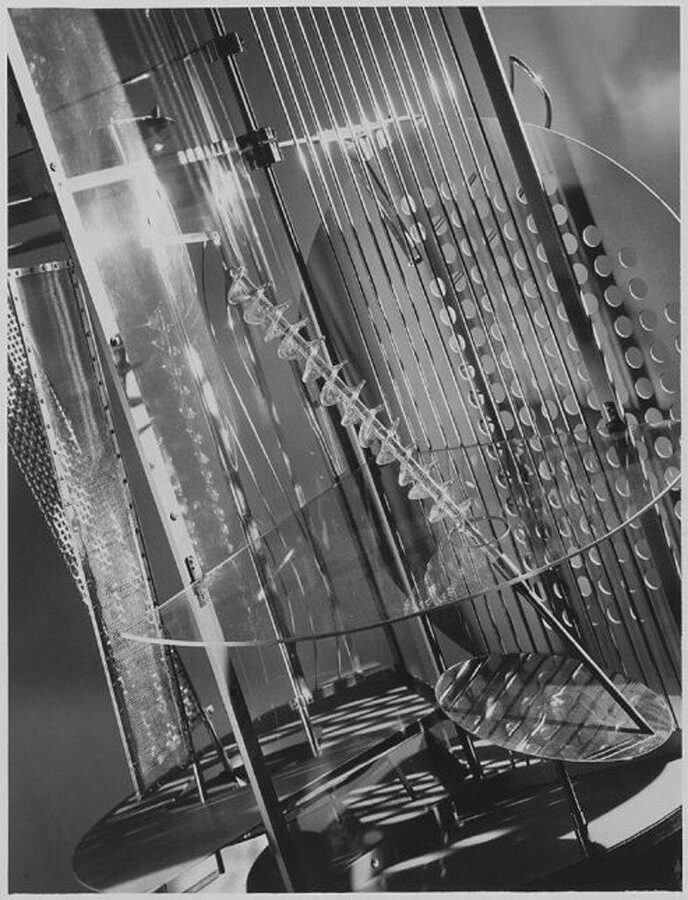
Around 40 international artists have work on the floor, and the lineup rotates. The Hungarian connection is real, not bolted-on: László Moholy-Nagy and Victor Vasarely are both pioneers of using light as a medium, and both were Hungarian. Moholy-Nagy built his Light-Space Modulator in 1930, four decades before anyone was using the word “immersive.” Vasarely basically invented op-art. So LAM has roots, even if the surface looks like 2026.
How Tickets Work and What You’ll Pay
Pricing is straightforward. Adult entry is €18 (roughly $21 at the moment, though obviously check what your card pulls). Students with a valid ID, seniors 65 and up, and children aged 5 to 12 get a discounted rate of €12. Children under four are free but have to be with an adult. Family tickets (two adults plus two kids) come in around €42, which works out cheaper if you’re a unit of four.
You can buy tickets at the door if you really want to, but I wouldn’t. On a Saturday afternoon in summer the desk queue can run 20-30 minutes, and tickets occasionally sell out for the rest of the day. Online booking through GetYourGuide gets you the same price plus skip-the-line — same as buying through LAM’s own site, but with the added benefit that if you change your mind the cancellation policies are usually more forgiving.
One thing that’s worth knowing: your ticket is valid for the whole day. Not a 90-minute slot, not a 2-hour limit. You walk in, do the loop, and if you want to wander back to a room you missed or sit in the airship for another rotation, you can. Most people end up spending around 90 minutes. I stayed two and a half hours and didn’t feel I was overdoing it.
Combo tickets — are they worth it?
LAM offers a couple of combined tickets, the most popular being the Hungarian Parliament + LAM combo. If you’re already planning to visit the Parliament, the combo saves you a few euros and fast-tracks both queues. If Parliament wasn’t already on your list, the combo isn’t a reason to add it — they’re very different experiences and trying to do both back-to-back makes for a long, mentally cluttered afternoon.
For a similar saving, check whether the Budapest Card includes LAM in the current cycle (it’s been on and off the list — I’d verify before assuming).
Best Tours and Tickets to Book
1. Light Art Museum Skip-the-Line Entry Ticket — around $21
The default option, and honestly the only one that makes sense unless you’ve got a Parliament booking already lined up. Our review goes deeper on what the airship room is like and which installations work best for which type of visitor. Buy it the day before, screenshot the QR code, walk in.
2. IKONO Budapest Immersive Experience — about $18

Not technically LAM, but the closest cousin. IKONO leans heavier into the Instagram-friendly angle — fewer artistic statements, more “step in, take the photo, step out” rooms. Our IKONO review covers what overlaps and what doesn’t. Don’t book both for the same afternoon — your brain runs out of light by the second one.
3. Van Gogh Immersive Exhibition — $18
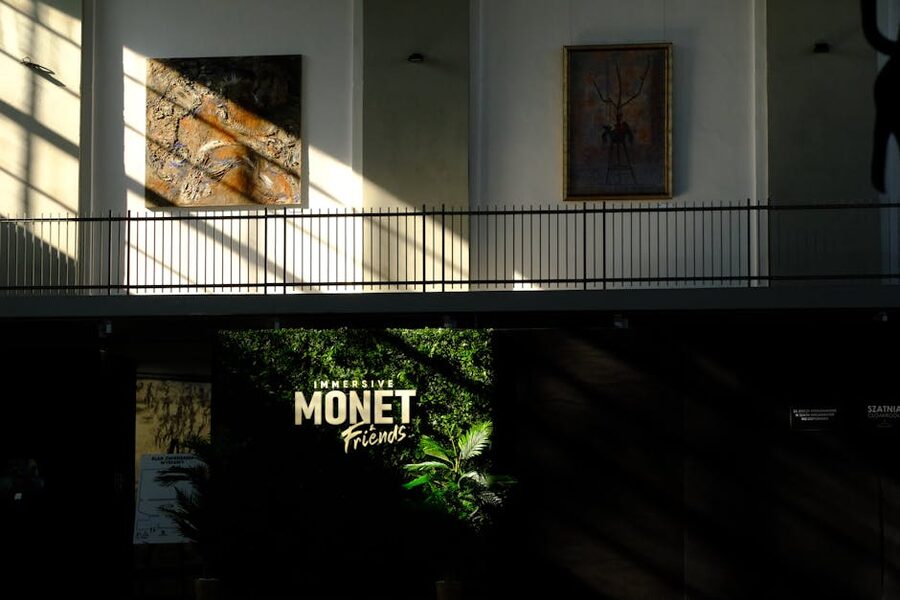
A different format entirely — projections of Van Gogh’s paintings (and Klimt and Frida) on huge walls, with music. Forty minutes if you don’t sit through repeats. The Van Gogh write-up walks through whether the format earns the ticket price; the short version is that it’s a different beast from LAM. One is original light art; the other is famous paintings, animated.
The Rooms You Actually Want to See
I’m not going to walk you through every gallery — half the fun is turning a corner and finding something you weren’t expecting. But a few rooms are signature pieces, and missing them is a small tragedy.
The Airship
The centrepiece. A huge inflatable zeppelin sits in the middle of the main hall — billed as the largest projection structure in Europe — and you can climb inside, lie back on bean bags, and let 360-degree projections wash over you for ten or twelve minutes. The footage cycles through cosmic landscapes, geometric patterns, abstract colour studies. It’s somewhere between a planetarium and a high-end light installation.
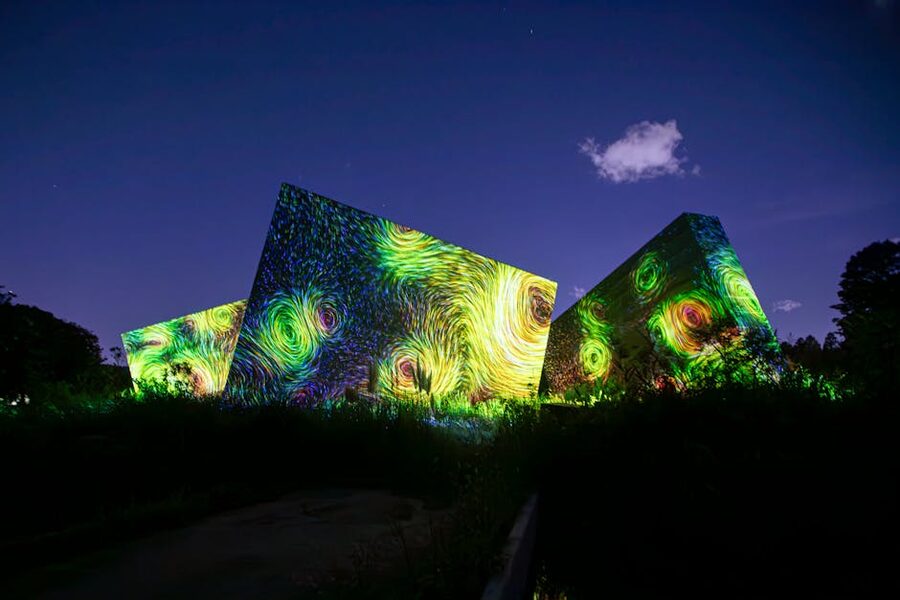
Tip: the airship is timed. There’s a soft cycle so you can come and go, but if it’s busy, the staff will sometimes ask you to leave after one full loop. Worth visiting twice — the patterns shift between morning and evening shows.
The Infinite Mirror Room
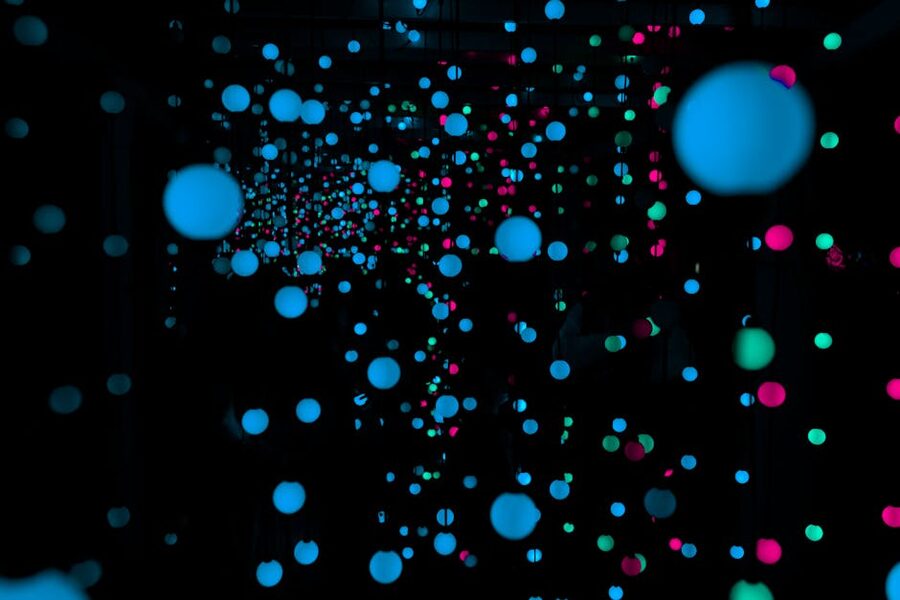
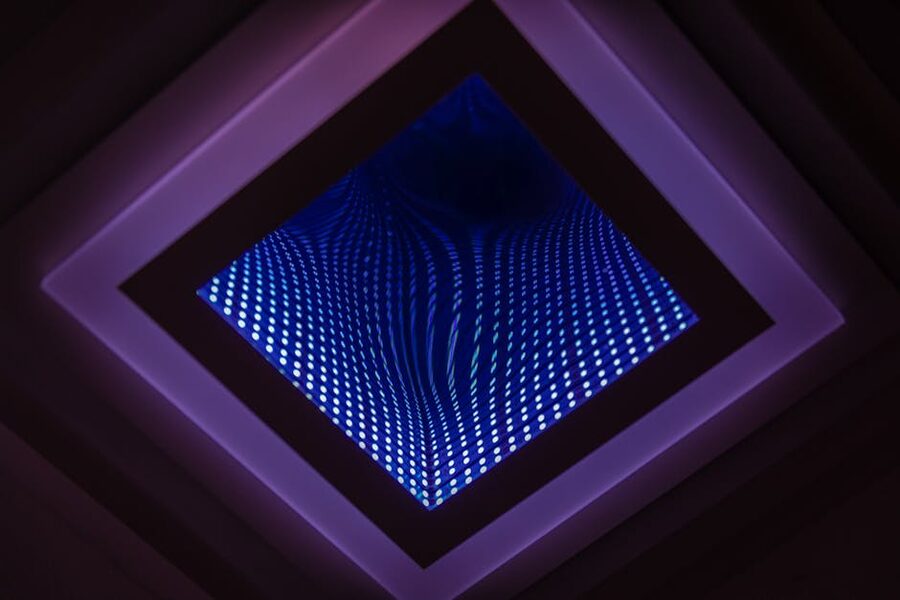
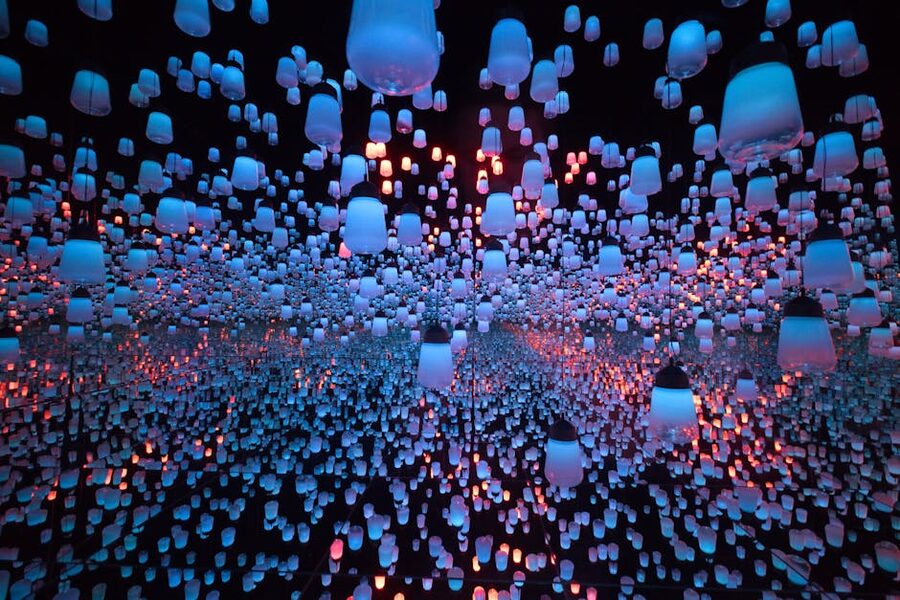
Walk in, the door closes behind you, and you’re suddenly in a small black-walled cube where every surface is a mirror. Suspended pinpoint lights reflect into infinity in every direction. Yayoi Kusama fans will recognise the format. The LAM version is shorter — about 90 seconds of solo time before the next group is let in — so don’t dawdle.
The E=mc² Sculpture
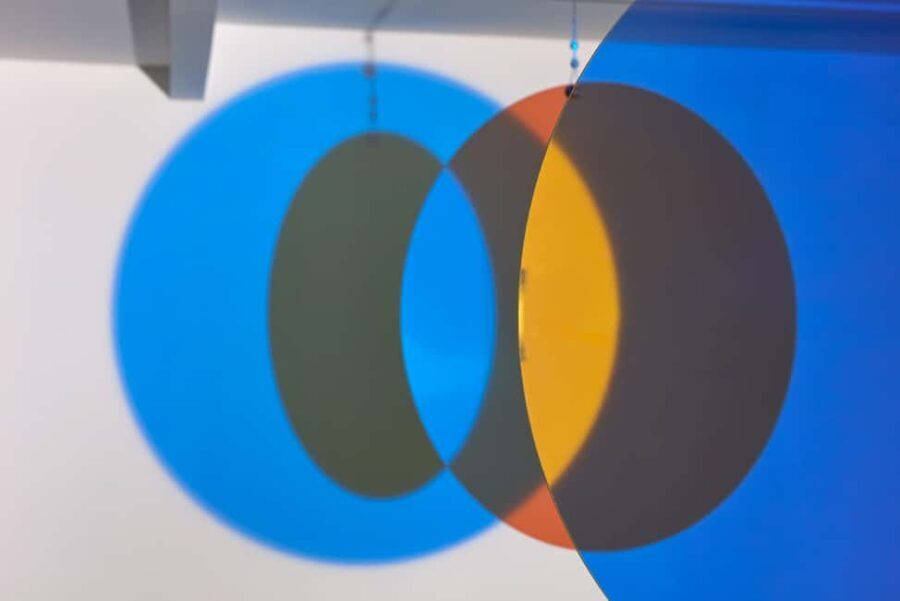
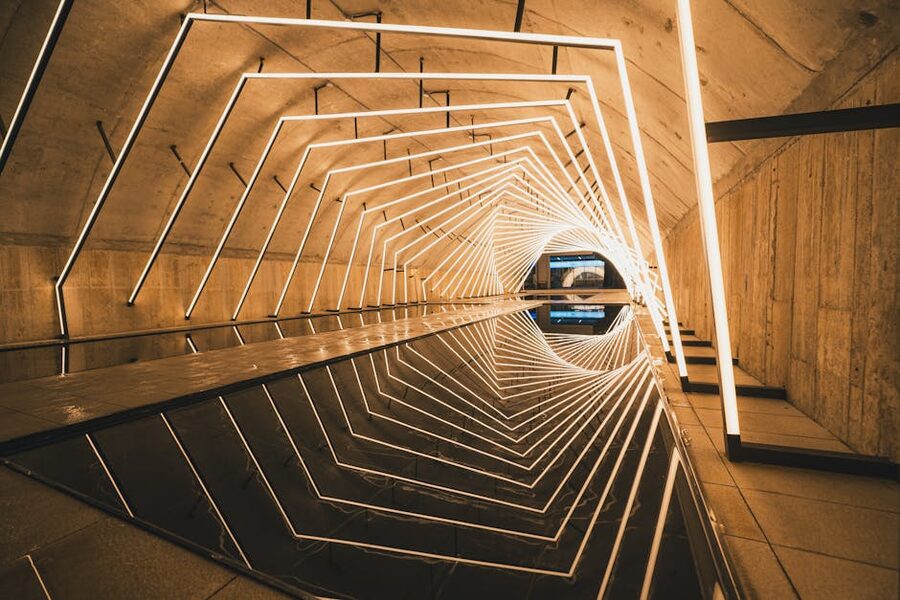
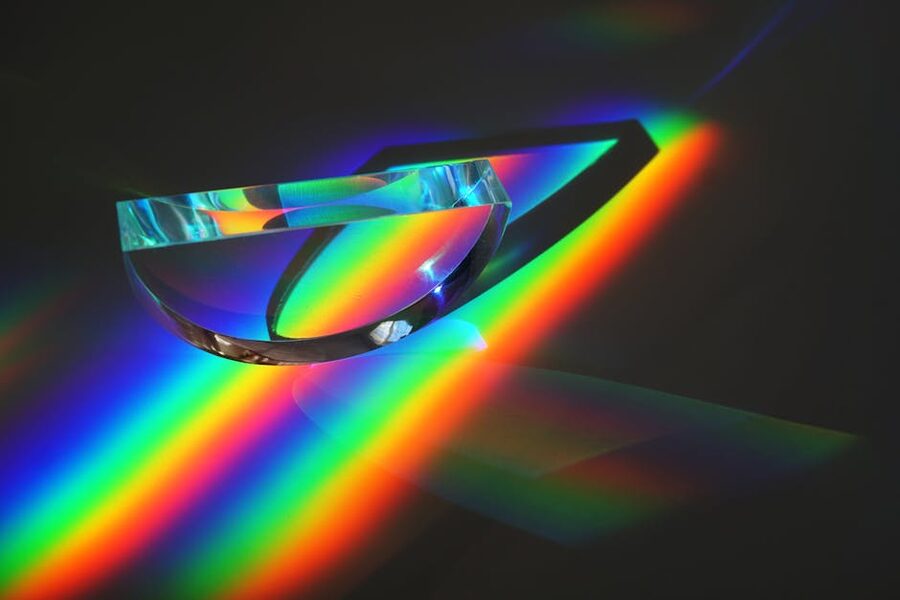
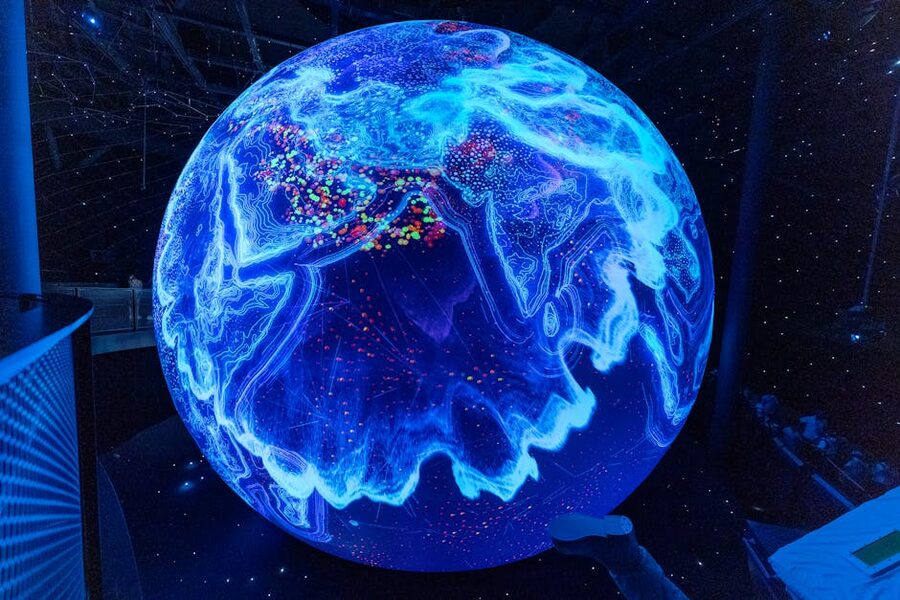
A pulsating light sculpture that turns Einstein’s most famous equation into a slow-breathing colour cycle. Sounds gimmicky on paper. In person it works — partly because of the scale and partly because the colour shifts are slow enough that you actually feel the rhythm.
Phantom Vision (18+ only)
This one’s worth flagging because not everyone gets in. The Phantom Vision room uses brain-computer interface technology and AI-generated imagery to project visualisations of artists’ dreams and unconscious thoughts. It runs on a 90-minute loop and is restricted to over-18s. If you’re travelling with kids, plan around it — the room is on the route, but the entrance is monitored.
The Root Room and Other Interactive Pieces
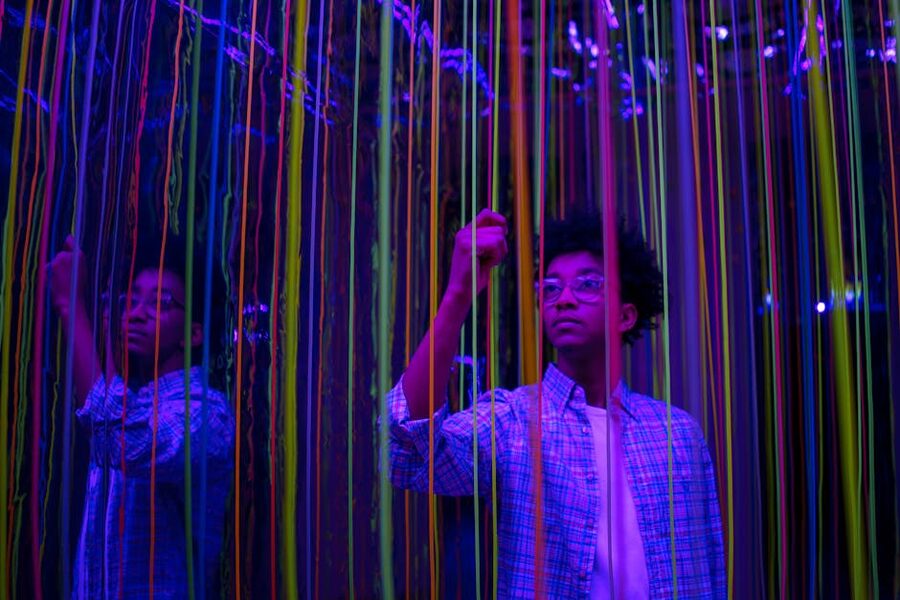
This is where I lost the most time. A wall-sized representation of a tree’s root system lights up and reacts to your movement — wave a hand, the roots glow brighter; stand still, they fade. Other interactive bits: a giant orange eye that tracks visitors with motion sensors, walls that turn spoken words into light displays, dancing pixels that change pattern when you approach. They sound novelty on paper. They’re the rooms kids and adults both linger longest in.
How to Get There
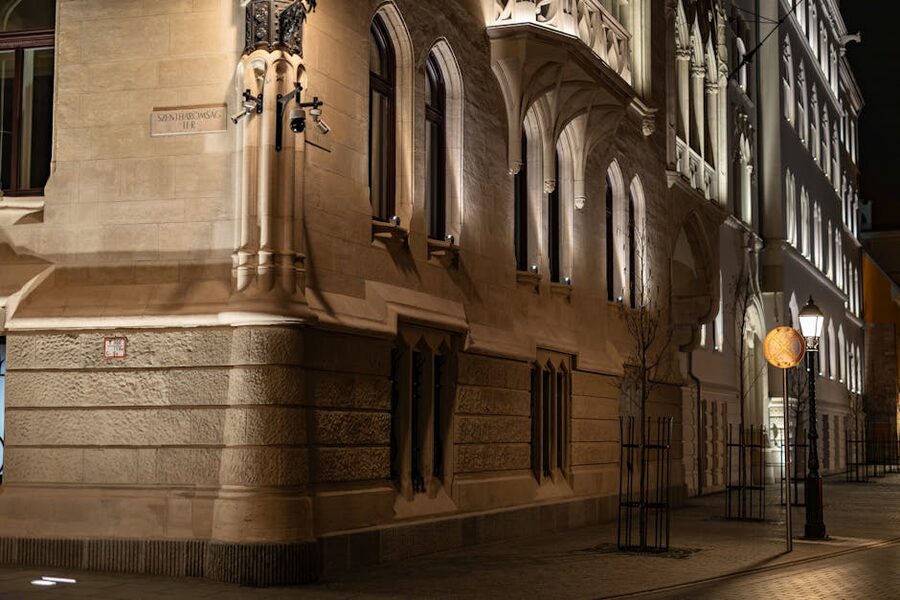
Light Art Museum sits at Hold utca 13 in the 5th district (Lipótváros), which is the central Pest neighbourhood between Parliament and St Stephen’s Basilica. You don’t really need a tour or transport plan — it’s a 5-10 minute walk from anywhere on that side of the river.
Concrete options:
- Metro M3 (blue line): Get off at Arany János utca. From there it’s a 5-7 minute walk north along Hold utca. The simplest option from anywhere on the M3 (which runs the whole length of Pest).
- Buses 15 or 115: Stop at “Hold utca (Belvárosi piac)” — literally in front of the museum entrance. One-minute walk. If you’re already on a bus heading down Hold utca, this is the easiest stop.
- Trams 2 or 2B: From Kossuth Lajos tér (the Parliament stop), it’s a 6-minute walk. Bonus: the tram itself is one of the most scenic short rides in Europe — runs along the Danube with views of Buda Castle the whole way. Worth combining with a Parliament visit.
- Walking from St Stephen’s Basilica: 6 minutes north-west. From the Parliament: 8 minutes south-east. From the river: 10 minutes inland.
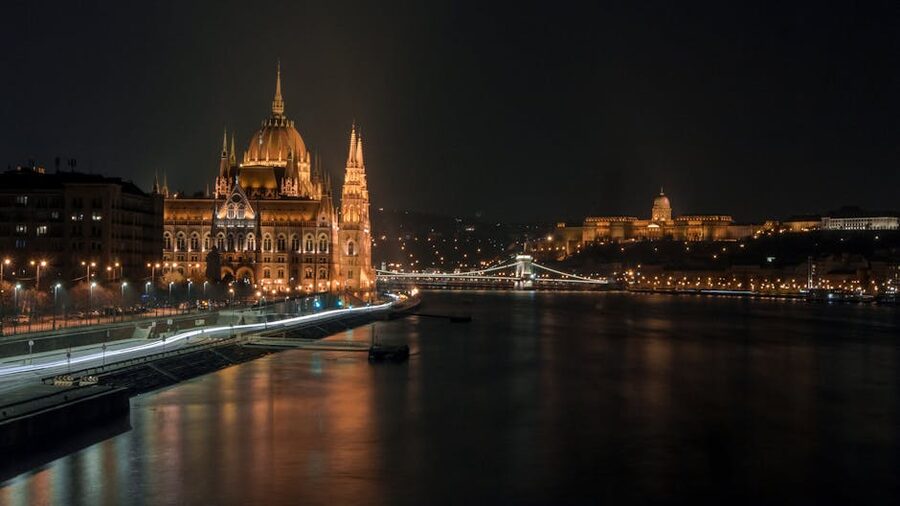
If you’re staying on the Buda side and arriving by foot, cross at the Chain Bridge or the Margaret Bridge and walk in. Either route adds about 15 minutes. If you’ve been at Széchenyi Baths on the Pest side, you’re 25 minutes by foot or 10 minutes by metro (M1 yellow line to Deák Ferenc tér, change to M3 blue, one stop to Arany János).
Opening Hours and When to Go
The museum is open every day of the year — including Hungarian public holidays, which is unusually visitor-friendly. The hours look something like this:
- Monday to Thursday: 10:00 – 20:00
- Friday: 10:00 – 21:00
- Saturday and Sunday: 10:00 – 21:00 (sometimes 22:00 in peak season — check the official site if you want to time it tight)
The boring answer: best time to go is whenever you can fit it in. The interesting answer: the experience changes meaningfully depending on what time of day you visit.
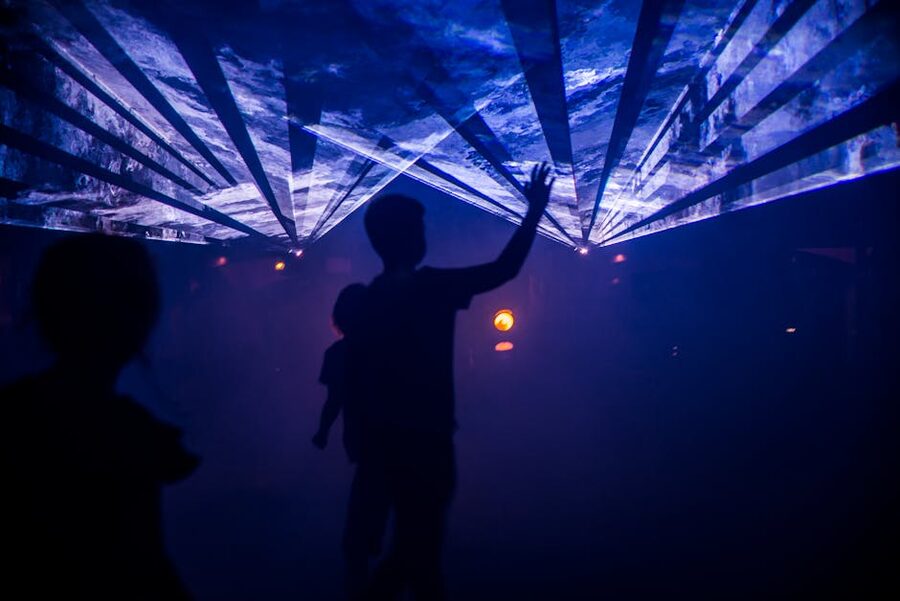
Daytime (10:00-15:00): Quieter. Better for families with small kids. The contrast between the dark exhibition halls and bright street light outside makes the entry effect stronger. You walk in from sunshine into deep blue rooms and your eyes adjust over the first ten minutes.
Late afternoon (15:00-18:00): Worst time on weekends. You’ll queue at the airship, queue at the mirror room, queue at the interactive walls.
Evening (18:00 onwards): My pick. Dinner before, art after, then a walk along the lit-up Danube. The museum starts to thin out around 19:00 and from 19:30 to closing it’s positively peaceful. The art also hits differently when you’ve had a glass of wine and the city outside has gone dark — the projections feel more dreamy and less like a science exhibit.
Indoor attraction means weather doesn’t matter. This is genuinely one of the best things to do in Budapest on a rainy or freezing day. If you’ve visited in January and the wind off the Danube is making your face numb, LAM is one of the few places that gets better the worse it is outside.
Tips That Will Save You Time
A handful of practical things I wish I’d known before my first visit.
- Lockers are free at the entrance. Backpacks, coats, anything bigger than a shoulder bag. Use them — some of the corridors are tight and you don’t want to be the person clipping a sculpture.
- Photography is allowed everywhere. No flash, obviously — but actual photos are fine. Phones do better than most cameras in low-light conditions, particularly the newer night modes.
- Wear flat shoes. Some of the floors are reflective, some are matte black. Heels click and echo, which is more noticeable than you’d think in a quiet projection room.
- Wear dark or matte clothes if you can. Anything bright white reflects projections back into the room and can spoil shots for nearby visitors. Not a rule, just a courtesy.
- Bring a light layer. The exhibition halls run cool — partly to keep the projectors happy, partly for atmosphere. In summer you’ll want a long sleeve. In winter, you’ll want to take your coat off then put it back on for the walk to dinner.
- Set aside 90 minutes minimum. Two hours if you’re the kind of person who reads every sign. The all-day ticket means you can step out for coffee and come back, which is genuinely useful if you’re travelling with someone whose patience runs shorter than yours.
- The shop at the exit sells decent prints and small light objects. The catalogue is overpriced. The postcards are cheap and surprisingly well-chosen if you want a small souvenir.
Eating before or after
The market hall upstairs still functions as a working market on weekday mornings, but the best food options for a LAM visit are within a 5-minute walk:
- Belvárosi Piac food court: literally in the same building, on the upper level. Fast, cheap, decent quality. Hungarian goulash, langos, sausage plates. Open lunchtimes only on weekdays.
- Borkonyha: a few streets south. Michelin-starred Hungarian. Book a week ahead.
- St Stephen’s Square area: lots of tourist-priced but acceptable cafes within 6 minutes’ walk. If you’re chaining LAM with the Basilica, eat between the two.
A Bit of Context: Hungarian Light Artists
This is the part most blog posts skip. LAM isn’t a random “immersive experience” parachuted into Budapest because the format sells. The museum has a real lineage, and walking through with even rough knowledge of where light art came from changes how the rooms read.
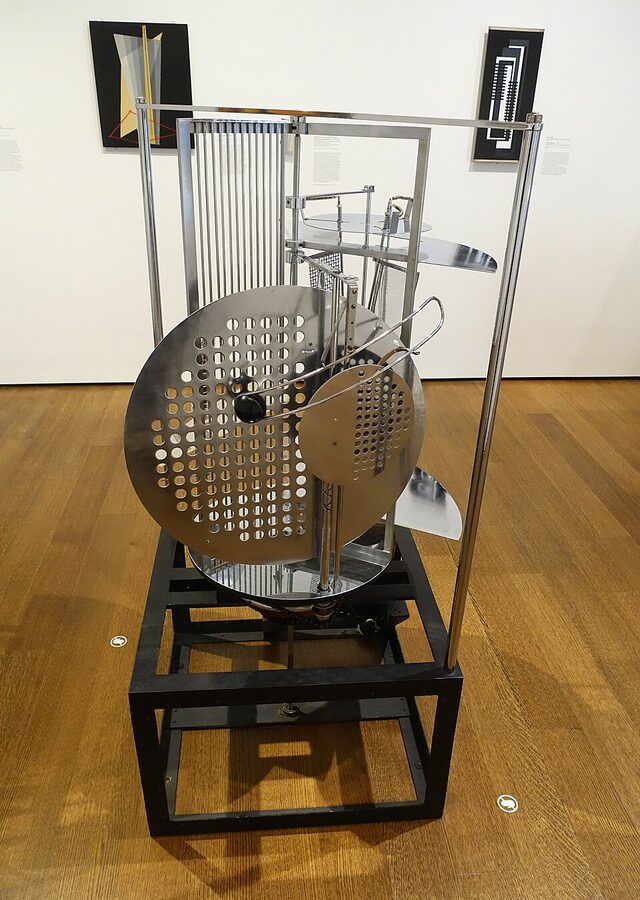
László Moholy-Nagy was born in 1895 in what’s now southern Hungary. He spent most of his career in Germany at the Bauhaus and later in Chicago, but he was the first major artist to treat light itself — not painted light, not depicted light, but actual physical light — as raw material. His Light-Space Modulator from 1930 is essentially a slow-moving sculpture made of polished metal that throws shifting reflections onto the walls. Stand in front of an early Moholy-Nagy piece and you can see the entire next century of digital art coming.
Victor Vasarely (born Győző Vásárhelyi in Pécs, 1906) is the other big name. He moved to Paris in his 20s and basically invented op-art — the kind of optical illusion that makes flat patterns look like they’re moving or bulging. Vasarely’s pieces aren’t strictly light art, but they’re the philosophical bridge: art that does something to the viewer’s eye, art where perception is the medium. LAM’s interactive rooms are direct descendants of Vasarely’s work.
There’s also a third figure worth knowing: László Zsolt Bordos, one of LAM’s founders. Bordos is one of Europe’s leading projection-mapping artists — he’s done external projection shows on buildings from Riyadh to Paris. The reason LAM’s projection halls feel a step above other immersive museums is because Bordos isn’t just programming the schedule; he’s a working practitioner of the form. The work he’s contributed downstairs is genuinely his own.
Knowing this stuff isn’t required. You can walk in cold and still have a good time. But the airship hits a bit harder when you know it was designed by someone who’s mapped projections onto Saudi palaces.
Who LAM Is For (and Who It Isn’t)
I want to be honest here because immersive museums get oversold, and LAM in particular has had some glowing press that doesn’t match every visitor’s experience.

You’ll love LAM if: you’re into contemporary art, science, or design. You like museums where you have to participate rather than read plaques. You’ve got kids aged 6-14 who’d be bored at a traditional museum. You’re a photographer (amateur or otherwise) who wants visually rich material. You’re travelling with someone whose tastes don’t match yours, and you need a place where you’ll both find something — there’s enough range here that the science person and the art person can both come away happy.
You won’t love it if: you only travel for history (this is firmly modern), you struggle with darkness or strobe effects (some rooms get intense), or you’re already over the “immersive Van Gogh / TeamLab / Meow Wolf” format. There’s also a small contingent of visitors who feel the price doesn’t match the duration — if you’re a fast walker you can do the whole museum in 60 minutes, and at €18 that feels steep. The all-day ticket helps if you actually use it.
One genuine downside: the upstairs galleries are weaker than the downstairs ones. If you’re tight on time, prioritise the basement halls. The upstairs is where the calmer, more conventional pieces live — fine, but not the reason you came.
What to Pair It With
LAM works well as part of a half-day or full-day Pest itinerary. A few combinations that make sense logistically and don’t fry your brain:
Half-day cultural loop: Start at St Stephen’s Basilica in the morning (cheap, fast), walk 6 minutes to LAM, do the museum, lunch at the market upstairs, walk to the Hungarian State Opera for an afternoon tour. Three of central Pest’s heavyweight attractions in five hours, walking the whole way.
Family day: LAM in the morning, lunch, then either the Cat Museum or Madame Tussauds Budapest for the kid-friendly afternoon, finish with a Danube cruise. Three different kinds of “wow” without overlapping.
Rainy day rescue: LAM in the morning, then a long lunch, then the Cinema Mystica in the afternoon if you want a second light-and-projection hit (different format — more cinematic, less interactive — so they don’t feel repetitive). Two big-format indoor experiences if the weather’s grim.
Date night: LAM at 18:00 or 19:00 entry, walk along the Danube afterwards, dinner near the Basilica, end with a Danube cruise or a few drinks at a ruin bar. Hits soft, then cosy, then loud — proper night-out arc.
If you’re tight on time: skip LAM if it’s your first visit to Budapest and you only have two days. The Parliament, the spas, and the Castle district come first. LAM is a third- or fourth-day attraction. It’s brilliant — it just rewards travellers who’ve already done the headline stuff.
How LAM Compares to Other Budapest “Light” Attractions
Budapest has accidentally become a hub for immersive and projection-based experiences, and it’s worth understanding which is which before you book one or three.
LAM (Light Art Museum): gallery-format. Original light art, rotating exhibitions, ~40 international artists. Cerebral, varied, science and art mixed. Best for adults and older kids.
Cinema Mystica: cinematic. Narrative-driven projection shows in a single hall — sit down, watch a 30-40 minute story unfold across the walls. Less art, more entertainment. Good for older kids.
IKONO: Instagram-format. A dozen or so themed rooms designed primarily for photos. Less artistic, more playful. Good for groups of friends, not great for someone who wants depth.
Van Gogh / Klimt / Frida Immersive: famous-paintings-on-walls format. Projections of well-known artworks animated to music. Comforting and accessible if you’re not into contemporary art.
If you’re going to do exactly one of these, pick LAM. If you’re going to do two, pair LAM with Cinema Mystica — they’re different enough to feel complementary. Three is too many. You’ll burn out.
Money, Wi-fi, Accessibility
Tickets are in euros but the on-site card reader takes forint, euros, and most cards. ATMs are abundant nearby — skip the Euronet ones (poor rates) and use OTP, K&H, or Erste instead.
Wi-fi is decent but spotty in the basement — the old market hall structure blocks signal in places. Toilets are clean and free.
The basement is reached by stairs and a lift. Most exhibitions are wheelchair-accessible, but a couple of the tighter corridors are not — staff at the entrance can flag which rooms might be a problem if you ask.
Booking — The Actual Mechanics
To wrap this up: here’s the simplest sequence if you want to be done in two minutes.
- Open the GetYourGuide skip-the-line page.
- Pick a date. If you’re booking the day before, evening slots are still usually available. If you’re booking a week out, you’ll have full pick of times.
- Pick a time slot. The earliest morning (10:00) and latest evening slots are the calmest. Mid-afternoon weekend slots are the busiest.
- Pay. You’ll get a QR code by email immediately.
- On the day, walk in, screenshot ready, head to the skip-the-line desk on the right of the entrance. They scan, you go.
That’s it. No need to print anything. No need to bring ID unless you’ve booked the discounted student or senior ticket — if you have, bring the ID, otherwise you’ll be charged the difference at the door.
You can also book direct via lam.xyz — same prices, same skip-the-line. Most travellers use GetYourGuide because the booking sits with the rest of their trip and the cancellation policy is usually a touch more forgiving for last-minute changes.
Other Budapest Reads You’ll Want
If LAM is on your itinerary, you’re probably building out a few days in Pest — and the area around the Light Art Museum has more attractions per square kilometre than almost anywhere else in the city. The Parliament tour is a 6-minute walk away and is the obvious pair if you want one historic and one contemporary morning. The St Stephen’s Basilica is even closer — climb to the dome for the best central view of Pest. For evenings, the ruin bar pub crawl is a five-minute taxi ride from LAM and the obvious “what next” for a younger crowd. If you’ve still got daylight after the museum, the Széchenyi thermal baths sit a 10-minute metro hop north and round out the day perfectly — light art, then hot water, then dinner. And if you’re staying long enough to want a wider-angle view of the city, the floating bus tour covers both the riverside and the streets in one go.
For something different the next day, the Buda Castle walking tour is the clearest counterpoint to LAM — old stone, slow stories, no projectors. The general Budapest walking tour is a useful first-day orientation if you haven’t already done one. And if you’ve got an extra day to spare, the Danube Bend day trip gets you out of the city for the kind of countryside contrast that makes coming back to LAM’s basement projections feel even more like another world.
This article contains affiliate links. We earn a small commission if you book through them, at no extra cost to you. Prices and details accurate at time of writing — always confirm at the official source before you travel.