Tokyo’s ramen culture can be tricky to navigate if you avoid meat, fish, or animal products. This 2.5-hour class in Komae gives you a hands-on way to make vegan ramen and gyoza, with ingredients and utensils provided. I like that you leave with recipes, not just a full stomach.
I also like the personal touches that can make this more than a cooking lesson: host Kaori has helped participants identify Japanese products at a supermarket, shared useful phrases for asking about vegan food, and offered local restaurant suggestions. The class is a chance to cook and talk with the host, rather than watch a chef work from across a counter.
The trade-off is the location. Komae is about 30 minutes from Shinjuku, and transport is not included, so you’ll need to make your own way there and allow time to find the meeting point.
- At a glance: what makes this class useful
- Making ramen from scratch, one step at a time
- Folding gyoza and making the meal your own
- A supermarket stop, Japanese phrases, and local food advice
- What the home-kitchen setting adds
- Getting to Komae and choosing the right package
- Who will get the most from the class
- Should you book this vegan ramen and gyoza class?
- FAQ
- How long is the cooking class?
- What will I make?
- Where does the class meet?
- How far is Komae from Shinjuku?
- Are halal and gluten-free options available?
- Can children join the class?
- What is included in the price?
- The Best Of Tokyo!
- More Food Experiences in Tokyo
- More Tours in Tokyo
- More Tour Reviews in Tokyo
At a glance: what makes this class useful
 1 / 8
 2 / 8
 3 / 8
 4 / 8
 5 / 8
 6 / 8
 7 / 8
 8 / 8
- Cook two Japanese staples without animal products: Make ramen and gyoza using 100% vegan ingredients.
- Learn in a home setting: Kaori’s class has a friendly, personal feel, with time to ask questions as you chop, mix, and cook.
- Get more than a recipe: Some classes include a supermarket visit, Japanese phrases, and tips for finding vegan food.
- Take the lesson home: Recipes are included, so you can try the dishes again after your trip.
- Choose a dietary package: The standard class is vegan, with separate halal and gluten-free options at a higher starting price.
- Plan for Komae: The class meets near Komae Station, around 30 minutes from Shinjuku. Transport is not included.
👉 See our pick of the Our Picks For The 11 Best Workshops & Classes In Tokyo
Making ramen from scratch, one step at a time
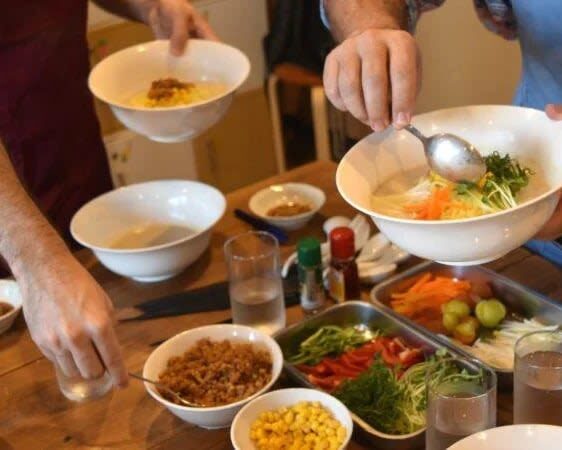
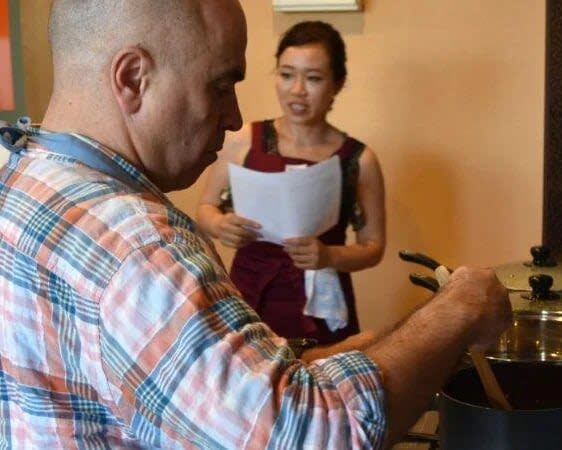
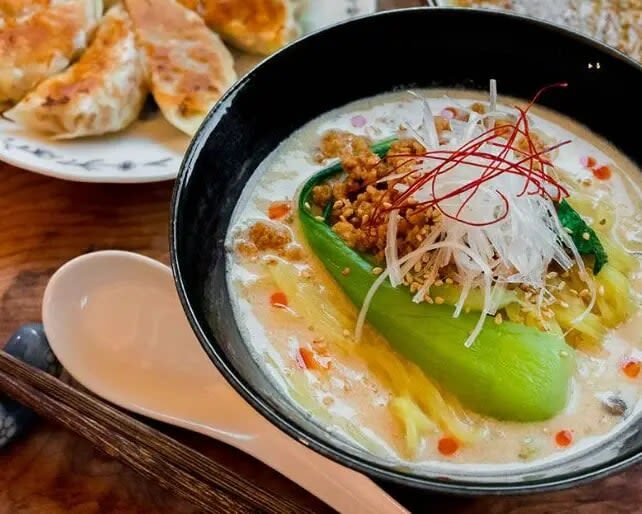
The core of the class is learning how to make ramen with vegan ingredients. The promise is not simply a meat-free bowl served at the end. You take part in preparing it, with the instructor explaining the process and ingredients as you go.
That distinction matters if you want to understand how a Japanese dish works, rather than only sample a version adapted for your diet. Japan’s traditional food often uses ingredients that can be difficult for vegetarians and vegans to spot, including animal-based elements in broths and sauces. Here, the class is designed around vegan cooking from the start.
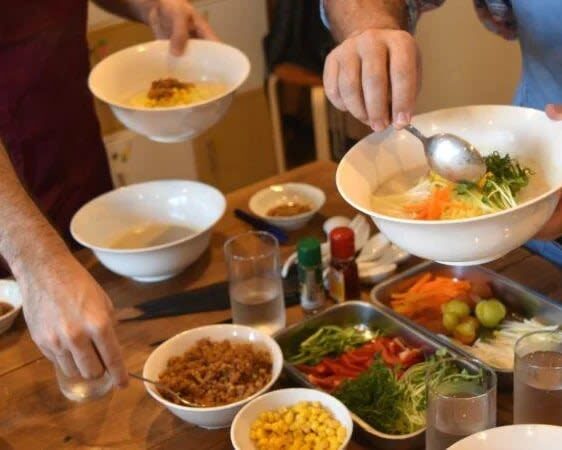
Expect a practical lesson rather than a formal demonstration where you sit and watch. Participants have described chopping vegetables, mixing ingredients, and following the steps with the host. The level of detail can help if you’re new to Japanese cooking, and it gives experienced home cooks a chance to ask about methods and products.
Kaori is the host most often associated with the class. Participants describe her as patient and clear, and say she takes time to answer questions. That matters when you’re working with unfamiliar ingredients or trying to remember a new technique. You can ask as you cook, rather than hope you catch every detail in one demonstration.
The exact ramen recipe and ingredient list are not specified in advance, so don’t expect a promised menu beyond vegan ramen and gyoza. Some participants have tried different miso pastes during the class, which can be a useful introduction to how one ingredient changes the taste of a dish. If you have a specific food concern, check that the package you book fits it.
You can also read our reviews of more tours and experiences in Tokyo



Folding gyoza and making the meal your own
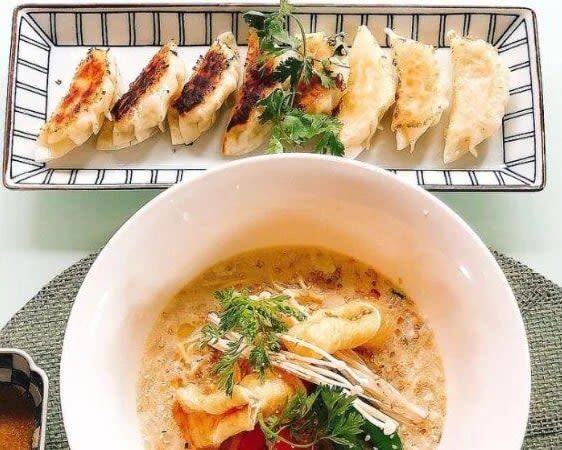
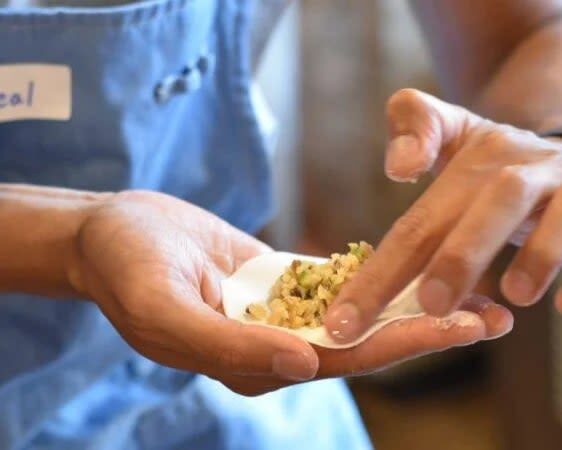
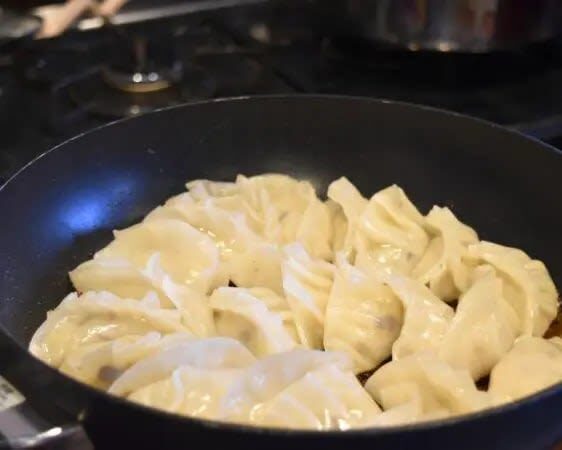
Gyoza are the second half of the meal, and a good reason to choose this class over a ramen-only lesson. You make dumplings without meat or other animal products, then enjoy them alongside the ramen. The combination gives you two recipes to take home and two different techniques to practise.
A class participant also described learning to make gyoza sauce and chili oil. Those additions are not listed as guaranteed parts of every session, so treat them as possible extras rather than a fixed promise. Still, they point to the kind of practical cooking conversation you can have: not just how to make the main dish, but how to adjust its flavor at the table.
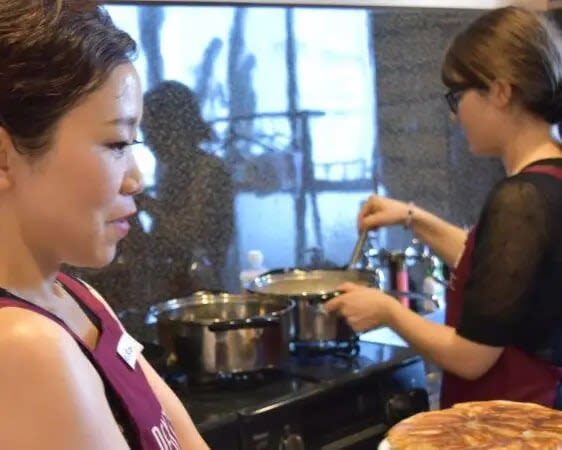
Making dumplings together is also a natural way to share the work. You’ll be preparing food alongside the host and other participants, which can make the class feel more social than a one-on-one lesson. The group size is not provided, so I wouldn’t book on the assumption that it will be private.
There’s a pleasing payoff at the end: you eat the food you have made. The class description promises ramen and gyoza, while some participants have also described a small dessert. That extra is not assured, but the main meal should be substantial enough to make this a useful activity around lunchtime or dinner, depending on the session time.
A supermarket stop, Japanese phrases, and local food advice
Several participants describe starting with a short visit to a nearby supermarket. Kaori explains products that will be used in class, helping you connect the recipe to the shelves where you might shop later. This is a practical addition, especially if you plan to cook in Japan or want to understand Japanese labels and ingredients.
The supermarket visit is not listed as a fixed feature of every package, so consider it a possible part of the host’s approach rather than a guaranteed stop. If it happens, it can be one of the most useful parts of the experience. You get a little context for what goes into the dishes before you begin cooking.
Kaori has also shared Japanese phrases and cards that can help you ask restaurants about vegan options. Some participants received restaurant recommendations or a brochure with vegan dining suggestions. These details are particularly helpful if you’re travelling on a plant-based diet, since a cooking class can teach you what to make while the host’s local advice can help with the rest of your stay.
Keep expectations measured: this is not a city food tour or a full guide to Japan’s dietary rules. It’s a cooking class with a host who may share extra language and food tips. The value is in having a real conversation and the chance to ask about your own plans.
What the home-kitchen setting adds
The class takes place at the host’s home, according to participants who describe cooking there. That makes the experience feel different from a restaurant kitchen or a large commercial cooking school. You’re entering a more personal setting, where the host can explain her approach and make space for conversation as the food comes together.
For many people, that is the main appeal. You’re not only paying to prepare a meal; you’re spending part of your Tokyo visit with a local host, learning about ingredients and exchanging stories around food. The atmosphere may suit you if you enjoy small, social activities and feel comfortable joining a class in someone’s home.
The personal setting also means the experience may be less polished or predictable than a large cooking studio. The supplied information does not give a group size, specific kitchen layout, or exact menu sequence. If you prefer a structured demonstration with a detailed printed schedule, this may be a more informal fit.
The class is wheelchair-accessible, according to the activity details. If access needs affect your visit, it is still sensible to confirm the arrangements with the provider before booking, since no further details about the space are given.
Getting to Komae and choosing the right package
The meeting point is listed at 1 Chome-7 Motoizumi, Komae, Tokyo, with the host meeting participants at Komae Station. Komae is about 30 minutes from Shinjuku Station. The exact location and map link are provided after booking confirmation, and transport is not included in the price.
That journey is worth considering when you compare this class with a cooking activity in central Tokyo. You’ll need to budget time and transport fare, and you should arrive on time. In return, you get a home-based class away from the city-center rush. The location is a practical drawback, not a reason to rule it out, but it does make the experience less convenient if your schedule is tight.
The standard 2.5-hour vegan class starts at US$83.15. Separate 2.5-hour packages are listed for halal and gluten-free cooking, each starting at US$93.60. The higher-priced options make sense if you need those dietary accommodations, but be sure to select the matching package rather than assume the standard vegan class covers every restriction.
For the price, you’re getting ingredients, cooking utensils, an English-speaking guide, and take-home recipes. You are also paying for the host’s instruction and a shared meal, not merely a restaurant serving. If you value learning a skill and having a personal cultural exchange, the cost is easier to justify. If you only want a quick bowl of ramen, eating out will be simpler and less expensive.
Children aged 4 and older can participate. Children aged 4 to 12 must be accompanied by a paying adult, and those aged 13 or older are charged the adult rate. Infants and children must be included in the passenger headcount, so don’t leave a young child off the booking.



Who will get the most from the class
This is a strong fit for vegan and vegetarian visitors who want more than a list of restaurant names. You’ll learn to prepare two familiar Japanese dishes in plant-based form, and may also pick up useful language and dining tips. The class is especially worthwhile if you enjoy cooking and expect to use the recipes again at home.
It can also suit mixed-diet groups. The standard class uses vegan ingredients, while halal and gluten-free packages are offered separately. That gives you options, but the package details matter. Choose the one that matches your needs, and check directly if you have a dietary requirement beyond those specifically named.
Families with children aged 4 and up can take part, provided children in the 4-to-12 age group attend with a paying adult. The activity is wheelchair-accessible. For any access or dietary question that needs a precise answer, confirm before you book rather than rely on assumptions about a home kitchen.
You may want to skip it if you dislike group cooking, don’t want to travel outside central Tokyo, or are looking for a restaurant-style meal without participating in the preparation. The class is built around hands-on work and conversation. It’s not a quick tasting stop.
Should you book this vegan ramen and gyoza class?
I’d book this if you’re plant-based, curious about Japanese home cooking, or keen to leave Tokyo with a recipe you can actually use. The strongest parts are the chance to make both ramen and gyoza, Kaori’s patient instruction, and the practical advice about ingredients and finding vegan food. That combination gives the class value beyond the meal.
Before committing, check the travel time to Komae and choose the right dietary package. The standard class starts at US$83.15, while halal and gluten-free options start at US$93.60. With a 2.5-hour session, recipes to take home, and a personal cooking setting, it’s a good use of an afternoon if you want to learn by doing. If your Tokyo plans leave no room for the journey, or you’d rather be served than cook, choose something closer and simpler.
Make Gyoza and Ramen with Vegan Ingredients in Tokyo
“10/10 experience – well worth the time and money. Kaori-san was absolutely wonderful!! This cooking class has been our favorite Toyko experience by…”
FAQ
How long is the cooking class?
The class lasts 2.5 hours.
What will I make?
You’ll make vegan ramen and gyoza using ingredients that contain no animal products.
Where does the class meet?
The meeting point is at 1 Chome-7 Motoizumi, Komae, Tokyo. The host meets participants at Komae Station.
How far is Komae from Shinjuku?
Komae Station is about 30 minutes from Shinjuku Station.
Are halal and gluten-free options available?
Yes. Separate 2.5-hour halal and gluten-free class packages are offered, each from US$93.60.
Can children join the class?
Participants must be at least 4 years old. Children aged 4 to 12 must be accompanied by a paying adult, and participants aged 13 or older pay the adult rate.
What is included in the price?
The class includes an English-speaking guide, ingredients for vegan ramen and gyoza, cooking utensils, and recipes to take home. Transport and other personal expenses are not included.