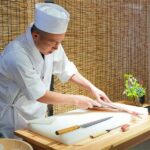
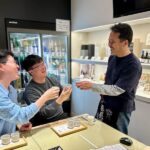
A knife can look perfectly fine and still feel dull on the cutting board. At Sakai Toku in Asakusa, you learn why Japanese knives differ in shape, steel, and edge, then try sharpening a Santoku yourself. It is a close-up look at a useful craft, not a sightseeing tour.
I like two things in particular: you get to feel the difference before and after sharpening, and the instruction is designed to leave you with care skills you can use at home. An English-speaking expert explains the technique, and all tools are provided.
The main consideration is the short format. One hour gives you an introduction and a hands-on try, not a full course in knife making or advanced sharpening. At $31.55, it makes most sense if you are curious about Japanese knives and want practical instruction, rather than a broad Asakusa tour.
- What makes this Asakusa workshop worth an hour
- A knife lesson, not another temple stop
- What happens during the one-hour session
- The strength is clear, hands-on teaching
- What .55 buys you
- Finding Sakai Toku in Asakusa
- A few limits to keep in mind
- Who should book this experience
- FAQ
- How long does the Japanese knife sharpening experience last?
- Where does the workshop take place?
- How do I get to Sakai Toku?
- Do I need to bring a knife or sharpening tools?
- Is the activity suitable for beginners and children?
- What is included in the price?
- The Best Of Tokyo!
- More Tours in Tokyo
- More Tour Reviews in Tokyo
What makes this Asakusa workshop worth an hour
 1 / 4
 2 / 4
 3 / 4
 4 / 4
- You sharpen a Japanese Santoku yourself, rather than only watching a demonstration.
- The lesson covers steel, shape, and edge, so you get context for why Japanese knives can feel different.
- You compare the knife before and after sharpening, a direct way to notice what a fresh edge changes.
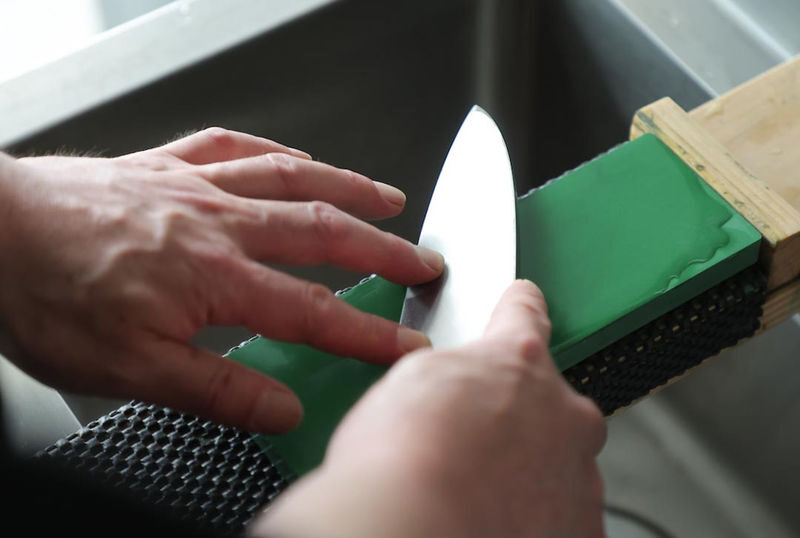
- A whetstone is part of the lesson, with an expert showing you basic technique.
- The care tips travel home with you, making the hour useful beyond your time in Tokyo.
- The shop is near Asakusa Station, served by the Ginza Line, Toei Asakusa Line, and Tobu Skytree Line.
👉 See our pick of the Our Picks For The 11 Best Workshops & Classes In Tokyo
A knife lesson, not another temple stop
Asakusa is known for major sights and busy streets, but this hour offers a quieter kind of encounter with Japanese culture. At Sakai Toku, the subject is a familiar kitchen tool, explored through the craft of sharpening. You learn how knife shape, steel, and edge relate to the way a Japanese knife is made and used.
That practical focus is the appeal. Instead of collecting another photo, you leave with a better sense of how to care for a knife and why sharpening matters. If you cook at home, or simply enjoy learning how everyday objects are made and maintained, the subject has an immediate connection to your own life.
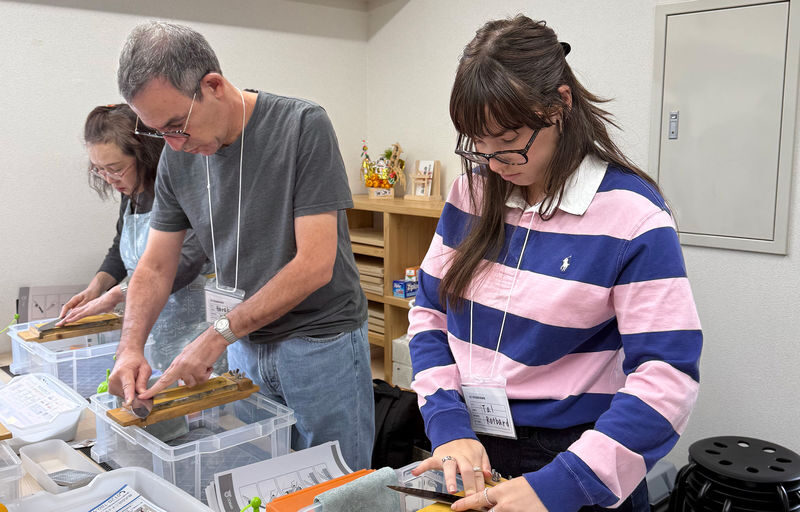
The workshop centers on a Japanese-style Santoku. You do not need previous experience, and tools are provided, so you can take part without bringing equipment or preparing in advance. The session is suitable for participants aged six and older, though children pay the same rate as adults.
You can also read our reviews of more tours and experiences in Tokyo.



What happens during the one-hour session
The listed schedule starts at Sakai Toku and returns there about an hour later. There are no other stops or transfers in the experience. Treat it as a compact, hands-on appointment at the shop, rather than a guided walk through Asakusa.
The session begins with an introduction to Japanese knives. You learn about differences in steel, shape, and edge, which gives you a framework for understanding what you will do next. These details matter because the lesson is not simply about rubbing metal on a stone. You first get a sense of the tool and the care it calls for.
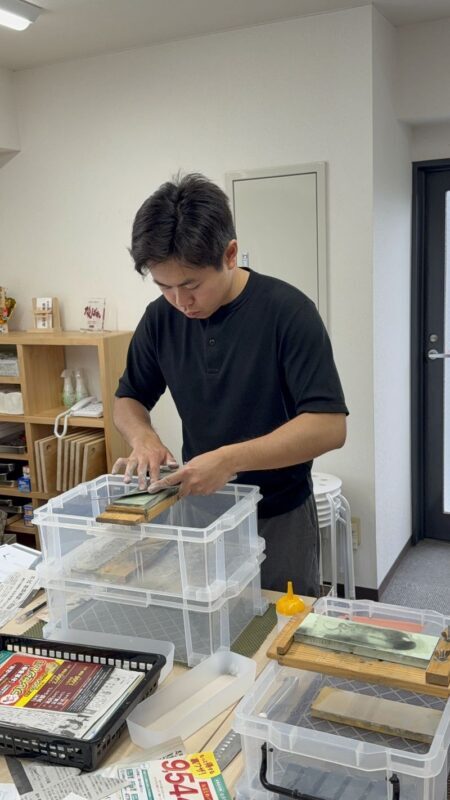
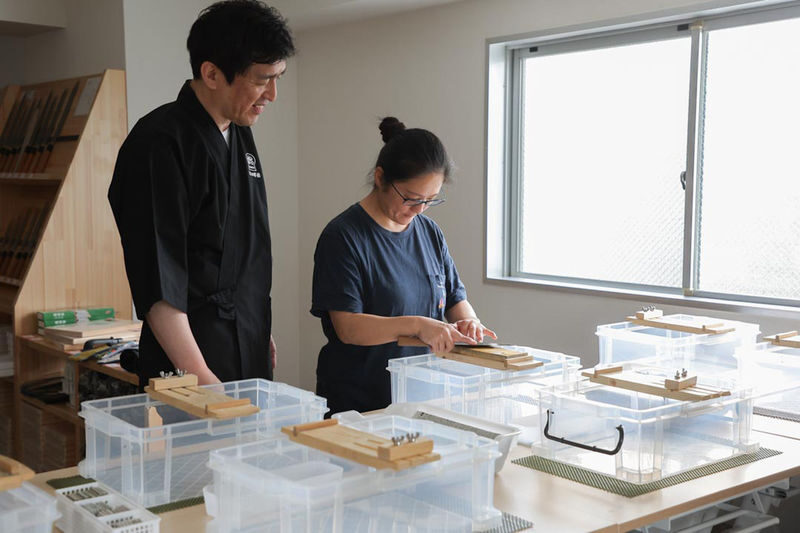
Next, an expert demonstrates basic whetstone sharpening. The key benefit is seeing the method explained in person before you try it. One participant described a one-to-one demonstration as much clearer than trying to learn from a video. That is a useful point for beginners: sharpening can look simple from a distance, but small changes in how you hold and move a blade can be hard to judge on a screen.
Then you sharpen a Santoku yourself. The experience is hands-on, but it is still an introduction. Expect time to learn the basic movement and put it into practice, not a long apprenticeship or a lesson in forging a knife. The aim is to help you understand sharpening and feel more confident about caring for a knife at home.
The before-and-after comparison brings the lesson together. You can feel the difference between a dull and freshly sharpened knife, which makes the earlier explanation easier to grasp. The activity does not specify a particular cutting test, so think of this as a chance to notice the change directly, rather than a promise of a certain demonstration.
You finish with practical knife-care tips. This is where the experience earns value beyond its hour in the shop. A technique you can use at home is more lasting than a souvenir you might leave in a hotel drawer.
The strength is clear, hands-on teaching
The most praised part of the experience is the instruction. The two available comments both emphasize learning: one describes the host’s explanations as easy to follow, while another says the knowledge can be brought home. That is a strong fit for an activity whose success depends less on spectacle and more on whether you understand what you are doing.
English-speaking staff and an English-speaking guide are included. The supplied details do not give the instructor’s name, so there is no specific host to request. What matters here is that the lesson is presented in English, with a demonstration and a chance to practice, rather than relying on you to interpret a technical process on your own.
A short workshop can be a good format for trying a new skill without giving up half a day. It is also a limit. You will get the basics, but the information does not promise extended practice, a take-home knife, or a certificate. Book it for the instruction and the experience of sharpening, not for a finished product.
What $31.55 buys you
The starting price is $31.55 for the one-hour experience. For that, you get an English-language introduction, a demonstration, a chance to sharpen a Santoku, and practical care advice. With tools provided, there is no separate equipment cost to plan for.
The value depends on what you want from a Tokyo activity. If you are looking for a full-day cultural tour or a long technical course, this will feel small. If you want a focused workshop that teaches something tangible and leaves time for other plans, the price is easier to justify. You are paying for guided practice and the chance to feel the difference for yourself, not for transport around the city or a series of attractions.
It may be especially worthwhile for home cooks, knife enthusiasts, and curious beginners. If you are already skilled at sharpening, the introductory level may offer less new material. Families can consider it too, but remember that children aged six and up are charged the adult rate.
Finding Sakai Toku in Asakusa
The shop is at NW Building Asakusa Ekimae, sixth floor, 1-11-4 Hanakawado, Taito City, Tokyo. It is reachable from Asakusa Station on the Metro Ginza Line, Toei Asakusa Line, or Tobu Skytree Line. Since the venue is in a building, allow enough time to find the entrance and get upstairs.
The departure time listed is 10:00, with a return time of 11:00. Available times can vary with the selected package, so check your confirmed booking rather than assuming every session follows that exact schedule. Arrive five minutes early. Late arrivals and no-shows are not refunded, and the conditions also say refunds are unavailable for arrivals ten minutes late or more.
The voucher is mobile, and it is valid only on the specified date and time. Changes are allowed until 24 hours before the activity, subject to the stated exceptions. If extreme weather or another unforeseen event leads the operator to cancel, you can reschedule or request a refund, subject to availability.



A few limits to keep in mind
This experience is compact and specialized. It does not include a broader tour of Asakusa, a meal, or personal expenses. If you want a varied itinerary with several stops, plan another activity around it. The workshop itself is the main event.
Recording is strictly prohibited inside the attraction, and outside food and drinks are not allowed. Weapons, cigarettes, e-cigarettes, alcohol, illegal substances, and pets are also prohibited. Participants who appear intoxicated may be refused service without a refund.
The activity is suitable for ages six and older, but children pay the same price as adults. That makes it worth weighing the child’s interest in a hands-on lesson before booking. No experience is required, but the subject does call for attention and care around a sharp tool.
Who should book this experience
Book it if you want to understand the craft behind Japanese knives and appreciate learning by doing. It suits people who cook, enjoy practical workshops, or want a quieter cultural activity to balance Tokyo’s major sights. The clearest payoff is the combination of an expert demonstration, your own attempt with the whetstone, and advice you can use later.
Skip it if you want an extended course, a knife-making session, or a tour that covers multiple Asakusa landmarks. There is no forging in this activity, and the hour is focused on sharpening a Santoku. If that focused lesson sounds appealing, the price and duration make it an easy experience to fit into a day in the neighborhood.
Tokyo: Japanese Knife Sharpening Experience
“Wonderful and knowledgeable host. I learned so much, and everything was explained in a way that made perfect sense. Having it demonstrated one-to-o…”
FAQ
How long does the Japanese knife sharpening experience last?
The experience lasts one hour. The listed schedule runs from 10:00 to 11:00, though available times can depend on the booking.
Where does the workshop take place?
It takes place at Sakai Toku, on the sixth floor of NW Building Asakusa Ekimae, 1-11-4 Hanakawado, Taito City, Tokyo.
How do I get to Sakai Toku?
The shop is reachable from Asakusa Station on the Metro Ginza Line, Toei Asakusa Line, and Tobu Skytree Line.
Do I need to bring a knife or sharpening tools?
No. All tools are provided, and you sharpen a Japanese-style Santoku during the experience.
Is the activity suitable for beginners and children?
No prior experience is required. Participants must be at least six years old, and children aged six and older pay the same rate as adults.
What is included in the price?
The one-hour package includes an English-speaking guide and English-speaking staff. Other personal expenses and tips are not included.