Edo Castle was built to keep attackers out. Its gates, guardhouses, moats, and massive stone walls still tell that story, even though the original castle buildings are mostly gone. This walk links those defenses to the Imperial Palace grounds and to the skyscrapers of present-day Tokyo.
I like two things in particular: the small group of up to 10, which makes it easier to ask questions, and the route’s mix of castle ruins and garden paths. Guides such as Koo, Kodai, and Omer have earned praise for clear explanations, a friendly manner, and useful local advice.
One consideration: this is a walking tour, not a visit inside the emperor’s residence. Expect stretches of outdoor walking, some uphill ground, and possible changes to the route in bad weather. Wear comfortable shoes and plan for the day’s conditions.
- Key points before you book
- Edo Castle’s defenses still shape the walk
- Starting at Wadakura Fountain Park
- Honmaru Rest House and the former castle center
- Tenshukaku and the keep that no longer stands
- The East Gardens and a quieter side of central Tokyo
- Sakuradatsumiyagura and the city beyond the walls
- Otemon Gate and the guardhouses
- Fujimi-yagura and the shogun’s seat of power
- What the guide adds to the experience
- Price, pace, and practical trade-offs
- Should you book the Edo Castle walk?
- FAQ
- How long is the tour?
- Where does the tour meet?
- How early should I arrive?
- Where does the tour end?
- Is the Imperial Palace residence open during the tour?
- What should I bring?
- Is the tour suitable for children?
- Is luggage storage available?
- Can I cancel for a refund?
- The Best Of Tokyo!
- More Walking Tours in Tokyo
- More Tours in Tokyo
- More Tour Reviews in Tokyo
Key points before you book

- Otemon Gate is more than a photo stop: Its turns and defensive design help explain how a castle entrance could slow and expose an attacker.
- The buildings are mostly gone, but the ground plan survives: Stone walls, moats, and guard sites make Edo Castle’s scale easier to grasp.
- The East Gardens bring the pace down: The formal grounds offer a calm contrast to the city streets nearby, with seasonal planting along the route.
- Small groups make room for questions: The group cap is 10, and past groups have sometimes been smaller.
- The emperor’s residence is not open to the public: The tour explores public grounds and castle remains, not the private residence.
- Plan on about two hours outdoors: Bring walking shoes, sunscreen, or rain protection, and arrive 15 minutes early.

👉 See our pick of the Our Picks For The 11 Best Workshops & Classes In Tokyo
Edo Castle’s defenses still shape the walk
This tour is about a castle that has largely vanished from view but has not disappeared from the city. Edo Castle was Japan’s largest fortress, and its surviving stonework and layout hint at the effort required to protect it. The guided route turns those remains into a story about power, strategy, and the long samurai era.
The castle was the seat of the shogun, the military ruler who governed Japan for much of the period covered on the walk. The tour also looks at the imperial system, described in the experience as having a 2,600-year legacy. That long timeline is a useful frame for understanding the contrast between the shogun’s former stronghold and the palace that now serves as the emperor’s residence.
You will not see a complete castle rising above the grounds. The itinerary includes the former keep site, watchtowers, gates, and guardhouses, rather than a preserved interior. For me, that is part of the appeal: the guide helps you read the remains instead of relying on a reconstructed building to do the explaining.
The route is also a lesson in Tokyo’s layers. Quiet paths and old stonework sit close to the modern business district, where tall buildings make the change in scale plain. It is a compact way to see how the city’s current center grew around a former seat of power.
You can also read our reviews of more walking tours in Tokyo

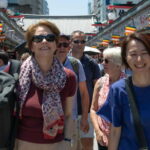

Starting at Wadakura Fountain Park
The meeting point is outside Starbucks Coffee at Wadakura Fountain Park, at 3-1 Kokyo Gaien in Chiyoda City. Look for a guide holding a sign marked Local Guide Stars. You can select from several morning and afternoon departure times, from 09:00 through 14:30, with the available return time depending on your chosen start.
Arrive 15 minutes before departure. That small buffer matters in a large city, especially if you are coming from another part of Tokyo or need time to find the meeting spot. Your mobile voucher is used for entry, and the tour includes admission to the attractions listed for the experience.
The outing is led by English-speaking staff, with a maximum group size of 10. That is a useful middle ground: you are not left to interpret the grounds on your own, but the group should remain small enough for questions. Past groups have included families, couples, and solo visitors. One family of four, for example, appreciated having a group of six in total, which made it comfortable to speak up.
The tour returns near Tokyo Station, at 1 Chome-9 Marunouchi. The meeting and return points are not identical, so factor that into your plans. There is no luggage storage, so bring only what you can comfortably carry during the walk.
Honmaru Rest House and the former castle center
The Honmaru Rest House stop introduces the shift from samurai castle to modern imperial family. The Honmaru was the central precinct of Edo Castle, and its setting gives your guide a chance to explain how the castle functioned as a political center, not just a military stronghold.
Do not expect the original buildings to be standing here. The value is in understanding the site and its role. A good guide can use the remaining layout to explain who held power, how the castle was organized, and how that history connects to the Imperial Palace today.
This is where a guided walk earns its fee. If you came alone, you could stroll the grounds and admire the walls, but the names and functions of the different spaces might blur together. The tour’s central theme, samurai rule giving way to the modern imperial household, gives each stop a place in the larger story.
Tenshukaku and the keep that no longer stands
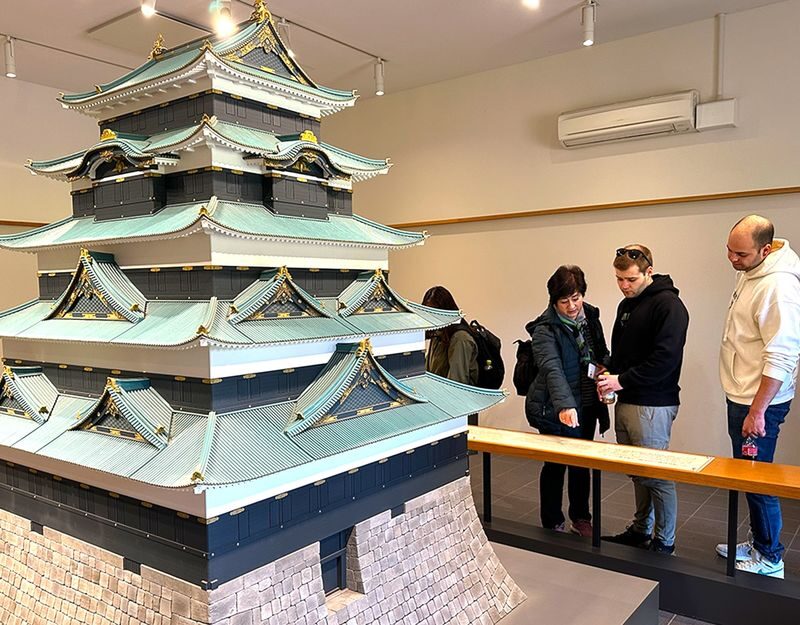
The Tenshukaku, or castle tower, marks the site of Edo Castle’s main keep. The original structure is gone, so this stop is about the tower’s former importance and the way it represented the shogun’s authority. Your guide can help you picture the scale and role of the building without pretending that the old castle survives intact.
The itinerary’s dramatic phrasing about the shogun’s story is a reminder that this is a history walk, not just a garden tour. You will hear about the military government and the era it shaped. The site is more evocative than visually grand, so it may appeal most if you enjoy learning how a place worked rather than collecting intact monuments.
That distinction is worth keeping in mind if you are deciding between this tour and a museum visit. Here, you get open-air context and a walk through the former grounds. You do not get a display of castle rooms or a visit to the emperor’s private residence.
The East Gardens and a quieter side of central Tokyo
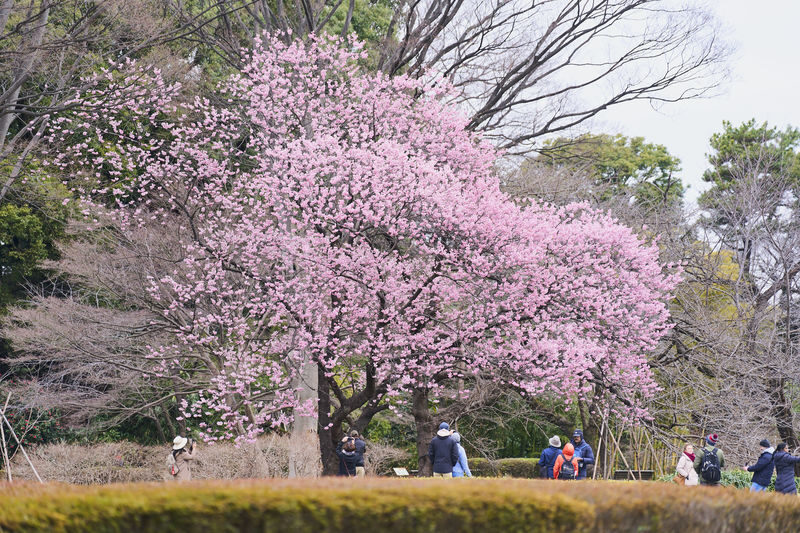
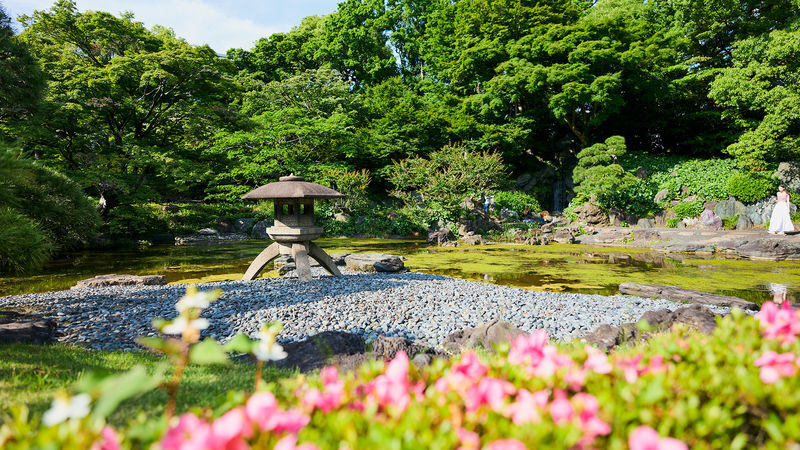
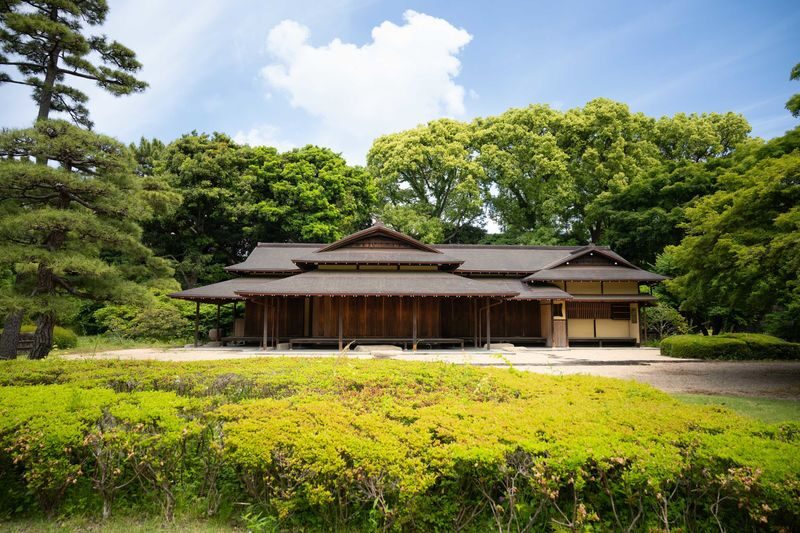
The Imperial Palace East Gardens offer a change of pace from the castle’s defensive story. The grounds are planted as a Japanese garden, with seasonal interest and open spaces that invite a slower look. The tour highlights the garden as a place admired by the emperor, while staying on areas accessible to the public.
The gardens are one of the clearest reasons to choose this outing over a history lecture indoors. You see the setting as you learn about it, and the shift from stone fortifications to landscaped paths helps the route feel varied. The grounds are especially pleasant when the weather is mild, though the walk is exposed to sun and rain.
A practical note: the route may involve uphill sections, and heat can make the walk feel longer. One family described taking breaks on a hot day, and the tour ran longer than expected. If the forecast is warm, carry water and sunscreen. In wet weather, bring a raincoat or poncho; the tour has continued in rain, but a wet walk is still a wet walk.



Sakuradatsumiyagura and the city beyond the walls
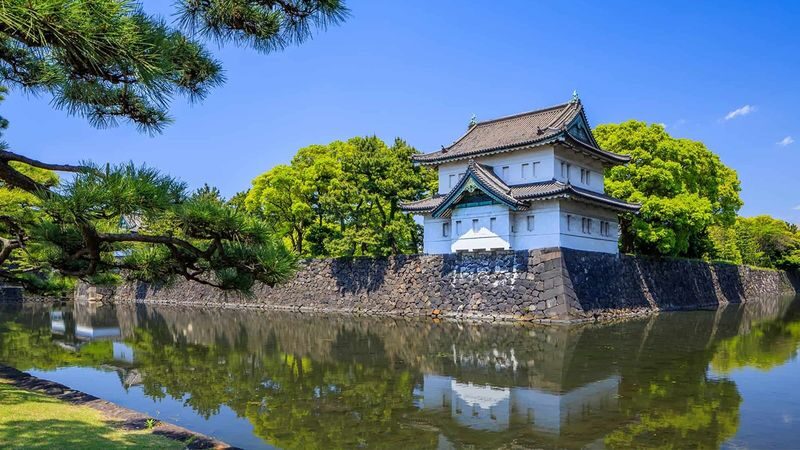
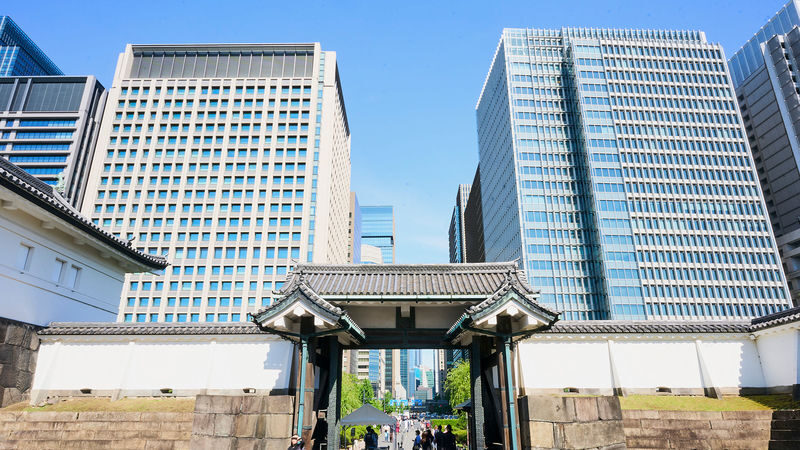
Sakuradatsumiyagura is a watchtower from the samurai period, set against a very different Tokyo. The contrast is one of the walk’s most useful visual lessons: the old defensive structures are not tucked away in a distant historic district. They remain part of the city center, with modern buildings close by.
The tower helps make the castle’s defensive logic concrete. A guard point was not an ornament. It gave defenders a way to watch approaches and protect key areas. From here, the guide can connect the physical remains to the broader question of how Edo Castle controlled movement through its grounds.
You may also get a good photo opportunity here. Some guides have been praised for pointing out useful photo spots, though the exact stops and timing can vary with conditions. Keep your camera ready, but do not let the search for a perfect shot replace the view itself.
Otemon Gate and the guardhouses
Otemon was a major entrance to the castle. Its design was meant to do more than welcome people through: gates and turns could channel movement, slow an intruder, and make it easier for guards to inspect those entering. The tour’s description calls it a trap from the samurai age, a vivid way to introduce the practical thinking behind the architecture.
The Bansho guardhouses extend that story. The itinerary lists first, second, and third guard posts, and the guide explains how security depended on more than thick walls. The experience uses the phrase ninja blood to evoke the castle’s vigilant defenses, but the useful point is the layered system of guards, gates, and checkpoints.
These are good stops for questions. If you are curious about how a castle protected its ruler or how people moved through the compound, ask. The small-group format is well suited to this kind of discussion, and the strongest guide comments describe patient answers and explanations that are easy to follow.
Fujimi-yagura and the shogun’s seat of power
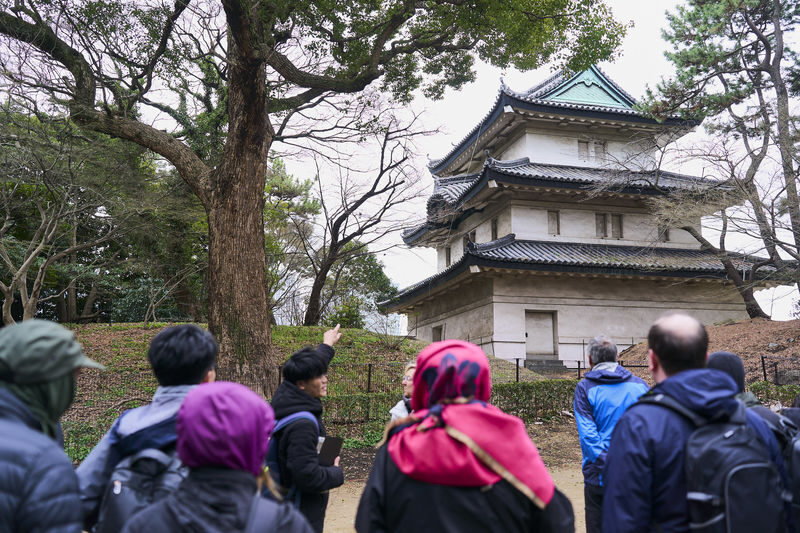
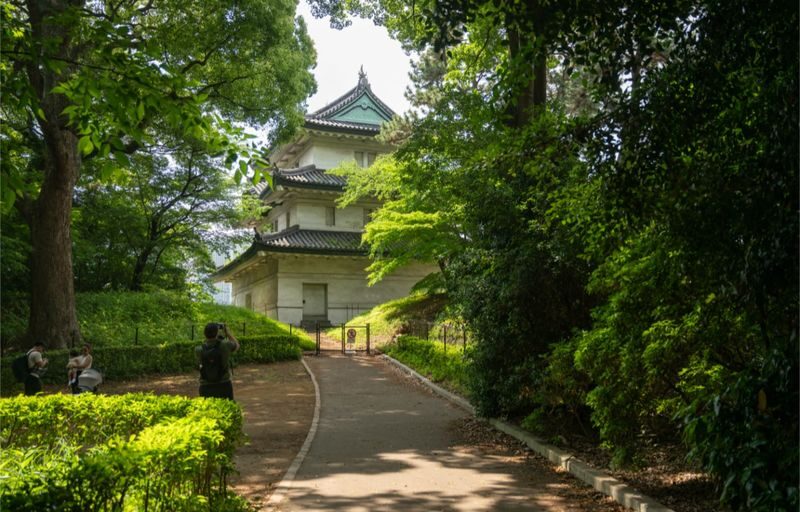
Fujimi-yagura is a surviving watchtower associated with Edo Castle’s defensive system. It gives the route a tangible link to the period when shoguns ruled from here. The tower is a reminder that the grounds were not simply a residence: they were designed to defend authority and organize a vast center of government.
From this point, the tour draws together the themes of military rule and the imperial household. The emperor still resides at the Imperial Palace, but the residence itself is closed to the public. You see the public grounds and historic remains, not the private rooms or a ceremonial audience.
That boundary is important to understand before booking. The tour offers context for Japan’s imperial system, but it does not provide access to the emperor. If you want to learn how the grounds relate to the country’s long political history, the walk fits. If your main goal is entry to the residence, this is not that experience.
What the guide adds to the experience
The guide is the main reason this tour works. The surviving structures can be impressive, but the route depends on someone explaining what you are looking at and why it mattered. Guides named Koo, Kodai, Omer, Ichiro, Keiko, and Dai have led tours, among others; your assigned guide will vary.
The strongest guide experiences combine clear history with an easy manner. Koo has been praised for being funny and engaging, Kodai for a friendly approach and useful photo tips, and Omer for answering questions while linking the castle to Japanese history. Keiko’s two-hour walk was described as educational and light in tone. These examples suggest the guiding style can make a substantial difference, but you cannot book a particular guide based on the information provided.
Families should find the format workable if children can manage a walk and enjoy stories about castles, guards, and samurai. A family with children aged 10 and 11 found the tour engaging, and children aged zero to six are free. The guide can also help with questions about Tokyo beyond the palace area, which is handy early in a stay or near the end of one.
Price, pace, and practical trade-offs
Prices are shown from US$13.29, while the Imperial Palace package is listed from US$18.99. Check the exact package and final price when you book, since the starting amount is not necessarily the price for every option. At either price, the value comes from combining a guided history walk, admission, a small group, and an English-speaking guide.
For roughly two hours, you get more than a stroll through a garden. The guide explains the castle’s defenses, the samurai and shogun era, and the connection to the modern imperial family. If those subjects interest you, that context makes the cost easier to justify. If you mainly want a quiet garden visit and prefer to read signs at your own pace, you may not need a guided tour.
There are a few practical limits. The tour is outdoors, luggage storage is not provided, and a security check is required to enter the Imperial Palace grounds. Do not bring knives or alcohol. Wear walking shoes, and carry sunscreen or rain protection. The schedule can change due to weather or traffic, so leave some flexibility after the walk rather than planning a tight connection.
The tour includes admission to attractions and English-speaking staff. Tips are not included. Children aged zero to six can join for free, and cancellation earns a full refund if made at least 24 hours before the activity date in local time.
Should you book the Edo Castle walk?
Book this tour if you want the palace grounds to make historical sense, not just look pretty in photos. The best fit is a curious first-time visitor, a family with school-age children, or anyone interested in samurai rule, castle defenses, and the imperial system. The small cap and room for questions are real advantages.
Skip it if you want to enter the emperor’s residence, avoid walking, or need a fixed route regardless of weather. The original castle buildings are mostly gone, and the experience relies on the guide to bring the remains to life. Choose a departure time that suits your day, arrive early, and bring sensible shoes. For a modest price, it is a useful way to read one of Tokyo’s most important historic sites.
Tokyo Castle & Imperial PalaceーShogun Walking Tour
“Great tour. Knowledgeable and kind guide.”
FAQ
How long is the tour?
The available departure and return times indicate a tour of about two hours. The schedule can change with weather or traffic, and walking breaks may affect the total time.
Where does the tour meet?
Meet in front of Starbucks Coffee at Wadakura Fountain Park, 3-1 Kokyo Gaien, Chiyoda City. Look for a guide holding a Local Guide Stars sign.
How early should I arrive?
Arrive 15 minutes before the departure time you selected.
Where does the tour end?
The listed return point is near Tokyo Station, at 1 Chome-9 Marunouchi, Chiyoda City.
Is the Imperial Palace residence open during the tour?
No. The emperor’s residence is not open to the public. The tour visits public grounds and historic castle remains.
What should I bring?
Wear walking shoes and bring sunscreen or a raincoat or poncho, depending on the weather. Do not bring knives or alcohol, as there is a security check.
Is the tour suitable for children?
Children aged zero to six are free. The tour is described as suitable for families, and children aged 10 and 11 have enjoyed it.
Is luggage storage available?
No. Luggage storage services are not provided, so bring only what you can carry during the walk.
Can I cancel for a refund?
You can receive a full refund if you cancel at least 24 hours before the activity date, using destination local time.